The snapshot you see here—the little boy holding a helmet worn by Formula 1 icon Ayrton Senna—speaks volumes, and we mean that literally, about the reason we’ve spoken to the all-grown-up-now Joe Twyman. His gorgeous two-volume set called The Art of Racing: Helmets is comparably literal: It’s about helmets worn by famous and less-famous race car drivers, some of which are rather plain, and some are artistic masterpieces.
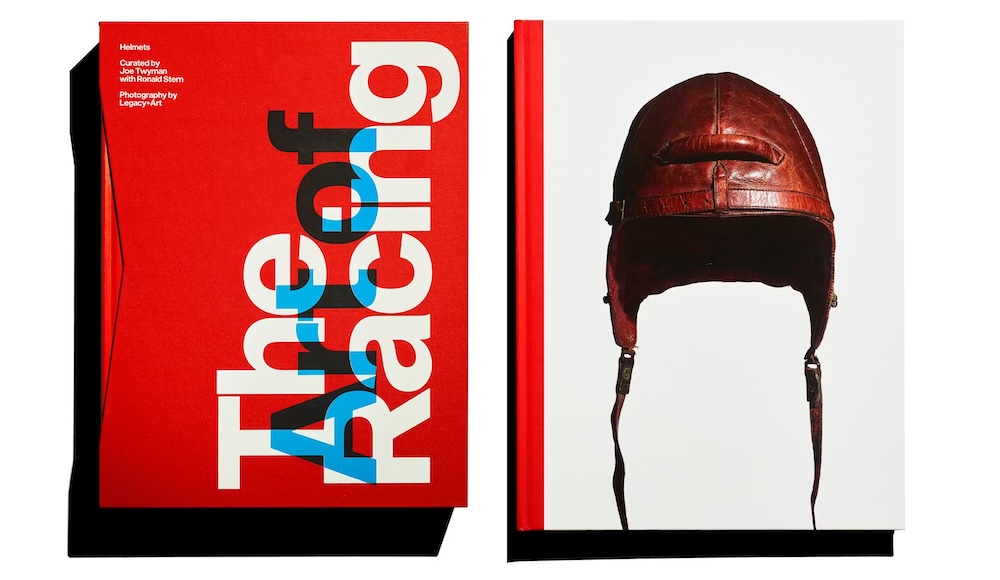
It’s a topic of great interest to Twyman, who grew up in England a dedicated racing fan. That descriptor, though, may not quite suggest the depth and breadth of just how important motorsports was, and remains, to the Brit, whose day job is working as a vice-president for Broad Arrow, the automotive auction firm owned by Hagerty. The Art of Racing: Helmets is co-authored—or co-curated, according to the book’s cover—by Ronald Stern, a noted helmet collector, with photographs by Rick Guest, and design by Peter Allen.
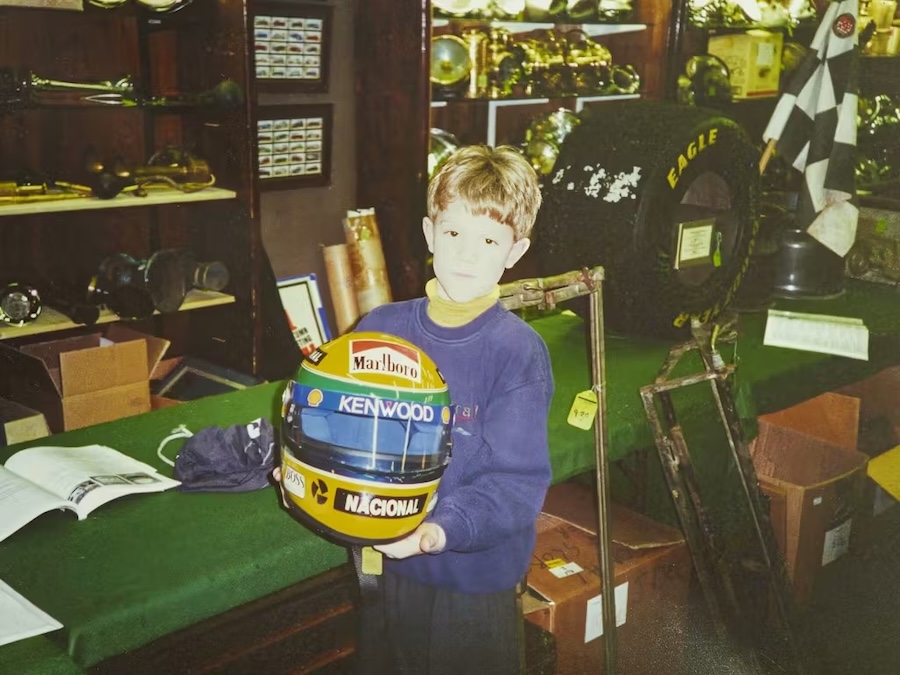
As the snapshot suggests, Twyman was, by the age of eight, already captivated by the helmets worn by his heroes, an interest that compounded over time. But interest, regardless of how strong, does not quite rise to the level of the commitment required to conceive of and complete a 660-page project like this. Yes, it was certainly a labor of love, but labor nonetheless. What made him take it on?
“I think the fact that there was nothing out there that pre-existed,” he said. “It was something I wanted to exist that didn’t, for my own interests.” There are plenty of racing books, he said, “on the cars, the drivers, the teams, the races, but there was really very little out there on the subject of helmets.”
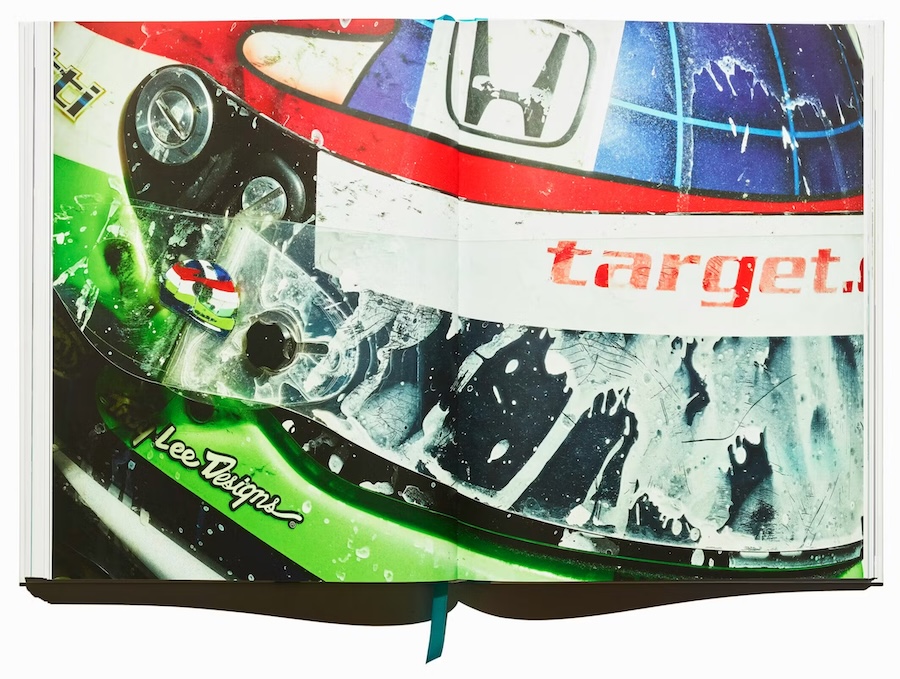
Think about it, and you can make the argument that a driver’s helmet may well be more recognizable than his or her likeness. Watch a three-hour Indianapolis 500, for instance, and you may see the driver’s face for a pre- and post-event total of five minutes, and that’s only if they do very well. The rest of the time, you’re looking at the racer’s helmet.
And for decades, those helmets have been personalized, typically a far cry from the black or white colors that come from the factory.
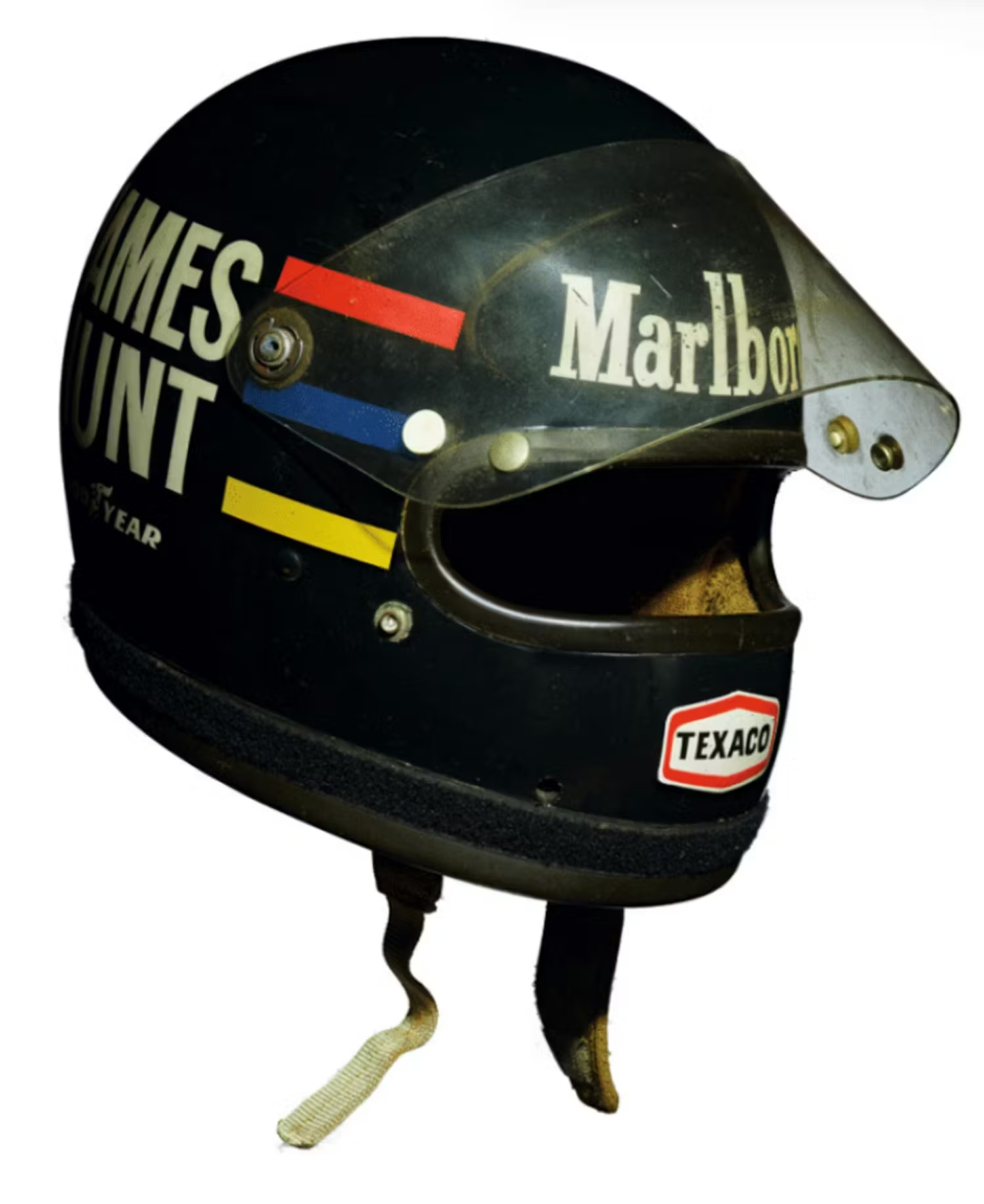
“Everybody knows Ayrton Senna by his helmet,” said Twyman. “Everybody knows Graham Hill by his helmet. But it’s kind of one of those things that’s not been talked about. So I thought I’d talk about it.”
According to the British-based Octane, the classic car magazine, The Art of Racing: Helmets “tracks the graphic glow-up of headgear from early cloth and leather caps and single-color shellac-soaked canvas examples, via the gradual implementation of contrasting hues, patterns, patriotic signaling and sponsor decals to today’s sophisticated airbrushed statements of personalization.” Indeed.
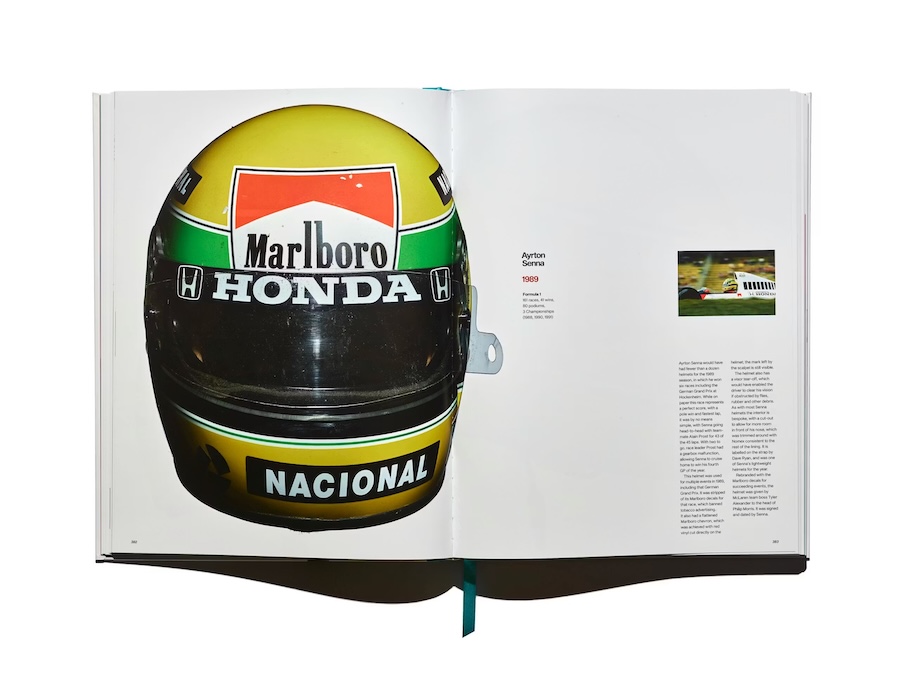
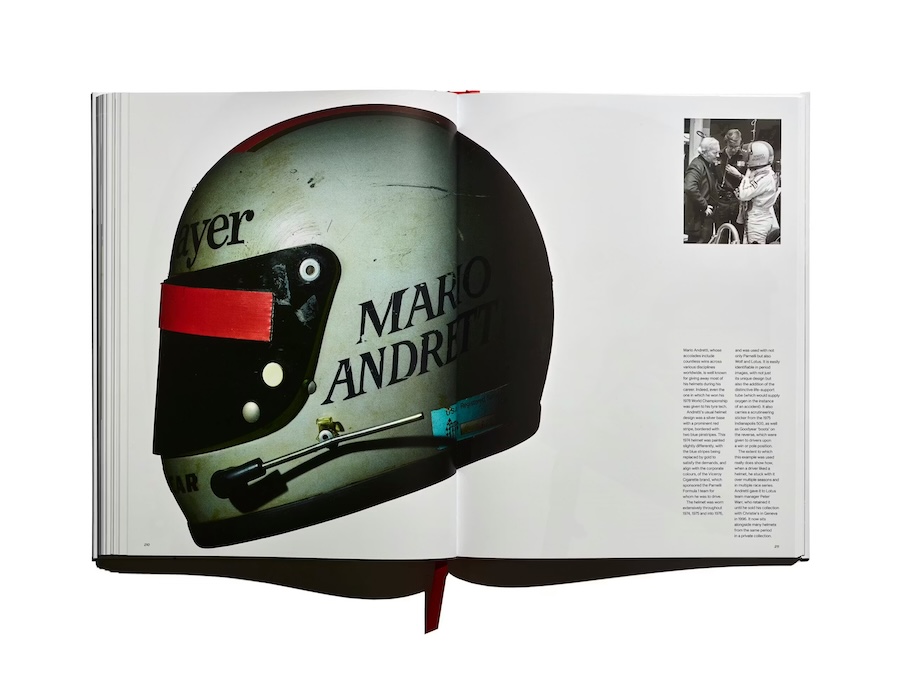
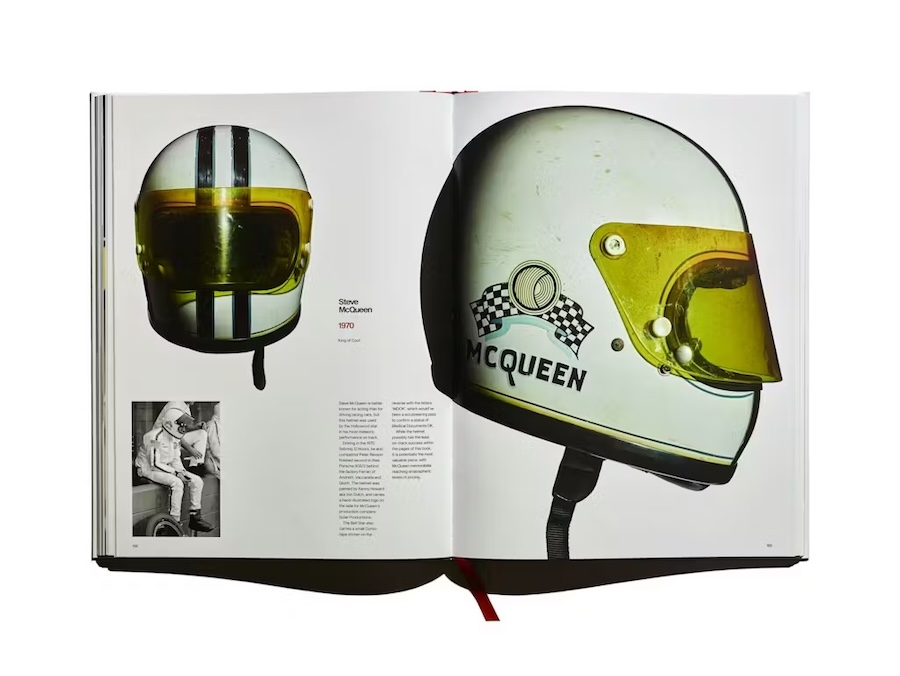
“It was a three-and-a-half-year project,” Twyman said. Though these are helmets—properly worn helmets, Twyman stressed, not copies, not promotional versions—from significant winners of the 24 Hours of Le Mans, the Indianapolis 500, the Mille Miglia, and the Targa Florio, the subject is overwhelmingly Formula 1. “My aspiration was to get an example from every single world champion, which initially seemed like a big task, but we achieved that. And then I wondered how far we could go beyond that. What about grand prix winners?”
The plan was for a single book, “but it became quite apparent we needed two volumes, so we created a split,” ending the first book around 1979, with the second volume covering this modern era, through 2024.
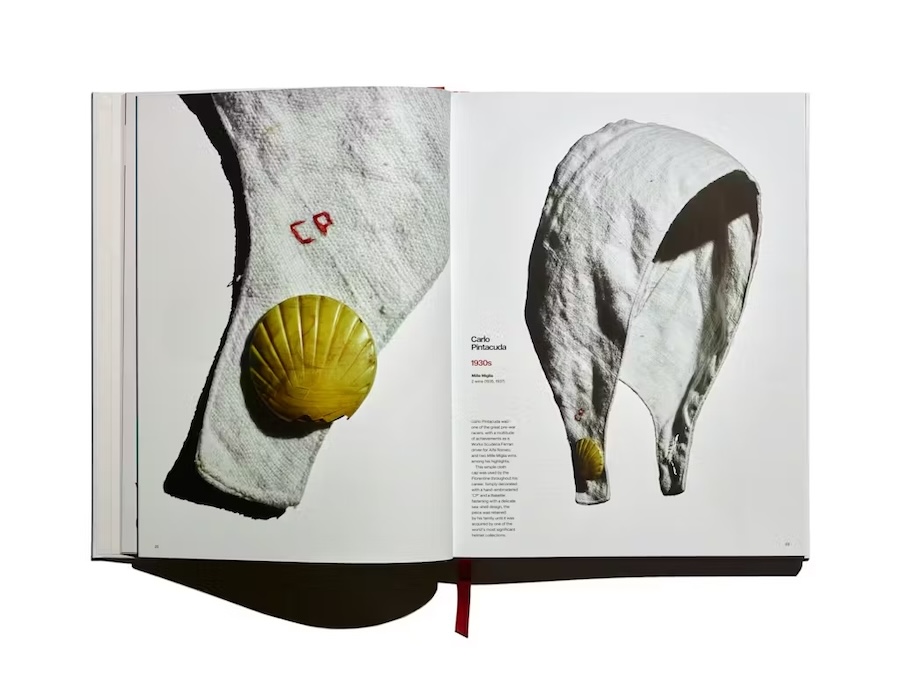
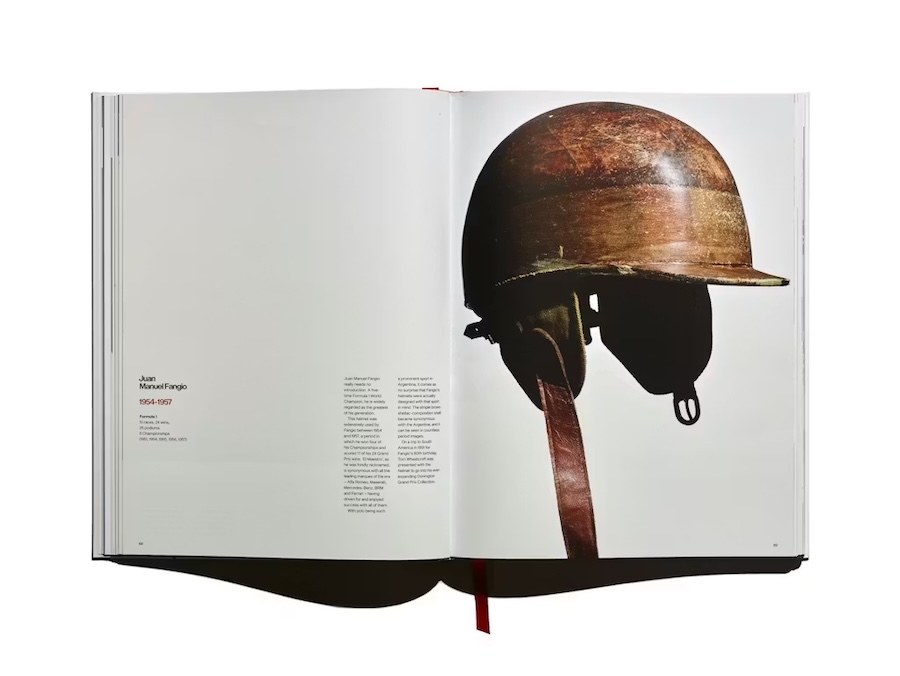
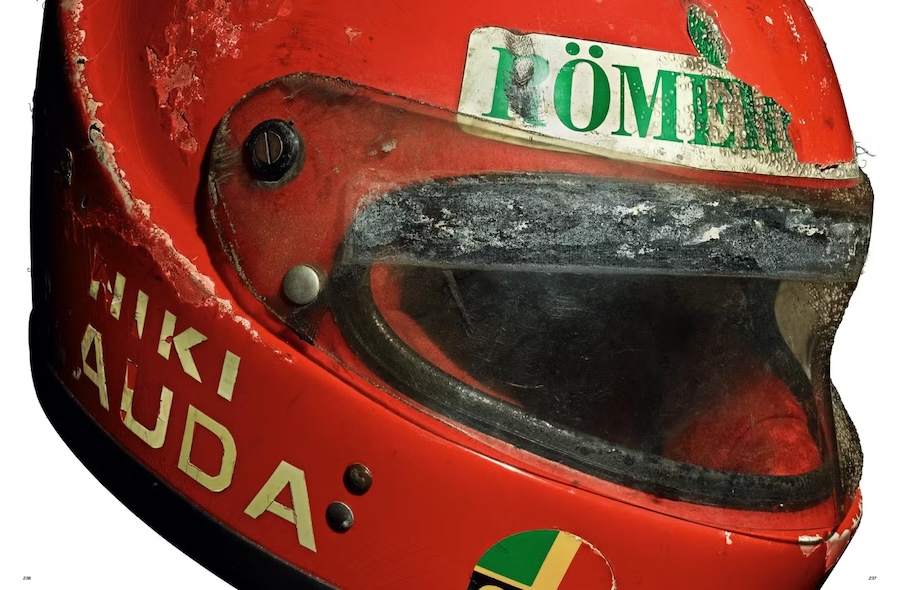
Highlights from volume one include Tazio Nuvolari’s leather cap, Mike Hawthorn’s 1958 Championship winner, Chris Amon’s 1966 Le Mans-winning helmet, Jochen Rindt’s 1970 Bell Magnum, worn during five of his six Grand Prix victories, and perhaps the most remarkable example of all, Niki Lauda’s fire-damaged AGV X1 from his 1976 Nürburgring crash. There is also a trio of significant helmets from both Graham Hill and Jackie Stewart, as well as Derek Bell’s first Le Mans-winning helmet from 1975.
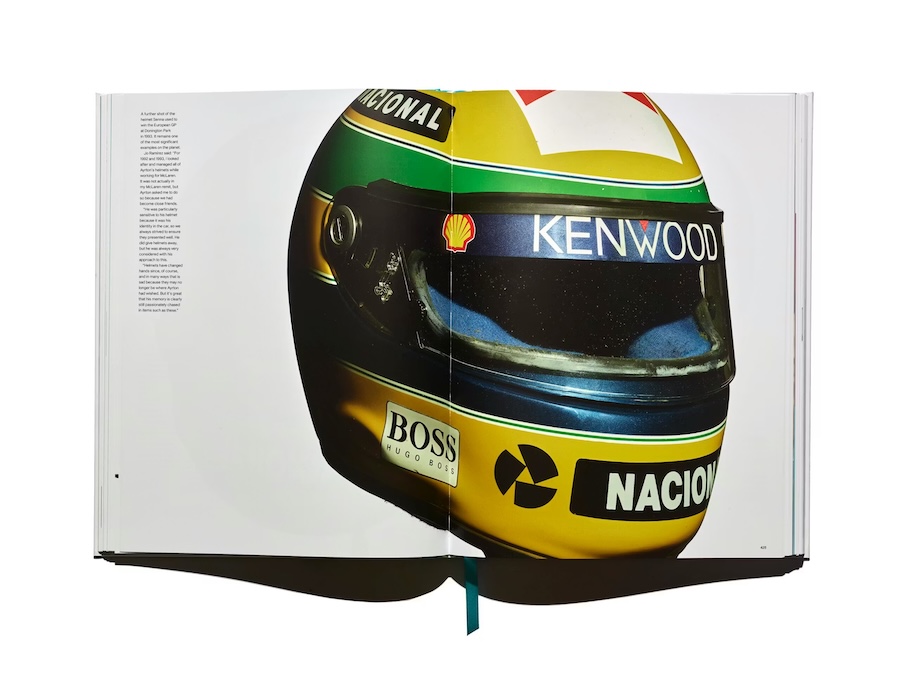
In the second volume, you’ll find Senna’s 1993 Donington helmet and Mika Häkkinen’s 1998 winner from Monaco. Tom Kristensen, a racing contact of Twyman’s, personally selected four helmets from his nine wins at Le Mans. And there’s the last helmet worn by Lewis Hamilton at Mercedes.
The question may be boilerplate, but we had to ask: Does he have any favorites? There’s a long pause. “It’s very difficult to say, because I already have a big collection, personally. And I obviously like the ones that I own, but of some of the helmets I don’t own, Senna is up there for me as a hero. My first race was the Donington European Grand Prix in 1993.” Held at the Donington Park circuit in Leicestershire, England, the race was held from 1935 to 1938, then again as this one-off in ’93 as a replacement for the Asian Grand Prix in Japan, plans for which fell through. Senna’s win was regarded as one of his finest performances; in the wet, qualifying fourth, he steered his McLaren around Michael Schumacher, Damon Hill, and polesitter Alain Prost on the first lap, and never looked back. “If I had to pick one, it’d probably be that one. Because that’s where it all started.”
And was there one that got away? Another pause. “We didn’t get all the winning drivers,” he said. “But we got most of them—there were very, very few that we didn’t land. If I had known it was out there, I would have waited and included it, but there is one out there, that I now know about, that I missed. And I’m sure that one day, another will present itself, and I’ll go, ‘Ah! I should have gotten that one, too!’”
Even if you spotted them the requisite knowledge, there are very, very few helmet enthusiasts who could have pulled this off, because not many could match the credibility that Twyman and co-curator Ronald Stern have established over decades of research and collecting. Plus, “I have a lot of very good contacts, and I have a racing background myself—I spent a long time competing—and I know a lot of the drivers, so there was clearly a personal relationship that I leveraged.” Many of the helmets came from institutions such as the Swiss Museum of Transport, as well as private collections of motorsports enthusiasts such at McLaren Racing CEO Zak Brown.
Also, a key asset was Rick Guest, the photographer, who has a stellar automotive portfolio but also a beyond-that international reputation, having shot subjects that range from The Beatles to The Royal Ballet, and for clients that include Nike, Ferrari, and Hugo Boss. “It was a combination of me, and the contacts and relationships that I have, and the guy I was doing this with. Rick is the real deal,” Twyman said. That’s how owners of the helmets that were borrowed for photo shoots knew that their prize possessions wouldn’t end up on eBay.
For the future, Twyman has thought about a book on helmets from the world of motorcycle racing, and a major collector of Indianapolis 500 memorabilia “contacted me last week and said, ‘Hey, do you want to do an Indy book?’” He told him that it was definitely worth some additional discussion.
So far, Twyman said, the book has been “positively received” by the motorsports community. Among those drivers featured is F1’s Mark Webber. “I took him a copy last week,” Twyman said. “He was blown away by it.” Twyman counts Dario Franchitti among his personal friends, “and he felt the same way. Dario has been a big supporter of the project, and it was good to get a copy into his hands after we’d been talking about it for so long.”
Twyman began collecting helmets about 15 years ago, “with the first one from Daniel Ricciardo, who is a friend. I remember thinking, ‘Hey, that’s pretty cool, I’ll see if I can collect a few more!’ And it has escalated” to over 100. “Yes, there are a number of my helmets in the book, but I haven’t done it as a self-promotion piece. Any time I was able to find a better example than mine, I used that one, because this is about the best of the best,” he said. “I led this project with what is the best for the book, not what is best for my collection. I think that allowed us to have the authenticity, so it isn’t just a catalog of my collection.”
Indeed it isn’t. Make no mistake: To call this merely a book of handsome photography would be selling short Twyman’s narrative, which accompanies each helmet. His words add context and biographical information for the driver, which may not be critical for contemporary personalities like Max Verstappen or Lando Norris, but it certainly is for Percy Lambert, who wore a gold silk cap when he became the first man to drive faster than 100 mph. This is a book to read, not simply thumb through.
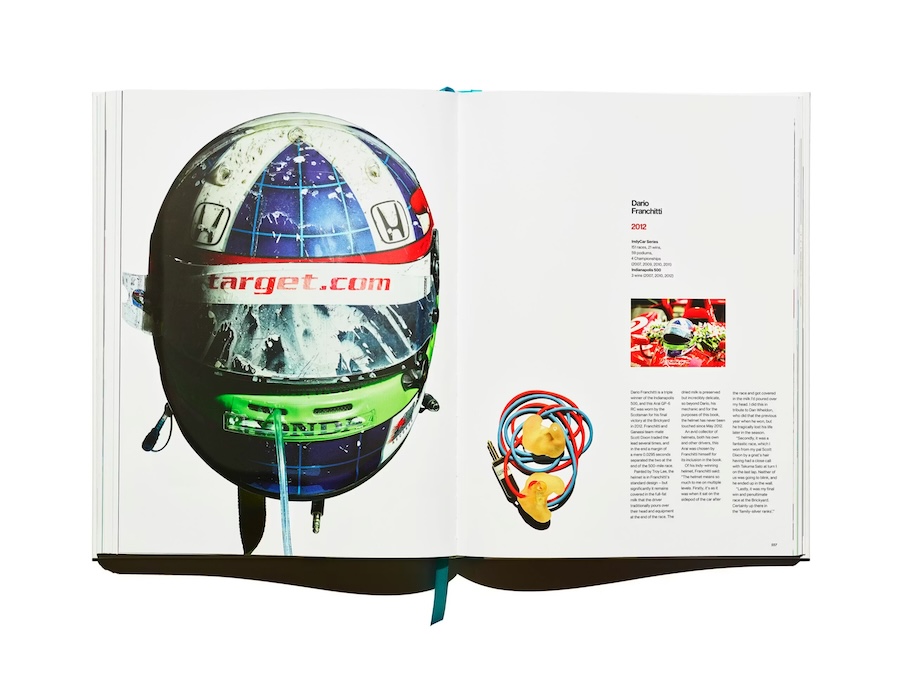
Just as the helmets featured are essentially exclusive, it’s probable The Art of Racing: Helmets will turn out to be as well. There are 300 “standard, slip-cased” sets for £495 (about $583), plus shipping, and there are 50 leather-bound editions that are numbered and signed for £1595 (about $1879). They are being sold through Magnetomagazine’s online bookshop here, as well as on Octane magazine’s online shop here.
Text by Steven Cole Smith