Every year, the world of motor sport hosts thousands of competitive events from small automobile club gatherings to professional multi-million dollar races. At the top of any survey conducted amongst members of the general public would be the Monaco grand prix, the ‘Indy 500’and the 24-Hours of Le Mans, still considered the premier race for sports and GT cars.
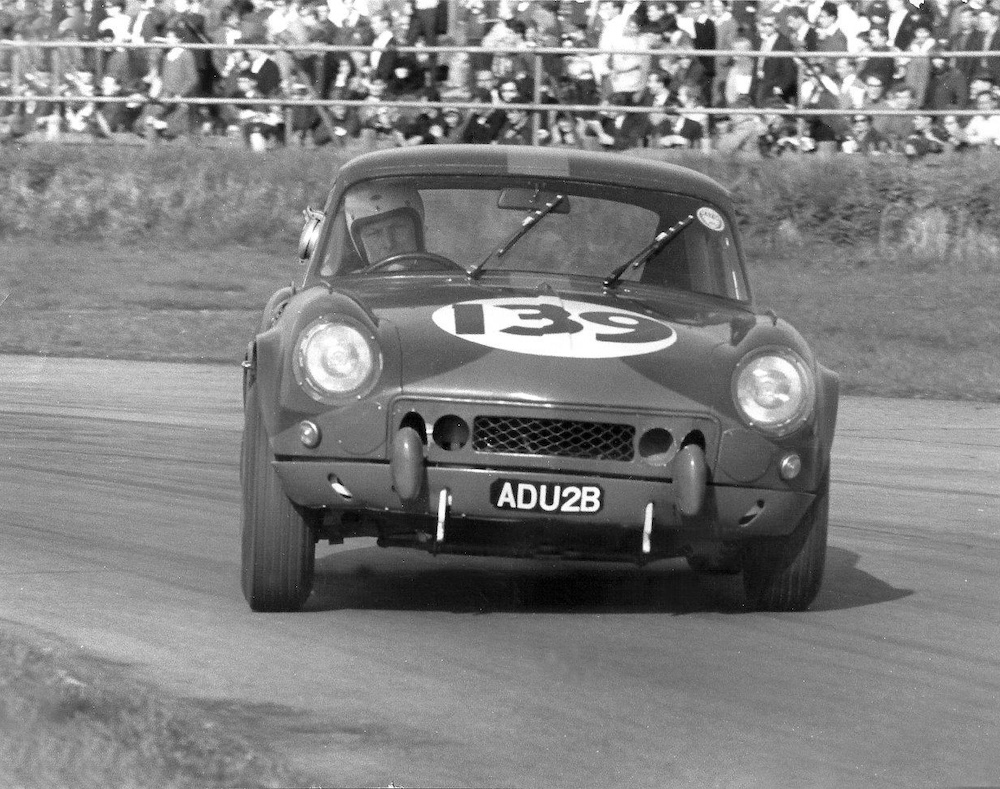
Founded in 1923 and run under a unique set of regulations created by the Automobile Club de l’Ouest, it features a wide range of categories that attracts a large and diverse entry, allowing numerous entrants to leave with a trophy. Naturally the winning car receives the most plaudits but a class win can also provide useful publicity and in 1964 the management of Standard-Triumph cars took a surprising decision to enter its Spitfire, a small and rather unlikely competition car. The car was based on a rudimentary Triumph Herald chassis and was intended to compete with BMC’s successful Austin Healey Sprite but during the development stage, Triumph’s sales figures fell dramatically resulting in the prototype being parked under dust sheets and forgotten. In 1960 the truck builder, Leyland Motors, was looking to expand its business by entering the car market was able to purchase Standard-Triumph. Whilst carrying out an inventory a senior manager discovered the prototype Spitfire, liked what he saw and revived the project, resulting in the Spitfire being launched in 1962. It proved a sales success as it offered more comfort and convenience than the Sprite. Bouyed by its success, Triumph decided to confirm its capabilities at Le Mans where, in 1964, it entered three cars. As open cars were no longer permitted for reasons of safety, four race-prepared Spitfires were sent to fibreglass specialists Williams and Pritchard to be fitted with aerodynamic fastback roofs. Powered by 1.1-litre four-cylinder engines, they recorded a top-speed of 134mph at 7000rpm using a 3.89-1 differential. Two hours into the race the first Spitfire retired following a crash and was joined by a second after 12 hours but the third car, registered ADU 2B, survived the full twenty-four hours finishing in 21st place having averaged 94.7mph with a fuel consumption of 22.4mpg, an impressive performance from such a small engine. All four race-prepared Spitfires returned for a final time in 1965 and two survived to finish 1- 2 in their class. In 1966 the cars were sold to private owners and the photograph shows Mike Costin (co-founder of Cosworth Engineering) who accepted an offer to drive the Le Mans Spitfire, ADU 2B, at the Goodwood Easter Monday meeting in 1966. A highly competitive driver, he is seen here demonstrating the noble art of the four-wheel drift.