The T-type MG Midget. The prewar design that triggered the postwar U.S. love affair with British sports cars. The dated machine derided when still in production as late as 1955, yet later loved for its old-fashioned aura. Is a car with such ancient genes a viable classic to own and drive today? And just how alien an experience is owning something with a body frame made of wood and a chassis peppered with myriad greasing points?
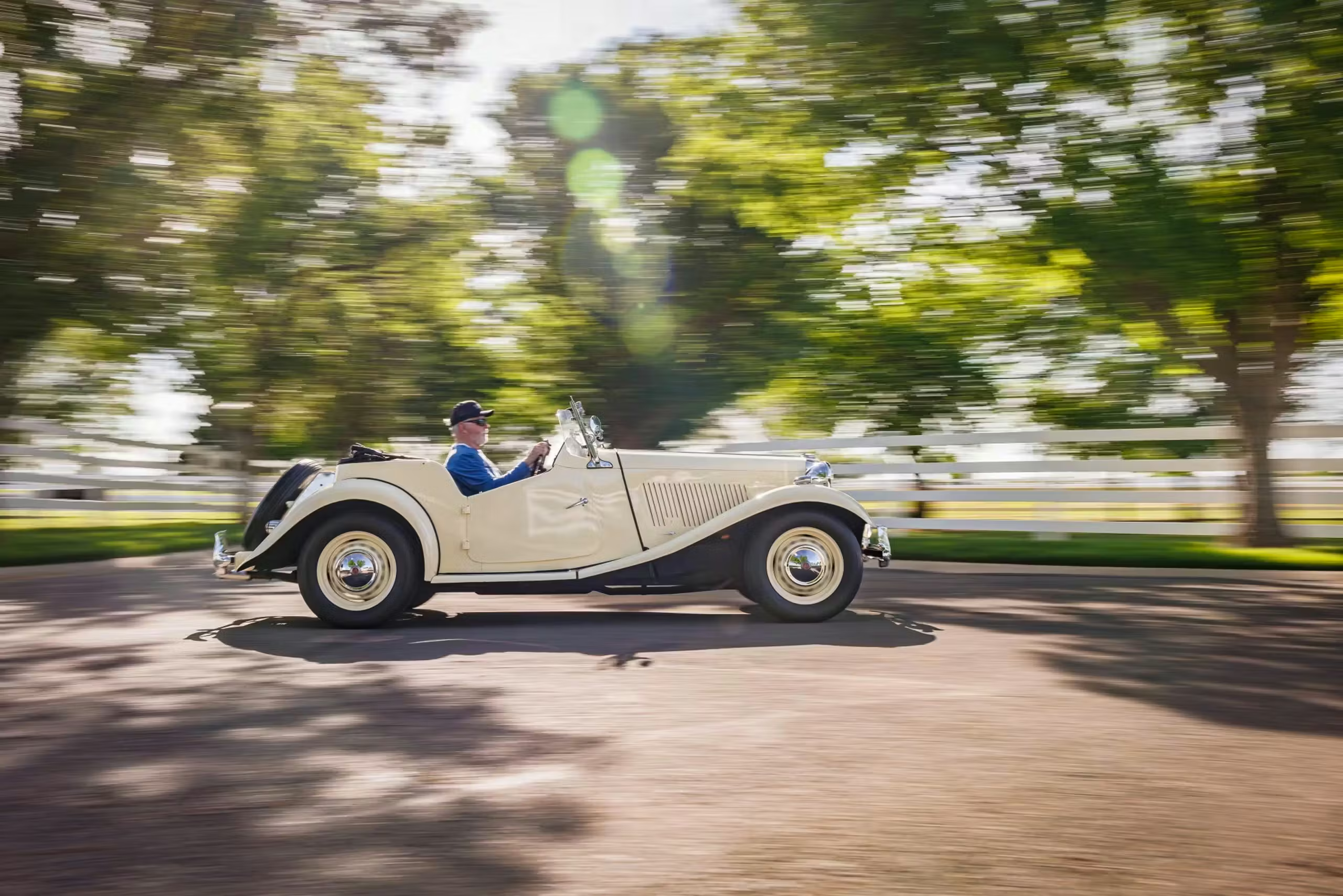
Not as alien as you might think, once you’ve reset much of what you’ve learned about vehicle dynamics to date. And owning such a hands-on, analog, imprecisely handmade and involvingly mechanical machine is a pleasure of its own. You can’t help but become a bit of an expert, with a better understanding of how the world of artifacts works and how to fix it when it doesn’t. That’s quite empowering.
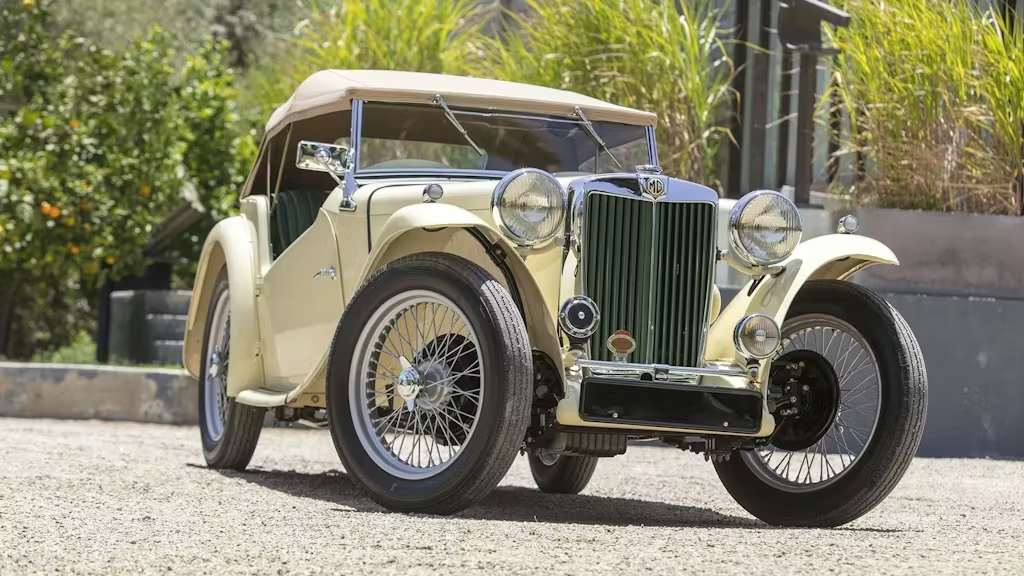
The story begins in 1936 with the launch of what retrospectively became known as the TA. MG’s Nuffield Group parent had ousted the old MG management and its independent ways and brought design under central Morris-influenced control. So out went the popular PB Midget with its 939-cc overhead-cam engine; in came the similar-looking but longer and wider T-Type, powered by a more prosaic pushrod engine from a Wolseley, another Nuffield brand.
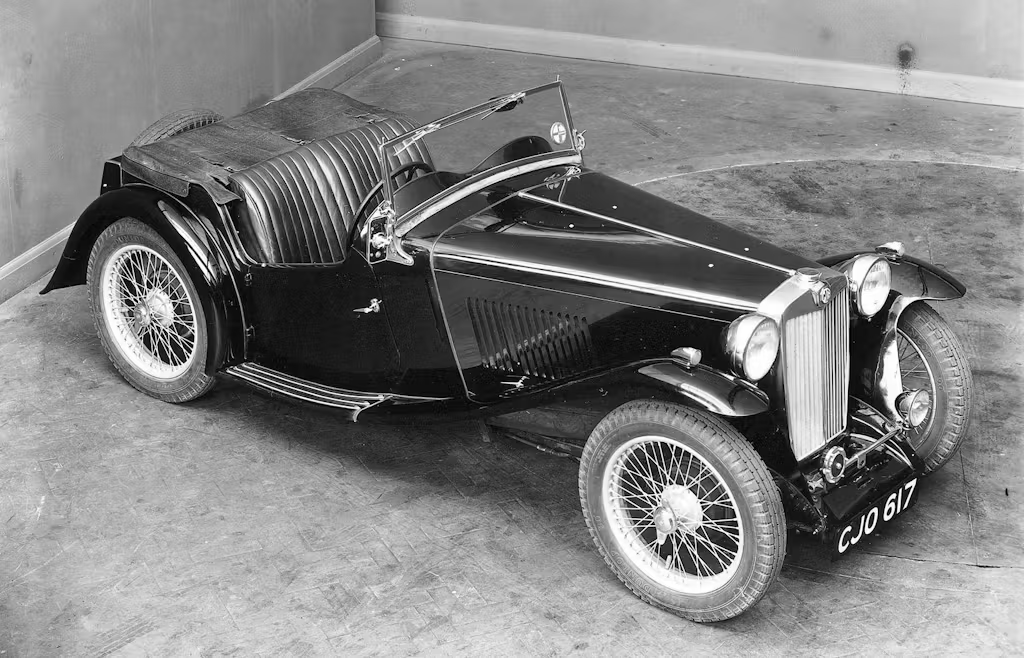
It was uprated with a pair of Nuffield’s SU carburetors and better breathing, but it was a low-revving, fragile engine with a very long piston stroke. However, its 1292-cc capacity was enough to give 50 hp and ultimately more pace than the PB had offered, if much less enthusiastically delivered.
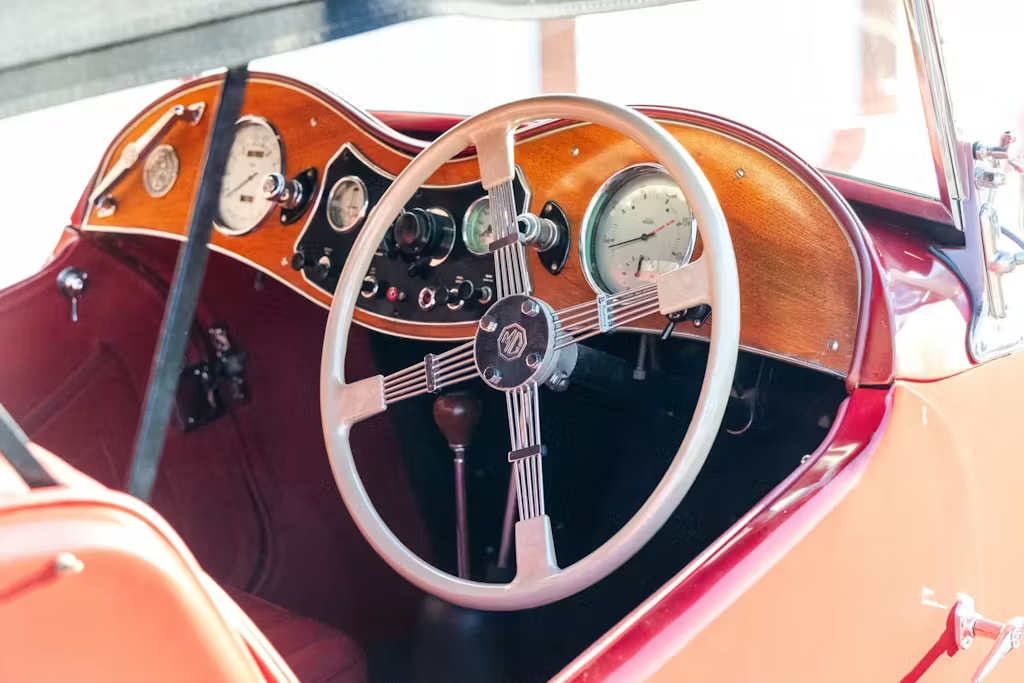
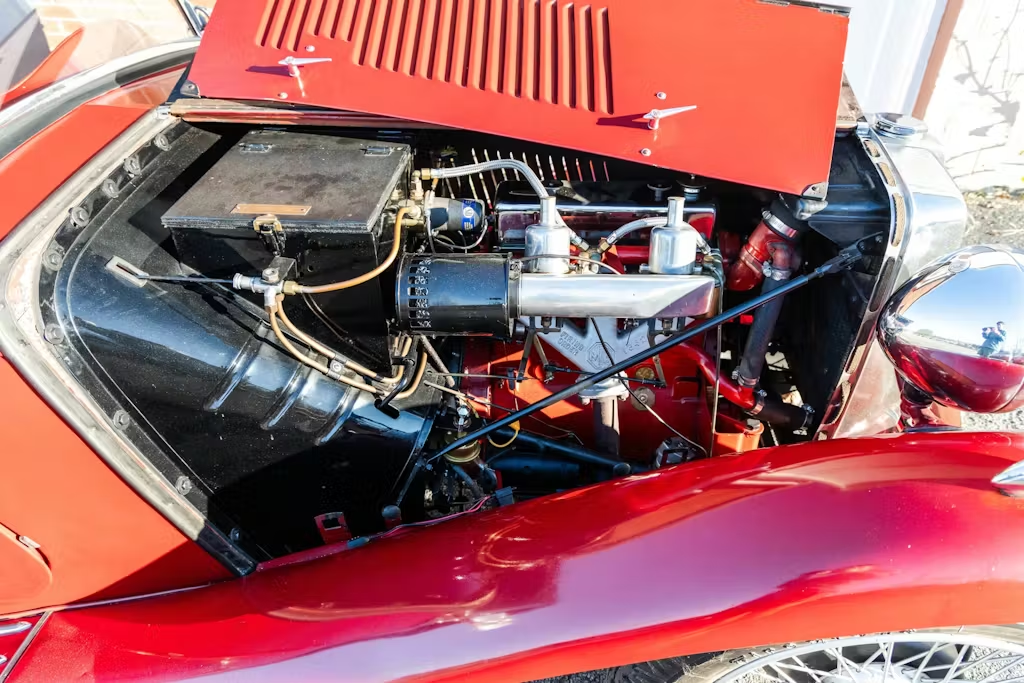
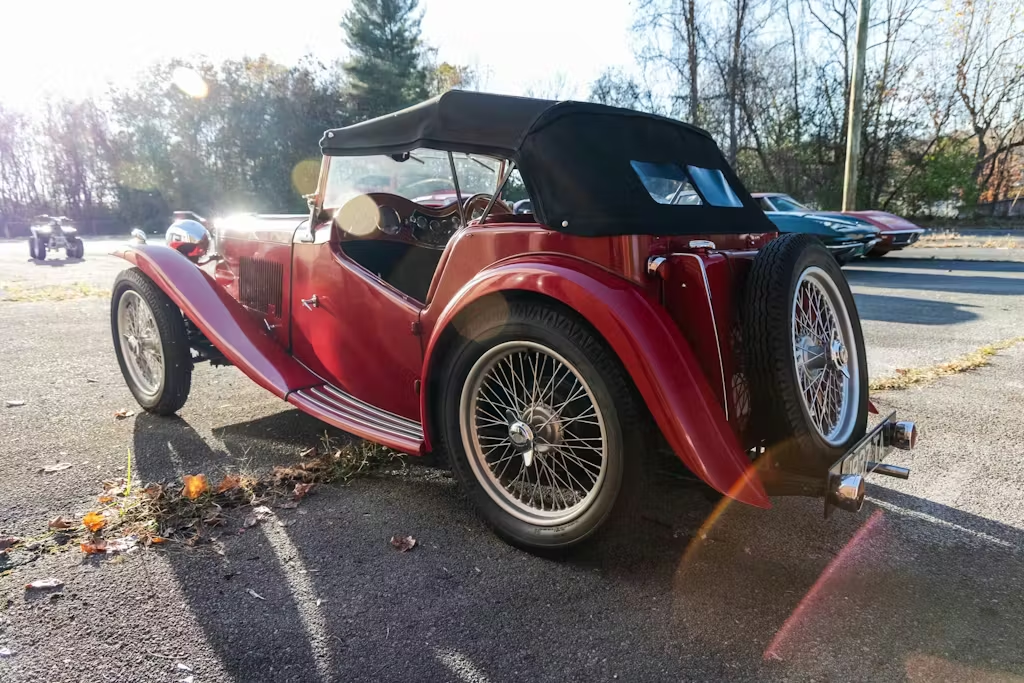
In May 1939, a new and better engine arrived, based on a new Morris Ten motor, still with pushrod-operated valves but featuring a shorter stroke (still long by modern standards) and a more rev-happy nature with its 54-hp power peak arriving at a racy-for-the-time 5200 rpm. This was the 1250-cc XPAG motor legendary in MG lore; like other Nuffield engines of the time, it was constructed with nuts and bolts with unusual metric threads, despite having standard British bolt heads. This was a strange and rather intriguing legacy from Morris’ post-WWI purchase of French company Hotchkiss, which had relocated to the U.K. to escape the Germans.
This new engine, along with a conventional dry-plate clutch to replace the old oil-bath unit, necessitated a renaming of the enlivened Midget, to TB. Then came World War II, and TB production ceased after just 379 cars, which makes the model very rare today.
Following the war’s end, MG’s Abingdon factory wasted no time in getting its sports cars back into production in 1945, incorporating a few improvements in the process. The cockpit was widened by four inches, the engine gained a hydraulic tensioner for its timing chain, and the troublesome sliding trunnions that located the suspension’s leaf springs were replaced by conventional shackles and rubber bushings. The resulting TC model became a huge U.S. hit much favored by ex-servicemen who had been in the U.K., and 10,000 examples were built—all right-hand drive—despite the Stateside sales.
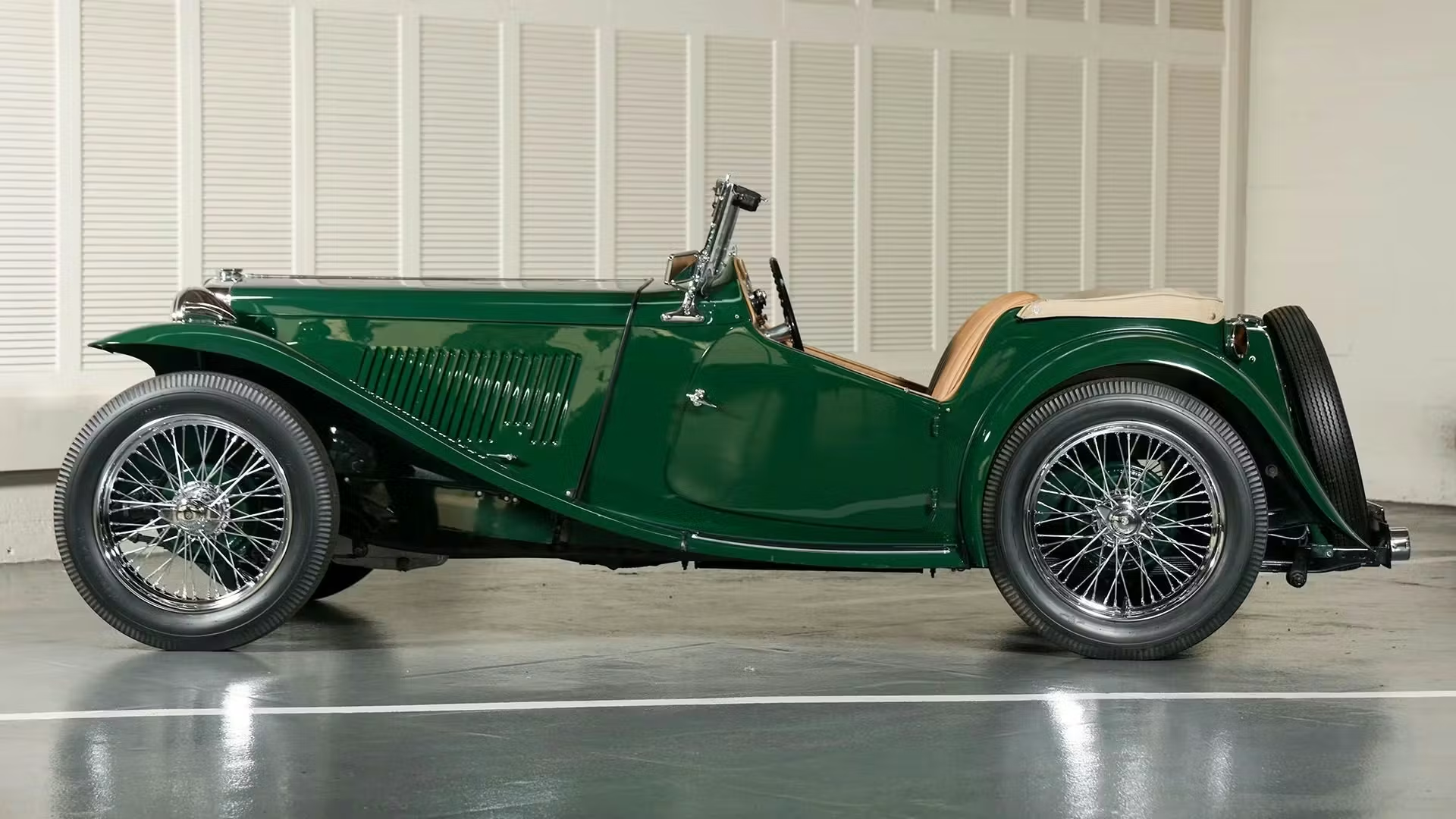
The enthusiasm was short-lived, as buyers began to crave a touch more civility, a better ride, and, in the U.S., left-hand drive. To address all that and more, in 1949 the TD Midget arrived with a new, more rigid, box-section chassis adapted from the Y-Type saloon. Its three main advances were independent wishbone front suspension, instead of the former solid-beam axle; rack-and-pinion steering; and a rear axle located under the now-upswept chassis rails, instead of over straight ones, which allowed more suspension travel.
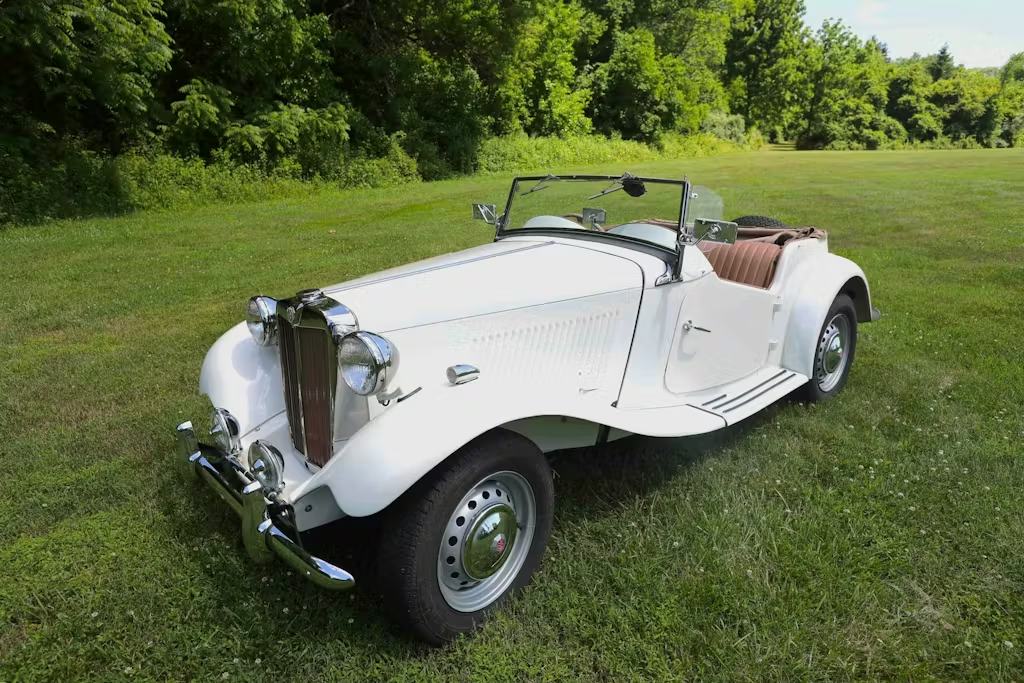
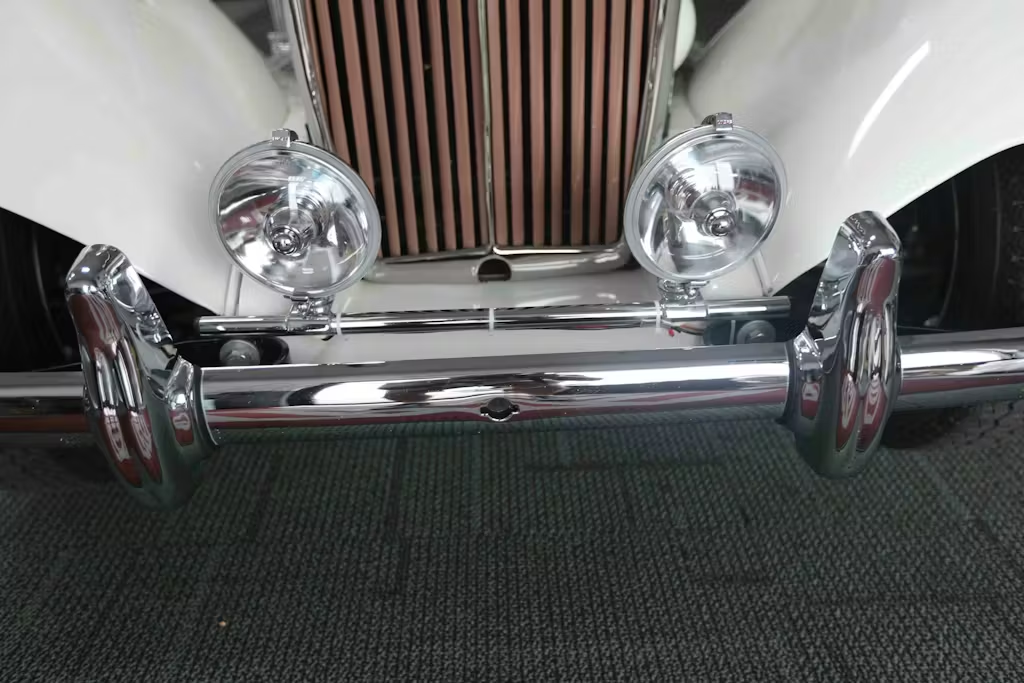
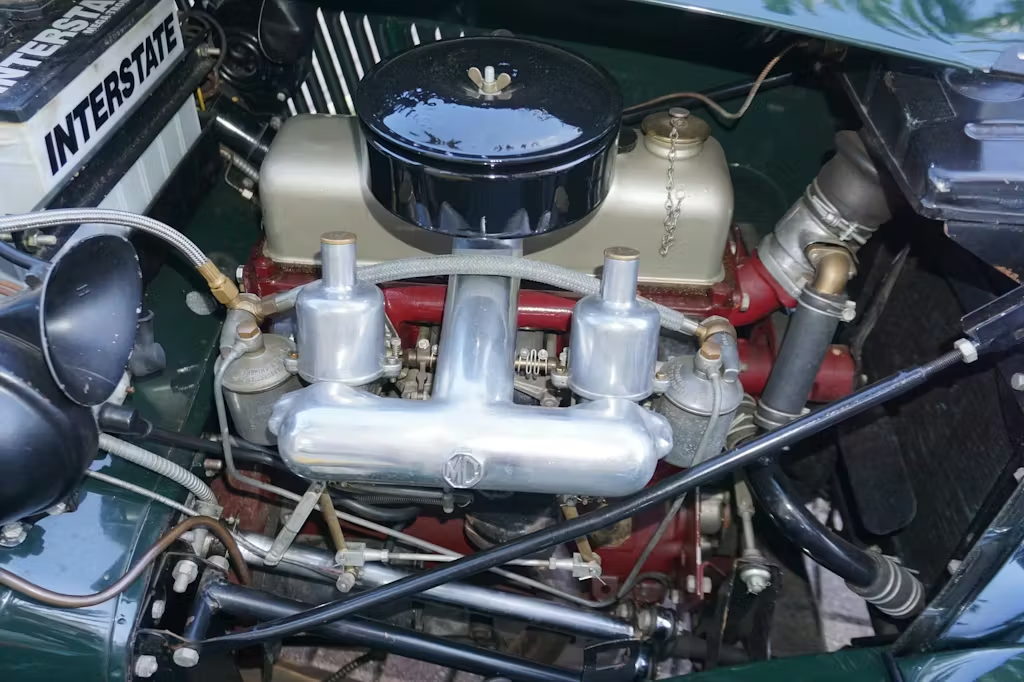
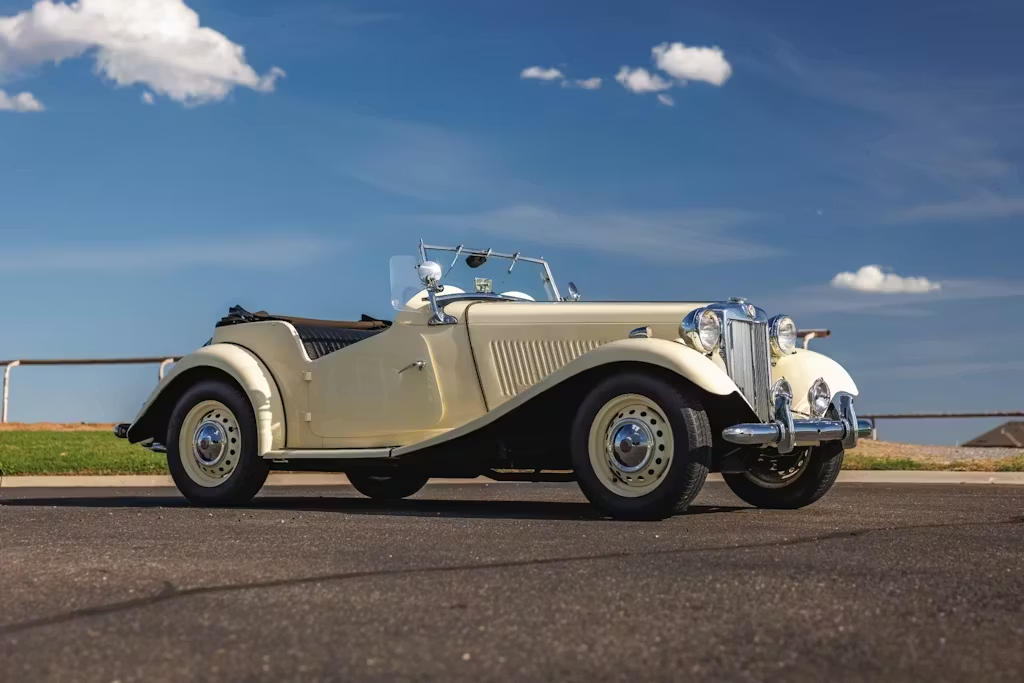
The new car was wider, with bumpers front and rear, and the 19-inch wire wheels gave way to pressed-steel ones of just 15 inches in diameter, albeit with sporty-looking perforations for brake cooling. There was still no fuel gauge, but at least a warning light gave notice of impending emptiness. The TD was a great success, with nearly 30,000 examples produced until the TF (there was no TE) replaced it in 1953.
MG’s designers wanted the replacement to be a much more modern-looking machine, but the top brass, by then all BMC, didn’t want competition for the recently launched Austin-Healey 100. Instead, the TD shape was updated with a lower hood line, a raked-back radiator grille, headlights faired into the front fenders, a more sloping tail, and a return to now-optional wire wheels.
There was slightly more power for the engine, too, now up to 58 hp thanks to higher compression and larger carburetors. Even more came in 1954, when the engine, designated XPEG, was bored out to 1466 cc for the 63-hp TF 1500.
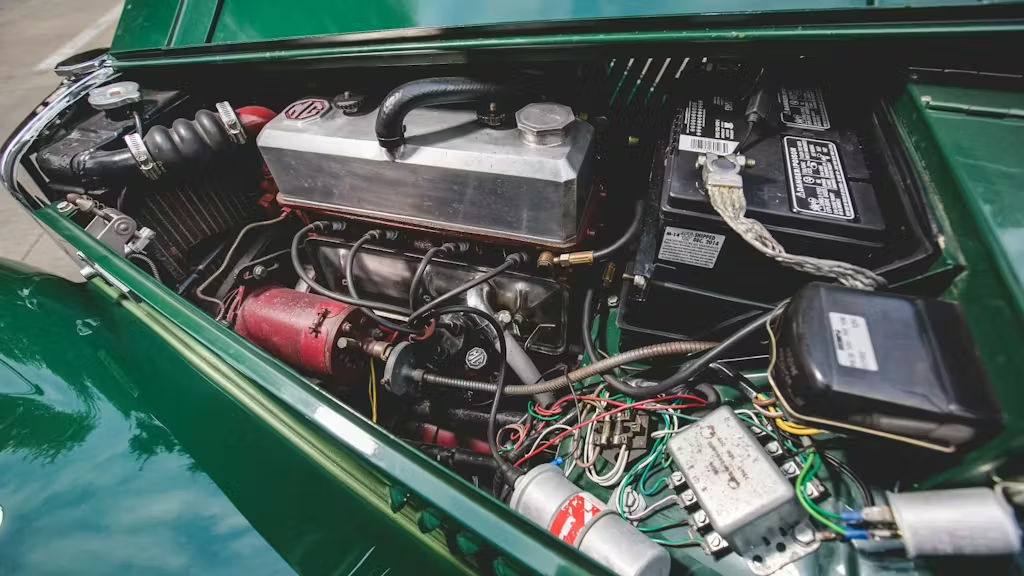
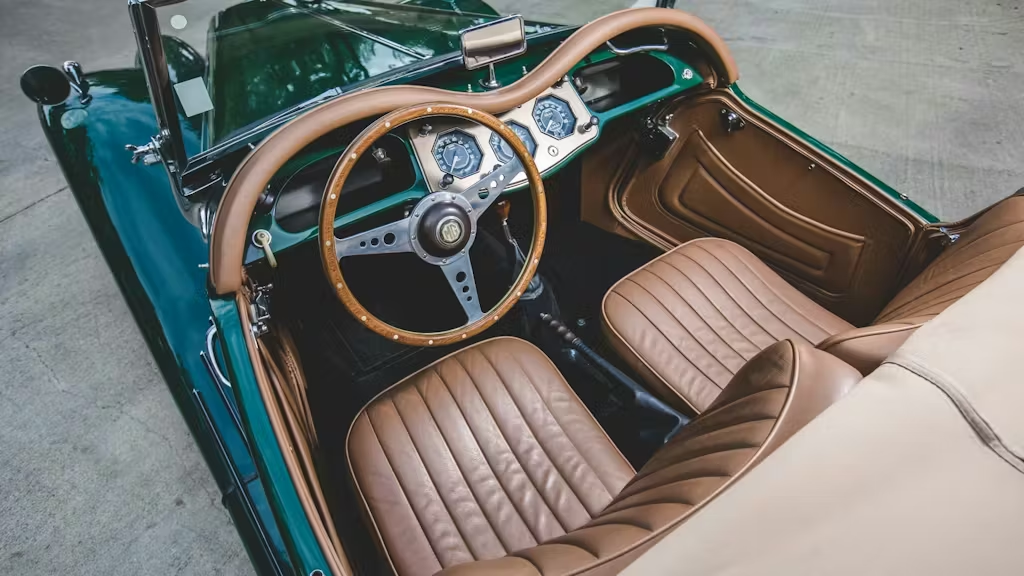
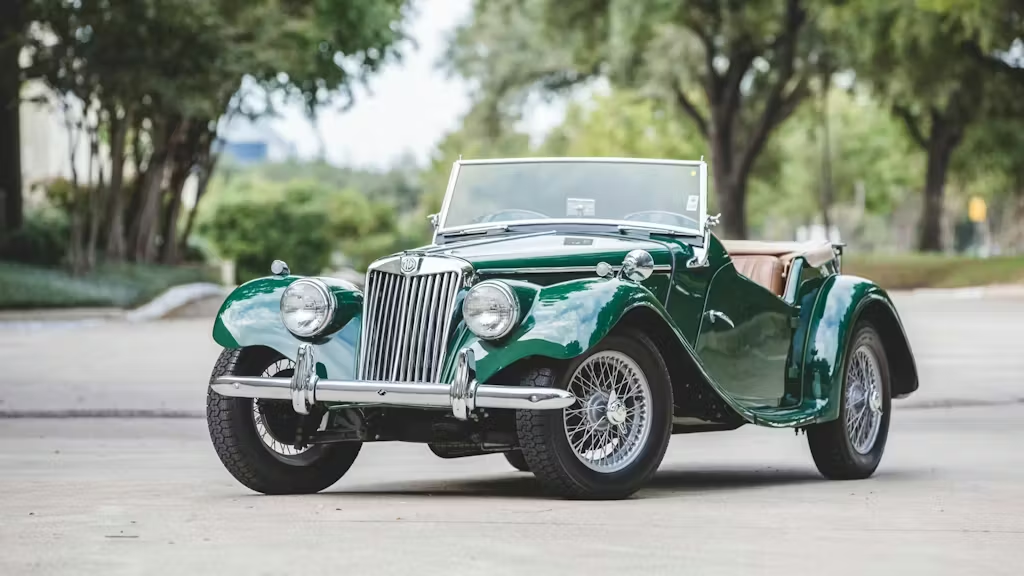
In 1955, after 9602 TFs had been built (of which 3400 were 1500s), the T-Type line finally ended when MG was at last able to launch the sleek-looking MGA roadster—whose underpinnings were still clearly TF-derived. There’s a later twist to the tale, though.
Naylor Brothers, a long-established MG restorer, built a short series of TFs in the mid-1980s from parts it had reproduced, updating the mechanicals to a British Leyland O-series engine, telescopic dampers, and disc front brakes. The result was the TF 1700 (with those from mid-production onward wearing the branding of the Hutson company, which took over from Naylor). The car was an interesting curio, but perhaps surprisingly, a genuine TF 1500 is a keener and more sporting drive.
What’s an MG T-Type Like to Drive?
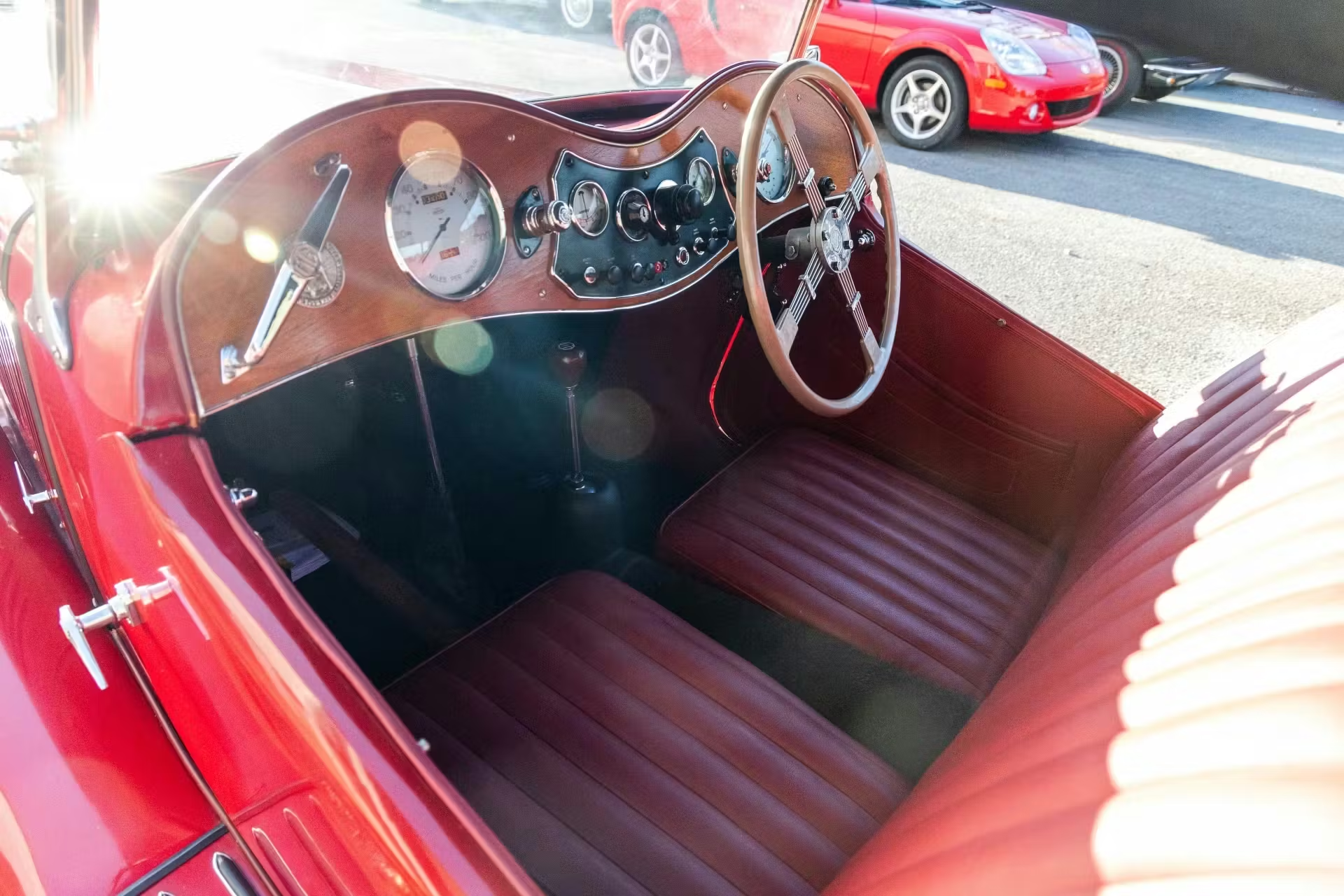
A TA, TB, or TC offers the full-on prewar experience: a restless ride as the chassis twists and the solid axles reach their narrow limits of travel; springy steering; drum brakes that need a good, hard shove; and the need to match your engine revs and gear-change speeds with a degree of mechanical sympathy as you dance with floor-hinged pedals and a roller-pad accelerator.
Soon, though, you’ll make sense of an early Midget’s garrulous messages, learn the required light touch on the giant steering wheel as you accept that the gentle meanderings are largely self-correcting, and enjoy the spirited blare from the twin-carb engine overlaid by the rich, melodic whine from the lower three gears. You become part of the machine, in other words.
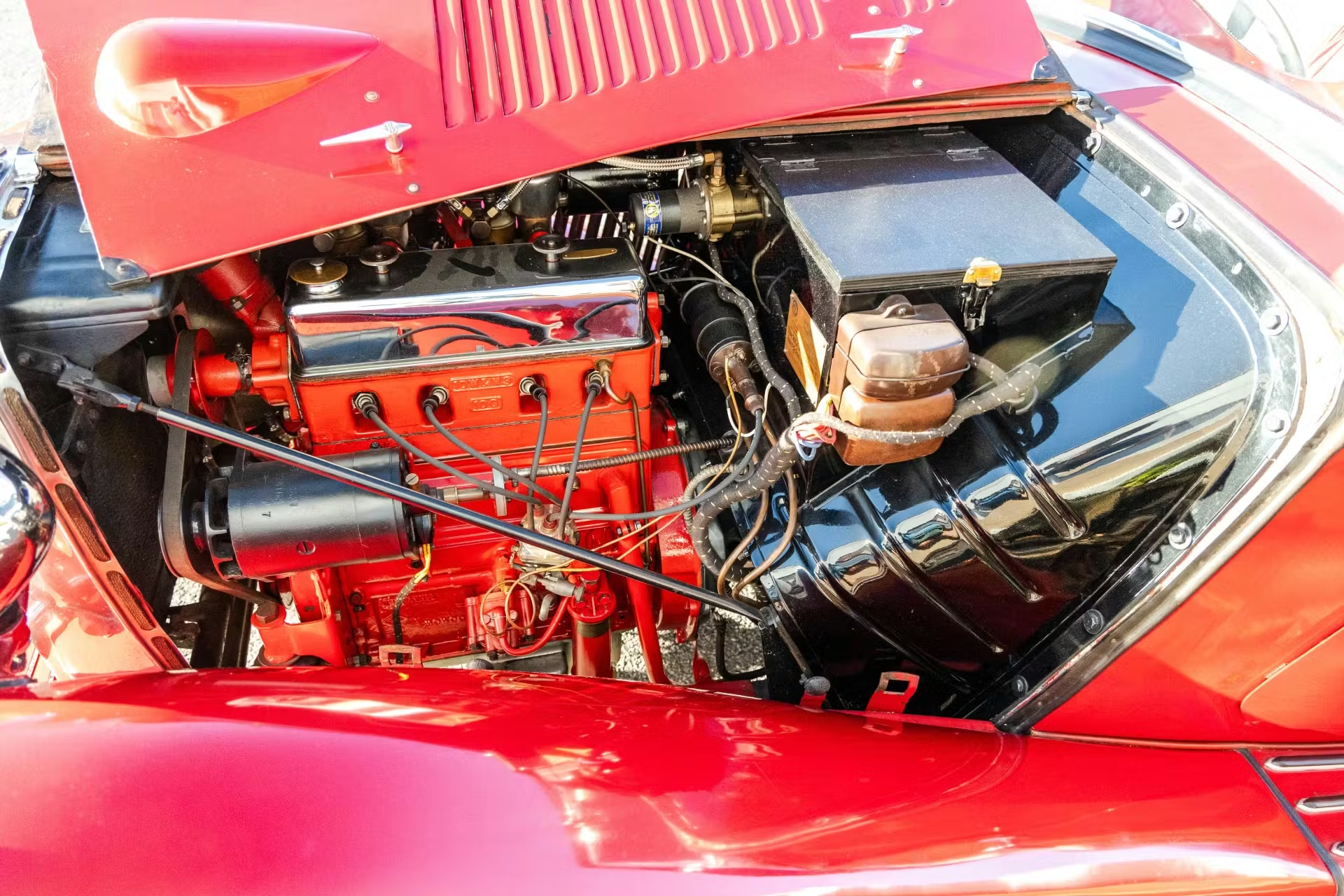
The TA is the least thrilling, because its engine really is not a revver, and attempting to make it so leads to mechanical carnage. Early ones have synchromesh on just the top two gears (no T-Types have it on first), so you’ll need to know how to double-declutch. An XPAG-engined car is a lot friskier, and on a fine day with the wind all around you there’s a great sense of being part of the three-dimensional landscape rather than just observing it.
There are no seatbelts, obviously. The doors are hinged at the rear, luggage space is meager (extendible with a luggage rack), and the primitive wipers are slow and have to be parked manually. The view down the hood, though, evokes nothing but joy. For the real racing look you can fold the windscreen down, but it’s best to fit either a pair of small aeroscreens or wear goggles. At the opposite extreme of engagement with the environment there are sidescreens to keep the worst of the weather out provided you’re moving, and a top as a last resort—but it takes a while to set it up.
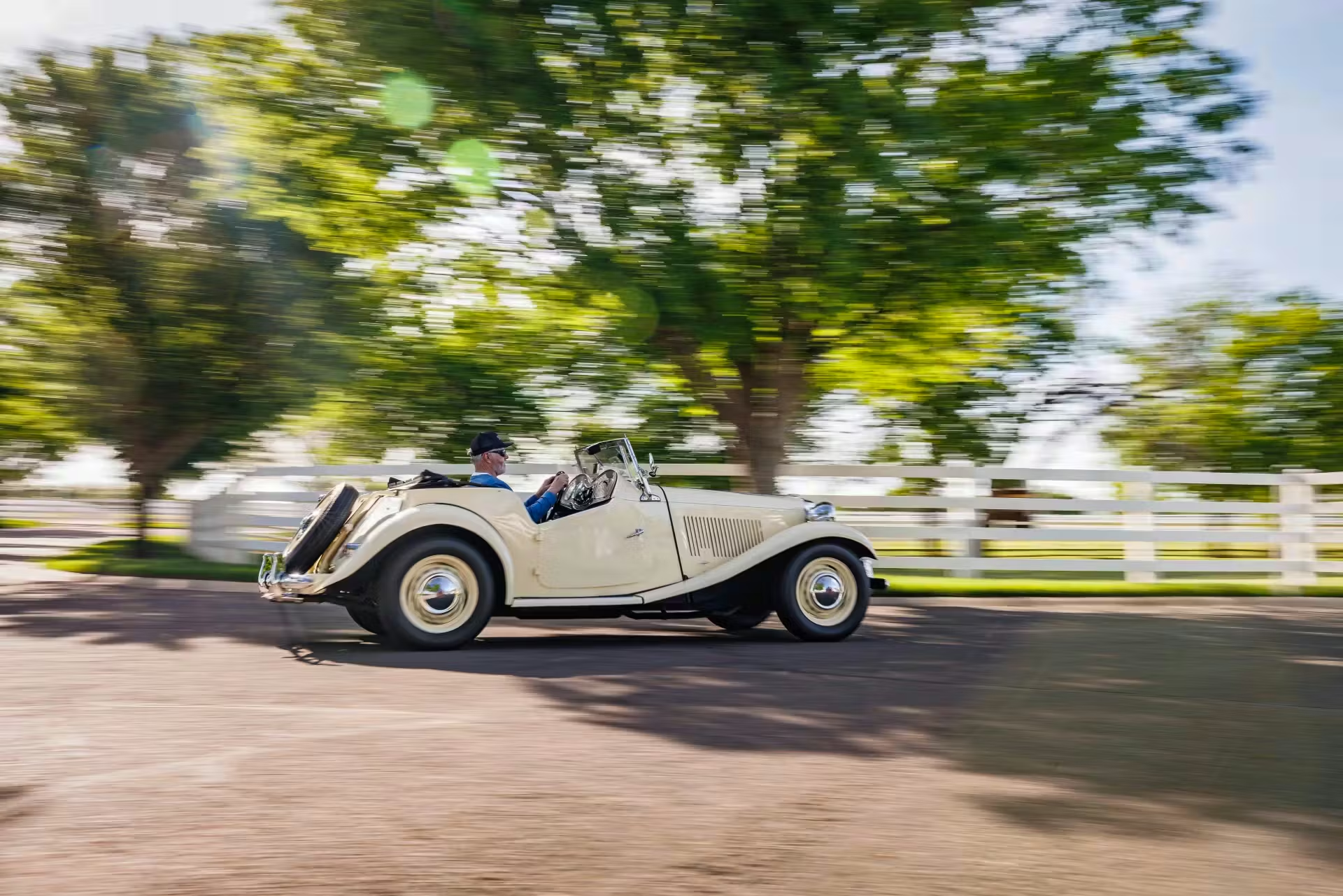
These MGs are fast enough not to get in the way on the highway—they’ll work their way up to 80 mph or so—but you’ll enjoy them more on back roads where there is no hurry. The same applies to the TD and TF, but they instantly feel a lot more modern than their predecessors. The way they move along the road is much more all-of-a-piece, their steering has an up-to-date sense of sharpness and speed of response, their brakes are more powerful, and the ride, though still lively, is a whole lot more absorbent.
The final TF 1500 has enough power and torque to mix entirely happily with modern traffic, and both the steering and the ride are significantly better than those of a contemporary Morgan. It’s a proper speedy sports car.
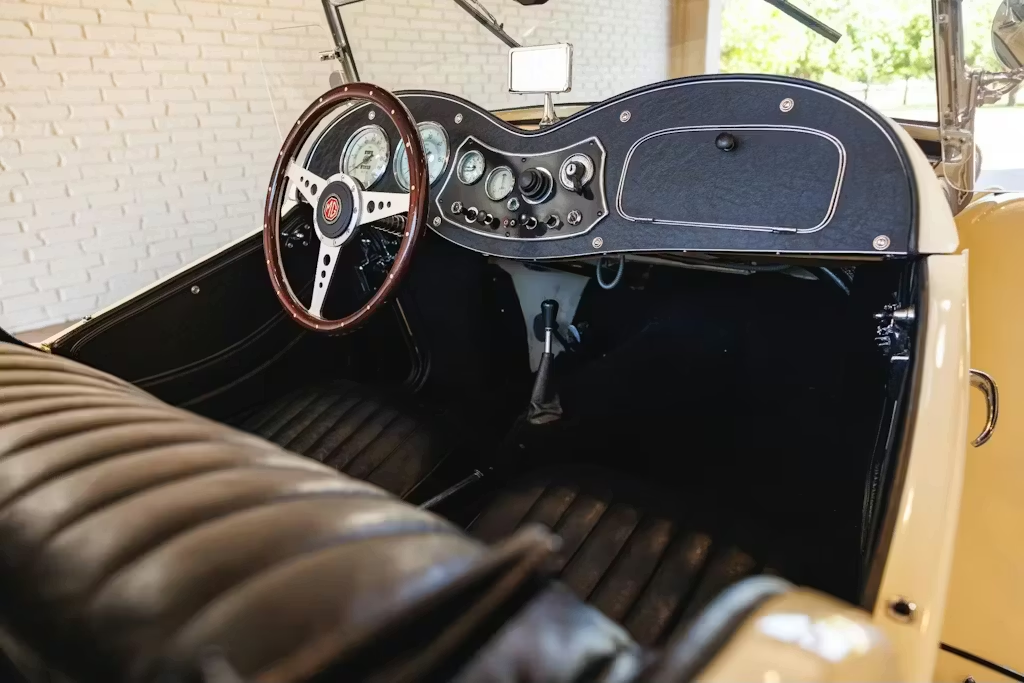
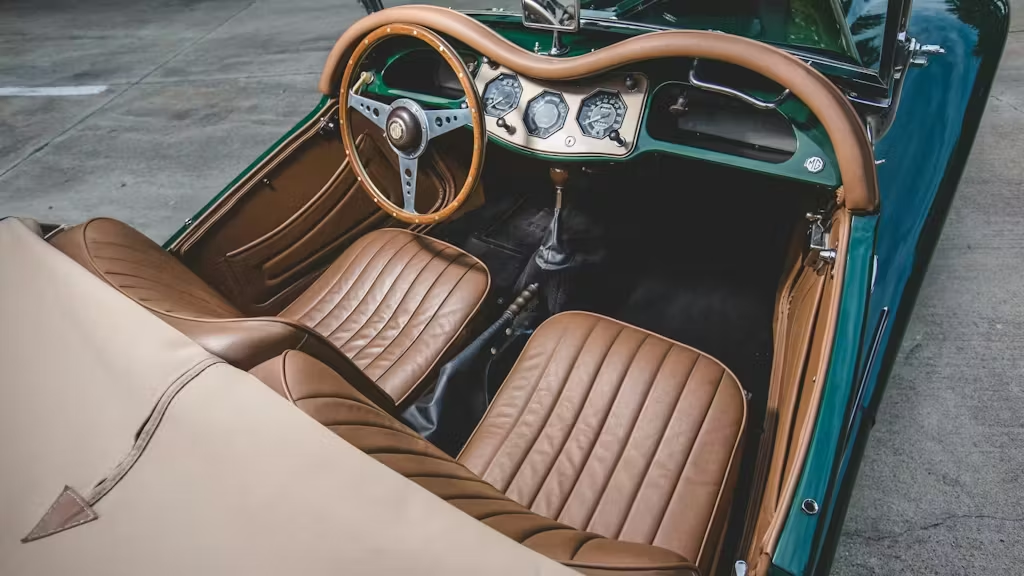
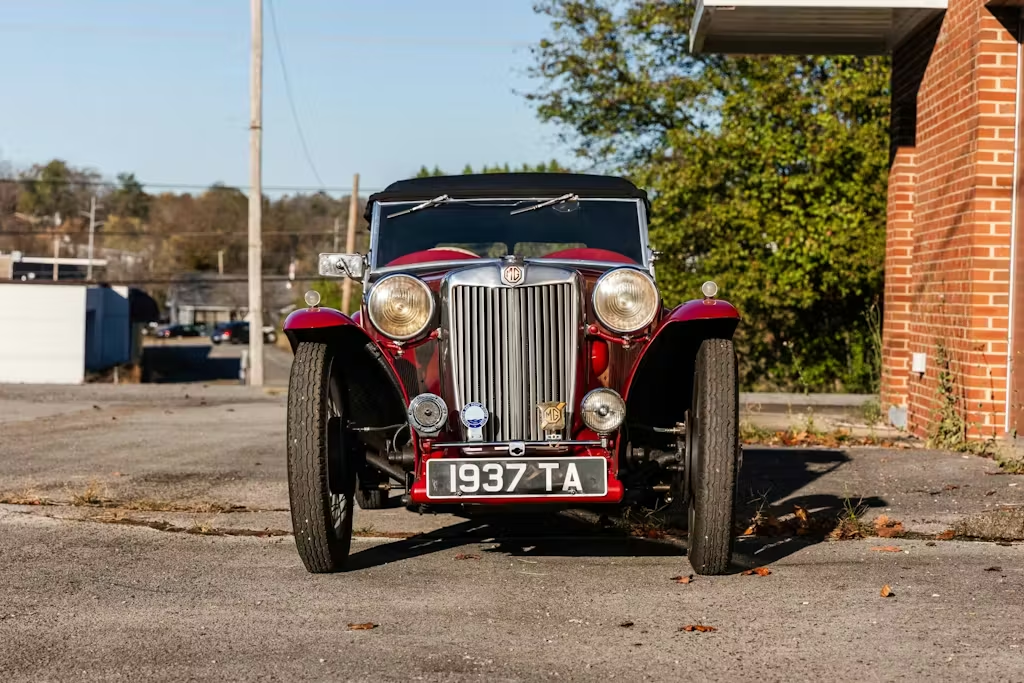
Because the MG T-Type story in America really begins with the postwar TC, and there simply aren’t many TAs or TBs here, we don’t value those early cars in our U.S. price guide. As a single point of reference, in April 2025 Mecum sold a 1937 TA in what looks to be #3 (good) condition for $27,500. In the U.K., where they are still rare but Hagerty does price them, both the TA and TB tend to sell for more than their TC/TD/TF counterparts.
Back on these shores, a slightly sad TC in #4 (fair) shape is worth about $12,600, with #3 (good) ones closer to $20K, #2 (excellent) ones around $38K, and concours examples (#1) right around $56,000. TDs, objectively better but subjectively less appealing with their raffishness watered down, are the bargain T-Types. Needy #4s are about $7000, while excellent ones hover around $21,000, with best-in-the-world examples not much more than $32,000.
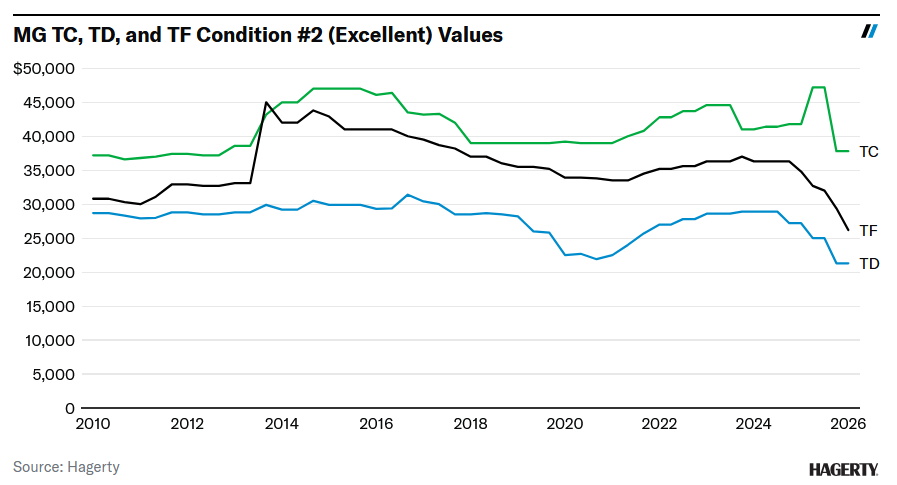
The TF has a stronger personality of its own and is a fine-looking machine. Values start at around $7600 for driver with needs, while an excellent car is about $26,000 and the very best tops $33K. Unsurprisingly, the 1500 version carries a premium, especially at the high end. A fair TF 1500 might cost $9000, while a concours example is $40,000, with excellent ones around $27,000 and good ones half that.
What to Look for When Buying a T-Type
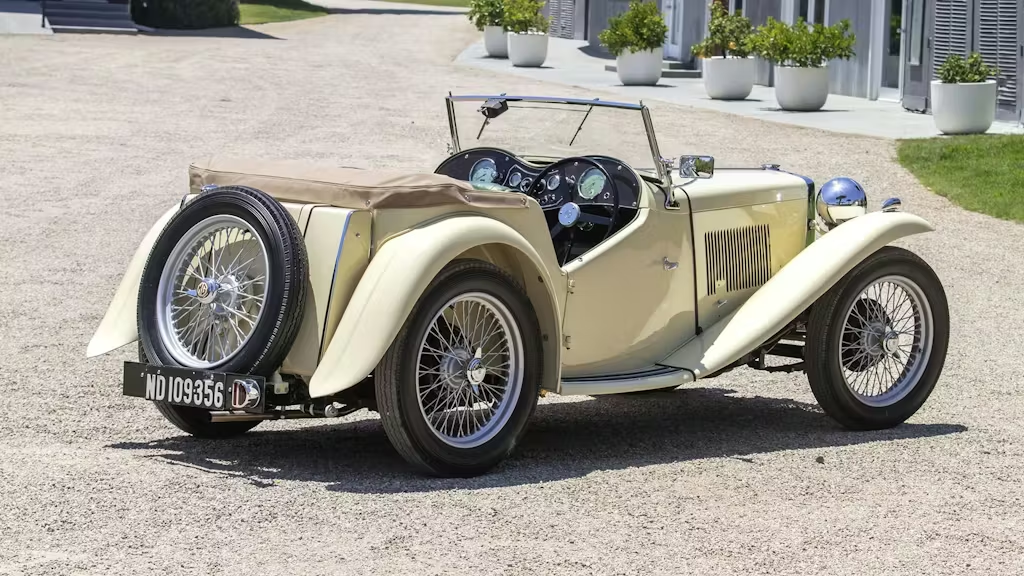
When shopping for a T-Type, first take a moment stand back and look at it from all angles. The ash body frame is very likely to have been rebuilt or replaced at some point, and there’s plenty of scope for it not to be quite straight or symmetrical. Looking at the front head-on: Does the center line of the center-hinged hood point exactly to the center of the car’s tail? Does the scuttle look level relative to the radiator, and does the same apply to the early cars’ front apron below the radiator? Are the door apertures the same length on each side, and do the doors fit properly? If they don’t, is it worn hinges or something more serious?
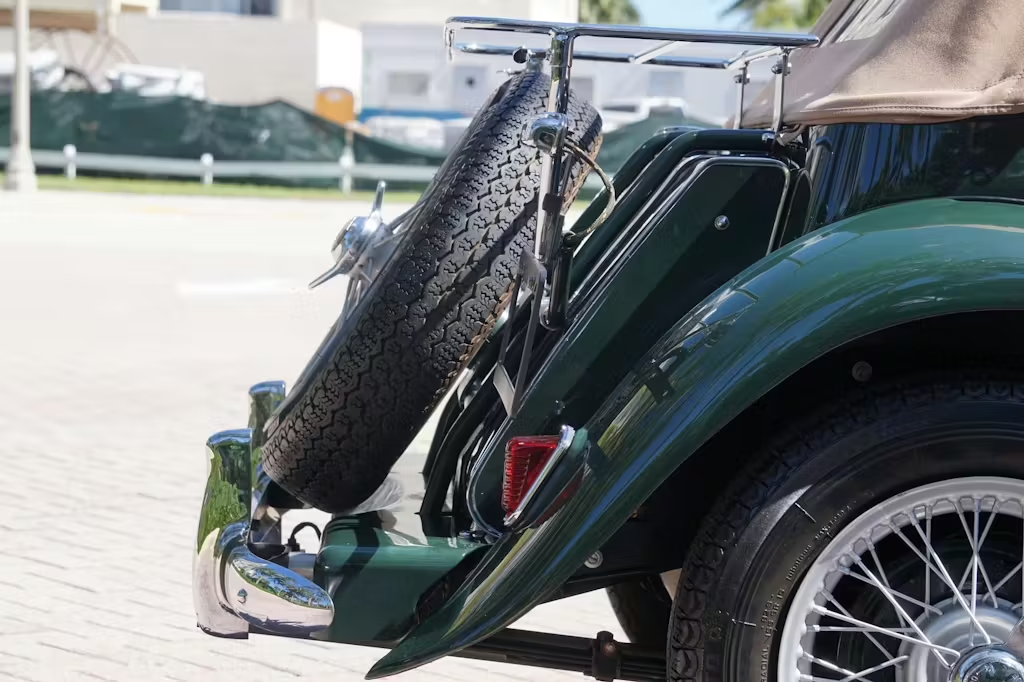
The steel body panels can rust, of course, but rot in the body-tub wood behind them is more serious. Have a good look at those sections you can get at, mostly the lower longitudinal rails and the uprights at the base of the scuttle and bulkhead structure, and check for softness. In a really bad case, you might be able to wobble the scuttle from side to side. The outer panels are fettled to fit each individual MG, and replacing them will involve much work.
A further check is to make sure the join line between the top of the hood and its side panels (the latter fixed and separate from the top panels on TFs, to the detriment of engine accessibility) aligns exactly with the seam on the scuttle section just below the windscreen’s support pillars. If the lines don’t align, something is amiss with the body frame.
The chassis itself is quite strong but cracks can appear, notably on TDs and TFs below the scuttle where the main rails’ box section becomes a channel section. The suspension is similarly robust, but check for play in the kingpins, perished rubber bushings (which will clonk on a test drive if really bad), leaking lever-arm dampers and, in earlier cars with a steering box, excess play on the steering. Up to three inches at the steering wheel’s rim is acceptable, less is much preferable.
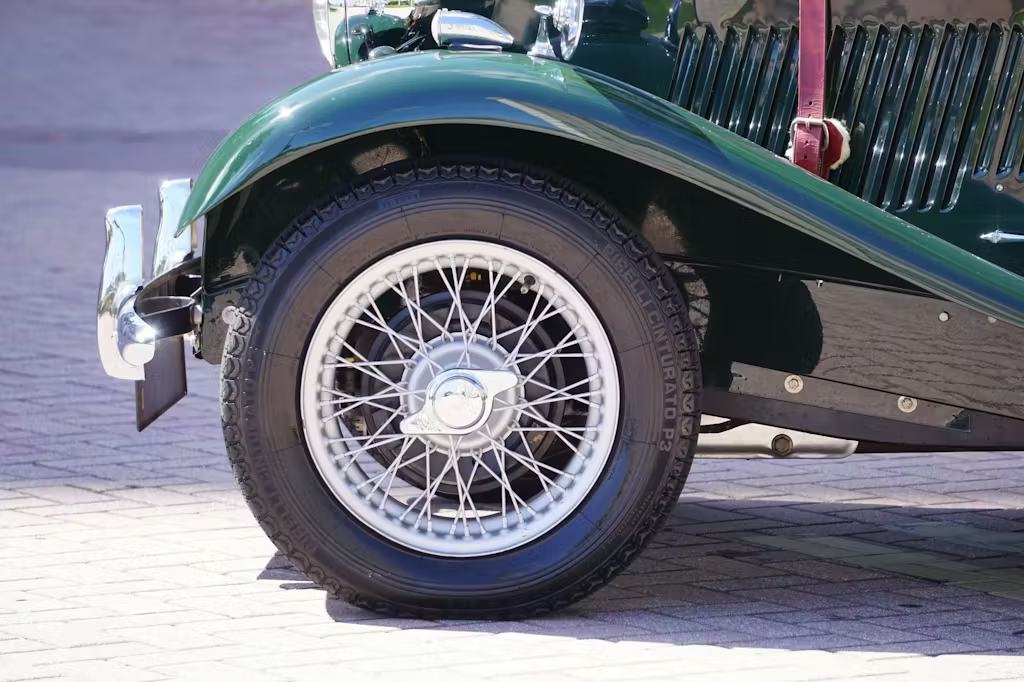
With wire wheels, tap the spokes and listen for a consistent “twang” from one spoke to the next, indicating even tensions. A clonk on initial acceleration can be caused by worn splines in the wire wheels’ centers, or in the hubs on which they fit, or both. Whatever the cause, it will need to be fixed.
The engines, both XPAG/XPEG and the earlier TA unit, coded MPJG, are straightforward and mostly robust, over-revved MPJGs apart. Usual checks for rattles, smoke, and oil pressure (ideally 40 psi or over at speed) apply. Some TAs have been retrofitted with XPAG engines over the years, which makes them less “pure” but a better sports car. The gear change should be precise and easy provided you don’t rush it, but don’t expect too much from the synchromesh.
The electrical system is simple, primitive even, by modern standards, but check that everything works and that the ammeter shows a charge when the engine is running above idle speed. It’s also worth checking that all the weather equipment—top, side screens, tonneau cover if you’re lucky—is present, working, and in usable condition.
And check the tires. Cars like this often spend long periods not being used and might cover few miles, so even if the tires have plenty of tread they could still be old and hard, to the detriment of grip. You at least want them to have been made this century…
If the car you’re considering needs work, don’t despair. All T-Types are straightforward, simple things, with excellent club support and a broad network of specialists.
Which Is the Right T-Type for You?
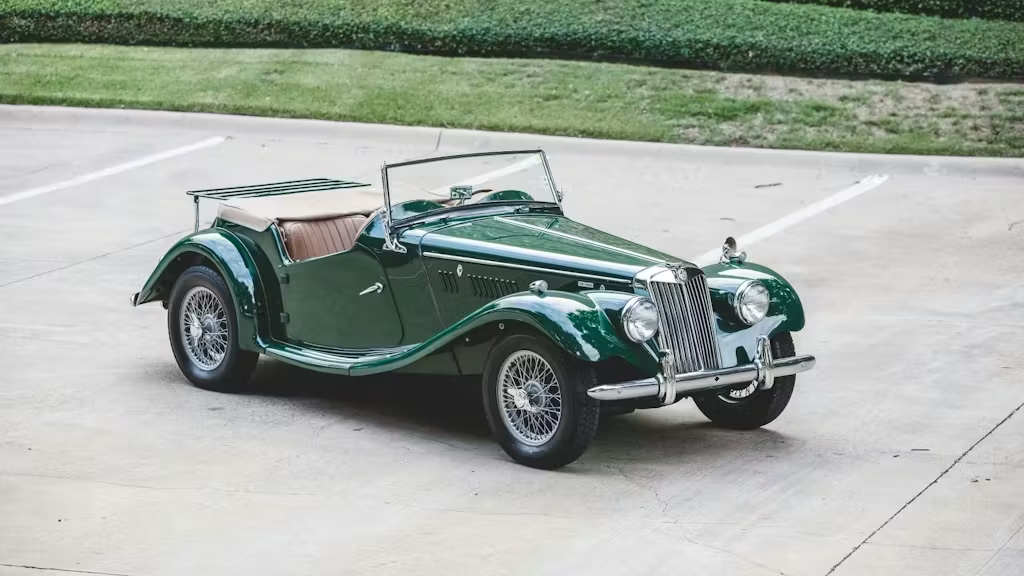
Availability is important, of course, but the TA and TB can be imported if so desired. And so it depends on whether you like the prewar vibe, or you want something with rakish old-Midget looks but a driving tactility recognizably related to modernity. The optimum prewar experience comes with a TB, but they are hard to find. A TA re-engined with an XPAG is virtually a TB; a purist wouldn’t approve but it sounds to us an ideal remedy for the standard TA’s misjudged motor.
The TC best represents the Midget’s car-cultural significance as the archetypal small British sports car. A TD is a bit of an apology, and a bit of a compromise, as reflected in its lower values. And the TF? It’s the best driving machine, especially in 1500 form, and the most usable T-Type, as well as one of the best-looking. It would be our choice—but a really good TC, offering prewar charms with under-skin updates, would also be hard to resist.
Report by John Simister
find more news here.