H.P. Lovecraft. Aleister Crowley. Helena Blavatsky. Many are the names of those who either dabbled in the occult or dreamed of indescribable horrors, demonstrating cosmic indifference to human suffering. Depending on who you ask, the guys who designed the electrics on the 1976 Aston-Martin Lagonda might’ve been among that devilish group.
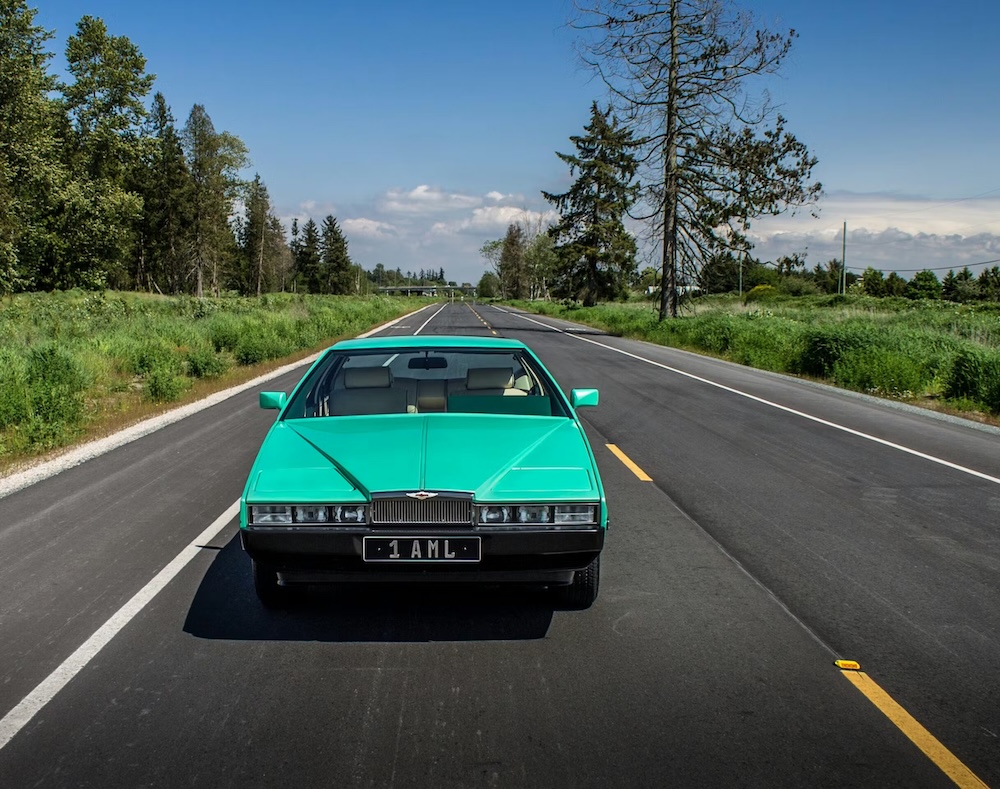
At the Mechanics of Madness, it’s the 50th anniversary of the cutting-edge luxury sedan that would make even squid-faced Cthulhu quake in his scales. For half a century, the Aston-Martin Series 2 Lagonda has been terrifying restoration houses with its nightmarish complexity and reputation for unreliability. It is rare, it’s outlandish to look at, and there are those who say it has the power to warp mortal minds.
Well, not quite. They can be quite reliable. If you’ve got a genius electrical engineer handy, that is. More on that in a bit.
Someday, All of This Will Be Yours. No, Not the Curtains
First, time to hop in your British Leyland-built time machine and fire it up after having to bump start it because Lucas, Prince of Darkness, has drained the battery again. Set the time dial to 1974, and set Aston-Martin’s bank account dial to disturbingly in the red.
Many luxury automakers these days have enjoyed decades of success through careful product planning, highly detailed brand management, and an aversion to risk-taking. Aston-Martin in the 1960s and 1970s took a rather different approach.
Traditionally, the company operated on basically the same business plan as the Swamp King from Monty Python and the Holy Grail. It was first founded in 1913, but then went bankrupt and sank into the swamp in the 1920s. Then, David Brown (where the “DB” comes from) bought Aston in 1947. It sank into the swamp and was rescued from debt by a Birmingham business consortium in 1972. This time…
It burned down, fell over, and sank into the swamp. Aston-Martin shut its doors in 1974.
However, all was not lost, just a bit swampy. A new group of businessmen, American, Canadian, and British, bought Aston-Martin from the receiver for just over a million pounds sterling. The plan: forget going after the flighty sports car and grand tourer markets—draw a bead on Bentley and Rolls-Royce with the production of a world-class luxury sedan.
Now, there was a bit of foreshadowing here in that the recently bankrupt Aston-Martin had already tried this idea. In 1974, the company showed off a four-door version of the DBS sedan called the Lagonda. Like the DBS, it was handsome enough, with 320 hp worth of V-8 power and an available five-speed manual transmission. They sold seven of them.
Lagonda is a very old British marque of Anglo-American origins. It was founded in 1906 by a former operatic tenor from Springfield, Ohio. Wilbur Gunn, the singer in question, had found America to be insufficiently rewarding to his art, so he headed off to Europe, where he joined a touring company. Further success was middling, so he decided to start a car company instead.
The name Lagonda was taken from a Shawnee placename from near his native Springfield. Prewar British enthusiasts in the audience might note the later existence of the Springfield-built Rolls-Royce Ghosts, though those cars were made in a town of the same name in Massachusetts.
Gunn was relatively successful for several years, and Lagonda managed to survive the tumult of the Great War. He died in 1920, and the company continued until the mid-1930s, when it was bought up by Dublin-born Alan P. Good. Good managed to lure W.O. Bentley over from Rolls-Royce, and V-12-powered Lagondas were among the most desirable British prewar cars. After the war, Lagonda was folded into Aston-Martin by David Brown.
So, here Aston had a potential sub-brand with enough heritage to shoulder the strain of being the name of an entirely new vehicle for the marque. Trouble was, simply building a conventional sedan version of existing Astons wasn’t going to cut it. They needed something daring. And they got it.
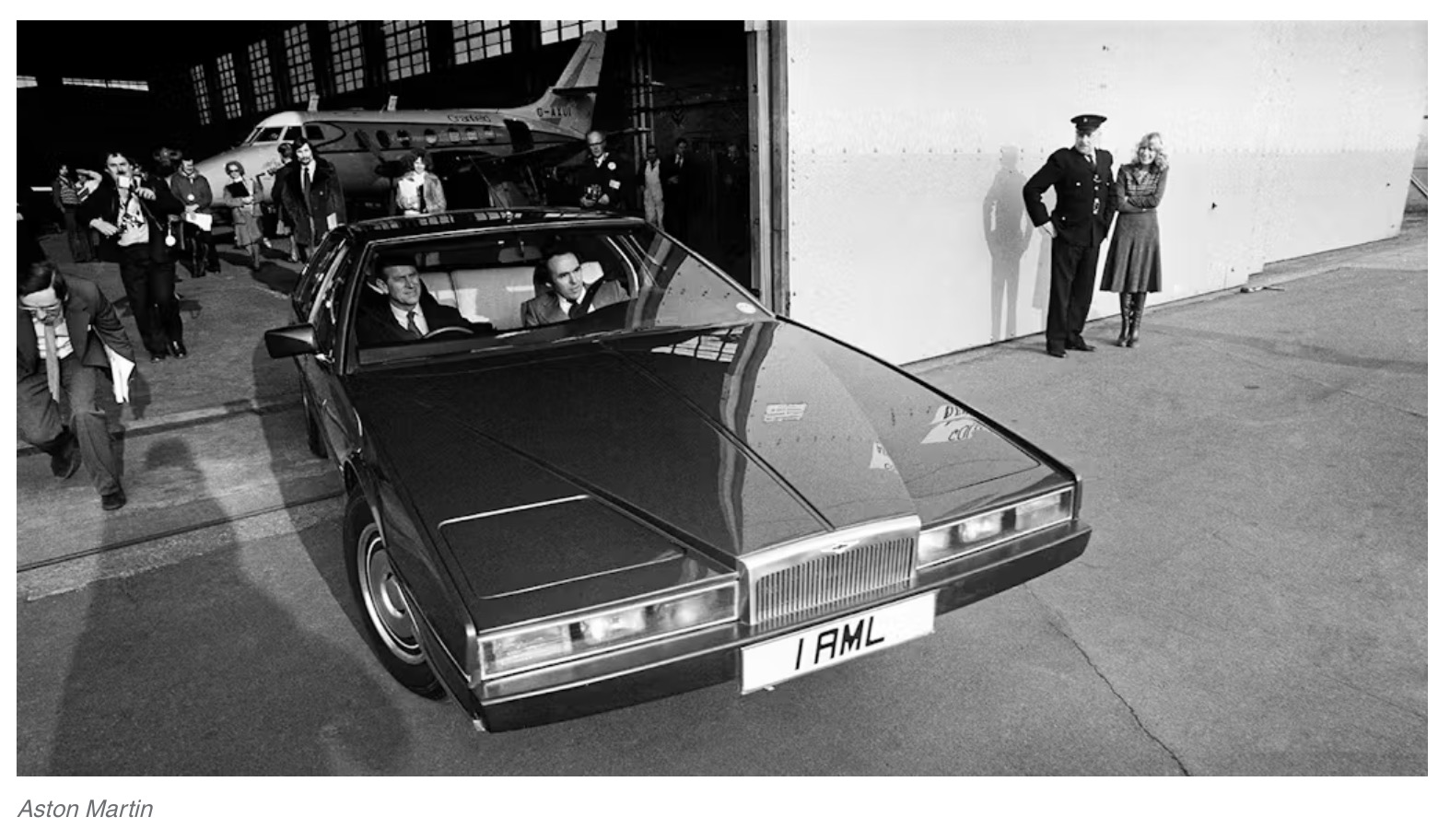
William Towns was an experienced designer when he joined Aston-Martin in 1966, but not so experienced as to be stuck in a rut. He styled the original S1 Lagonda with its more conventional looks, but when tasked to break the mould, he did.
Taking inspiration from the “folded paper” designs of Gandini and Giugiaro, he sketched out a truly wild-looking shape. Interestingly, the shape took only about a month to finish, a similar time frame as that of the Studebaker Avanti, another design that flew in the face of established norms.
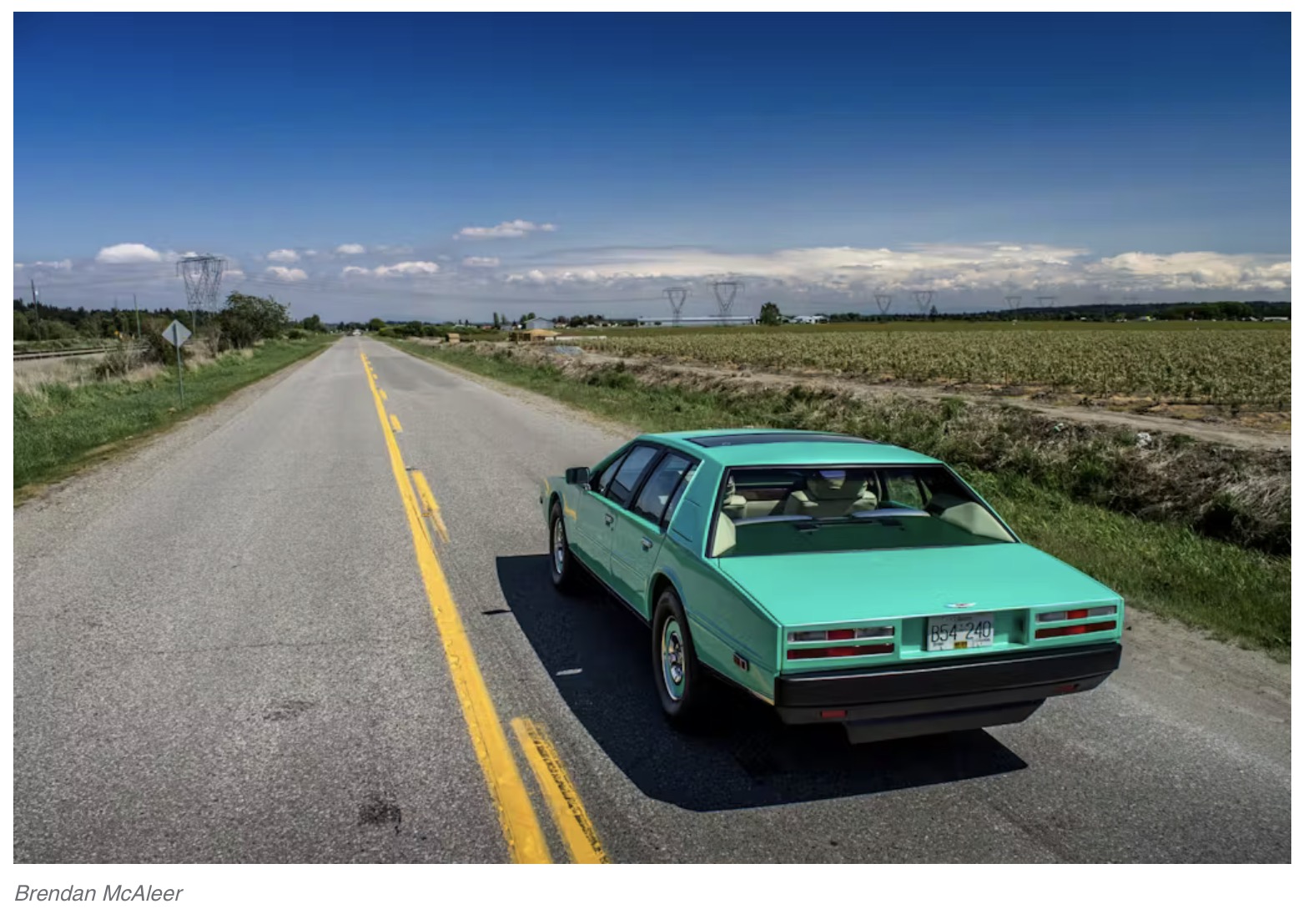
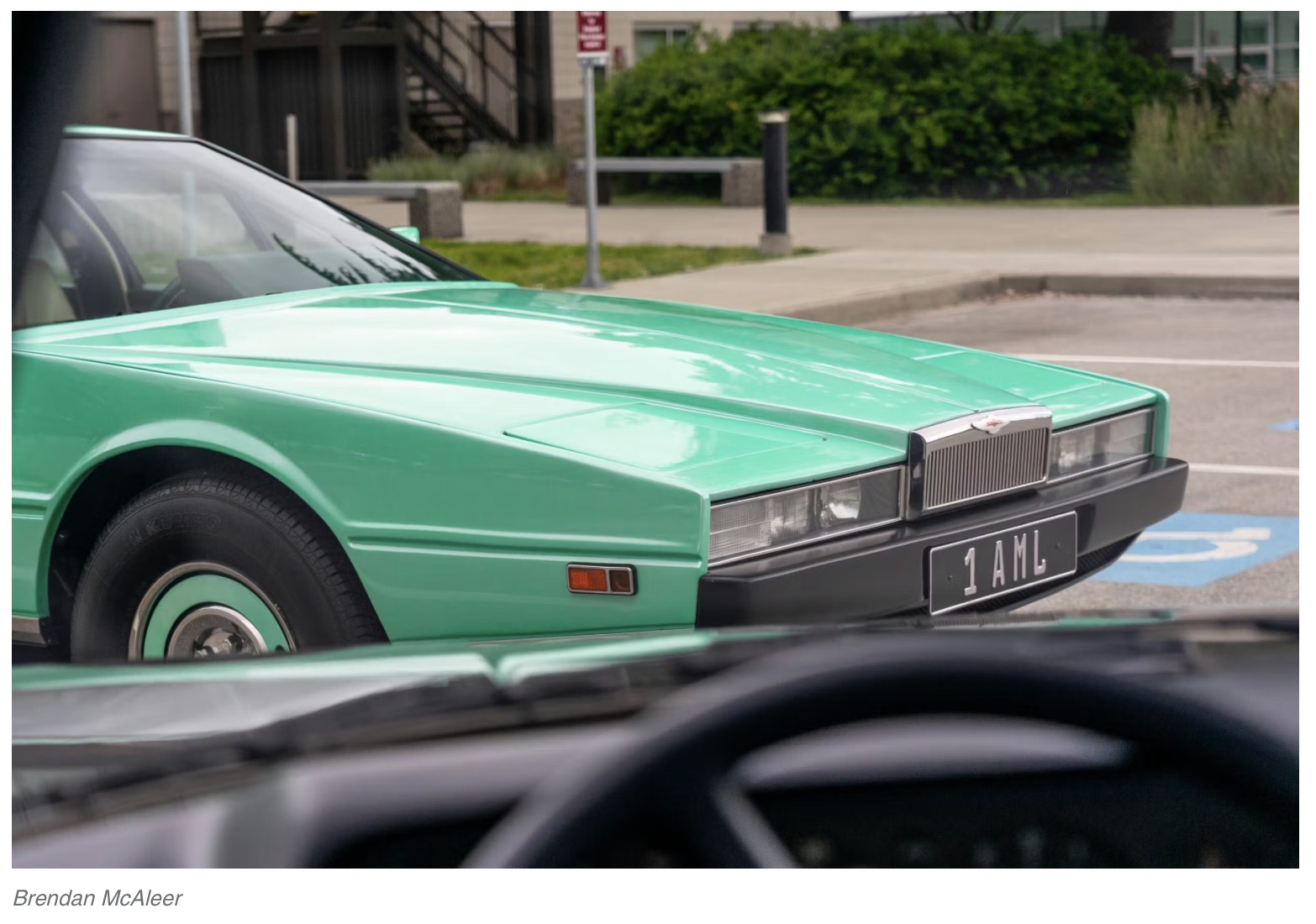
It’s not just the angularity that makes the Lagonda so shocking. Where a contemporary Rolls-Royce might have a bluff and upright front end like a cruise liner, the nose of the Lagonda is as low as a sports car, sleek and pointy. It looks, overall, like the kind of spaceship Lando Calrissian would park on his Cloud City landing pad, except with four wheels.
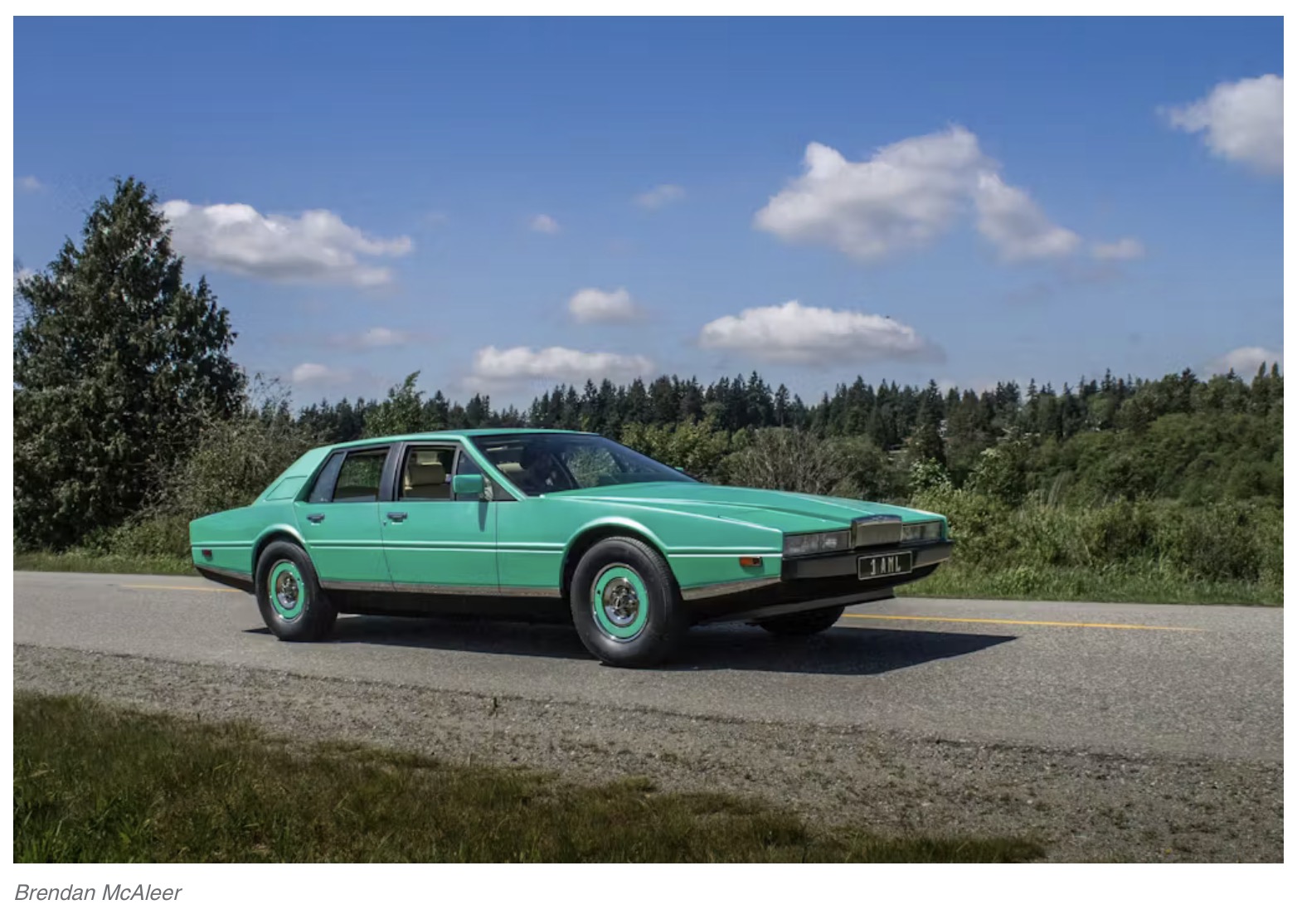
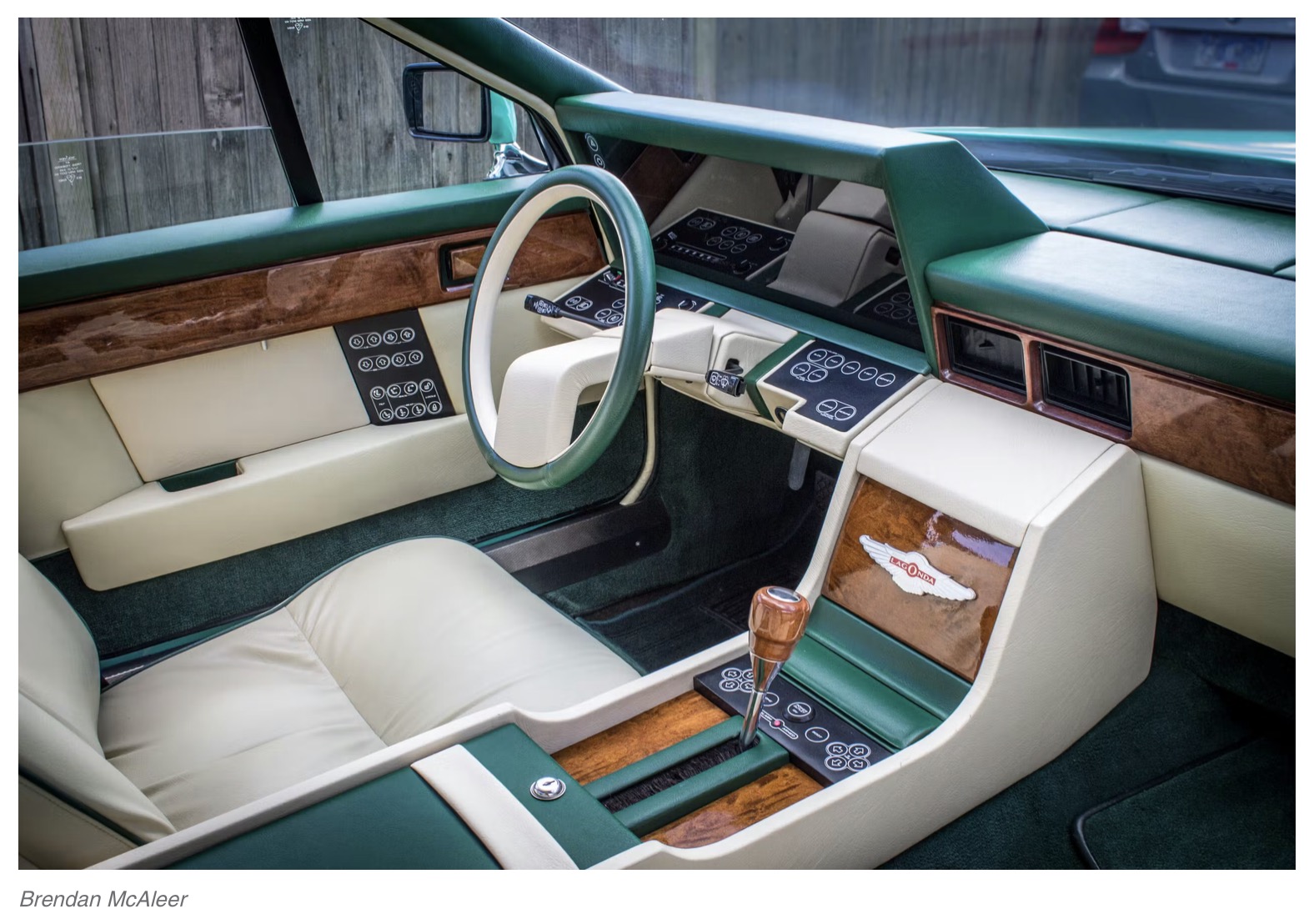
If the exterior grabbed the public’s attention, the interior design held it. The American part of the consortium that owned Aston was one Peter Sprague, an entrepreneur who had made his fortune in the nascent high-tech industry of California. Sprague’s ownership of National Semiconductor was directly responsible for the Lagonda’s futuristic controls and digital instrumentation, based around a hugely expensive 16-bit printed circuit card.
The short way to explain how badly the Lagonda’s launch went is to note the time between the reveal of the prototype in October of 1976 and the delivery of the first production car in 1979: Three years of redevelopment work, more R&D dollars spent, and embarrassing launch failures.
Eventually, though, with electronics now from aircraft specialist Javelina Corp., the Lagonda was out in the world. And it was a commercial success. Thanks to the combination of take-no-prisoners looks and bragging rights as the fastest four-door production car of its day, the huge expense attracted sufficient buyers, including much-needed Middle Eastern petro-dollars.
A Man with No Fear
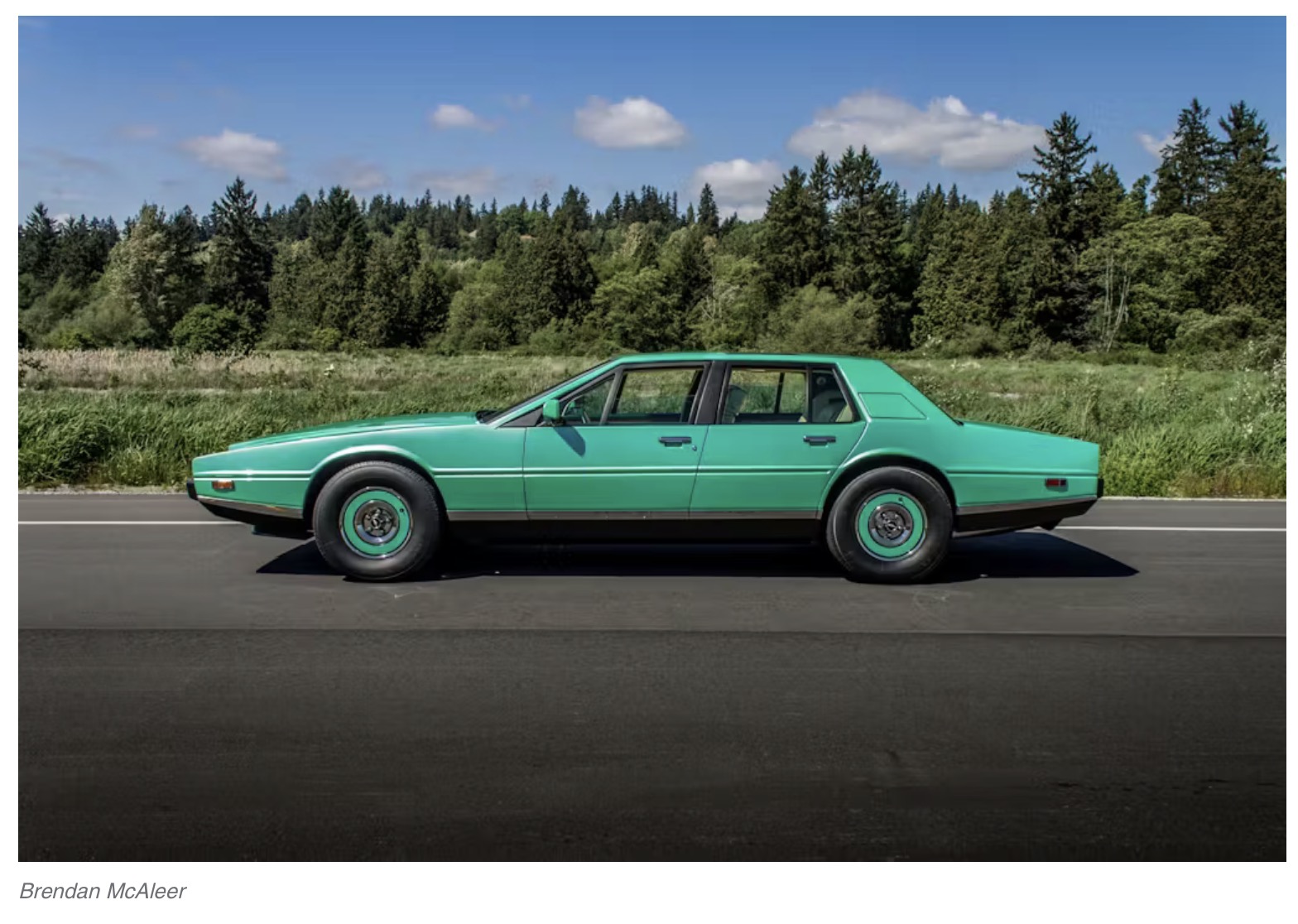

As complex as its birth was, so too is the rebirth of a Lagonda. The mechanical bits of the car are relatively conventional: a 5.3-liter V-8 that’s nearly identical to other Aston-Martin V-8s of the time, and a three-speed automatic transmission sourced from Chrysler. The V-8 makes a little less peak power than in a DBS, at 280 hp, but offers a suitably torquey 350 lb-ft of grunt.
The suspension is also conventional, albeit with self-leveling rear dampers. The bodywork, while coachbuilt, also doesn’t offer much that would unsettle an experienced restoration shop. The electronic systems are the snag.
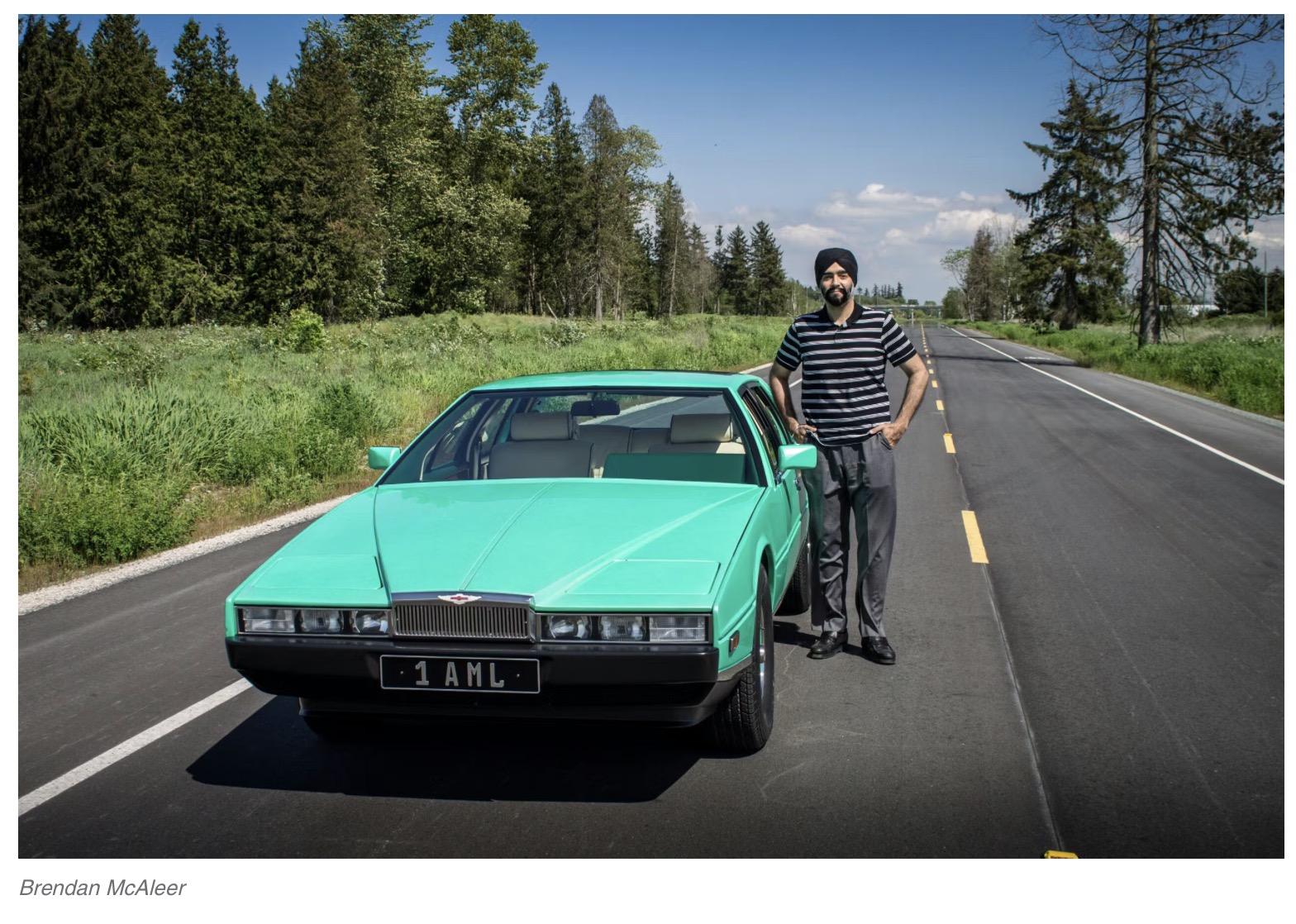
Enter Harjeet S. Kalsi of British Columbia. An electrical engineer by trade, Kalsi long dreamed of owning a Lagonda, and found one when on a family trip to Kuwait in the late 1990s. The car was a basket case, but undeterred, he got it home and began wrenching.
Self-effacing and modest, Harjeet is nonetheless one of those people who combine a natural mechanical aptitude with a willingness to take on challenges. Having never before done bodywork or other cosmetic repairs, he taught himself leatherwork and woodwork to refresh the interior, along with fiberglass repair and painting to restore the exterior. In his home garage.
Next, he replaced the car’s by-now jury-rigged electrical system with his own redesigned relays. The Lagonda has a ridiculous amount of these, and replacing them actually made the car function as its designers had intended.
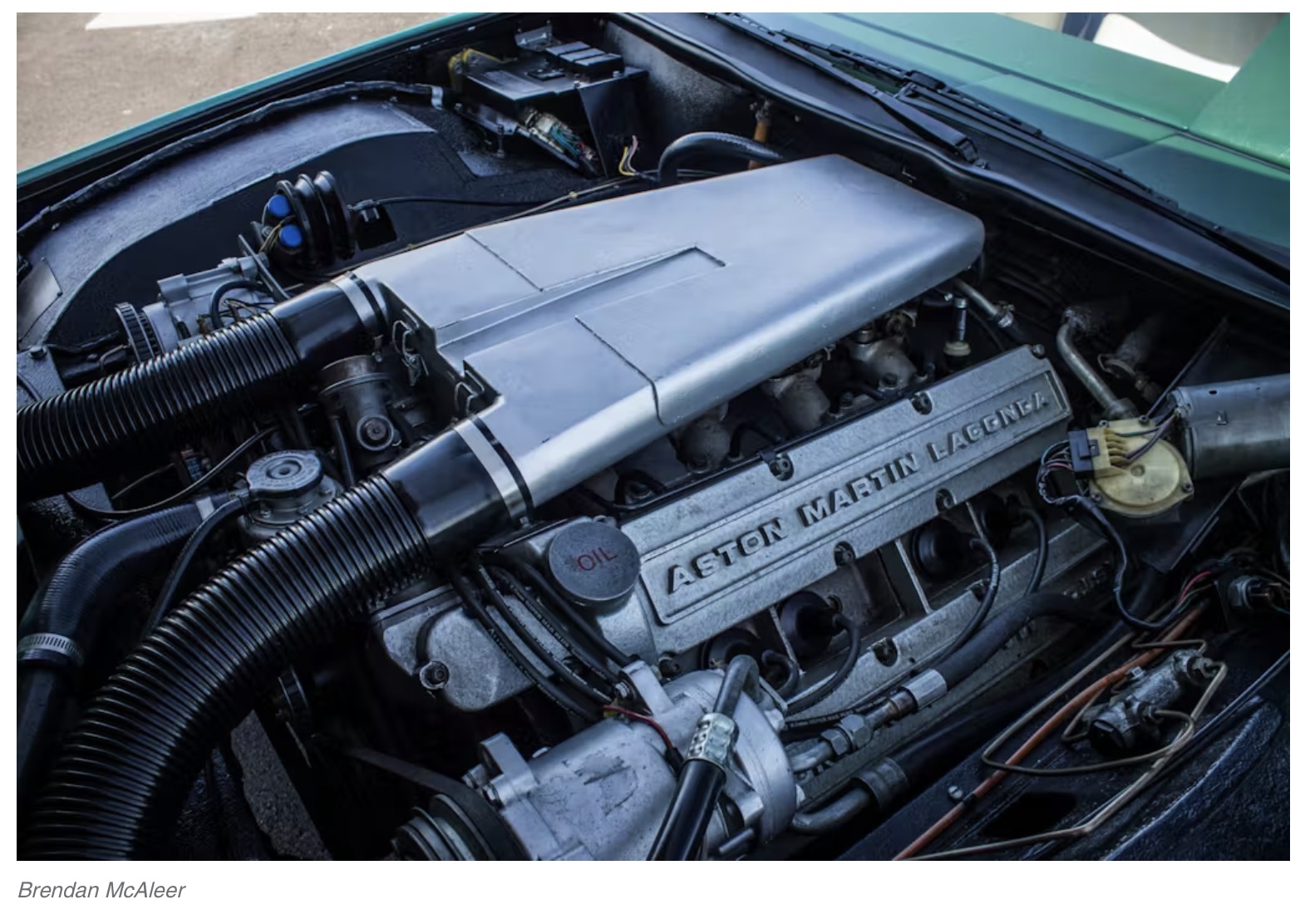
According to Kalsi, the original mechanical latching relays used by Aston-Martin were advanced for the time, but subject to becoming jammed by dust or corrosion. They also appear to have originally been built for 24V use in non-automotive applications, rather than the Lagonda’s 12V system. His hand-assembled electronic impulse relays retain factory functionality, but without the mechanical glitches.
As a result, his 1982 Lagonda has enjoyed roughly two decades without a stumble. The only insanity it projects is mostly down to the incredible paintwork, which routinely captivates bystanders in amazement.
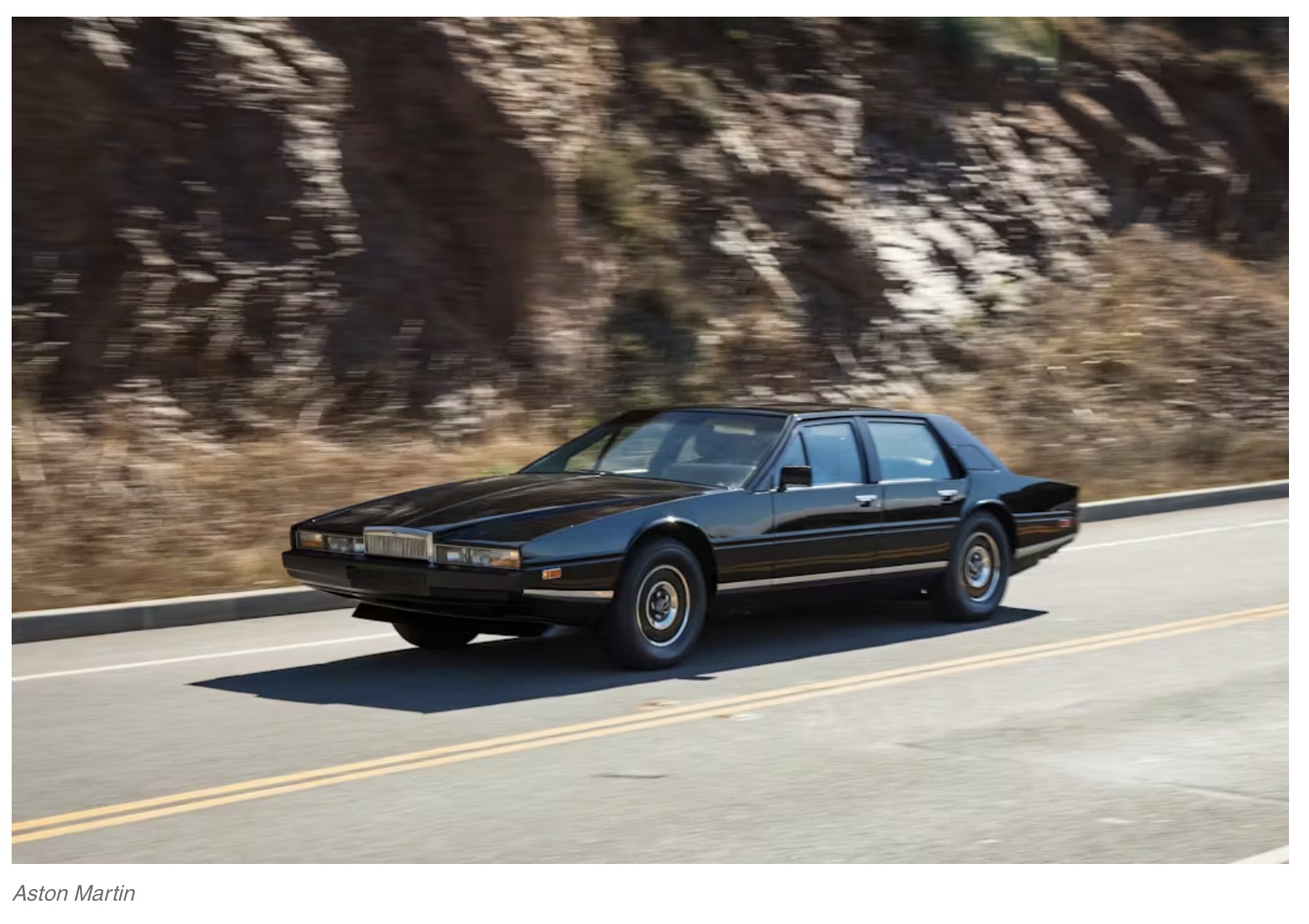
Just under 650 Lagondas were built between 1976 and 1990, which does mark the car down as a success for Aston-Martin. Roughly one-sixth of these still show up as registered in the U.K., though most of them aren’t taxed for on-road use.
But thanks to Kalsi, Towns’ Lagonda gets to celebrate its fiftieth anniversary with the hope of seeing more of them actually on the road. A restoration shop in West Yorkshire is one of the latest to use his replacement impulse regulators in getting a Lagonda running again.
It remains one of the most mind-bending cars ever made. Yet the Aston-Martin Lagonda did not hail from some dimensionless void in the cosmos. It was built by human hands. By human hands it is maintained, a 1970s vision of the future, at home in the present at last.
Report by Brendan McAleer for hagerty.com