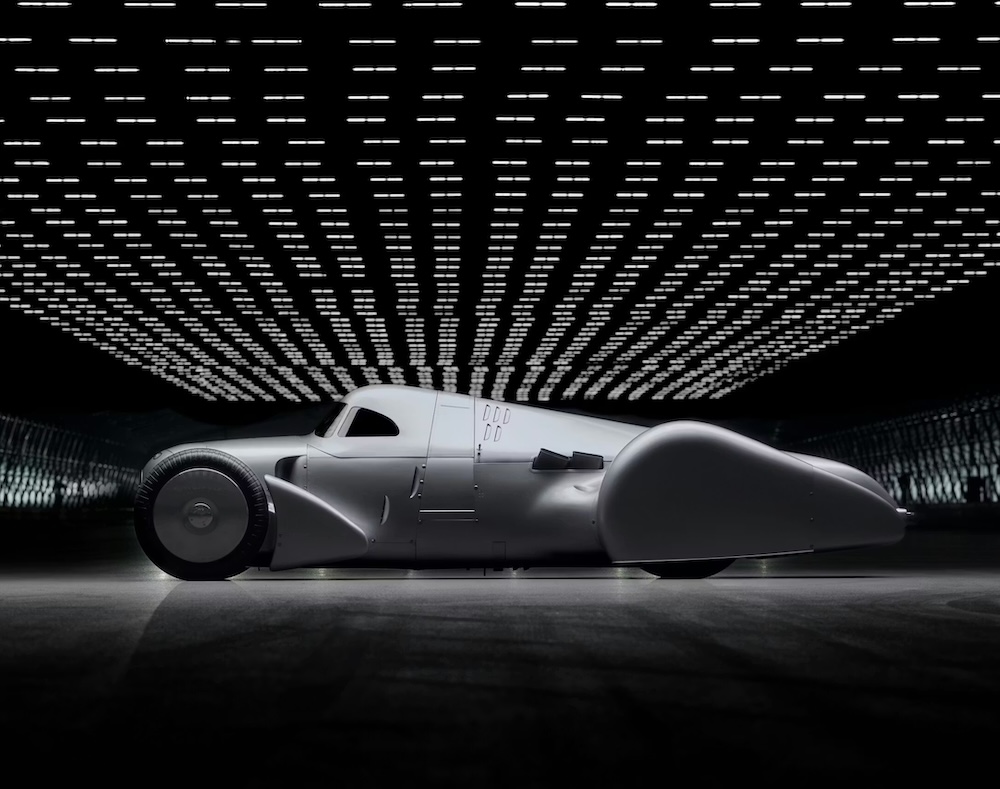
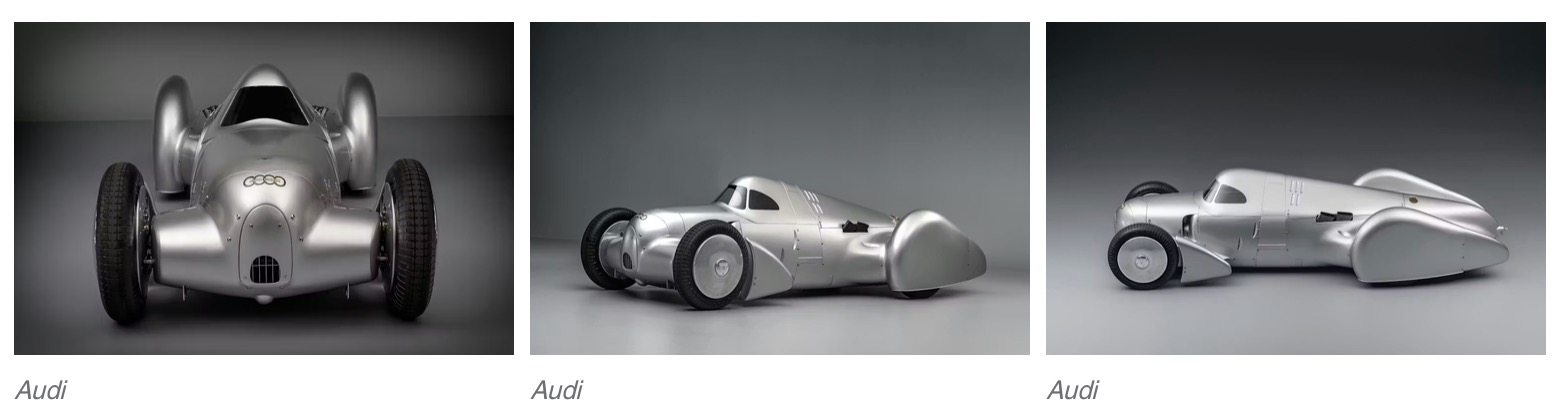
Auto Union, from which modern-day Audi descended, set a long list of speed records in the 1930s with a line of highly futuristic race cars called Silver Arrows. Most were destroyed shortly after their racing careers ended, so Audi has commissioned a British restoration shop to recreate a record-setting Auto Union streamliner called the “Lucca.”
The original, supercharged V-16 streamliner set a flying-start mile record on February 15, 1935, with an average speed of 199 mph and a top speed of 203 mph. Those figures were highly impressive for the era, but what’s perhaps even more impressive is where they were achieved. Auto Union didn’t take the Silver Arrow to a race track but to what Audi simply describes as a straight section of the autostrada, the Italian equivalent of a public highway. (Why? It was February, and the weather was terrible in Hungary, their first choice, and snow was still on the ground in northern Italy.) The record was set near the town of Lucca, just 20 km northeast of Pisa.
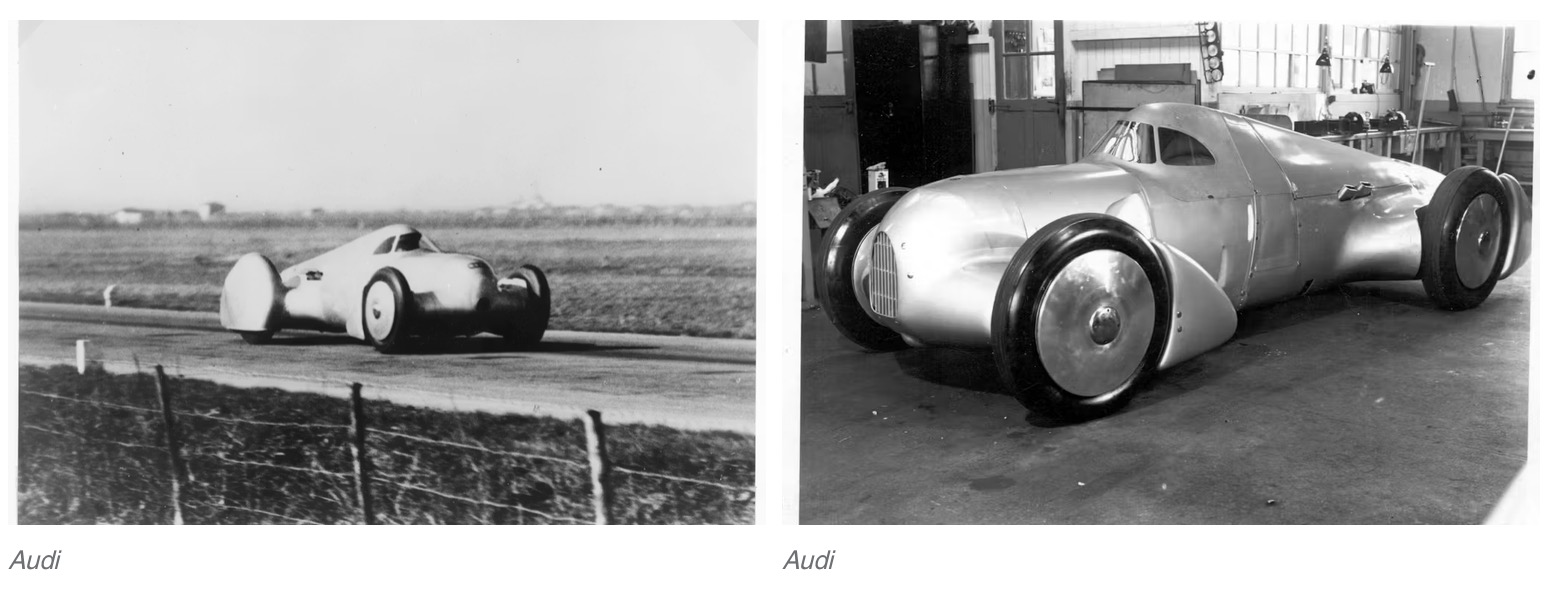
Driven by Hans Stuck, father of Hans-Joachim Stuck, the “Lucca” was celebrated as the fastest race car in the world by the period press, which nicknamed it the Rennlimousine. The car also gave Auto Union a big victory in its top-speed war with Daimler. Just months before, in October of 1934, Rudolf Caracciola in a Daimler-Benz had run a flying mile at an average speed of 196.7 mph.
The Lucca later competed in the fifth edition of the International Avus Race in Berlin, but it retired due to cooling problems. What happened to the car after is a little murky. At the time, race cars were often scrapped when they became outdated, which happened quickly, especially at that time. Only a handful survived, including two restored in the 1990s.
Without a donor car, Audi had to rebuild the Lucca from scratch. It gave the project to a well-known British shop named Crosthwaite & Gardiner, an outfit that has already restored several Silver Arrow cars. Audi provided period photographs and documents from its archives to help technicians, but the build nonetheless required more than three years. It was finally finished earlier in 2026.
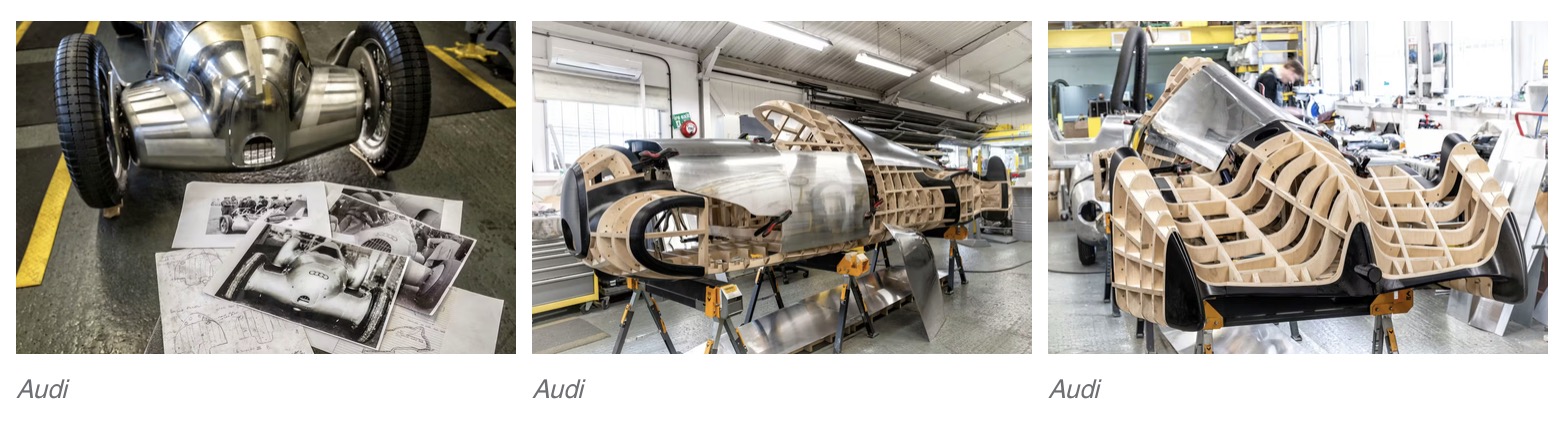
Spare parts aren’t available, so all of the Lucca’s parts were made by hand specifically for it. The streamlined body was particularly difficult to manufacture, the shop points out, but the final product boasts a drag coefficient of 0.43. Audi requested several small modifications, including fitting the ventilation system designed for the 1935 Berlin race.
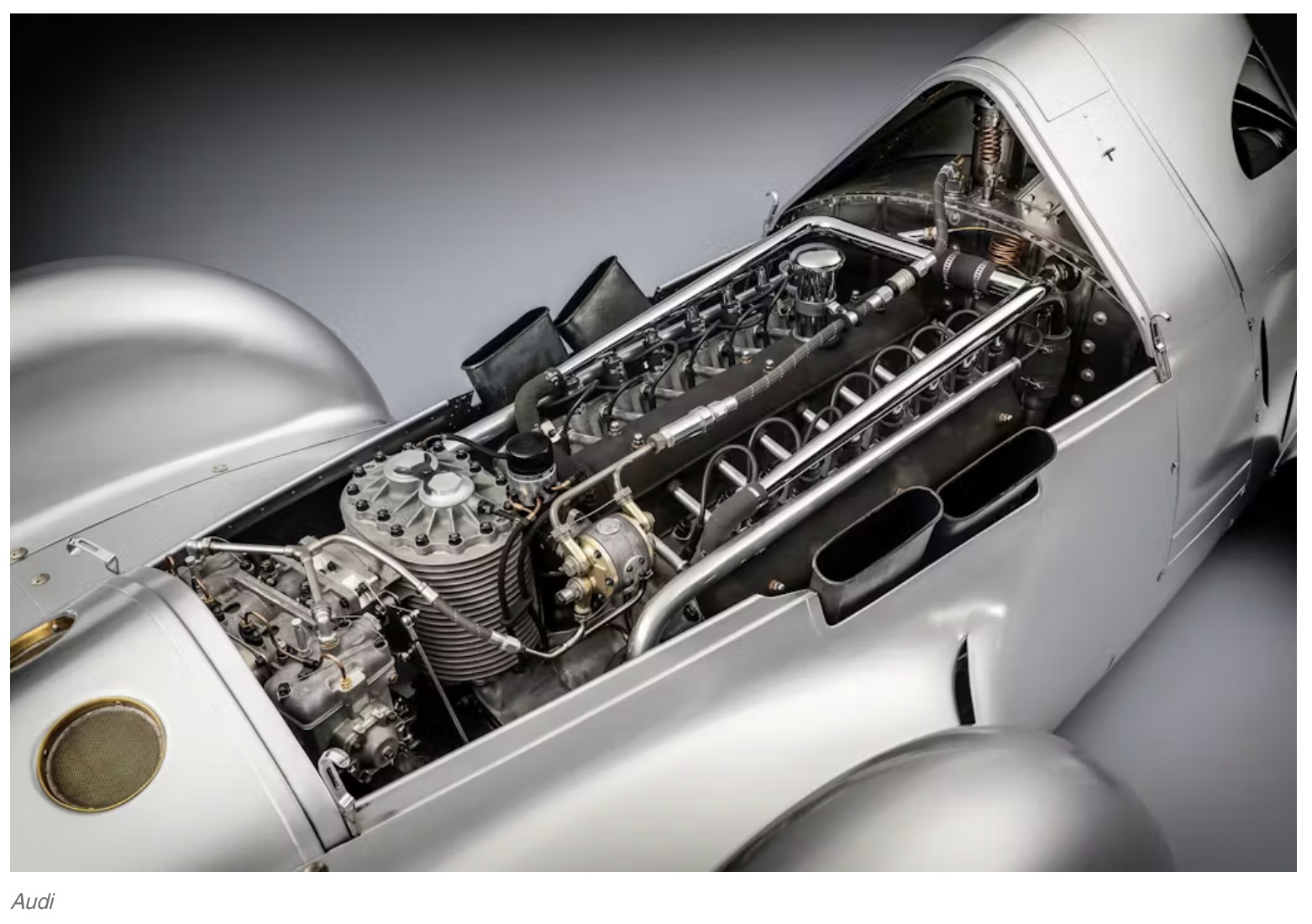
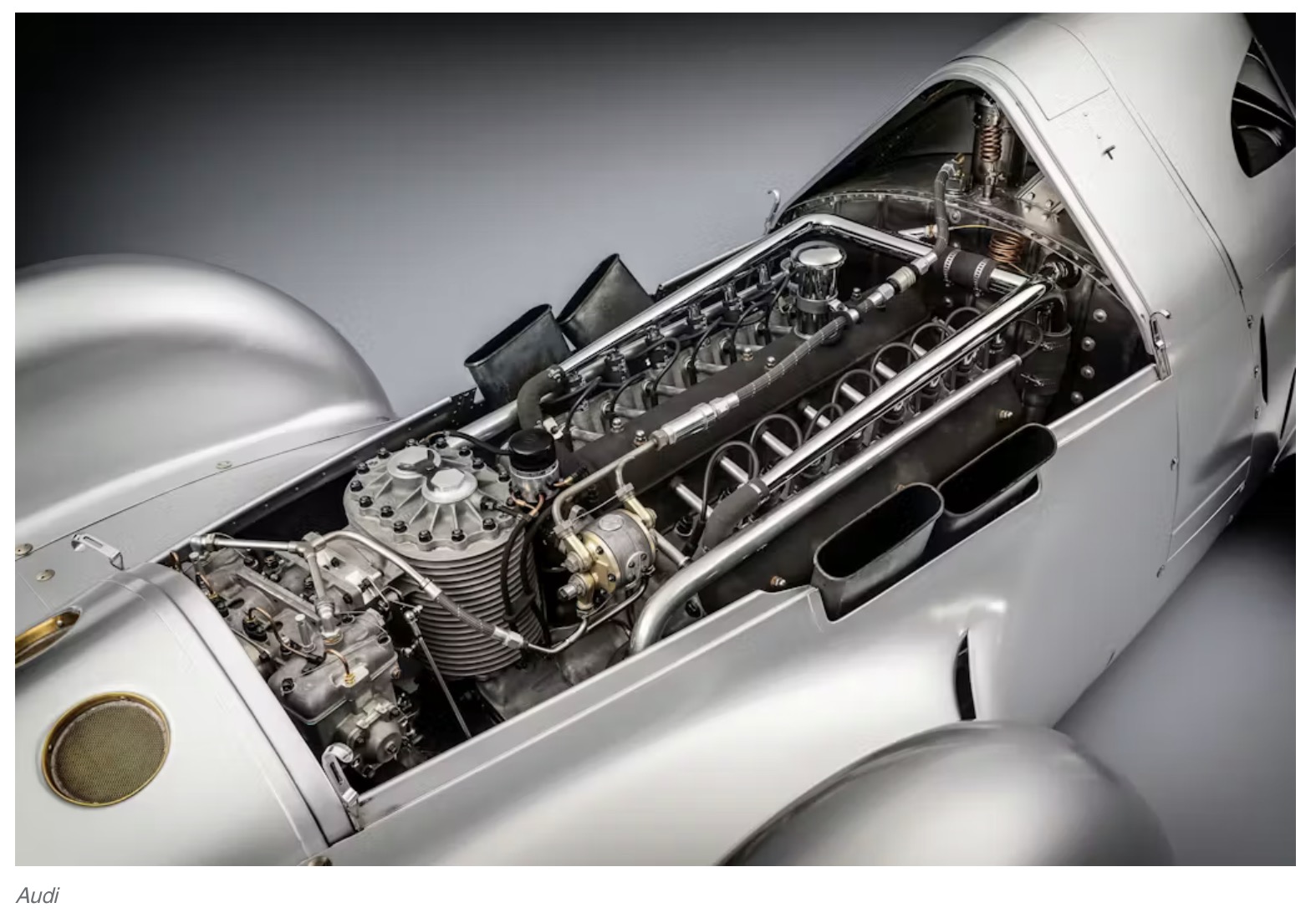
Another modification is the engine. Power comes from a 6.0-liter, supercharged 16-cylinder engine from the 1936 Auto Union Type C, a later variation of the 5.0-liter powerplant that powered the Lucca to its record runs. (Fun fact: 6006 cc was the largest piston displacement used by any manufacturer in this era.) The engine’s output is rated at an eye-popping 512 horsepower at 4500 rpm. It achieves those figures by burning a blend of 50% methanol, 40% premium unleaded, and 10% toluene. (If you’re hankering for a technical breakdown of this engine, and what made it so amazing, check out Don Sherman’s deep dive.)
Audi hasn’t revealed whether the coupe is still capable of hitting 200 mph, but we’re hoping to see its top speed tested soon.
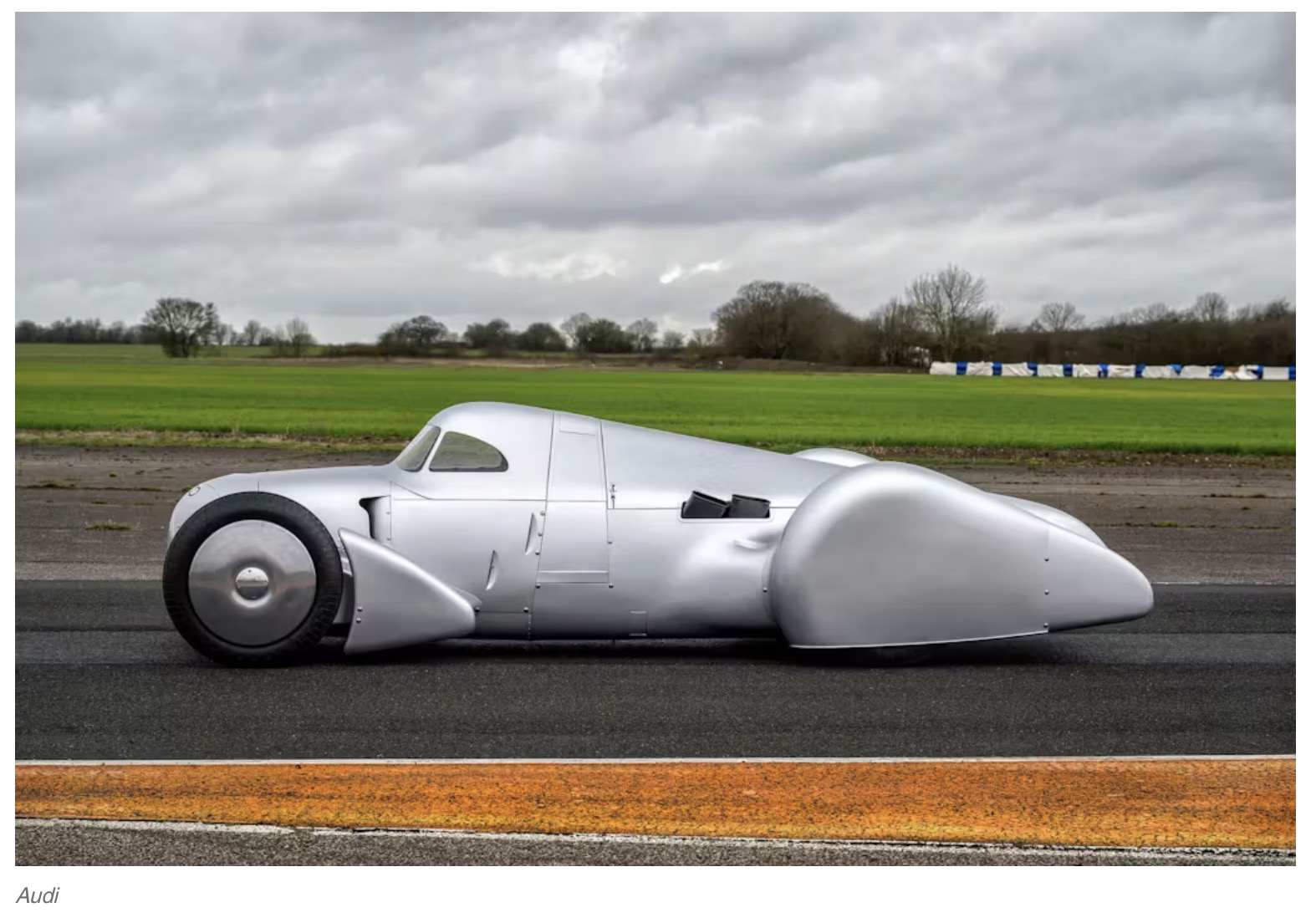
The new Auto Union Lucca will make its dynamic debut at the 2026 Goodwood Festival of Speed, which runs from July 9 to 12. After that, it will join the other Silver Arrows in Audi’s collection of historic cars. Bravo to Audi, and to Crosthwaite & Gardiner, for recreating this stunning ’30s streamliner!
Report by Ronan Glon for hagerty.com