Throughout history, diamonds and coloured gemstones have served to adorn objects, including jewellery and watches. At Richard Mille, gemsetting is guided by a quest for beauty, technical mastery and emotional resonance. Stones are more than decoration—they affirm their place as constitutive elements of the watch, on par with case design, materials, or the calibre’s architecture.
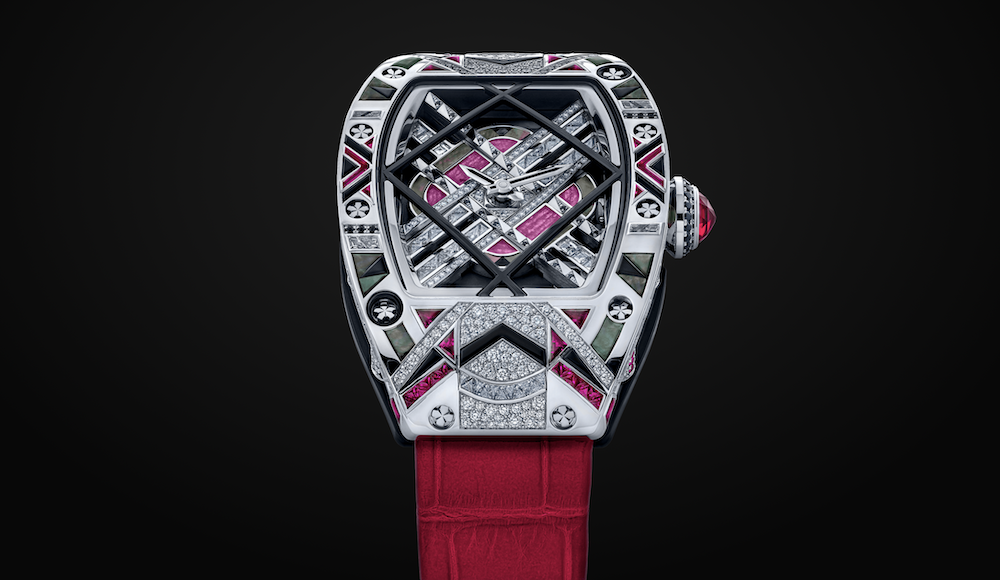
The unique geometry of Richard Mille cases constitutes a first challenge for the gemsetter. Whether tonneau-shaped, round or rectangular, their arched silhouettes and sophisticated pillars demand exceptional know-how and uncompromising craftsmanship. Sculpting each cavity with precision to the dimensions of the individual stone, the artisan brings to life a setting that bathes every curve of the case in brilliant light.
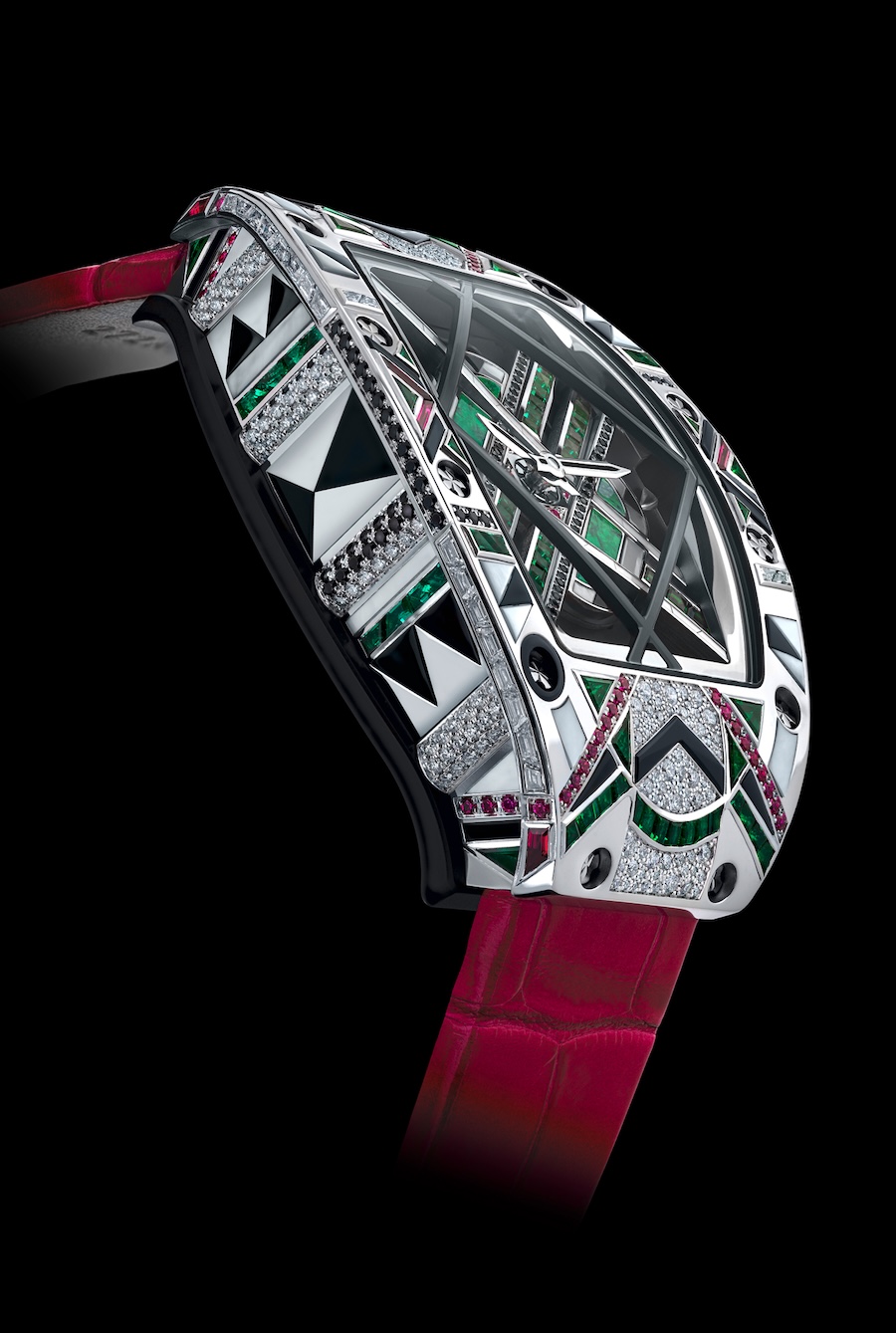
Even then, gems had made a place for themselves at the heart of the mechanism. Affirming their role as architectural elements, they spark complex emotions born of unexpected pairings of material and colour. Diamond with ornamental stones, gold with titanium and more. In 2008, the RM 018 Tourbillon Boucheron illustrated this daring orientation, using stone to make gear wheels, a triumph of master that required over four years of development. The following year saw the RM 019 Tourbillon reaffirmed this novel synergy of watchmaking and jewellery techniques with a movement baseplate carved in black onyx, a breathtakingly delicate operation that the brand successfully completed.
Since 2015, the brand has given free rein to creativity, extending and applying traditional expertise to technical materials that are notoriously difficult to work.
Unleashing creativity and achieving the impossible thanks to engineering
At Richard Mille, creativity drives innovation and technology relentlessly pursues beauty. The setting process becomes even more complex when it involves the technical materials like Carbon TPT®, sapphire or ceramics.
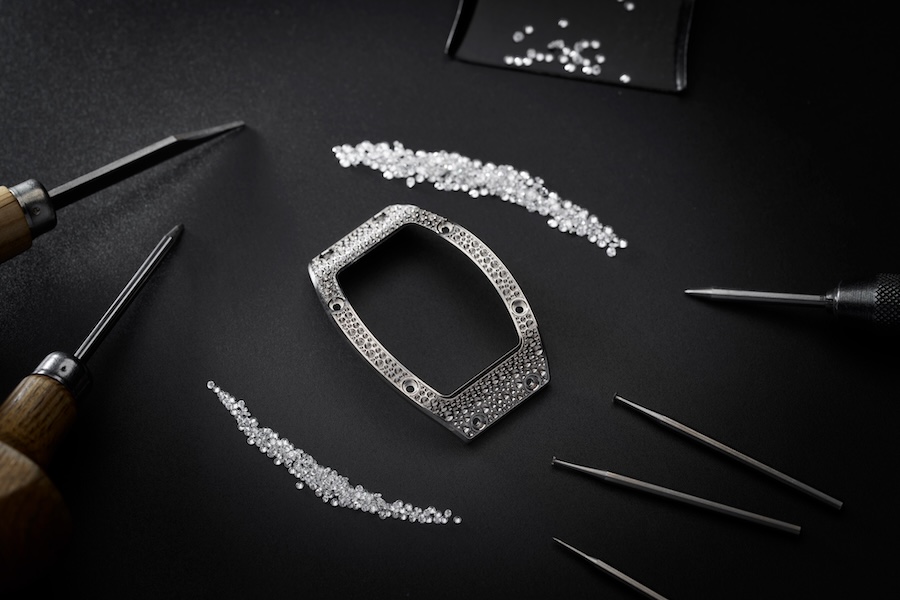
The brand’s technical experience in milling these materials, amassed over many years, made it possible to develop new setting techniques. Minute cavities are carved out using a CNC machine (or a laser in the case of sapphire) with margins of error around a single micron. The gemsetter then inserts the tiny gold claws that will hold each stone.
The launch of an in-house gemsetting workshop in June of 2019 attests the brand’s ambition and commitment: to forever push the limits of this hallowed craft, expanding know-how to achieve the technically impossible expand the realm of possibility.
- The first of the decorative arts to be explored at Richard Mille
- A symbiotic balance of emotion, savoir-faire, and innovation
- An in-house gemsetting workshop dedicated to expanding the field
Click here for further information




By loading the video, you agree to YouTube’s privacy policy.
Learn more
more information: richardmille.com
Photo Credit by richardmille.com