March 18 marks the birthday of Rudolf Diesel (1858–1913), the inventor of the internal combustion process that continues to bear his name. His life invites a series of intriguing questions: Where might technological development stand today had he not pursued a technical education? What course might innovation have taken if he had remained focused on refrigeration rather than refining the Otto cycle? And what further contributions might he have made had he not disappeared under mysterious circumstances?
The question of “what if?” often arises when considering several intriguing proposals for diesel-powered sports cars. For various reasons, the seven examples referenced never came to fruition. While diesel engines did find their way into passenger vehicles, proved successful in endurance racing, and even appeared briefly in a handful of European sports cars and hot hatches, it remains uncertain whether the North American market would have embraced a diesel-powered supercar or sports coupe.
Due to increasingly stringent emissions regulations—and the repercussions of related industry scandals—a definitive answer is unlikely to emerge. Nevertheless, these unrealized concepts continue to invite reflection on what might have been.
2008 Audi R8 TDI
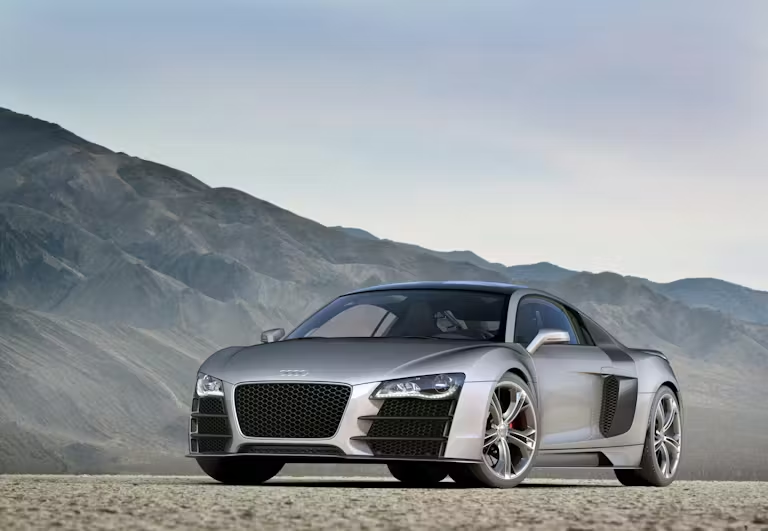
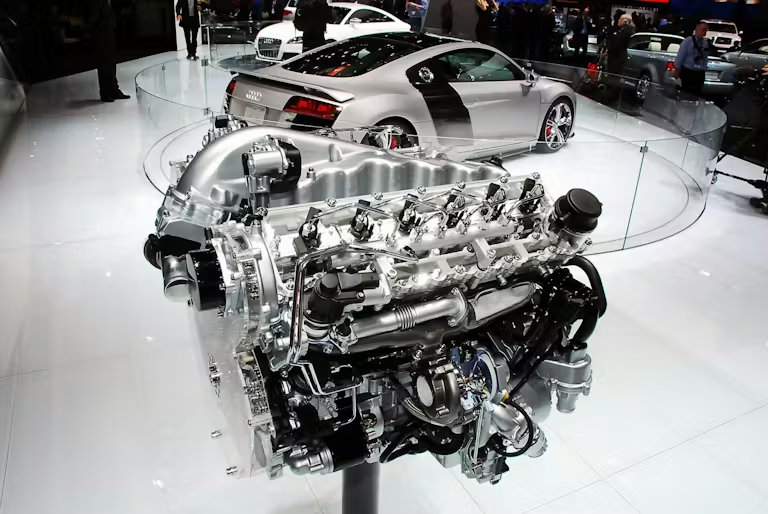
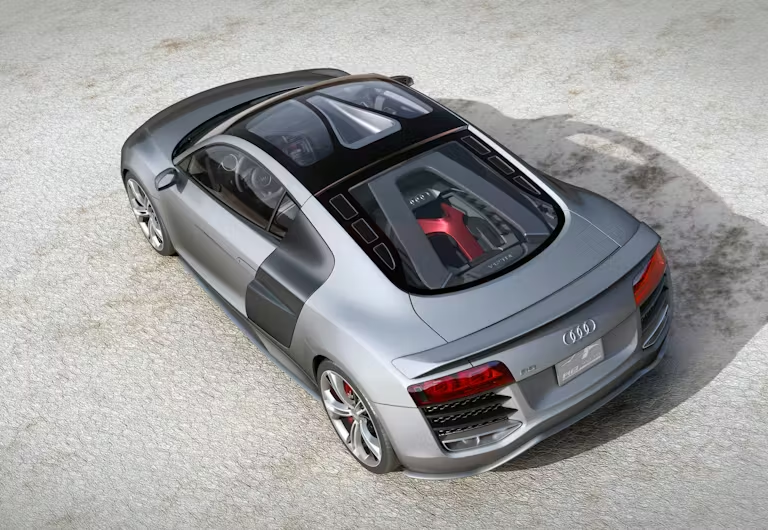
How do you celebrate earning back-to-back 24 Hours of Le Mans victories with a revolutionary diesel-powered race car? If you’re Audi, you stuff a version of that diesel engine into your new, mid-engine sports coupe. The R8 TDI concept (later rechristened the R8 TDI Le Mans, when it gained a new coat of red paint) used a 5.5-liter, twin-turbocharged diesel V-12 capable of producing 500 hp and 738 lb-ft of torque. Unique air intakes, including enlarged inlets on the front fascia, new scoops on the carbon-fiber side blades, and a giant NACA duct mounted on the roof, routed extra air to the engine. Though it seemed well-sorted enough to reach production, the R8 TDI remained a concept, although its massive TDI powerplant did wind up in the Quattro GmbH-tuned Q7 V-12 TDI SUV.
2013 Audi Nanuk Quattro
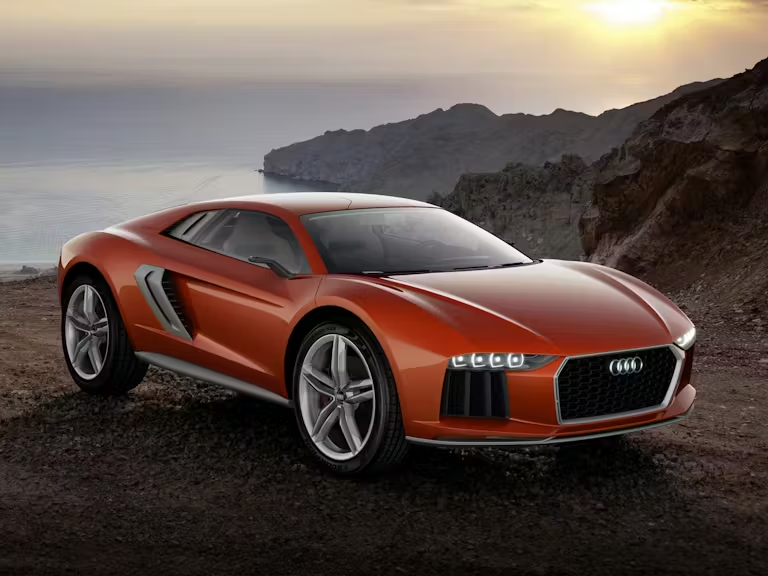
Nanuk may mean “polar bear” in Inuit, but crowds at the 2013 Frankfurt motor show could be forgiven for thinking it meant déjà vu. This high-riding proposal for an off-road capable mid-engine supercar bore an alarming resemblance to the ItalDesign Parcour concept, which had debuted three months prior at the Geneva motor show. Both cars were styled by ItalDesign (which, at the time, was majority-owned by the Volkswagen Group) and used powerful ten-cylinder engines, but that’s also where the concepts diverged. The Parcour used a 550-hp, 5.2-liter V-10 plucked from Lamborghini’s parts bin, while Nanuk relied on a 5.0-liter, twin-turbocharged diesel V-10 sourced from Audi and allegedly rated at 544 hp and 738 lb-ft of torque. Audi claimed that the Nanuk could blast from 0 to 62 mph in 3.8 seconds and hit a top speed of 190 mph. Those figures likely weren’t attainable if you set the Nanuk’s air suspension to off-road mode, which increased ride height by nearly two inches.
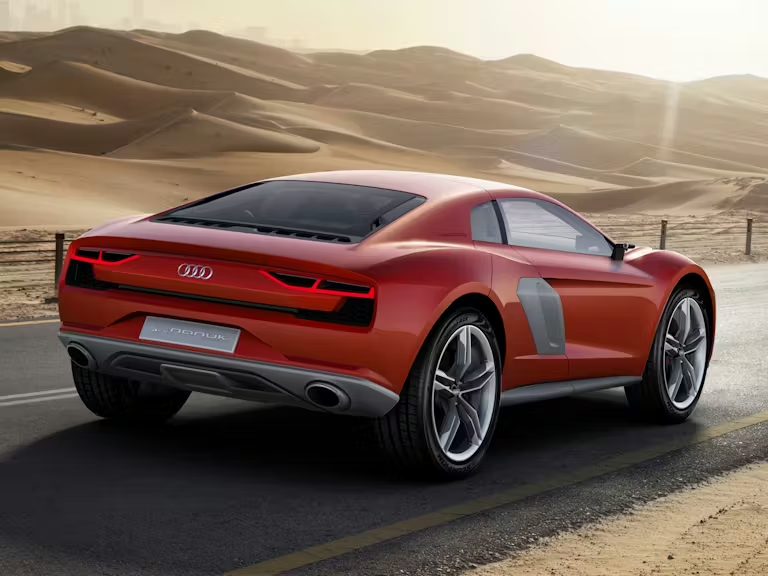
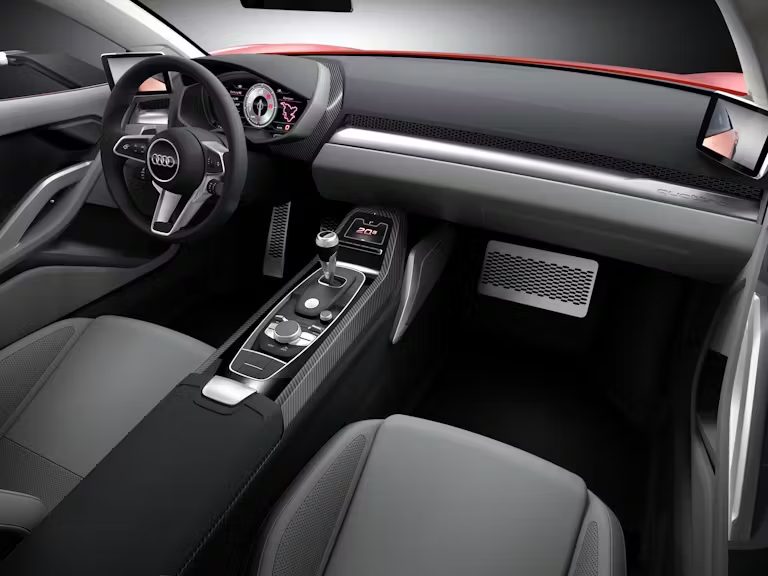
At the time, Audi officials claimed they were seriously contemplating limited series production of an off-road sports car like Nanuk, but they ultimately chose not to pursue the idea. Other Volkswagen Group companies—namely, Porsche and Lamborghini—launched safari-spec sports cars of their own almost a decade later.
1998/2000 Bizzarrini Kjara
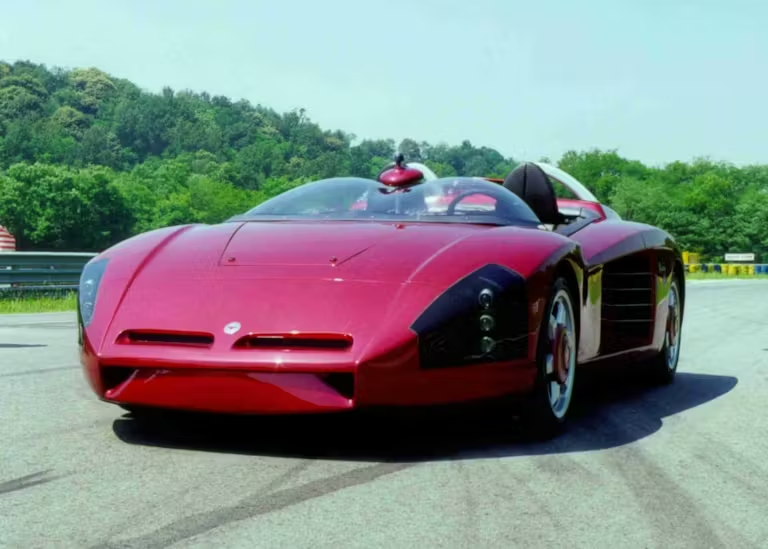
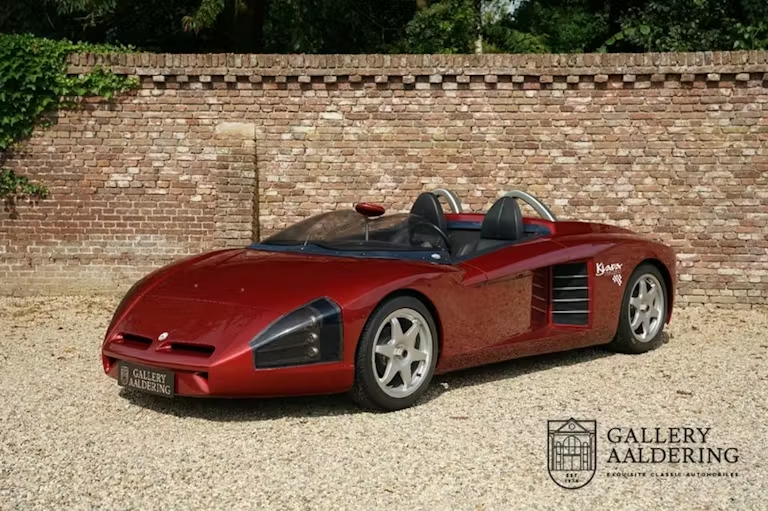
Over the past 40 years, the Bizzarrini name has been revived numerous times—another revival is reportedly already underway. However, only one instance is known in which a company bearing the name attempted to install a relatively modest diesel engine into a striking red barchetta.
The result was the Kjara, a concept that reportedly dates back to 1998 but was not formally presented to the public until 2000. Beneath its bodywork, it featured a Fiat turbo-diesel five-cylinder engine combined with an experimental hybrid drivetrain.
Although the Kjara never progressed beyond the concept stage, the 2.4-liter Multijet diesel engine did later find its way into two production sports cars—albeit without hybrid technology—the Alfa Romeo Brera and Spider, produced between 2005 and 2010.
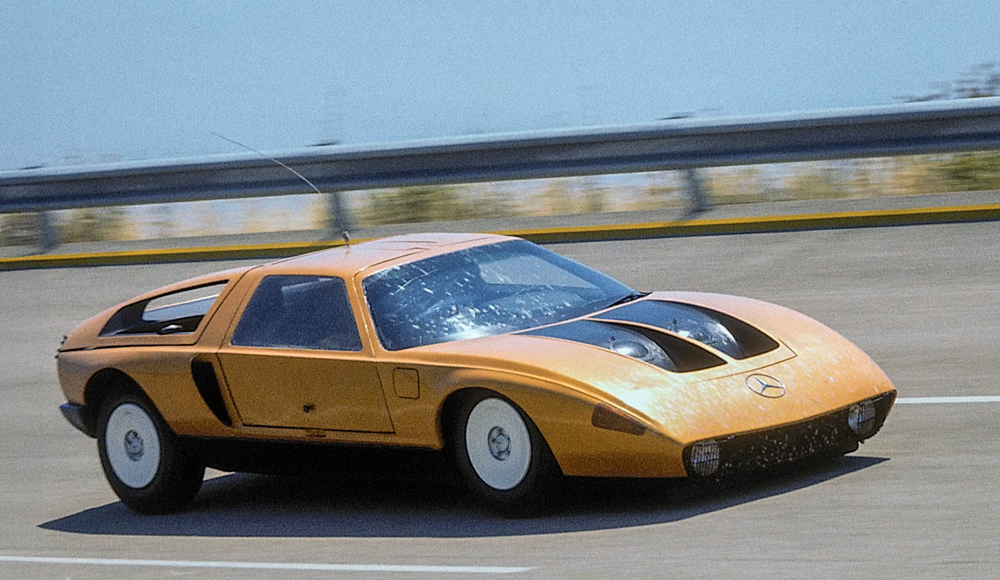
1976 Mercedes-Benz C111-IID
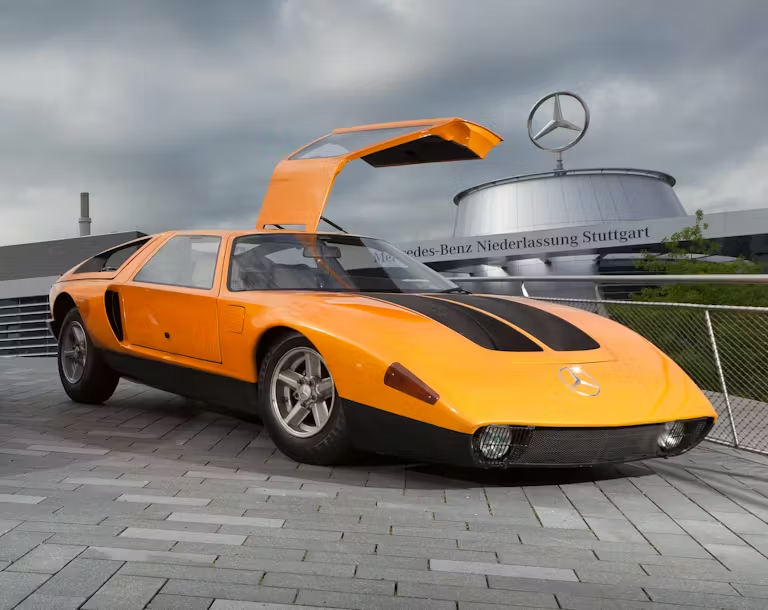
The original goal of Mercedes-Benz’s C-111 program wasn’t just to create an achingly beautiful supercar that turned heads on motor show stands, but to build a testbed for advanced technologies. Most notably, this achingly beautiful car allowed Daimler-Benz engineers to play with the Wankel rotary engine. But the C111 was something more than a lab experiment or a one-off race car. From the get-go, it was designed to go into limited-series production, should customer demand prove sufficient.
The second C-111 series, which debuted at the 1970 Geneva motor show, appeared to move even closer to production reality, thanks to a more powerful four-rotor Wankel engine, along with increasingly refined exterior styling and interior appointments. But by 1973, increasing global oil costs effectively sounded the death knell for the thirsty Wankel’s development within Daimler-Benz.
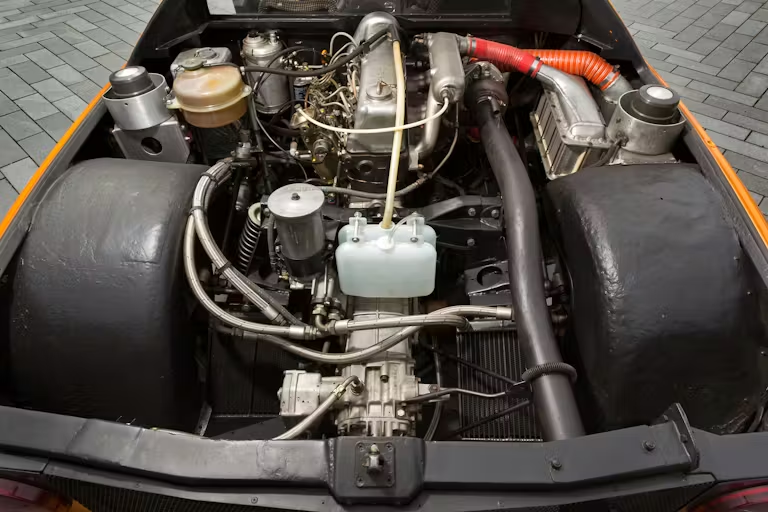
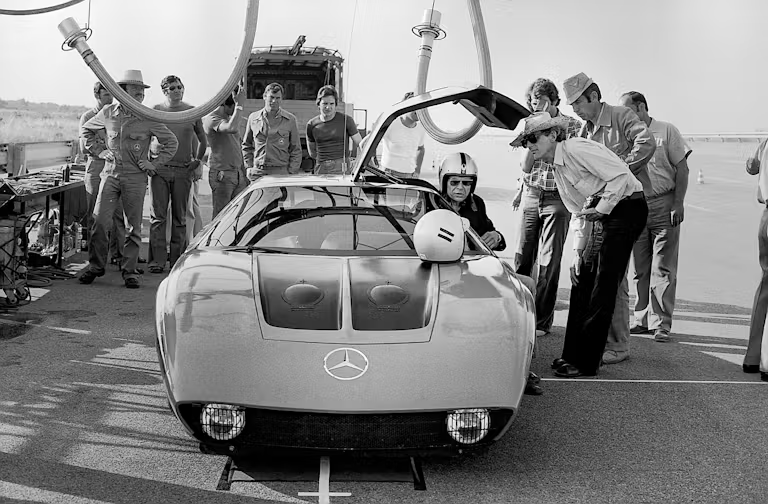
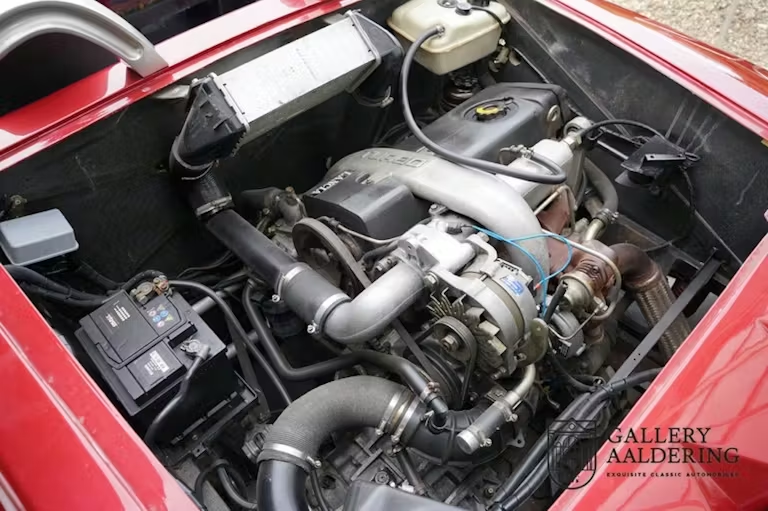
Instead of shoving prototypes in a warehouse and tending to other development programs, C111 engineers pivoted. Why not showcase the potential of Mercedes’ diesel passenger-car engines by setting speed records with a diesel-powered C111? Chassis 31, the first of the C111-II cars built, was dusted off, divorced from its rotary powerplant, and given a turbocharged, intercooled version of the 3.0-liter OM 617 diesel, essentially an early prototype of the engine which would later power the W123 300 TD range.
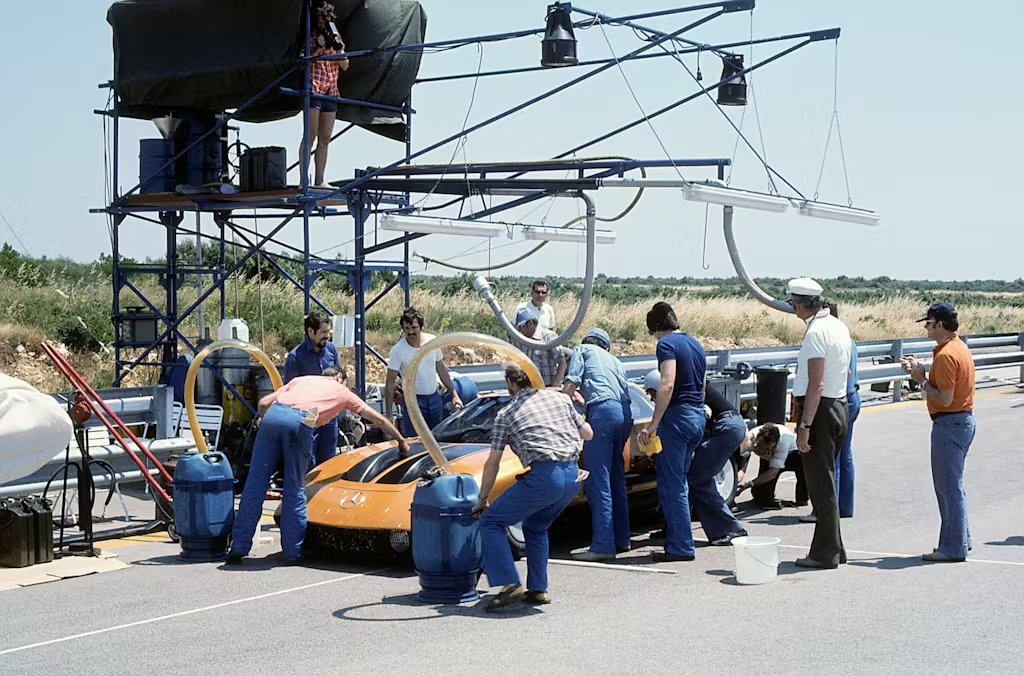
The resulting “-IId” record car looked remarkably similar to other second-gen C111s, save for minor changes. Pop-up headlights were ditched in favor of lamps faired in beneath plexiglass, sideview mirrors deleted, aero-disc wheels fitted, and the suspension dramatically raked front-to-back, all in the name of reduced drag.
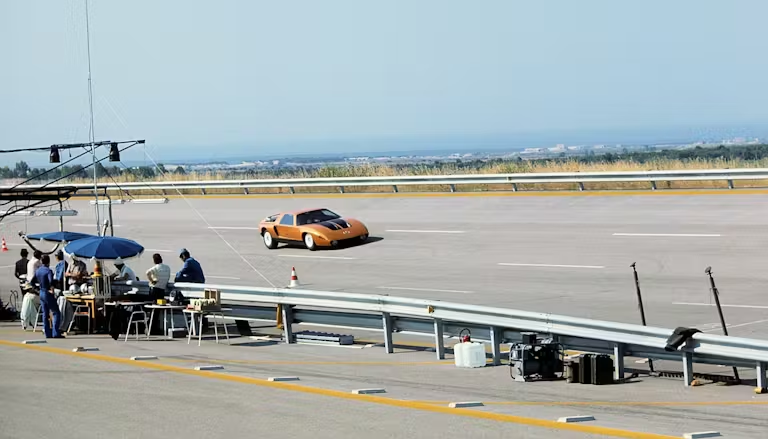
After a continuous, 64-hour-long test run at the Nardò Ring in 1976, the C111-IId posted an average speed of 155 mph, setting three world diesel speed records in the process. What it failed to do was move the C111 program any closer to series production. The third C111 iteration, which debuted in 1979, continued to set speed records with the OM 617, but evolved into a purpose-built streamliner instead of a sports car that had any chance of reaching a showroom floor.
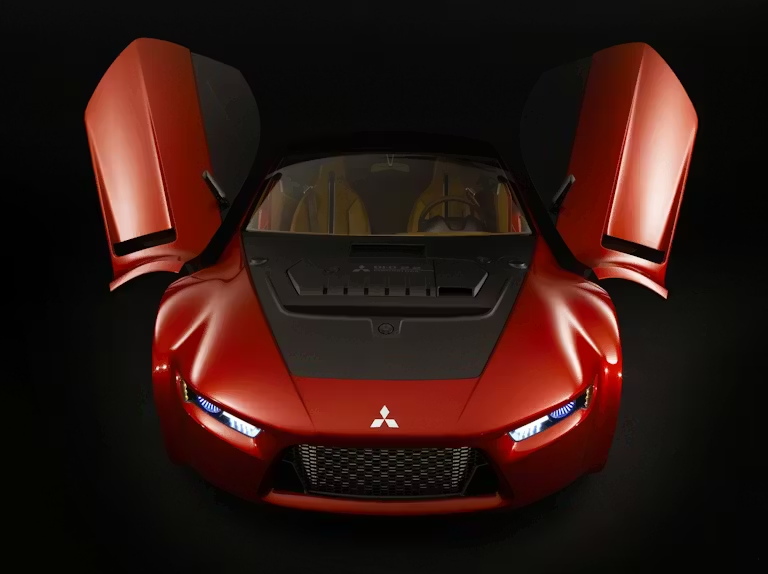
2008 Mitsubishi Concept RA
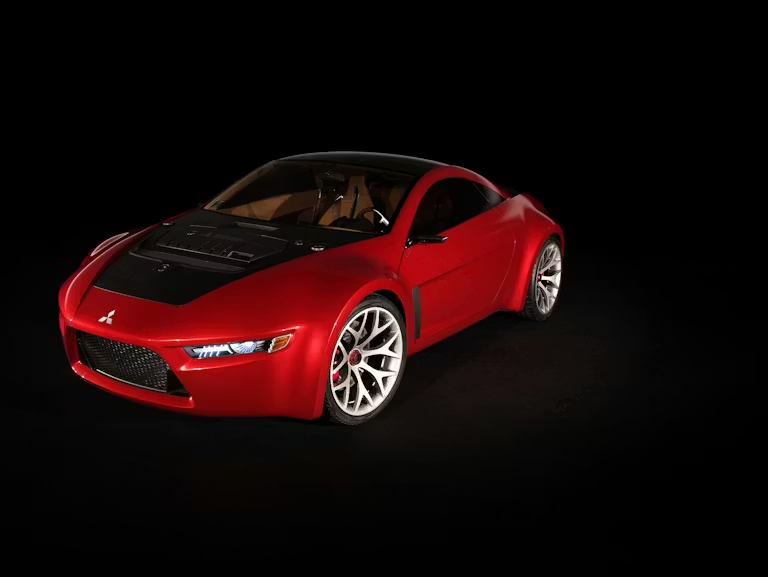
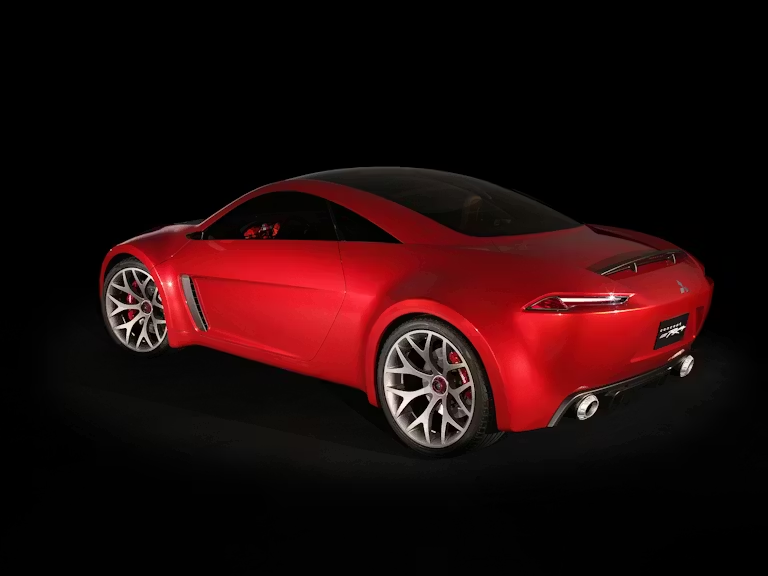
Was the Concept RA a thinly disguised look at a fifth-generation Eclipse? Despite Mitsubishi’s claims that the car was merely a “technology showcase,” it seemed entirely possible. (The 1998 SST and 2004 Concept-E showcars had both closely previewed subsequent Eclipse designs.) The “RA”, allegedly shorthand for “Road Alive,” managed to blend cues from both the curvaceous fourth-gen Eclipse with the shark nose and blistered fenders of the then-new Lancer Evolution X into a surprisingly cohesive design.
Perhaps less likely to see production was the engine that lurked under the hood—or rather, actually protruded through the hood. Concept RA made use of a 2.2-liter DOHC 16-valve turbo-diesel four-cylinder, which reportedly produced 201 hp and 310 lb-ft of torque. That power was sent through a six-speed dual-clutch transmission cribbed from the Lancer Evo X, along with a similar torque-vectoring all-wheel-drive system.
While that turbo-diesel engine would ultimately wind up in crossovers in other corners of the world starting in 2010, the RA’s rakish coupe form wasn’t destined for series production. Instead, the fourth-generation Eclipse soldiered on with few updates until 2012, when it was unceremoniously discontinued.
2010 Local Motors Rally Fighter
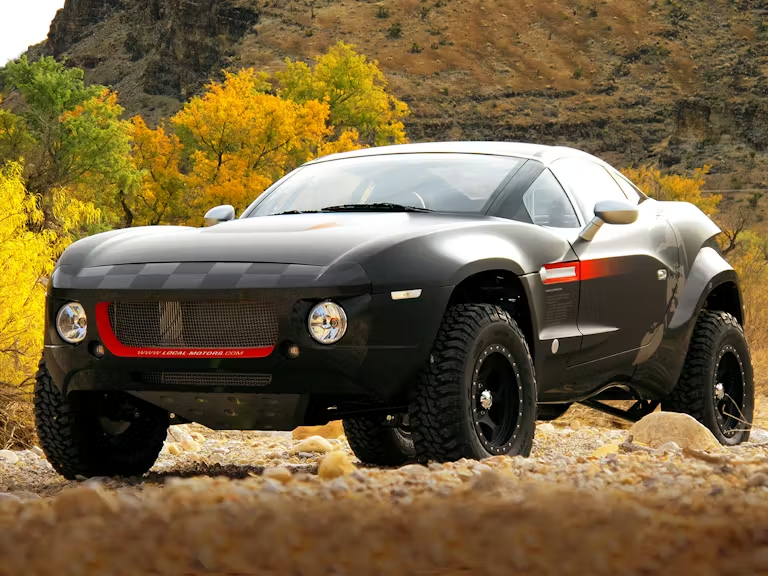
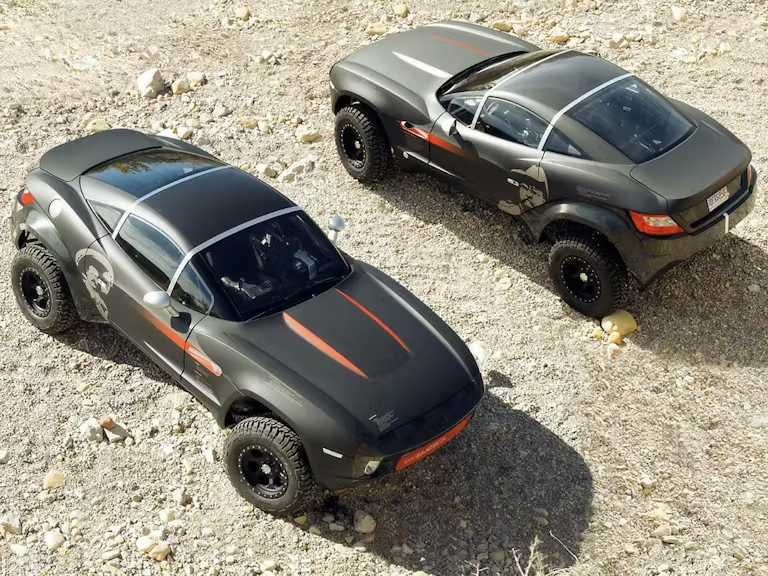
It is well known that, before shifting its focus to additive manufacturing technologies and autonomous shuttle pods, Local Motors produced roughly 100 examples of its muscular off-road coupe, none of which featured a diesel powerplant. However, the original Rally Fighter concept was, in fact, equipped with a diesel engine.
After initially considering sourcing an engine from Mercedes-Benz, the engineers ultimately opted for BMW’s 3.0-liter M57 inline-six twin-turbo diesel, derived from models such as the 335d. While most production versions were fitted with a 6.2-liter GM LS3 V-8, it is alleged that a single diesel-powered prototype was built and eventually left the company’s possession, reportedly acquired by a particularly enthusiastic former employee.
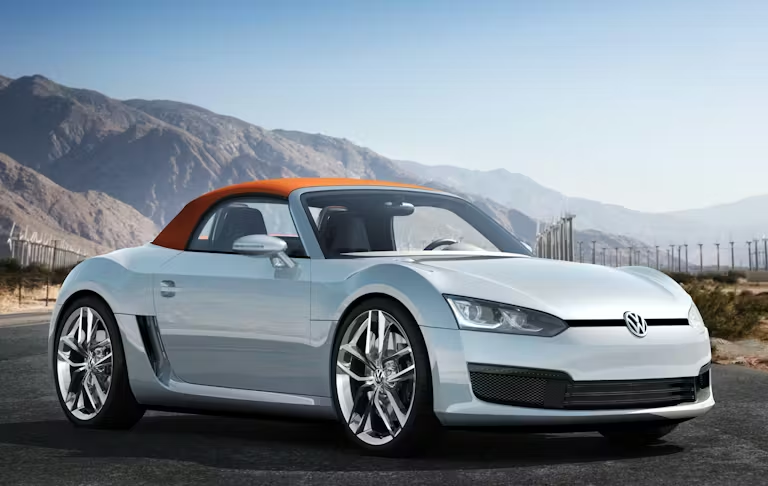
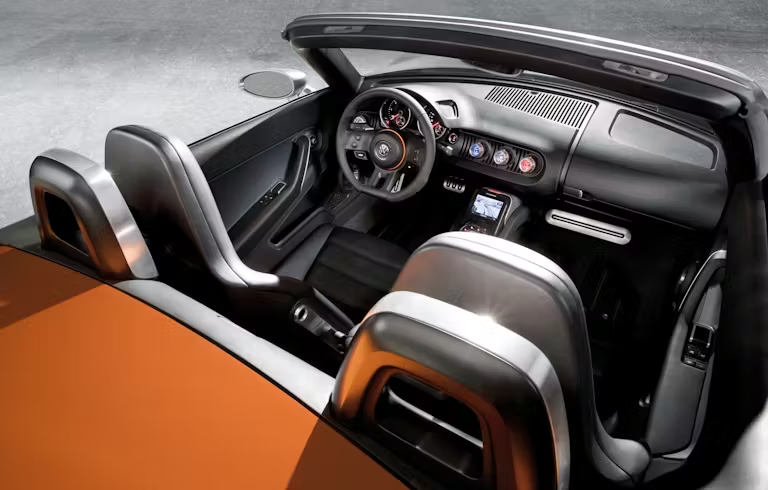
2009 Volkswagen Concept BlueSport
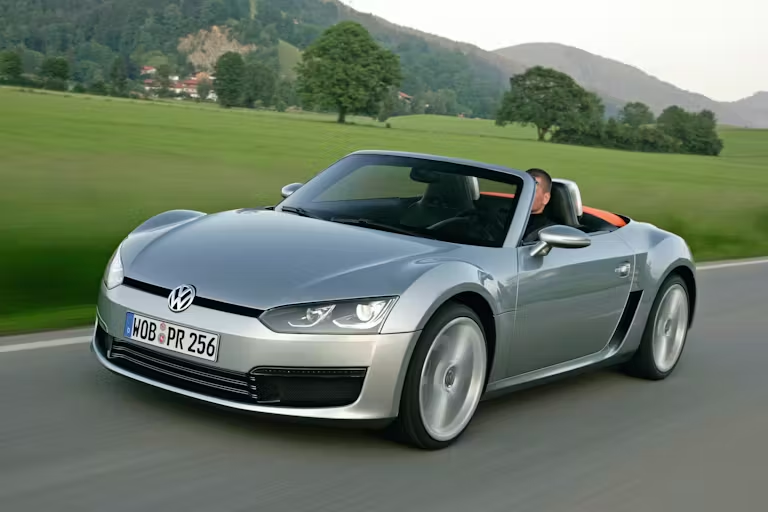
Four years after showing a diesel-powered speedster that it had no intentions of actually selling (the EcoRacer), Volkswagen returned to the auto show circuit with another compact mid-engine diesel sports car. This one seemed like a shoo-in for series production. Concept Bluesport debuted at the 2009 Detroit show as a svelte mid-engine two-seater roughly the same size as Mazda’s MX-5. (The projected price point was the same, too.) Power came from VW’s 2.0-liter turbo-diesel I-4, which drove the rear wheels through a six-speed dual-clutch gearbox and made some 168 hp and 258 lb-ft of torque.
The few journalists allowed to take the car out for a quick spin reported that Bluesport was crisp, engaging, and far more sorted than most show cars tend to be, lending further credence to reports that production was likely a go for the 2012 calendar year. By 2010, insiders suggested Porsche would serve as an engineering lead for Bluesport’s platform, which would also be used to create an Audi “R4” and a Porsche “55-One.” By 2012, shifting priorities within Volkswagen and Porsche management effectively put an end to the program. That’s a shame, as Bluesport—along with the Porsche 55-One, which was publicly revealed in 2021—would have been handsome, affable, attainable roadsters.
Report by Evan McCausland
find more news here.