In the exclusive world of grand prix racing, the one event that remains a firm fixture in the ever-evolving calendar is the Monaco grand prix, a race held on narrow public roads totally unsuited to racing cars in general and Formula 1 cars in particular.
This glamourous, premier event has survived for many reasons as it is held in a unique location that offers more than just a motor race. Conceived by the Automobile Club de Monaco it was first held in April 1929 and became part of the European Championship prior to being accepted as a round of the World Championship of Drivers in 1950. But the inaugural race and first driver to win such a significant event will always be remembered but the victor, commonly referred to as “Williams”, became a legend due in part to his life of espionage during the Second World War. Many colourful stories were woven about his past and his career as a spy but in 1929 Williams was better known as William Grover-Williams, a British gentleman who was born in France in 1903 to a British father and French mother. During World War I he was sent to live in Britain but following hostilities he returned to live with his parents in Monaco where he developed a lasting interest in automobiles. Having obtained a driving licence, he found employment as a chauffeur and by 1926 began racing his own Bugatti at circuits around France, winning the Monte Carlo rally in 1928 and the French grand prix in 1928 and 1929.
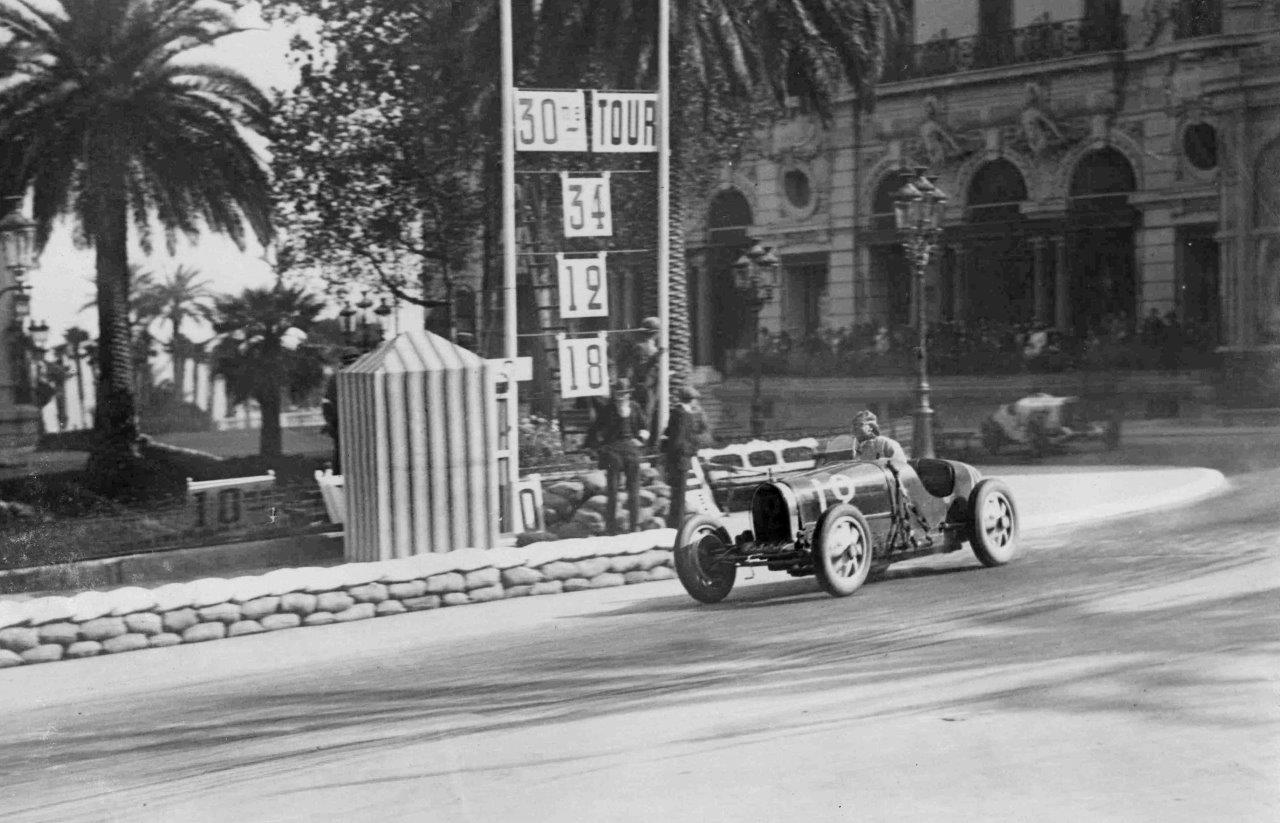
By winning the first Monaco grand prix in the same year he wrote his name into the record books, not least because he beat the Mercedes of Rudolf Caracciola who was a firm favourite to win the race. He always raced a Bugatti, painting his 35B a dark green that would later be known as British Racing Green. Having married in late 1929 he continued to race until 1933 when he retired to run his successful businesses and enjoy life based around his homes in Paris and in the country until his life changed in 1940 when he enlisted in the British army. He was evacuated from the beaches at Dunkirk and joined the Special Services where his fluent French was a great asset. He returned to France where he controlled operations behind enemy lines but eventually he was arrested and executed in 1945, a few weeks before peace was declared. The photograph shows the Bugatti 35B of William Grover-Williams en route to winning the inaugural Monaco grand prix in 1929.