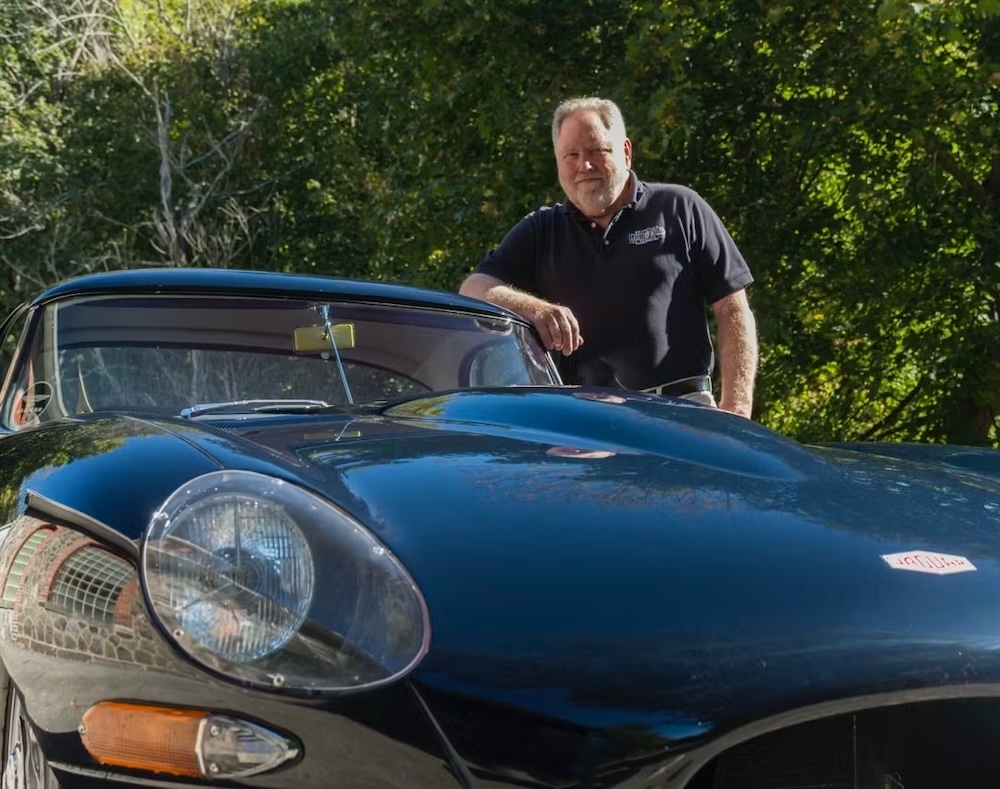
Plenty of cars have come and gone in Bob Millstein’s life—Aston Martin DB4s, Jaguar XK 120s and 150s, Bugeye Sprites—but one constant has been his 1965 Jaguar E-Type, a car he has nearly killed himself in more times than he’d care to admit. “Hands down,” he says, “it is the last possession I will ever sell.” Cars weren’t originally part of the plan for Bob, however.
His father went to Stuyvesant High School, and then Bob went to Stuyvesant. His father went to NYU, and then Bob went to NYU. His father went to Yale School of Medicine, and he hoped Bob would follow him there, too. But his father died of a heart attack while Bob was in his junior year at NYU, and so he had to support himself and his mother and pay for school. He did this by working on cars.
“I spent my evenings in Long Island City, Queens, hanging out with my brother and his racing friends,” he says. “My father told me that if I didn’t straighten up and apply myself, I would be working on cars for the rest of my life.” His father’s curse came true. Instead of healing people, Bob Millstein healed cars.
He started buying and selling Bugeye Sprites, too. “At the time, that was the only thing I knew how to work on,” he says, but it paid for school. And working on race cars taught him to be thorough and exacting, because there was little room for error.
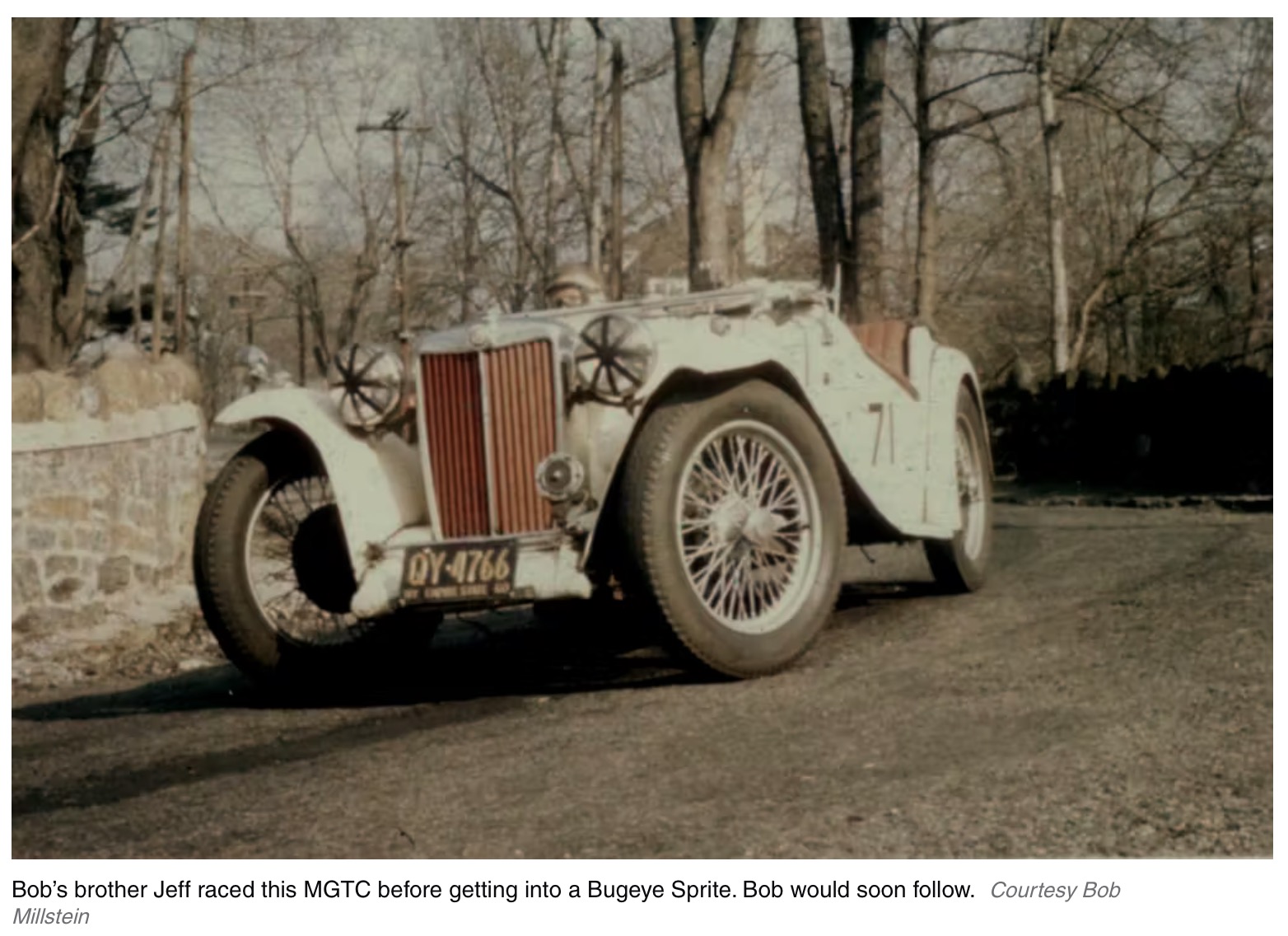
His brother raced an MGTC around the Northeast and then started racing a Sprite out of a shop in Harlem called Carl’s Garage. “There was a group of wealthy black lawyers and doctors who all owned Jaguars,” Bob says. “They called themselves ‘The Sugar Hill Racing Mob.’ When they went racing, we went along to all the tracks.” In fact, the first time he ever saw an E-Type Jaguar being raced was at Bridgehampton. “The driver was Charley Murray, whose family owned the Murray’s pomade company.”
Bob says that if you were a gearhead growing up in the Washington Heights neighborhood of Manhattan, you were in one camp or the other: You were a Vette guy or an E-Type guy. No question, he was an E-Type guy.
“I had a love of E-Types, but it was always long distance,” he says. “I had a garage in Queens, and we couldn’t work there during the day, but after 6 p.m., when the landlord went home, we could start work. We catered mostly to people from Greenwich Village, and we became known as the ‘Underground Garage.’ We would work till the early hours of the morning, go to a diner with our racing friends and talk about cars, and then I would head off to class at NYU.”
During this time, a friend of his who worked in a Midtown Manhattan Jaguar dealership got himself a 1965 E-Type. “He drove cross-country in the car, came back, and wrecked it. It sat in a garage for years. I had loaned him $300 at one point, and in 1974, in lieu of payment, he gave me the XKE.”
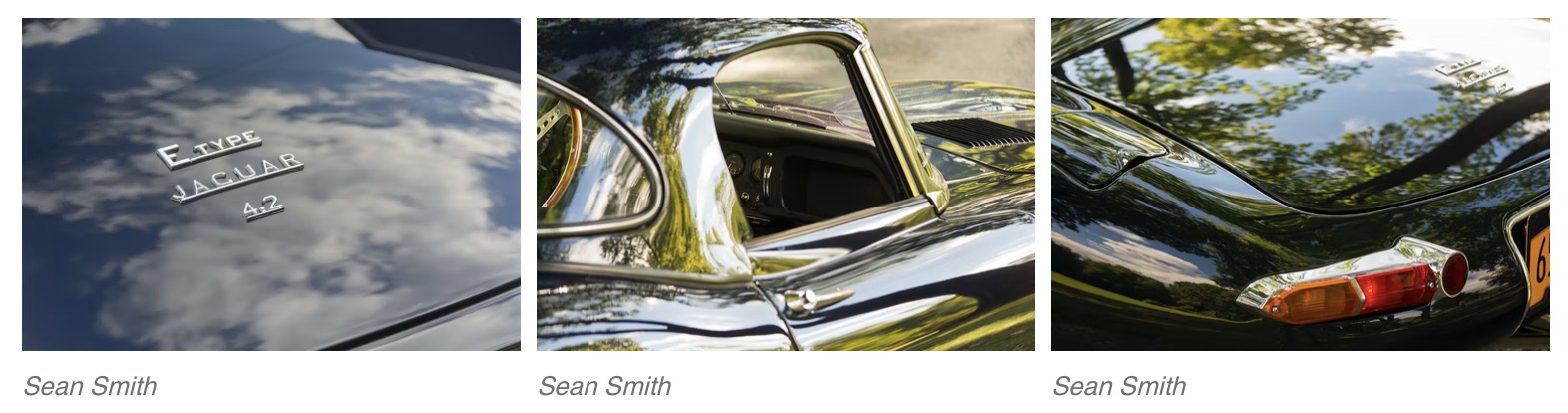
The Jag was a mess. The radiator was destroyed and it needed a hood, among other things. So Bob bought another Jag, swapped the hood and radiator, changed the oil, and started driving it. At the time, he had just opened his own shop in Briarcliff, New York—Briarcliff Classic and Imported Car Service. His good friend, Dr. Jim Morrisey, who was in the Aston Martin club, persuaded him to go along to the VSCCA Hill Climb at Mt. Equinox in Vermont. “I drove my E-Type up and decided to compete. There were 30 or more cars there, and by the end of the weekend, I had the second-fastest time of the day behind a Ferrari Tour de France—which had missed the finish line and locked up its brakes when the driver realized his mistake and plowed into a car full of nuns. Luckily, no one was injured.”
Bob noticed that many of the cars that competed were purpose-built race cars, which had been trailered to the event. “I had driven my car there. My advantage was that the XKE was my only means of transportation at the time. I knew everything about that car.”
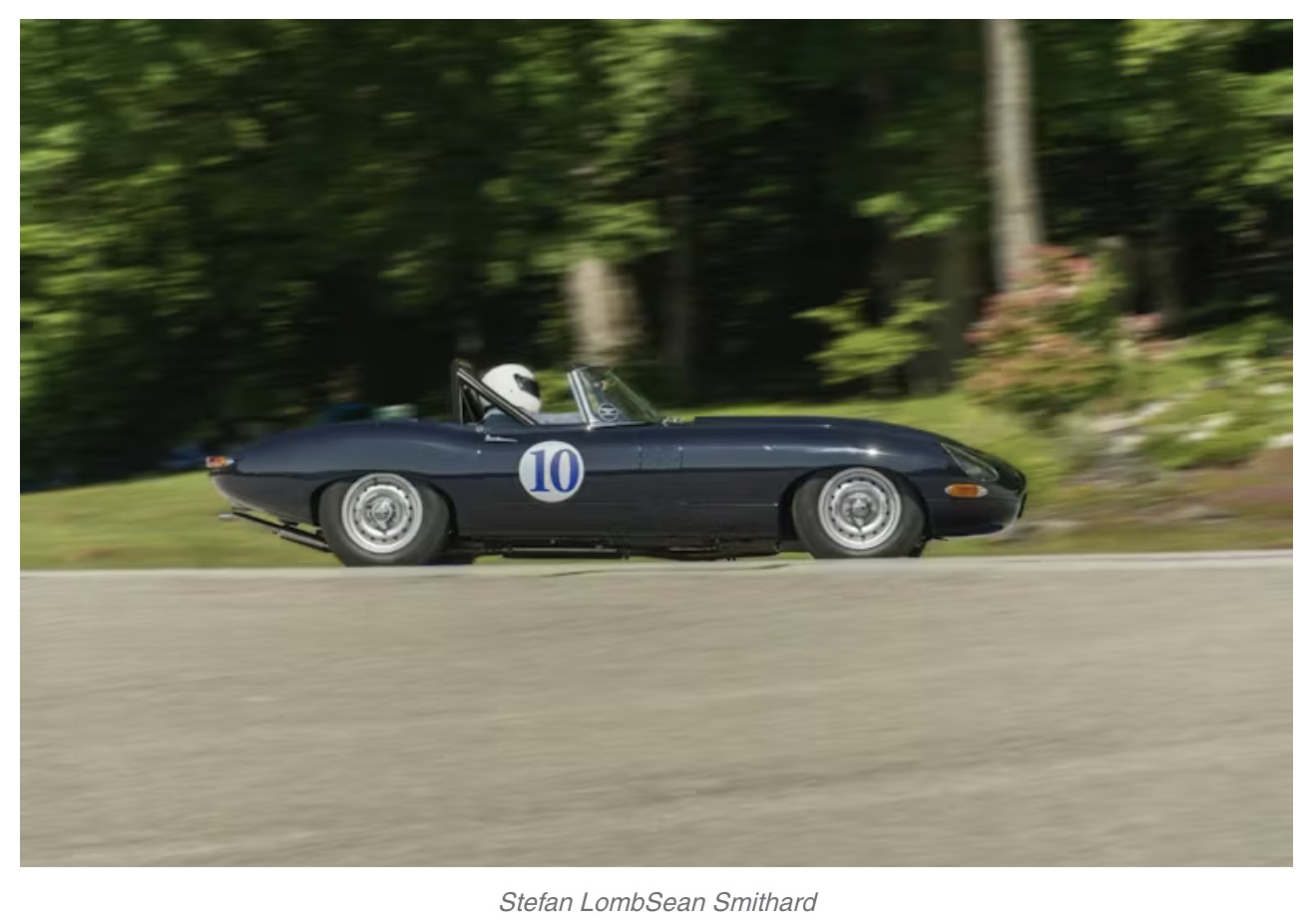
Because he had rebuilt it and trusted both his own work and the car’s mechanical components, he knew how it would respond under stress, and he was hooked. Soon, a friend was selling an SCCA H Production Bugeye Sprite race car, and Bob bought it. “I was racing both cars simultaneously. I began racing the Sprite at the national level. I was a North Atlantic Road Racing Champion and a regional champion on multiple occasions. And I kept refining the XKE as I drove it. Better shocks, better brakes, headers, and Weber carburetors. I gave it a new coat of dark blue paint, replacing its original silver.”
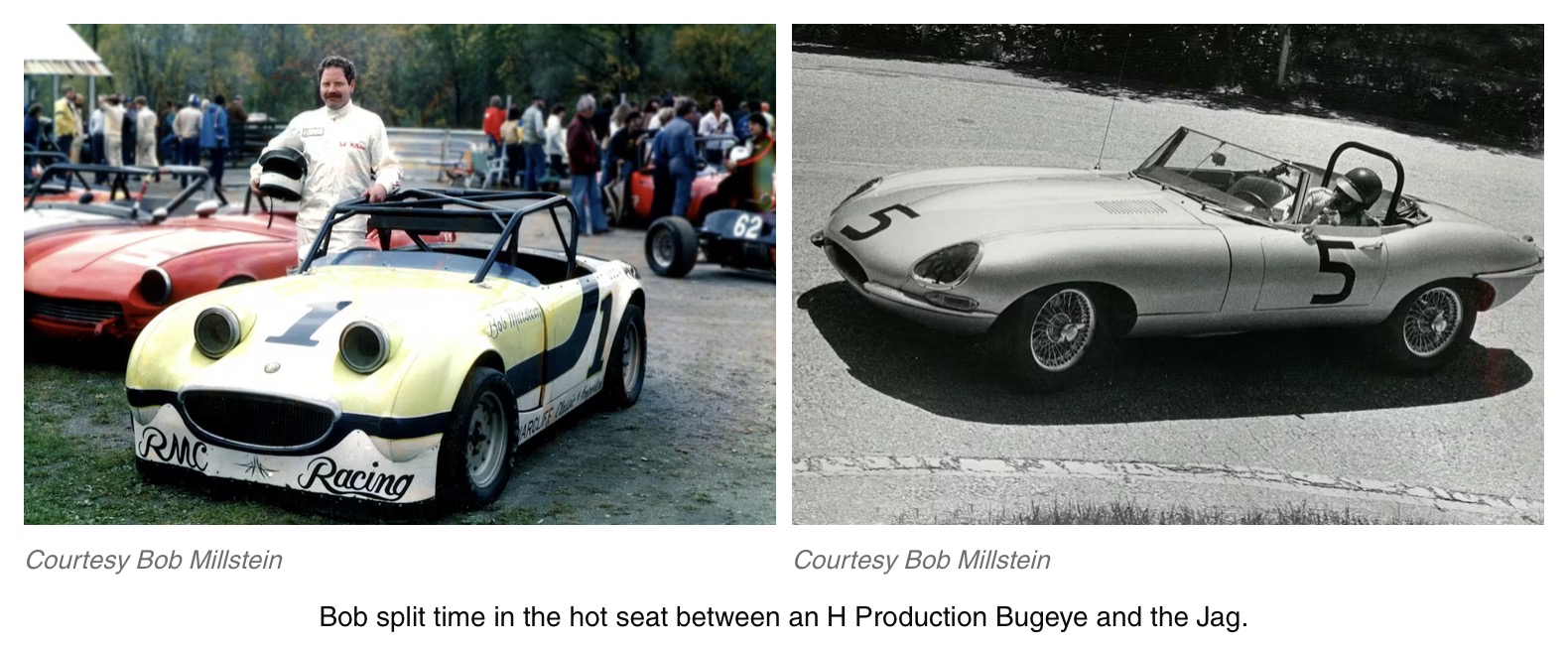
Bob trusted his fully sorted Jag, yes, and he was gaining a fair bit of experience racing it and the Bugeye, but one day at Lime Rock he came to understand the peculiarities of jumping from one to the other. “I had been racing the Bugeye, a full-on production race car with wide, sticky slicks. Then I got on the track in the Jag with cold tires going into Big Bend [Turns 1 and 2], and I expected the car to handle the way the Sprite did with its slicks. I realized very quickly that wasn’t going to be the case, and the car spun out. The Sprite would have just gone Ha Ha Ha! at the experience. The E-Type went Oh crap! and left the road.”
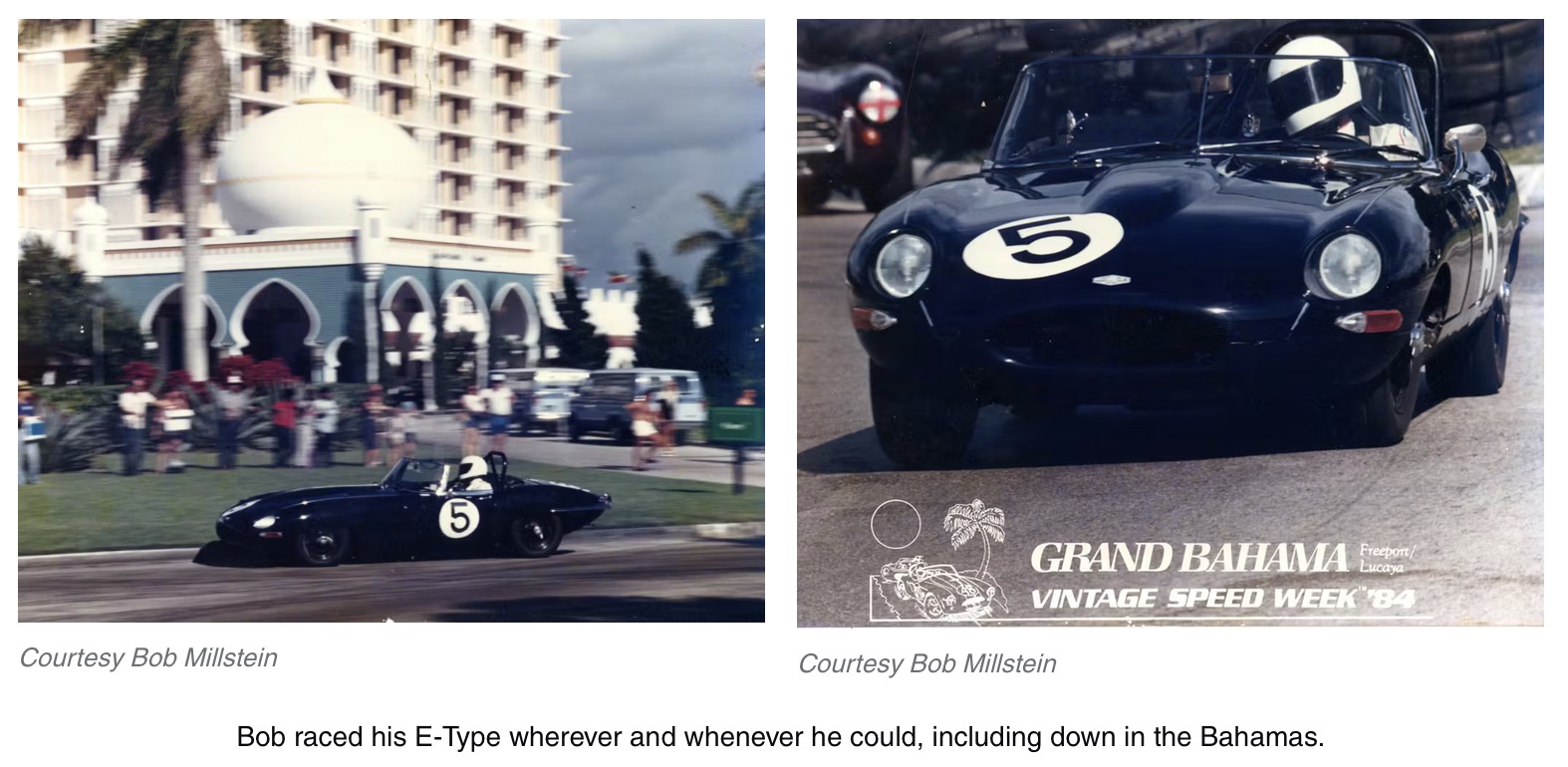
The Jag flipped, but Bob was fortunate because it had a rollbar. “I got the car turned over and was able to drive it home with no windshield and holes in the hood where the carburetors punched through. He was also unfortunate, because just before that weekend, he had finished the restoration and had the Jag painted. “I called the guy who had painted it and told him to come look at the car. Said I was having trouble with the paint coming off the hood, so I told him to bring some touch-up paint with him. He got to my shop, and I uncovered the car. His jaw dropped, and we both had a good laugh. I was alive. My rollbar did its job, and he had more work coming his way.” After repairing and repainting it again, Bob continued to race the Jag in the Northeast, and he even took it to the Grand Bahama Vintage Grand Prix.
For a time he split his devotion between it and another special Jag, the 1953 Watkins Glen Grand Prix–winning Hansgen Special, based on an XK 120 and built by the late racer Walt Hansgen. In the late 1980s, he gave it a restoration that preserved its originality as Hansgen envisioned it but also updated the car for vintage racing, and in 1989 the Jaguar Club of North America recognized the work with its highest honor. Then, Bob took it racing, and over the next two decades competed with it in more than 150 events.
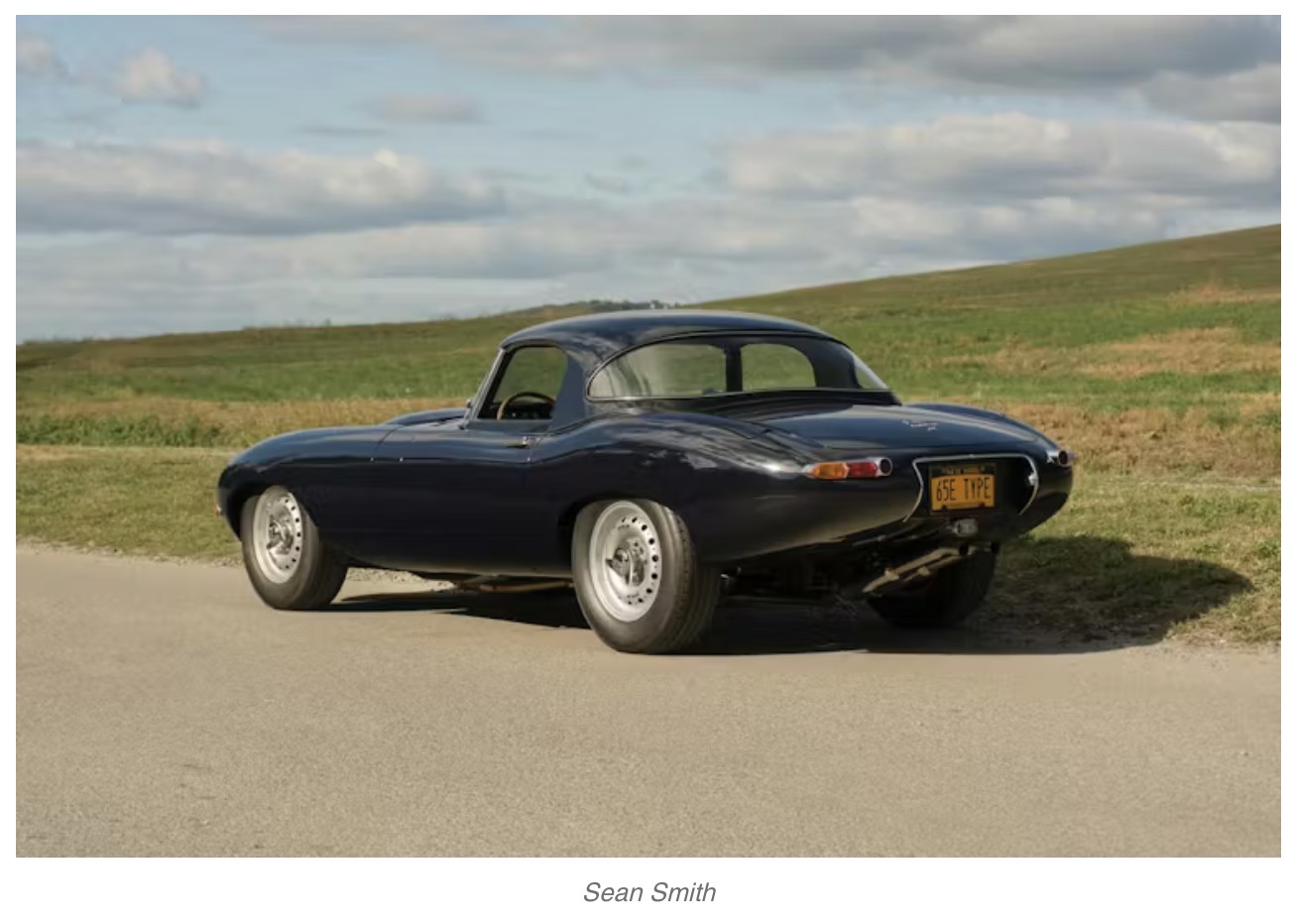
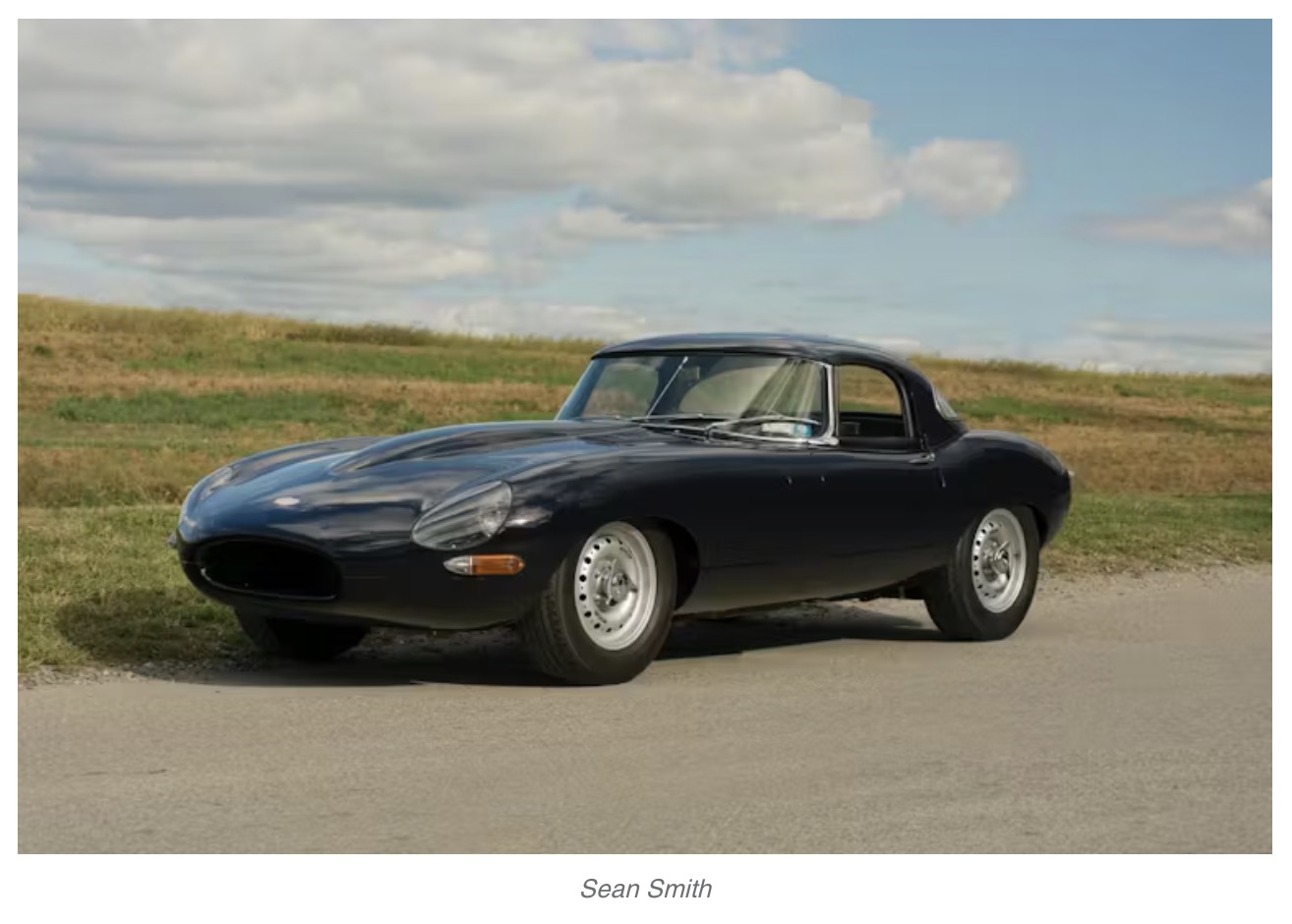
The E-Type was always there, but years of hard driving had taken their toll, and Bob eventually decided to treat it to its own special restoration. He spent the better part of a decade doing just that, every nut and every bolt, from the ground up, but unlike the previous restoration work he’d done to his prized E-Type, this time he aimed for something else.
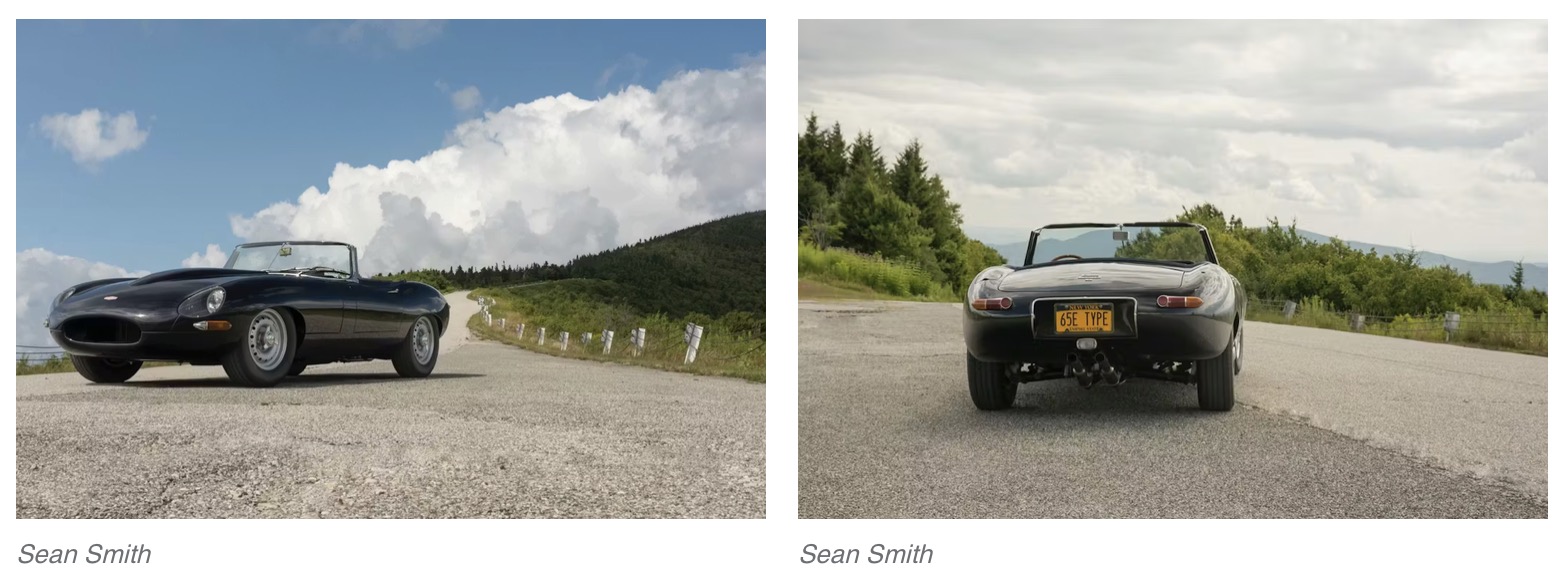
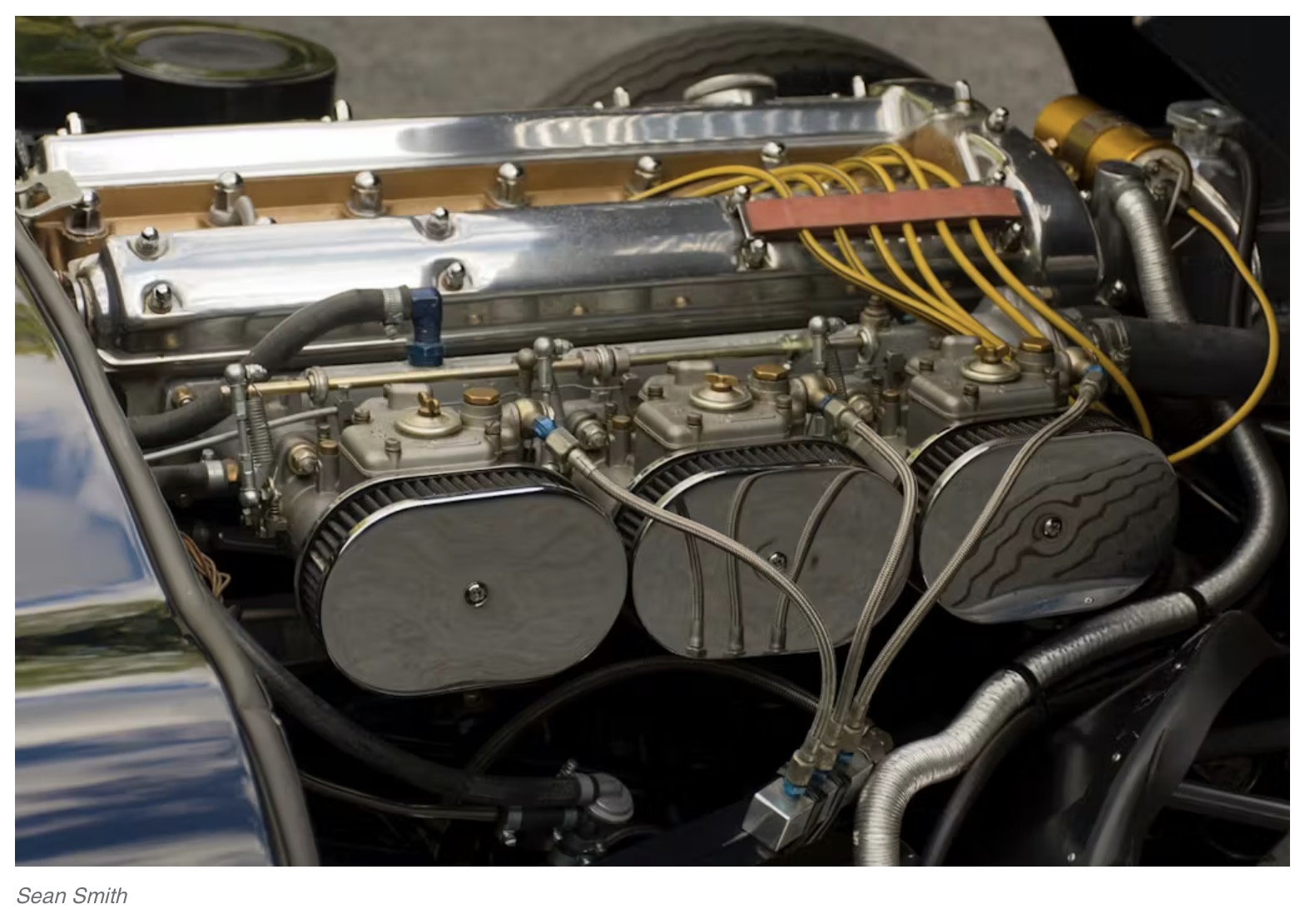
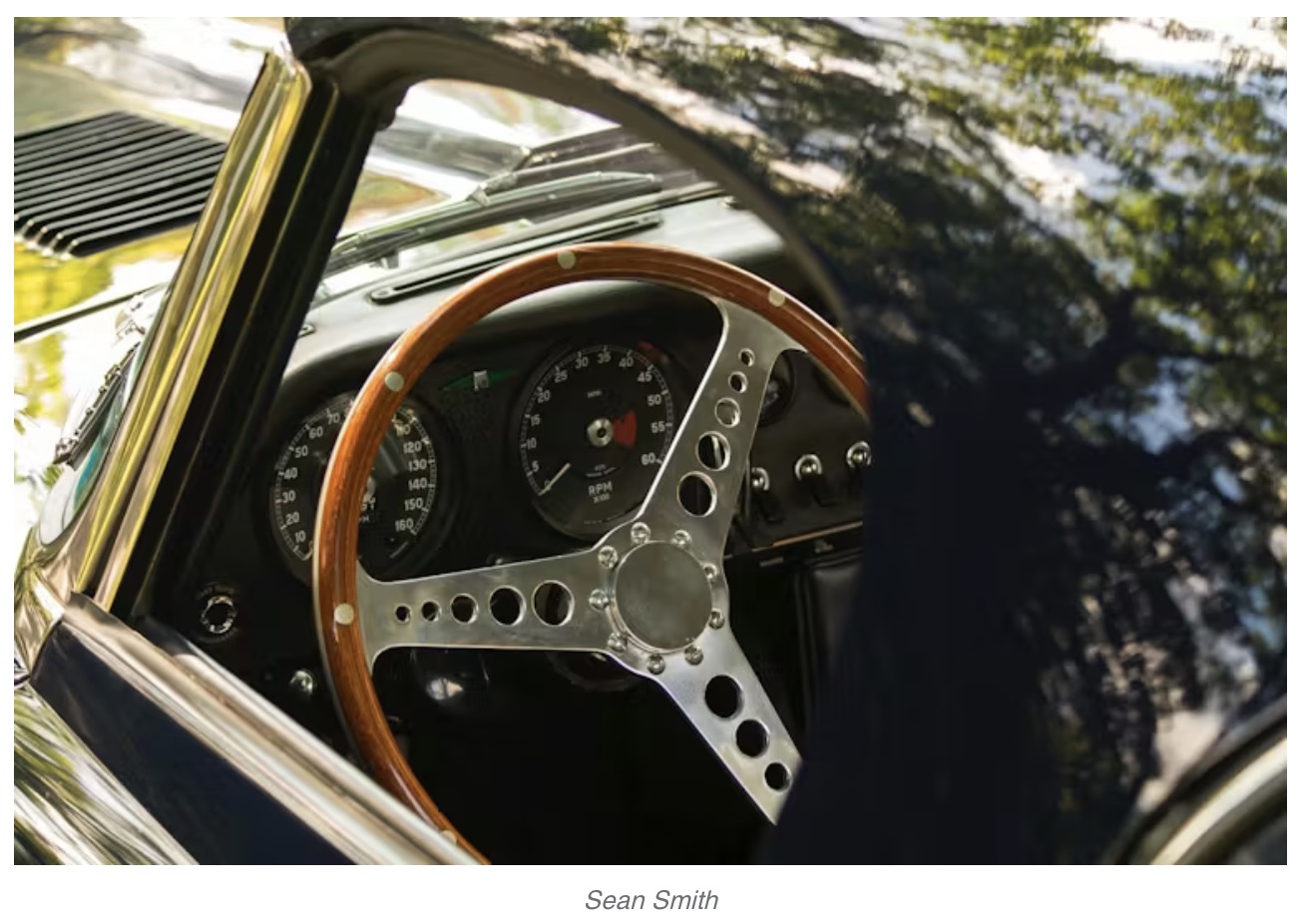
“I wanted to give the car a new look.” Taking a page from Jaguar racing history, Bob gave the XKE the look of its lightweight racing relatives. He balanced and blueprinted the engine and fitted forged pistons, Isky cams, and triple Weber carburetors. Headers and a stainless-steel exhaust helped bring the horsepower to somewhere north of 300, and he ran it through a five-speed gearbox to give the car a more modern ride. D-Type–style Dunlop wheels and Avon tires added the final touch.
It is now the highlight of a garage that also includes a Ferrari Daytona, a 289 Cobra, and a 2019 Bullitt Mustang.
At 76, Bob Millstein has indeed seen his fair share of terrific machinery come and go. Even the Hansgen Special is gone now. But the E-Type has been a constant since it fell into his lap more than 50 years ago. He’s been through a lot with that car, and there are too many miles and too many memories to let it go.
“Each car I own does something different for me,” Bob says. “The Mustang is a modern car, so it removes some of the driving experience. The Daytona is exciting, but in a very different way.” And the Jaguar?
“The Jaguar is just a visceral experience that no other machine can replicate.”
Report by Sean Smith for hagerty.com