It’s hard to believe it has been this long, but the water-cooled 911 will celebrate its 30th anniversary next year. Porsche introduced the 996 generation 911 at the Frankfurt International Motor Show in September of 1997, then began selling it in North America for the 1999 model year. And although it was an ambitious redesign of the company’s signature model, the 996 wasn’t the unqualified success that Porsche had hoped for. While it was an objectively superior driver’s car to its predecessor the 993 (1994-98), during the 996’s development, Porsche AG’s finances weren’t in the best shape, and the cost-cutting went perhaps a bit too far. In the rearview mirror, for example, a 996 was nearly impossible to tell apart from the cheaper, entry-level Boxster.
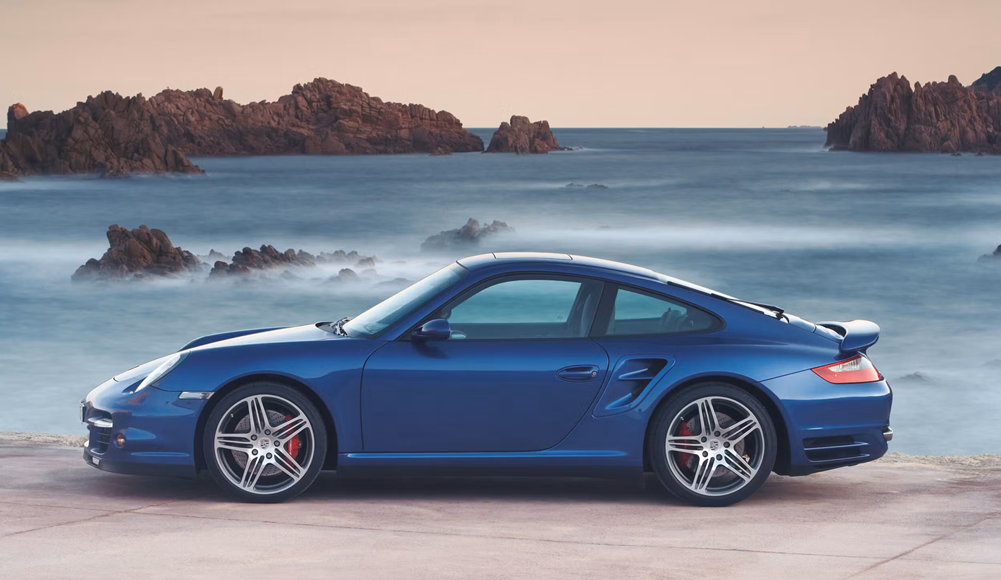
Significant improvements arrived with the 997 generation 911 of 2005. While not a clean-sheet design, it remedied most of the perceived shortcomings of the 996. Today, it’s an appreciating modern collector car and arguably the most beloved water-cooled 911 to date. As with any Porsche, though, there are plenty of things to look out for when shopping, and deciding what to spend.
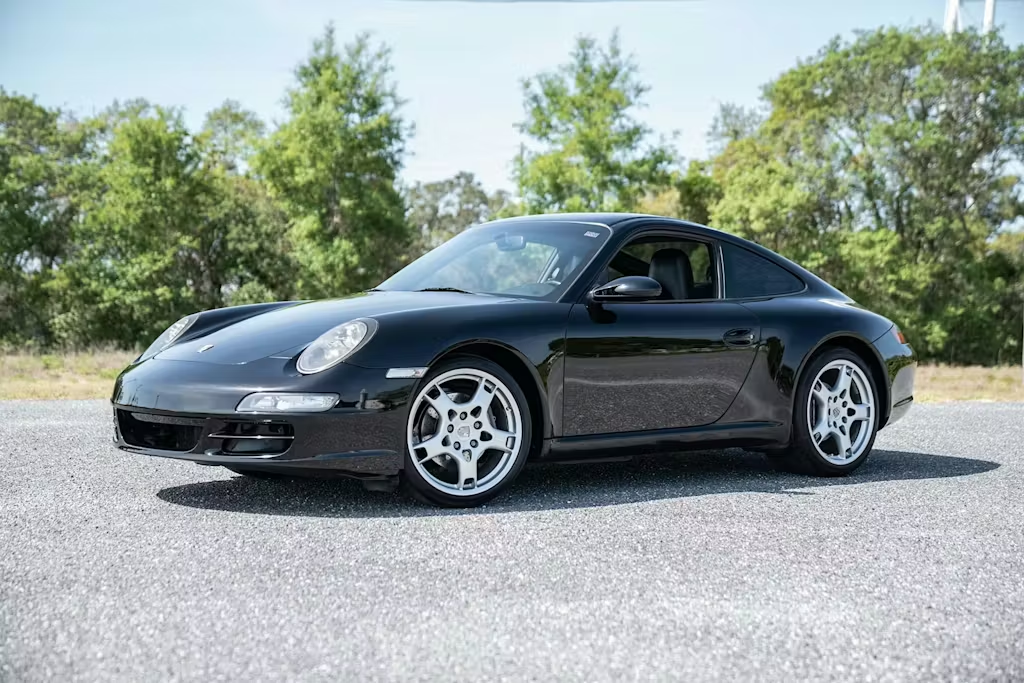
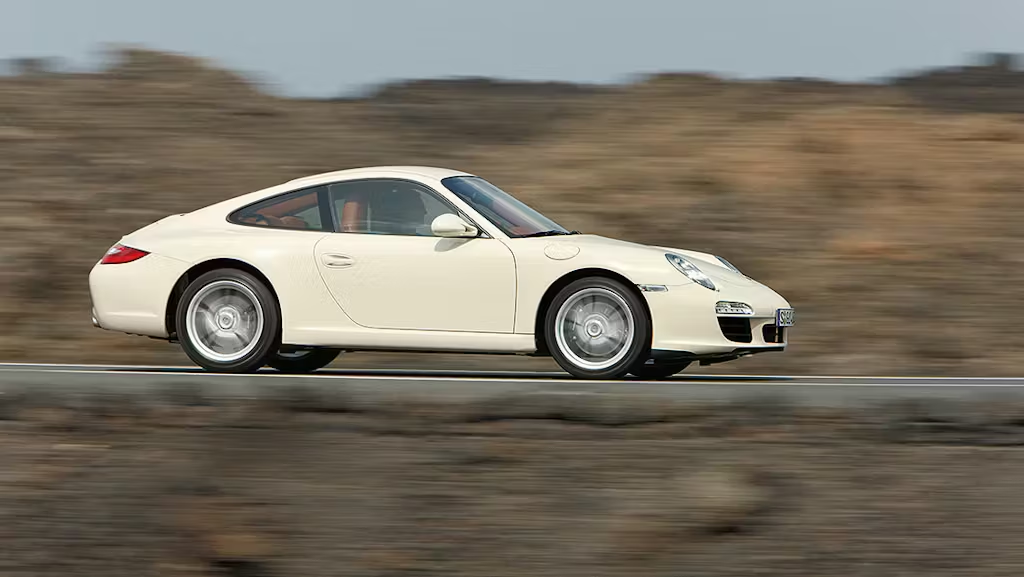
Ask any 911 enthusiast what their least favorite aspect of the 996 was, and chances are they would mention the headlights—especially on models built before the 2001 facelift, which indeed shared their design with the Boxster—as well as the rather plain slab sides. Designer Grant Larson took no chances with the 997. More traditional headlights returned, along with a more curvaceous profile, particularly in the widebody variants. The proportions remained unmistakably 911.
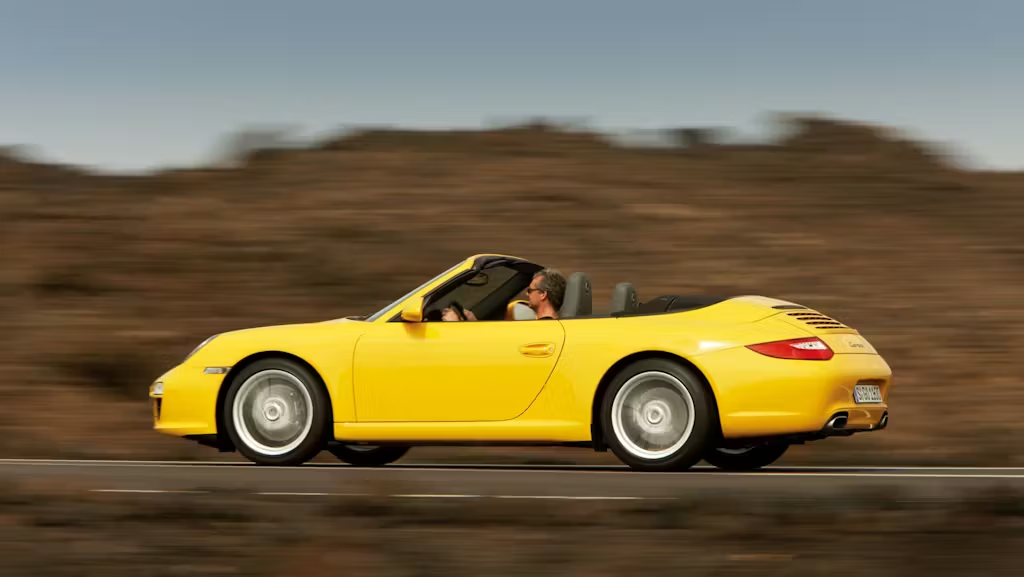
The initial submodels included the base Carrera, Carrera S, Carrera 4, and Carrera 4S. The latter two featured all-wheel drive and had rear haunches that were 44 mm wider, which led to the nickname “widebody.” The 997 was offered in coupe, cabriolet, and Targa body styles, with the Targa distinguished by a large panoramic glass roof and a practical hinged glass rear hatch.
In a recent conversation with Grant Larson, he explained how his involvement with the 997 came about. According to him, the process was surprisingly straightforward: he simply asked the then head of Porsche design, Harm Lagaaij, whether he could work on the successor to the 996—and Lagaaij agreed.
“It’s important to remember that under every 997 hides a 996. The roof and all of the expensive stuff is 996,” according to Larson. He also notes that ideation and collaboration with other designers on the 997 was brief. It happened at the sketch phase where once again, Lagaaij favored Larson by essentially saying, “let’s go with this design, it’s already done.”
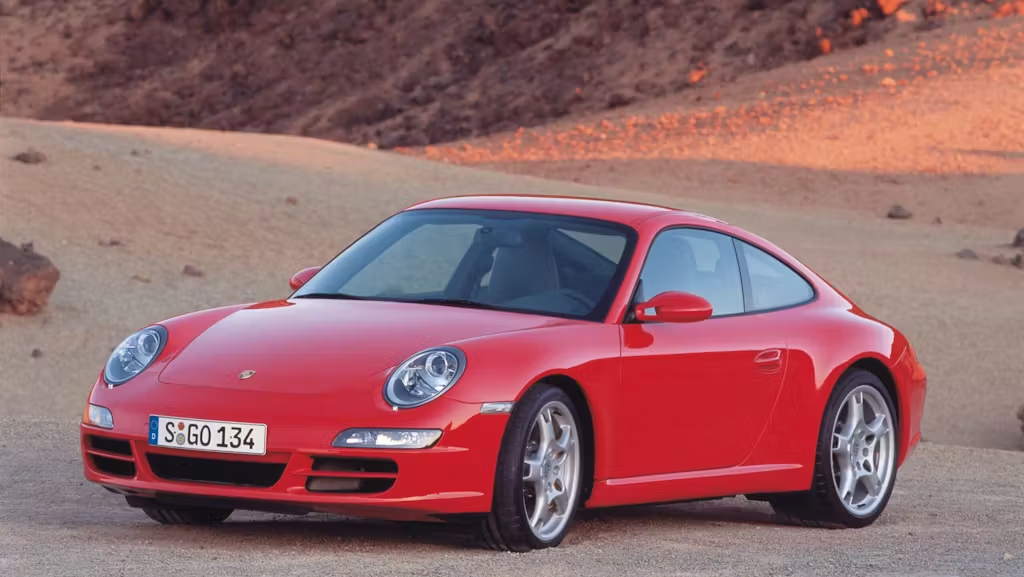
Clarity and precision were the major pillars of the design brief: “Everything was tighter, more precise and flush,” says Larson. Quality was up, and the iconic oval headlamps were back. Budgets were more generous by the time of the 997, so bespoke headlamps not shared with another car, and the freedom to break turn signals and fog lights out of the lamp assembly helped cement the car’s identity. And just when you think that classic 911s were the only inspiration for the 997, Larson mentioned that the radiused hood an element inspired by the 356.
Another carryover for the original 997 (known retroactively as the “997.1”) was the engine architecture. The M96/M97 flat-six (in 3.6-liter form for the base car and 3.8-liter for the S) was similar to the 996’s engine, which means that it shared the controversial Intermediate Shaft (“IMS”) bearing of the earlier car. More on this later, but the first half of 2005 had the single-row, replaceable bearing (which failed at the highest rate). Mid-year 2005 through 2008 had a vastly improved larger bearing that could only be removed by taking apart the engine. Adding further confusion is the fact that the Turbo model, which was introduced in 2007, had a completely different engine altogether that does not suffer from IMS issues.
The 997.1 base cars made 325 horsepower, and the “S” model 355 hp. The 3.6-liter Turbo made 480 hp. Gearbox choices for all were a very sweet 6-speed manual transmission, and the uninspiring but competent and reliable Tiptronic automatic transmission that had been introduced with the 964-generation 911 back in 1989.
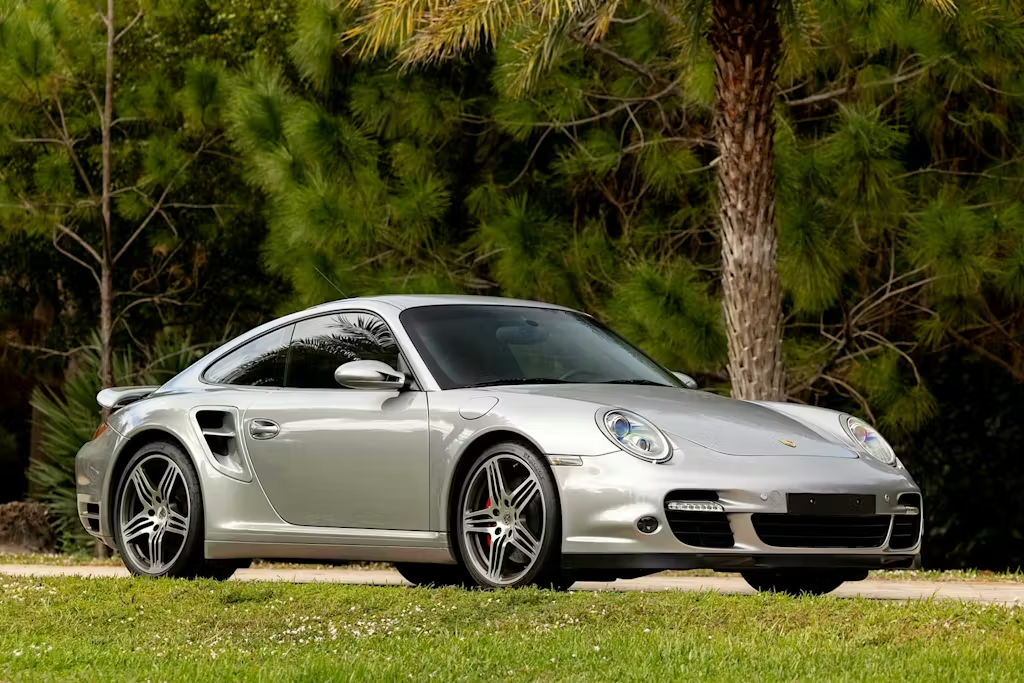
Other than the introduction of the Turbo in 2007, changes were few with the 997 until its facelift in 2009, resulting in the so-called “997.2.” Perhaps the most notable change for the 997.2 was the introduction of a new two-pedal choice for gearbox, the Porsche Doppelkupplung (aka the “PDK”) dual-clutch automatic gearbox known for smooth operation and insanely quick shifts. Inexplicably, Porsche launched this revolutionary, race-inspired gearbox with old-fashioned steering wheel buttons instead of proper paddle-shifters. The sport wheel offered with the 997.2 Turbo in 2010 had this important feature which soon spread to ordinary two-pedal 911s.
Other changes to the 997.2 included a revised front fascia and rear lights that have a distinctive notch in the inboard corners. The IMS bearing was also a thing of the past with the new 9A1 engine which featured Direct Fuel Injection (DFI) for the first time. Base 3.6-liter engines now made 345 hp, while the S came with 40 more at 385 hp and the Turbo cracked the 500-hp mark. Porsche also unveiled a more powerful Turbo S model in 2010 with 30 more hp than the standard Turbo. There were GT car (GT3, GT2, and RS versions of both) variants of the 997, but these are very different cars with very different prices, and are thus a bit beyond the scope of this buyer’s guide.
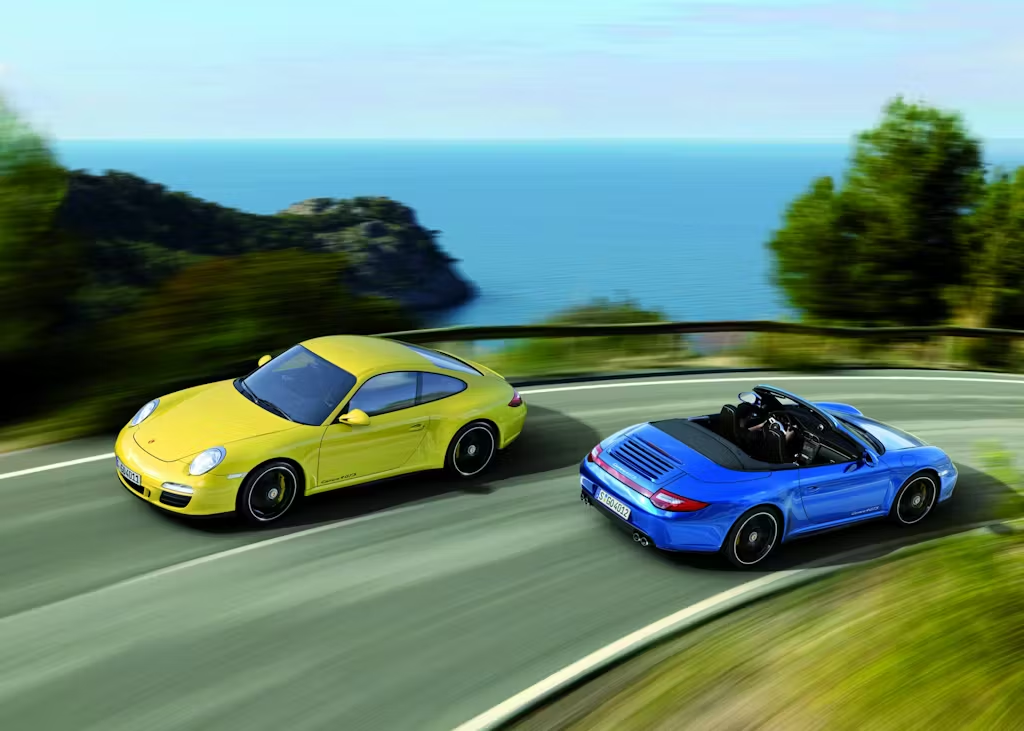
As is often the case with Porsche, the best came last. The 997 Carrera GTS, a mid-level model above the Carrera S and below the more expensive and track-oriented GT3, is regarded as one of the most desirable naturally-aspirated, non-GT 911s. All the ingredients that 911 geeks cherish (with the possible exception of air-cooling) are present: lovely hydraulic steering, the slick 6-speed manual or brilliant PDK gearbox, centerlock wheels, lower stance, and the coveted wide-body combined with rear-wheel drive. The GTS was available for 2011, and the 991 transition year of 2012 only. The 997’s successor, the 991 contributed to the mystique of the GTS. While certainly a fine 911, its proportions were even further removed from the air-cooled 911s than the 996 and 997.
What to Look for
The 997 is certainly emerging as the Goldilocks of the water-cooled 911s, with some comparing it favorably to the 993 generation of air-cooled cars. Built in two separate sub-generations, (997.1 from 2005-08 and 997.2 from 2009-12), their story is complicated, and this is where it really helps to be able to tap into a knowledge base. The Porsche Club of America (PCA), for example, employs a full-time Technical Director to field questions and assist in making a good choice. A PCA membership and a thorough pre-purchase inspection by a shop familiar with water-cooled 911s is a must.
The oldest 997s are now over 20-years-old, and some have accumulated well over 200,000 miles already, so the cars are clearly not made out of papier-mâché. Even so, there are some well-documented issues that you’ll need to be aware of. The aforementioned IMS bearing is probably the most notorious, though the 997.1 cars are the only ones for which this is a concern. Early 2005 models are a classic case of good news/bad news. The bad news is that these cars came with the most troublesome bearing, the smaller, single-row one that had the highest failure rate. Many of these cars had their engines replaced under warranty or as the result of a class action settlement. It’s important to check your engine number to see which one you have, which is another step that PCA can help with.
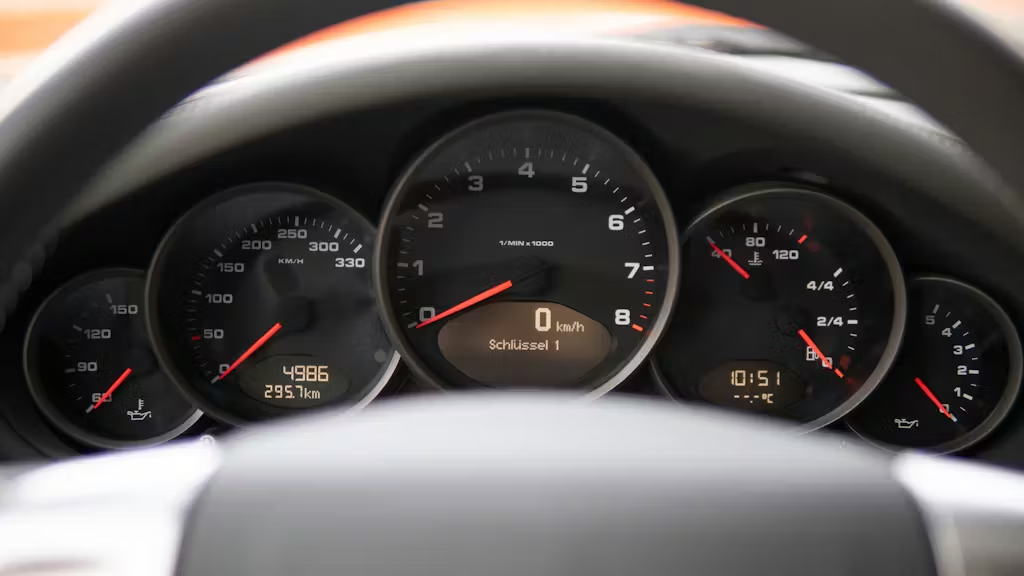
If someone were to consider buying a car equipped with this type of bearing, it would be strongly advisable to have it replaced with a reputable aftermarket bearing as soon as possible. When IMS failure occurs, it is typically sudden and catastrophic, often resulting in engine damage that requires a rebuild costing more than $25,000. Although some sources cite an 8% failure rate under warranty—suggesting that 92% of engines were unaffected—it is likely that the overall failure rate has increased over time as vehicles have aged.
The improved, larger bearing used between 2006 and 2008 is not easily replaceable unless the engine is disassembled or the bearing is drilled out. However, Charles Navarro of LN Engineering, a company specializing in the M97 engine, recommends removing the bearing’s grease seal during a clutch replacement. This allows the bearing to be lubricated by engine oil, which significantly reduces the likelihood of failure.
Another well-known weakness of the M97 engine is bore scoring. This refers to deep scratches in the cylinder walls that can negatively affect compression and increase oil consumption, potentially leading to complete engine failure. The precise cause of bore scoring remains unclear. Vehicles operated in colder climates appear to be more susceptible, although the cylinder lining material is also believed to play a role. Contributing factors may include cylinder wash caused by dirty or misfiring injectors, as well as allowing the engine to idle for extended periods immediately after a cold start. To reduce risk, it is advisable to keep injectors in good condition, begin driving shortly after starting the engine, and avoid exceeding 3,000 rpm until the engine has reached operating temperature.
An engine suffering from severe bore scoring may consume excessive oil, produce a ticking noise at idle, and display darker, sootier exhaust deposits in one tailpipe. The most reliable diagnostic methods include a bore-scope inspection and an oil analysis. Anecdotal evidence suggests that the 3.8-liter engines are more prone to bore scoring than smaller variants. The only definitive solution is a complete engine rebuild that includes installing cylinder sleeves. In contrast, the later 997.2 engine, the 9A1, appears to experience this issue far less frequently.
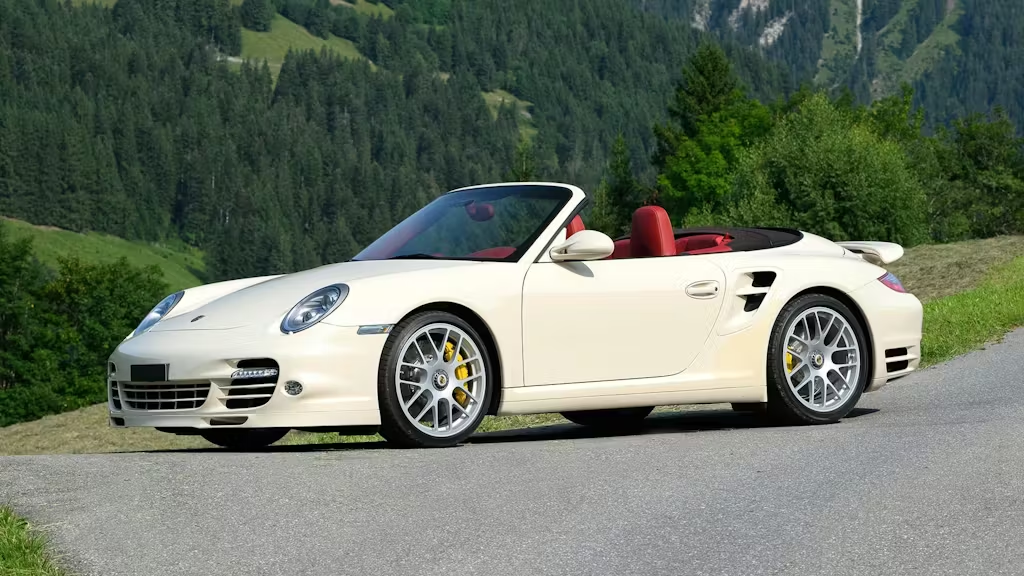
The 997 Turbo uses a completely different engine design referred to as a “Mezger” engine after famed engine designer Hans Mezger. It’s an incredibly reliable unit with one caveat: Porsche used bonded connectors for the coolant pipes, and this bond can fail under hard use. Pinning, or welding the coolant pipes is good insurance against potentially catastrophic overheating. Other than that, 911 Turbos are tremendously reliable cars, albeit with fairly expensive normal maintenance due to the fact that accessibility is poor and the engine has to be at least partially removed to accomplish a good number of service items.
Gearboxes and differentials are generally stout in all flavors of 997, with Tiptronic failures almost unheard of. Proper maintenance must be followed on PDK cars, and replacement of a faulty PDK is frightfully expensive, so you’ll want to see the receipts. Occasionally, the transfer case fails on cars with AWD, but used ones are readily available. Bodywork on all 997s is of good quality both in paintwork and rust-proofing. It’s rare to see one with any sort of rust. Collision repair is generally what you need to look for. Panel gaps on the 997 were fairly tight and precise, so variation here is a clue. A paint thickness meter is a few hundred dollars well spent. A simple tap on the body panels will tell you where repairs have been made. CARFAX doesn’t catch everything, but among 911 fanatics a questionable CARFAX is a black mark.
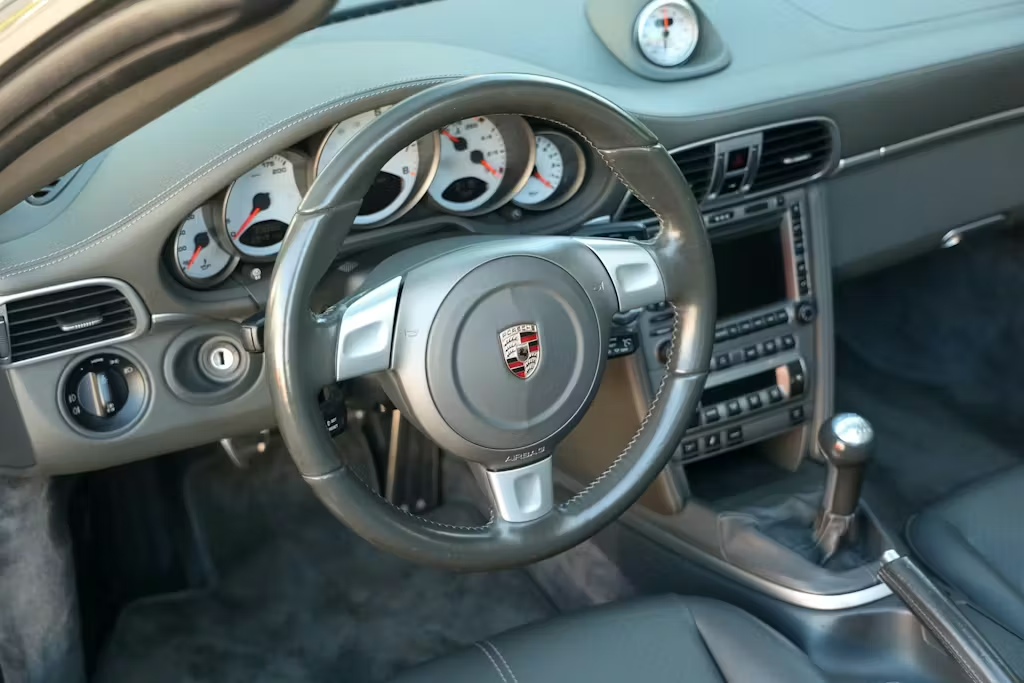
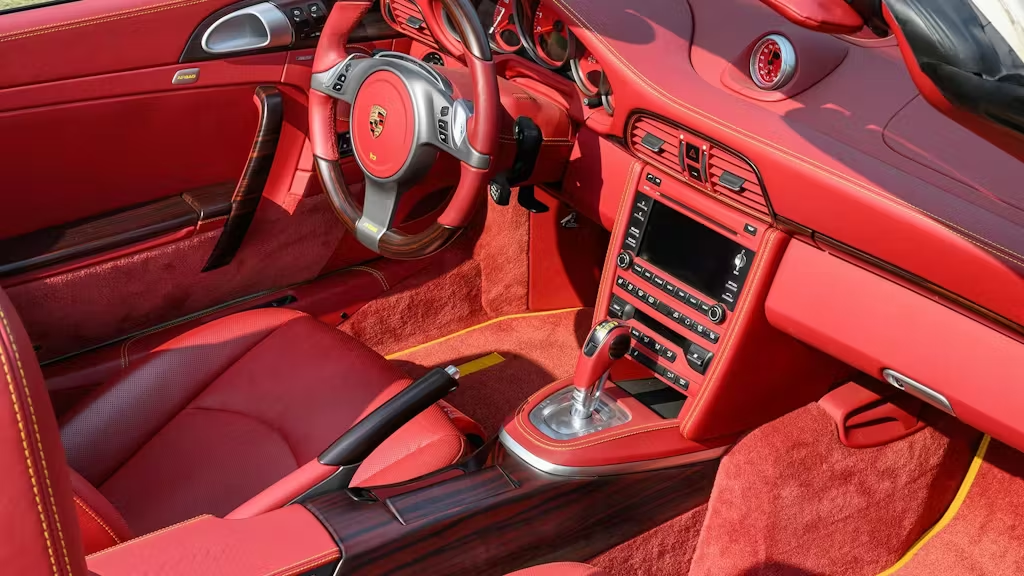
With a few exceptions, interiors seem to wear pretty well. Climate control buttons on 997.1s can suffer from a buildup of sticky residue that is both annoying and unsightly. Cars with a Sand Beige interior also suffer from wear and chipping of soft finishes that is also ugly, although there are products available to touch this up. Beige steering wheels and shift knobs were an appalling idea, and often the only remedy here is to replace them with black items.
Options are also a big deal to Porsche people. Unlike the 996, which carried option codes on a white sticker under the hood, the option codes for a 997 are usually found in the warranty booklet. Sport seats and a sport exhaust are some of the options that will add value to a 997, as are unusual colors like Speed Yellow or Racing Green Metallic.
What to Pay
Values for 997s have increased noticeably since the pandemic, though not drastically. Not surprisingly, the 997.2s are more valuable, as they’re newer and have more durable engines. Manual coupes bring the most money, and while there are some fans of the Targa model, cabriolets are generally on the bottom rung of the ladder.
Base Carrera 997.2 manual coupes have gotten quite dear—they’re also fairly rare, having been introduced at the start of the Great Recession. It’s getting hard to find a manual coupe in #2 (excellent) condition for under $65,000. Carrera 4s generally sell for a decent premium over their two-wheel drive counterparts, and the S variants of each carry a decent premium as well. After 2008, with the introduction of the PDK gearbox, the take rate for manuals began to plummet, so it can be genuinely hard to find a manual 997.2. Cars equipped with a PDK carry a 10% discount in the Hagerty Price Guide.
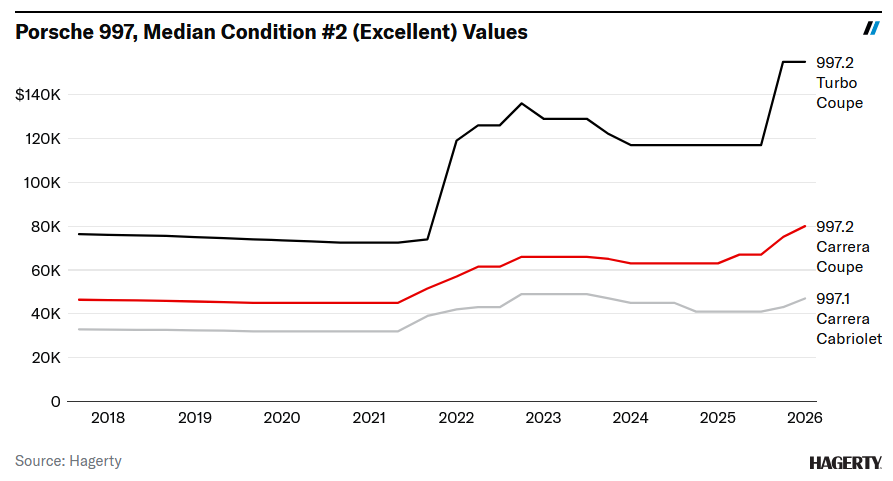
Rising 997.2 prices have also had a ride-along affect on 997.1s. Excellent-condition 6-speed coupes are well into the $50,000 range. The GTS variant in excellent condition generally starts at around $90,000 and goes up from there. Manual Turbo coupes are well over $100,000 today. Further down, a narrow-body 997.1 cabriolet with a Tiptronic automatic transmission will generally be on the bottom rung of the ladder. With over 100,000 miles, there are still Tiptronic cabriolets out there in the high-$20,000 range.
There are many flavors of 997, and they come in a wide range of prices. In general, though, this era of 911 is gaining recognition among the Porsche faithful and beyond. A clean, well-maintained one with all the checks and services performed will be a rewarding car to own, hold its value well, and of course be a blast to drive.
Rob Sass is the Editor-in-Chief of Porsche Panorama, the official publication of the Porsche Club of America. His opinions are his own, not necessarily that of the Club.
Report by Rob Sass
find more news here.