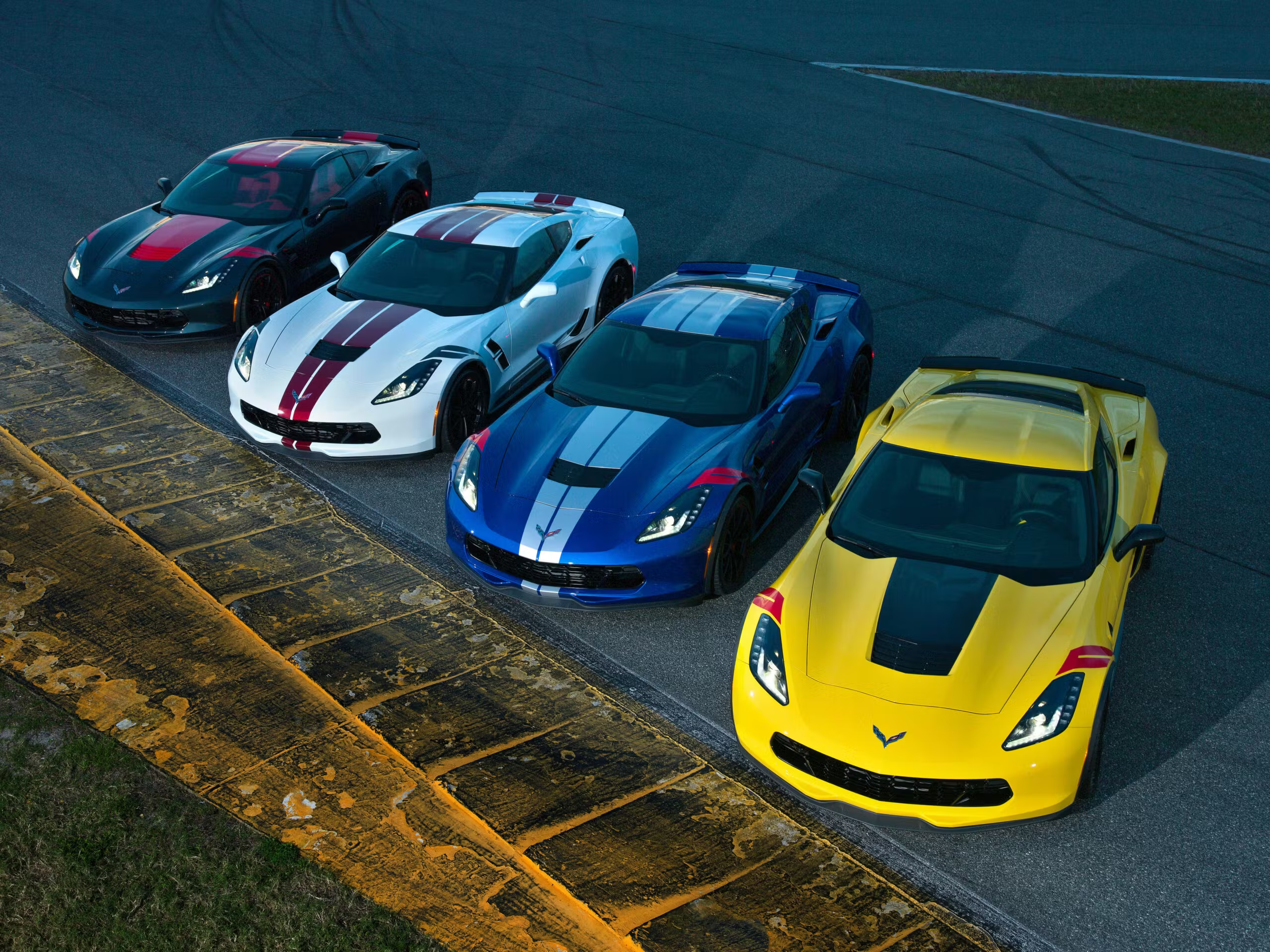
The long-rumored C8 Corvette Grand Sport is set to be officially unveiled on March 26th. In an exclusive preview at Sebring, we were able to catch a glimpse of the finished product in action one week early. Other than “yes, it exists,” “it will debut a new V-8,” and it, sadly, “won’t usher in the return of the manual transmission,” details about the new 2027 model were scarce. This lack of concrete information about the event’s headline act left many excited onlookers focused on nostalgia, because along with the newest Vette parading around the famed Florida road course were all four Corvettes that preceded it in wearing the historic Grand Sport moniker.
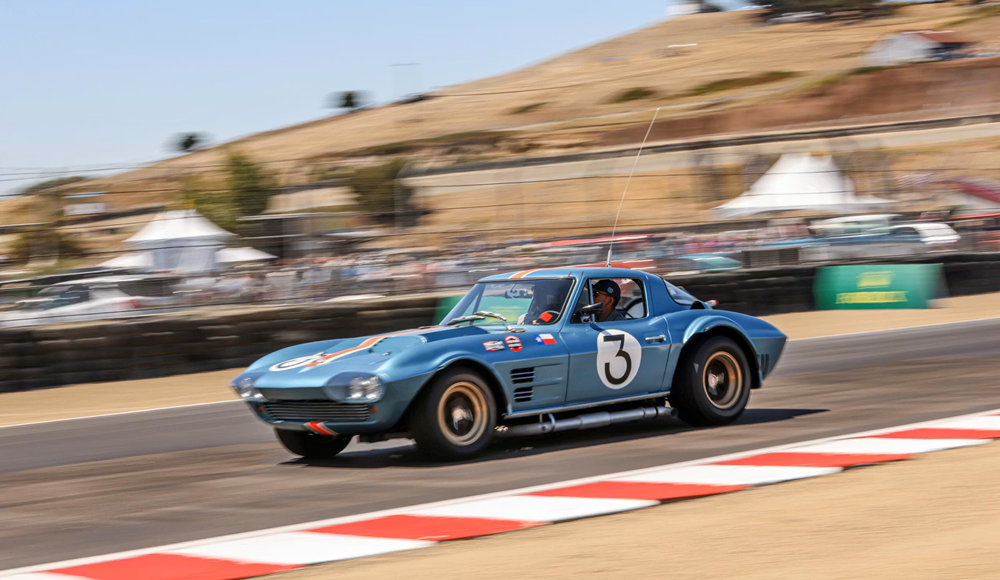
If you’re interested in curating your own collection of Grand Sports while you wait for the new one to hit showrooms, we’ve compiled a bit of history along with values from the Hagerty Price Guide.
The Original (1963)
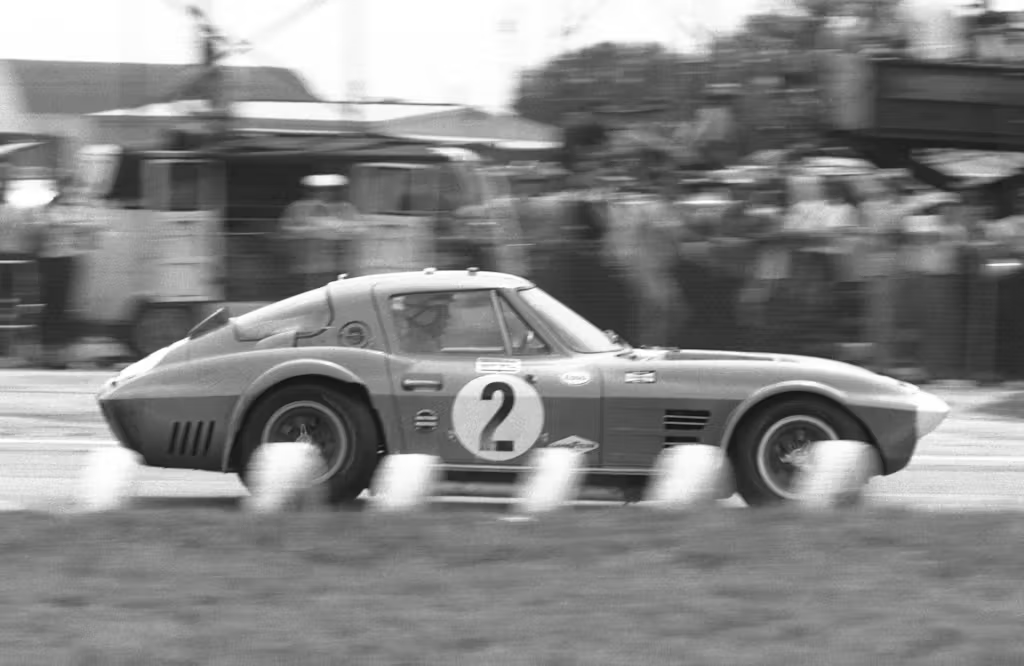
With his eyes on Le Mans, Sebring, and the goings on at Carroll Shelby’s California shop, Corvette Chief Engineer Zora Arkus-Duntov conceived of the Grand Sport in 1962 with green-lit plans to skirt GM’s racing ban by producing a limited run of 125 lightweight Corvettes to get into the hands of independent teams. The project was built around a steel tube ladder-type frame with a built-in roll bar and featured a modified fiberglass body sans the trademark split rear window of run-of-the-mill 1963 ‘Vettes. Unique side pipes, Halibrand knock-off magnesium wheels, Firestone racing tires, and planned engines including big-blocks and all-aluminum small-blocks with hemi heads rounded out the main attractions of Zora’s 2000-pound fantasy build.
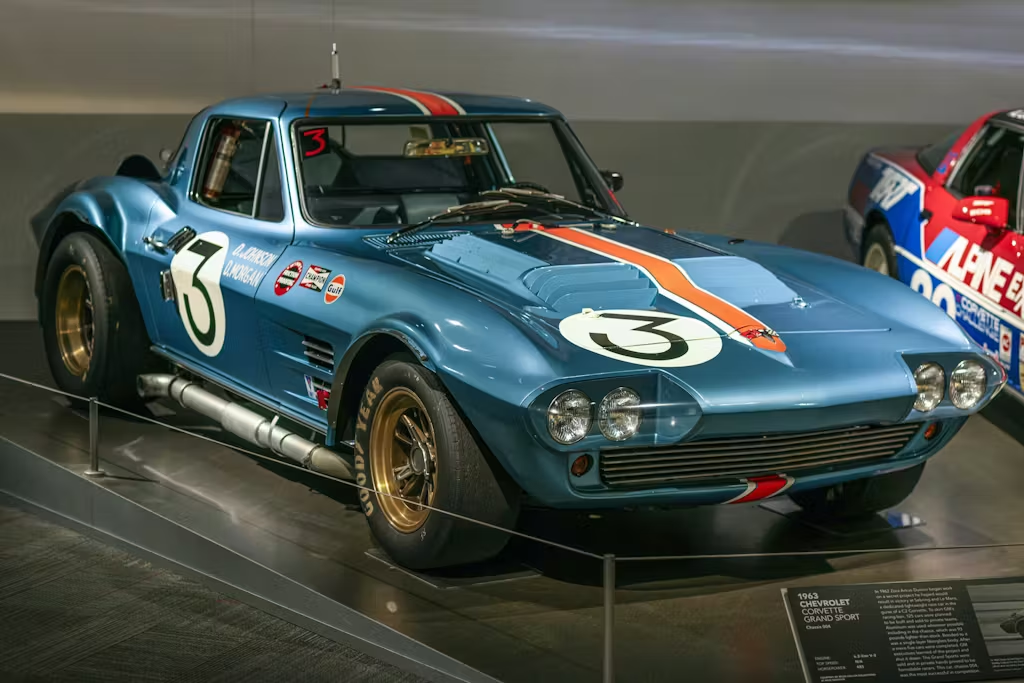
Two roadsters and three coupes were produced before the wrong members of GM brass caught wind of the program, pulled the plug, and ordered the existing cars to be destroyed, with annual bonuses on the line for insubordination. Legend has it that Duntov stashed the first two cars and snuck the other three into the hands of his racing friends. In 1963, the GSs beat Shelby’s Cobras at Nassau Speed Week, chassis 005 went on to win the 12 Hours of Sebring, and the rest is history. All five Grand Sports survive to this day and are likely the most valuable Corvettes in the world, though one would have to come up for sale to solidify that claim and earn them a spot in our valuation tool.
Like the Cobras and GT40s of Ford lore, the closest most folks can get to 1963 Grand Sport ownership is through the aftermarket; Superformance builds officially licensed continuation GSs with access to modern powerplants.
C4 Grand Sport (1996)
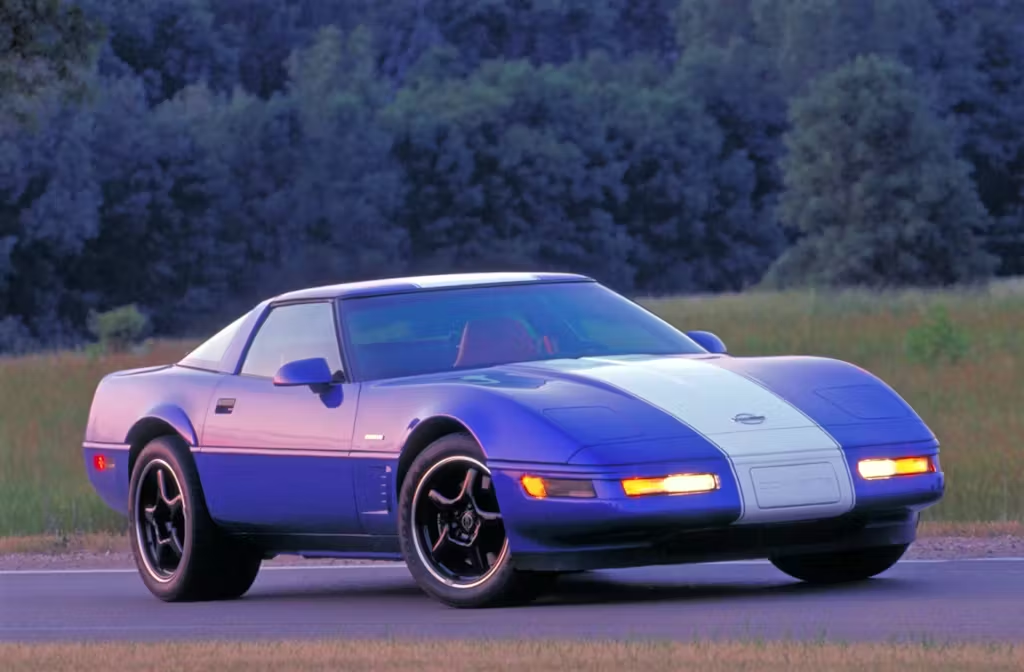
The modern GS template began as a special send-off for the C4 Corvette, which carried on for an extra model year after the retirement of its signature ZR-1 halo model. To fill the void left by the slow-selling but fast-accelerating 405-horse “King of the Hill,” Chevrolet dusted off the Grand Sport name. Visually, the C4 GS combined the standard Corvette body with the wider wheels and tires of the ZR-1. This combination necessitated unique rear fender flares that look mightily familiar to present-day Hellcat Widebody owners. The main selling points of the GS, though, were limited production numbers, its stunning livery, and the upgraded small-block under its clamshell hood.
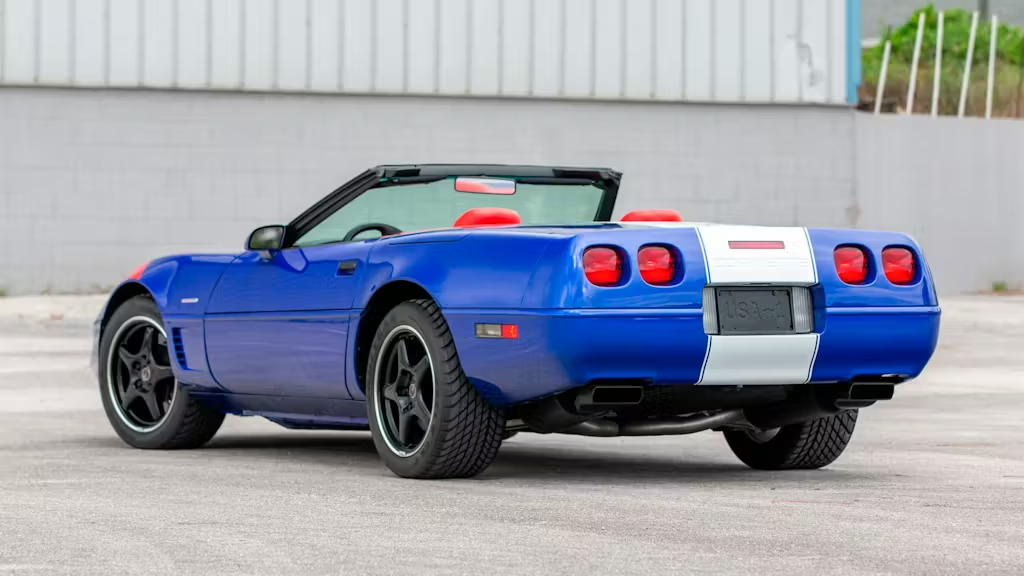
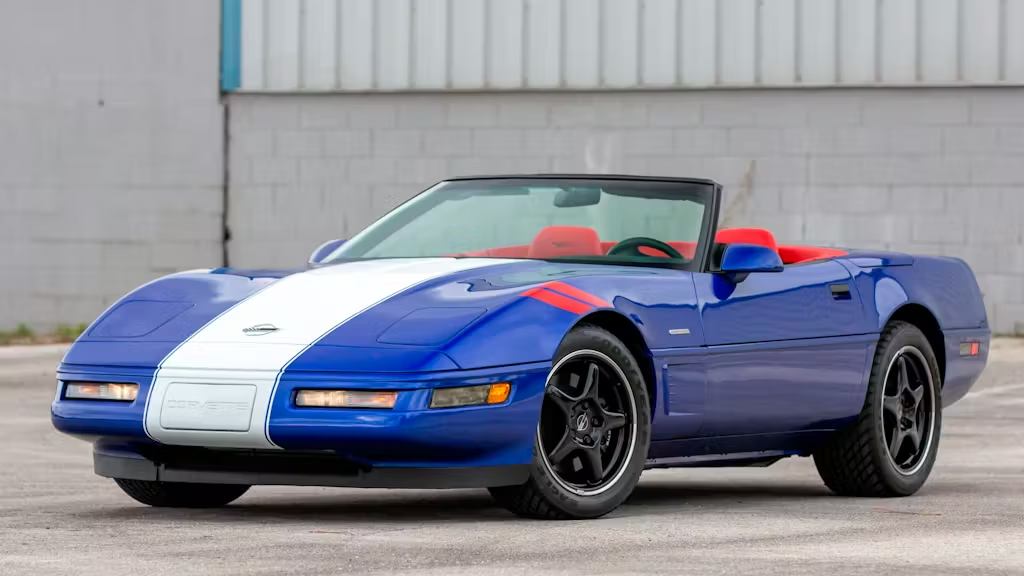
Before switching over to its first new generation in thirteen years, Chevrolet stamped together 1000 numbered examples of the C4 Grand Sport. 810 of those were Targa-topped coupes, with the remaining 190 being convertibles (with skinnier rear tires and no flares). No matter which top they were optioned with, all GSs were painted a striking shade of metallic blue dubbed “Admiral” with a full-length white center “skunk” stripe, a pair of red hashmarks on the left front wheel well—a nod to classic international racing series’ need to show emergency crews which side of a wrecked car held the driver—and a set of black ZR-1-style five-spoke wheels. The Grand Sport was only available with a six-speed manual transmission, and like all three-pedal ‘Vettes of ’96, that meant an upgrade to the final Gen-II Chevy Small-Block before the LS revolution: the 5.7-liter LT4. That one-year-only powerplant got a 10% bump in power over the standard LT1 for a total of 330 horses to go with 340 lb.-ft. of torque.
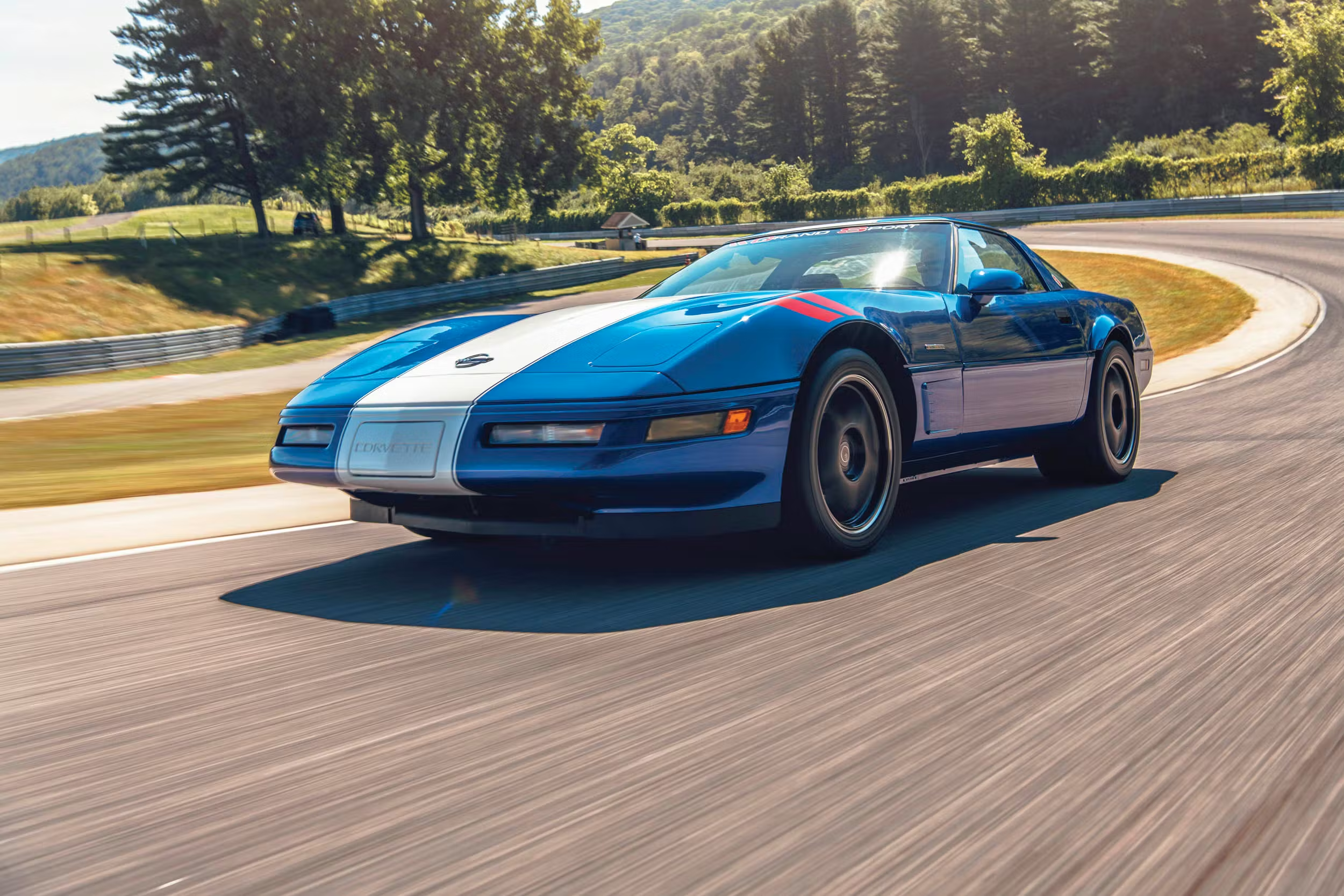
In testing, Car and Driver clocked the GS at 5.1 seconds to 60 mph and 12.7 to 100 on its way to 13.7 second quarter mile at 104 mph, putting it exactly where you’d expect; directly between the ZR-1’s respective marks of 4.5, 10.4, 12.8 @ 111 and the 5.3 to 60 and 13.9 quarter @ 100 mph of the LT1. Where this patriotic Bull Market alum has outpaced its contemporary stablemates is in appreciation. Concours-condition examples have climbed to $73,300, including a 7% rise since July of 2025. For comparison, similar-condition stick-shift LT1 ’95s that have only added $6K in value to their $37,000 ask since new, while top-flight final-year ZR-1s are worth more at up to $83,800 today. Excellent (#2) condition Grand Sports are up 12.3% since June with a current value of $53,700, while #3s represent a value play for a striking and historically significant collectable Corvette at $28,900.
C6 Grand Sport (2010-13)
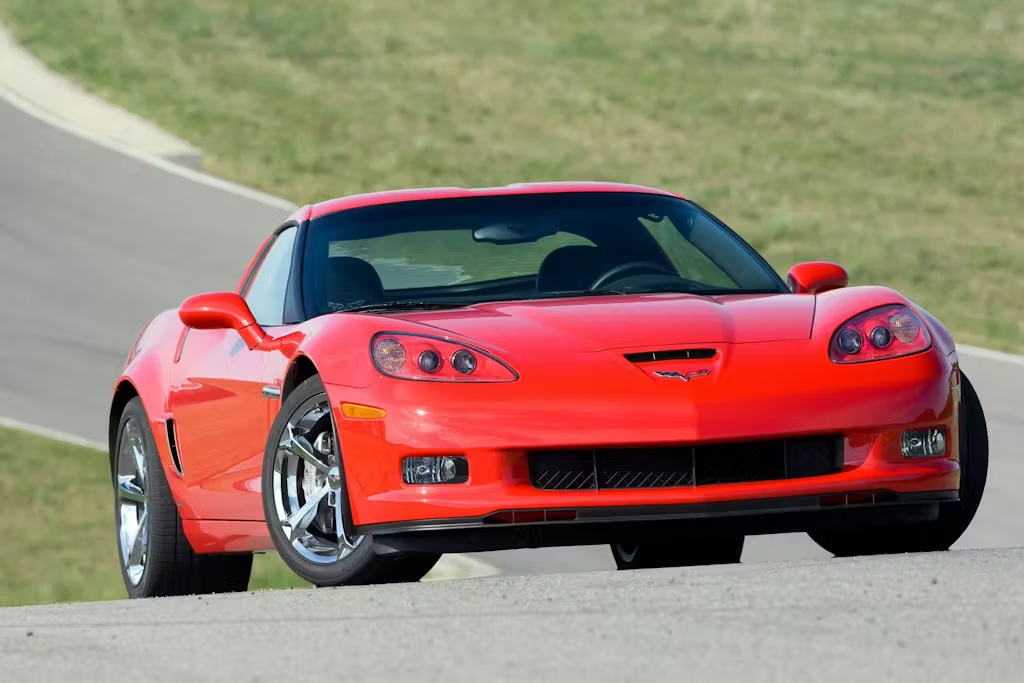
If the Grand Sport is Metallica, the C6 is its Black Album, the moment it became more accessible to a mainstream audience. Purists might have bemoaned the C6 GS as a sellout of the name, but, like the heavy metal band’s fifth album, “sell” is exactly what it did. The new GS formula was surprisingly simple: stretch the sultry wide haunches of the expensive and hardcore Z06 over the steel chassis and wonderful 430-436 horsepower LS3 V-8 from the plain-Jane C6 Corvette and even, gasp! offer buyers the option to order one with an automatic transmission and a full palette of colors. Its transition from individually numbered niche product to sales leader was absolute, leaving the rest of the lineup in the dust with 28,004 total orders over the final four years of C6 production.
After moving more an average of 36,816 total Corvettes per year over the first four years of C6 production (with a high of 40,561 in 2007), the final four years only tallied 50,903 combined sales (with the Z06 only accounting for 2371 of those and the newer, faster ZR1 only faring slightly better at 3280), giving the GS a whopping 55% of the ‘Vette market. While it’s up for debate if the C6 Grand Sport lived up to the badge it was given, there’s no denying that it was the exact car the crossed flags needed at a time when the line’s very existence was hanging by a thread. The sprint to 60 now took about four seconds flat, and 1320 feet were dispatched in 12.5 seconds at 116 mph.
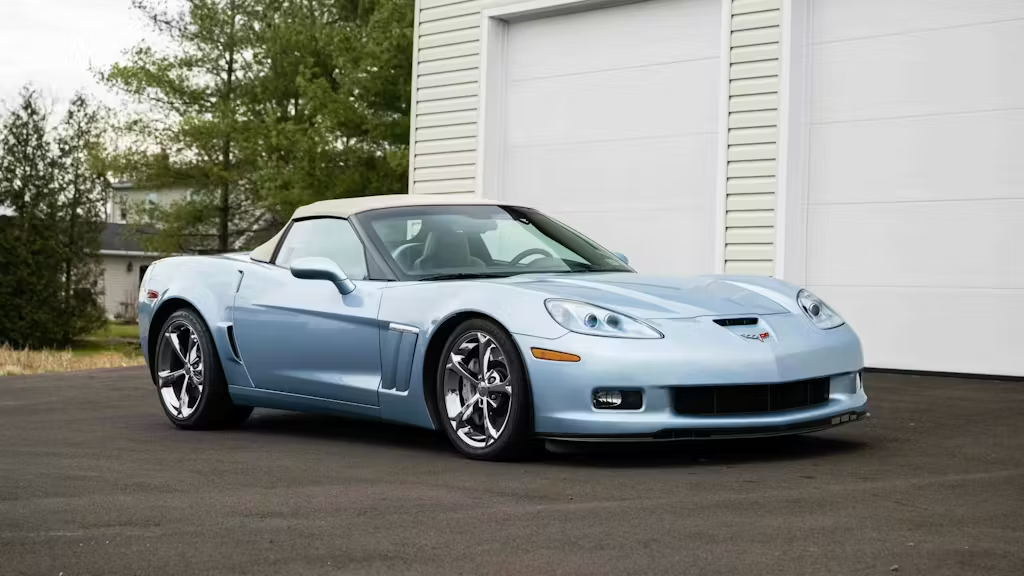
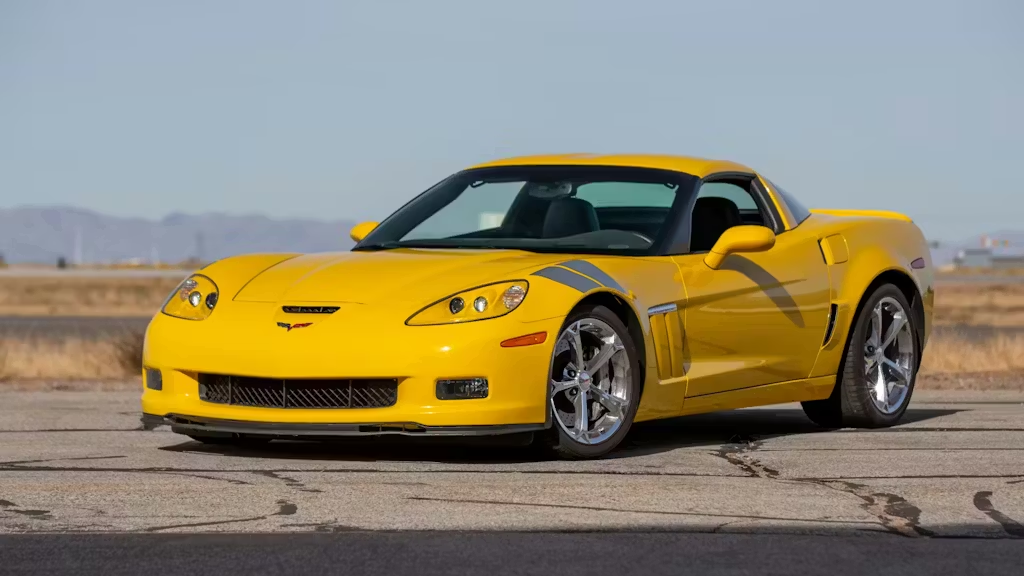
While you’ll likely never see a genuine C2 GS for sale, and C4s are a difficult find, the problem with 2010-13 Grand Sports is finding one that’s distinctive enough that it doesn’t have multiple twins on the market at the same time. Excellent-quality #2 cars come in at $50K while best-in-world #1 values slide in at $68,000. Don’t let those numbers discourage you, though—plenty of solid examples can be found in the mid-$30K range.
C7 Grand Sport (2017-19)
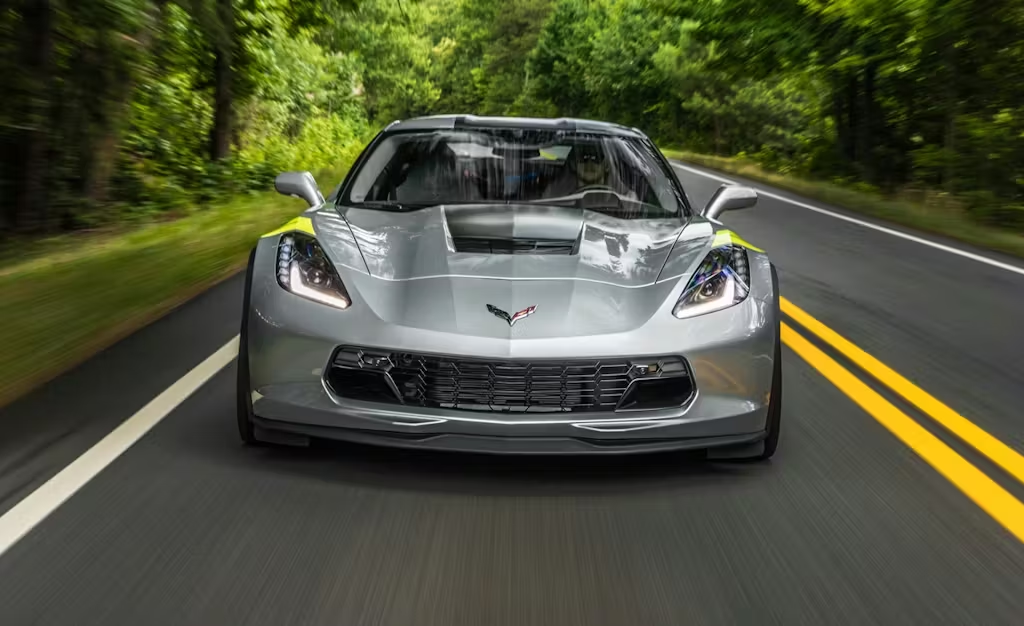
The C7 picked up right where the C6 left off when it added its own Grand Sport in 2017, and with the Z06 adding a supercharger and some more welcoming options of its own, the GS pounced on the opportunity to enhance the old stadium-filling recipe with a little spice. The basics remained the same: base engine, upgraded bodywork and suspension to go with wider rubber, and full menu of options, colors, tops, and transmissions. But, when paired with the seven-speed manual transmission, a new RPO from the Z06’s order guide turned the C7 GS into the spiritual successor to the vaunted C6 Z06 and the perfect “Goldilocks” model of the entire range. This Z07 package won back some street cred for the GS by imbuing it with $8000 of go-fast hardware, including carbon-ceramic brakes, the stickiest Michelins available at the time, and the Z06’s “Stage 2” aerodynamics package to go with the car’s standard MagneRide suspension.
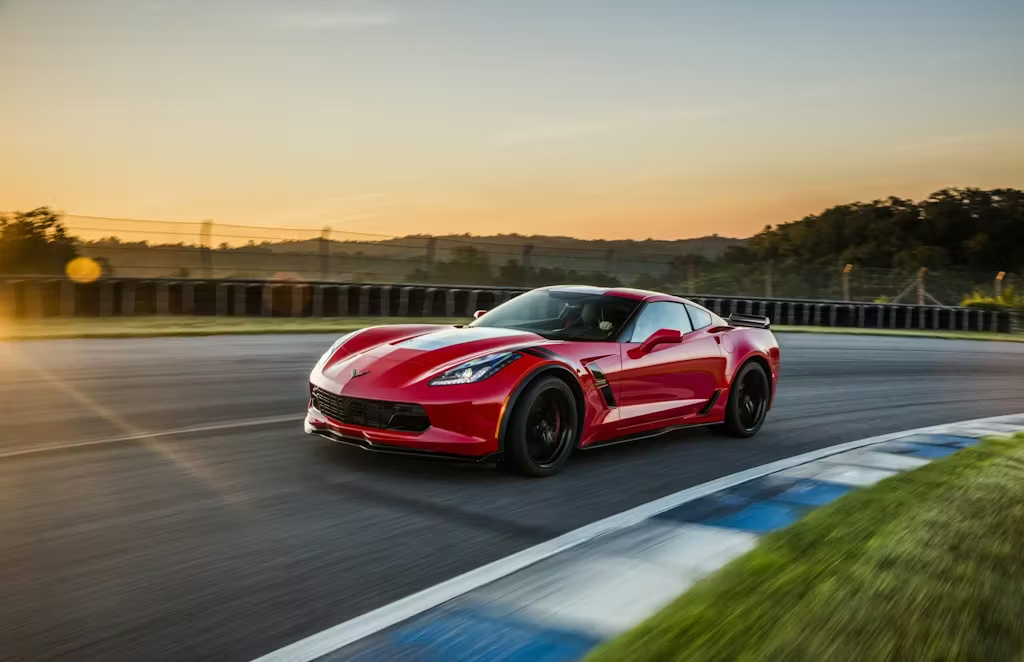
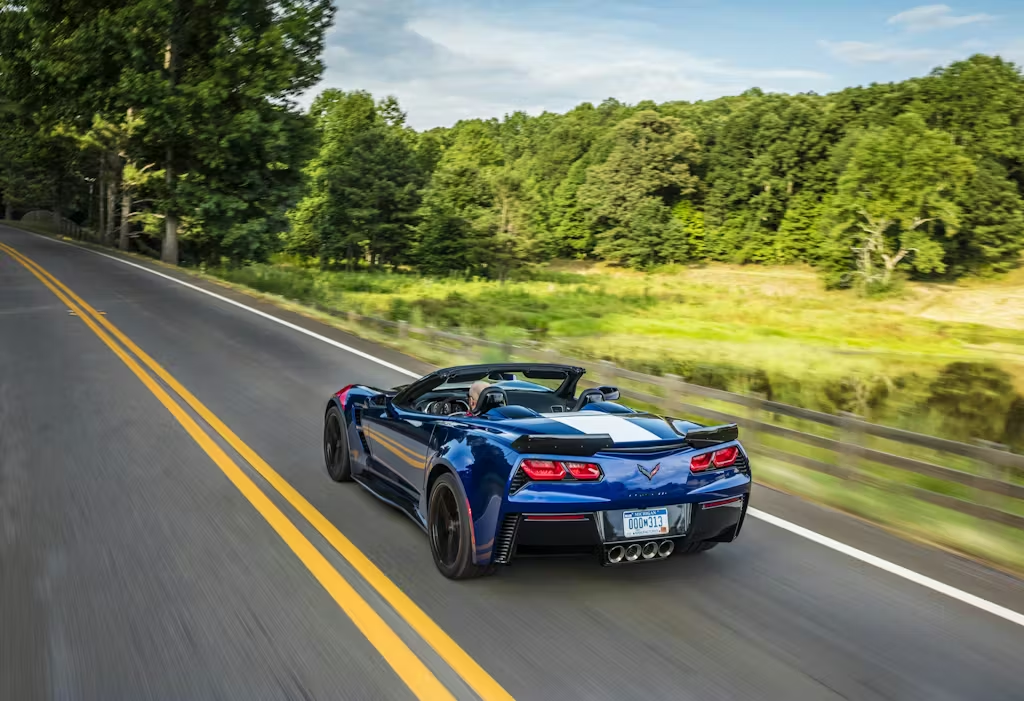
Sales remained incredibly solid, but the GS had more internal competition than ever. With automatic and convertible options, the C7 Z06 became the most popular “Z” branded ‘Vette ever made, and, with new Stingray badging, the base car never fell out of favor with the car-buying public. Still, Grand Sports found homes in 26,280 garages over three model years, trailing only the Stingray and its 31,045 sales in that short overlapping window. Of those, 5546 left Kentucky with three pedals, and if you want to zoom in even further, fewer still had option box Z07 checked (2028). Even though it was “only” pushing 460 HP and 465 lb.-ft. from the Stingray’s LT1 V8, that potent combination of options got the GS past the quarter pole in 12.2 @ 117, hitting 60 in 3.8 and 100 in 8.7 on the way, but handling was its true gift. It could pull 1.18 g on a 300-foot skidpad, and in C&D’s hands at Virginia International Raceway, it stopped the clock in 2:47.1, not only making it an outrageous 6.7 seconds faster than the Stingray but also putting it more than 3.5 ticks out in front of the 638-horsepower C6 ZR1 Super ‘Vette.
Our valuation data says an excellent-condition (#2) 2018 Corvette Grand Sport coupe is worth $65,600, and Good-condition examples come in at $52,600. Convertibles command a couple grand more, and automatics typically trade for about 10% less than the manuals. Special options like the Z07 package will command a healthy premium.
Report by Alex Sommers
find more news here.