It’s become a part of car community lore that you can’t be a car enthusiast if you’ve never owned an Alfa Romeo. Whether there’s any weight to that gatekeeping argument is another matter, but if it’s a box you feel you need to tick we thought we’d help out with some suggestions of the best Alfa Romeos of all time.
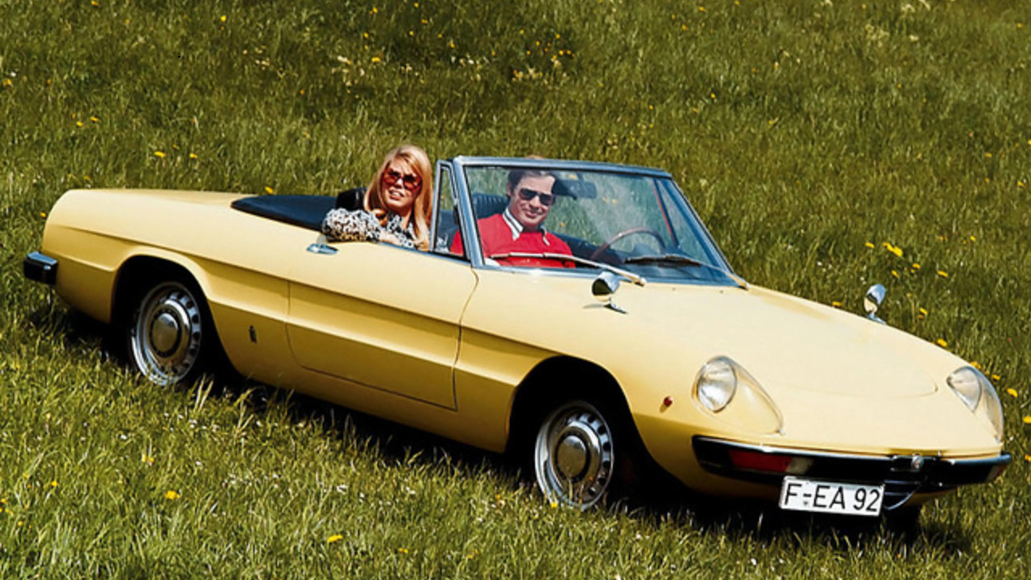
Alfa Romeo Spider (1966)
Alfa Romeo introduced the Spider in 1966, and it remained in production for close to three decades. By the time its life came to an end in 1993 it had been through many different generations.
In its original iteration, the final design was attributed to Battista Pininfarina. It had a twin carburettor fed 1,570cc four-cylinder engine, which was replaced two years later by the 1,779cc engine that Alfa Romeo employed across its range. The smaller-engined 1300 Junior model to join as the entry level offering.
By the end of its production run, the purity of its styling had suffered but it was fundamentally a 1960s classic that could be bought new in John Major’s Britain. The Spider name was brought back for the soft-top version of 1995’s GTV and again for the open-top variant of the Brera.
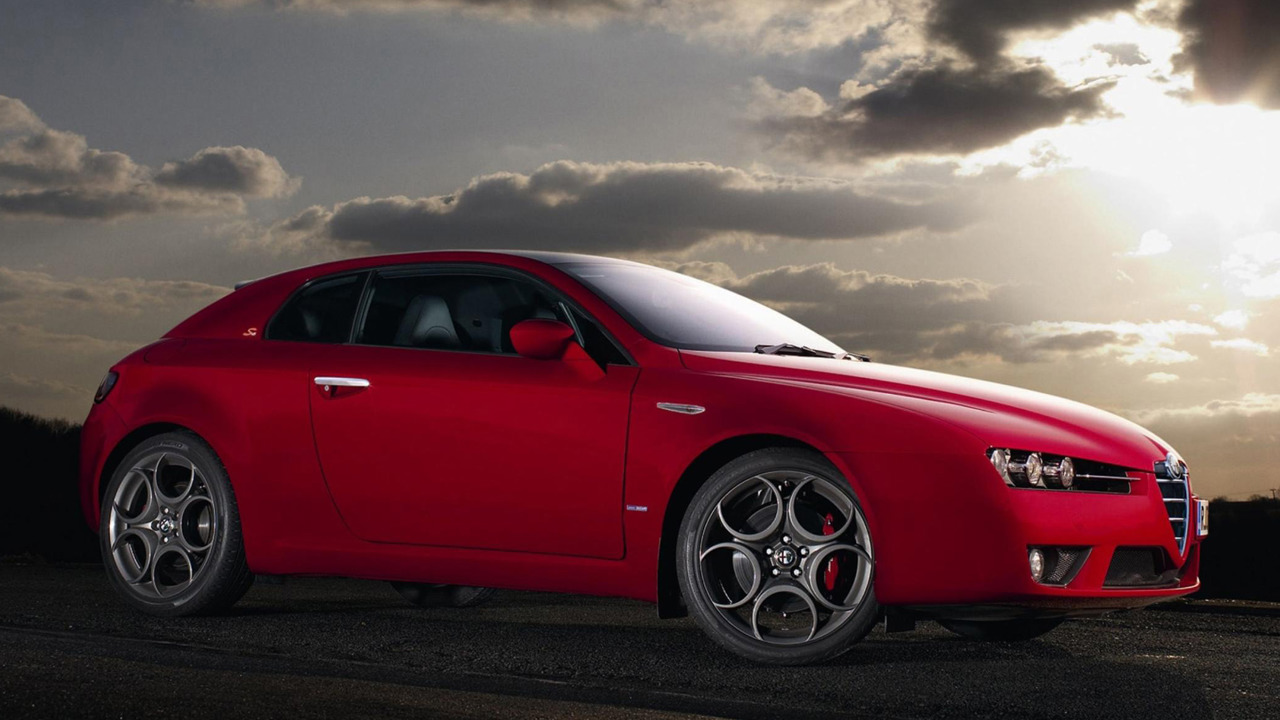
Alfa Romeo Brera (2005)
The Alfa Romeo Brera arrived in 2005 as the production-ready version of the Giugiaro concept shown three years prior. Early cars came with the option of the Busso V6, or four-cylinder petrol or diesel engines. The V6 was obviously the Alfa Romeo enthusiast’s choice, even when it was supplemented for the JTS V6 from 2008 onwards.
The real pick of the bunch, though, was the Brera S. Alfa Romeo UK commissioned Prodrive to fix the Brera’s handling and the result meant that dynamics could cash the cheque written by the rakish looks. It was the only V6 Brera available with two-wheel-drive, and was joined by a four-cylinder S. Just 500 were built.
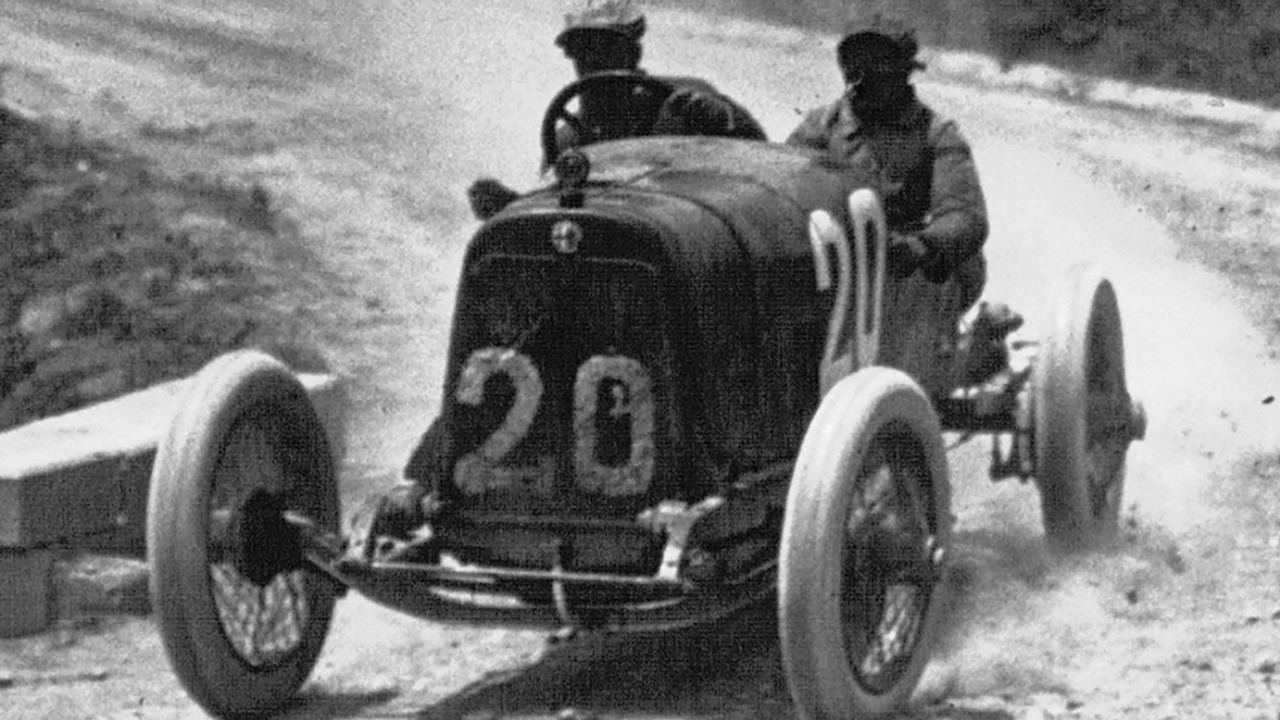
Alfa Romeo 20/30 ES (1921)
Not quite the car which started it all but the first to carry the full ‘Alfa Romeo’ name. The original ‘Anonima Lombarda Fabbrica Automobili’, set up in the old Darraq factory in Milan in 1910, was taken over by entrepreneur Nicola Romeo in 1915 who added his surname to the brand. The 20/30HP the company was making at the time was an update of the very first ALFA, the 24HP, before production was halted due to World War I.
Upon its resumption in 1920, the standard model was joined by the Alfa Romeo 20/30 ES. The ‘S’ stood for ‘Sport’, signifying the car’s sleek torpedo body and larger 4.2-litre straight-four engine producing 68PS (50kW). Intended for the rich, the 20/30 ES was three times the price of a Ford Model T and gave Enzo Ferrari his start in motor racing alongside Alberto Ascari.
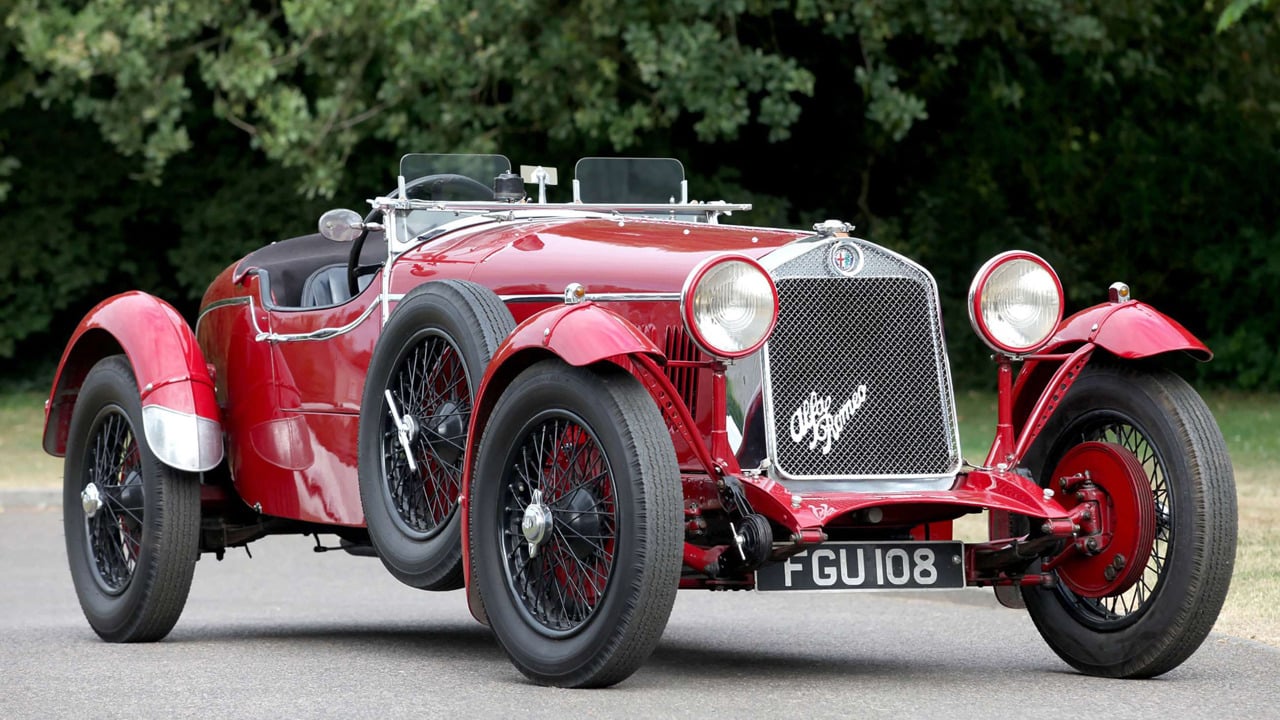
Alfa Romeo 6C 1750 (1929)
The 1750 designation has been used on a number of Alfa Romeos right up to the present day, usually signifying not just engine size but some measure of sporting intent to separate it from lesser models. The originator was the second generation of the 6C series cars built between 1927-54 which could probably fill this list on their own. The 6C took as its starting point the hugely successful Alfa Romeo P2 Grand Prix car but, due to changing regulations, ditched its 2.0-litre straight-eight in favour of a 1.5-litre straight-six, hence the 6C name
Two years later, the larger capacity 1,752cc engine was introduced in the 6C 1750, which promptly won the Belgian, Spanish, Tunisian and Monza Grands Prix, the Mille Miglia, Brooklands Double Twelve and Ulster TT. Road cars were bodied by Zagato, Touring Superleggera and James Young of Britain and were available in ‘Compressore’ or supercharged guise.
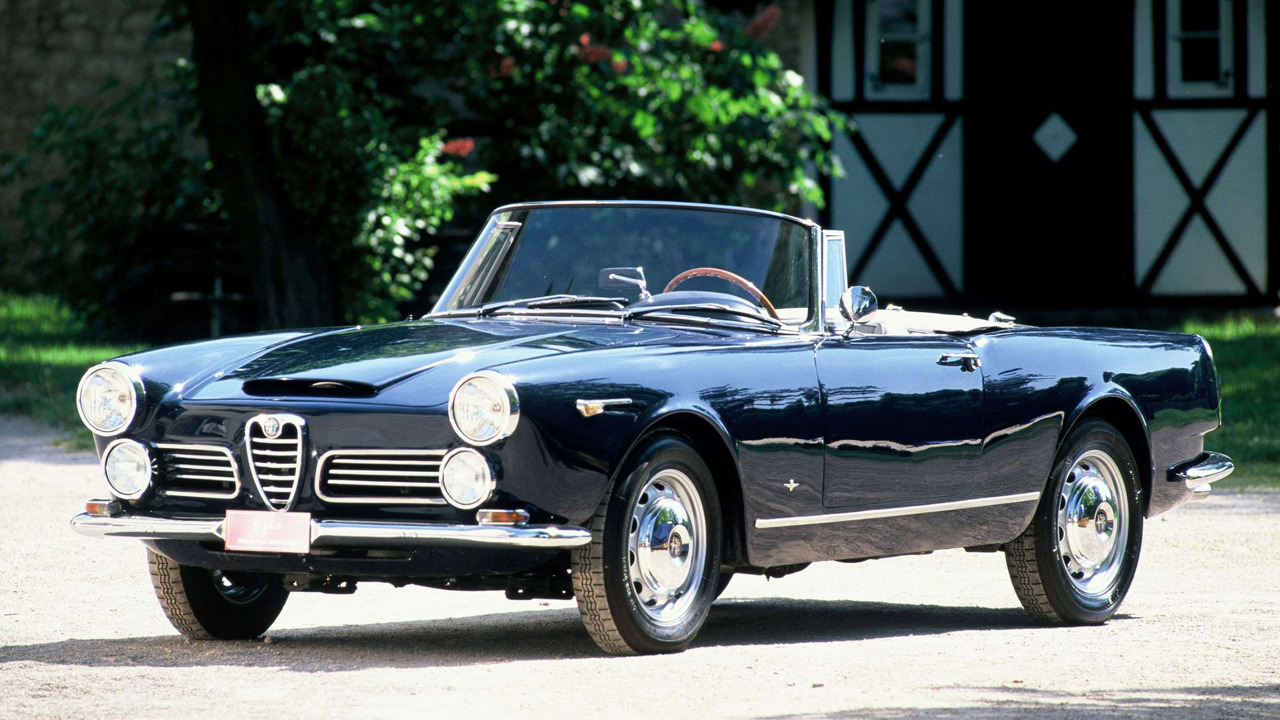
Alfa Romeo 2600 (1962)
Having successfully brought the Alfa Romeo name to the attention of a larger audience, a flagship model was needed. Enter the 2600. It used a brand new, all-alloy 2.6-litre straight-six — the last time that legendary configuration would appear in an Alfa Romeo. Launched first as a saloon with factory bodywork, it was quickly followed by a Touring designed convertible, the Spider, and a Bertone coupé, the Sprint.
Apart from the engine, the running gear was derived from the 1900 and, by now outdated, the Berlina saloon did not win many plaudits. However the handsome Sprint and stylish Spider were more popular as upmarket grand tourers, and the former were used by the Caribinieri as high-speed pursuit cars to counter a spate of armed robberies in 1960s Italy. You only have to look at the stunningly handsome Spider to know it deserves its place among the Alfa greats.
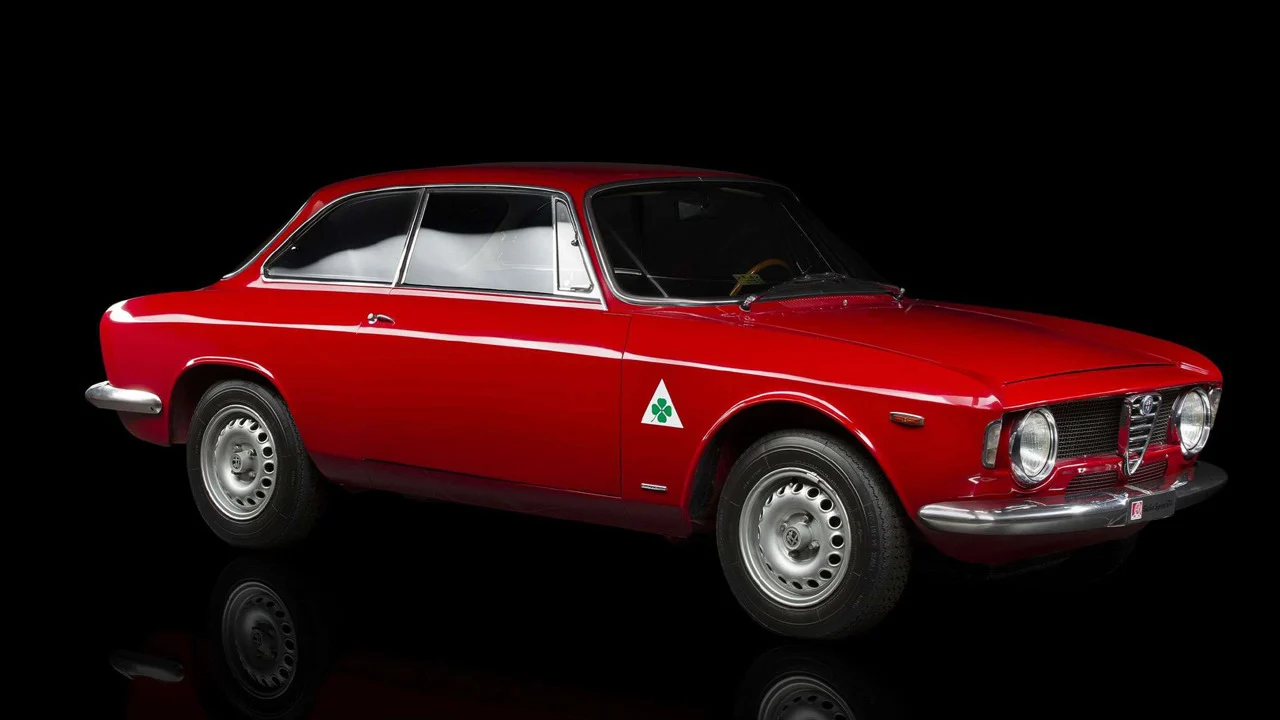
Alfa Romeo Giulia GTA (1965)
Introduced in 1963, the Giulia Sprint GT was based on a shortened floorpan from the newly introduced Giulia compact executive saloon. In one of his earliest works for Bertone, the coupé was styled by Giorgetto Giugiaro and was groundbreaking for the way in which the glazing dictated the size and shape of the cabin, and how the headlights were incorporated into the grille. Fitted with the now well established Twin Cam, the model also came as standard with a five-speed manual transmission and all-round disc brakes, both still a rarity in the early 1960s.
On sale in various updated forms for 14 years, it was the GTA model which cemented the car’s status. A racing special, the ‘A’ stood for ‘Alleggerita’, Italian for ‘lightened’. The car’s steel panels were replaced with aluminium and a number of the all-alloy engine’s components were replaced with magnesium. The engine itself, in 1.6-litre displacement received a twin-spark cylinder head and larger Weber carburettors. Although supplied like this from the factory, many owners took their cars to Autodelta, the race prep outfit which was by then wholly owned by Alfa Romeo. Autodelta later developed the wide-arched, fuel injected GTAm model.
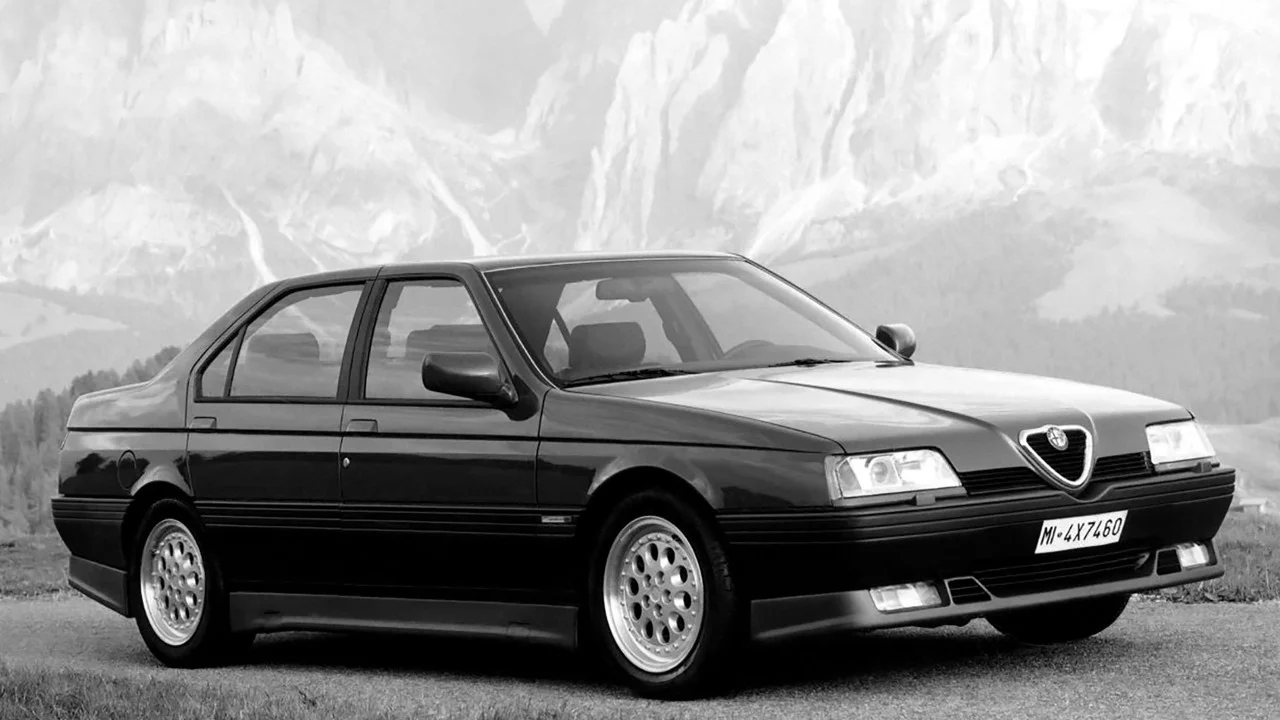
Alfa Romeo 164 (1987)
Remember big, posh saloon cars? They were a thing for a long time before the world went SUV mad. In 1978, Alfa Romeo and Lancia, joined their by now parent company Fiat (and for some reason, Saab) agreed to jointly develop a front-wheel-drive platform to compete in the sector. Known as the Type Four platform, it underpinned the Fiat Croma, Lancia Thema (available with the Integrale’s turbocharged 16-valve motor), Saab 9000 and Alfa Romeo 164.
Although the Saab and Lancia were handsome, the 164’s Pininfarina styling was undoubtedly the pick of the bunch and it could be had with the now legendary Busso V6 engine. Turned sideways for the front-wheel-drive application, the engine also gained the chromed inlet pipes which still attract intakes of breath whenever the bonnet is lifted. The top of the range Quadrifoglio Verde model received a 24-valve version of the engine in 1992 and a four-wheel-drive Q4 was offered from 1993 onwards to help tame the torque steer.
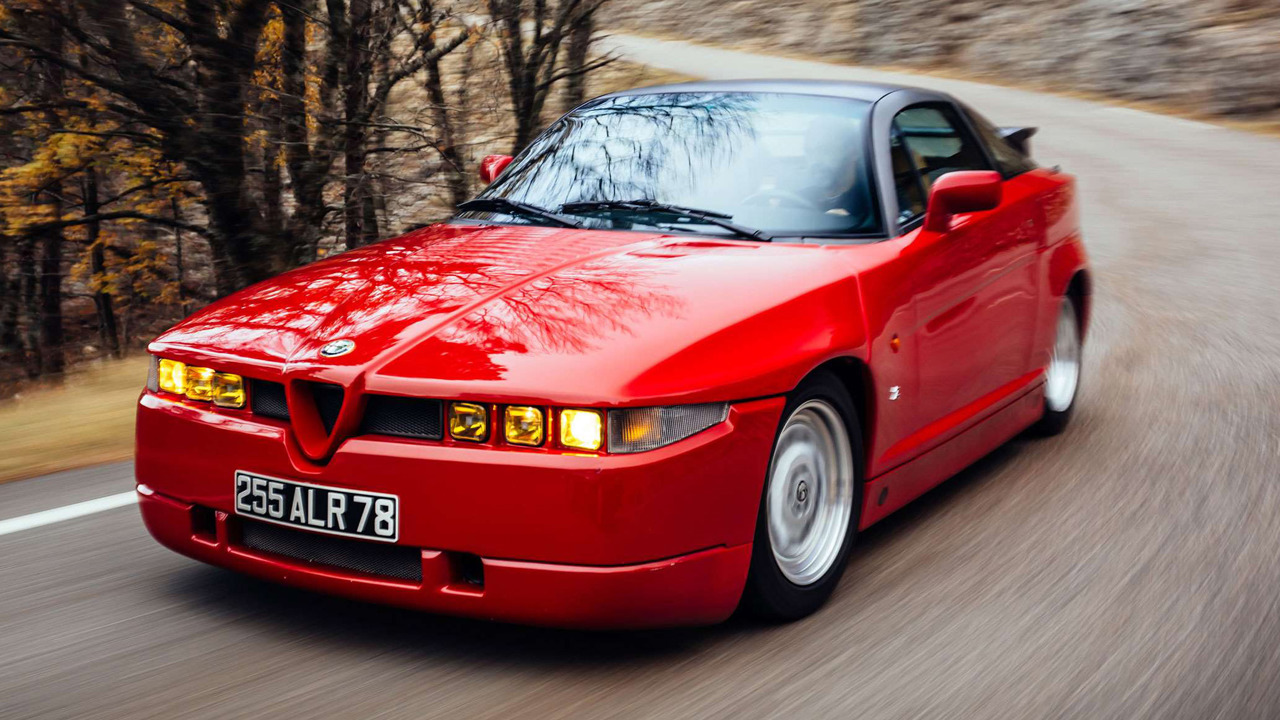
Alfa Romeo SZ (1989)
Long before Ducati appropriated the name, the Alfa Romeo SZ was known colloquially as ‘il mostro’ or ‘monster’ for its in-your-face styling. Often wrongly attributed to Zagato (the car’s initials mean ‘Sprint Zagato’), the carrozzeria was responsible for building, not styling the car. It was a collaboration between the Fiat and Alfa Romeo in-house design studios and most of the sketches are signed by Antonio Castellana, a junior Fiat stylist. The car was one of the first designed using the digital CAD/CAM process, and if you can remember 1980s computer graphics that may help to explain its sharp edges and flat surfaces.
Intended to recall Alfa Romeo’s racing heritage, which by now was somewhat of a fading memory, the SZ was mechanically based on the Alfa Romeo 75 saloon. A Busso V6 drove the rear wheels with touring car derived suspension fettled by Giorgio Pianta, Fiat and Lancia rally crew chief; the car is capable of 1.4G in cornering. Strictly a limited edition, just over 1,000 were built, followed up by a convertible version, the RZ, of which 278 were made.
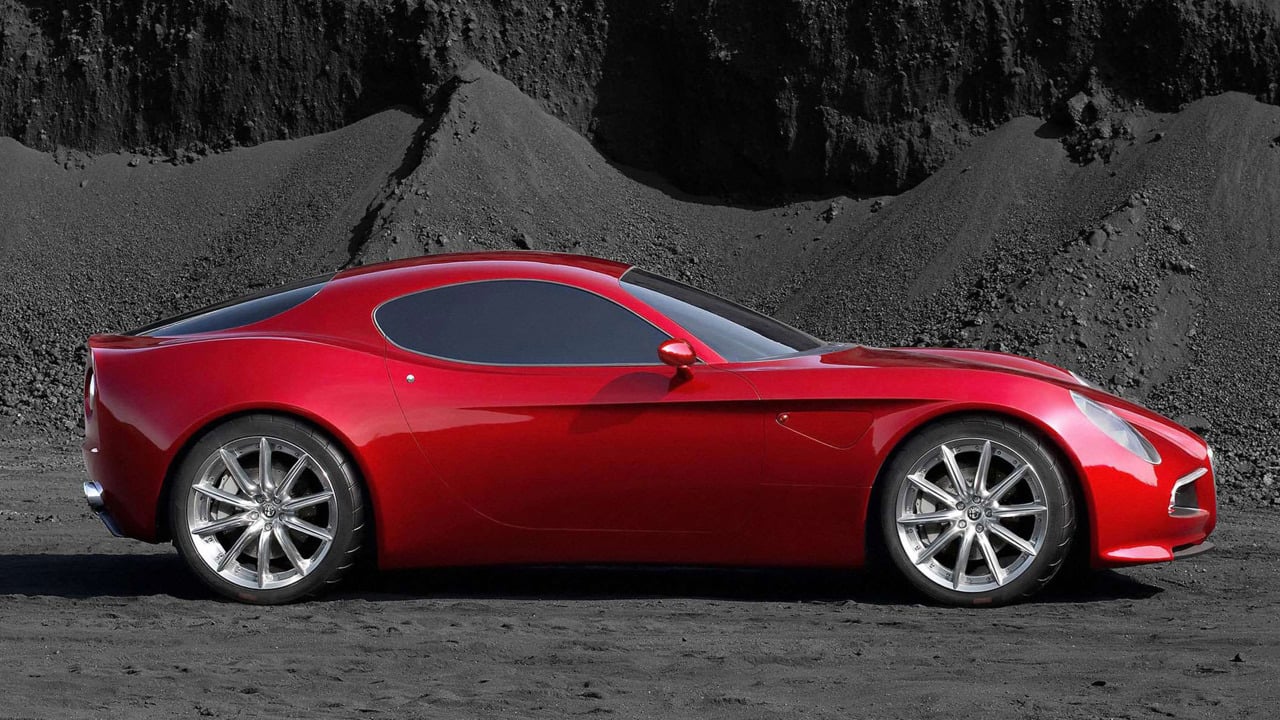
Alfa Romeo 8C Competizione (2007)
Another Alfa Romeo built to celebrate the company’s racing heritage, the 2007 8C Competizione was styled a great deal more traditionally by Wolfgang Egger of Centro Stile Alfa Romeo. Its name is (slightly confusingly) meant to reference the 6C Competizione model in which Juan Manuel Fangio competed in the Mille Miglia and which later won the Targa Florio.
The ‘8’ in the modern car’s name refers to the 450PS (331kW) 4.7-litre Ferrari-built V8 under its shapely nose, giving it a top speed approaching 190mph. Other components were shared with fellow Fiat Group firm Maserati, and both the coupé and spider versions were limited to just 500 each. Like the cars which it harks back to, the carrozzeria got their hands on the car with Zagato producing a one-off Alfa Romeo TZ3 Corse for a German collector, and Touring designing a modern version of their legendary Disco Volante for limited series production.
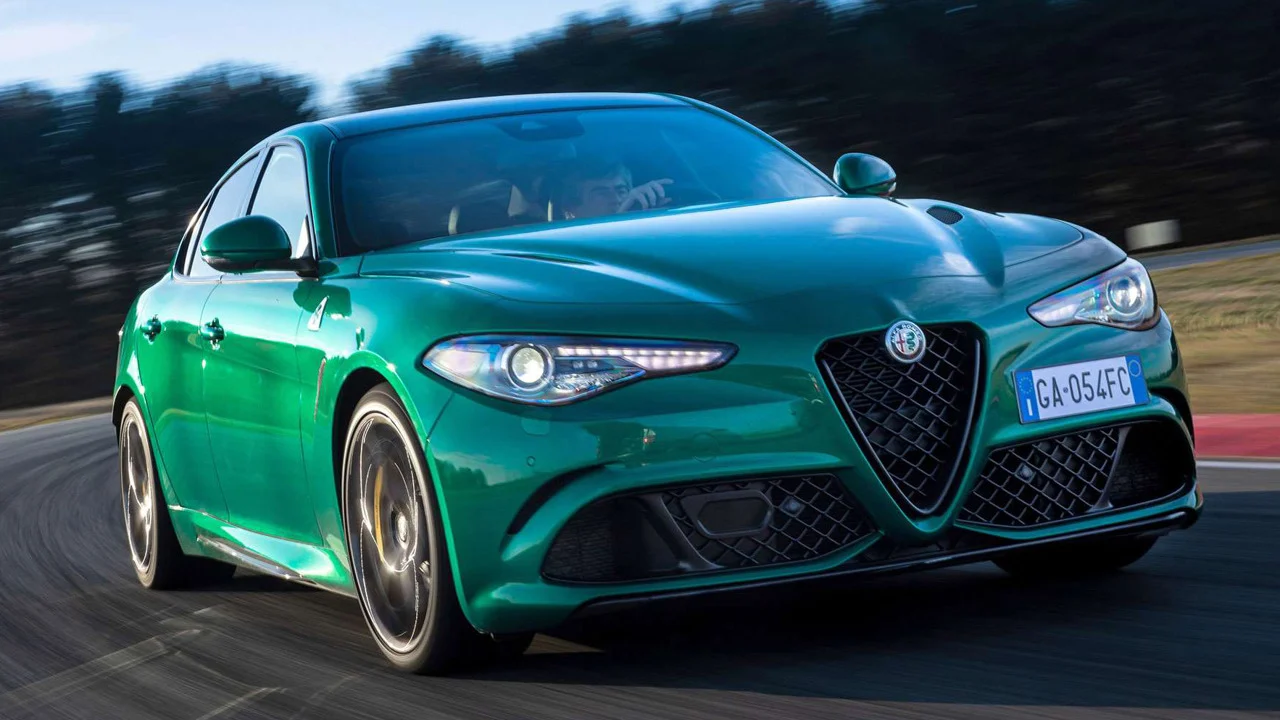
Alfa Romeo Giulia Quadrifoglio (2015)
We are, unsurprisingly, massive fans of the modern day Giulia. It certainly does justice to a legendary line up of sporting saloons, a breed we fear is under threat of extinction. The first production rear-wheel-drive Alfa Romeo saloon since the 75 went out of production in 1992, the Giulia proudly takes the fight to the established German, British and American players. And wins.
That is in no small part due to its twin-turbocharged. 2.9-litre V6, developed by Ferrari and producing 510PS (375kW), helping the Giulia Quadrifoglio set the saloon car lap record at the Nürburgring Nordschleife. To celebrate Alfa Romeo’s 110 years, the company has created a new GTA and GTAm based on the Giulia Quadrifoglio, following everyone’s favourite formula of less weight and more power.
Report by Adam Wilkins
find more news here.