It’s a tough time to be a financially challenged Porsche fan, and I’m afraid I’m speaking from experience. Sometimes it seems as if there are only three distinct collector car markets: Ferrari, Porsche, and The Rest. As the greater market stagnates, P-Cars surge with an average value increase increase of 7.4% for all #2 condition (Excellent) Porsches in the Hagerty Price Guide over the last 12 months. Remember the days of the $10,000 911 SC? Das Pfefferidge Farm remembers.
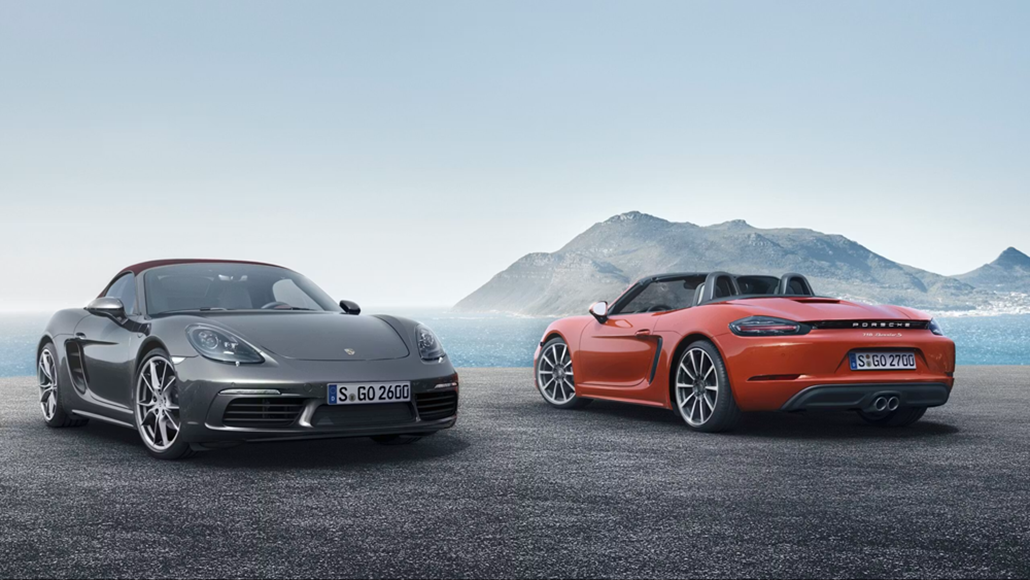
As always, assess your Porsche priorities. The carbon fiber, Paint-to-Sample ship has well and truly sailed for limited production and GT Division 911s, but there are still (relative) deals to be found, brand-wide. Transaxle cars—924s, 944s, 968s, and 928s—remain quite attainable, 914s are a bit stagnant, I doubt 996 Carreras will ever truly be valuable, and folks have yet to wake up to the unbelievable value of highly spec’d, highly depreciated Panameras.
And then, there’s always the humble Boxster/Cayman twins. These little cars have always been the salve of the skint Porsche enthusiast, offering exceptional mid-engine balance, a sweet flat-six soundtrack, and that undefinable, inherent Porsche tactility. And somewhere along the way, some 20 years into production, the entry-level Porsche sports car became a serious performer.
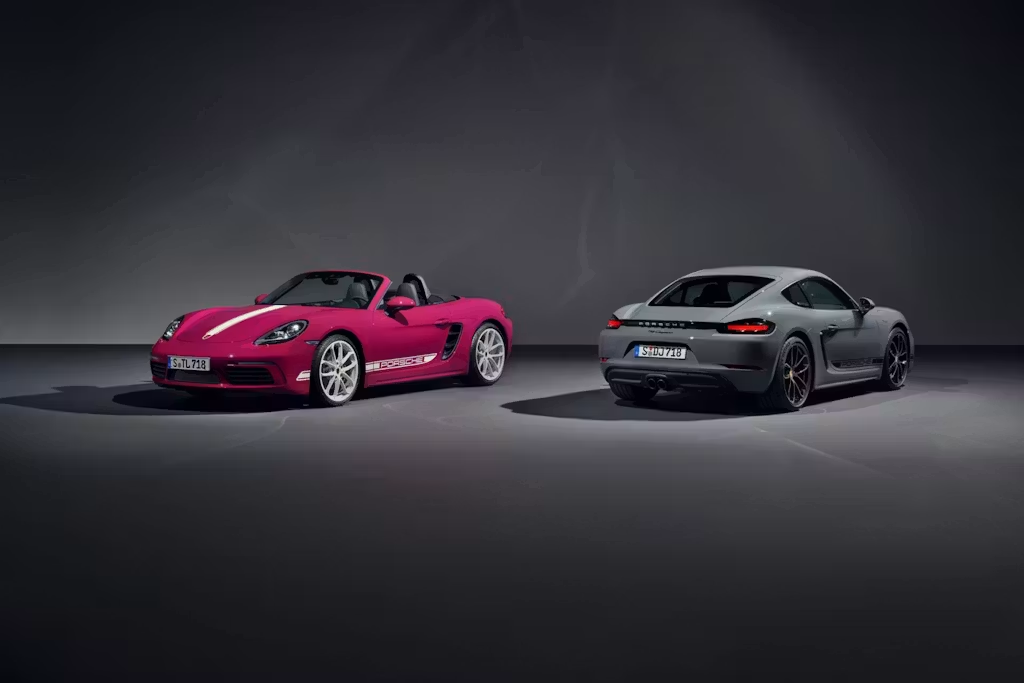
Even prior to its wholesale discontinuation after the 2025 model year, the collective 2017–25 Porsche 718 Boxster/Cayman model line is considered one of the greatest and most versatile sports cars in history, offering a spectrum between sensible daily and weapons-grade track special. And as one of the newest Porsches in the Hagerty Price Guide, their modestly depreciated status offers value per dollar—just as they did when new.
But there were initial doubts. Very much a mid-cycle update to the 2013–16 981-generation despite the internal 982 model designation, the new-for-2017 718 replaced the 981’s sweet suite of naturally aspirated flat-sixes with a pair of turbocharged flat-fours. The hordes were furious, of course, never mind the dramatic spike in power, torque, and performance afforded by turbocharging that extended far beyond the on-paper figures.
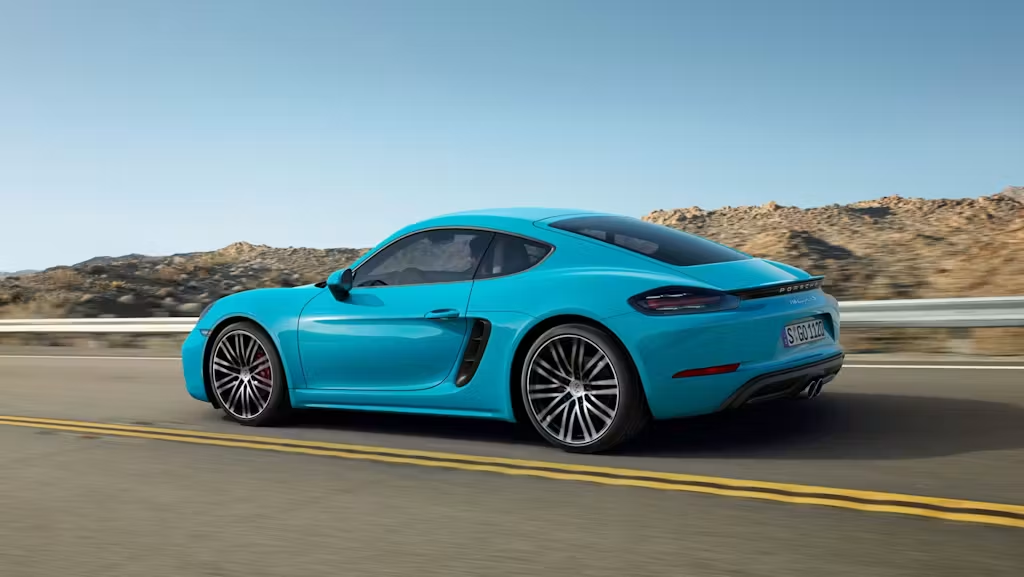
The base, unappended 718 Cayman/Boxster burbled around with a new 2.0-liter turbocharged flat-four, rated to a healthy 300 hp and 280 lb-ft through your choice of six-speed manual or seven-speed PDK dual-clutch transmission. The 718 S upped displacement to 2.5-liters and output to a meaty 350 hp and 309 lb-ft, supported by the traditional “S” treatment for chassis, drive profiles, and cosmetic accoutrements.
It’s true, these MA2 flat-fours aren’t as sonorous or soulful as the 981’s sixers. But for every ounce of lost character they gained five in outright capability and daily tractability; given that Porsche derived these fours from the 911 family’s then-new 9A2 flat-six architecture, it’s no wonder these new grumbly, hot-shot baby Porsches put down 911-esque performance figures.
In the hands of Car and Driver testers, a base, PDK-equipped Boxster cracked 0-60 mph in 4.0 seconds flat, 0-100 mph in 9.9 seconds, and the quarter-mile in 12.5 seconds, roundly a dead-match for C&D’s 991.1 Carrera 4S test. The PDK-fitted 718 Cayman S, meanwhile, matched the prior generation of supercars with a tested 0-60 mph time of 3.6 seconds and a quarter-mile scramble in 12 seconds flat. All this with two very functional trunks and a tested cruising range of 550 miles.
It’s my experience that these four-banger 718s make better dailies than weekend treats, and the market generally agrees. Expect to pay between $52,400 and over 100 grand for a base 718 Boxster in #2 condition. That’s a wild swing for a functionally identical car regardless of model year, but since some later model years are still experiencing the natural depreciation curve of a new car, expect values to settle out to total parity over the next decade.
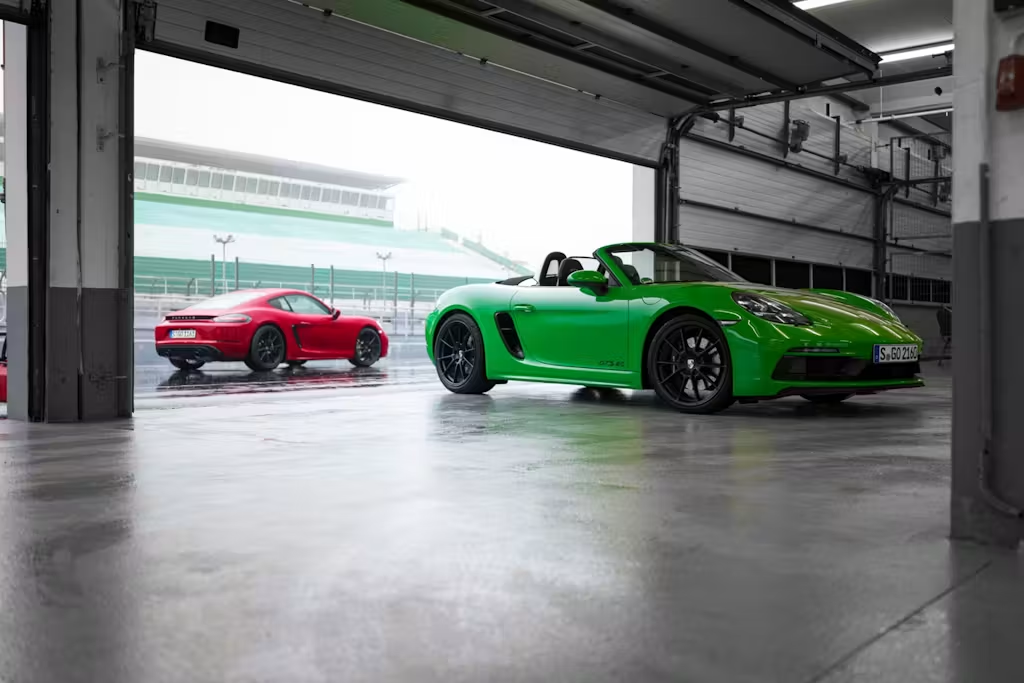
Sourcing a base Cayman in matching condition will cost a few grand less, but when you add that spicy little letter “S” to the 718, it flips the script. Condition #2 values for a Boxster S range from $57,000 for a first-year 2017 model to $110K for a 2025. The Cayman S will run several grand more.
Some things to consider. Both the 718 Boxster and Boxster S were often ordered as lease-’n-release specials, and thus are not commonly found in “interesting” configurations, Paint-to-Sample (PTS) or otherwise. Caymans are better for bright colors and for manual transmissions, though you’ll pay a premium for both. No performance options available on the base and S are frivolous, with Sport Chrono package, Porsche Active Suspension Management (PASM), and Porsche Torque Vectoring (PTV) considered the trifecta.
So, who’s the key demographic here? Gen X takes the cake with 38% of insurance quotes compared to a 31% share of the collector car market as a whole, followed by millennials (29%) and boomers (26%). Gen Z and Preboomers lag at 5% and 1% respectively, but these are both expected based on preboomer’s 4% market share and that Gen Z’s yet to come into true purchasing power. This spread makes sense; there might be occasional rivalry between Boxsters and 911s, but the appeal of a Porsche sports car continues to transcend generations.
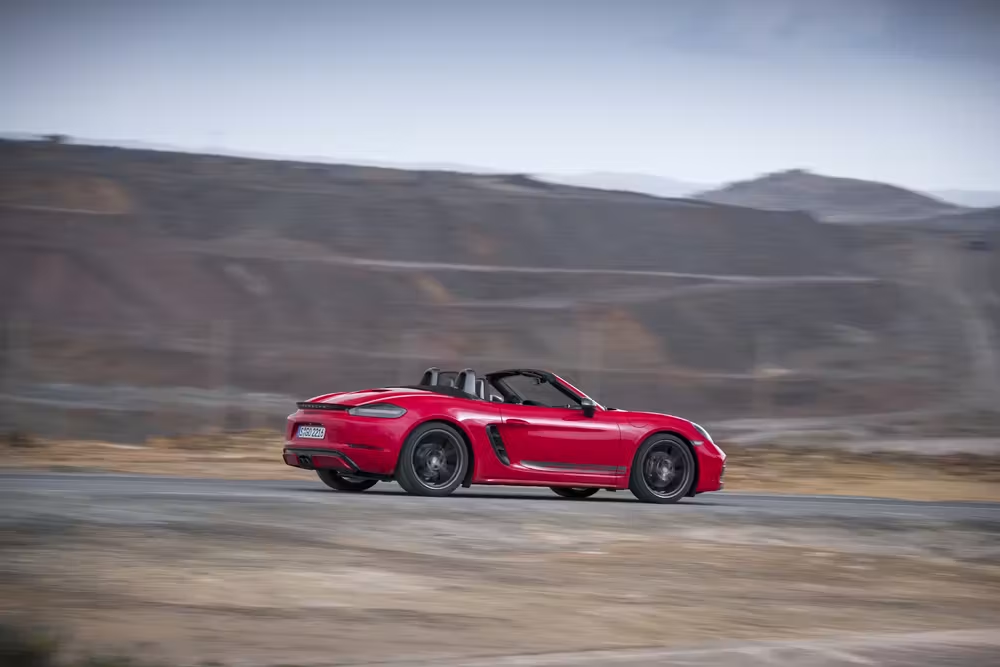
In your research, you’ll find two short-lived curios in the 718 family tree, only one of which is currently tracked in the Hagerty Price Guide. The 2020–23 718 T pulls its formula from the modern 991.2/992 Carrera T, keeping the base 2.0-liter engine but adding standard PASM, a limited-slip differential, Carrera wheels, and Sport Chrono package. Cool, but its mere $3000-ish price differential from the 718 S kept production (and interest) low when it came out.
You won’t find the T tracked in the price guide at this time, but the relatively forgotten 2018–19 GTS is in there. This is the standard Porsche GTS treatment: uprated suspension, standardized performance hardware (PTV, Sport Chrono), and an extra 15 hp from the 2.5-liter four compared to the S. The interior is often kitted with sport seats, carbon fiber, and Alcantara surfaces, and exterior accent trim is darkened for max tacticool.
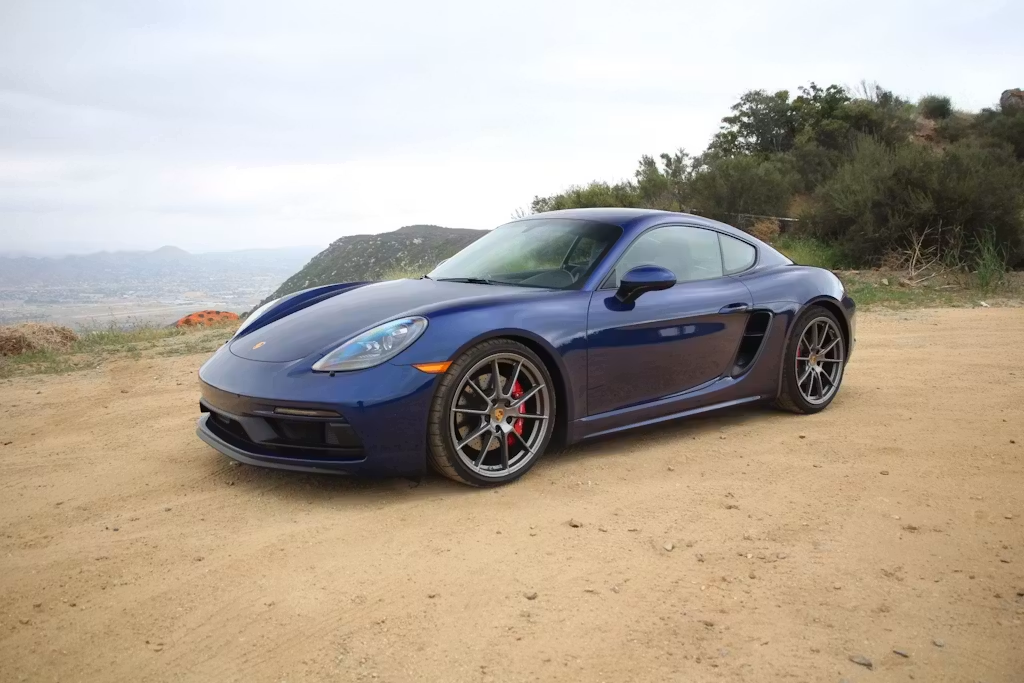
Great idea, but the end result was that of a slightly hotter S, and not a wholly distinct trim, especially as much of the go-fast hardware was available as an upgrade on said S. Porsche fixed this in spectacular fashion with the subsequent 2020–25 718 GTS 4.0, effectively the GTS 2.5 but fitted with the thrumming 4.0-liter naturally aspirated flat-six shared with the concurrent Cayman GT4 and Boxster Spyder.
Some—myself included—are of the opinion that the GTS 4.0 represents the greatest all-rounder Porsche sports car of at least the past 25 years. It’s genuinely that good; 394 hp and 317 lb-ft is healthy, but it’s how said power is delivered that’ll have you searching for one That 4.0 feels like a heart from yesteryear, howling with a mechanical thrash that’s equal parts metallic zing and snorting intake rush, all the way to its 7800–8000 rpm red line (depending on transmission).
Now that’s how you make a special car. Unfortunately for my garage, the market nods along. In condition #2, the GTS 4.0 carries an average value of between $111,250 (Cayman) and $133,000 (Boxster). Again, some of this is driven by the 4.0’s status as a nearly new car, but these special, special cars show signs of appreciation following the recent discontinuation of the entire 718 model lineup after the 2025 model year.
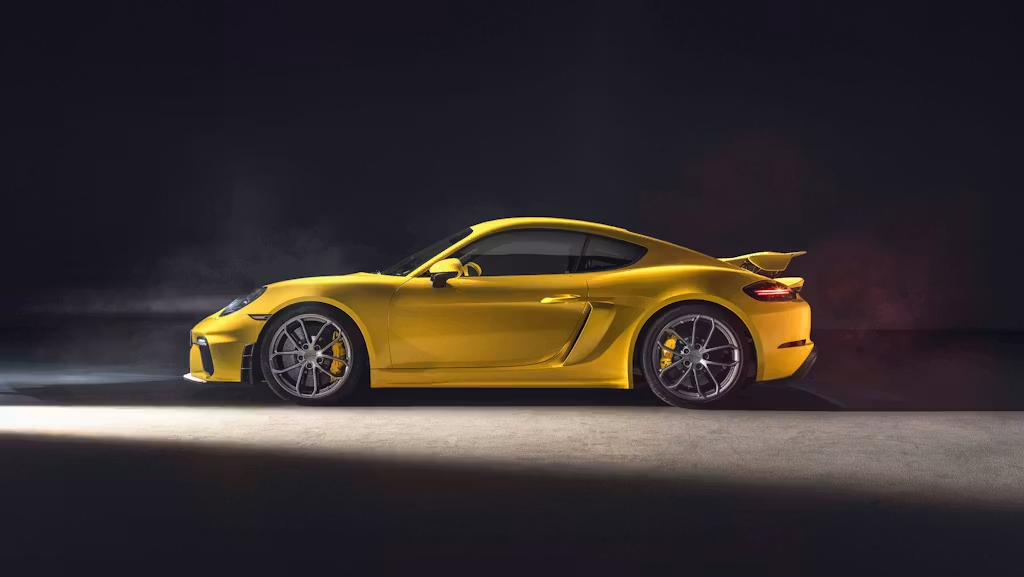
Speaking of appreciation, we’re now moving into a different tier of collector-grade Porsches. The 718 Cayman GT4 and Boxster Spyder are, without pretense, some of the greatest sports cars in automotive history, full stop. Building on the success of the 981-generation cars, Porsche’s famed GT division cut fat and honed nearly every aspect of the 718 for a car that’s equally at home on-track as it is sizzling up the tightest technical canyon road you can source.
That 4.0-liter from the GTS returns with just 20 extra hp, but the GT4/Spyder’s additional dynamic athleticism is a meaningful step up over the GTS 4.0’s balance of usability. The near-identical average condition #2 value between Cayman GT4 ($140,750) and Spyder ($138,500) are, in my opinion, a direct result of a tidy supply-and-demand equilibrium achieved by fewer Spyders sold against the fan-favorite GT4.
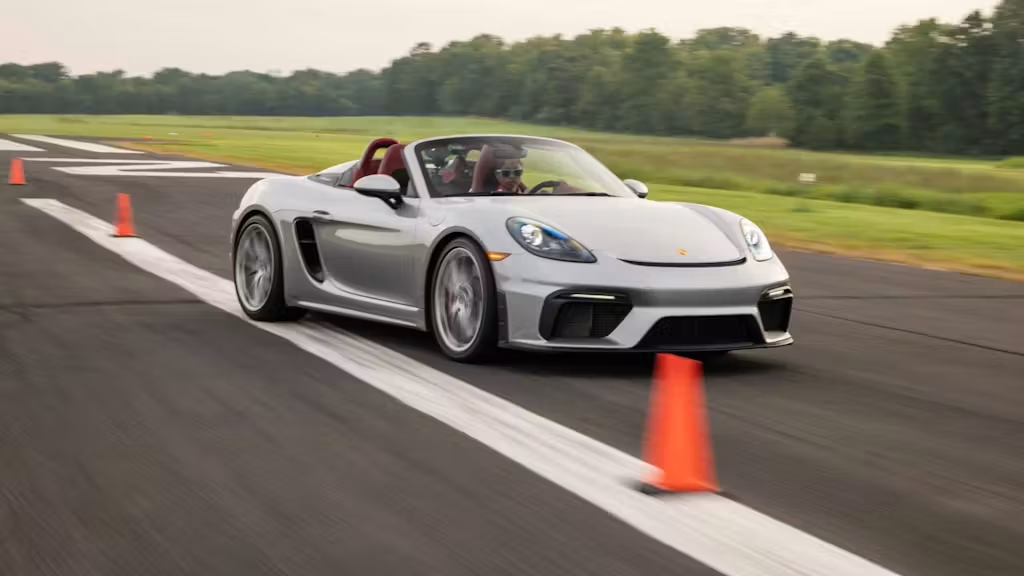
A few considerations. All cars fitted with the 4.0-liter also share the same available six-speed manual transmission that does have rather tall gearing, as everyone and their mother will tell you. At the top of second gear, you’ll merge at near 85 mph, and at the top of third, you’ll streak by that unmarked Charger at 121 mph. These big lungs are a bit at odds with the 718 platform’s compact, backroads vibe, but certainly not a deal breaker in the slightest. The aftermarket stepped up with a readjusted ratio for some of the gears to a great effect—or so I’ve been told—but do plan for a five-figure investment if you chose this path. The better news? The market shows this to be a neutral-to-value-additive modification.
The 718 Spyder is a significant step up over the 981-generation Spyder, which was closer to a Boxster GTS with the Carrera S’ 3.8-liter flat-six than a true crop-top Cayman GT4. This time, both GT4 and Spyder share general chassis architecture and raw capability aside from the Spyder’s fair weather preference. The 718 Spyder simplifies some of its predecessors’ manual roof foibles, with the 718’s manual folding canvas top requiring only manual raising and lowering as opposed to complete component removal.
Not so with the ultra-hardcore 718 Boxster Spyder RS. While its multi-part fabric roof is best described as “contraption” or “493-hp camping tent,” the 718 RS’ transplanted 911 GT3 (yes, that GT3) 4.0-liter requires higher clearance than the standard Spyder’s top allowed for. Thus, this bimini-style roof triggers a severe warning at and above 125-mph, and is suggested only for emergency downpours and car washing, not as a full-time top.
Most owners will likely keep theirs parked in their car cave when the weather is anything but blindingly sunny. A bummer, but this also elevates the Spyder RS to one of the most special and singular driving experiences in modern Porsches; there’s nothing protecting you from either the sound or the fury of that GT3 heart.
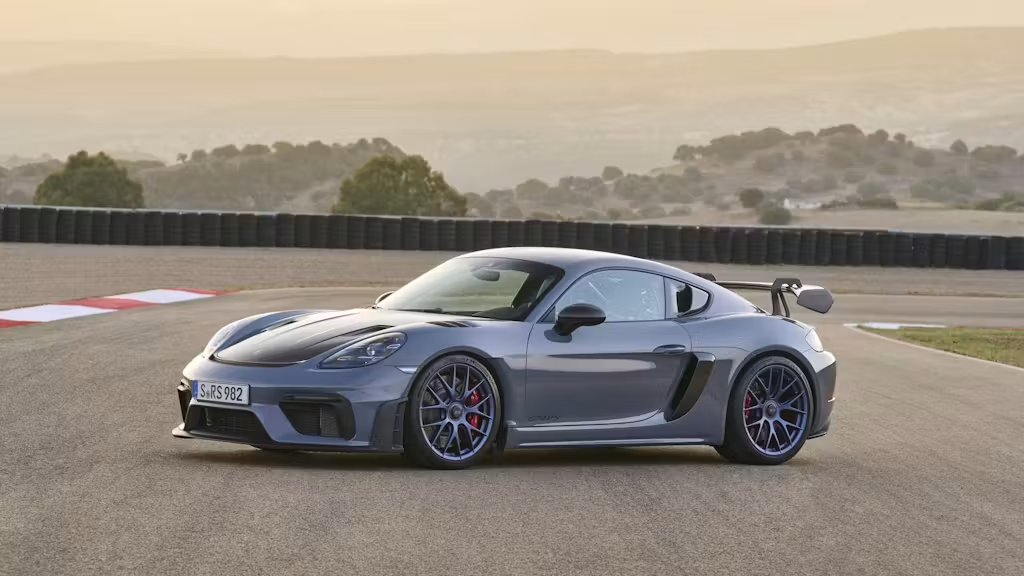
Then, there’s the shocking and comprehensively RS-ified Cayman chassis, a significant elevation above the standard GT4 in handling, aero, and feedback. A true Weissach weapon, and one that launched amidst a swell in Porsche speculation; by the time of its introduction in 2022, it was clear a well-specified, properly PTS’d Porsche GTx was your ticket to social media adulation, flipped profit, or both. Orders for the GT4 RS flowed in, with many paying hefty dealer markups for purchase privilege. As such, there’s an impressive amount of special order GT4 RSs with lengthy options lists that are either trading slightly above, at, or below the original MSRP, while low-option cars aren’t too far behind.
Values are on the rise. As of now, the average value of a condition #2 GT4 RS sits at $224,000 against the original 2025 model-year MSRP of around $165,000. Meanwhile, the inimitable Spyder RS had one less model year and likely significantly less take rate with an average value of $227,000 against the same original starting price.
The so-called “baby Porsche” is clearly a baby no more. While I won’t say there’s a 718 for every budget, there’s certainly a flavor for every preference, and you might want to get yours before values inevitably rise (further) out of reach. For max value, skip the final model years for an earlier car with low-to-medium miles, as they quite literally didn’t change a darn thing between model years aside from adjusting variant availability.
Report by Elliott Griffith
find more news here.