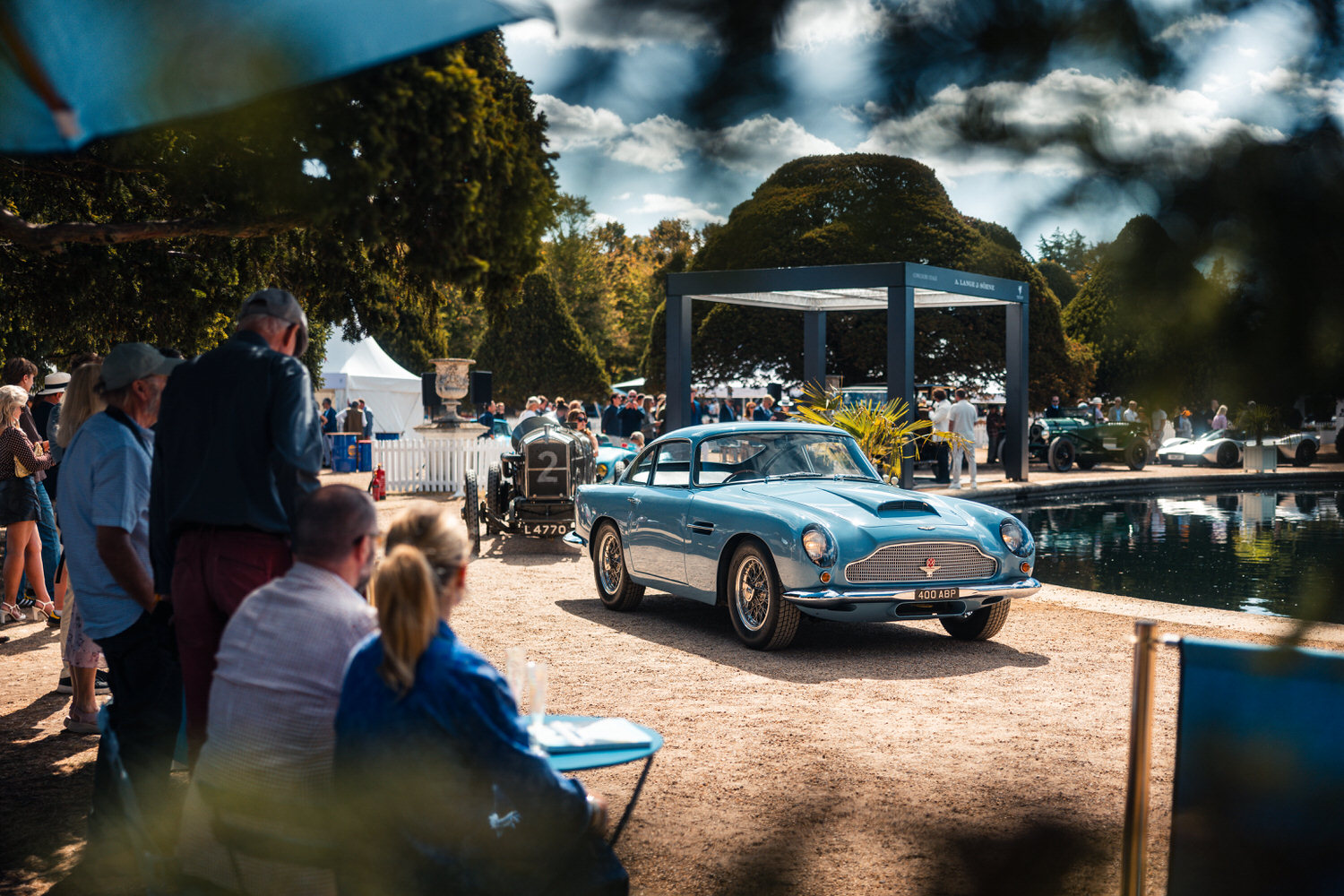
The Concours of Elegance at Hampton Court Palace was held on the first weekend in September and the weather as it had been for much of the blazing English summer of 2026 was positively, beautifully mediterranean.
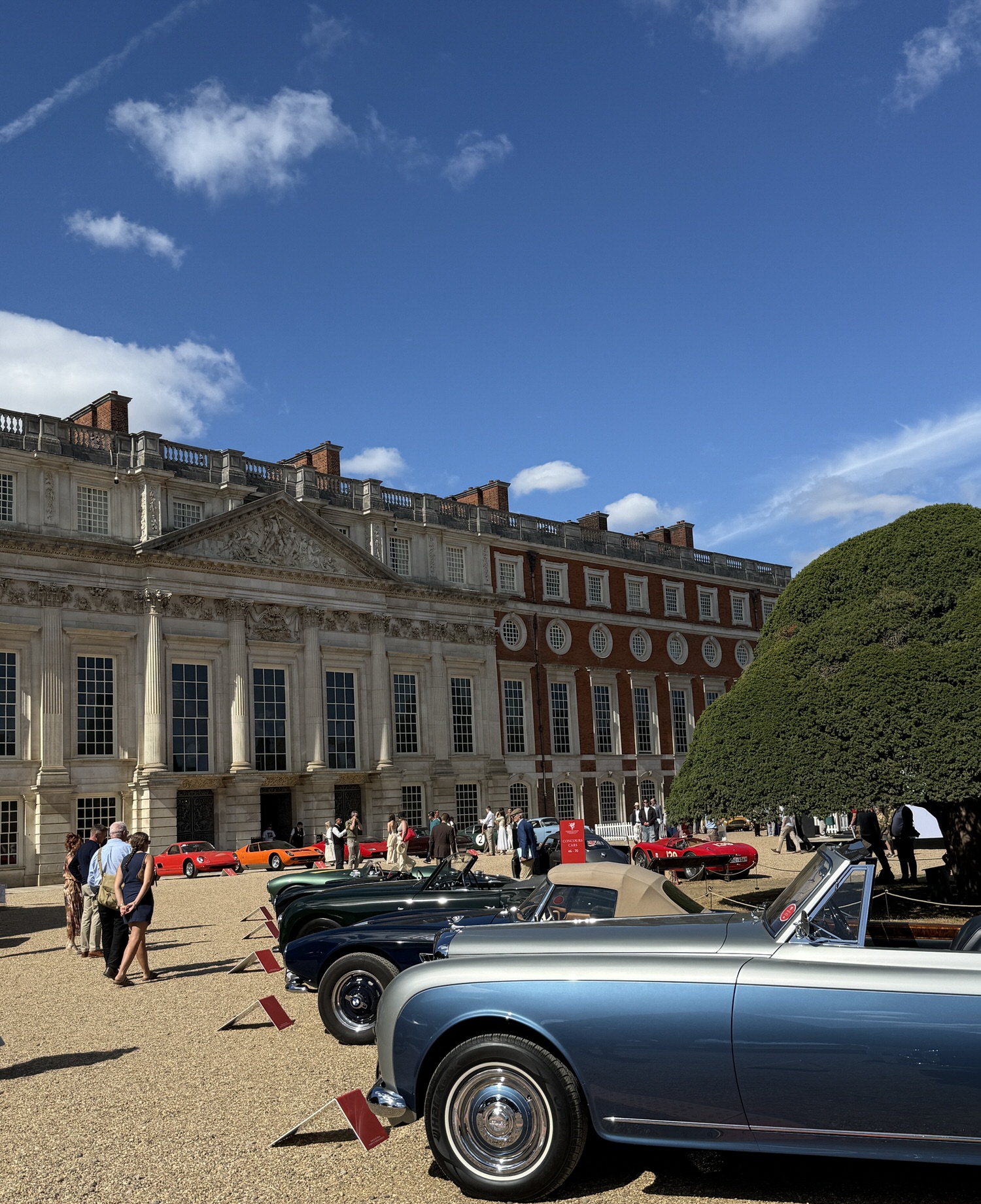
The amazing landmark that is the original Tudor Hampton Court Palace was originally the work of Cardinal Thomas Wolsey (1473 -1530). Wolsey who was at times Henry VIII’s (1491 – 1547) most loyal advisor went about transforming a small manor house on the edge of London into one of the most impressive palaces of the 16th Century. He did such a good job that King Henry appropriated it for himself and brought all his six wives there!
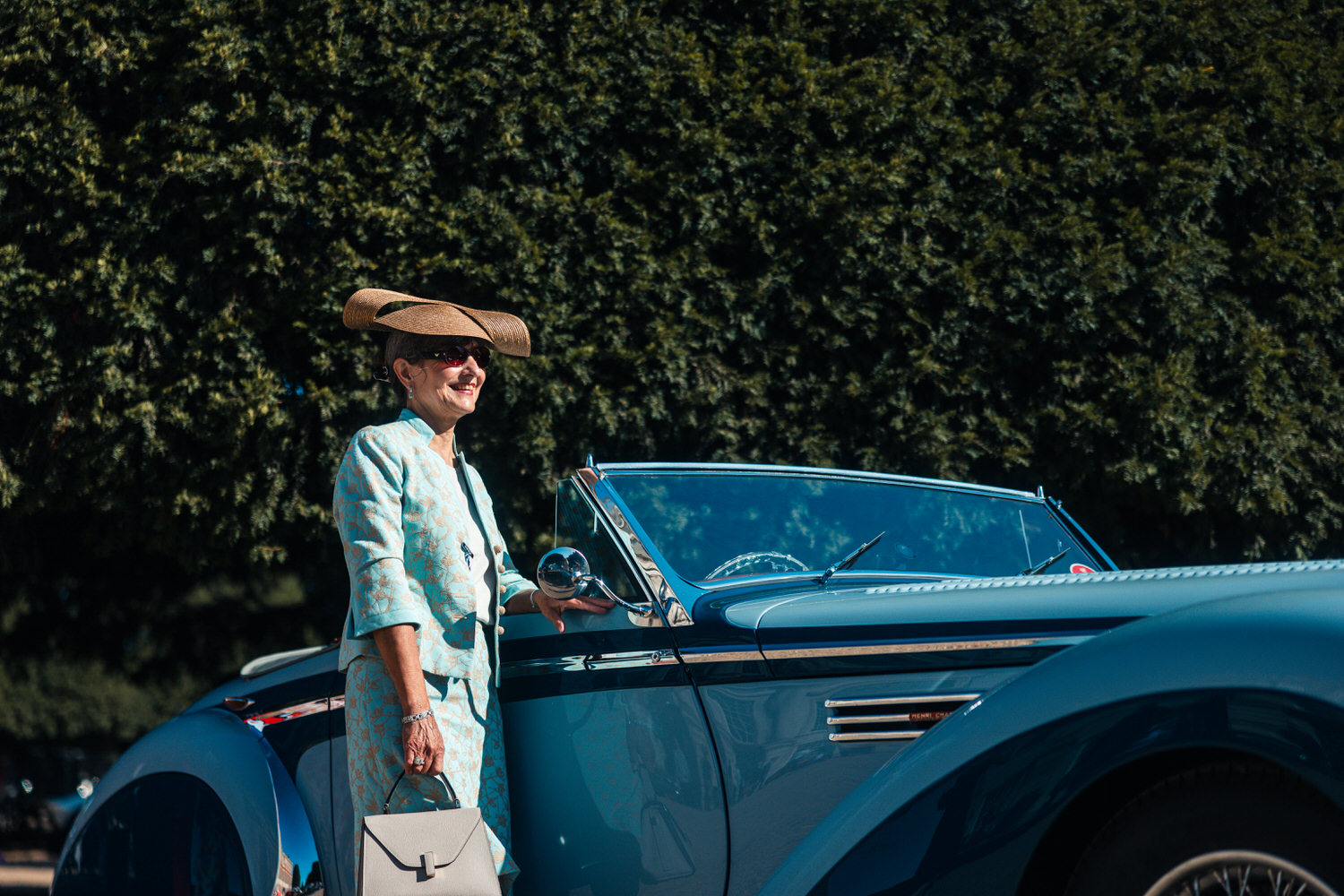
When William III and Mary II took the throne in 1689, Sir Chritopher Wren (St Pauls’ Cathedral) was commissioned to construct a stylish new baroque palace, and the Palace was eventually opened to the public by Queen Victoria in 1838, whilst it is still owned by the current monarch, Charles III, some 500 years later.
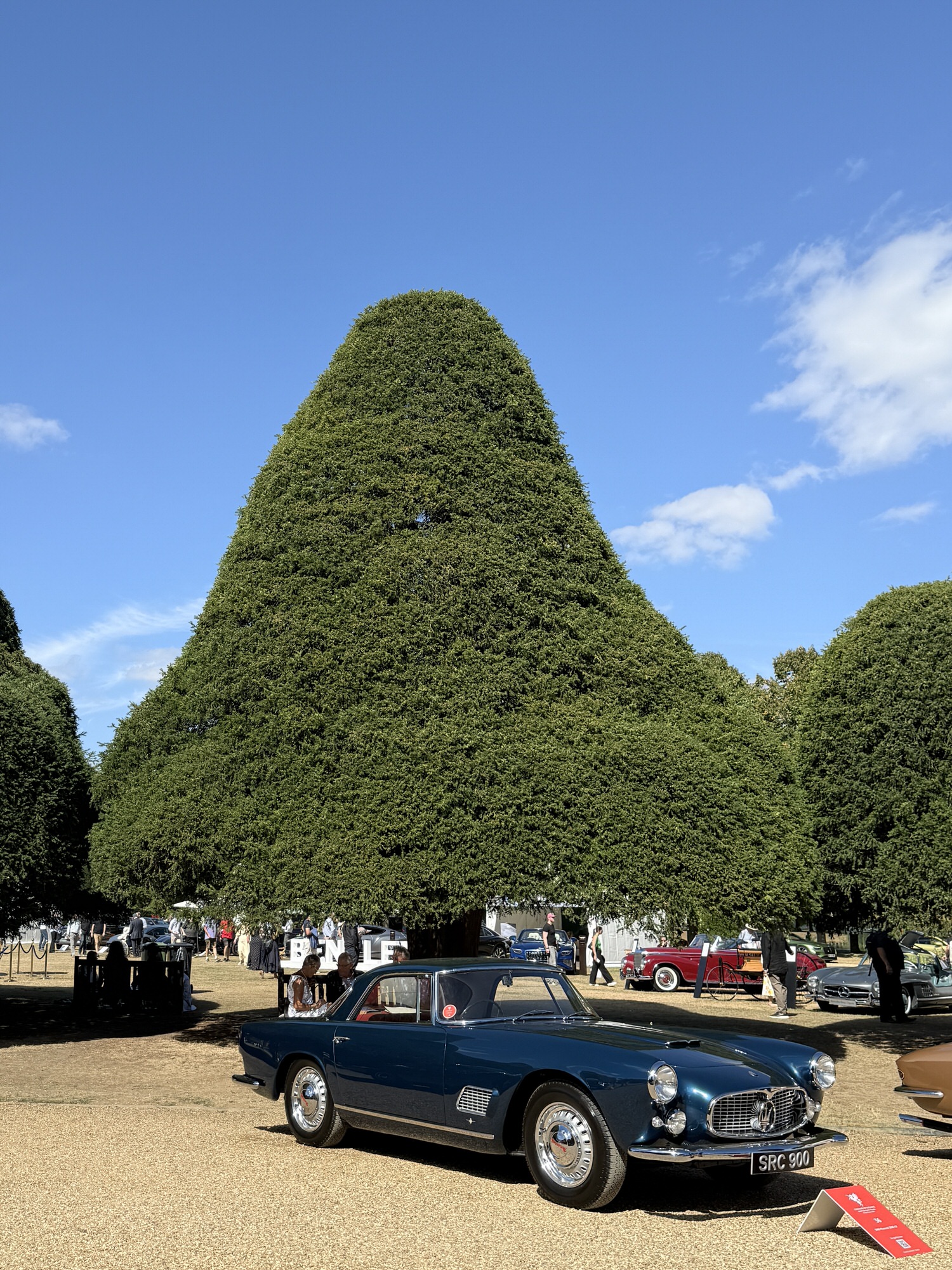
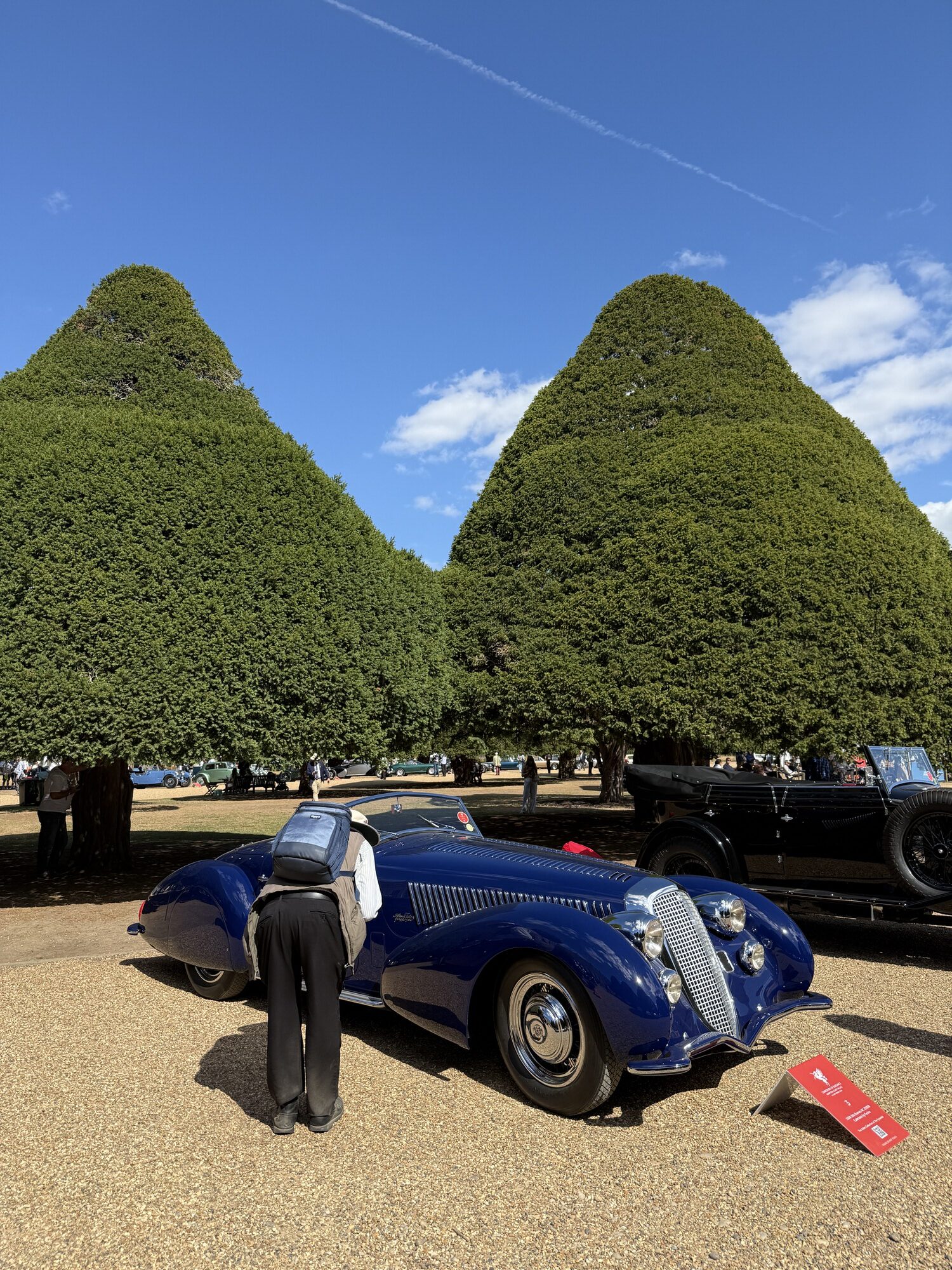
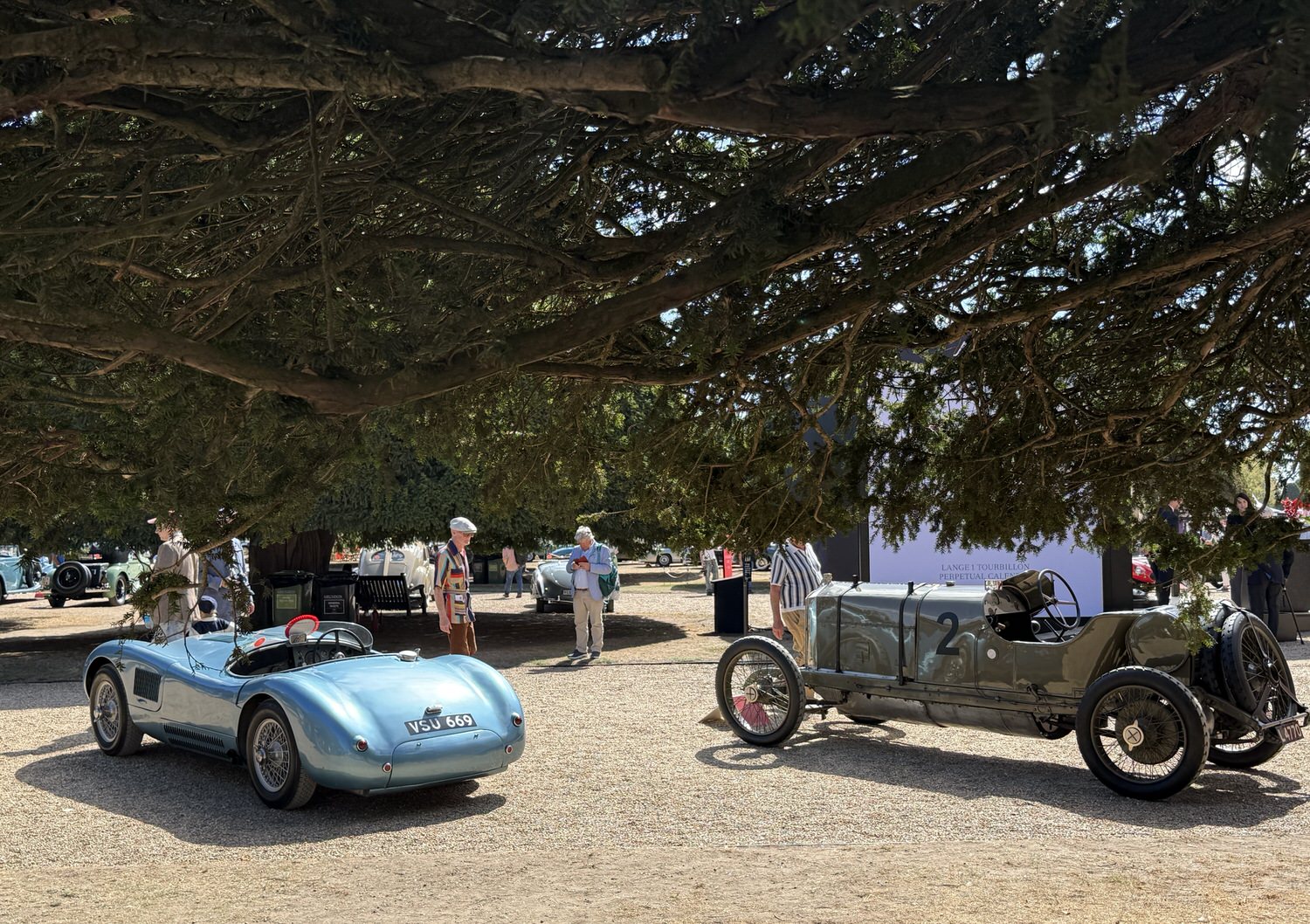
For myself, having been a member of the Jury a few days earlier at the equally impressive Salon Privé event at Blenheim Palace this event was simply a chance to relax and enjoy the atmosphere and the 80 odd marvellous cars on display amongst the splendid large pyramid shaped yew trees originally planted at the time of Queen Anne at the beginning of the 18th Century in the Great Fountain Garden.
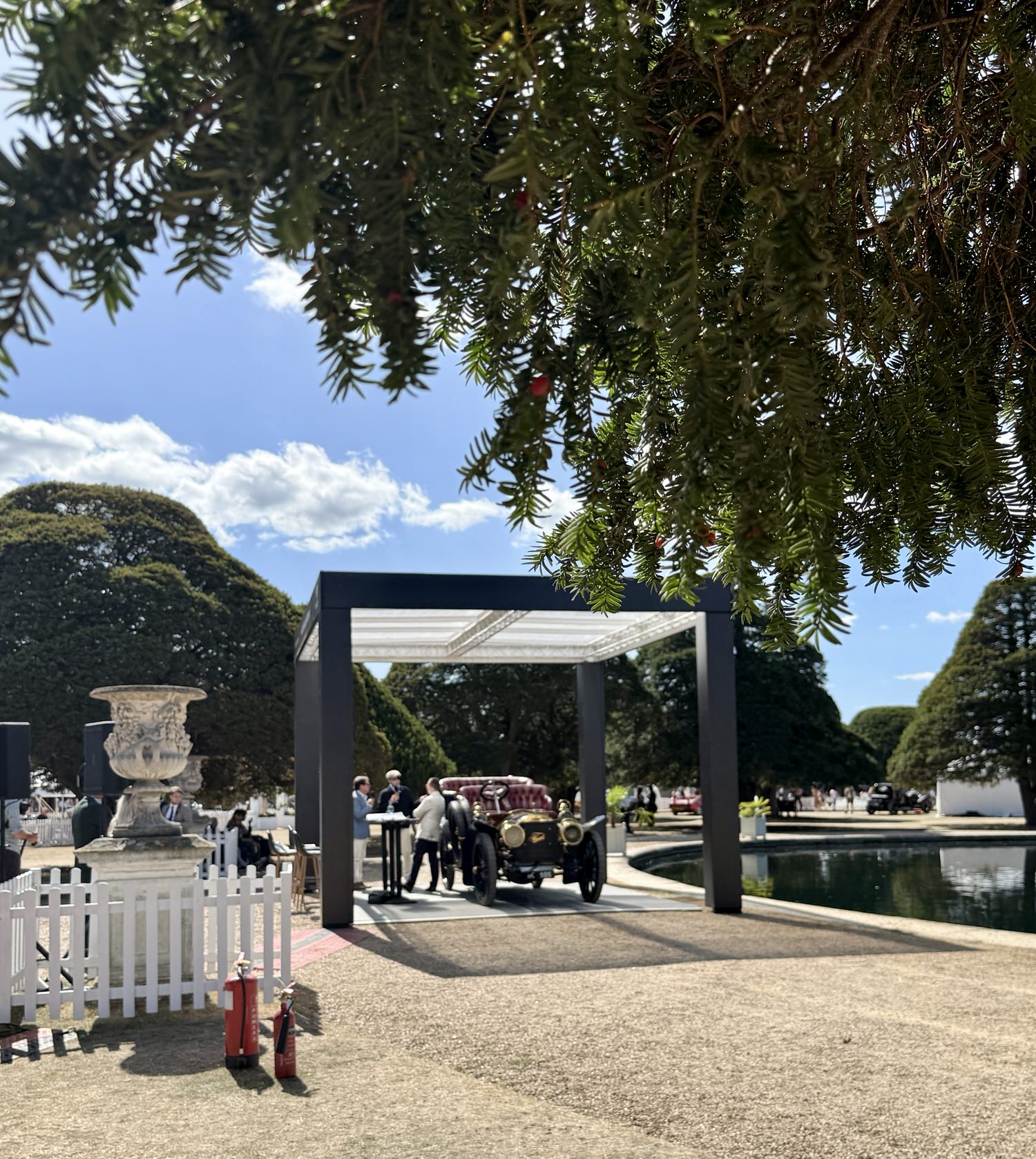
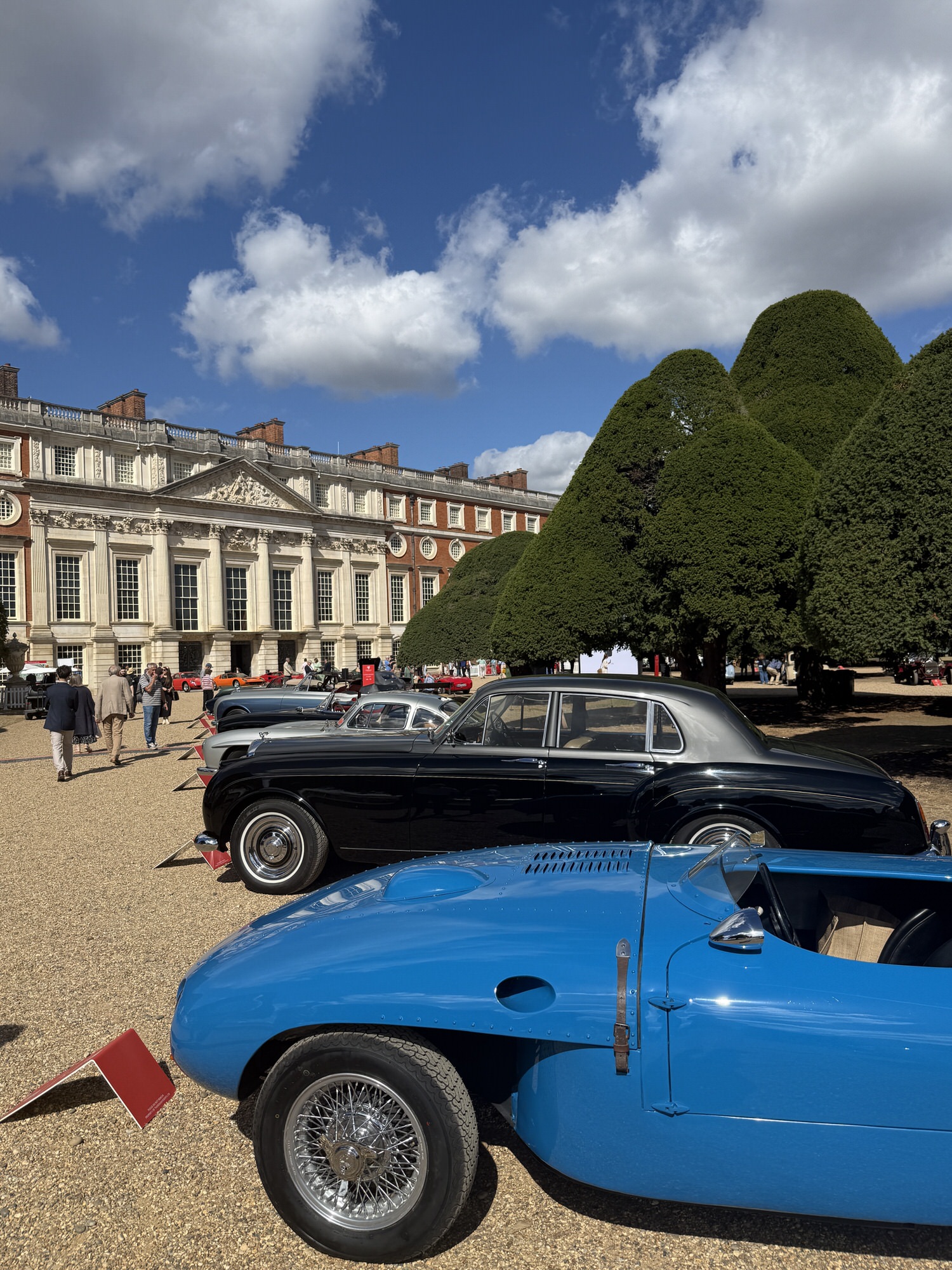
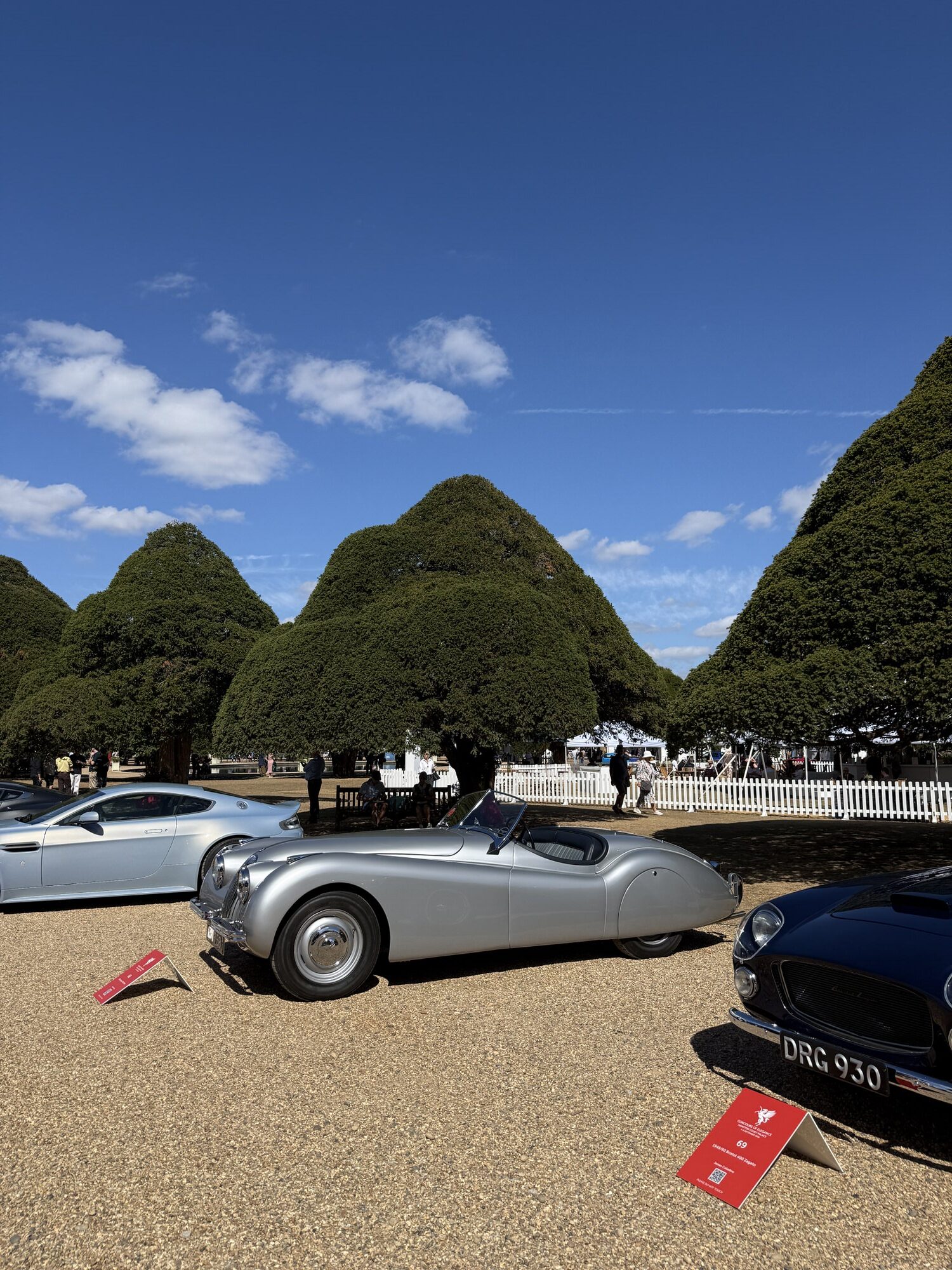
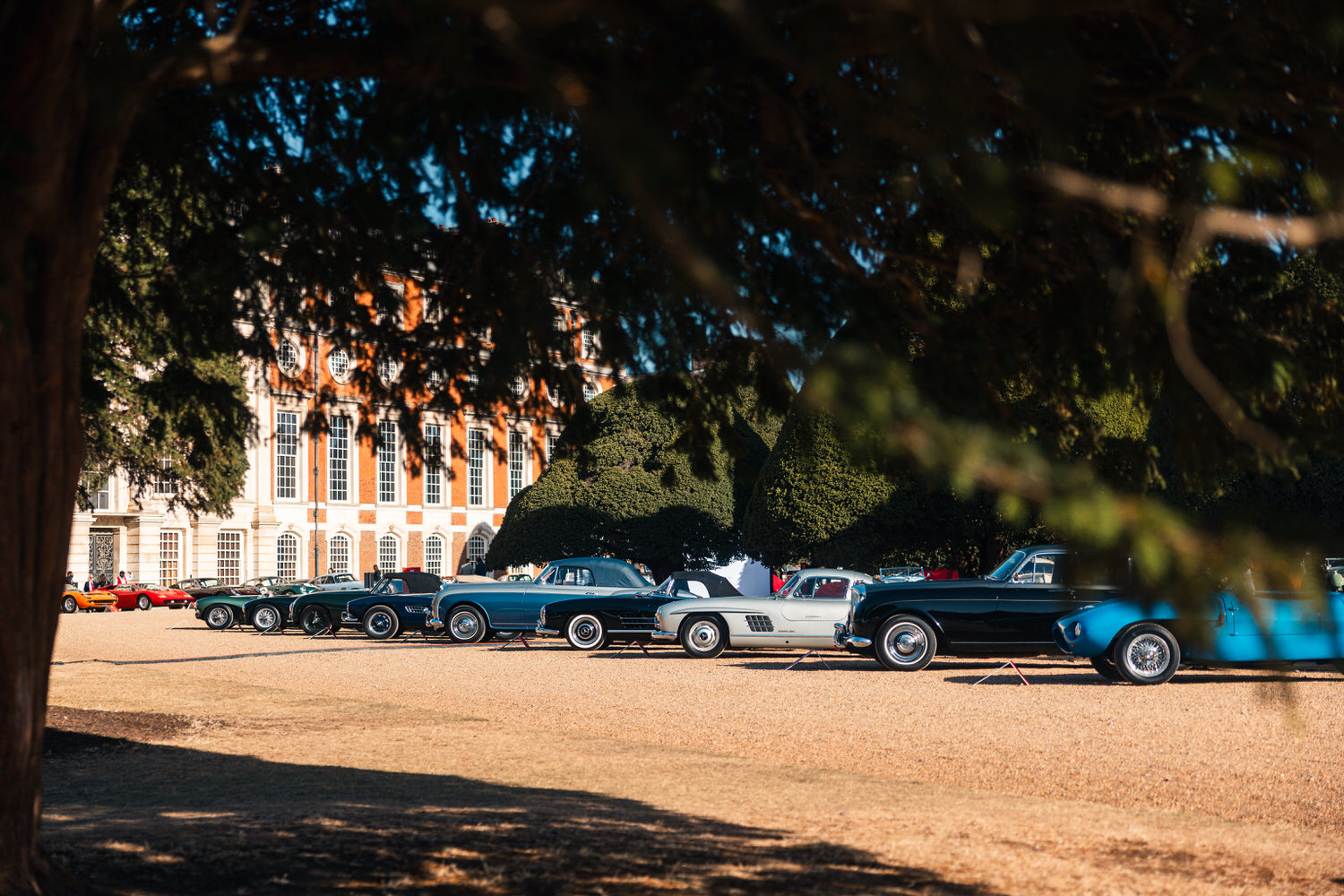
With the East Front of the Palace as a backdrop and framed by the neatly trimmed 300-year-old Yews lining the pattern of gravel paths with the magnificent central fountain at the apex it is a fitting scenario to display the array of historic motoring machinery gathered.
I was only present on the Saturday so had missed the first day’s action led by my old friend M/C Richard Charlesworth, with awards going to one of just two examples created by Carrozzeria Touring of the Aston Marin DBSC prototype from 1966, and the Art of Bespoke Award being presented to a 1952 Jaguar C-Type with competition history including the 12 Hours of Sebring and the Watkins Glen G.P. which had won the Preservation Class at Pebble Beach in 2025.
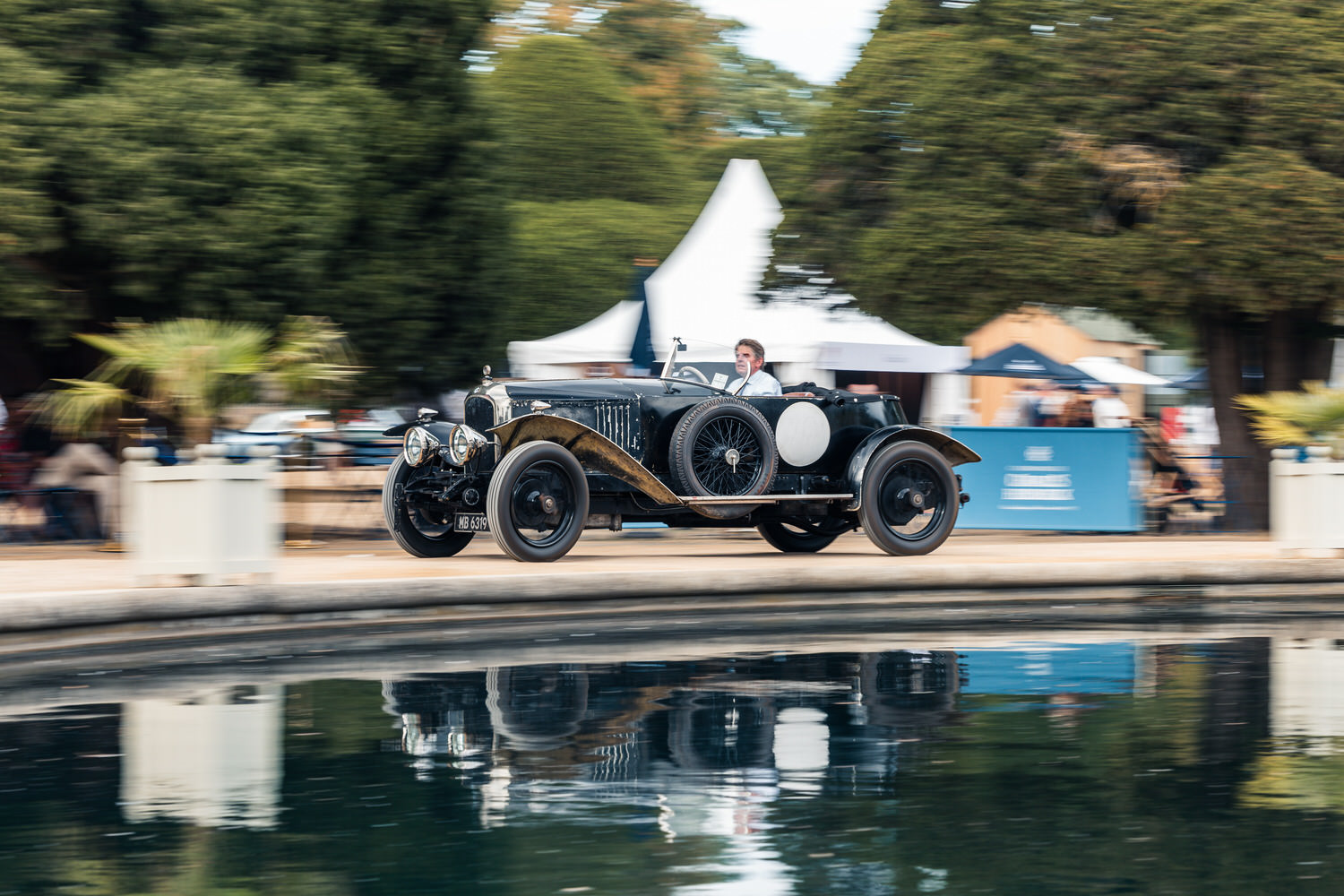
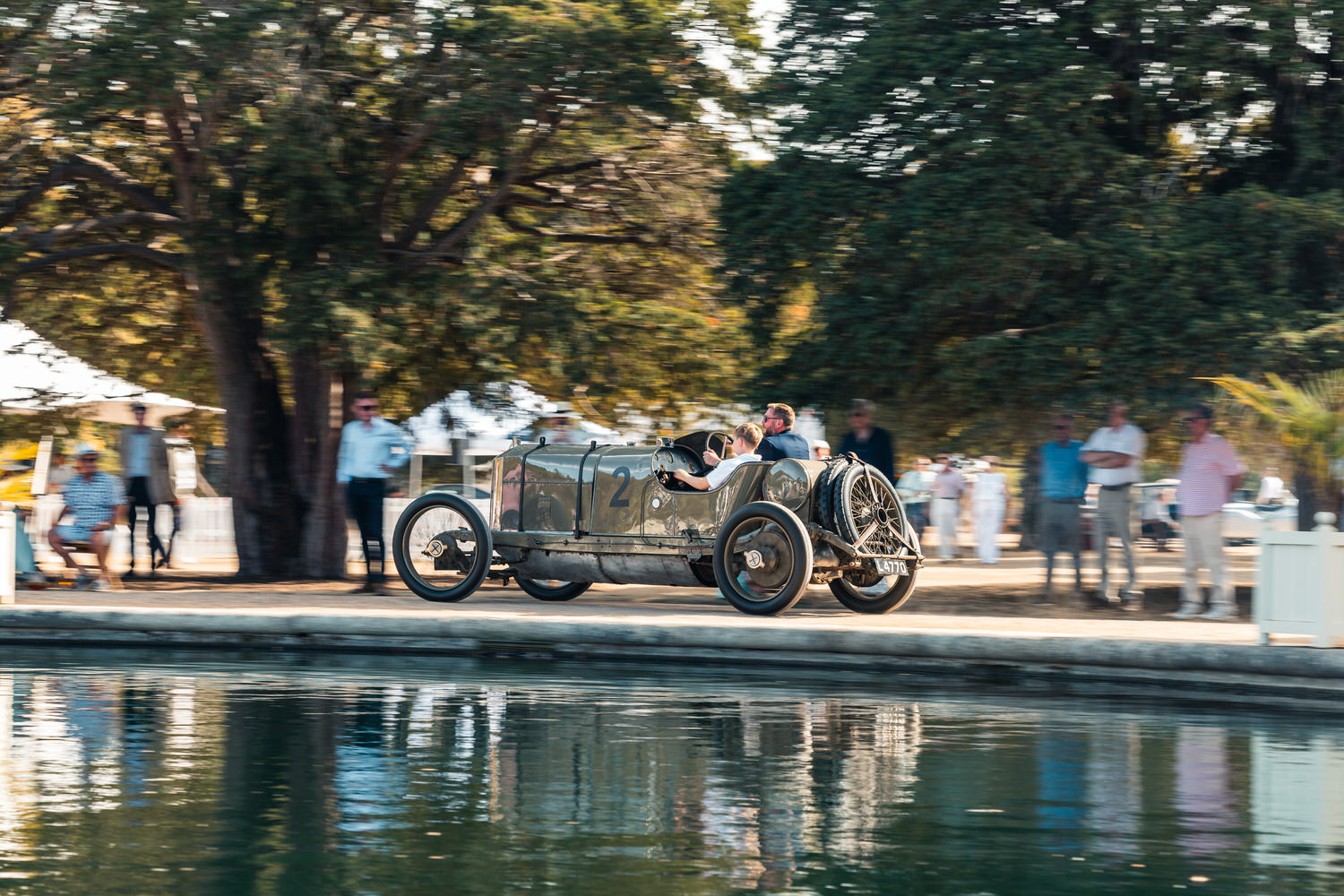
My Saturday outing though still had plenty to offer with an array of pioneers from the early 20th Century along with Art Deco specials, other legendary competition cars, and now what has become de rigueur at concours events, a selection of limited-edition hypercars.
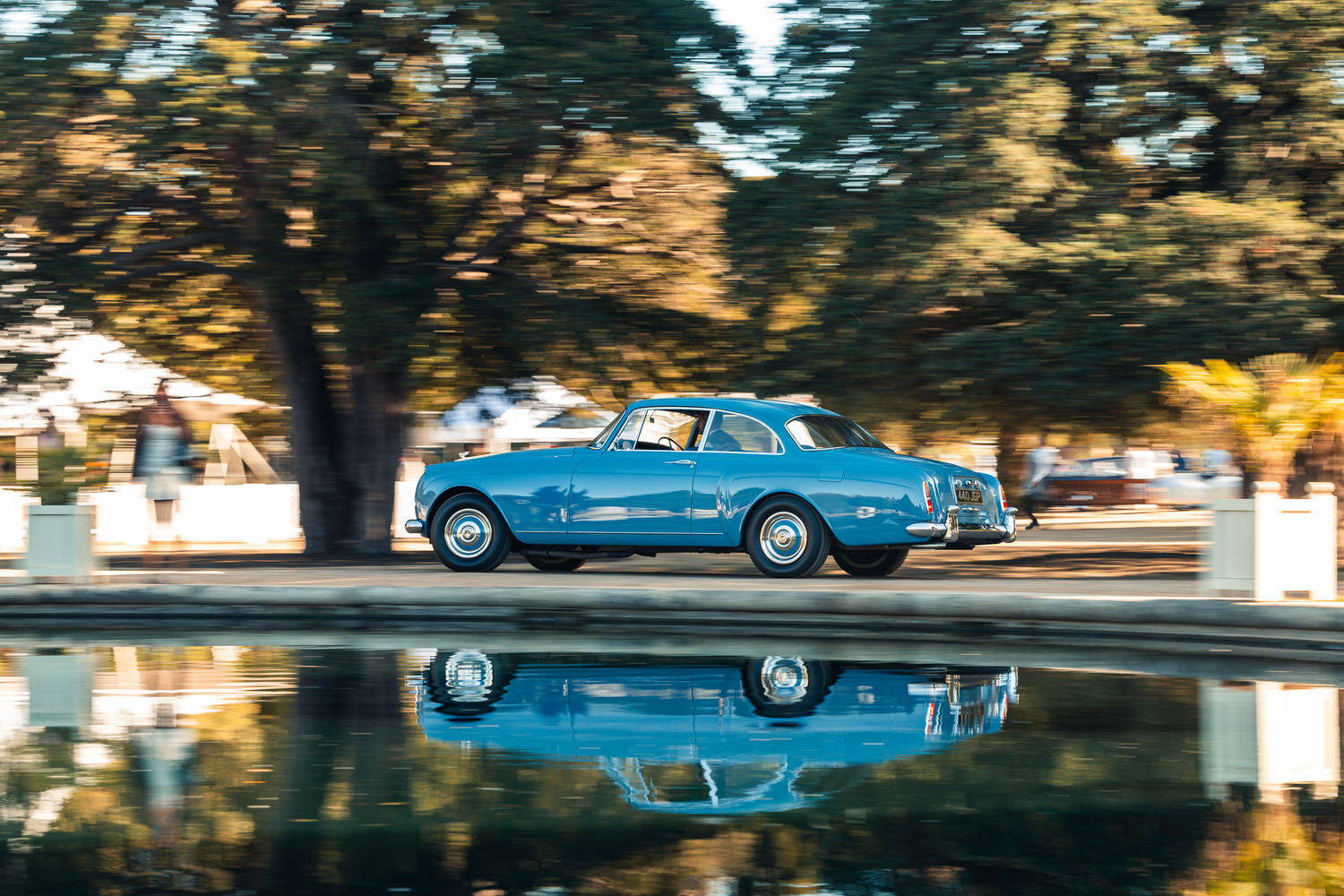
As I sat on a park bench in the shade of those famous old yews contemplating the tremendous automobiles spread before me it was hard not to enjoy these examples of hollow rolling sculpture, a term first coined by Arthur Drexler of the Museum of Modern Artin New York describing his exhibition of Eight Automobiles. “They have interior spaces corresponding to an outer form, like buildings, but the designer’s aesthetic purpose is to enclose the functioning parts of an automobile, as well as its passengers, in a package suggesting directed movement along the ground,” declared the curator of architecture.
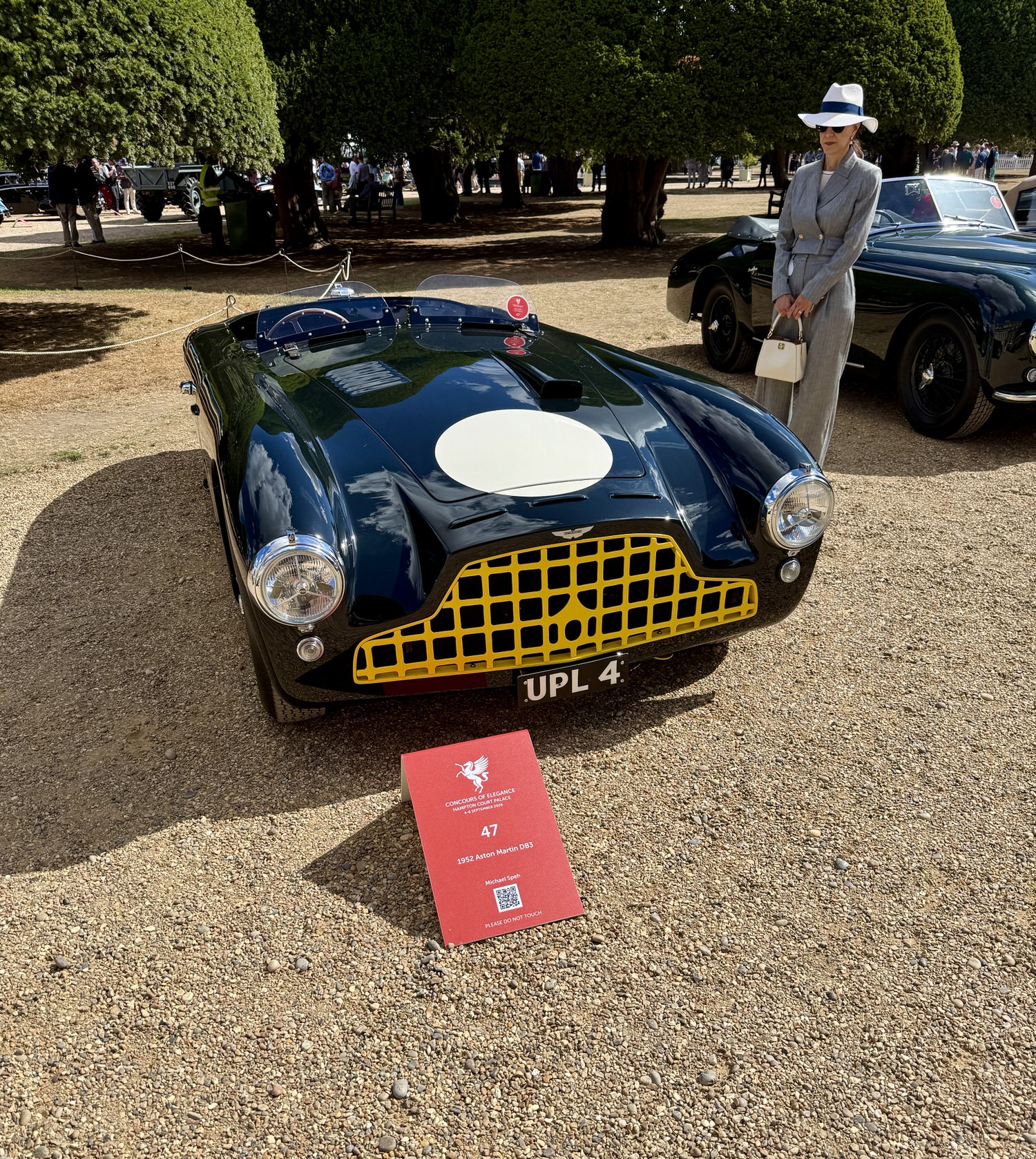
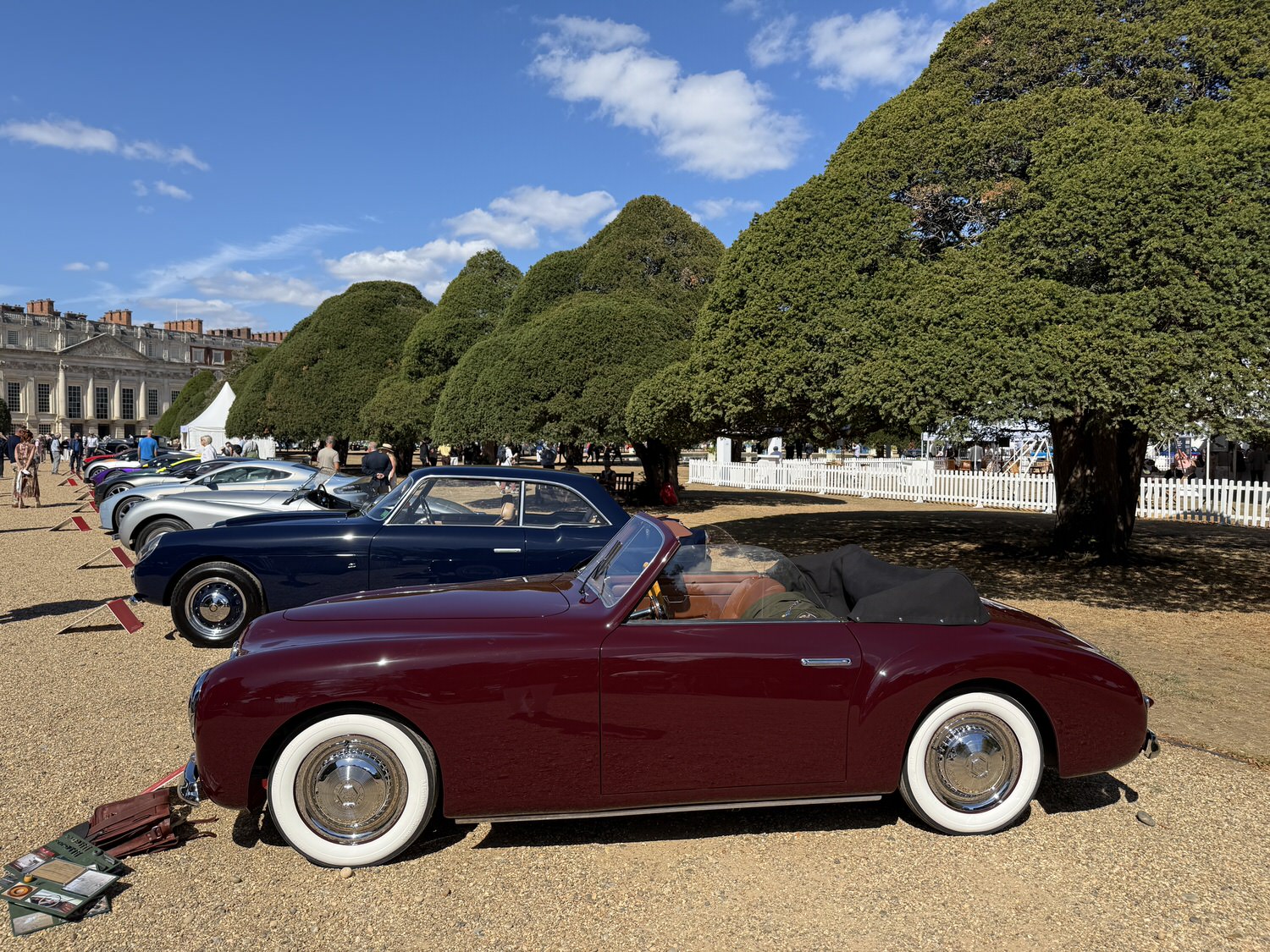
In this setting, in this weather it was hard not to be philosophical with time to think about the shape of a motor car; who was responsible for its engineering, for its shape. Was it over-restored, in need of restoration or should it remain as it was preserved; who might be driving it now; and of course, its monetary value?
The prestigious awards continued with Mr Charlesworth, and another old acquaintance Peter Wallman holding court on the concours presentation stage – 1930 Bentleys, 1960s E-Types and Alfas, Ferraris and Rolls-Royce rolled by along with the Junior Concours Award celebrating the best half-scale hand-built pedal, electric and petrol-powered cars.
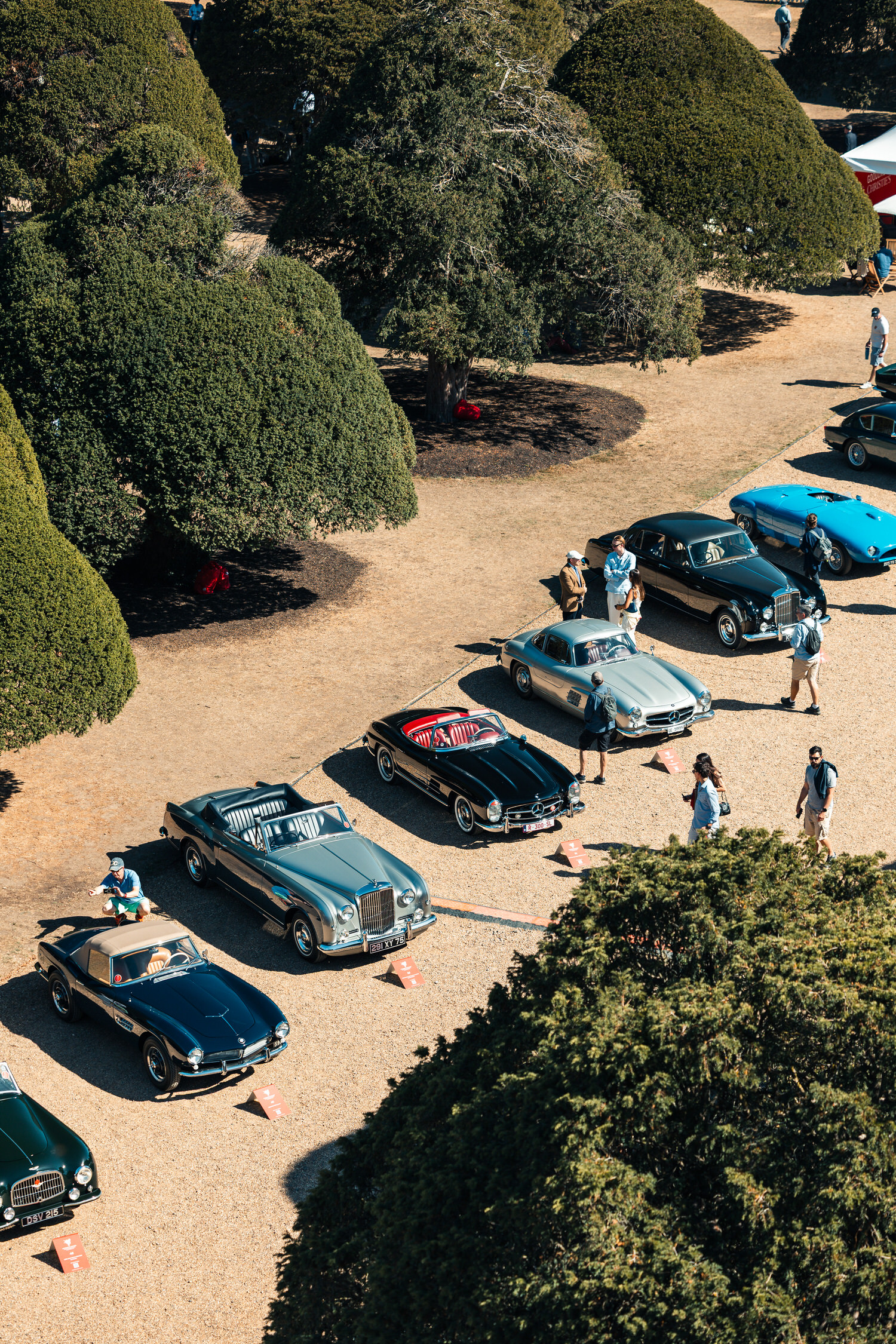
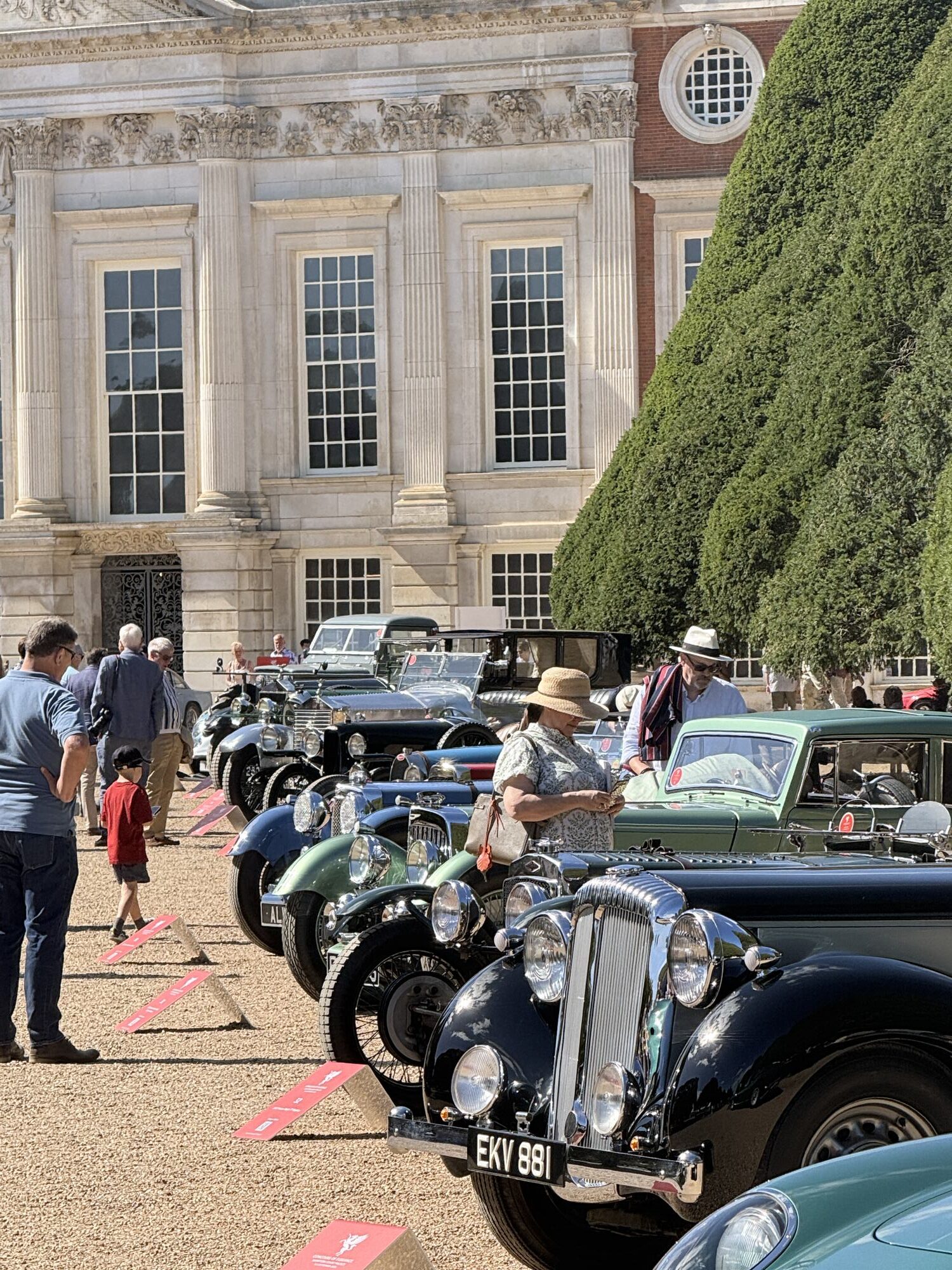
The final day on the Sunday for which I was not present (I had an appointment on lake Como and then on to Chantilly Arts & Elegance, but that is another story) was again set fair for the presentation of further awards including the Thirty Under 30 Award for younger owners, before the Grand Depart finale as the cars left the show field. Leading the way in more ways than one would have been the car chosen, in its first appearance at a UK event, as Best in Show, the 1928 Mercedes-Benz 710 SSK Rennwagen, an imperious racing car which started out life in Argentina.
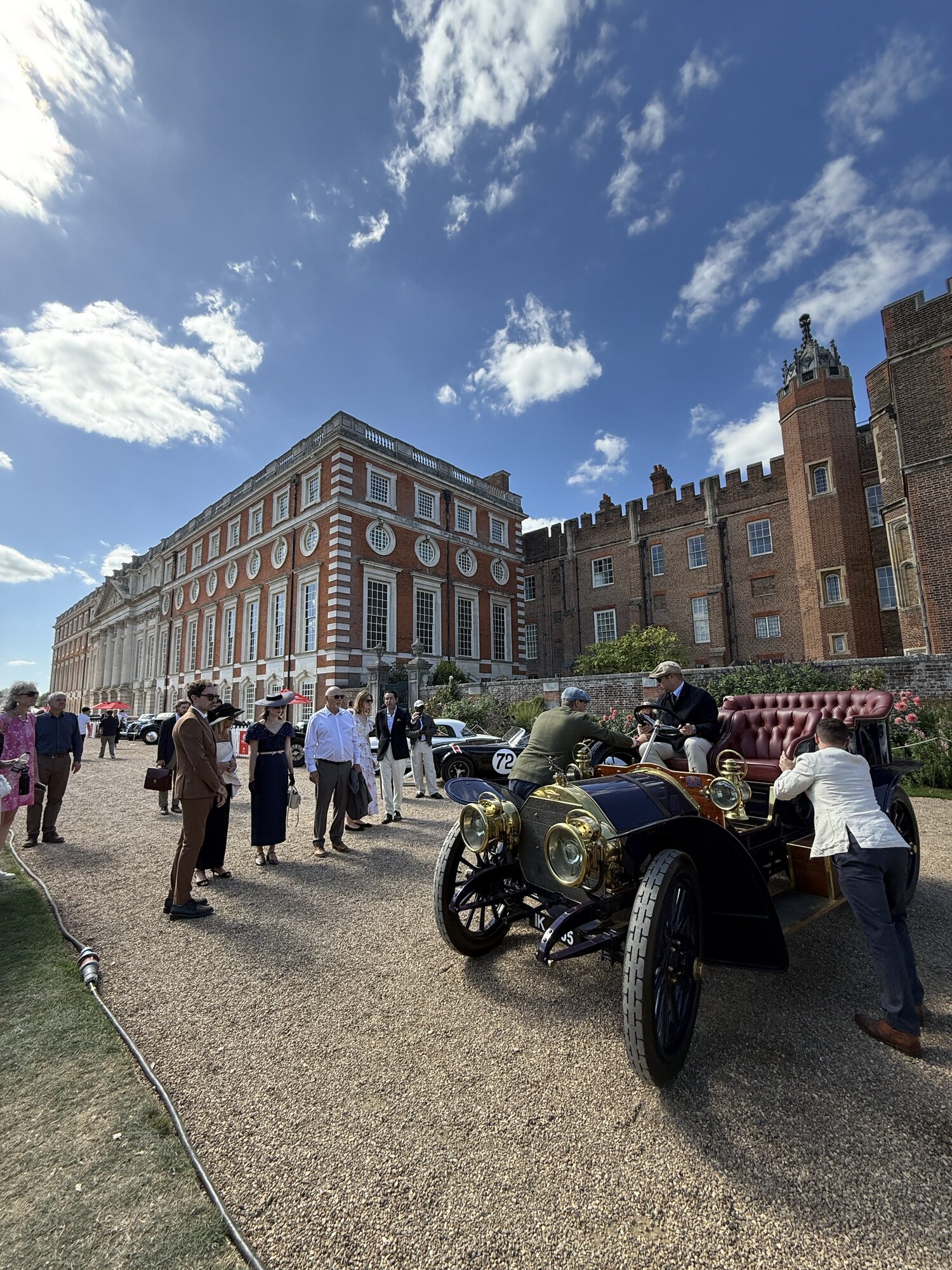
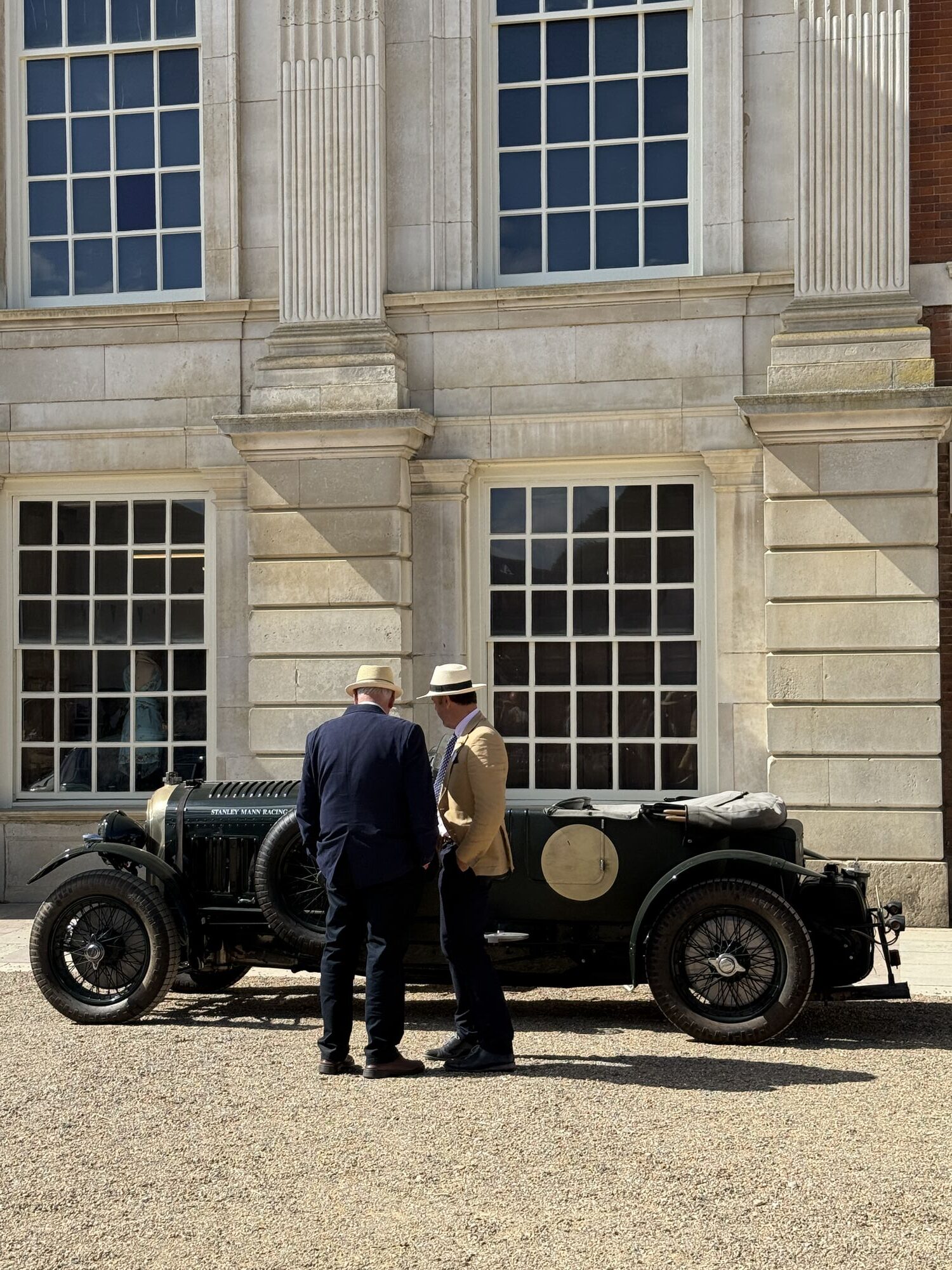
My day at Hampton Court, steeped as it is in history, had been an enjoyable outing just looking at and appreciating rare and beautiful motor cars. Unfortunately, I looked at a lot more stationary cars on the notorious M25 motorway on my drive on the way home. Stuck in the traffic and with cars overheating left and right and centre, the exhaust falling off the Ford Ka I had borrowed from my sister and sounding like a 1920s racing Mercedes-Benz ,the temperature gauge rising in the hot afternoon sun, it was hard to be as philosophical as I had been sitting under the cool yew trees earlier in the day!