In the summer of 1908, three white machines from Untertürkheim and Mannheim lined up for the greatest race in the world. And silenced Europe’s proudest motoring nation.
The story of the Dieppe Grand Prix: its drivers, its dangers, its delight in engineering. All of it anchored in a 1908 Mercedes Grand Prix car that is back on the road today.
An early racing car that was never an object with a fixed number. A being in constant transformation.
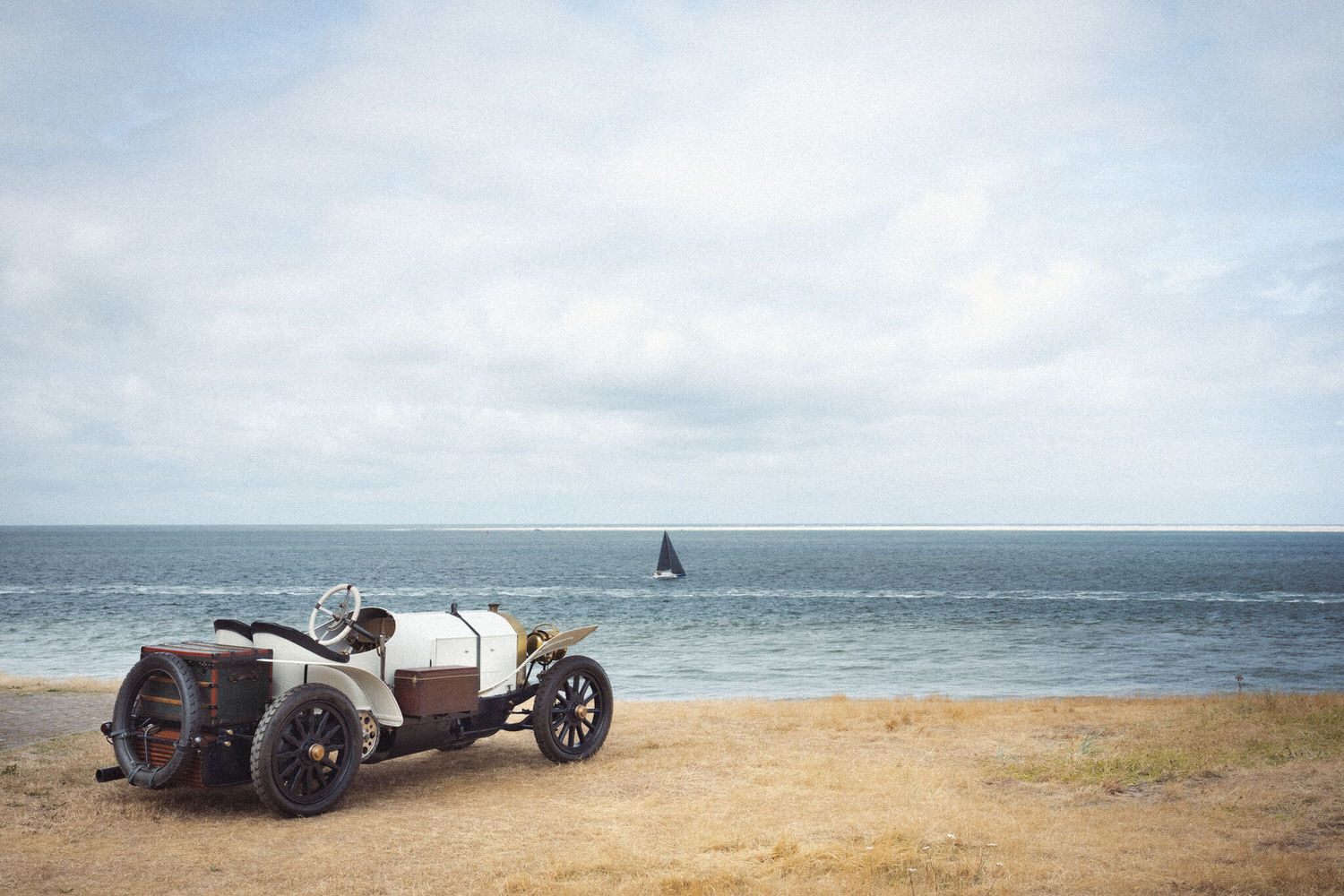
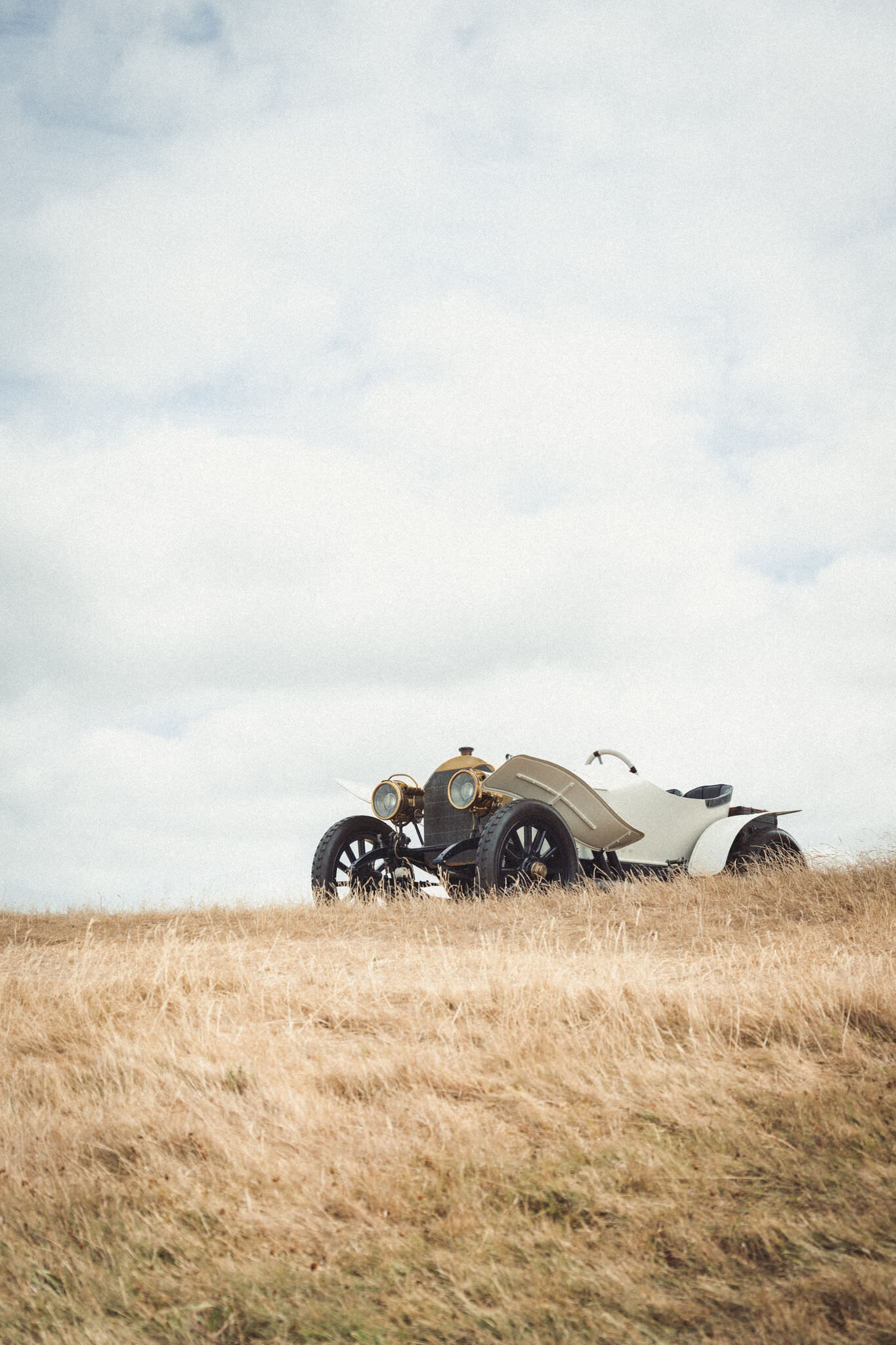
White as the colour of attack. Not silver; that came much later. When motor racing handed out its national colours, Germany got white, France blue, England green. Racing colours, taken back then as deadly seriously as a national football team’s jersey is today. And that is exactly how, white and imposing, three racing cars from Untertürkheim and Mannheim took the start in the summer of 1908. The Grand Prix de l’ACF in Dieppe was the most prestigious race in the world, even if nobody called it that yet. There was no world championship and no racing calendar in today’s sense; having emerged from the Gordon Bennett Cup in 1906, within just a few years it had grown into the great trial of strength between the industrial nations. The car on these pages dates from that year, standing in for an entire type and for a story that is bigger than the car itself.
Normandy, 7 July 1908. Six in the morning, and 48 cars set off onto the circuit at one-minute intervals, early enough for even the slowest to reach the finish in daylight. Ahead of them lie ten laps, each just under 77 kilometres long, 769.889 kilometres in total: cobblestones, gravel, swirling tar dust that burns eyes and lungs. No Sunday drive. After the race, every single driver and mechanic has to have their eyes treated; one driver is struck in the eye by a flying stone and drives on half blind, all the way to second place. Henri Cissac’s car loses a tyre and overturns. It is the first fatal accident in Grand Prix history: Cissac dies together with his mechanic Jules Schaube, who is sitting beside him. Safety does not have a department yet. Back then, drivers and mechanics are not separate worlds. It is an age in which driving, wrenching and inventing still belong together. Anyone who wants to be fast has to understand their machine as well.
For the French, a great deal is at stake. In 1906 Renault had still won, in 1907 it was already Fiat. And now this. At first it looks like a lively back-and-forth: Willy Pöge pulls away early, his Mercedes teammate Otto Salzer sets the fastest lap at a daring 126.5 km/h, and in between a French Brasier briefly pushes to the front. But on the fifth of ten laps, Christian Lautenschlager’s Mercedes takes the lead and never gives it up again. He wears out 22 tyres along the way, stops ten times, in the pits as well as at the roadside, and after just under seven hours crosses the line first at an average of 111.1 km/h, almost nine minutes ahead of the runner-up, a Benz. Third: another Benz. Of the seven best-placed cars, only one bears a French badge; the other six come from Germany. The shock runs deep. The following year, not enough car makers can be found for the Grand Prix. For three years, the race lies dormant.
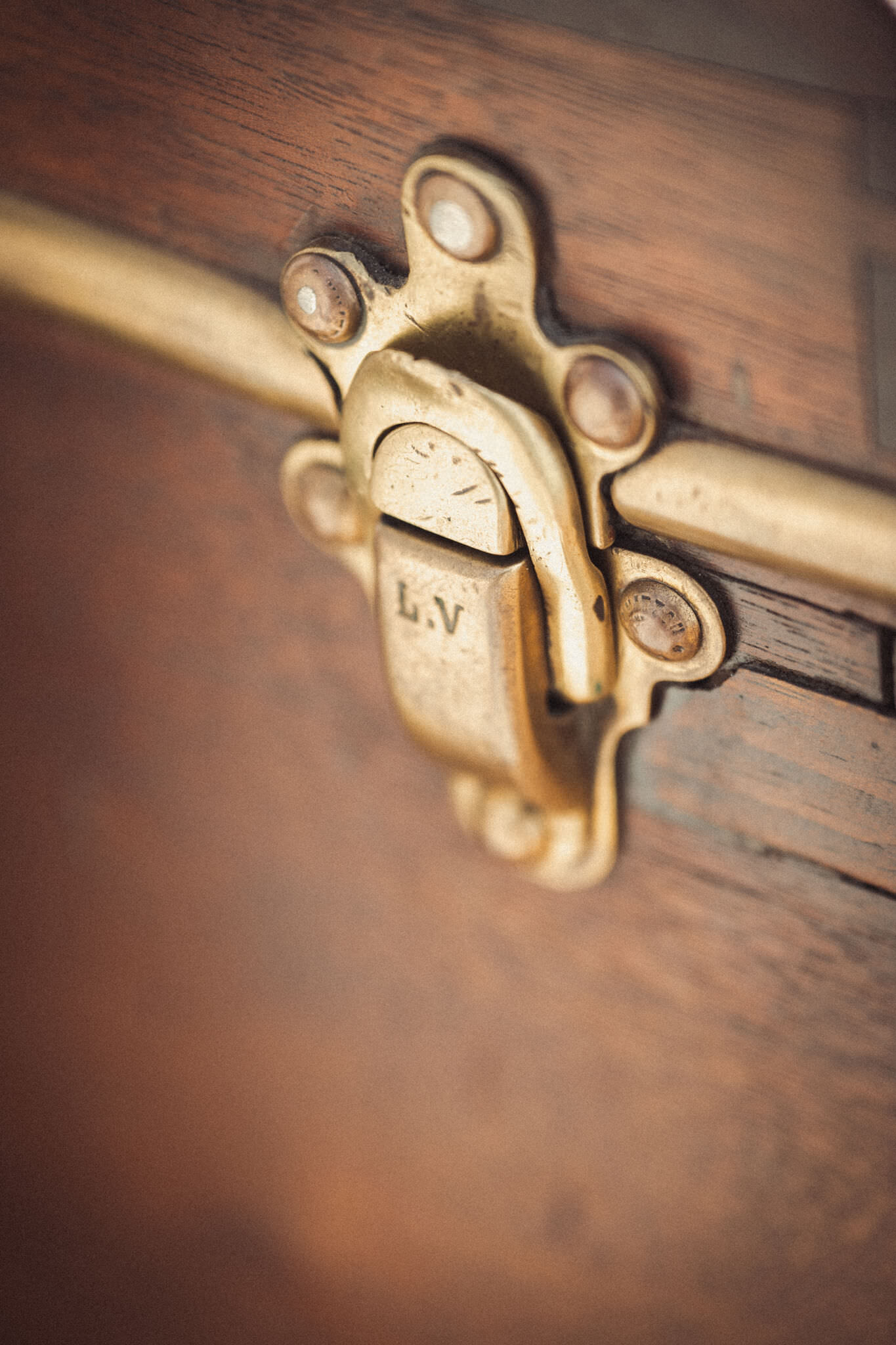
Of the seven best-placed cars, only one bears a French badge. The other six come from Germany.
The winner? No grand seigneur with a twirled moustache. A journeyman locksmith from Swabia, brought to Untertürkheim as a mechanic by Gottlieb Daimler in 1899 and promoted by Wilhelm Maybach to foreman of the test-driving department in 1905: Christian Lautenschlager, fearless and level-headed at once, and blessed with that healthy way of life and that down-to-earth business sense so often attributed to the Swabians.
He was promised 49,000 francs if he won. In today’s purchasing power, roughly a million euros, or fourteen kilograms of gold if you prefer. A thrifty Swabian scooping the jackpot at the most expensive game in the world: a punchline could hardly play out more beautifully. And because he was a man who thought ahead, he had worked out a system: always one front and two rear tyres on board as spares, dutifully restocked at every pit stop. He won. Beside him sat his riding mechanic, Jakob Meckle.
Six years later, Lautenschlager would win the Grand Prix once more. Again in a Mercedes, this time in Lyon, at the last great race before the war.
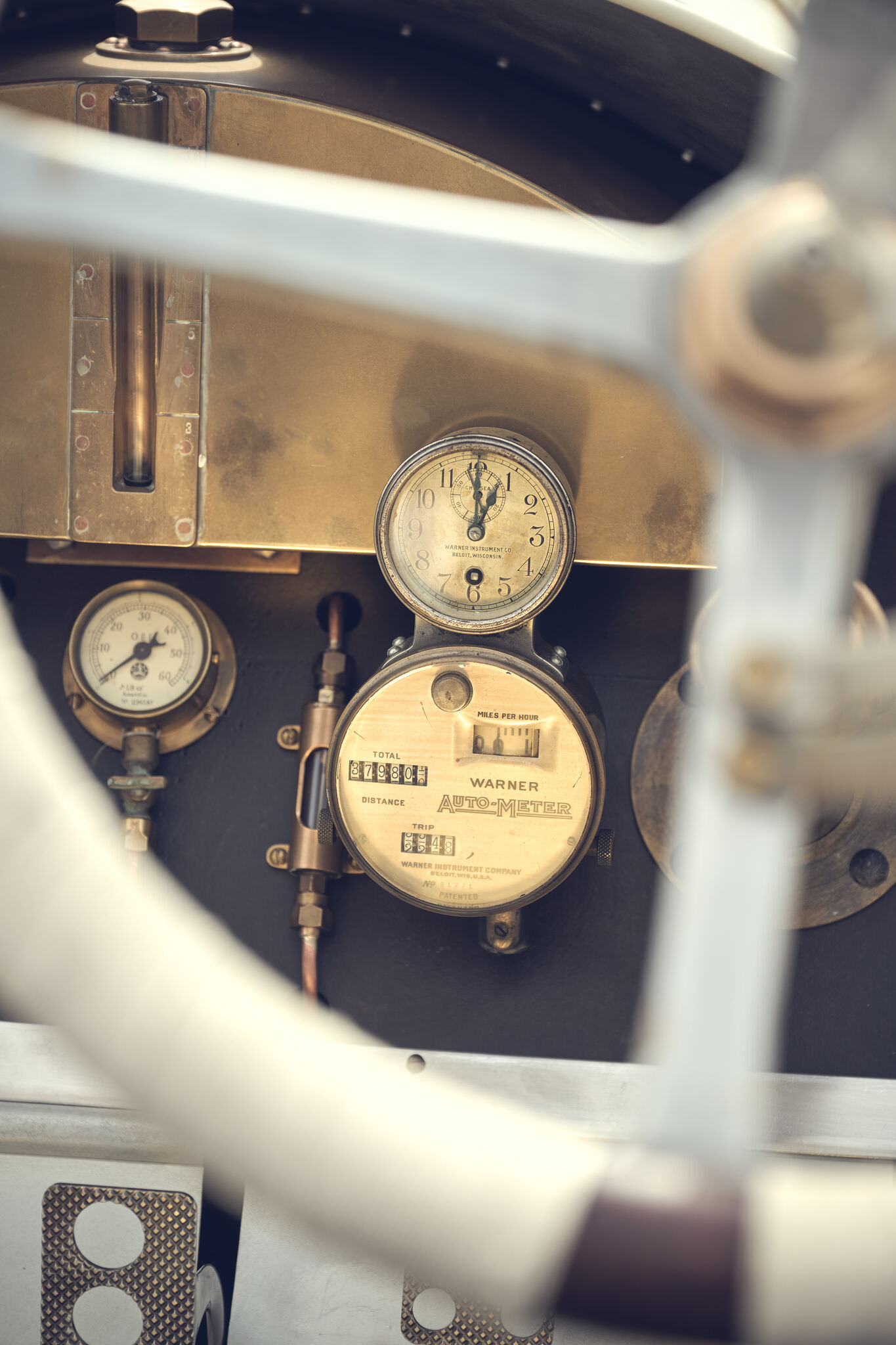
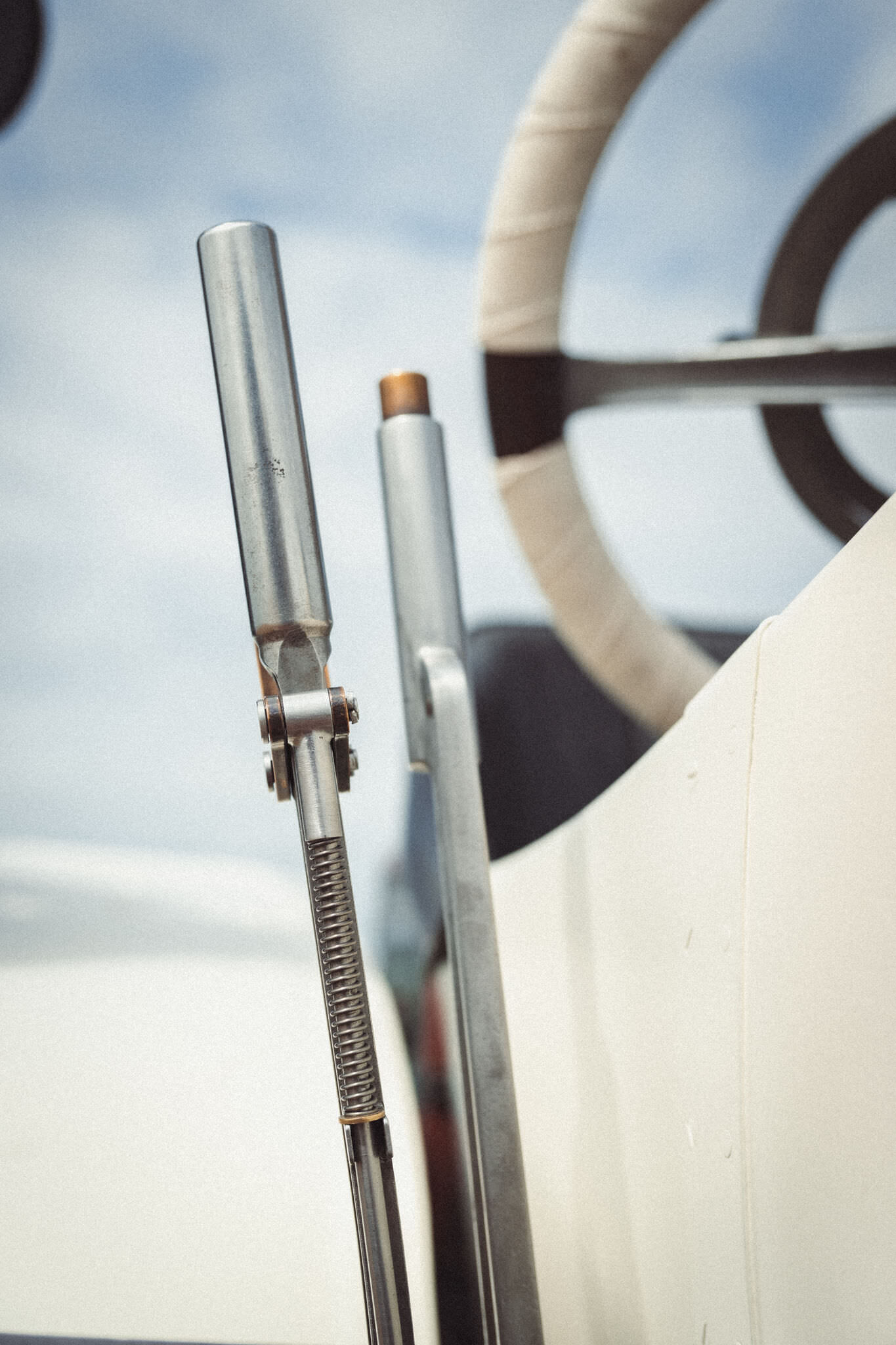
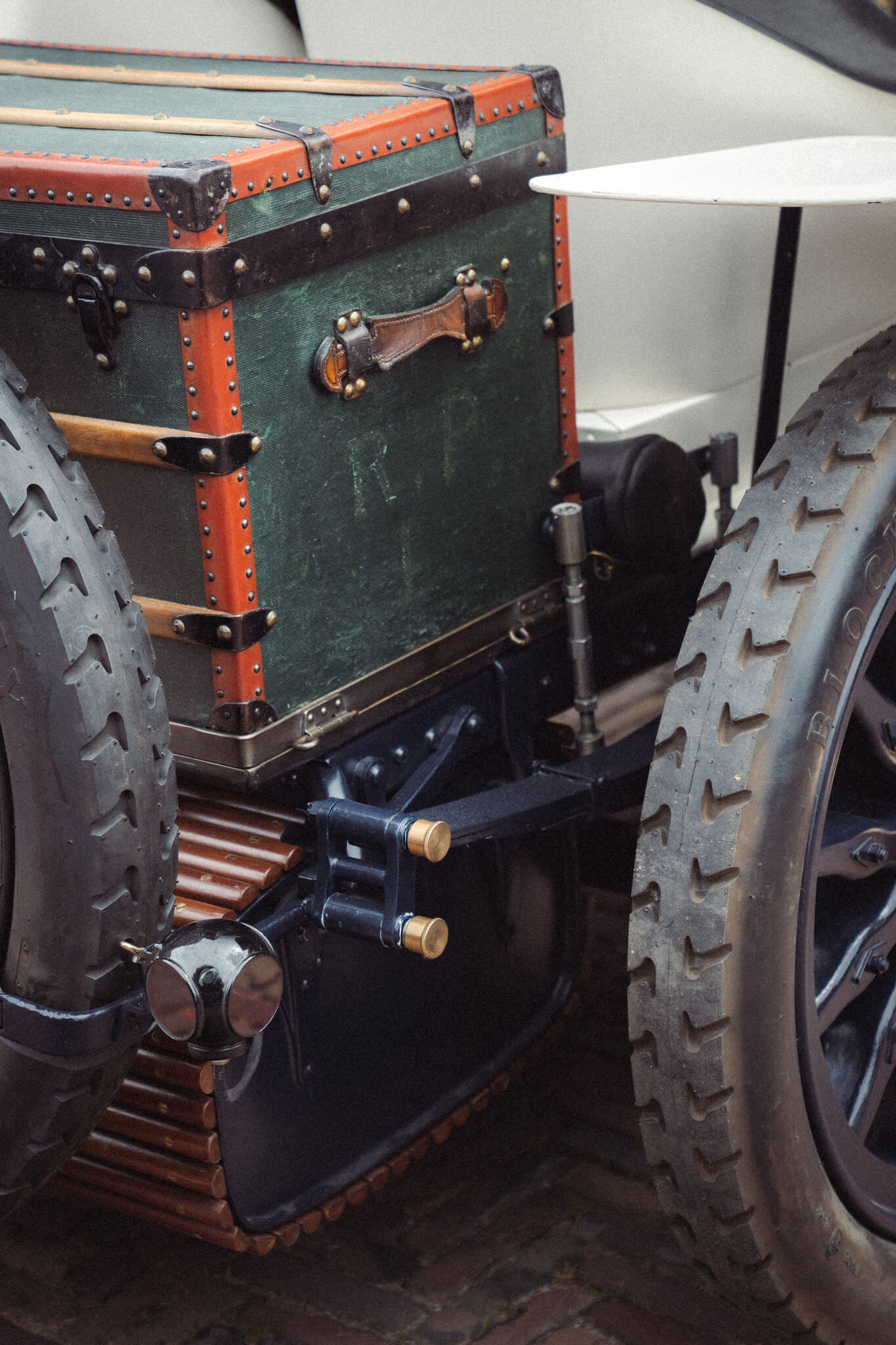
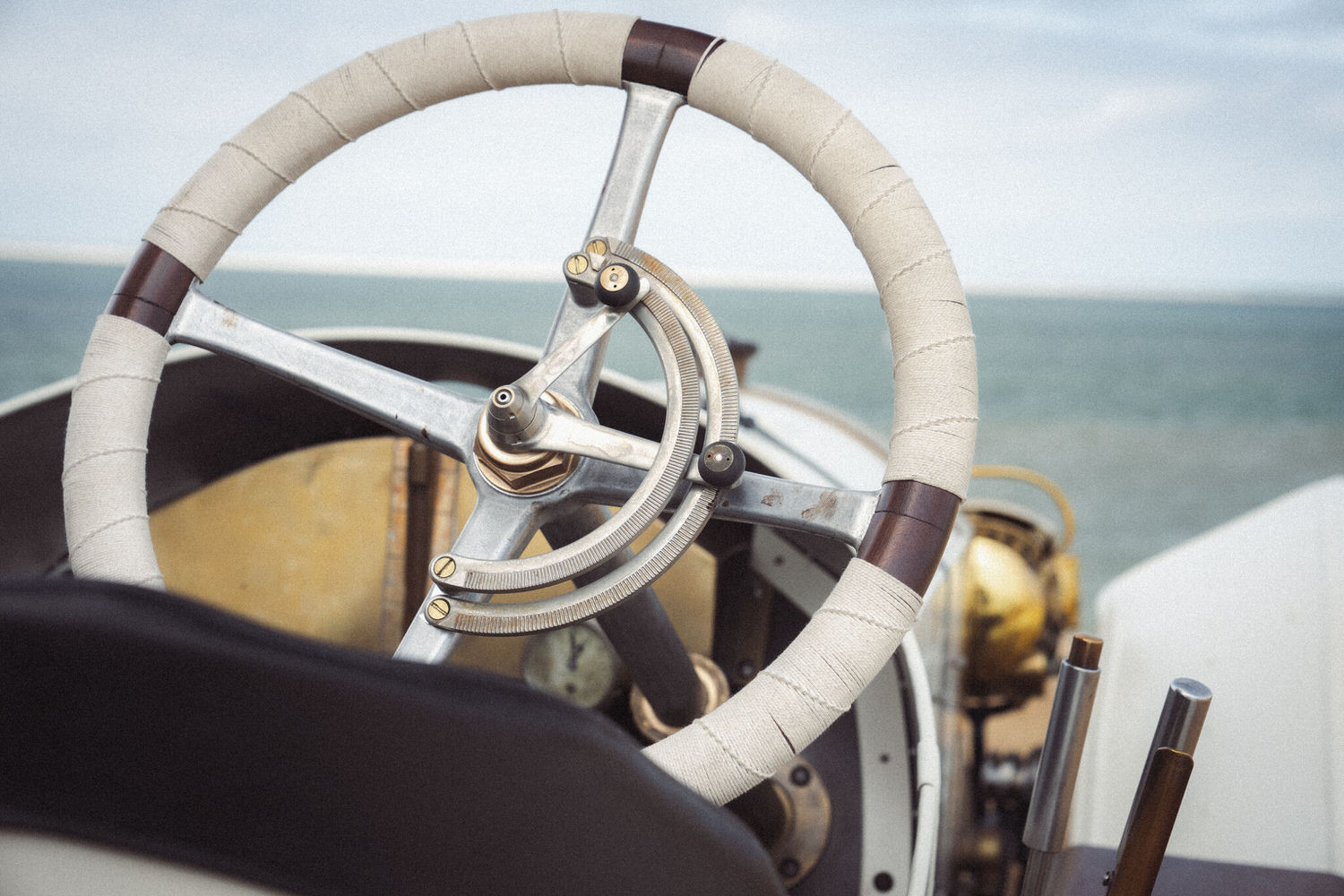
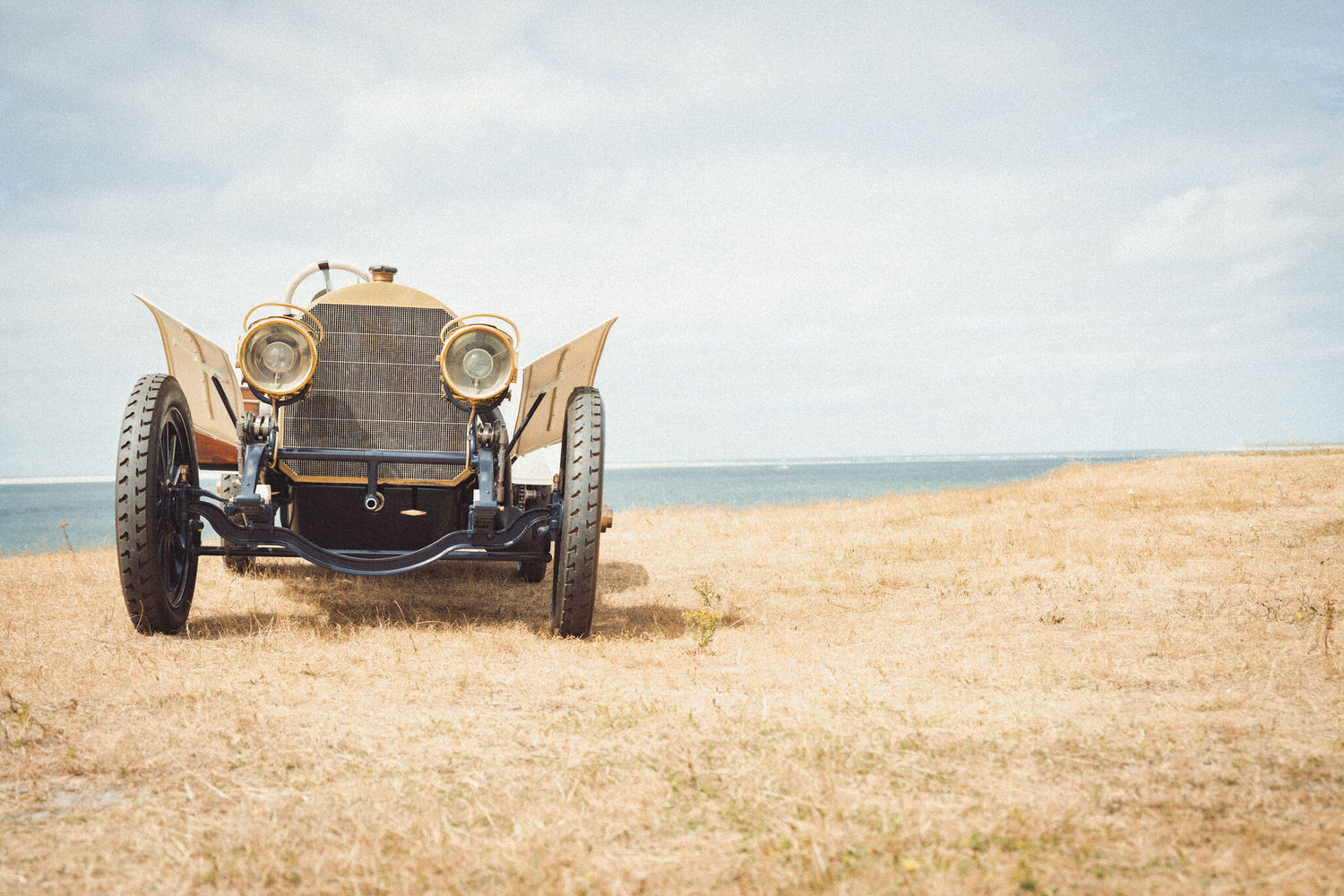
And the car? The GP 1908, a four-cylinder of almost 13 litres whose cylinders were still cast in pairs, because a block in a single piece could not yet be cast. 130 hp at a leisurely 1,400 rpm, the power still delivered to the rear axle via massive chains. Where today we would expect a dashboard sits something that looks as if someone had married a chemistry set to an engine: little glass tubes, a pump, a few levers. A total-loss lubrication system that drips its oil onto the road with stoic composure, because fresh oil is on its way anyway. The car leaks oil. On principle. So, no revolution. The patient perfection of what already existed. Early motor racing as a laboratory as lively as it was serious, in which the industrial nations warily sized one another up. All of it driven by a firm confidence that more technology, more knowledge, more speed could only make life better. A buoyant spirit of new beginnings all round.
One thing, though, is worth knowing when you stand in front of a car like this: it was never a production model with a fixed chassis number, never a vehicle with the clean, unbroken identity we know from road cars. Works racing cars were not registered. They were deployed. And constantly changed in the process. They were built, they crashed, they were rebuilt; wheelbases were shortened, axles swapped, bodies and entire engines exchanged, from race to race, precisely because there were breakages and accidents. With these machines, transformation was the essence, never the exception. A racing car of this era is not an object with a stamp. It is a verb, defined not by a number, only by what it has done. Whoever brings it back to life today from surviving original parts and historical evidence does not betray its nature. They understand it and carry it forward.
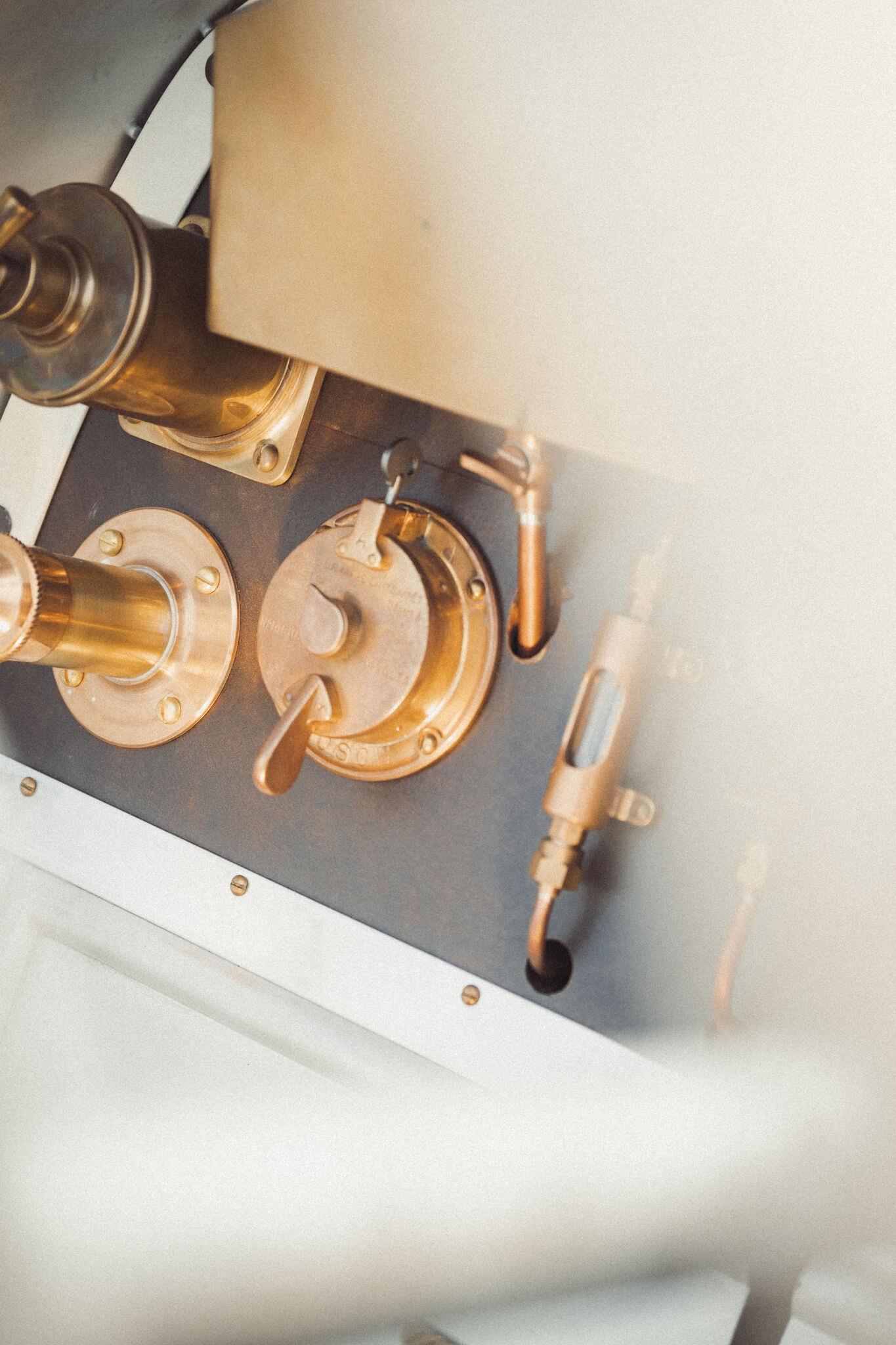
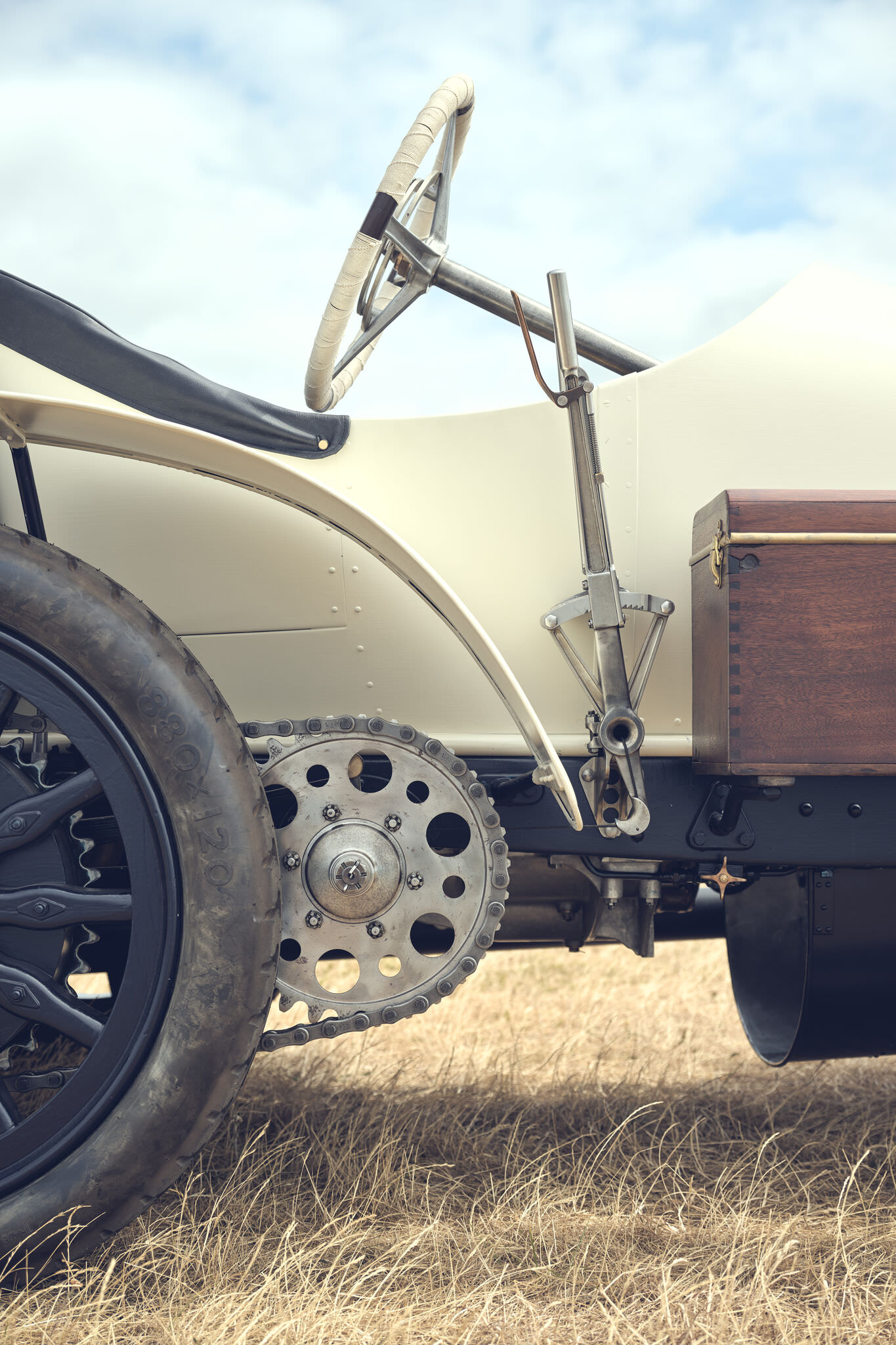
What has survived of this car remains as it is. Where time has left gaps, a different kind of work begins: drawings, photographs, measurements, materials, machining marks, surviving parts. The car and its history are read like a set of findings. Missing elements are only added once the existing evidence yields a reliable answer, faithful to the original, using materials, techniques and craft methods that follow the historical model. Do not make new what is allowed to be old. Do not invent what can be known.
The result is no arbitrary replica of the 1908 car. The new serves the old, not the other way round. As much historical substance as possible is preserved, and where additions are needed, they are made with respect for what has survived. Perhaps this is the wisest way to let a racing car like this keep its history. It is not forced back to a supposedly perfect moment in its past. Instead, one accepts that a machine can have a biography, one with breaks, changes, losses and additions, and that good restoration does not erase that biography. That is how all of its eras are taken seriously. Then again, a racing car was never made to stand still.
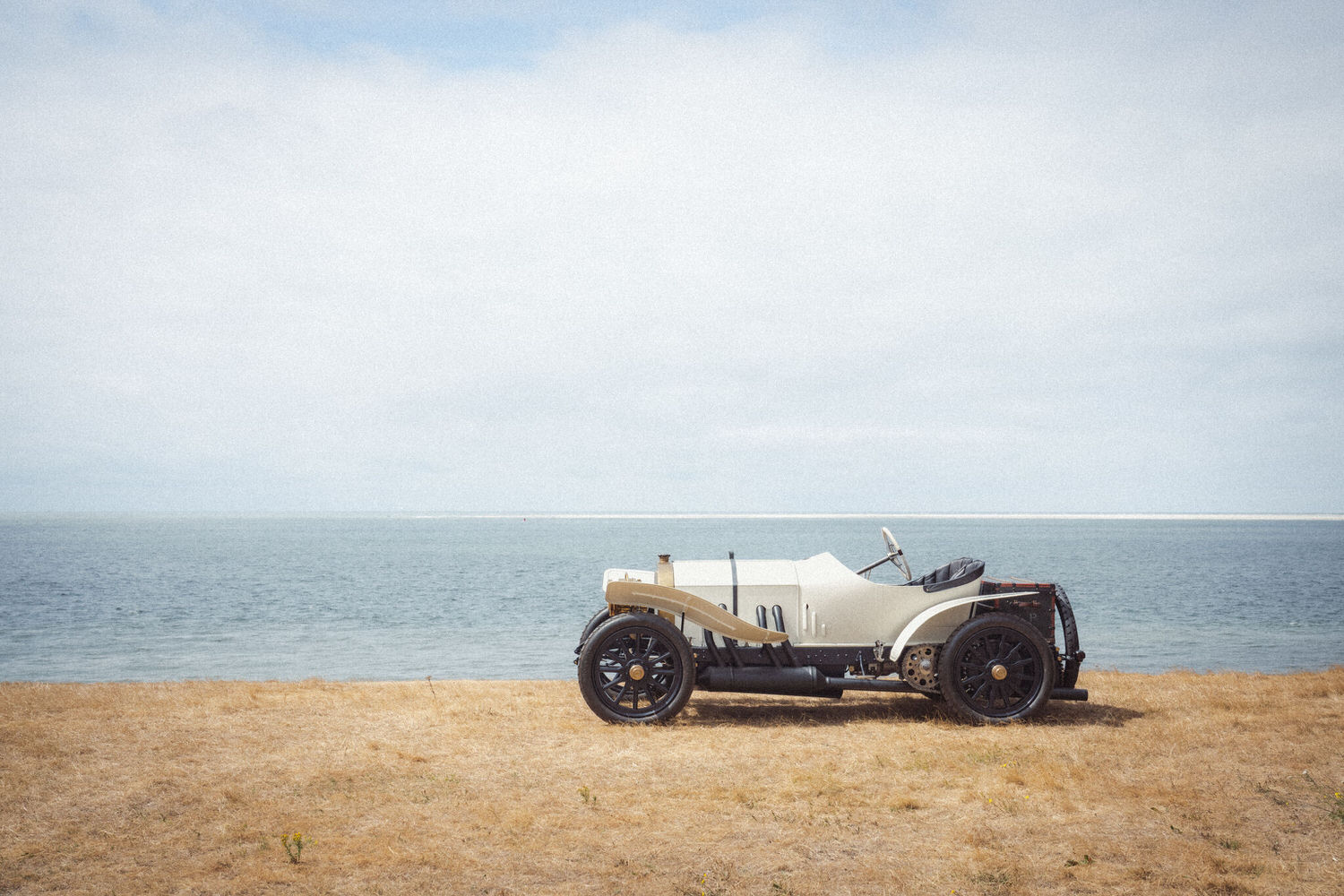
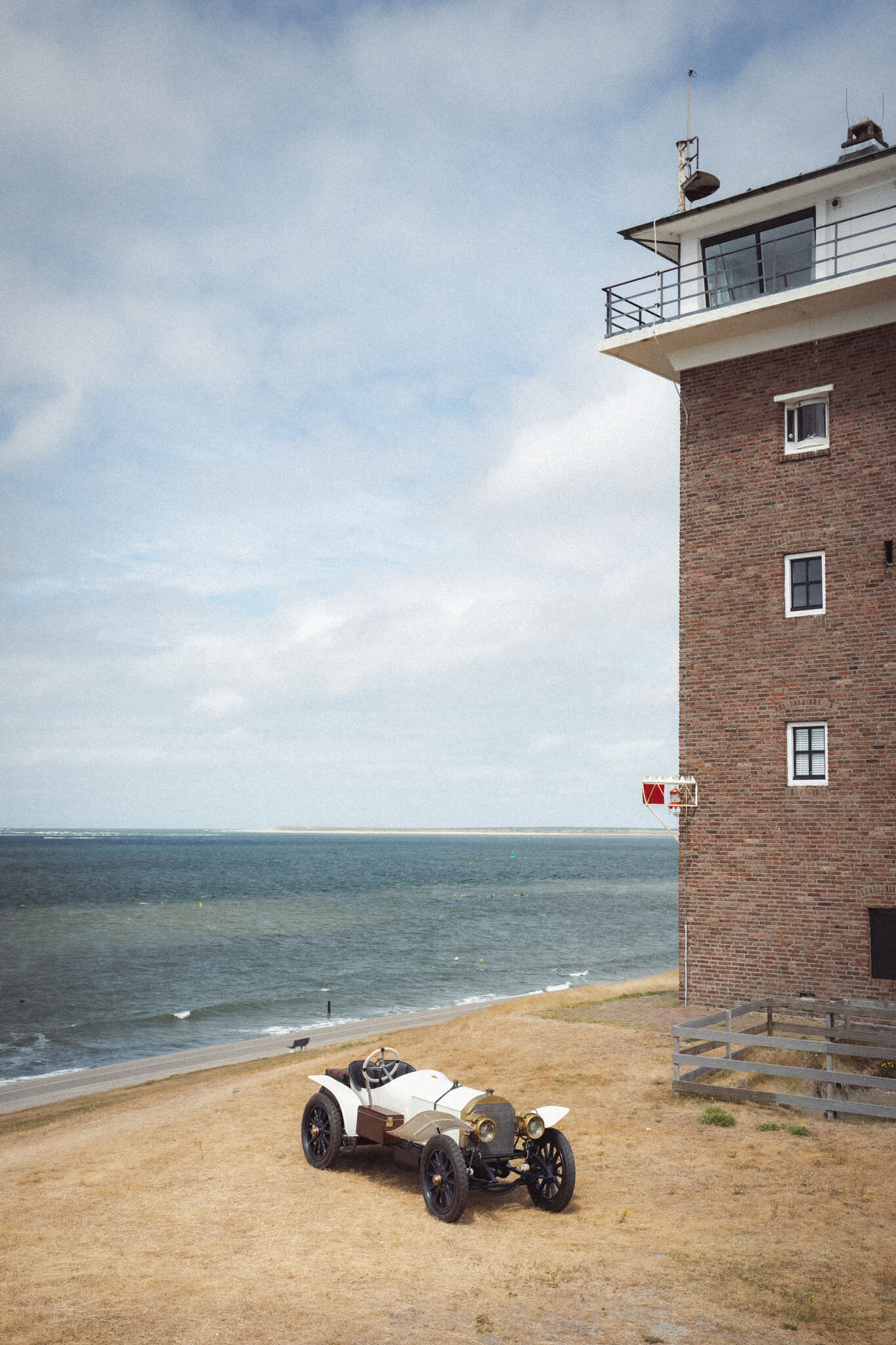
And here it stands now at the edge of the sea, white and silent, its brass dull in the cloudy light. Nothing about it reveals all it has lived through and set in motion. Even less does it reveal how much knowledge, restraint and craftsmanship it took for it to do once again what it was built for.
Driving.
In the beginning there was the joy of competition, the ambition to be faster and cleverer than the others. These people lay awake at night because they wanted to know whether what had seemed impossible yesterday would work tomorrow. Much of their world has vanished. Not this joy.
It still rides along.
Interview: Michael Köckritz
Photos: Steffen Jahn | Matthias Mederer · ramp.pictures
ramp #71 Yabba Dabba Doo!
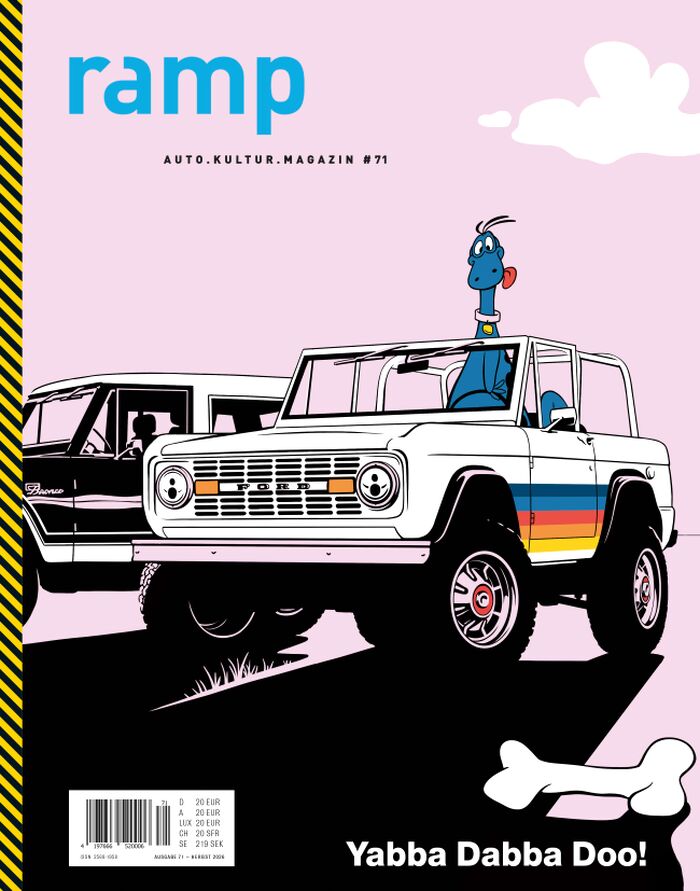
There’s Fred. Fred is happy. The moment the siren wails, he slides down the tail of his dinosaur, jumps into his stone car and shouts: “Yabba Dabba Doo!”
For more than sixty years, everyone has instantly understood what that means. Psychologists later came up with all kinds of terms for it. Philosophers distinguish between happiness and joy. Neuroscientists explain dopamine. Find out more