Imagine a scenario in which you could walk into a Porsche dealer today and order the equivalent of an everyman’s sports touring coupe. It would be a perfectly balanced front-engine, rear-wheel-drive sports car, one complete with a pair of seats in the back and enough luggage space for a road trip to someplace sunny.
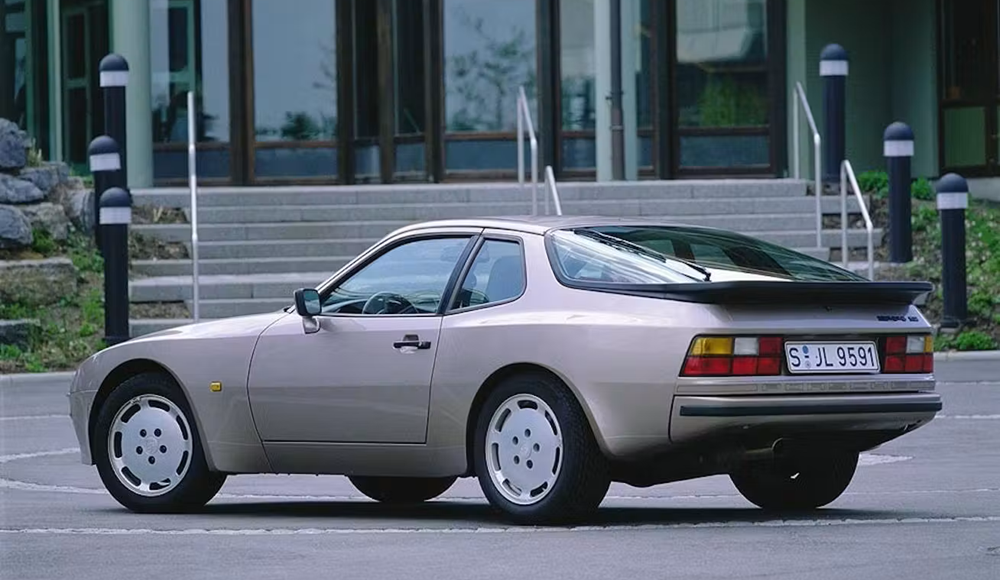
The irony, of course, is that Porsche used to offer enthusiast drivers just such a model. It began life as the 924, grew up to become the 944, which in turn morphed into the 968. Then, facing financial ruin, the company gave up on the concept and pivoted to create the Boxster in an effort to find economies of scale with the 911.
To this day, there are some Porsche purists who look down their noses at anything that doesn’t have a flat-six engine suspended over its rear axle. Yet this can play into the hands of open-minded enthusiasts who aren’t sniffy about four-cylinder, front-engined Porsches. Especially with the 944. I’m one of those people; I bought a 944 and lived with it for a year, used it every day, and got to learn about its best bits and, er, shoddy bits.
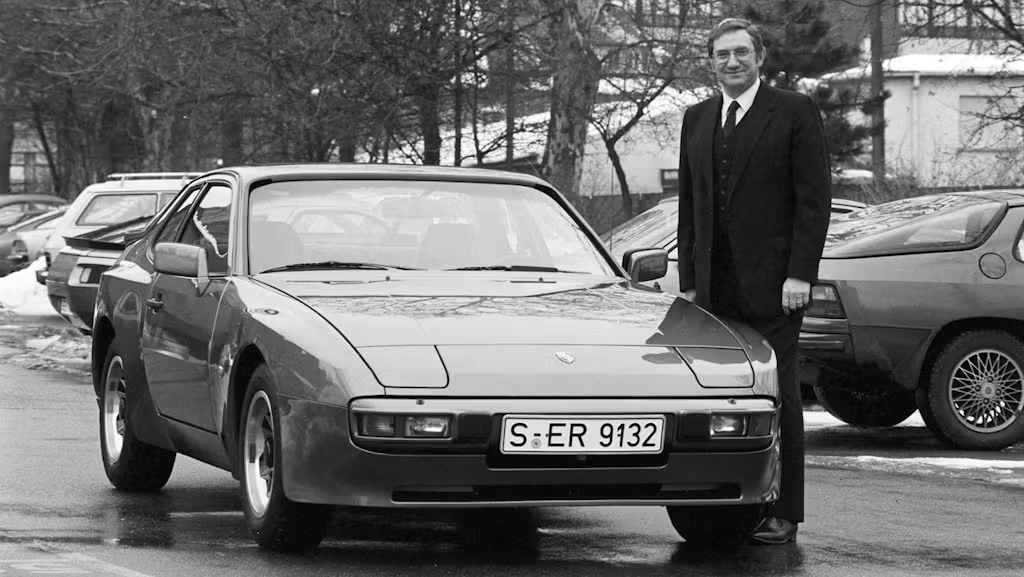
The good news: The 944 is an affordable classic—affordable, that is, when viewed comparatively within Porsche circles. And if properly maintained, it can still be pressed into service as a daily driver. The bad news: There isn’t really any such thing as a Porsche for peanuts. As more people have woken up to the car’s appeal, the 944 has become increasingly sought after, meaning its values have climbed over the past decade.
Introduced for 1982 with a 2.5-liter four-cylinder, front-mounted engine (effectively half of the 928’s V-8) and a rear-mounted transaxle, the 944’s near-perfect weight balance earned it success in both road and race form. It would remain on the market for a decade, eventually including a Turbo model in 1986 and higher-spec twin-cam S and S2 trims, as well as a cabriolet. In 1992, it was replaced by the 968.
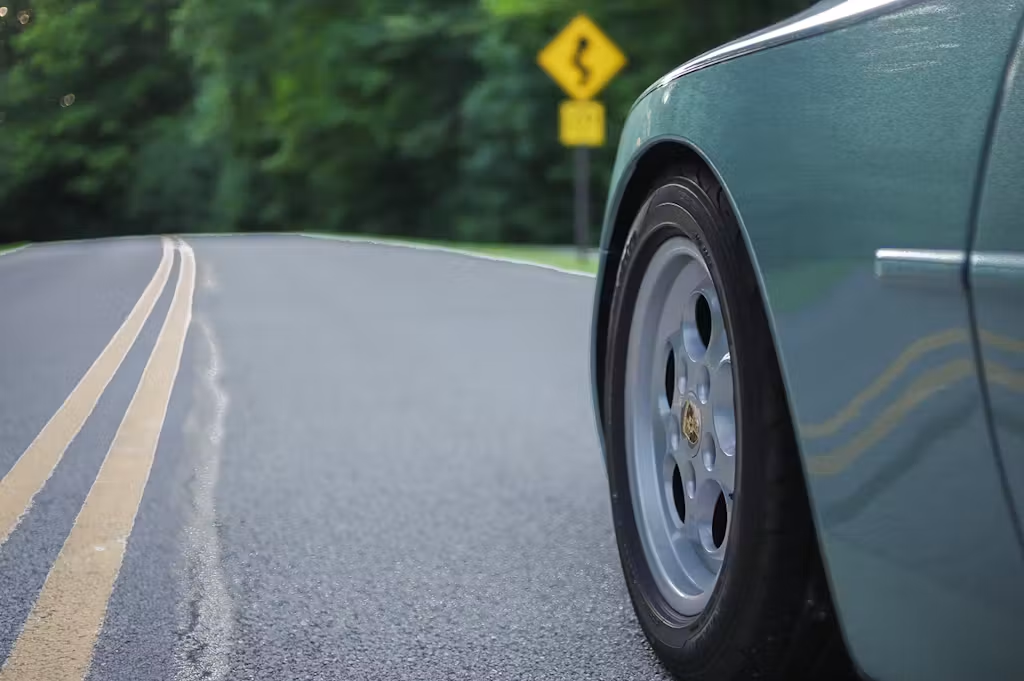
Today, the 944 is still enjoying a retro resurgence that began a decade ago. If you’re in the market, make sure your search criteria include a solid service history as a priority. The good news is, Porsche parts are readily available, and scheduled servicing is relatively affordable.
What’s a Porsche 944 Like to Drive?
The 944 is light, nimble, and direct, and is generally considered a hoot to drive. It flows down a road, and the balance of the front-engined, rear-wheel-drive platform inspires confidence, especially through bends.
Regardless of model choice, the power delivery of a 944 feels smooth and torquey, with easy progress made via the precise five-speed gearbox. The steering is an ideal balance of weighty feedback and responsiveness to minor inputs but proves light enough that parking maneuvers aren’t a chore. The gearbox is direct, but beware a notchy shift quality, as it indicates wear.
This cool coupe will happily take a track day in stride, or you can just putter down the road to the supermarket and make the most of its ample load space under that expansive rear glass.
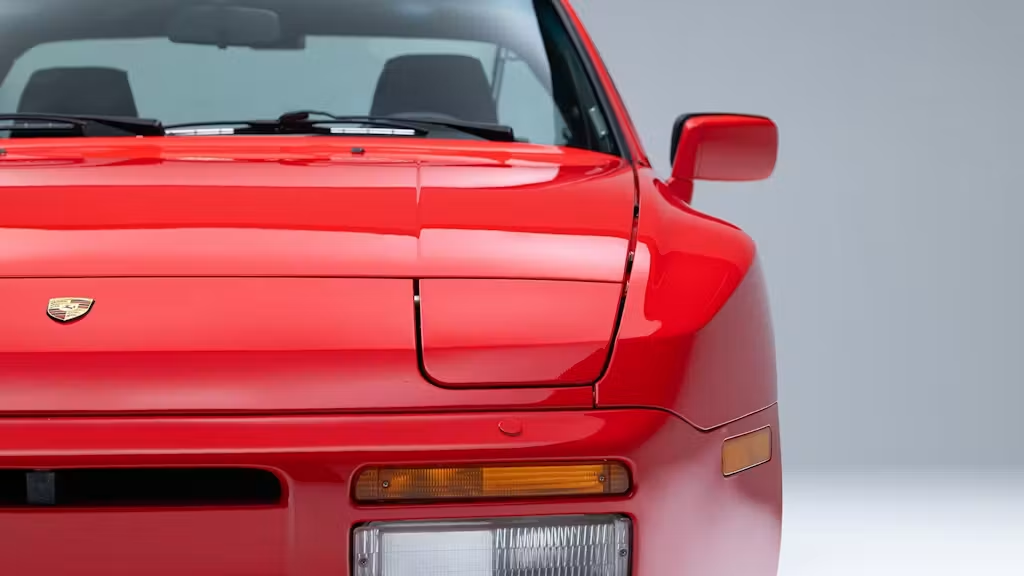
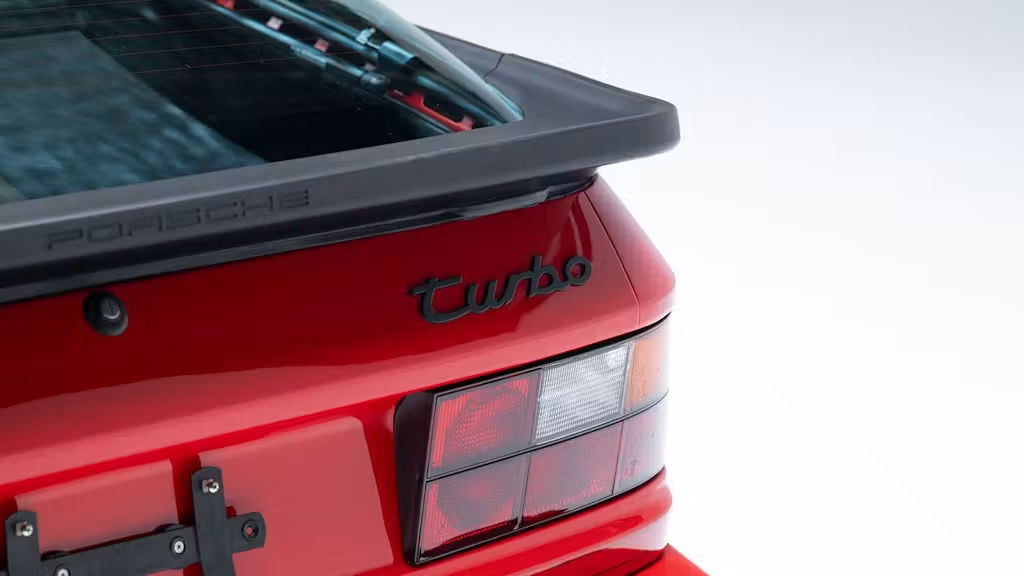
Singling out models, the standard 143-horsepower 944 is no rocket ship. The 2.5 (expanded to 2.7 liters and 165 hp for 1989) is just about quick enough to entertain, but what it lacks in standing acceleration it more than makes up for in driving experience, engagement, and feedback. Unsurprisingly, the 220-hp Turbo packs more punch and attracts more kudos, but there are reliability concerns, and its higher price range makes enthusiasts critically consider bang for buck. The 944 S, introduced in 1987, strikes a solid middle ground, with its dual-overhead-cam motor making 188 hp.
That said, many 944 fans feel the smart bet is the later 3-liter 16-valve S2. Introduced in 1989, the S2 is when things really started to get lively; with 208 horses, it put the old Turbo into the shadows. Its twin-cam engine is simply a more refined unit than the Turbo’s 2.5, with significant turn of pace and mid-range torque that will surprise and reward you in equal measure. The pinnacle of the model is perhaps the 250-hp Turbo S from 1988, with a harder edge to it thanks to adjustable coilover suspension, bigger antiroll bars, larger Brembo brakes, a limited-slip differential, and a few other chassis tweaks. For all-around value, however, the S2 probably offers the best investment in terms of both driver experience and residuals.
How Much Does a Porsche 944 Cost?
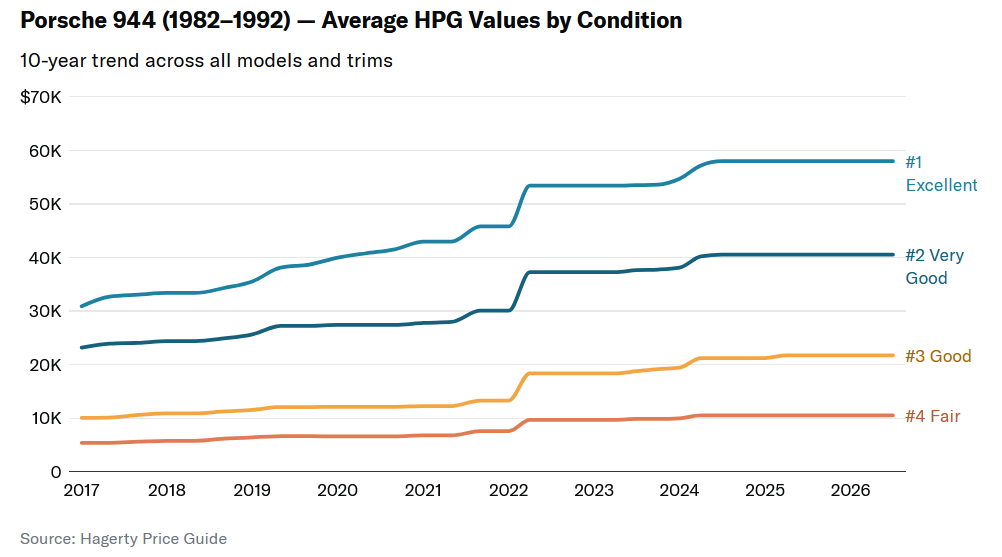
The 944 is no longer the unappreciated Porsche, so the days of picking up a bargain worth owning are behind us. Across the range, as ever, condition is everything. Early “square-dash” models are the entry point, but these pre-1986 base models have a dated feel. Values for a 1983 944 start at $5000 for one in #4 (fair) condition but can top $50K for a #1 (concours) example. Solid #3 drivers fall into the $12,000–$20,000 range. Later, post-’86 oval-dash 2.5 models are on average less expensive in all conditions, with concours examples closer to $40K and drivers more like $10K–$16K.
To afford a good early Turbo, you’ll need to budget roughly $40K–$55K for a #2 (excellent) one, while the very best are now approaching $80,000. An S model in excellent shape is roughly $23K–$33K, with the range for good ones less than half. The ’88 Turbo S is a $60K–$80K proposition in #2 condition, and the top ones have eclipsed $100K. Finally, an S2 coupe in good condition tends to fetch anywhere from $24K to $37K, with excellent ones more like $43K–$55K. S2 cabriolets are a slightly cheaper option, with equivalent #3 cars roughly $22K–$33K and #2 cars $39K–$51K.
Cars that could be politely described as projects are available for less, of course, but as many classic car enthusiasts will attest, it’s cheaper to buy a car that’s had its bad points put right than it is to pay for all the work yourself—unless, of course, you’re particularly handy with a wrench.
What to Look for When Buying a Porsche 944
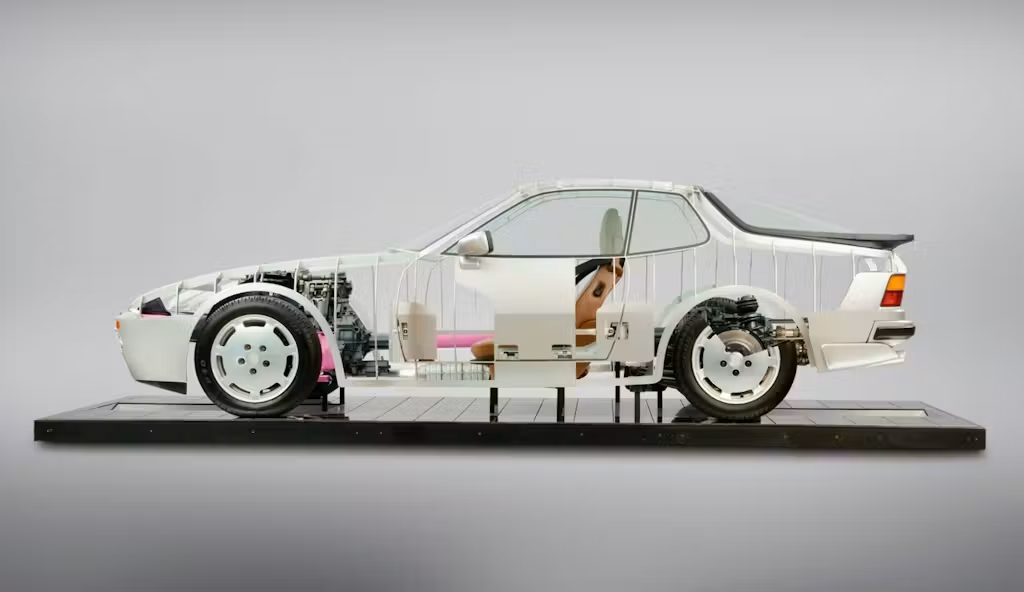
The good thing about living with a 944 is that your local Porsche dealer should be able to source original parts for the car at semi-reasonable prices. But you can try to negate the need for more costly parts by forensically examining any car’s history file. This can help you build a picture of what hasn’t been done and what you will need to budget for in the future. Some big items to consider are the all-important intervals for the engine’s belt changes, timing chain, tensioner, and water pump.
Spare parts are plentiful, but while there are a host of reputable Porsche independents across the country, personal experience has shown that speaking with a specialist who knows the 944 specifically will cut to issues particular to this Porsche, which can save both time and money.
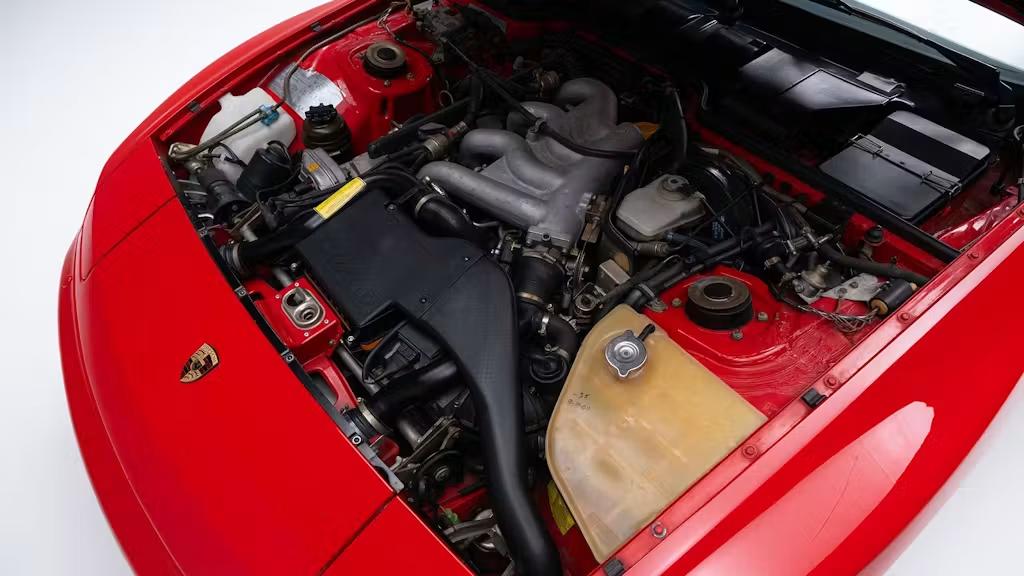
Engines are fairly bulletproof and, with proper service, can go a quarter-million miles. Drive, cam, and balance belt services (every four years maximum) should not be skipped under any circumstances, as a failure will cost dearly. While you’re in there, the water pump should be changed at the same time. If you find yourself in need of a new clutch, make sure you also have the rear main oil seal renewed—a weak point on these cars.
While Porsche saw fit to bless the 944 with a galvanized body, don’t be fooled into thinking they won’t rust. They nearly all do, but not terribly. Typical areas of corrosion include the wheel arches, fenders, and sills—all the common points, in other words. Thankfully, even the worst of rotting sills can be addressed by a reputable specialist. So do your best to get under the car and use a flashlight and, if the owner allows, a wire brush to check the condition of the chassis to see what lies beneath several decades of accumulated dirt.
During a test drive, the engine should feel smooth and pull enthusiastically. Listen to the transmission for any signs of whining and feel for poor gear selection. A 944’s gearbox can become quite vague with age. Tired original factory suspension is likely at the end of its life, if it hasn’t already been refreshed, so consider the cost of a coilover kit when negotiating on the price.
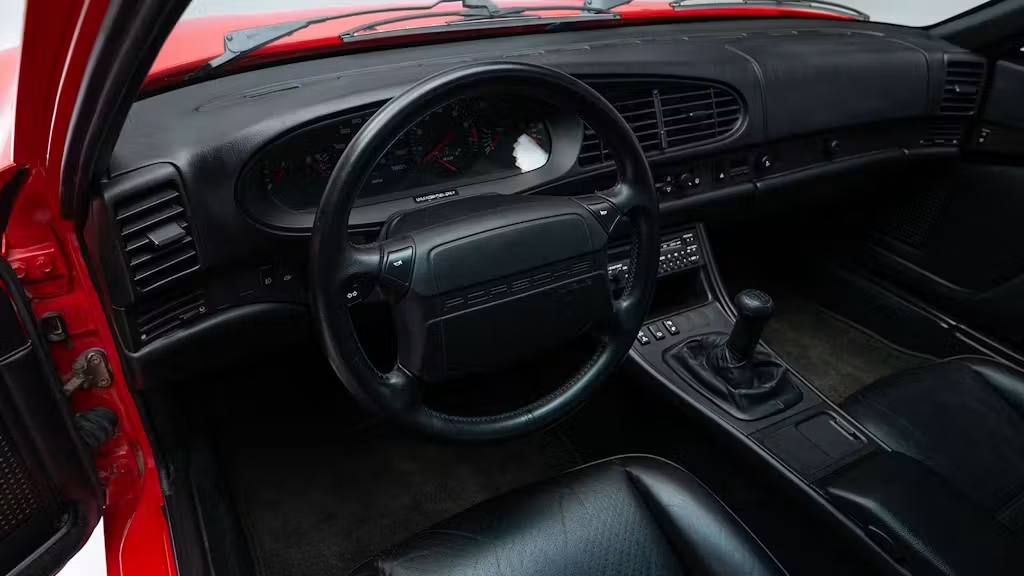
The interior, including those classic Porsche tombstone seats, should still be presentable despite the car’s age. However, rips are common on high-mileage cars, particularly on the driver’s bolster. It’s worth noting that from around 1987, the 944 gained interchangeable seat backs, so you can swap a passenger backrest for the driver’s. The dashboards tend to crack along the top due to sun exposure.
Check that all interior electrics function correctly, as windows can slow over time, and the temperature control for the heater is a common failure (but an easy fix). Another age-related “feature” is likely to be the dull and bleeding LCD screen of the digital dash clock. Replacements are a job for the kitchen table, with patience and time required.
Any sort of heavy weather will test the integrity of the rubber seals around the doors, windows, sunroof, taillights, and that vast expanse of glazed rear hatch. The upshot is that almost without exception, a 944 will at some point succumb to water ingress from one of its elderly seals. The lift-out targa sunroof is worth refreshing with both inner and outer seals. The lengthy hatch seal is an easy and advisable job, too, as are the rear hatch pin seals. Another tip is to check the condition of the rear right wheel arch, easily done by lifting the trunk carpet. A drain from the gas filler neck area can perish, and when it does, the arch cavity fills with water.
I’ll spare you the frustrating saga of trying to achieve watertight rear lights and simply say that the appalling factory sealant around the lenses should be completely stripped, cleaned, and upgraded.
Which Is the Right Porsche 944 for You?
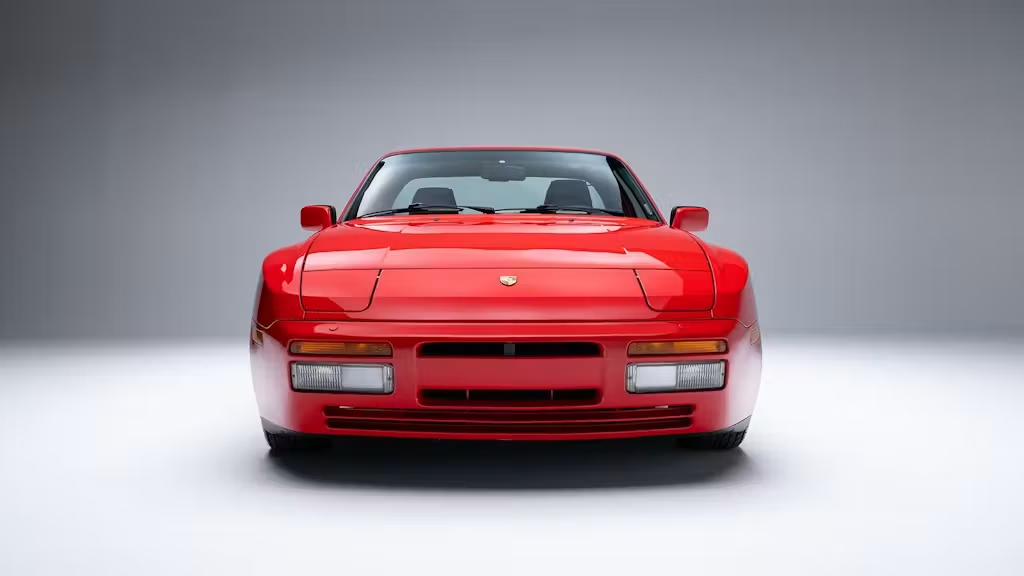
If you’re on a budget and simply looking to dip your toes into the Porsche world, a good 2.5-liter 944 is hard to beat. They’re not fast but they sure do handle well, which makes for a smile-inducing drive no matter where you’re headed. Early Turbos addressed the “not fast” issue, but they are laggy, with power delivery taking its time to come on until just north of 3000 rpm. The most refined experience of the 944 lot will be either of the twin-cam cars, the S or S2. In these you get all the handling perks of any 944 and most of the Turbo’s power in a smoother package overall. And of those two, as mentioned earlier, the 3.0-liter S2 is pretty hard to beat as the most fully realized 944 variant.
My own Porsche 944 experience left me with a lasting admiration for the transaxle coupe. If you have a 944 on your list of potential classic cars, take the time to speak with owners past and present. You’ll be hard-pressed to find anyone with a bad word to say about their time with a 944. It is a usable, reliable, surprisingly practical, and of-an-era sports car with sharp handling to match those sharp lines.
Report by Nick Chivers
find more news here.
![Wy Queen’s performance of „Bohemian Rhapsody“ at Live Aid wasn’t simply the beginning of their set
—it was the moment Freddie Mercury took complete control of Wembley Stadium.
On July 13, 1985, Freddie sat at the piano and began one of rock’s most recognizable songs.
Within seconds, more than 70,000 people were completely focused on him.
Queen performed only part of the six-minute masterpiece before moving into „Radio Ga Ga,“ but nothing felt incomplete.
They didn’t need the entire song to create history.
Freddie needed only a piano, his voice and one unforgettable entrance.
[queen, bohemian rhapsody, freddie mercury, live aid 1985, wembley stadium, classic rock, legendary concert, live performance]](https://collectorscarworld.com/wp-content/plugins/instagram-feed/img/placeholder.png)