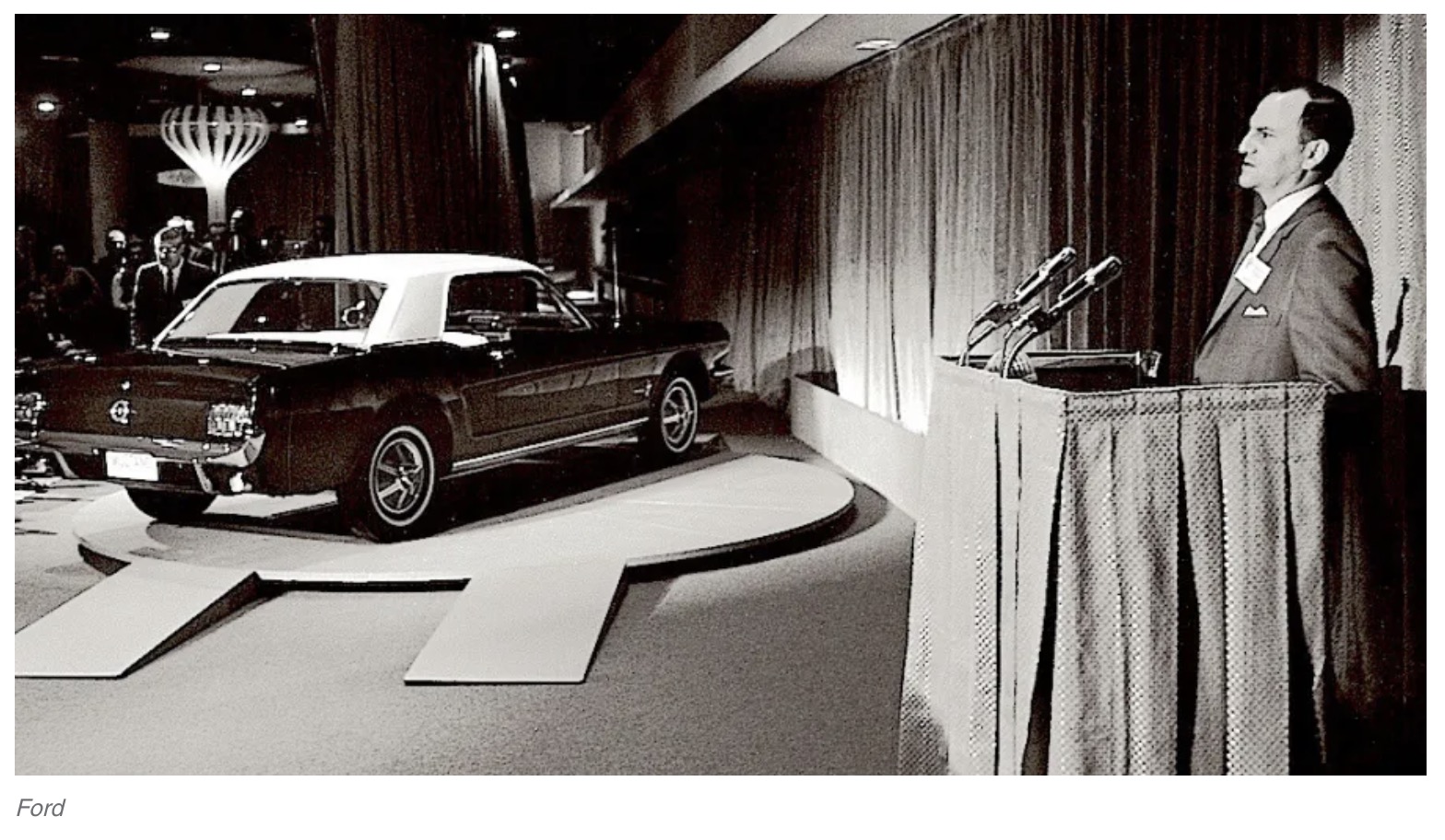
Many of the people who are reading this were actually around when the 1964–65 New York World’s Fair opened, which probably can’t be said for the earlier world’s fairs we’ve covered in this series. Since this is an enthusiast publication, it’s a safe bet that many of those people “know” that on that fair’s opening day, Ford Motor Company introduced the Mustang.
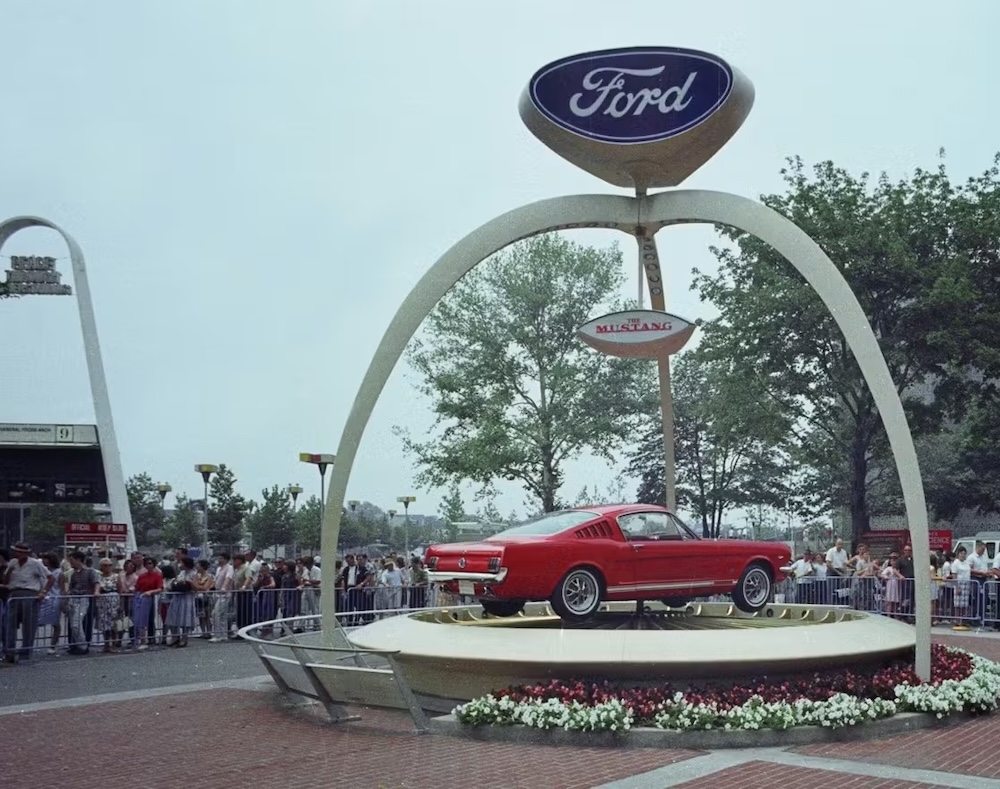
Actually, while the Mustang was indeed launched at the fair site in Flushing Meadows, the introduction took place on April 17, 1964, five days before the fair officially opened, during exhibitors’ media previews.
Journalists, photographers, and television networks from around the globe were present for those previews and for the fair’s official opening. As the “father” of the Mustang, Lee Iacocca said in a 2004 interview, “Where else could you introduce a car at such a world-class event?” The 1964 New York City fair was such a major event that even the Beatles made a brief visit. Their helicopter landed on the roof of the fair’s administration building as the band made its way next door to Shea Stadium.
As with earlier world’s fairs, foreign countries and major corporations had their own discrete pavilions. For example, IBM hired famed architect Eero Saarinen and designer Charles Eames to design their imposing building, and Eames and his wife Ray produced the multimedia presentation. Coincidentally, the Eameses and Saarinen were friends, both having been associated with the Cranbrook Academy of Art in suburban Detroit.
In 1964, the Motor City–based Big Three automakers were at the apex of their power. The only remaining independent, Studebaker, was circling the drain; production had stopped in South Bend and slowed to a limp in Canada. American Motors, formed from Nash and Hudson, had peaked a few years earlier with the compact Rambler but faded after the introduction of the Ford Falcon, Plymouth Valiant, and Chevrolet Corvair. Increased sales of the Volkswagen Beetle may have caught the attention of executives at the Big Three, but the rising sun of Japanese automakers was still beyond the horizon.
Consequently, while the 1933 and 1939 world’s fairs boasted significant displays from independent automakers in addition to the large pavilions from General Motors, Ford, and Chrysler, by 1964, only the Big Three had displays. Unlike the world’s fairs of 1904, 1933, and 1939, no foreign automakers set up displays in 1964. That fair was not officially recognized by the Bureau International des Expositions (BIE), the sanctioning body for world’s fairs. That apparently discouraged many European nations and companies from official participation.
Together, the Big Three spent over $110 million to build their displays, the equivalent of about $1.163 billion in today’s dollars. As I said at the outset, the ’64 New York World’s Fair was a major event.
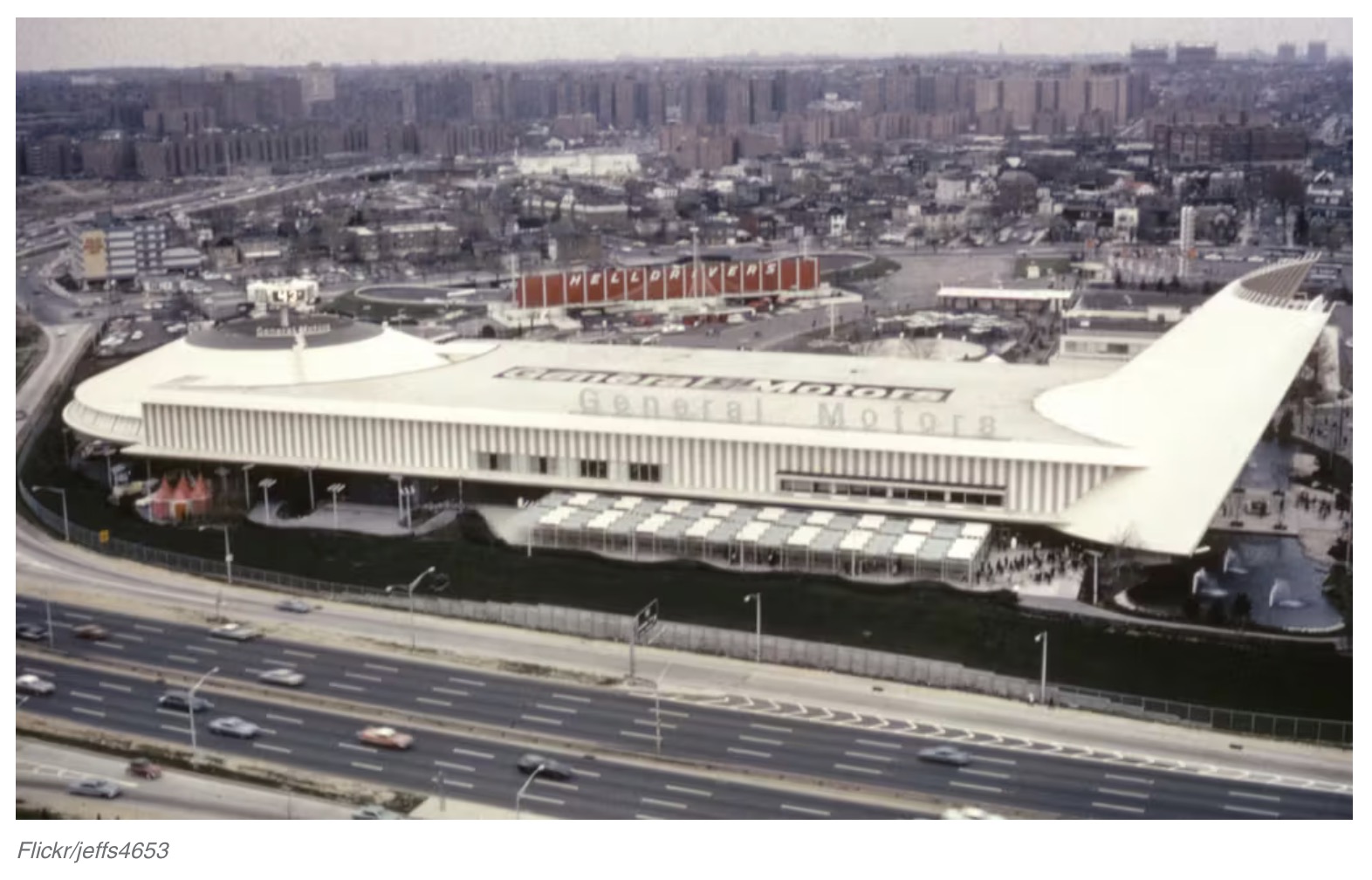
General Motors decided to reprise the Futurama concept from 1939 with Futurama II. While the 1939 exhibit was designed by Norman Bel Geddes, the 1964 edition was an in-house job, executed with input from GM’s styling department. The pavilion’s massive building was large enough to be measured in acres (1.5). Over 30,000 visitors a day visited the display, taking a 12-minute ride on moving chairs (equipped with individual speakers offering narration in four different languages), on a journey into the future, past large-scale animated dioramas. The first Futurama had highways in the sky. Futurama II took show visitors to the moon.

By loading the video, you agree to YouTube's privacy policy.
Learn more
The story began in Antarctica, with terra-forming laser-equipped machines cutting highways through the ice, followed by an undersea exhibit with a crawler harvesting valuable minerals from the seabed, then on to a City of the Future featuring rooftop heliports and moving sidewalks. The high point of the ride was the Highway of the Future, featuring four-lane roads where automated cars traveled at 100 mph just inches apart, controlled by electronic signals in the road itself.
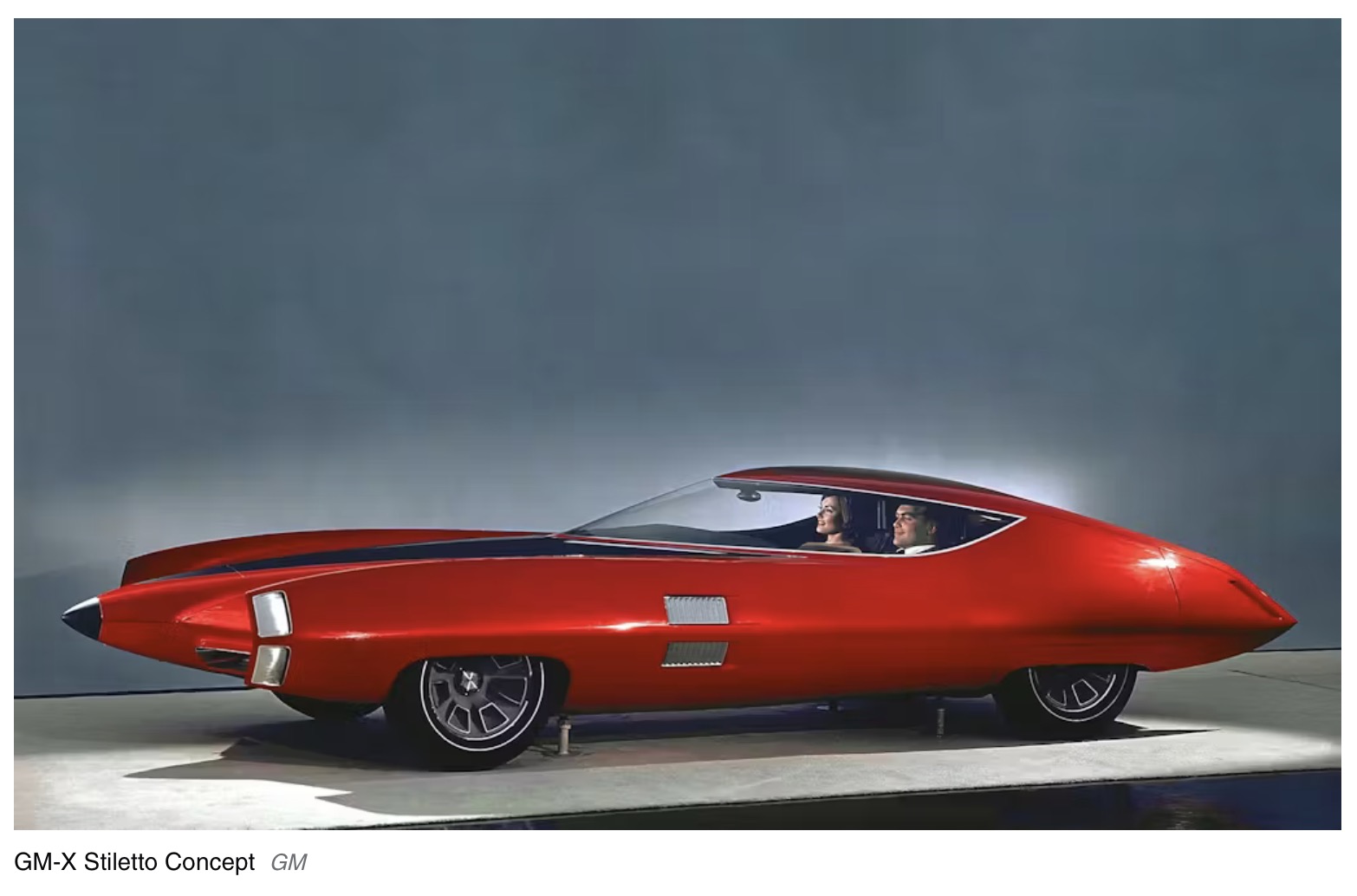
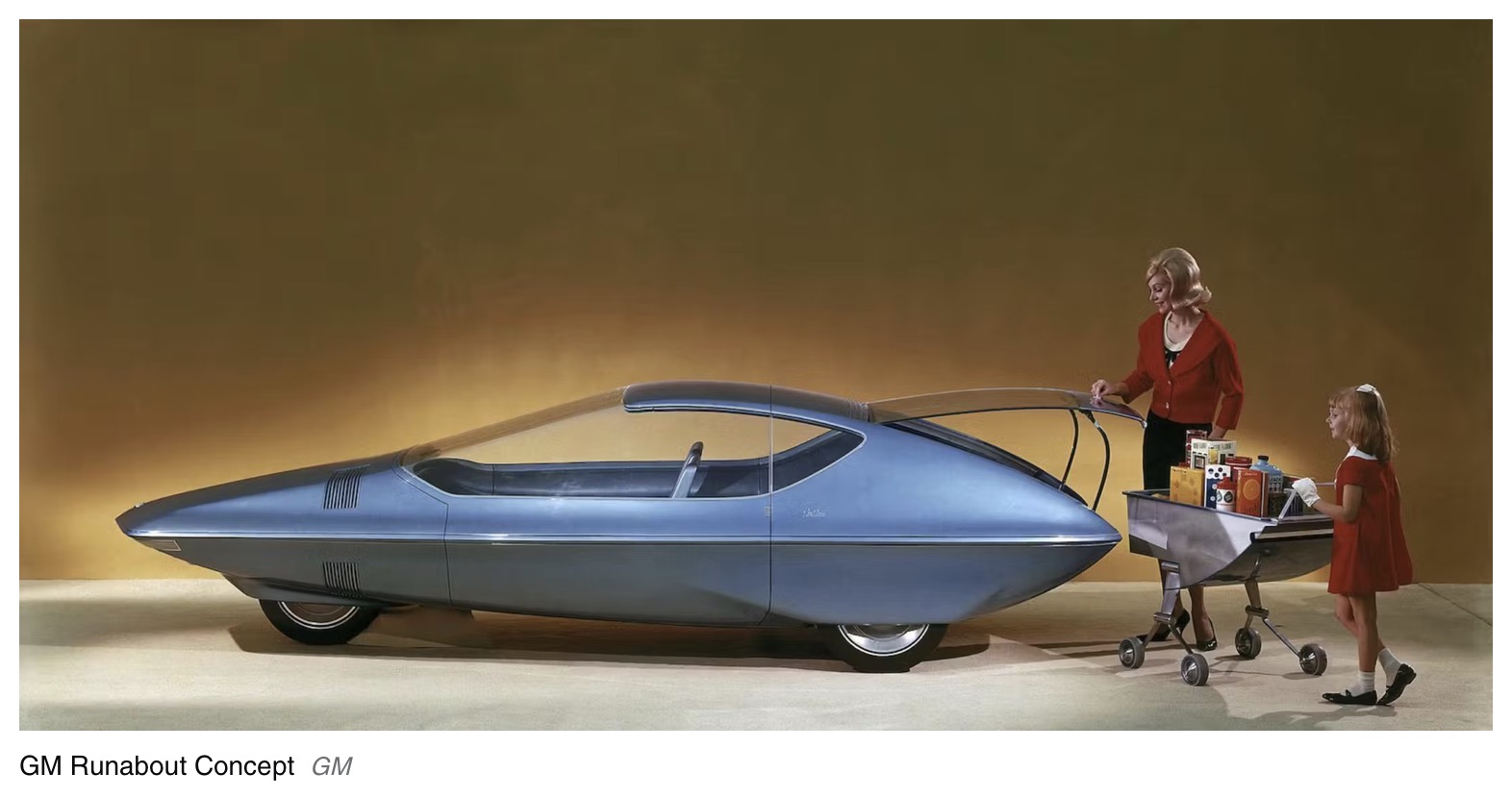
When the Futurama ride was finished, the visitors were deposited in the pavilion’s main exhibit hall, where they could see production vehicles from GM’s divisions as well as concept vehicles like the turbine-powered Firebird IV, the sleek GM-X Stiletto, and the three-wheeled Runabout grocery-getter with an integrated shopping cart. With more than 29 million visitors, the GM pavilion holds the record for the most-visited single exhibit in world’s fair history.
While GM’s display took visitors on a ride in comfortable chairs, Ford’s “Magic Skyway” put them in actual cars, including the newly introduced Mustang as well as Ford, Mercury, and Lincoln convertibles. The cars moved on a conveyor system, not under their own power.
By loading the video, you agree to YouTube's privacy policy.
Learn more
Ford contracted with the Walt Disney organization to “imagineer” the display, narrated by Walt himself, which took visitors from Animatronic dinosaurs to a futuristic “city of tomorrow” with elevated monorails, and a “Space City” with atomic-powered lunar rovers.
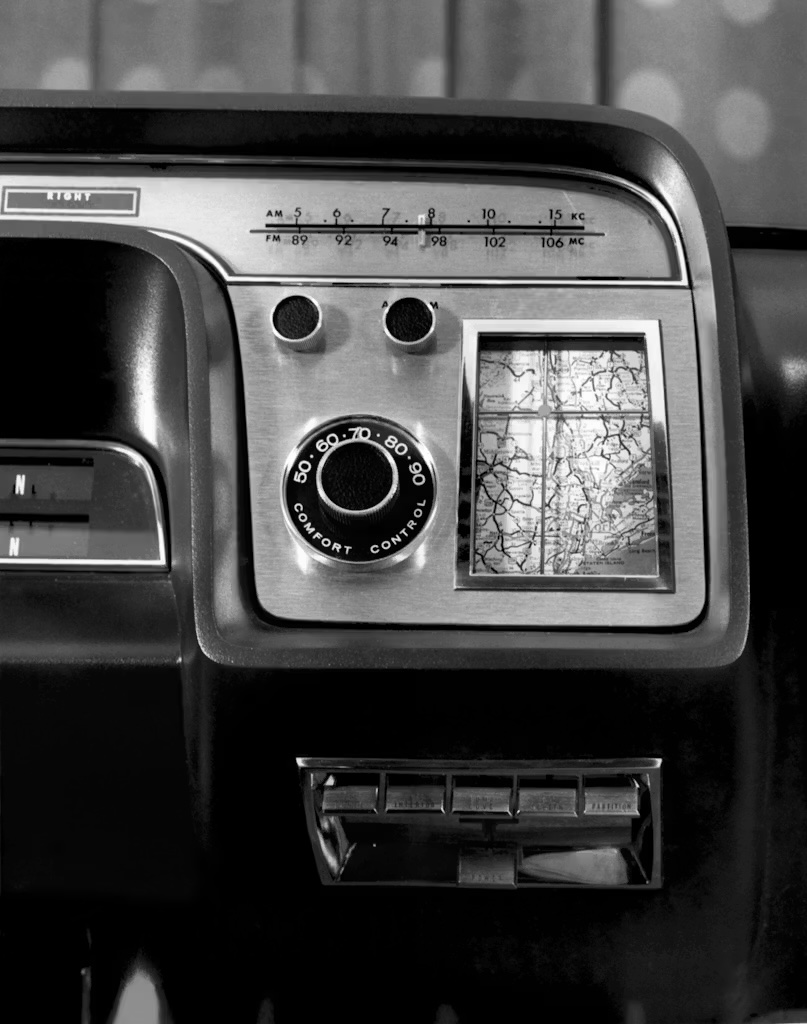
As with the General Motors display, the Ford Magic Skyway exited past the automaker’s current line of products, including the Mustang, plus concepts like the turbine-powered Big Red truck, and the Aurora I station wagon concept, which you could enter from the rear via a clamshell door. It also had a swiveling front passenger seat, a yoke instead of a steering wheel, automatic climate control, and an electromechanical navigation system.
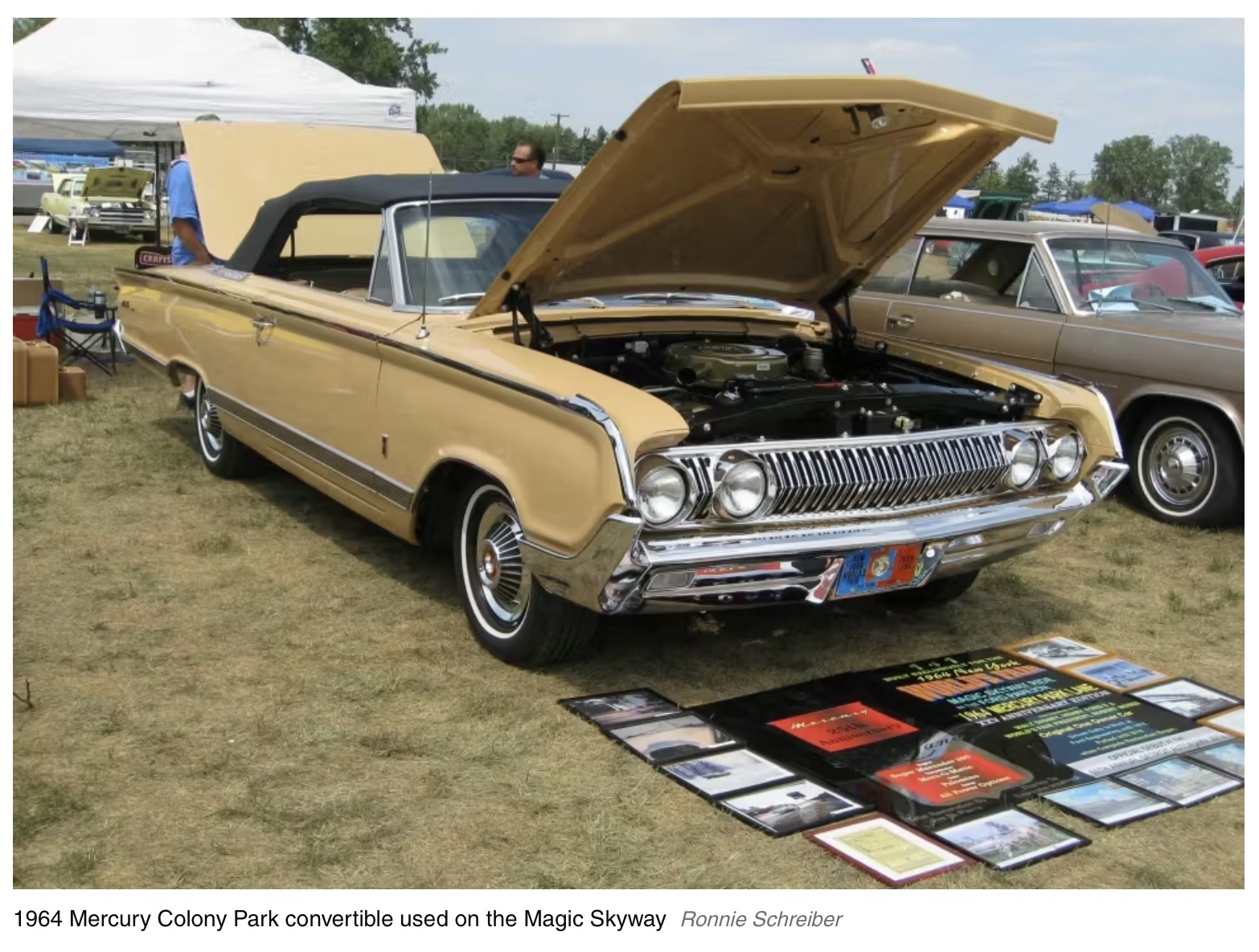
The cars used in the Magic Skyway, as you might expect, are collectible, particularly the Mustangs; they are some of the earliest examples produced. They can be identified by the special brackets used to secure the car to the moving skyway.
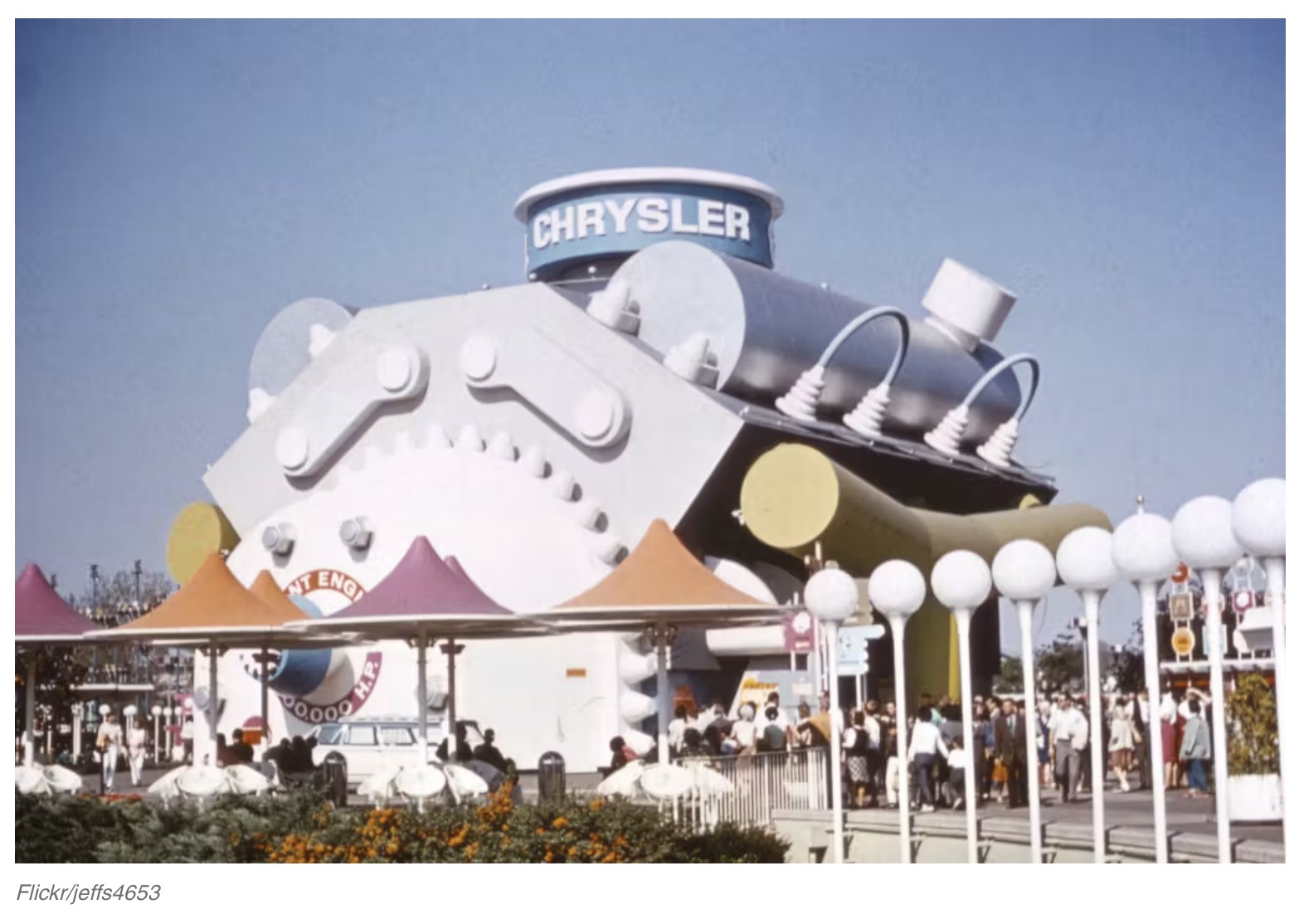
The smallest of the Big Three went big for the fair. Instead of constructing one large building like Ford and GM did, Chrysler installed a pavilion set on five islands sitting in a six-acre artificial lake. Chrysler’s Autofare, which it billed as “the fair-within-a-fair,” included the “world’s biggest car,” which was 80 feet long; a 100-foot-long animated engine; a giant robot made of car parts; a “working,” 16-foot-tall model of a Chrysler turbine engine with glowing red turbine fans; and a ten-story rocket. (Like GM and Ford, Chrysler was deeply involved in the U.S. space effort.) Chrysler, Plymouth, and Dodge cars sat on small islands in the lake, surrounded by fountains. Pleasure boats with Chrysler outboards navigated between the islands.
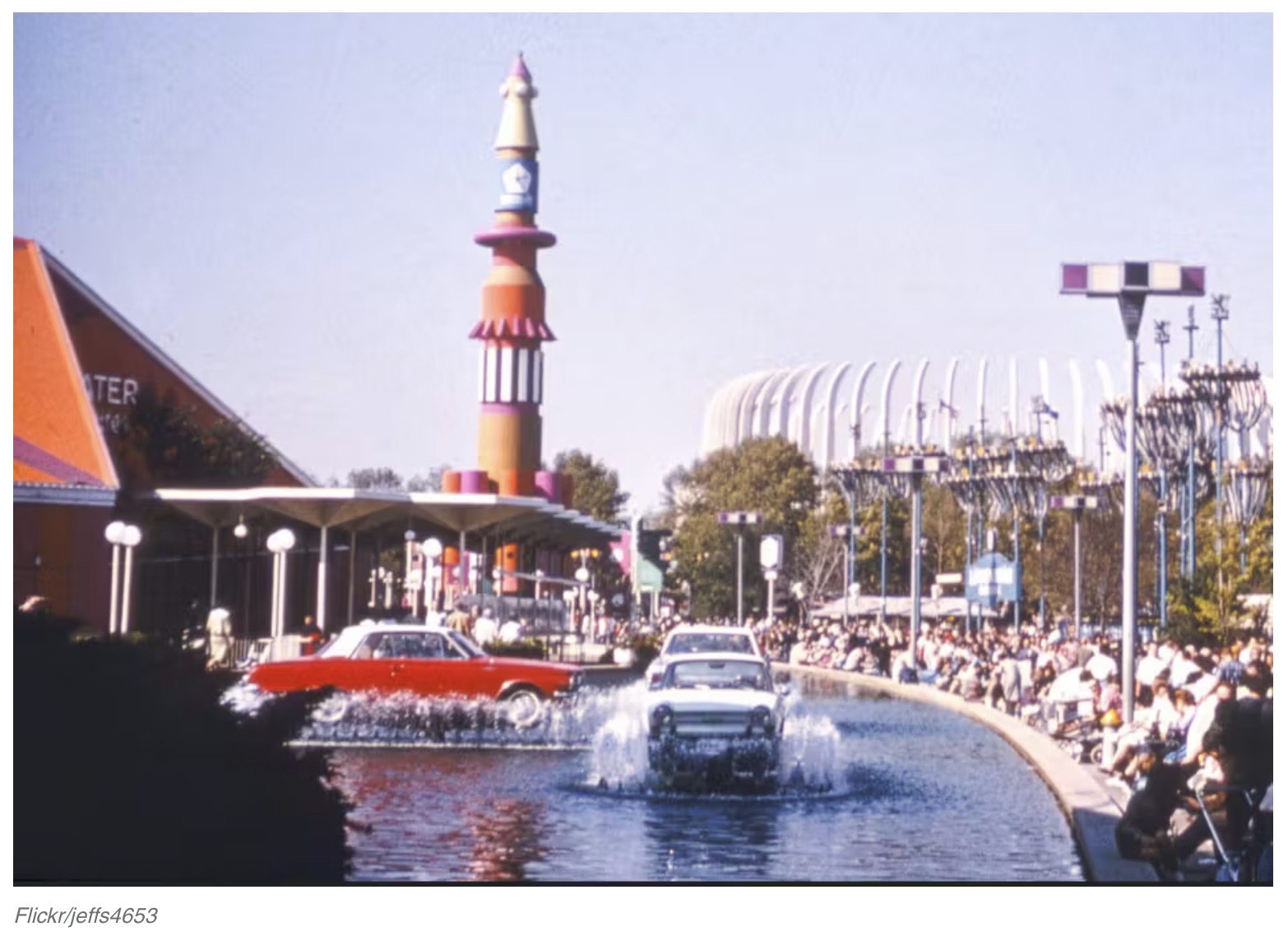
Just as the 1964 New York World’s Fair is known for the Mustang, it is also strongly connected to the Chrysler Turbine Car, which was introduced the year before the fair opened. The Chrysler pavilion included a test track, and people lined up for hours just to take a short ride. Jay Leno, who now owns one of the few surviving curbine cars, likes to tell the story of how he tried to convince his parents to drive to New York City from Massachusetts just so he could see the Turbine Car. Unfortunately for young Jay, his father said, “We’re not waitin’ in line all day just to ride in a goddamn cah,” and Leno had to wait decades before riding in a Turbine Car.
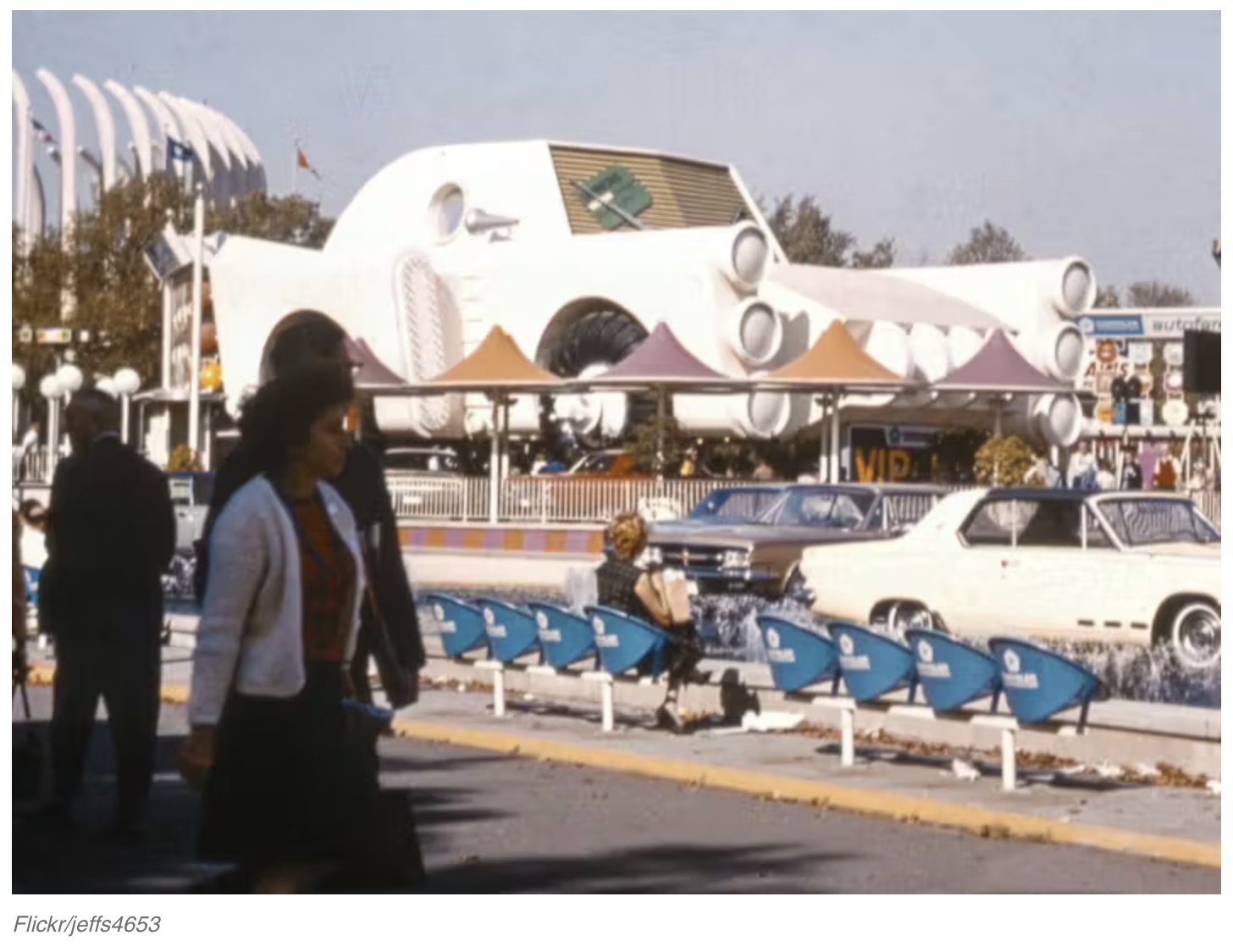
Chrysler was also the official supplier for cars used in the fair’s Hell Drivers thrill show, which had a dedicated stadium and track.
By loading the video, you agree to YouTube's privacy policy.
Learn more
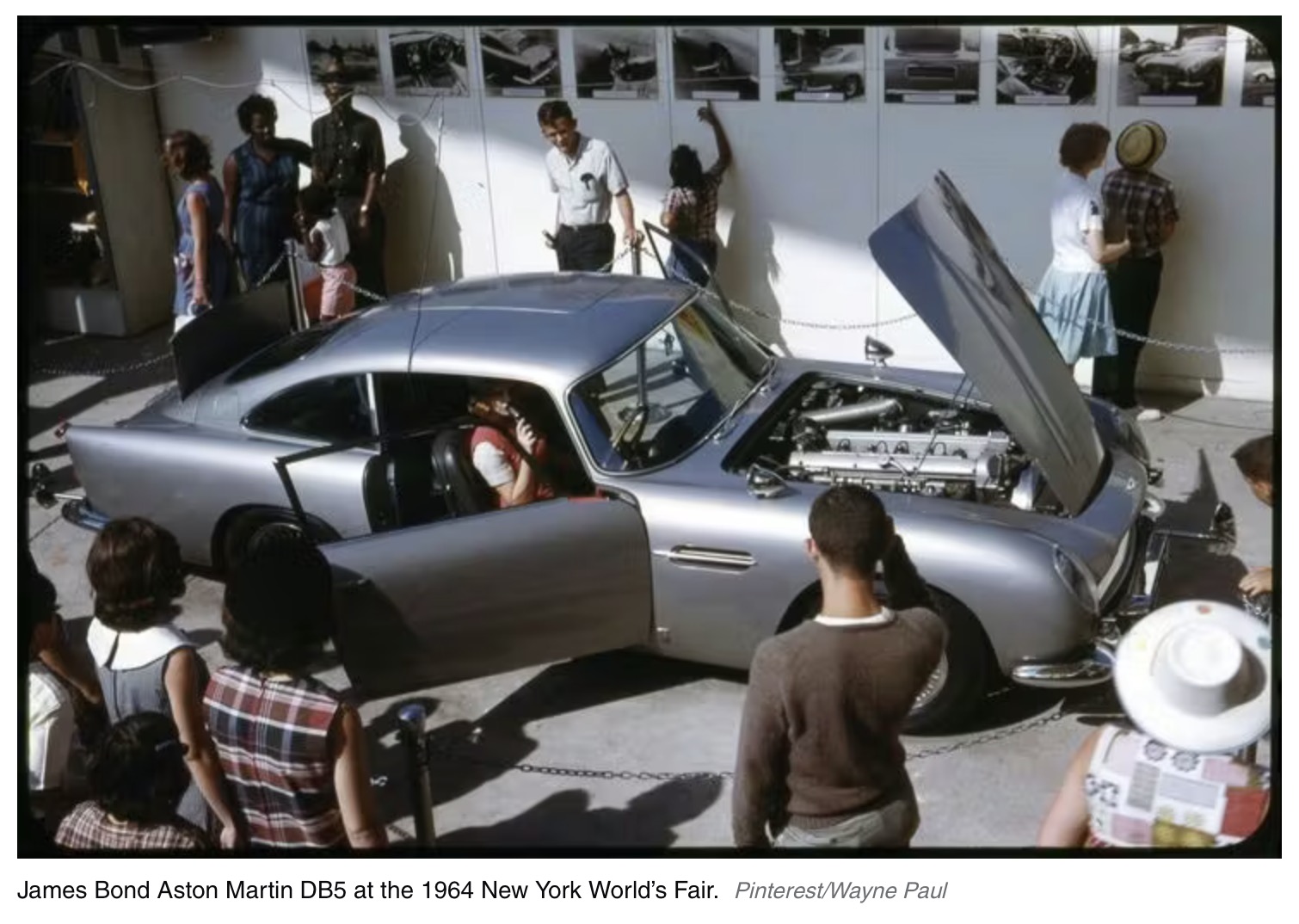
While there weren’t, as mentioned, any official displays from foreign automakers, there was one notable foreign car on display: “the world’s most famous car.” Actually, there were two examples, and both actually appeared in the movie. Though the producers of Goldfinger had commissioned two additional replicas of James Bond’s gadget-equipped DB5 for publicity tours, they apparently realized that, if the Vatican could bring Michelangelo’s La Pietà to New York for the fair, they could rustle up the Astons used for principal photography in their blockbuster hit.
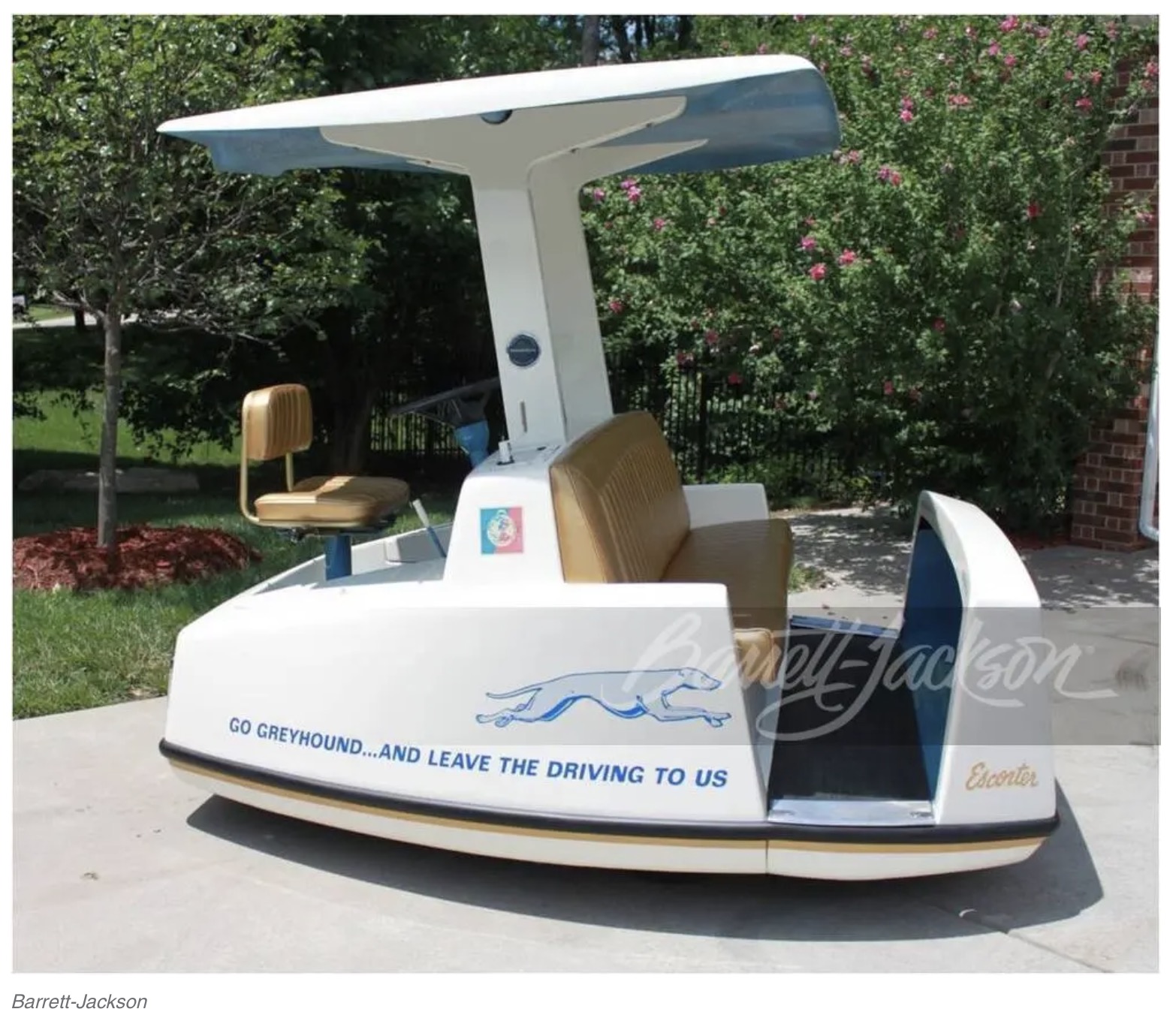
Perhaps the oddest “car” at the 1964 New York World’s Fair was not exhibited by an automobile company but rather by the Greyhound Bus lines. Dubbed the Greyhound Escorter, it was a canopied, rear-steering, open reverse-trike jitney that could be rented by the hour by fair visitors for guided custom tours of the fairgrounds, piloted by Greyhound-uniformed drivers (passengers sat up front, as you can see below). Greyhound commissioned the Kalamazoo Manufacturing Company to make 150 of the rear-control, front-wheel-drive vehicles. Again, the 1964 New York World’s Fair was one of the major events of the period. The Greyhound Corporation featured the Escorter in its annual report and also licensed the production of an Escorter toy.
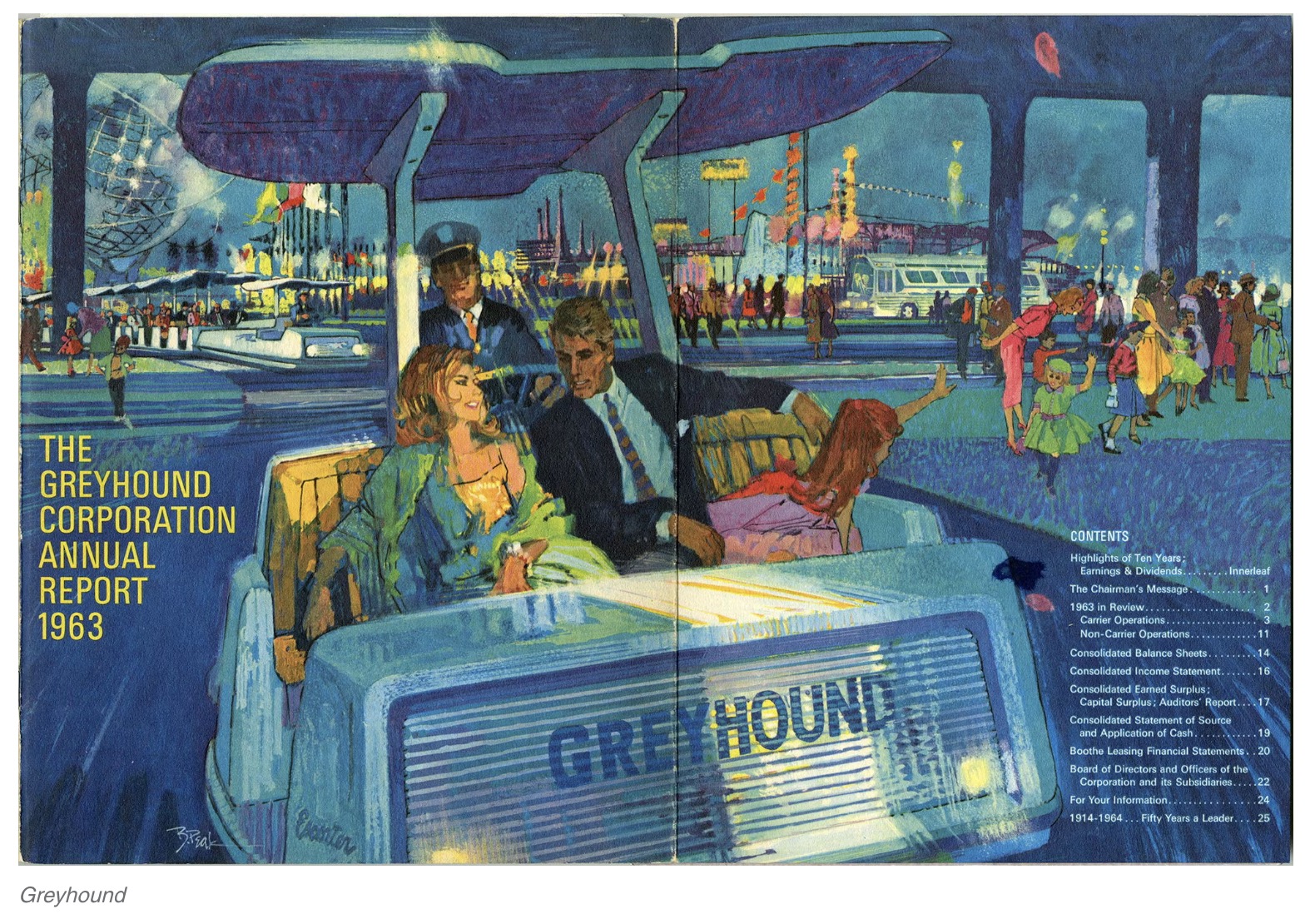
Said to be designed in a collaborative effort by the Disney organization, New York City planner Robert Moses, and the design firm established by Harley Earl after he retired from heading General Motors’ style division, the Escorter had a fiberglass body mounted on a welded steel frame, and was motivated by a unique drivetrain: A two-cylinder Onan engine ran a hydraulic pump that was connected to two hydraulic motors, made by Char-Lynn, that drove the front wheels. Disc brakes provided stopping power.
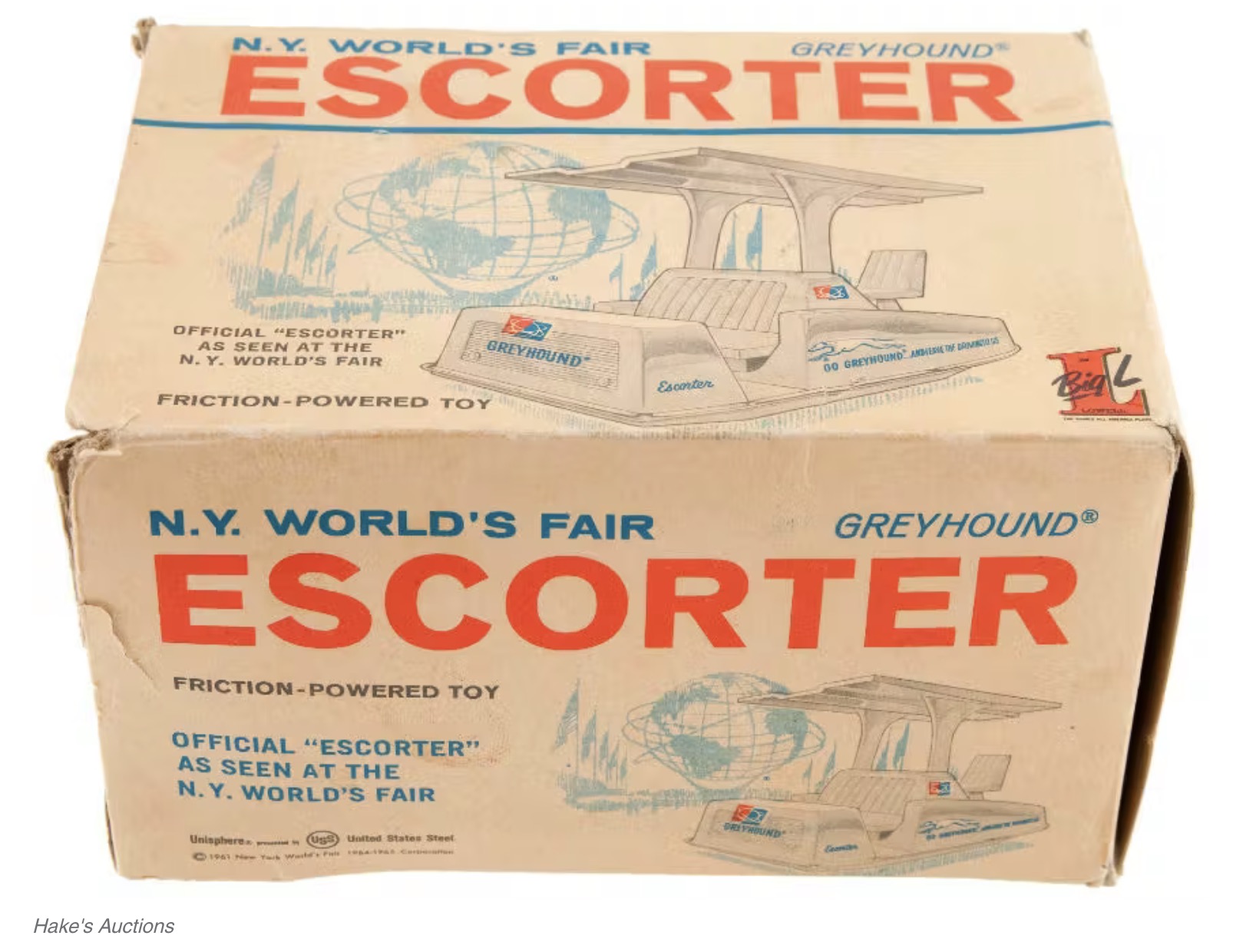
Fitted with a Rockwell taxi meter, Escorters were relatively expensive to rent, up to $11/hr ($115 in 2025 currency). For context, the median income in the U.S. was then less than $7000 a year, which may explain why Greyhound discontinued the Escorters for the 1965 edition of the fair. Of the 150 Escorters that were made, just three remain in functioning order.
Again, as with earlier world’s fairs, the 1964 New York edition featured displays from other companies serving the automotive market.
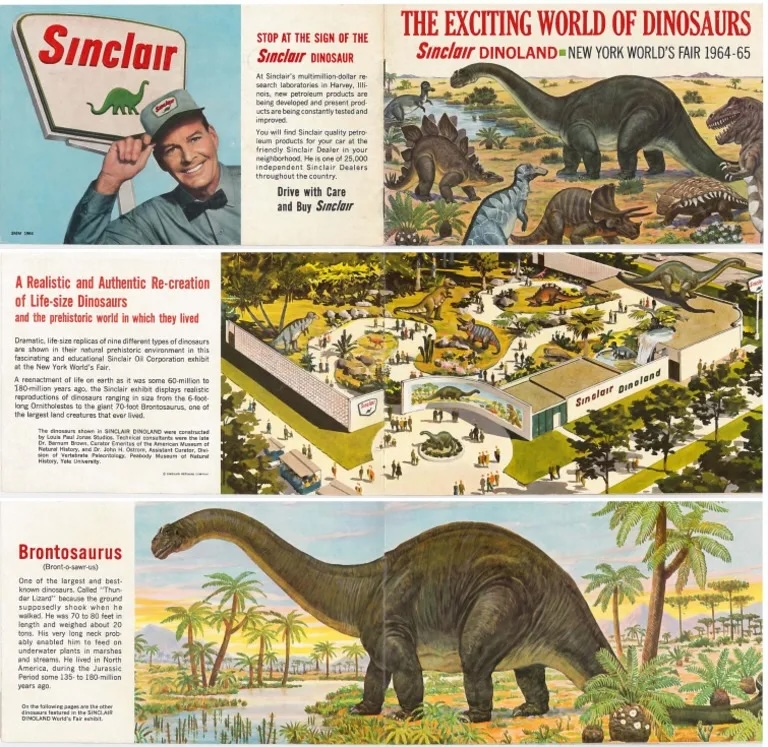
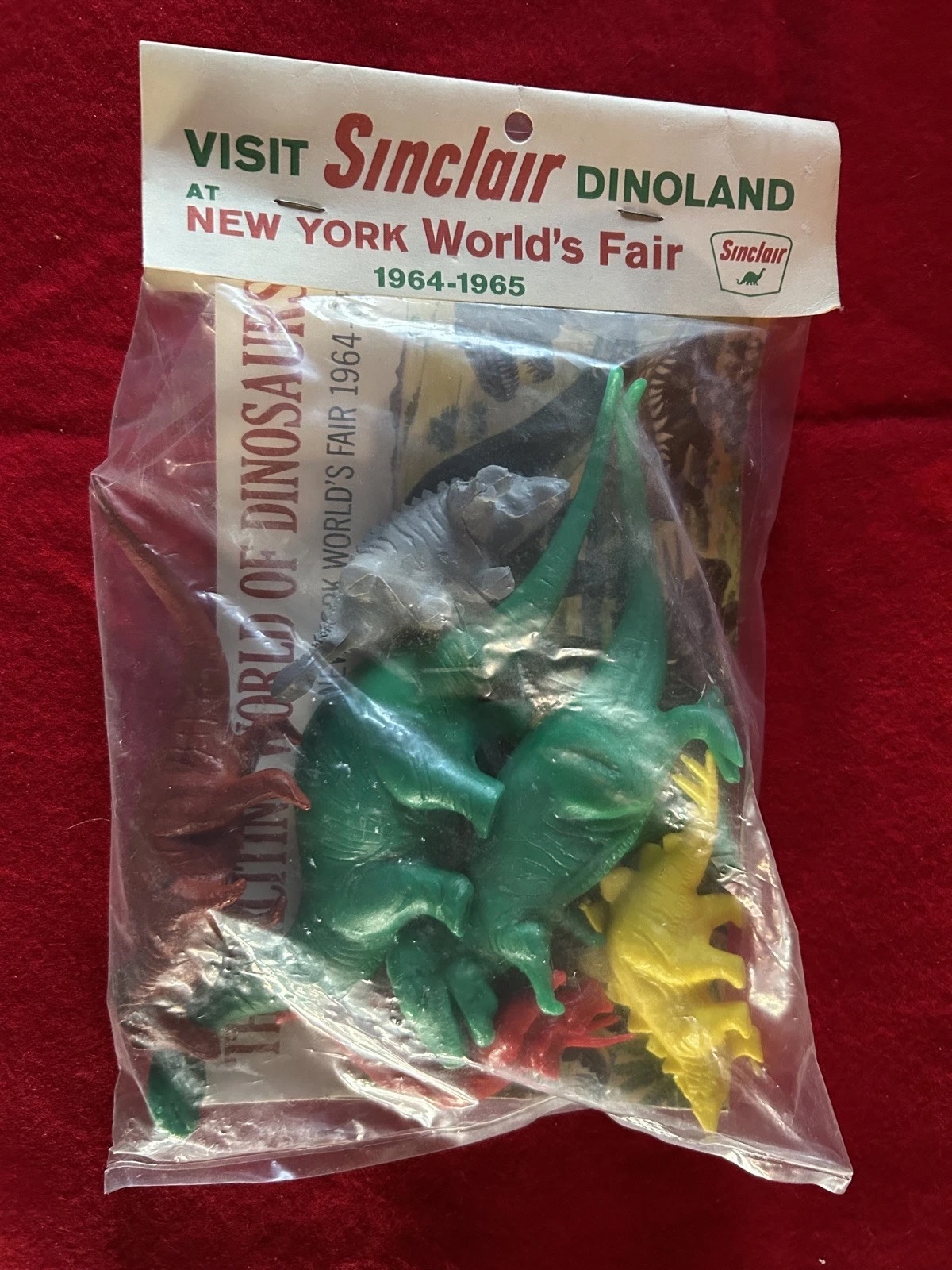
Sinclair Oil, whose logo included the profile of its green Brontosaurus mascot Dino, had shown life-size replicas of dinosaurs at the 1933 Chicago fair, and reprised the idea for the New York fair with Dinoland. Nine fiberglass dinosaurs were featured, including a 70-foot-long Brontosaurus and a 20-foot-tall Tyrannosaurus Rex. Millions of people took home souvenir plastic dinosaur coin banks that you can now buy on eBay.
Humble Oil, one of Exxon’s corporate ancestors, commissioned a large, oval, multi-screen theater which ran “The Energy Story,” tracing the history of energy from prehistoric swamps to modern refineries. Humble also built a full-size replica of the service station of the future, which predicted self-service pumps that accepted credit cards.
Visitors to Socony Mobil’s pavilion could drive across America in a 1964 version of a driving simulator, an electromechanical simulation of the famed Mobil Economy Run. Avis had a guided antique car ride modeled after Disneyland’s Autopia.
Tire companies Goodyear and U.S. Rubber (aka U.S. Royal/Uniroyal) also had standalone displays. Goodyear constructed a futuristic, monorail people-mover that carried fair attendees past a display of advanced tire technologies, including radial tires, and futuristic glow-in-the-dark ones.
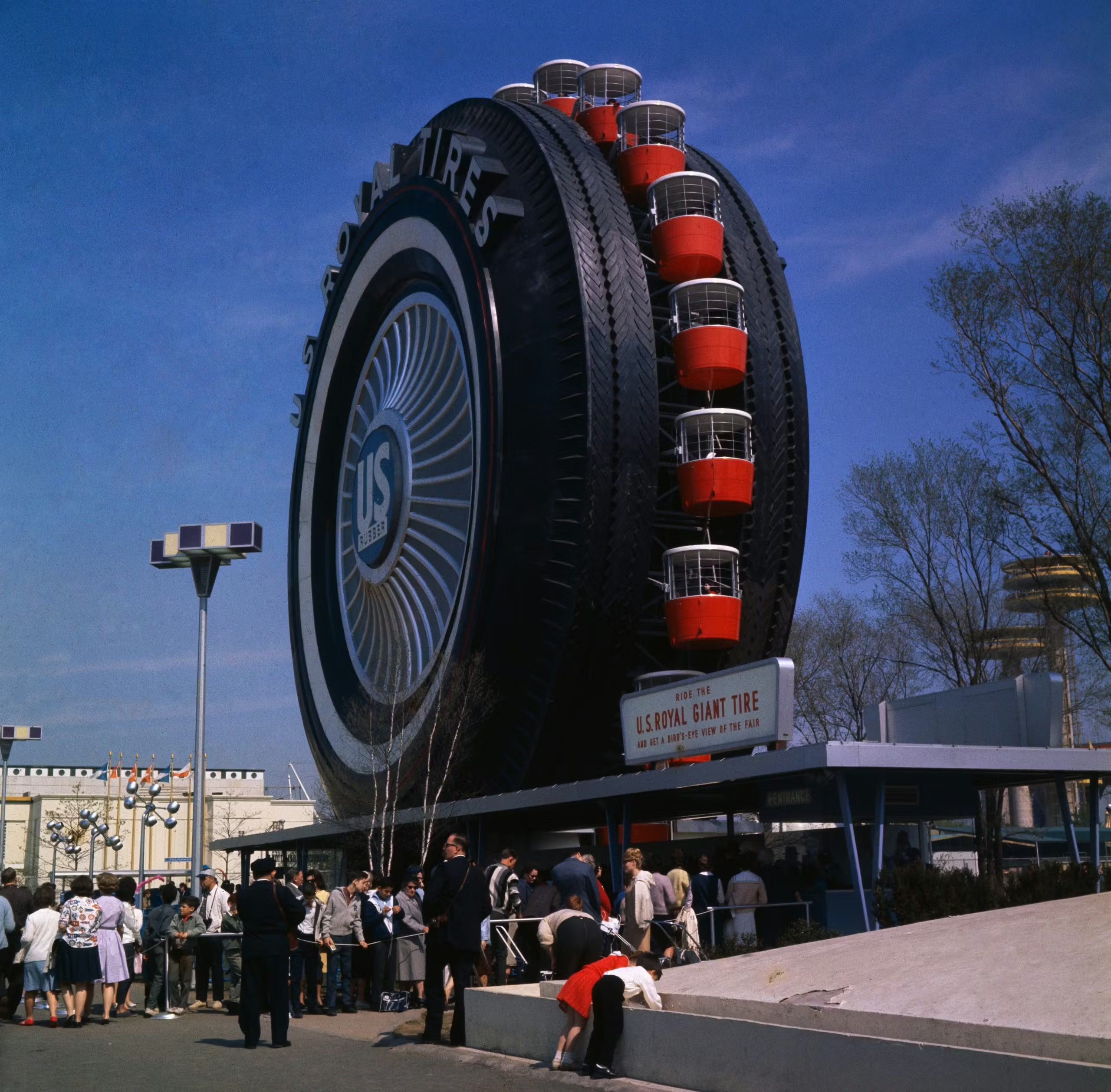
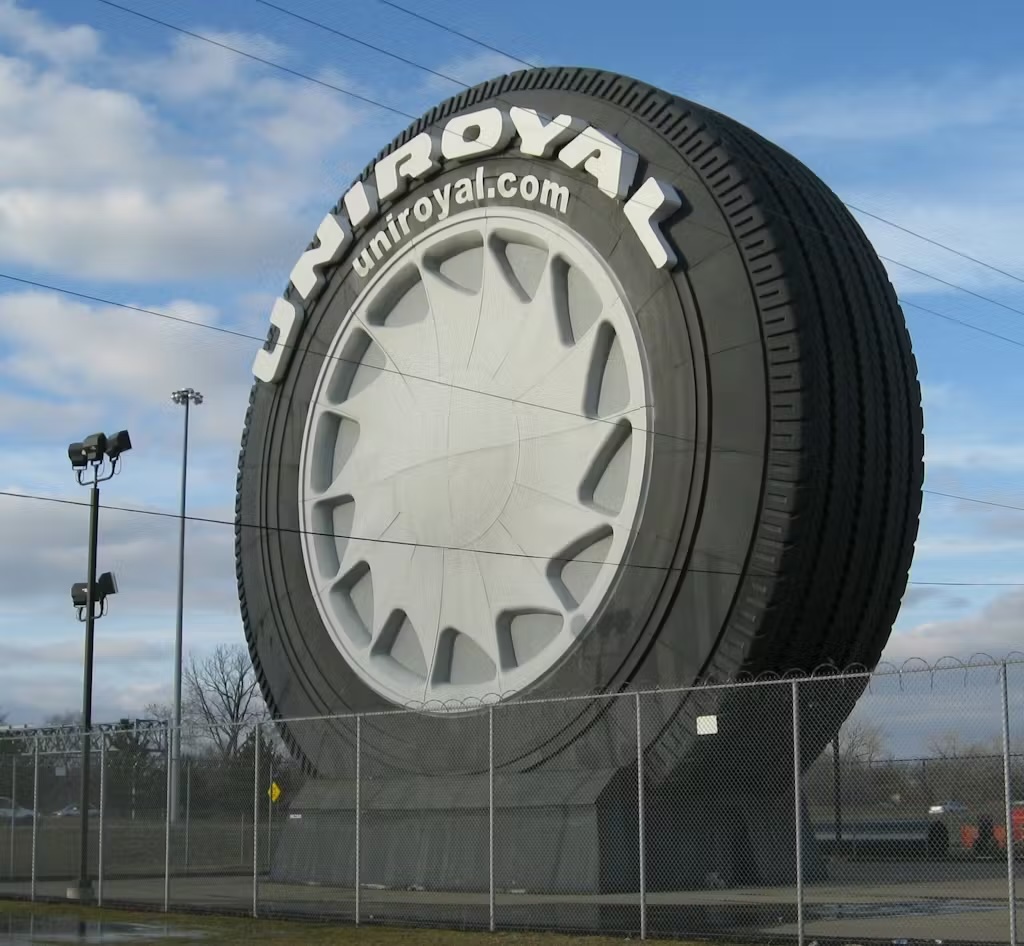
More famously, U.S. Royal had a Ferris wheel in the shape of a giant tire. The 80-foot-tall, 12-ton display carried attendees high above the fairgrounds in enclosed gondolas. An adjacent exhibit hall featured the history of rubber and futuristic tire concepts. As with other exhibitors, U.S. Royal made a nod towards the space race, showing experimental tires for lunar vehicles. Unlike most of the displays at the 1964 New York World’s Fair, the giant tire had a second life and still survives today, promoting the Uniroyal brand and welcoming visitors to Detroit on Interstate I-94 just west of the Motor City.
In an era rife with internet influencers, when nobody can tell you where the last “world’s fair” was, it’s unlikely that car companies would once again spend hundreds of millions of dollars on the elaborate displays that were seen at the 1933, 1939, and 1964 world’s fairs. However, because of the internet, we can look back and enjoy what once was.
Report by Ronnie Schreiber for hagerty.com