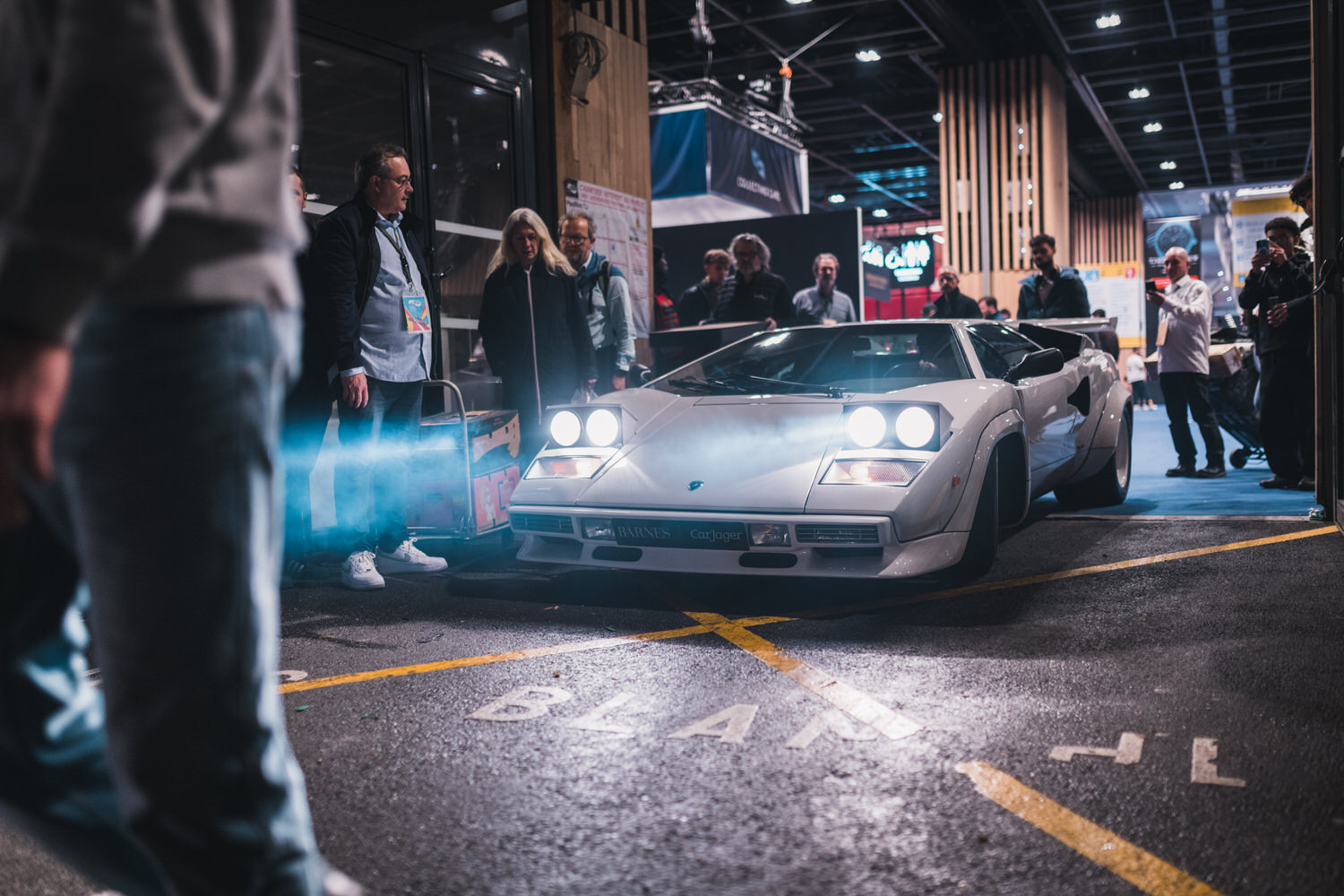
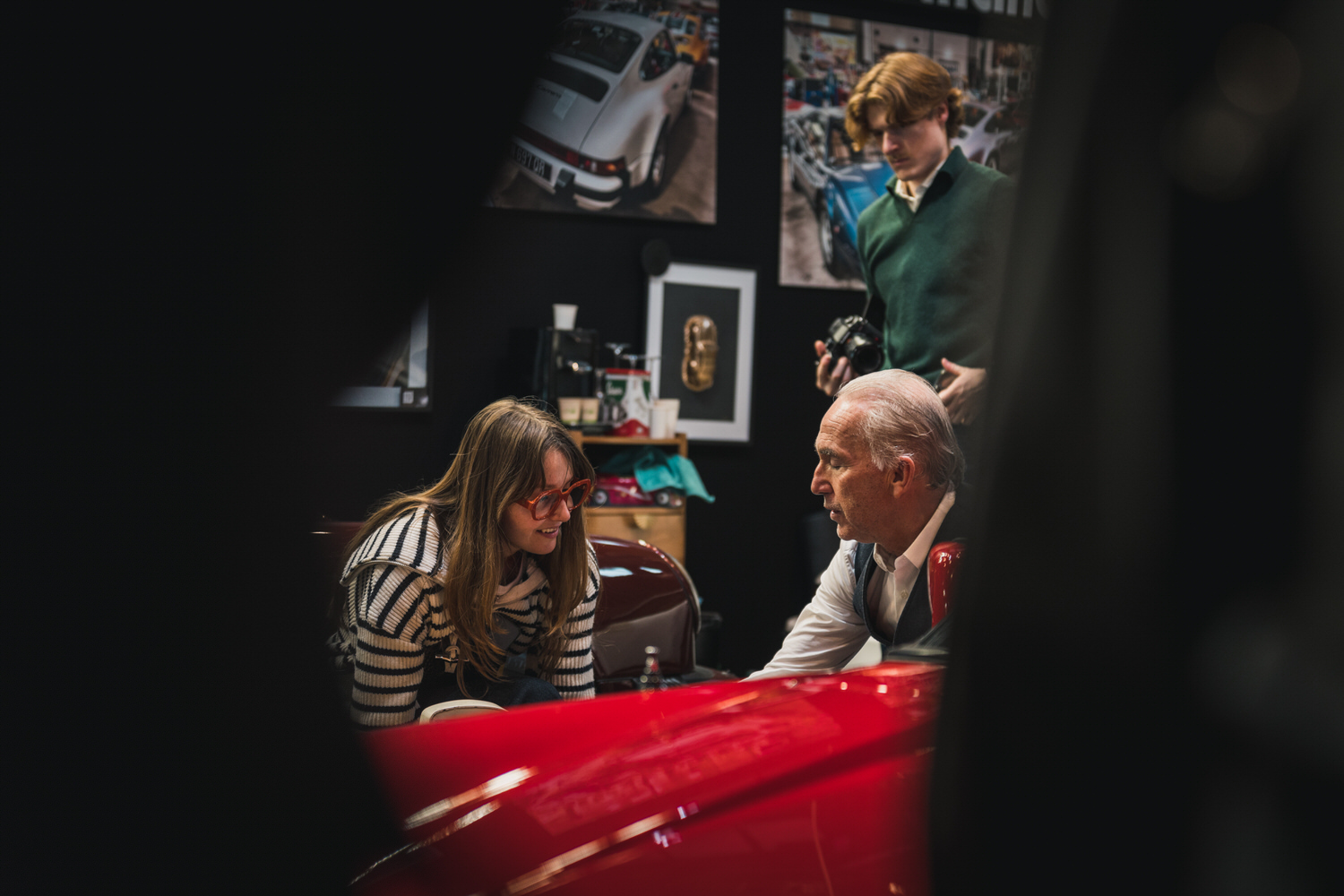
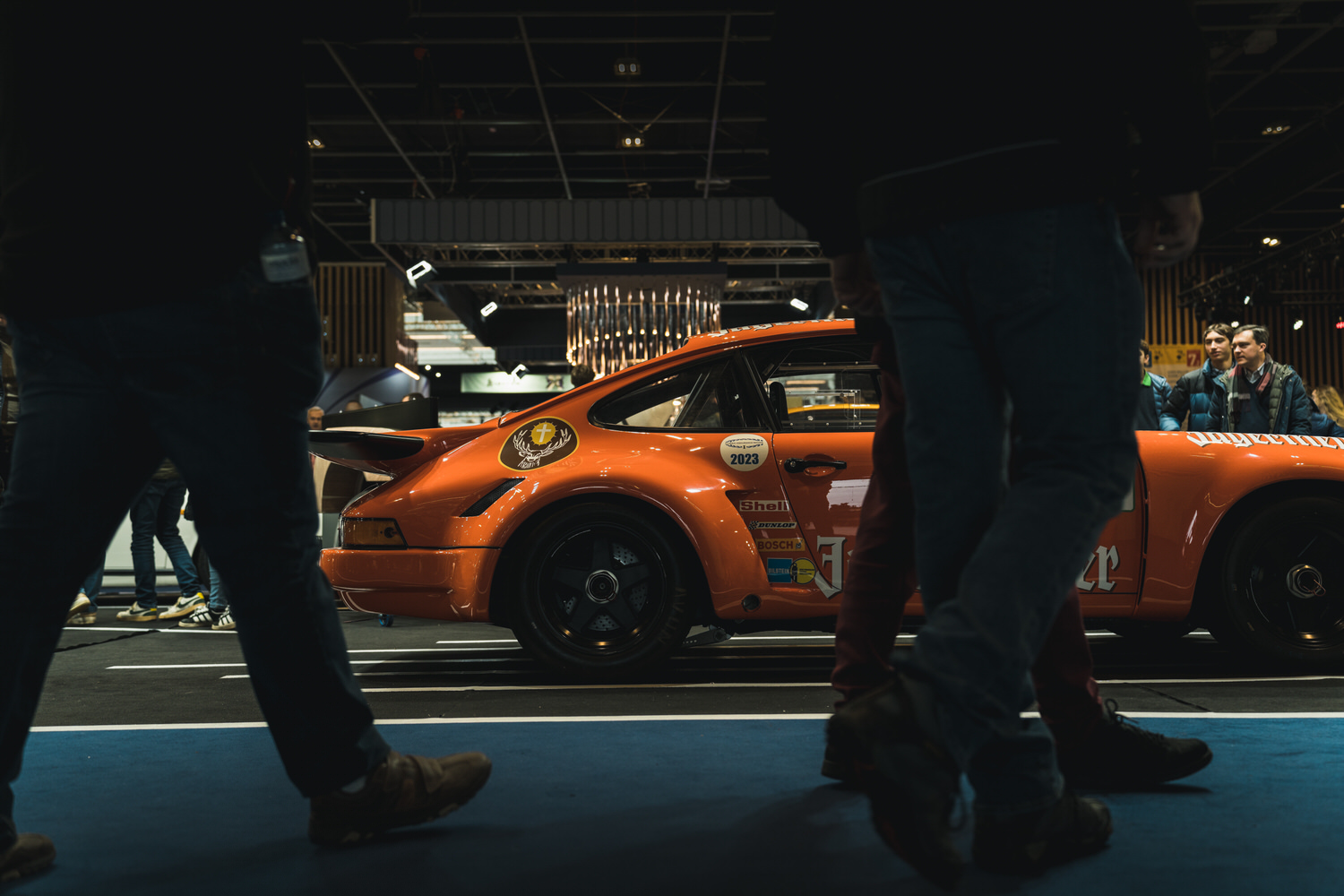
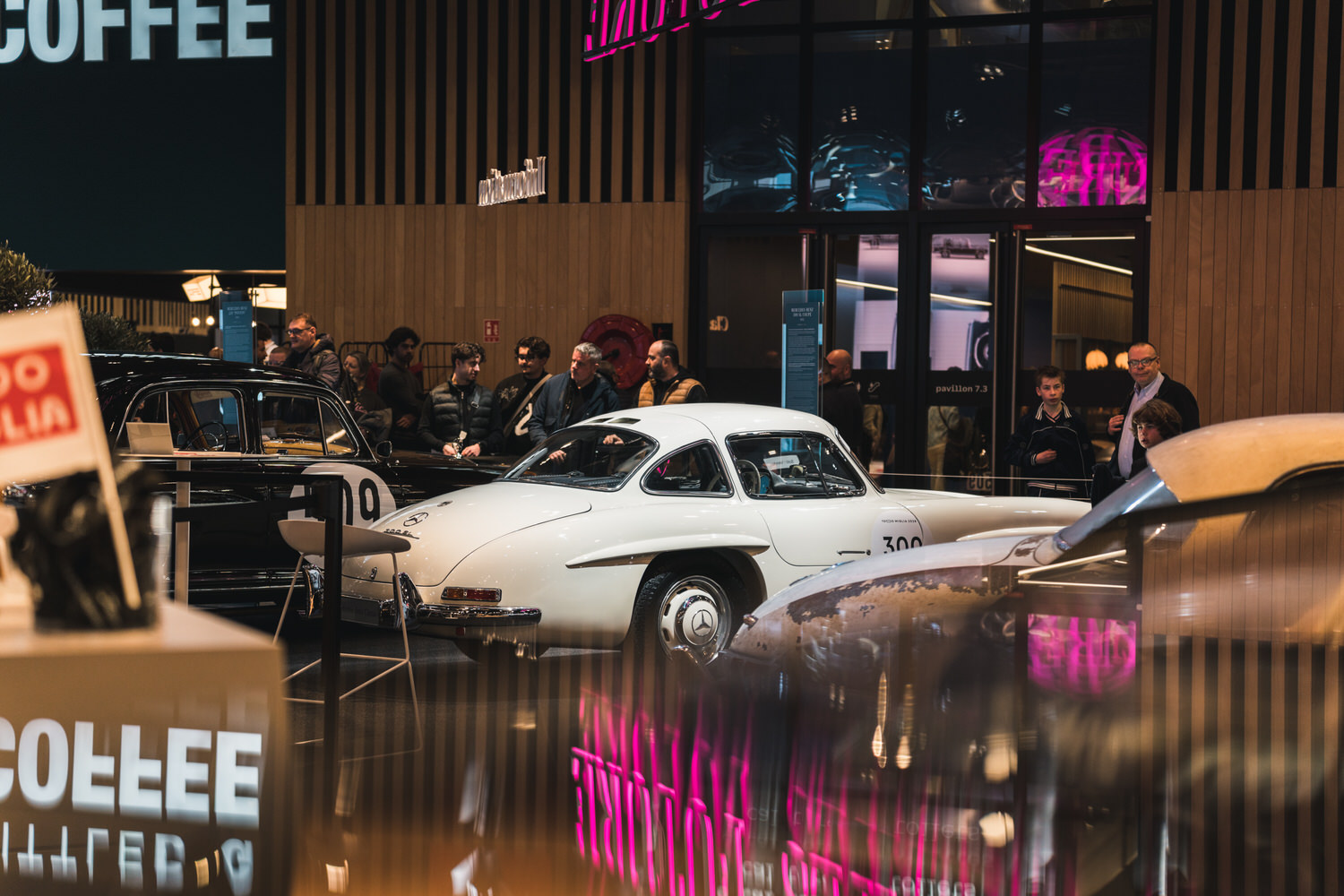
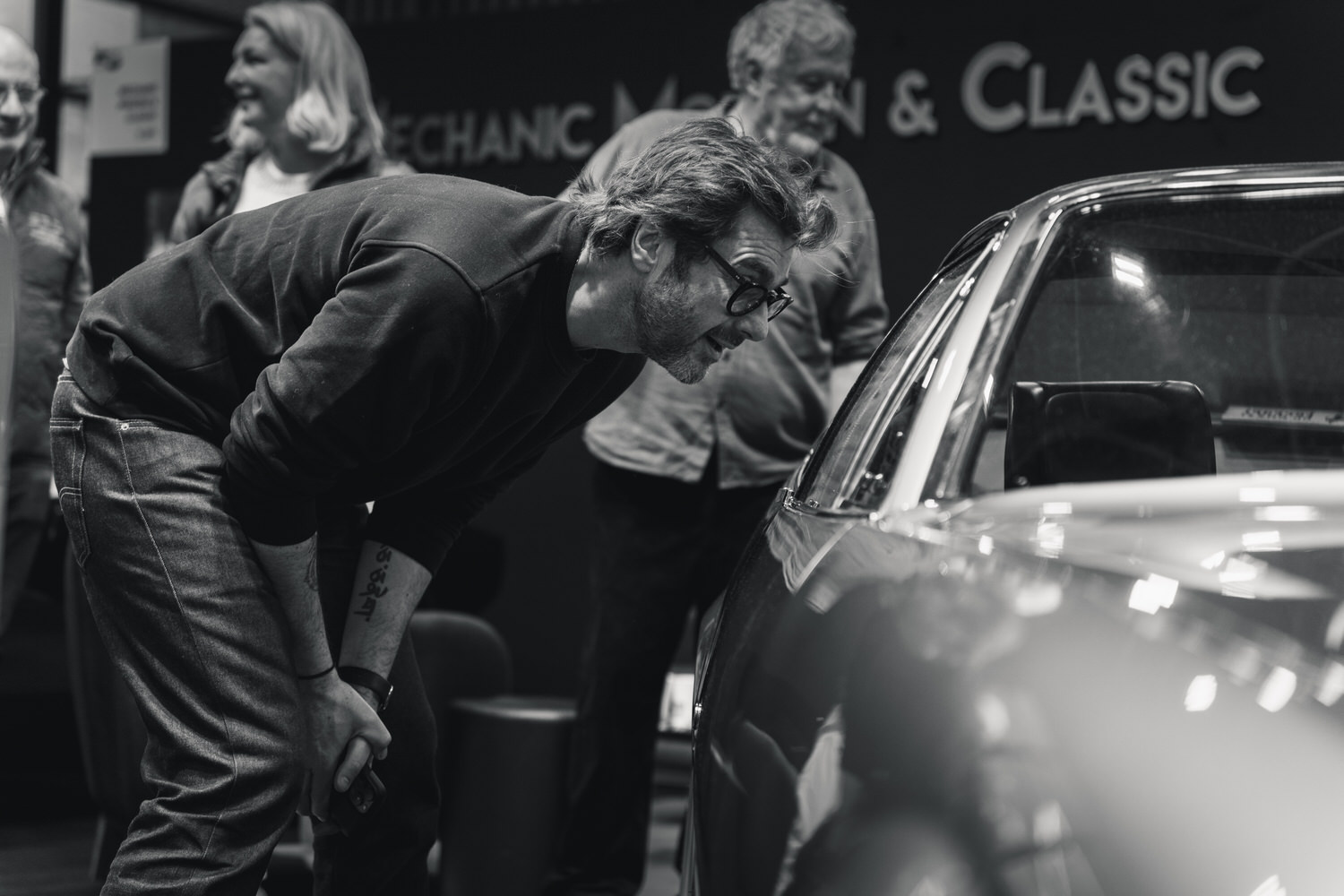
… If You Ever Manage to Park. Paris is the city of love, art, philosophy and fine food. It is also, as it turns out, the city where you can spend two full hours sitting in a car without actually going anywhere, while surrounded by thousands of people who all had the same brilliant idea: “Let’s go to Rétromobile.”
The 50th anniversary edition of Rétromobile returned to Porte de Versailles, and before I even saw a single car, I had already completed my first endurance race of the day. One hour to find parking. One hour to escape it later. By the time I finally entered the show, it was already 1 PM — which meant trying to see one of the world’s greatest car events in what felt like qualifying session time. Then again, I went on sunday – the last day of the event – when all the ‘tourists’ come out. And with a record amount of visitors of 181.500 people (an increase of 24% compared to last years edition) it was expected to be busy.
And yet, within minutes, you forget the traffic, the gridlock, and the mild existential crisis you experienced in the parking garage.
Because Rétromobile hits you like a V12 at full throttle.
Hall 7.3: The Beating Heart of Rétromobile
The top floor? Let’s start there. That’s where things get properly serious. Hall 7.3 isn’t just another part of Rétromobile — it’s the place. The main hall. The one where dreams, bank transfers and mild cardiac events all happen at once. I actually started my visit there (mostly because I was late, but let’s call it “prioritising”), and honestly…it hits you like discovering your “realistic budget” doesn’t apply here.
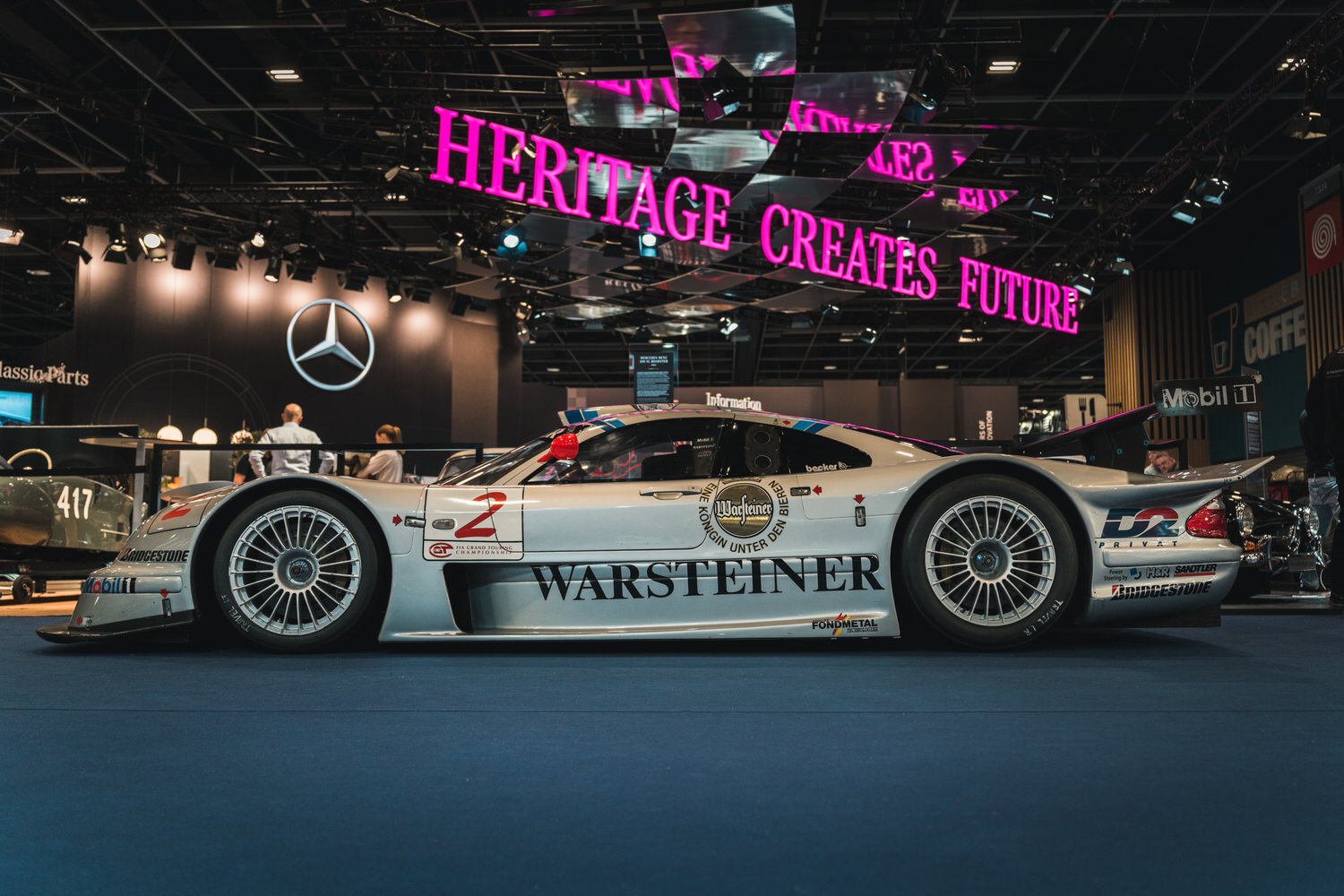
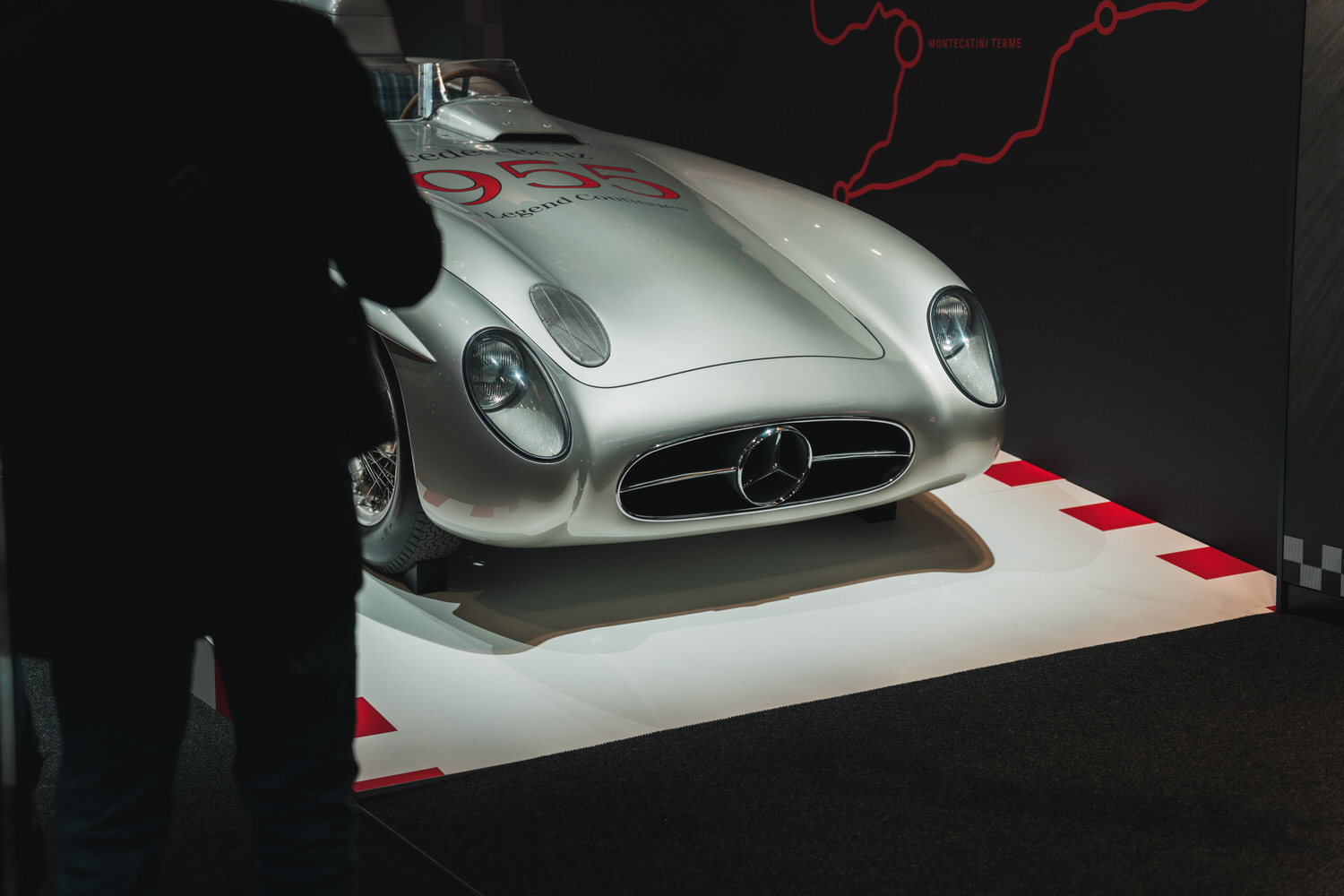
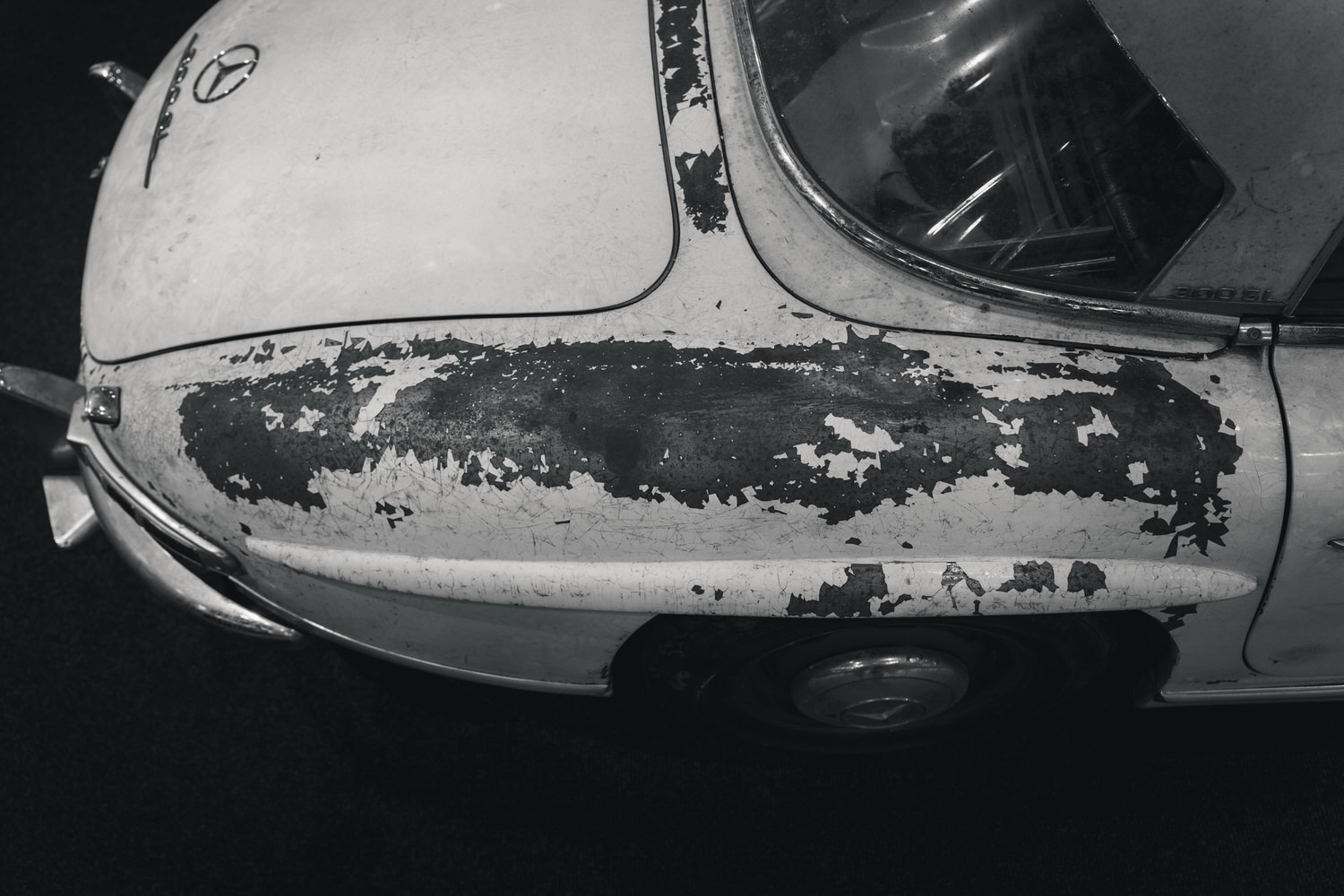
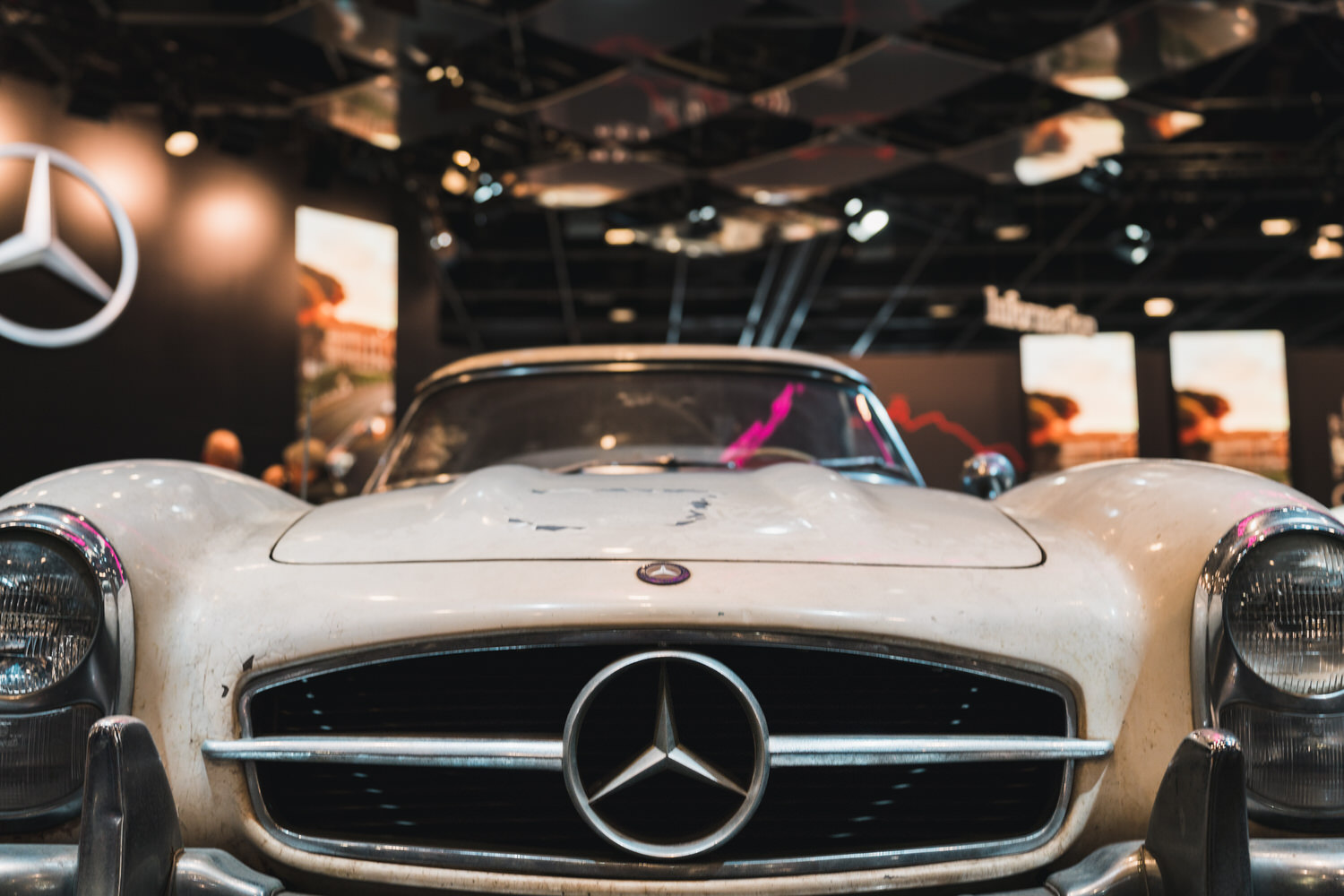
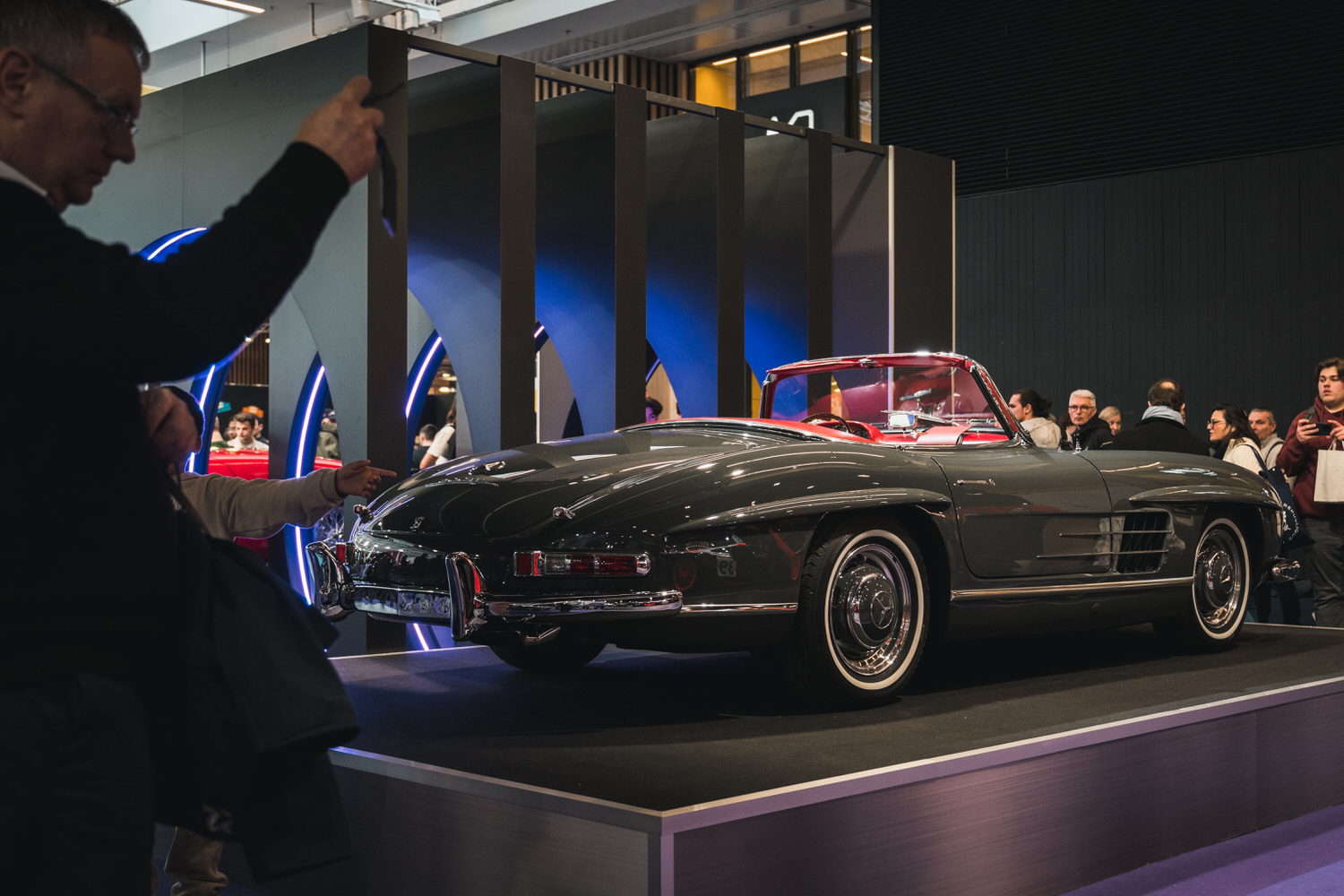
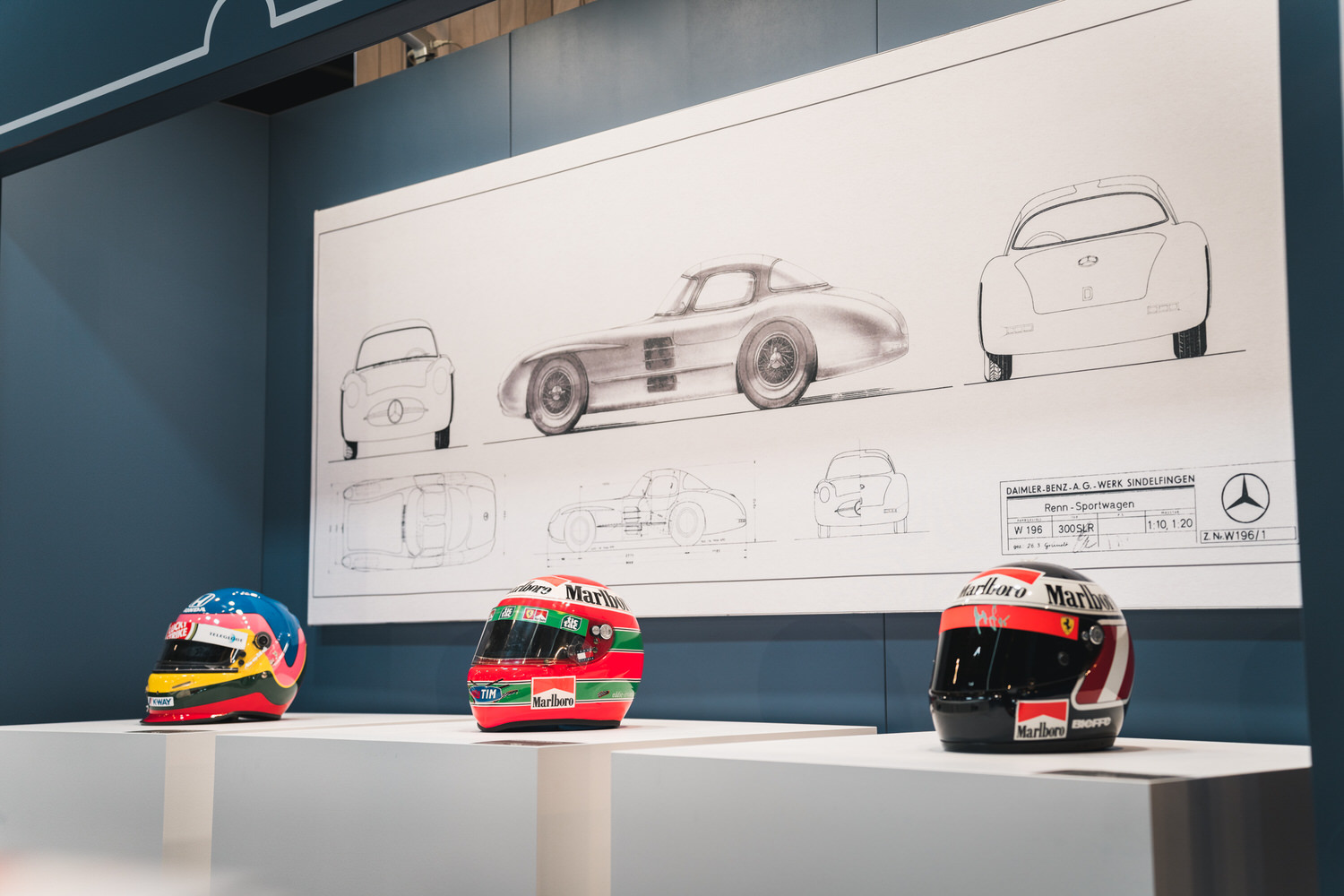
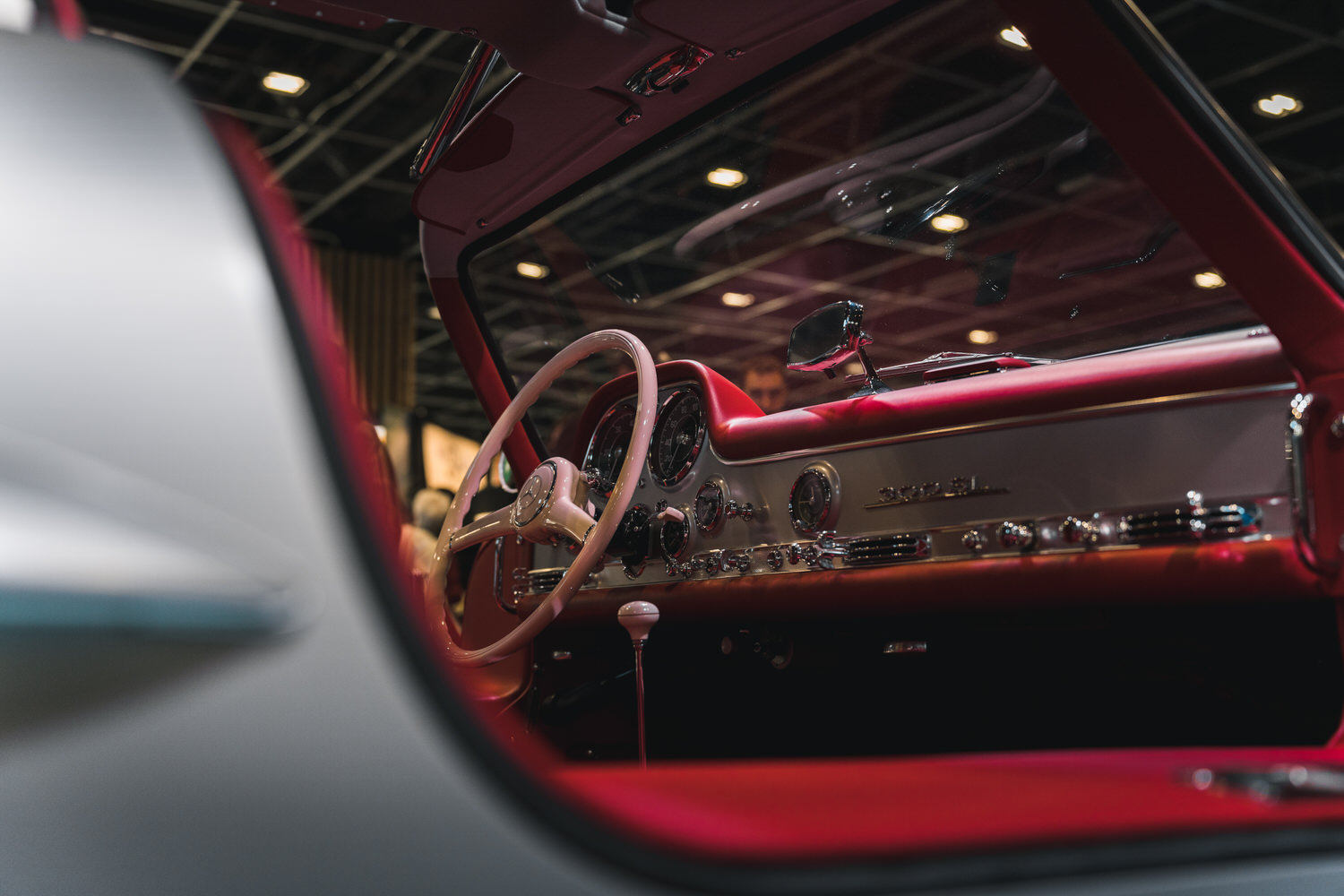
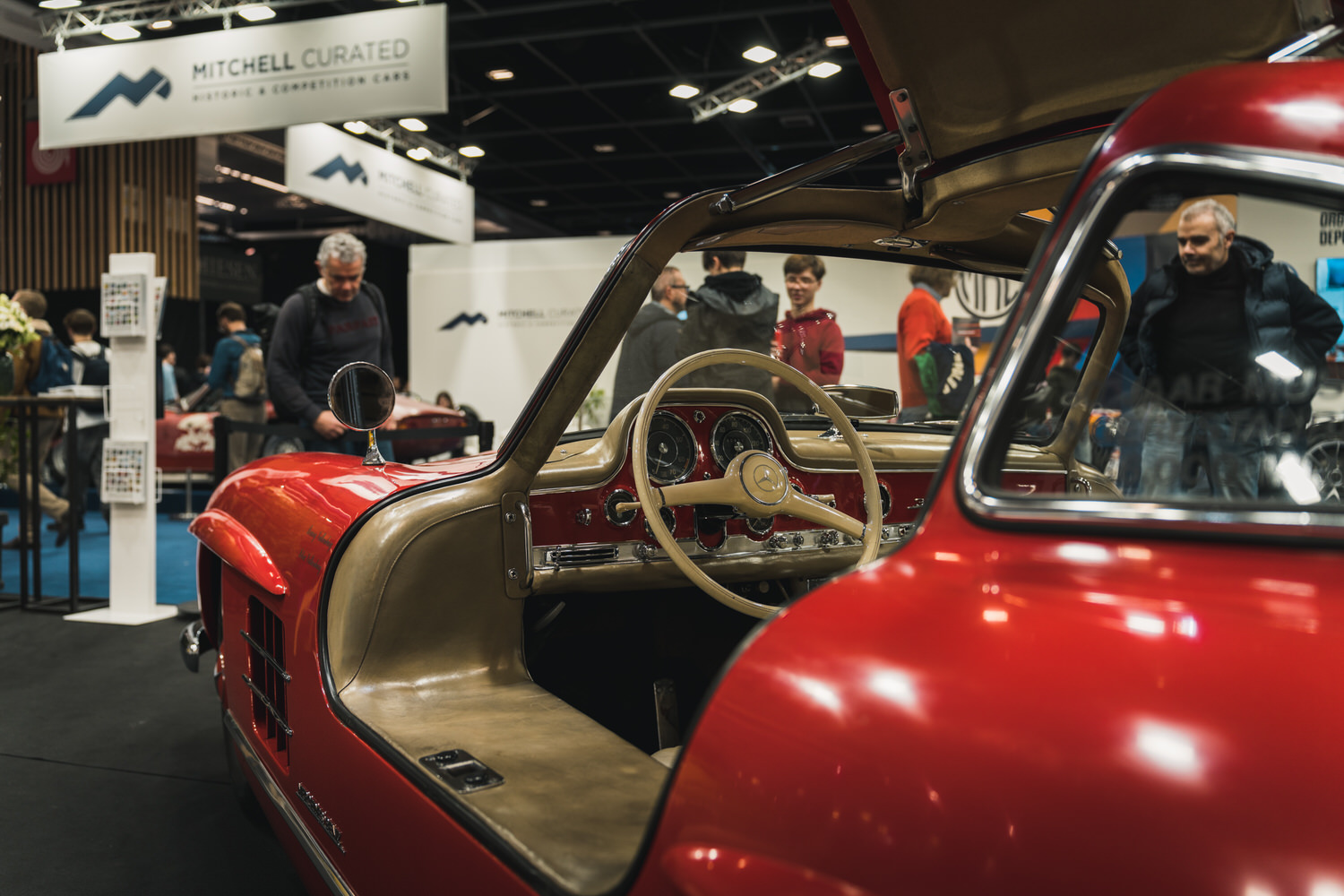
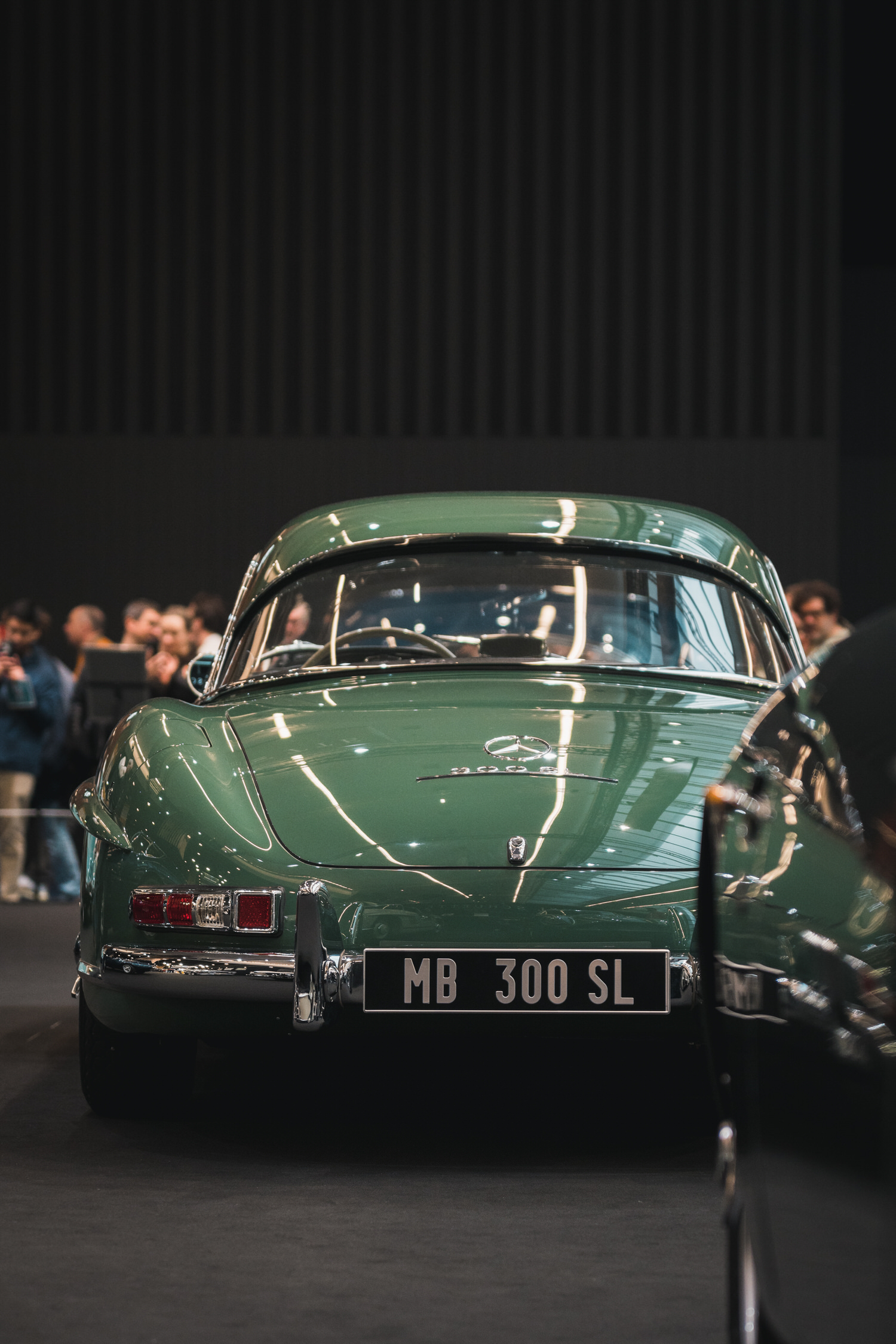
Because this is where your brain starts doing that weird recalibration thing. You walk past a Mercedes 300SL and think: “Oh. Another one. Nice.” That’s when you know you’re in deep.
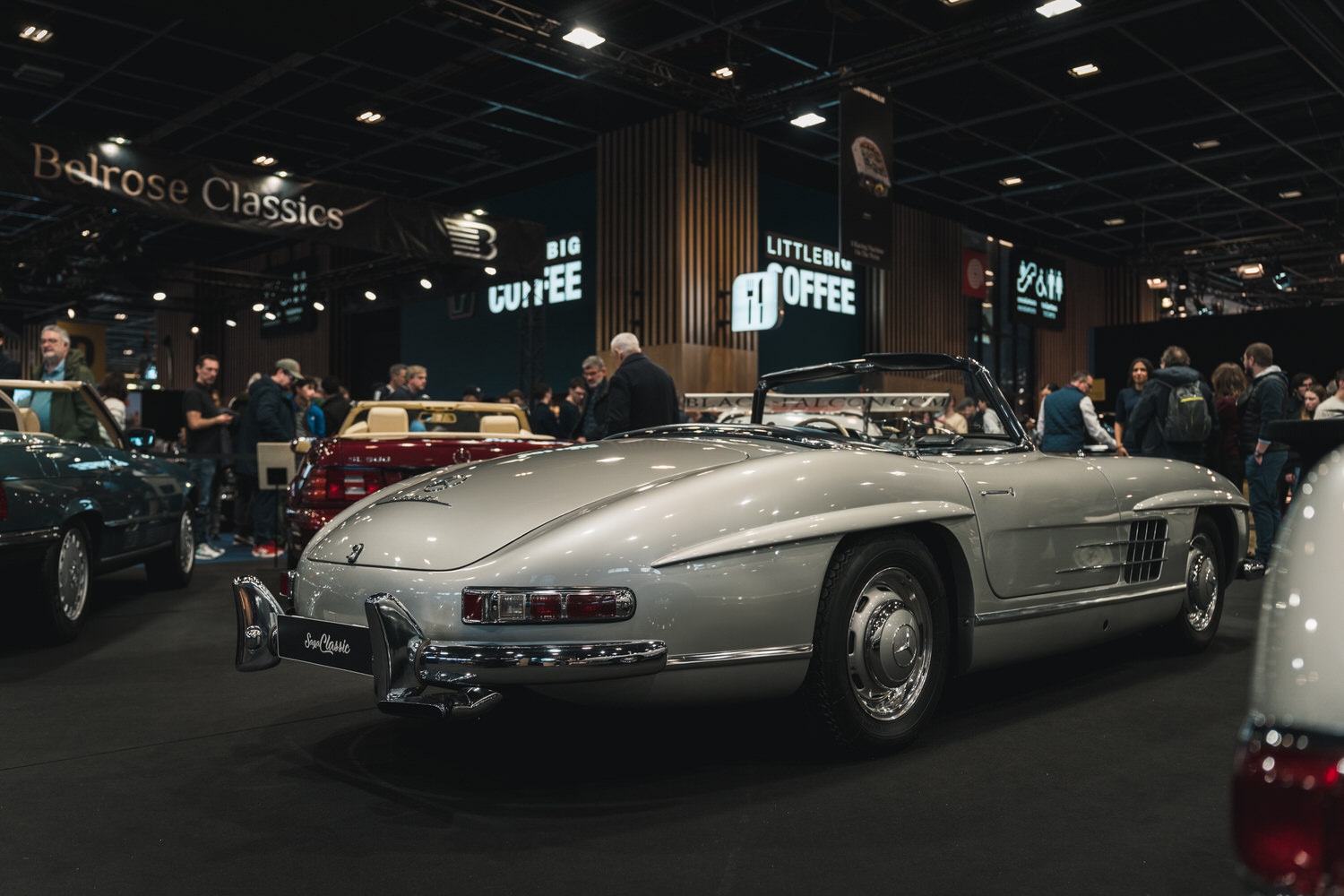
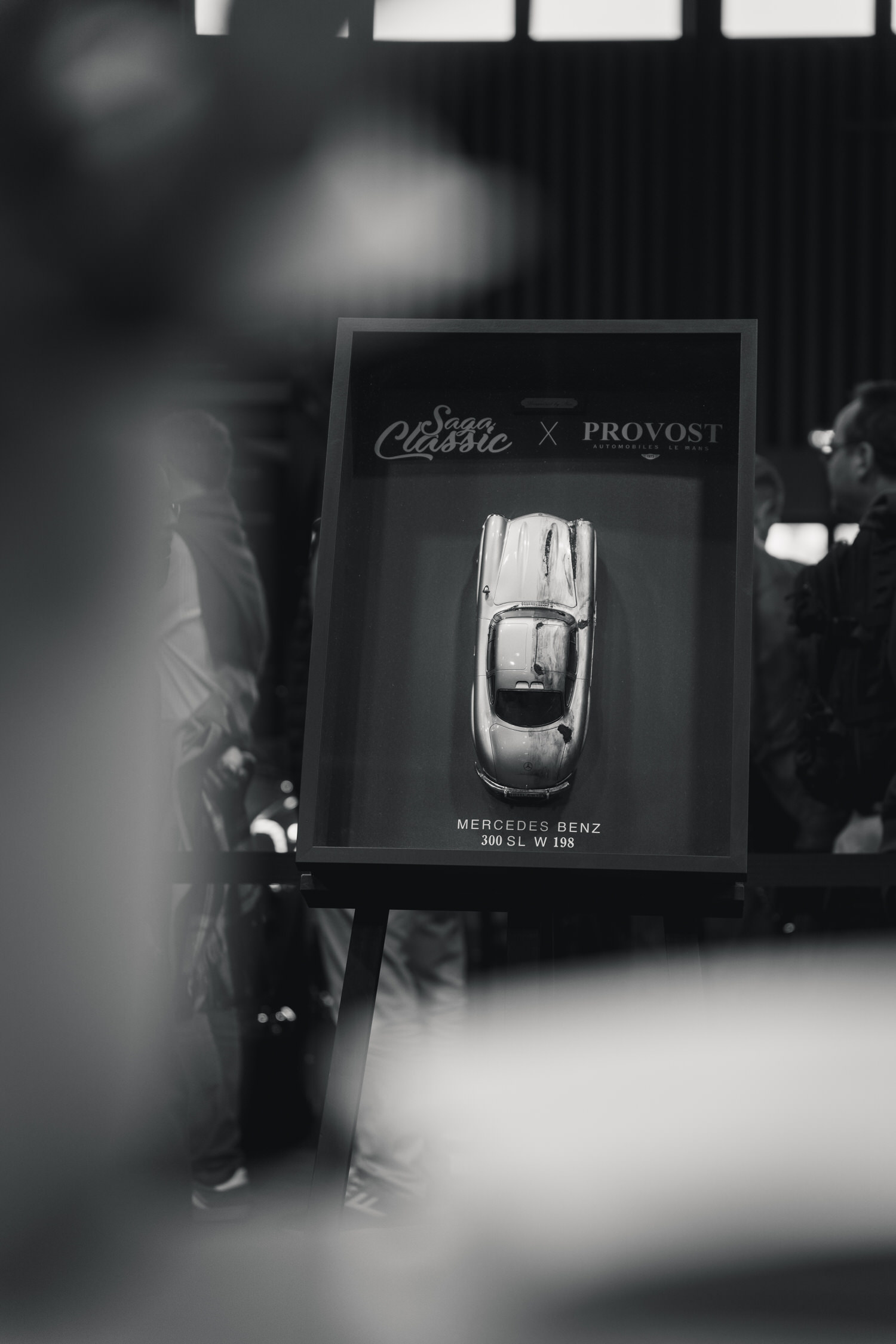
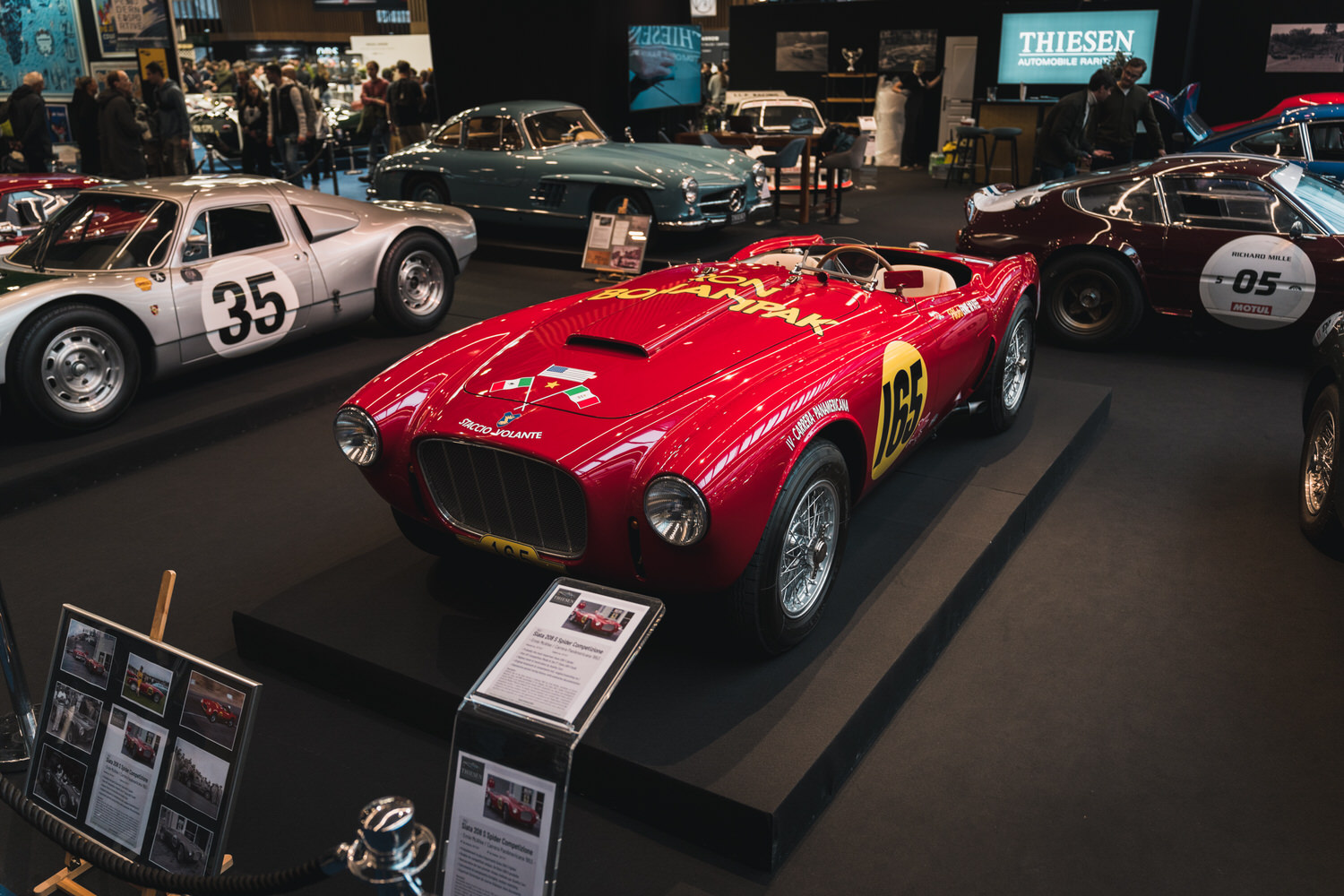
Hall 7.3 was absolutely rammed with Europe’s heavyweight dealers — we’re talking classic, supercar and hypercar royalty all under one roof. More than 50 dealers brought their A-game, but the big hitters were impossible to miss. Girardo & Co., Kidston, Fiskens, HK Engineering, Lukas Hüni, Joe Macari, Fiskens, Gallery Aaldering, Axel Schuette, Eberhard Thiesen, Mercedes SAGA Classic , JMB Classic … — each stand basically a shrine to unobtainium, each car the sort of thing that makes you quietly question your life choices.
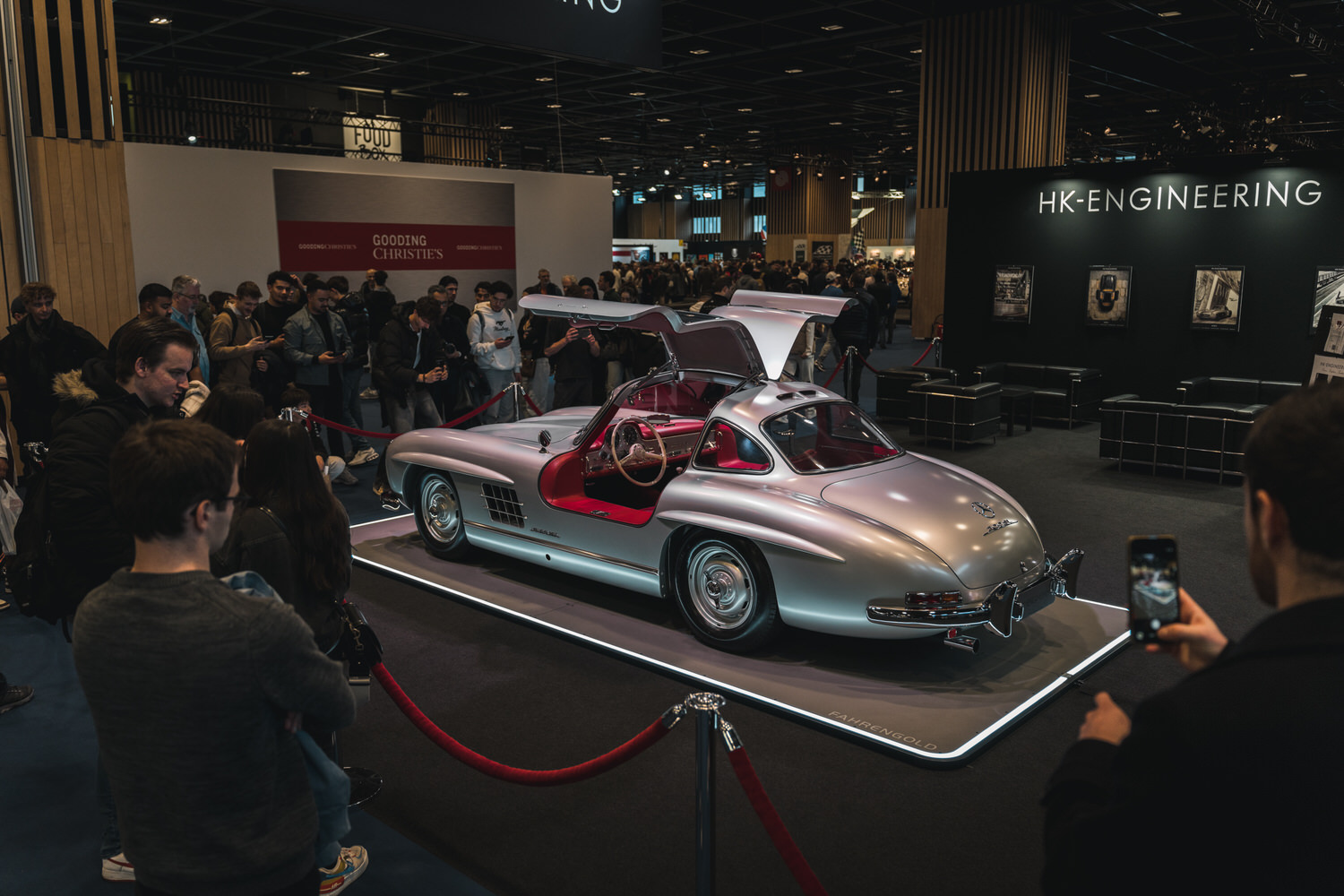
And the scary part? This wasn’t just a display. A lot of this metal is for sale. If you’ve got the funds — and possibly a forgiving partner — you could, in theory, go home with something utterly ridiculous. And wonderful.
Let’s talk about 4 stands in particular.
Girardo & Co — Making Unicorns Look Common
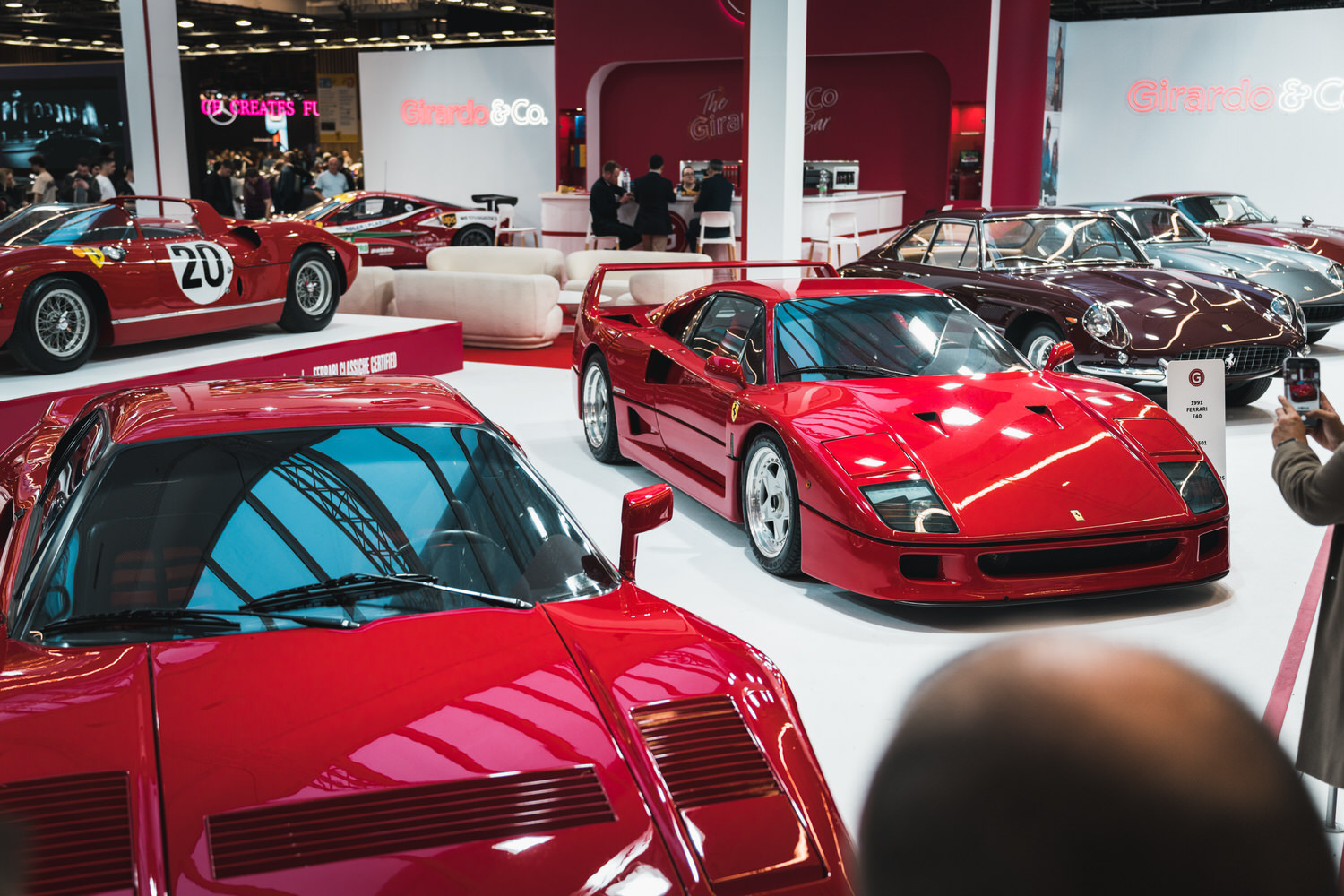
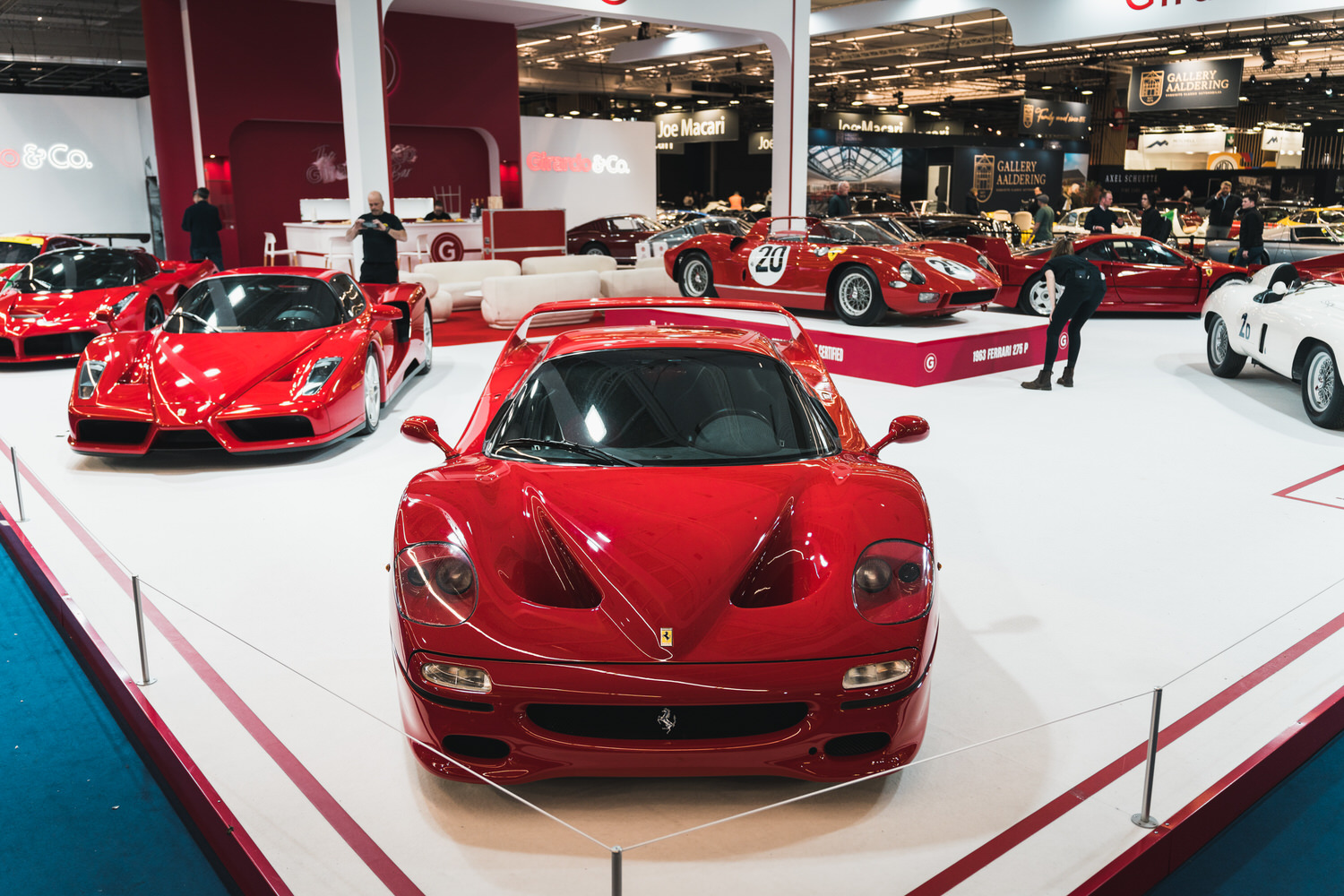
Girardo & Co, once again, demonstrated that their version of “normal” is very different from everyone else’s. Standing there, surrounded by 11 historic Ferraris, you could almost convince yourself cars like these must exist on every street corner. They don’t, of course — and you really don’t want to think about the insurance sums involved — but for the price of entry, you were staring at machines most people only ever see in books. Max Girardo, the owner of the company, is the kind of guy who can make a LaFerrari look like background decoration next to a 1955 Ferrari 750 Monza, chassis #0510M, just to name something.
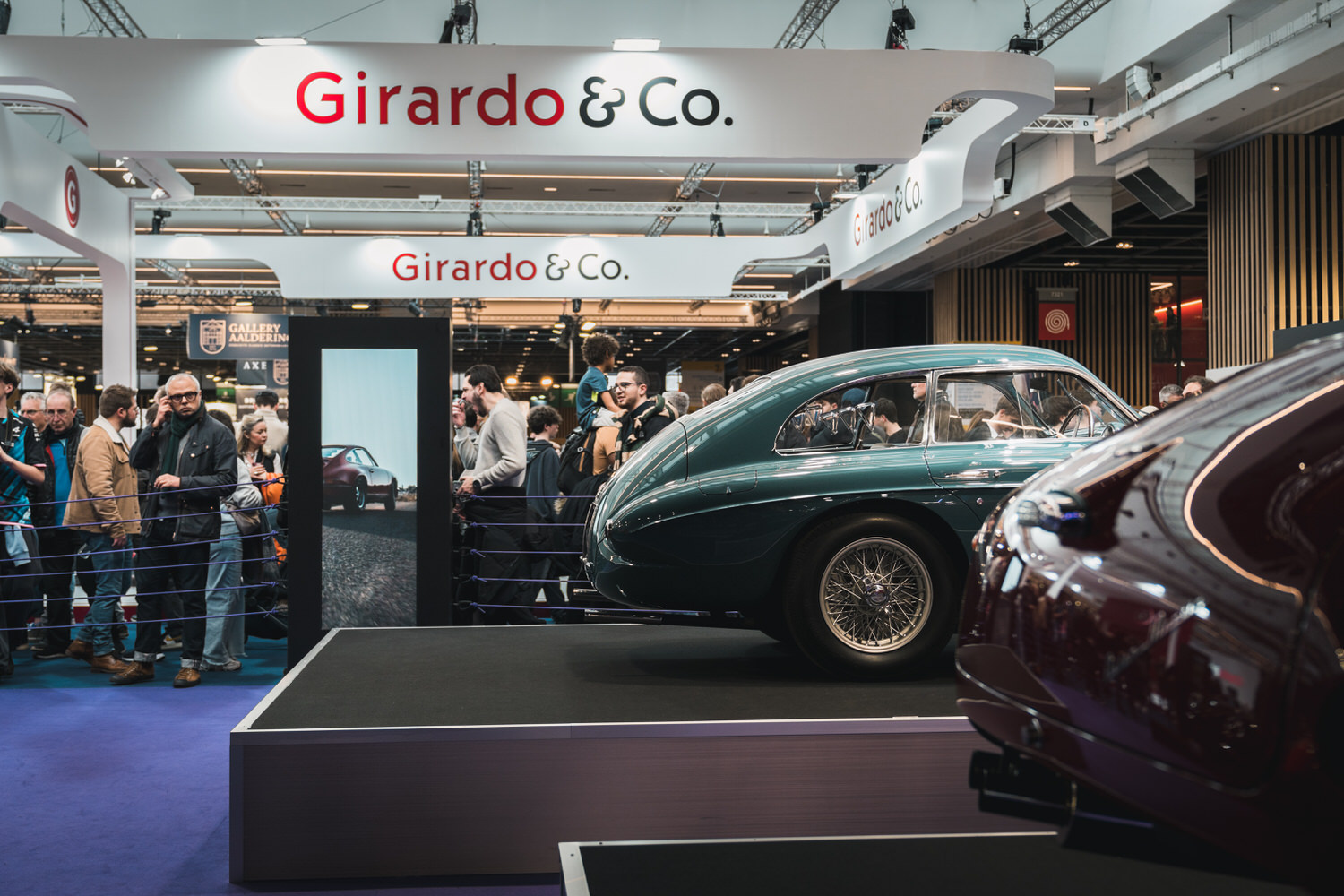
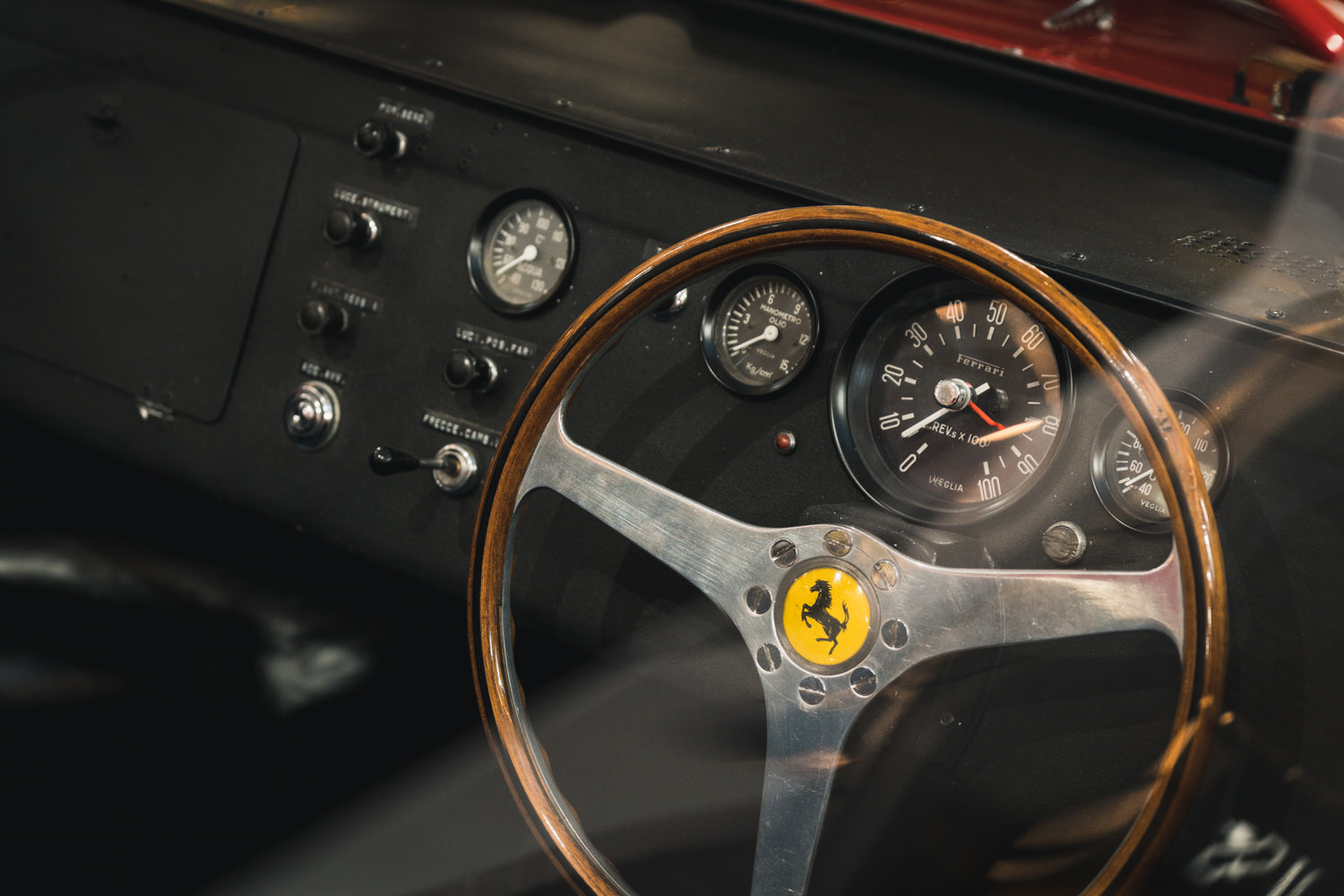
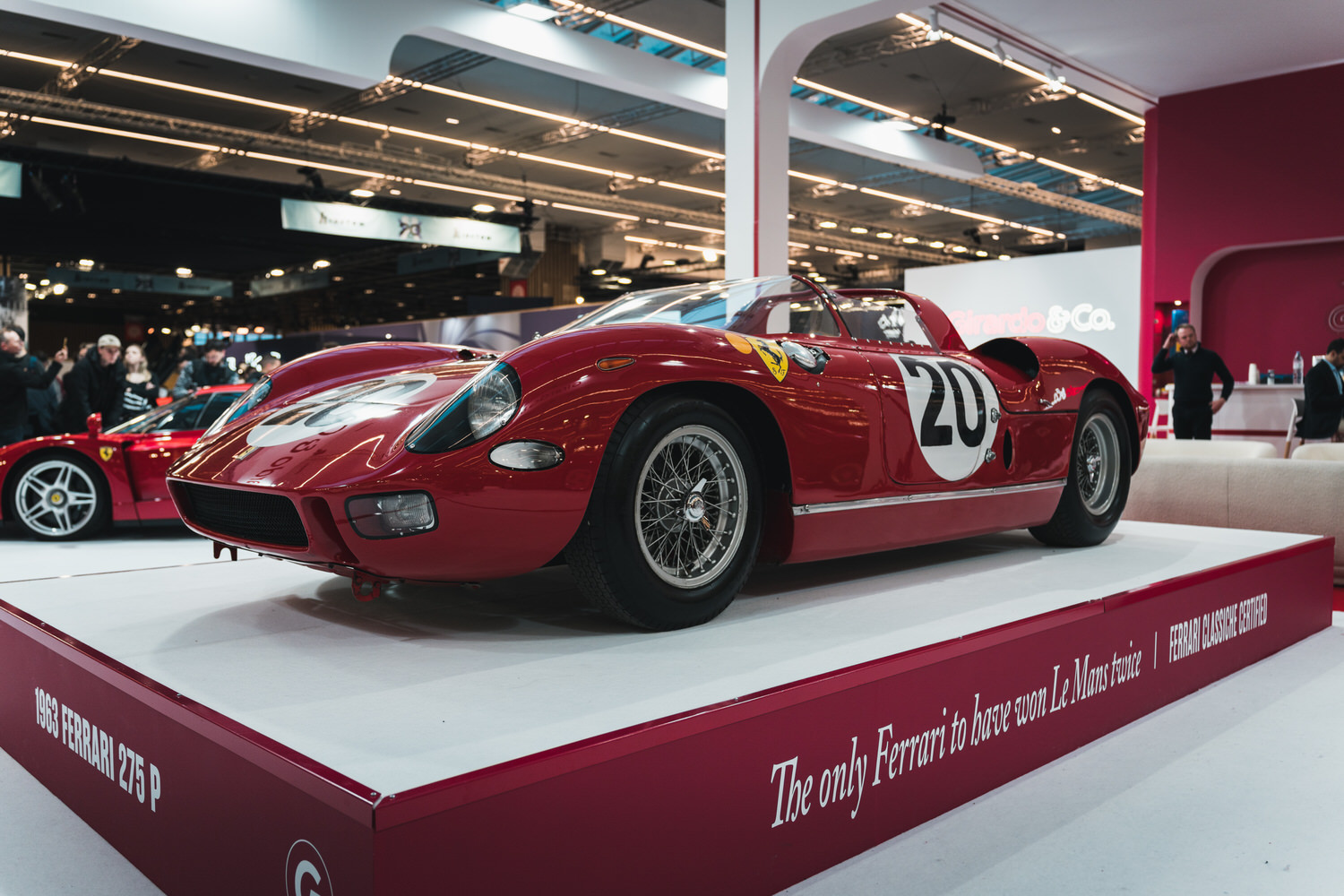
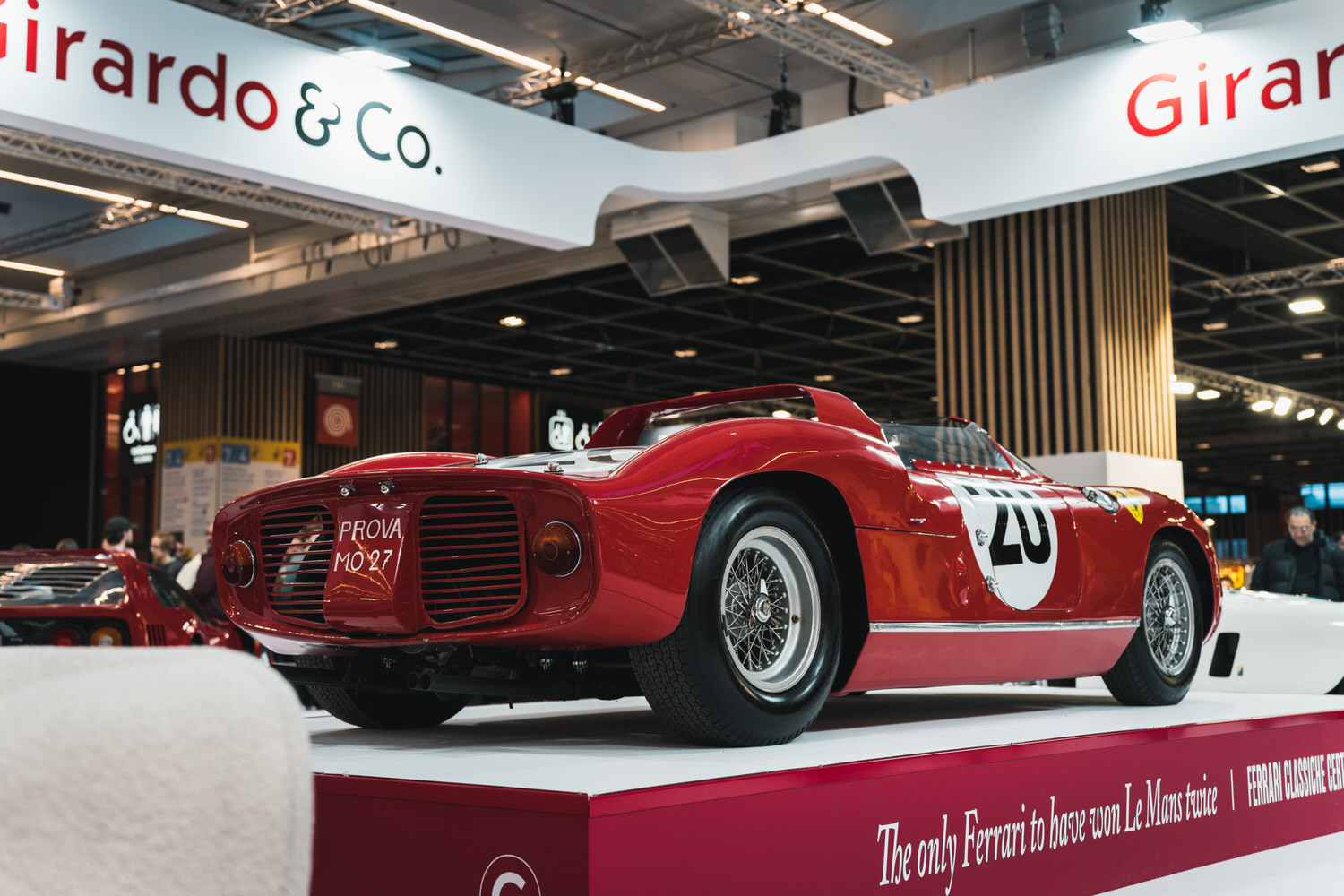
The centrepiece of the stand was none other than Ferrari 275 P chassis 0816, a car that reads like a history book in motion. Originally conceived as a 250 P in 1963, it was pressed into action after chassis 0814 was severely damaged at the Nürburgring just a month before Le Mans. Rather than submit a new entry, Ferrari sent 0816 under 0814’s identity — and it went on to claim victory at Le Mans, driven by Jean Guichet and Nino Vaccarella. Further investigation by Ferrari Classiche later revealed that it had also been used in triumphant runs at the 1963 Le Mans and the 1964 Sebring 12 Hours, making 0816 the only Ferrari to win Le Mans twice, and one of the very few cars to achieve back-to-back victories at the legendary race. Its journey from Ferrari’s factory to Luigi Chinetti, then into Pierre Bardinon’s Mas du Clos collection, and finally consigned through RM Sotheby’s in2018, only cements its status as living motorsport legend.
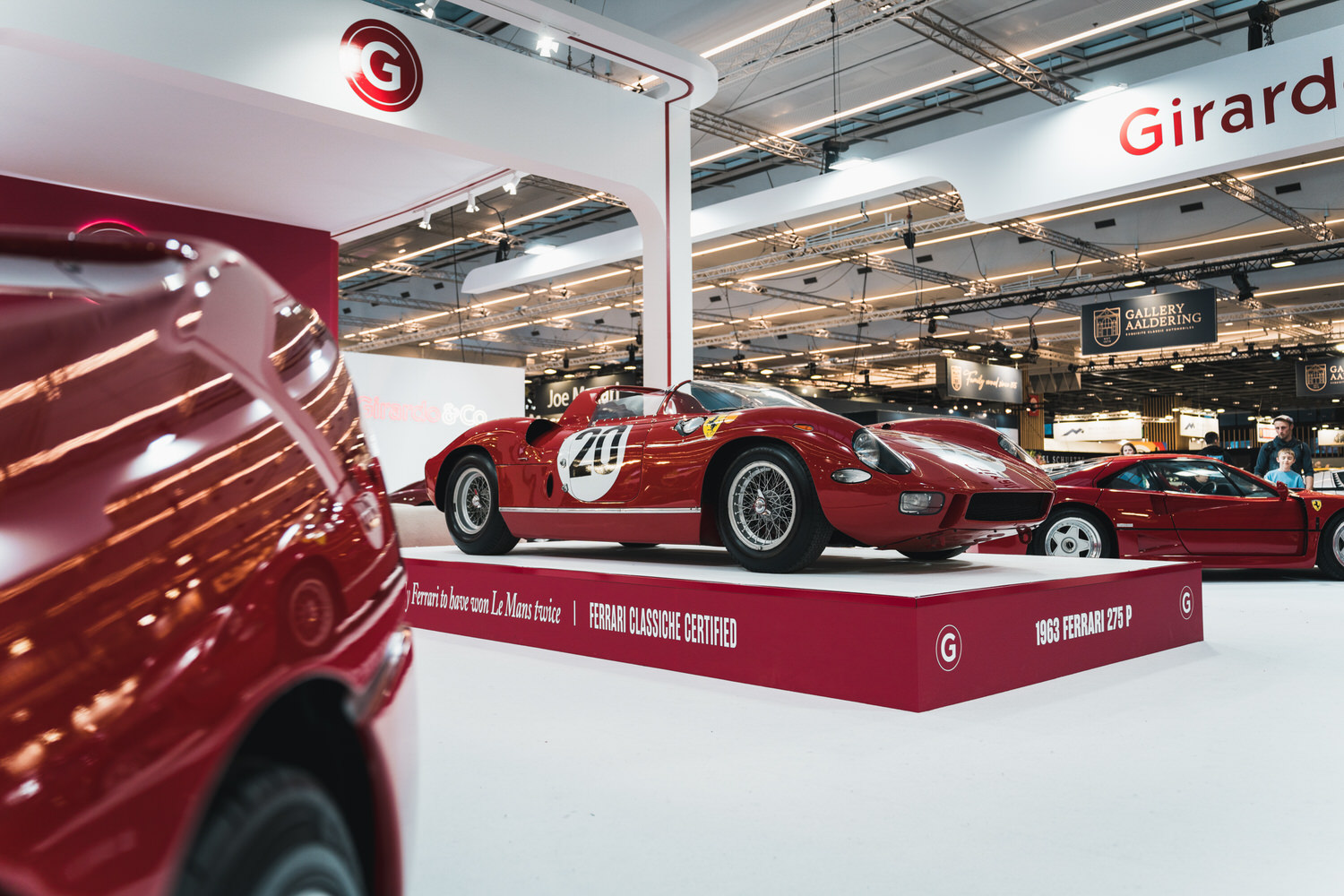
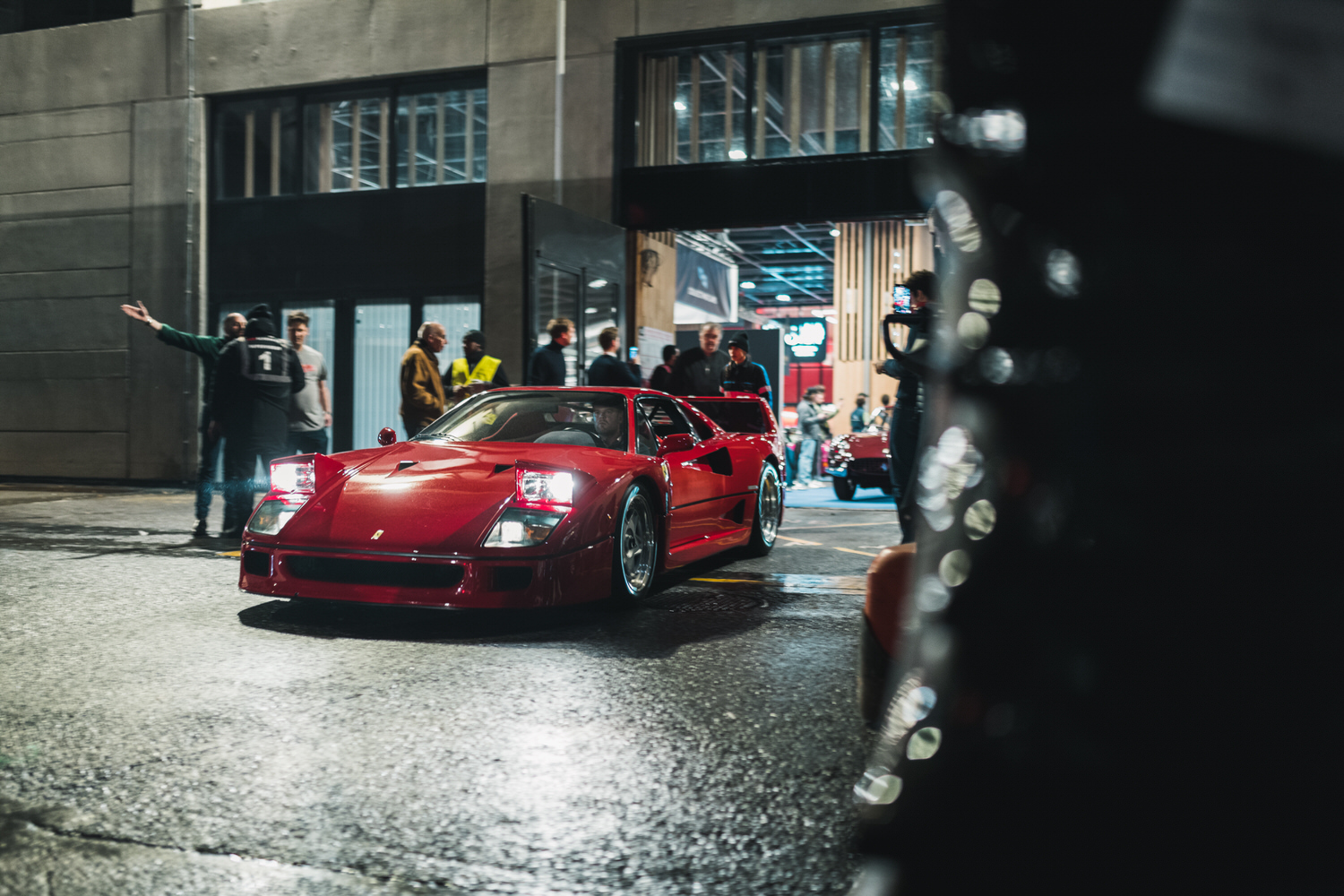
And of course, you can’t forget “The Big Five”, all in the obligatory Ferrari red, turning the very concept of hypercars into a historical statement. The lineup featured the 288 GTO, the oldest of the five, alongside the F40, F50, Enzo, and LaFerrari, each a masterpiece in its own right. Each car is more than just horsepower; they are the DNA of Ferrari distilled into asphalt art. Adding to the modern performance pedigree, the stand also showcased one of only 11 Works-specification Ferrari 458 Italia GTEs, delivered new to AF Corse, Ferrari’s de facto GT factory team.
In short, Girardo & Co. had created a motorsport temple, blending legendary historic race cars with the modern elite of Ferrari’s track-bred fleet. From back-to-back Le Mans winners to the Big Five hypercar pantheon, every glance, every chassis number, every curve told a story — and reminded you that for some people, owning Ferrari isn’t a hobby. It’s a lifetime obsession.
Fiskens at Rétromobile 2026 — The “No Half Measures” Stand
If you ever needed proof that Fiskens don’t do subtle, Rétromobile 2026 was it. Their stand was less “car display” and more “rolling history lesson”, jumping from pre-war royalty straight to modern hypercar madness without missing a beat.
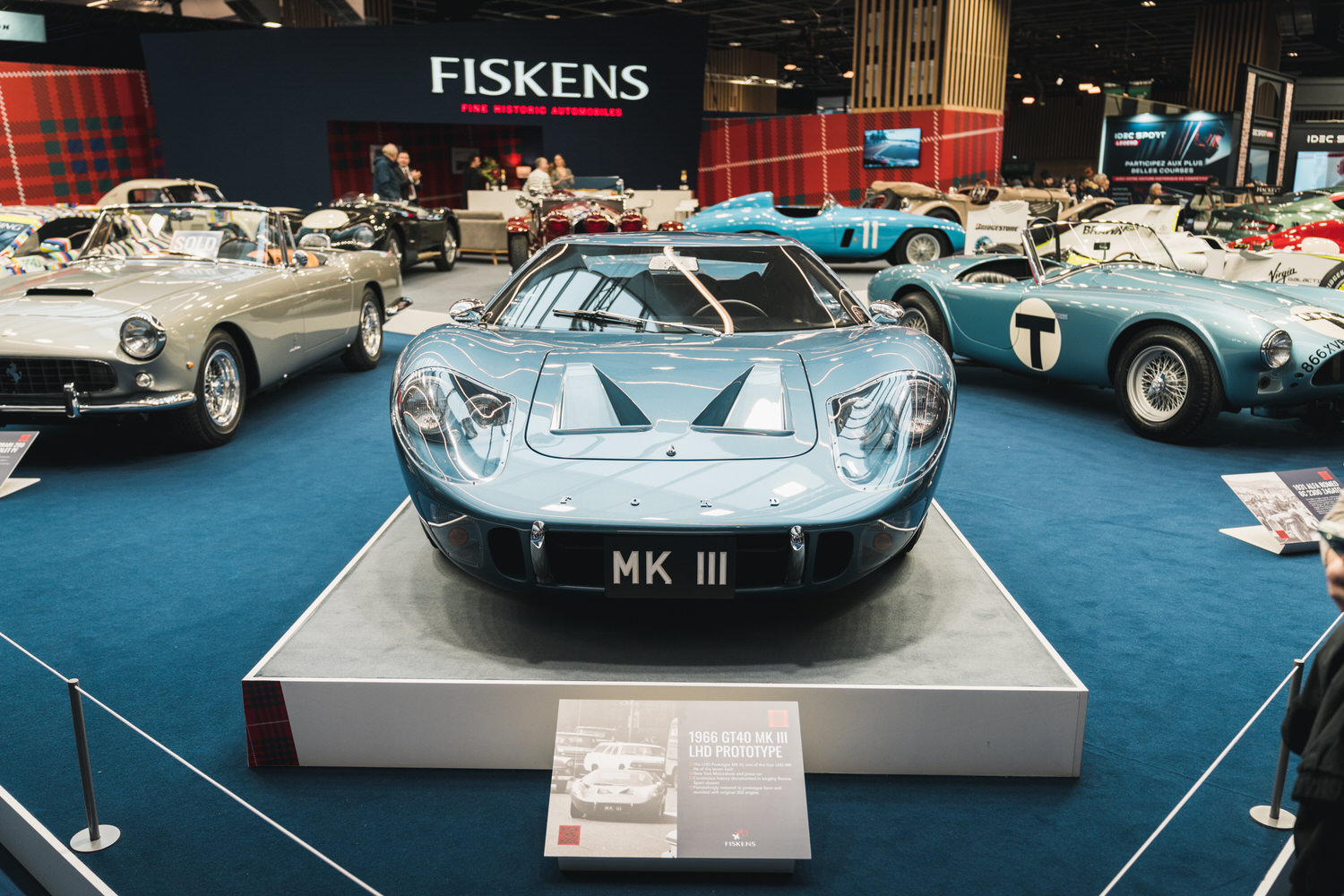
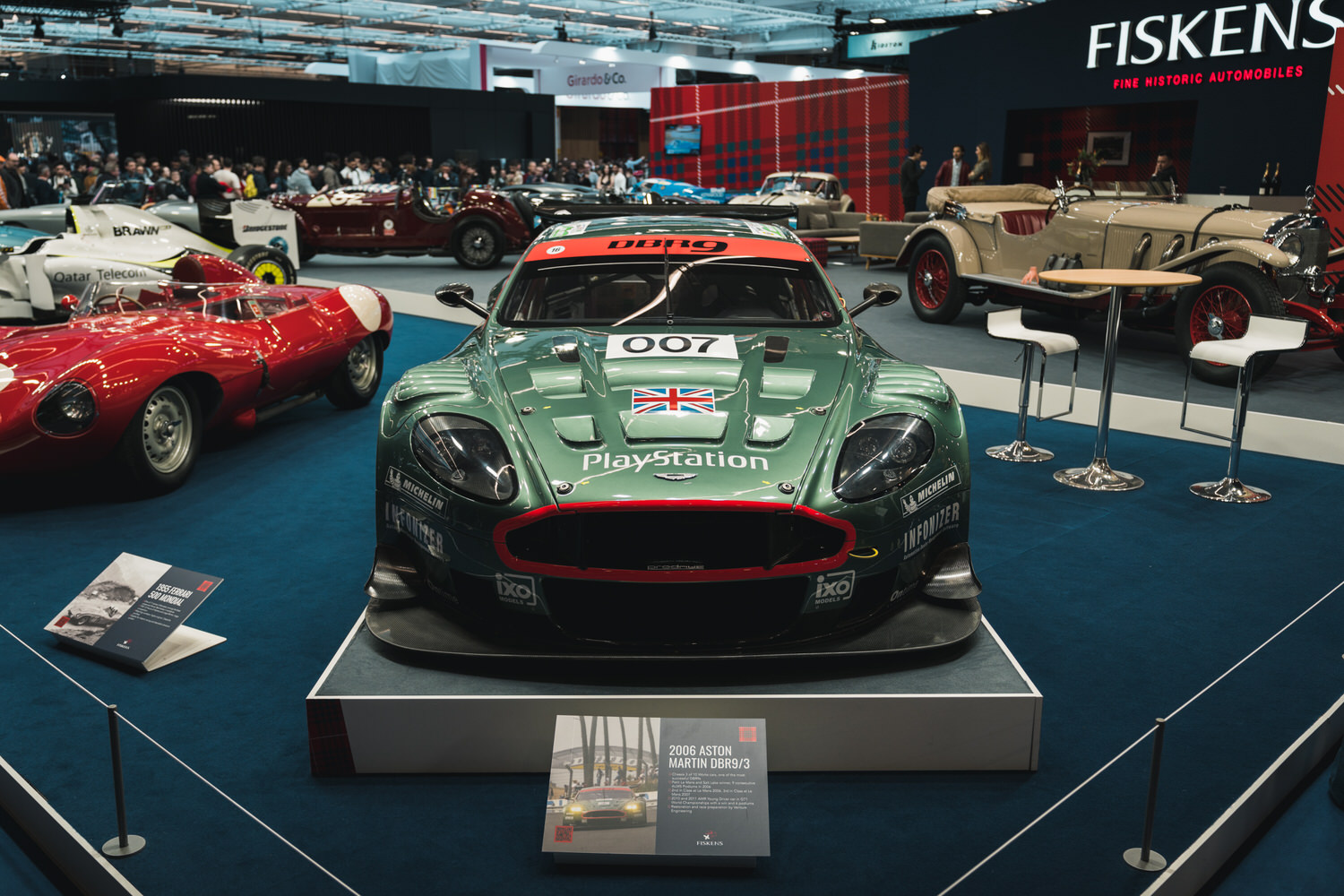
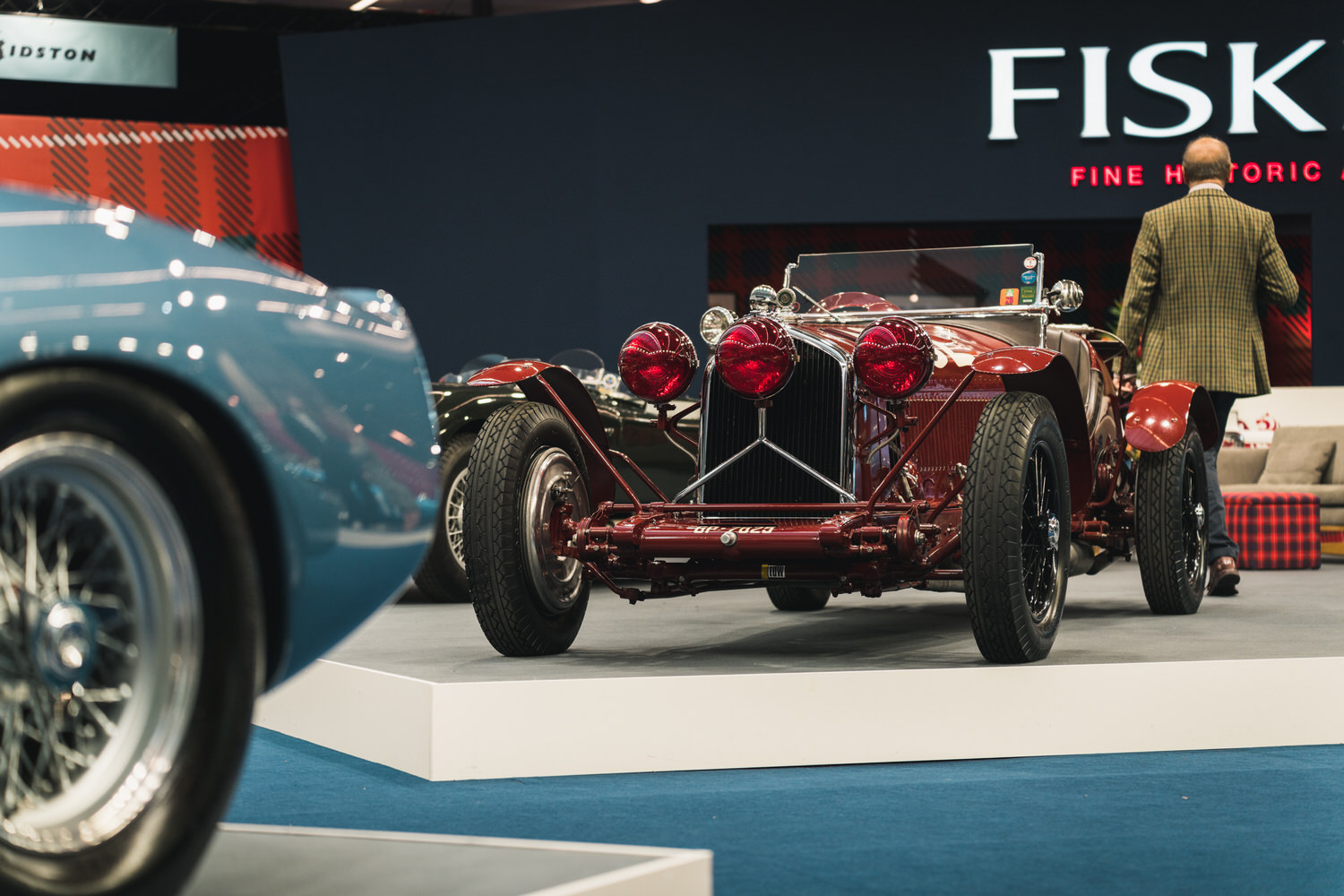
At one end, you had pure vintage theatre — the 1927 Mercedes-Benz 680 S Sindelfingen Sports Tourer, all presence, story and mechanical drama. Then came pre-war racing mythology in the shape of the Alfa Romeo 8C 2300 Zagato, a proper Nuvolari-era weapon with real race wins, not just museum polish.
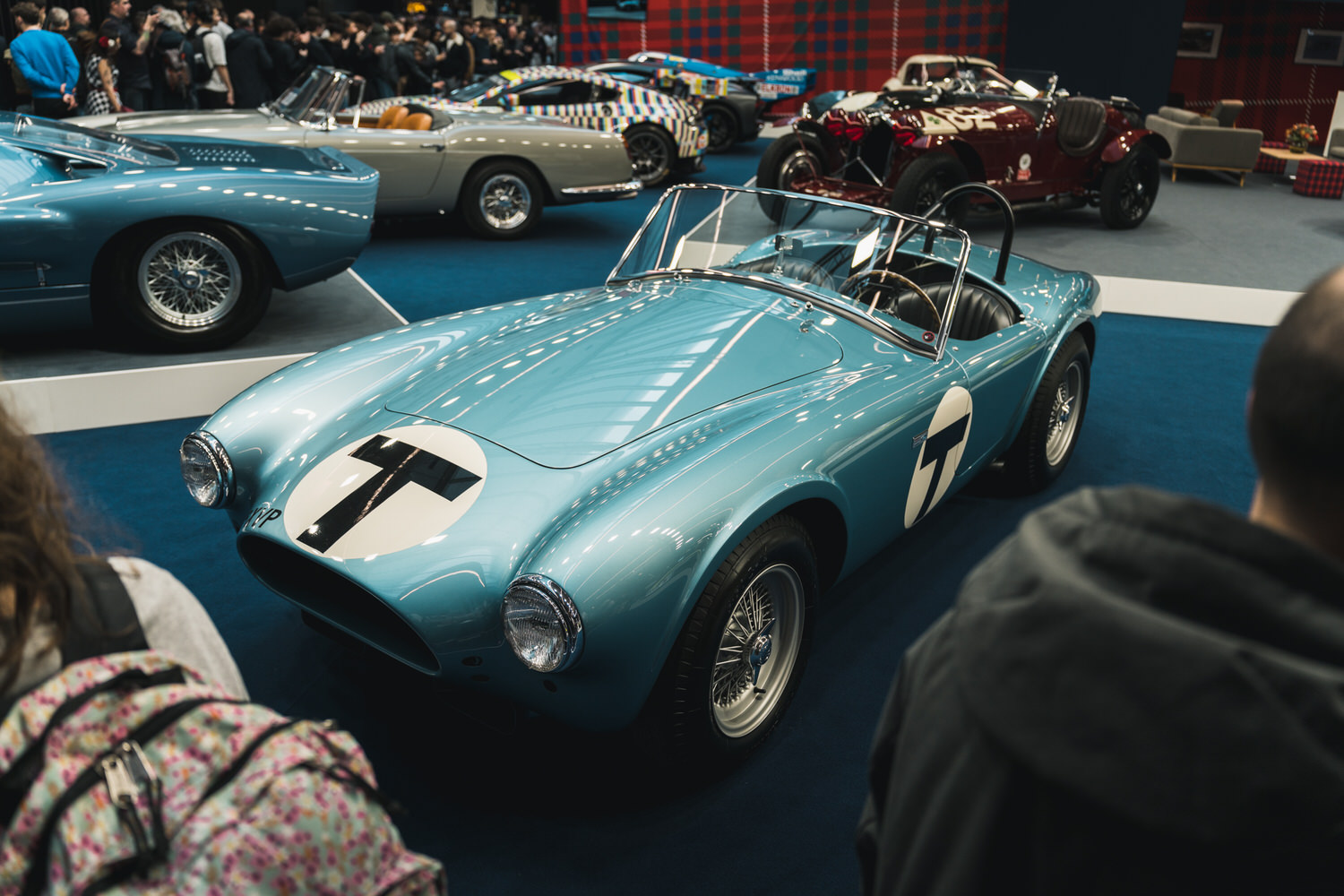
The middle of the stand was basically endurance racing heaven. Jaguar C-Type and D-Type icons, a beautifully preserved Ferrari 500 Mondial, and American muscle royalty via early Shelby Cobras — including a car tied to Shelby’s own driving school days.
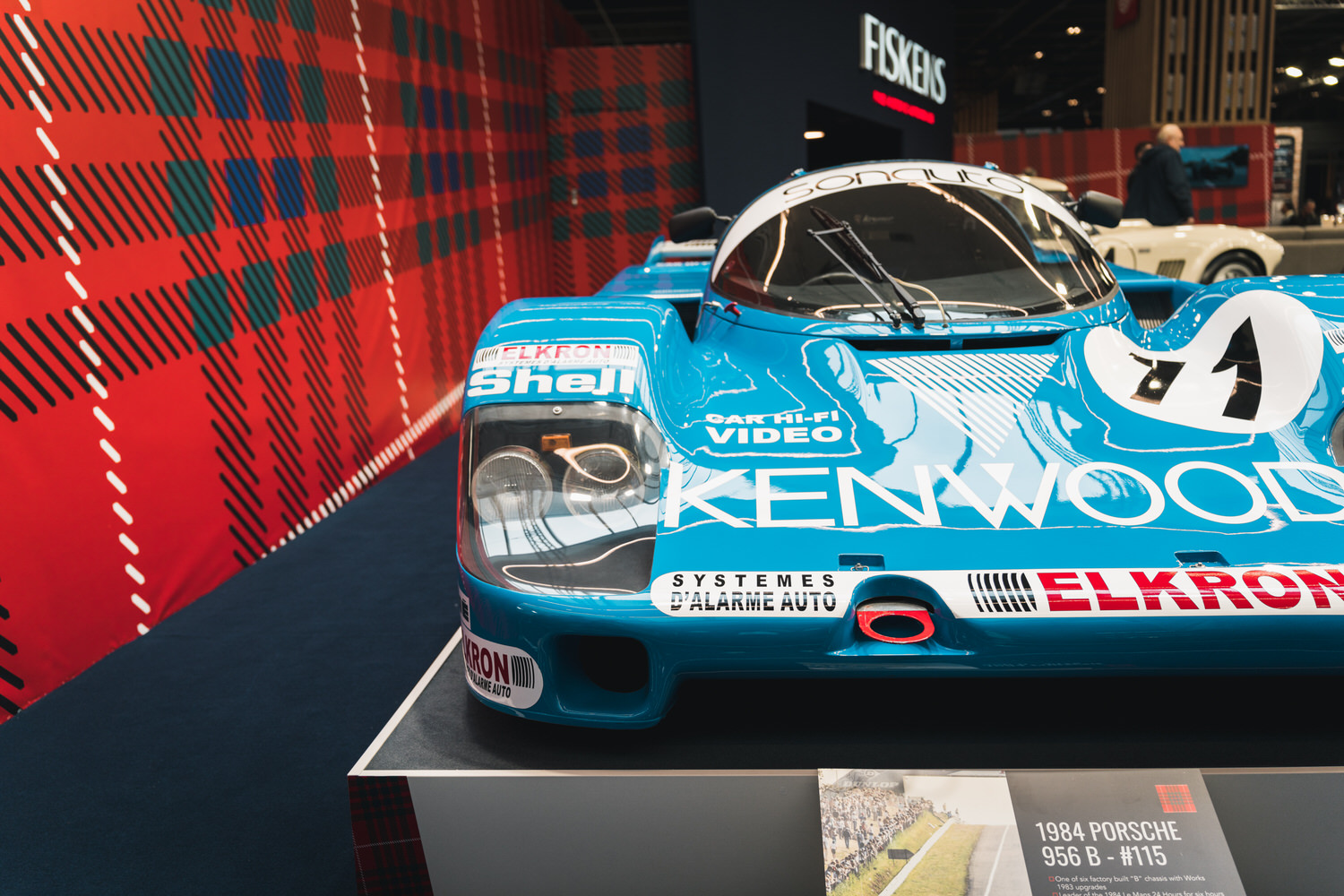
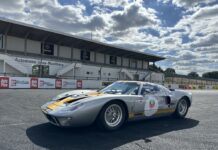
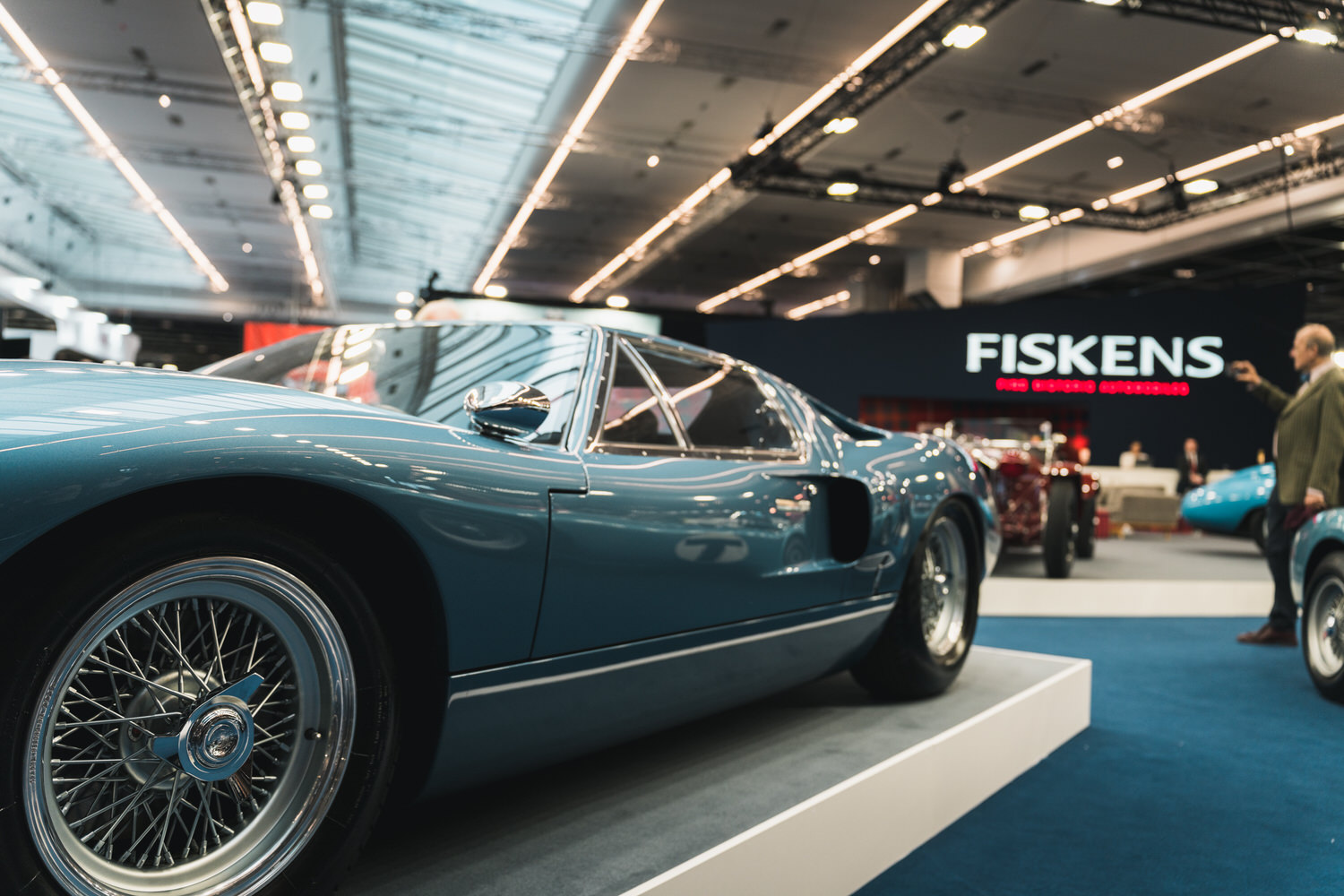
Then things got properly serious. The Ford GT40 Mk III prototype offered a rare look at the road-going side of Ford’s Le Mans war machine, this was definitely one of my personal highlights of the whole event. What a gorgeous machine that is! All this while the Porsche 956 B Group C monster in the iconic blue Kenwood livery reminded everyone just how dominant Porsche was in the 1980s. (Chassis #115 for the Porschists)
Modern race fans weren’t left out either, with a Works Aston Martin DBR9 and Vantage GTE, before the whole thing finished with full modern excess: a Bugatti Chiron Sport 110 Ans, quietly sitting there like 1,500hp is perfectly normal.
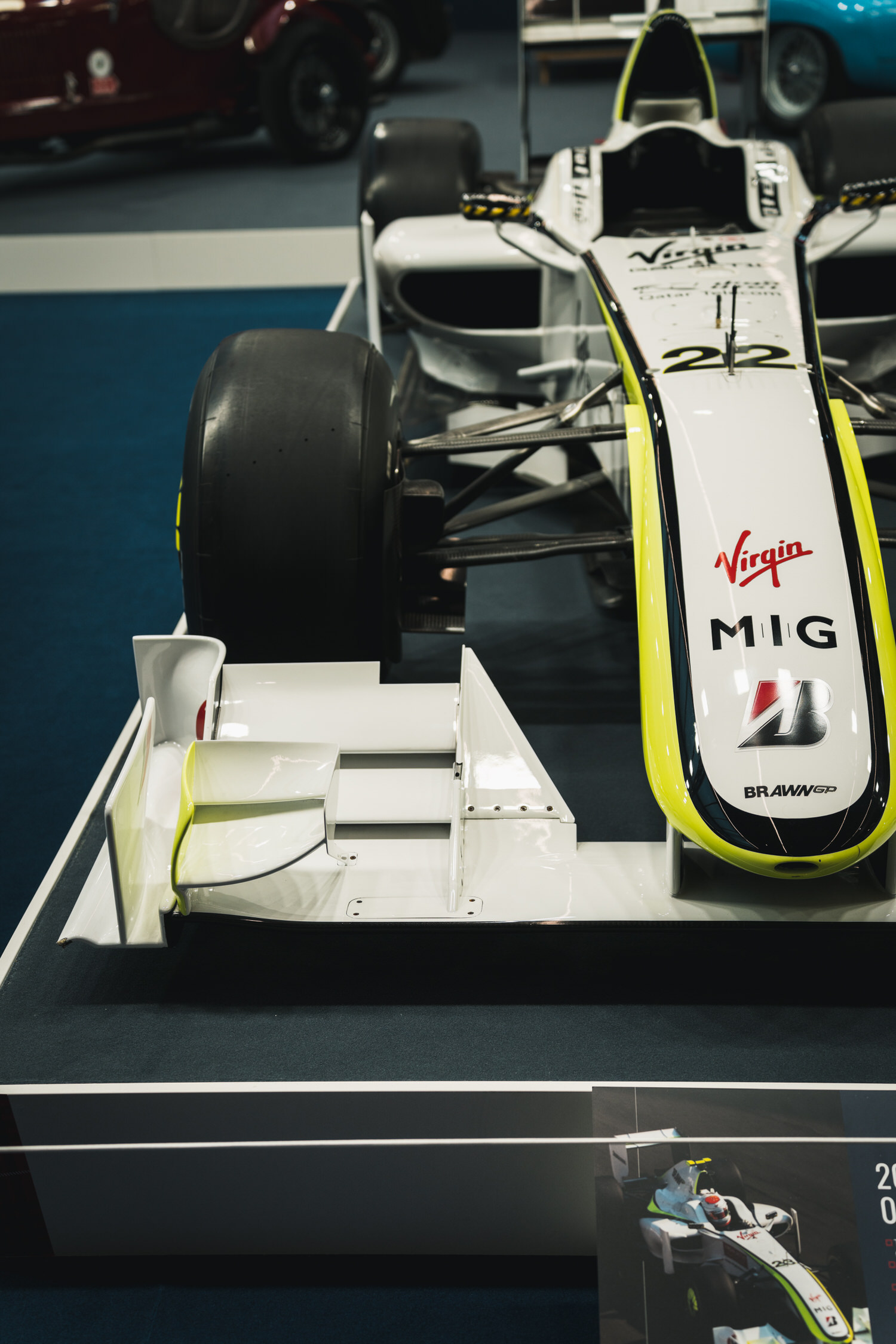
And then, because Fiskens don’t really do “ordinary”, there’s the Brawn GP BGP 001 — the very first car from Formula One’s ultimate fairytale season. One of just three ever built, this is the first time a Brawn GP car has been offered publicly, and it represents one of the greatest underdog stories motorsport has ever produced.
Originally designed under Honda before the brand’s shock F1 exit in 2008, the car was rescued through Ross Brawn’s famous £1 team buyout and a last-minute Mercedes engine deal. Its game-changing double diffuser helped deliver eight wins, 15 podiums and both the 2009 Drivers’ and Constructors’ World Championships. Driven in period by Rubens Barrichello and later owned by Jenson Button — who contractually received it after winning the title — the car is now offered through Fiskens, and stands as one of the most historically significant Formula One machines of modern times.
The only downside? Despite the press pass, access to the stand itself was a no-go — so all the photos had to be taken from the sidelines this time. Frustrating, yes, but when the view is this good, you take what you can get.
Classic Fiskens. No half measures.
Joe Macari at Rétromobile 2026 — When Reality Gets Parked on a Dealer Stand
You know that moment when you walk onto a show stand and your brain just quietly gives up trying to process value, rarity and historical importance all at once? That was Joe Macari at Rétromobile 2026.
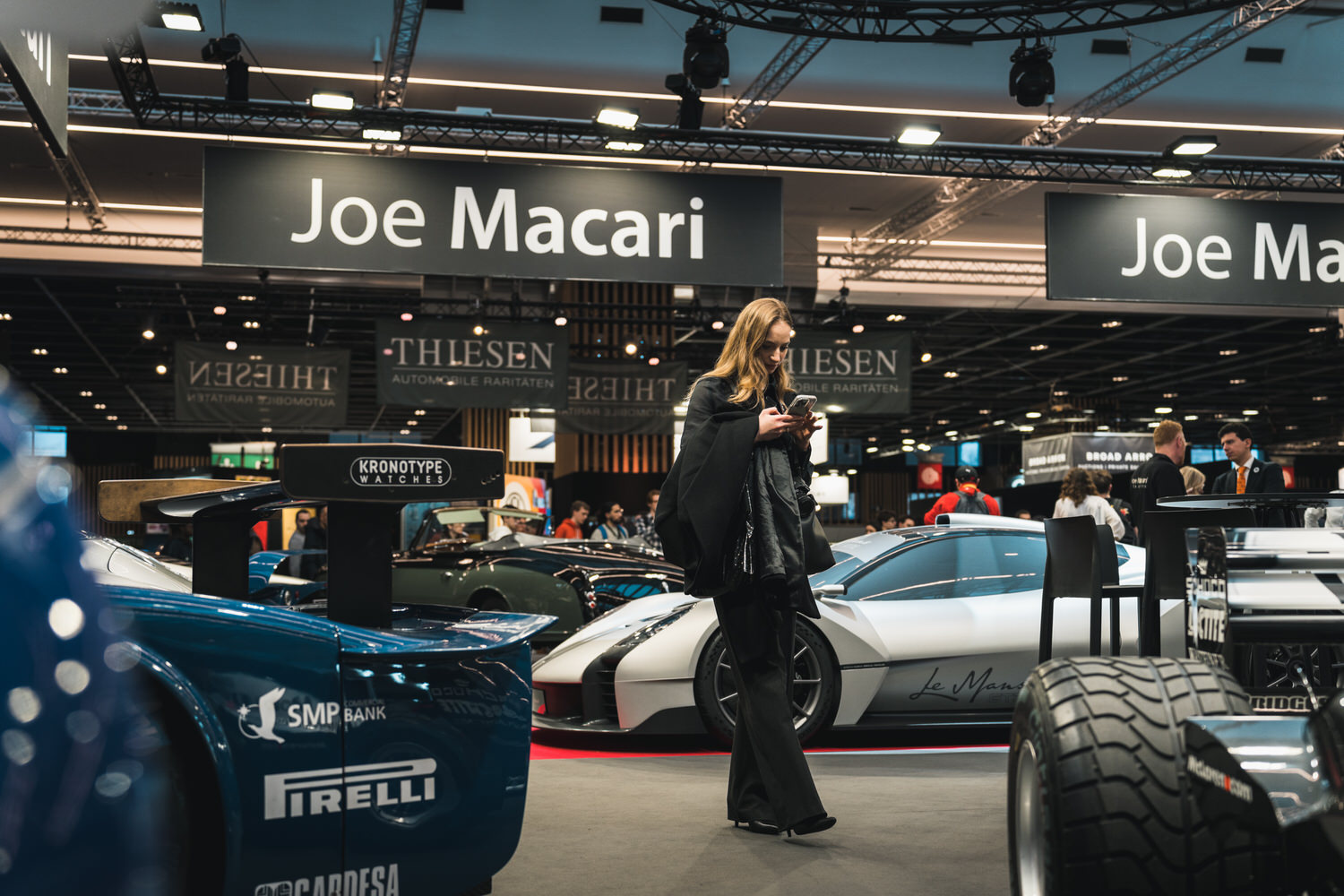
Hall 7.3 was already sensory overload — carbon fibre, polished aluminium, concours chrome reflecting overhead lights like jewellery counters for the dangerously wealthy. But then you hit the Macari stand, and suddenly everything else feels like warm-up acts.
Macari didn’t just arrive in Paris. They invaded it. Roughly 17 proper heavy hitters made the trip across the Channel, and not a single one was filler. And what immediately stood out was the theme: motorsport, motorsport, and more motorsport. The vast majority of the stand was built around cars born for circuits, pit lanes and podium ceremonies. Only a very small handful of the cars they brought were ever intended primarily for road use — and even those felt like they had racing DNA running through their chassis.
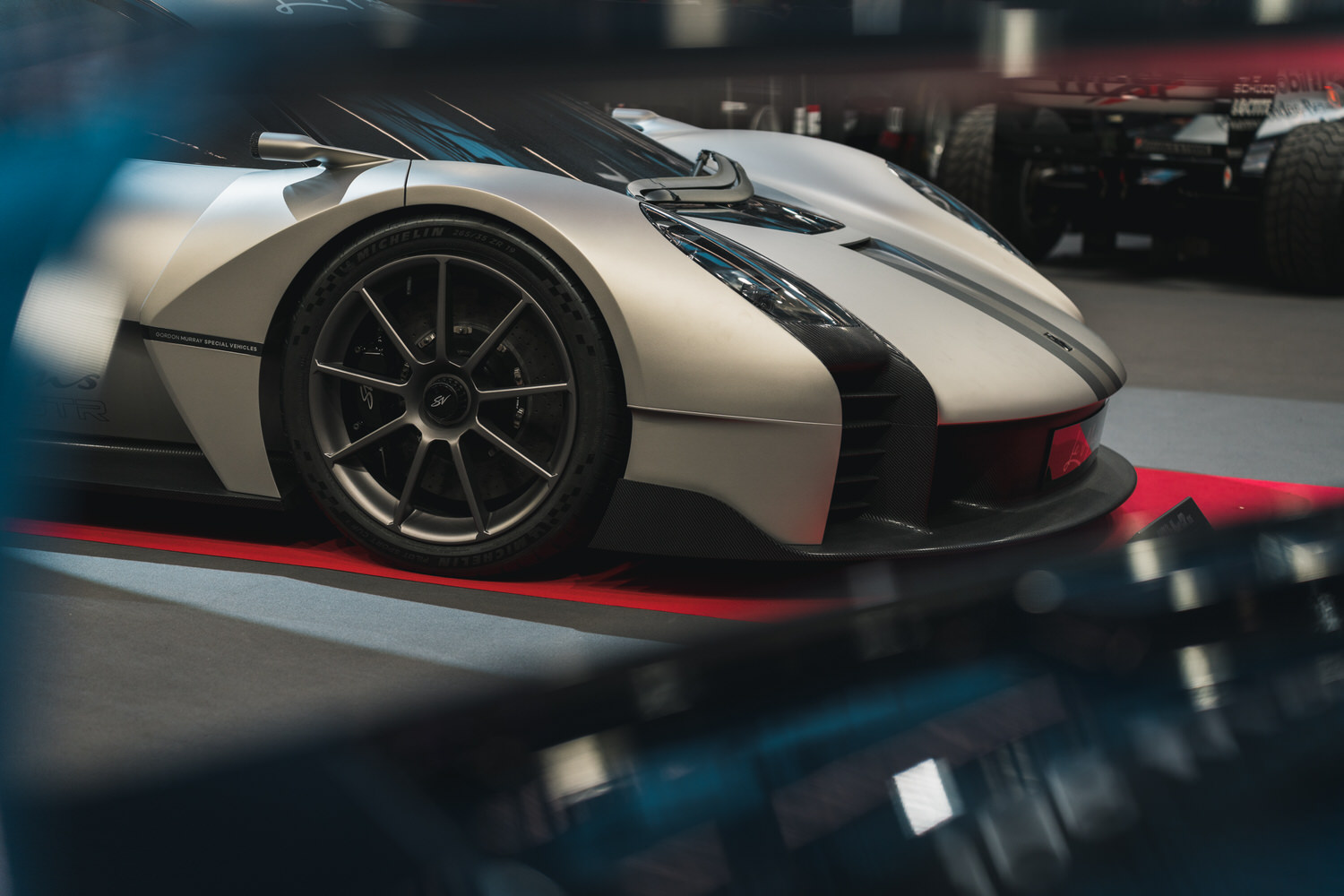
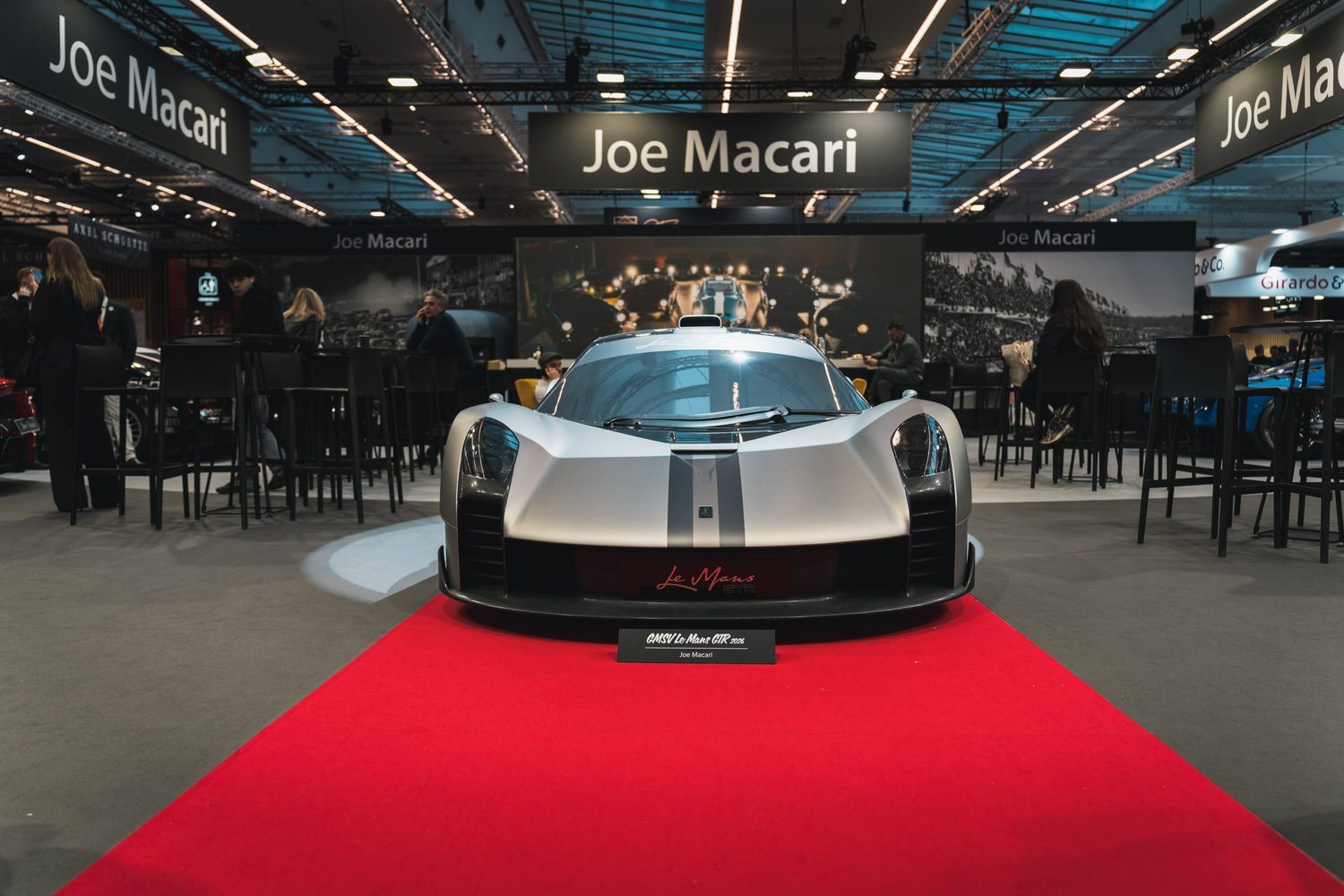
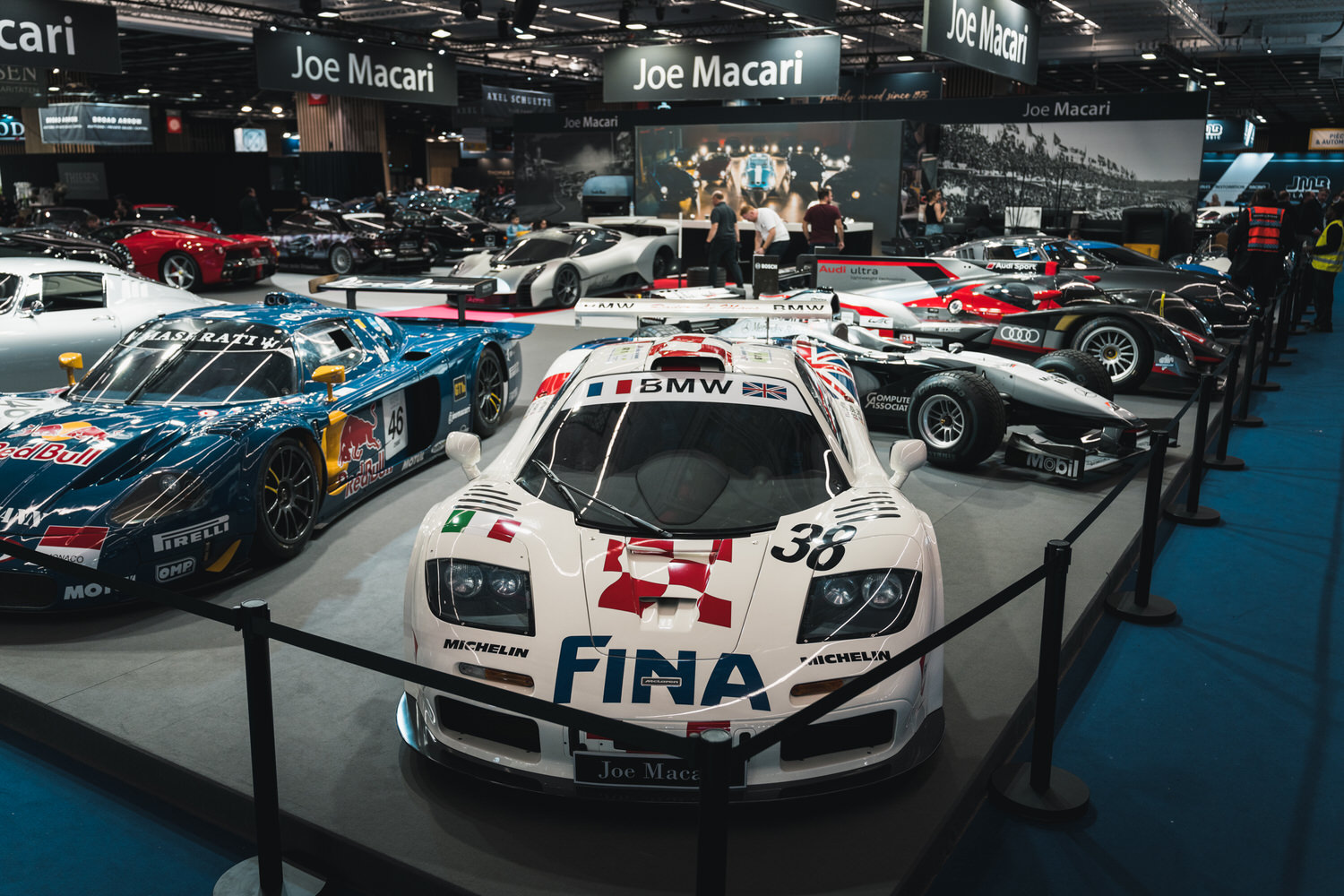
Front and centre sat the car that made me physically stop walking: the Maserati MC12 GT1. Not a tribute. Not a replica. The real, homologation-rule-bending, championship-crushing monster that helped dominate GT1 racing to the point where the rulebook basically waved a white flag. This particular 2005 chassis ran with JMB Racing until 2007, took race wins in period, and then — because legendary racing cars apparently don’t believe in retirement — came back to win the Endurance Racing Legends race at Le Mans Classic in 2025. Seeing it sitting still felt wrong, like spotting a caged tiger.
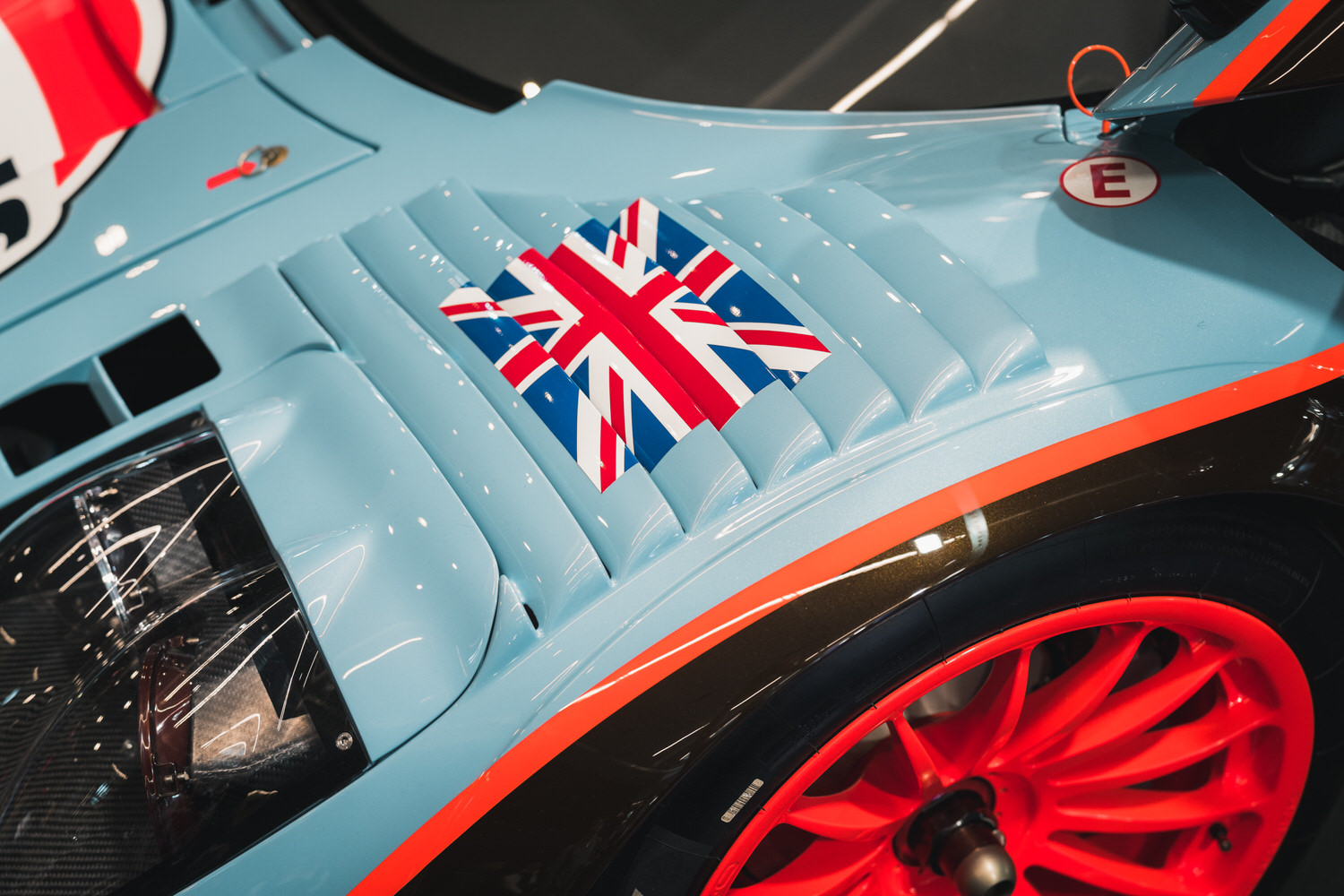
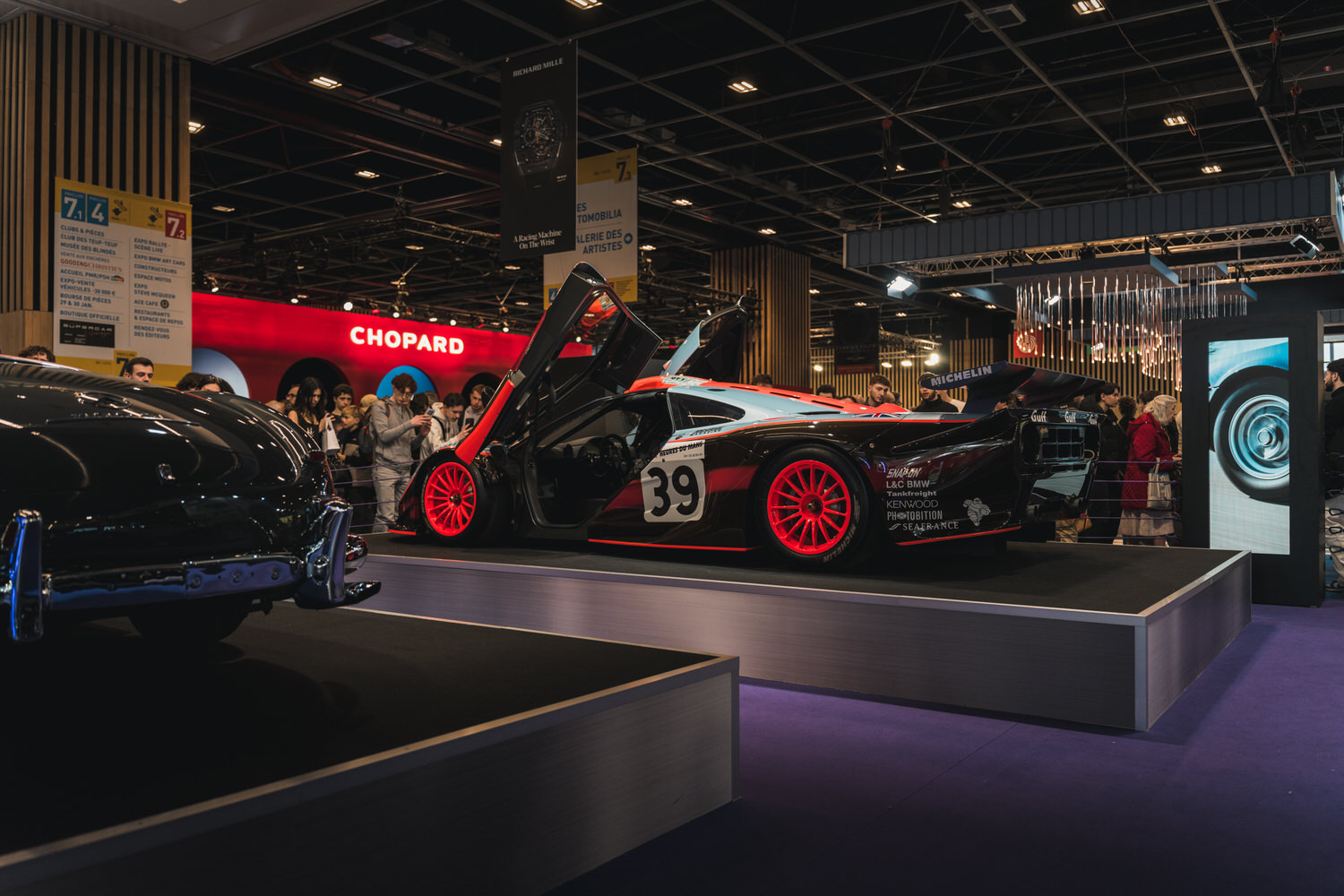
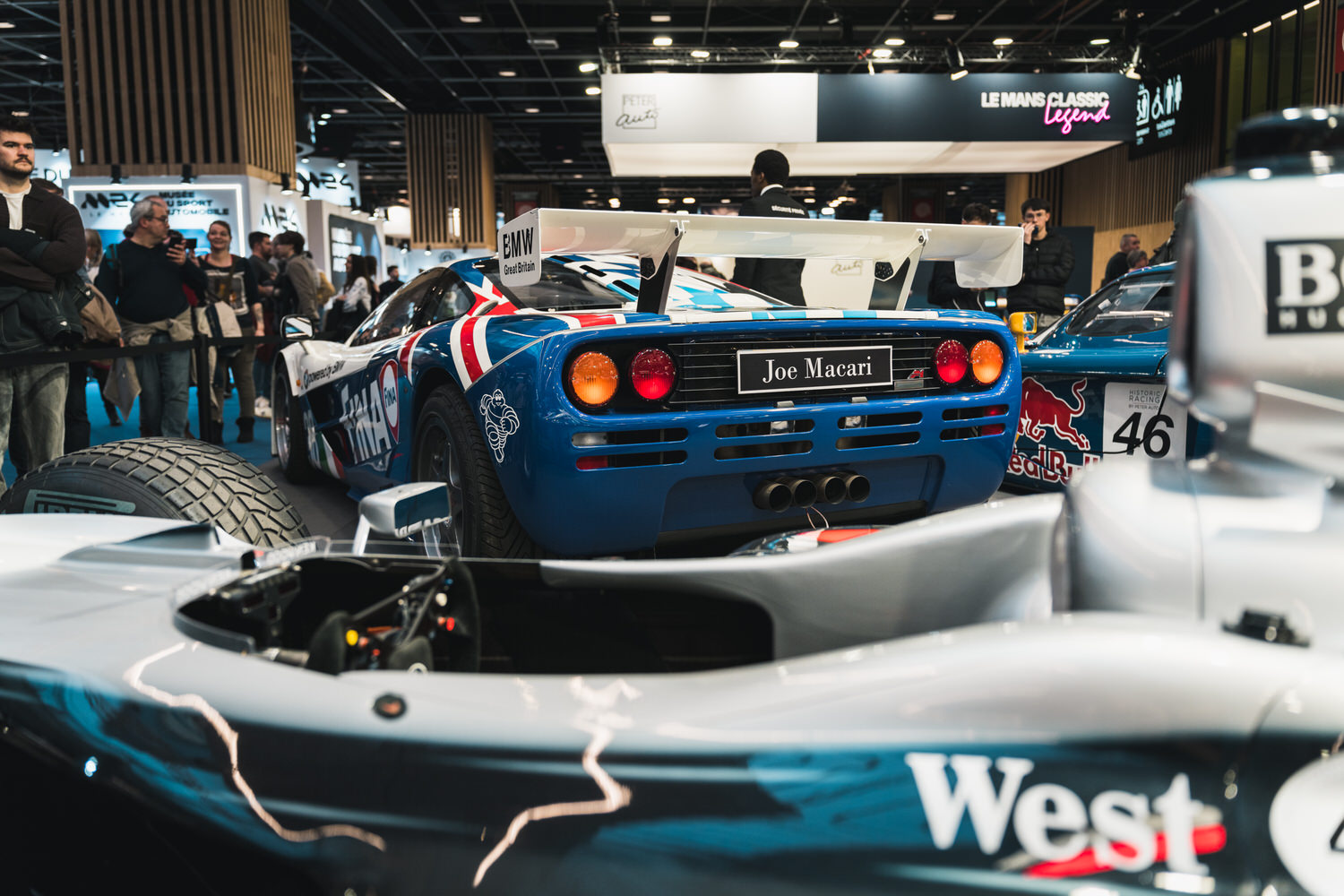
Just next to it, almost casually, was a 1996 McLaren F1 GTR — one of the final three of the nine 1996-spec cars ever built. Originally delivered to BMW Motorsport, it raced at Le Mans wearing full Team Bigazzi FINA colours. Today it’s road-converted by Lanzante, which means technically you could drive one of the most important race cars ever built to get coffee. The concept alone is mildly absurd.
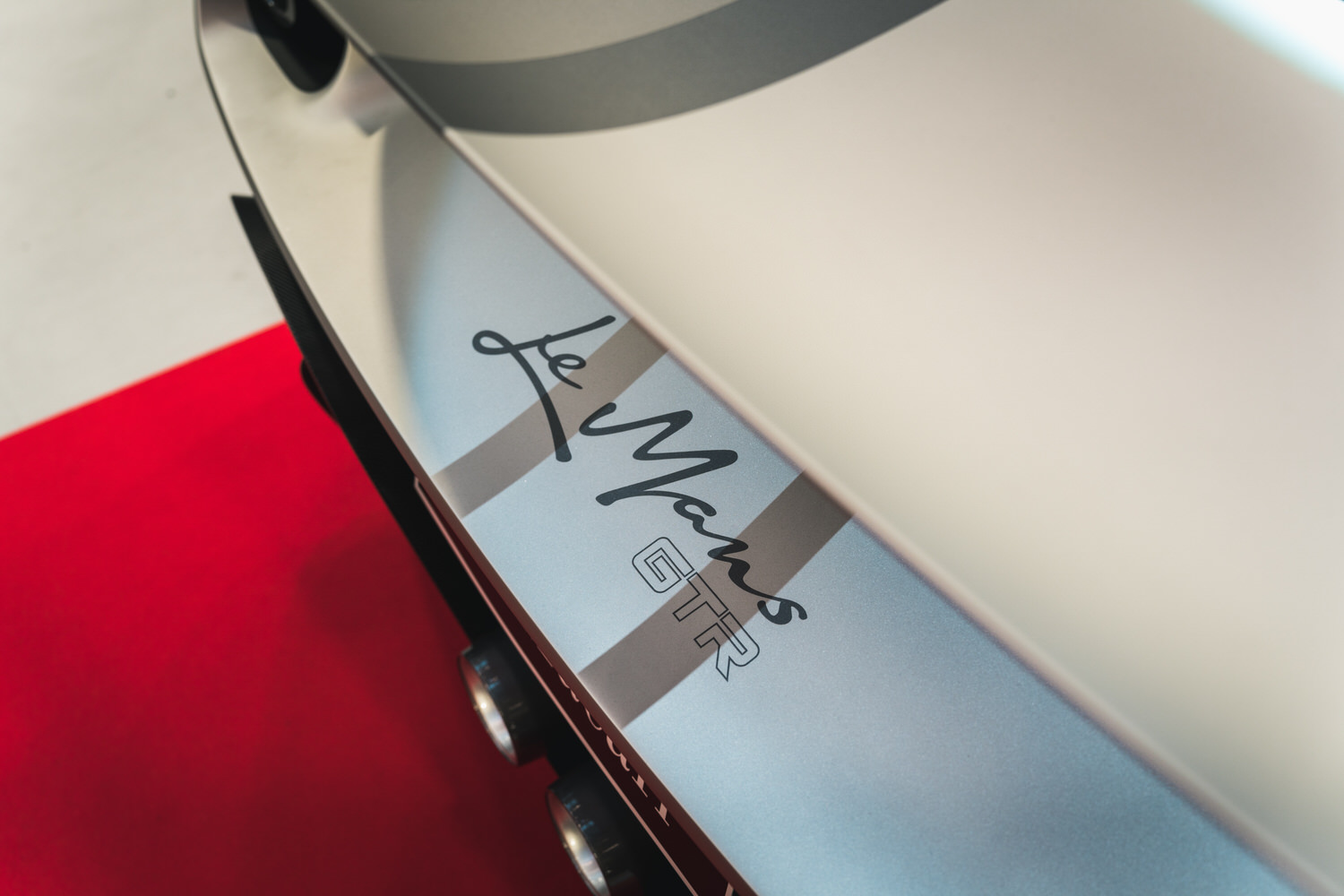
Then your eyes wander and you realise Macari also decided to casually bring a road-going Maserati MC12 — still one of the most visually dramatic hypercars ever made. In the center of their stand sat something that looks like it escaped from the future: the Gordon Murray T.50s Le Mans GTR. Central driving position. Manual gearbox. Naturally aspirated V12. 12,100rpm. It’s less “car” and more “mechanical opera singer that screams instead of sings”.
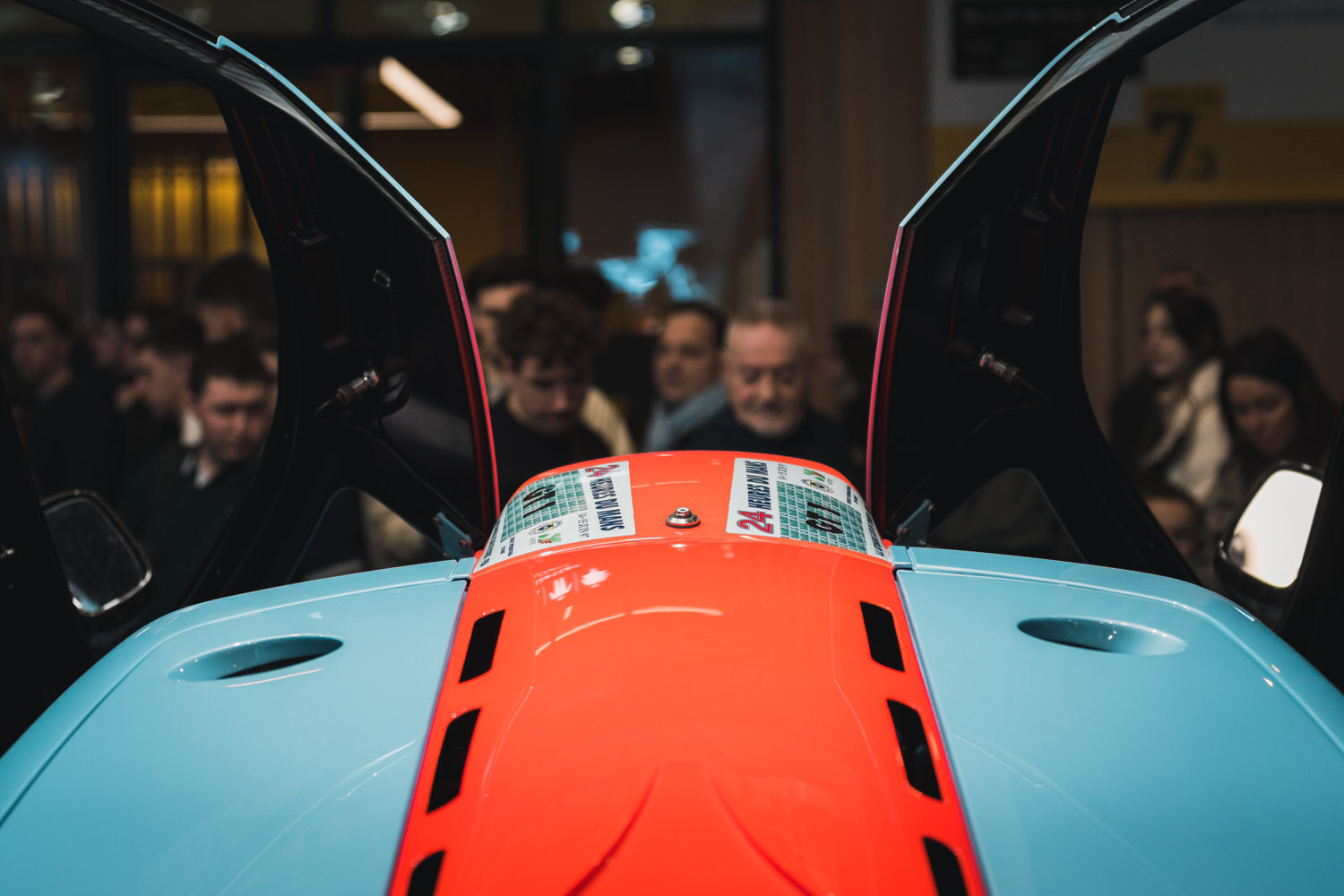
And just in case you thought the stand might calm down, along comes the modern endurance prototype insanity: the 2026 Ford GT Mk IV. Track only. Long-tail body. Full carbon everything. Around 800bhp from the EcoBoost V6. Only 67 cars will ever exist, marking Ford’s 1967 Le Mans win. It looks less like a car and more like a threat.
But Macari understands contrast. Because sitting there with quiet confidence was the 1954 Bentley R-Type Continental Park Ward Drophead Coupé — one of just four built, and the actual 1954 Paris Auto Salon show car. If the race cars were adrenaline, this was champagne and Savile Row tailoring.
And then — because subtlety was clearly banned from the stand — there was a 2011 Audi R18 TDI Ultra LMP1 works car. The sort of machine built purely to win Le Mans and ruin everyone else’s weekend. Driven by absolute legends, pole at Sebring, and one of only a handful still in existence.
What made the stand special wasn’t just the cars. It was the feeling that every single one of them had been chosen with intent. Not just expensive. Not just rare. Important. The kind of cars that change rulebooks, start design revolutions, or make engineers in rival teams quietly panic.
Some dealers show stock. Joe Macari staged a motorsport museum — one where almost everything still looks ready to race.
Simon Kidston — The Man Who Casually Sells GTOs
Although no Ferrari 250 GTO was present, then there was Simon Kidston, whose stand is one of those places where you suddenly become very aware of your bank balance… and how comically inadequate it is.
The Geneva-based dealer — who has been known to introduce himself with the wonderfully disarming line:
“Hi, my name is Simon Kidston. I can sell you a Ferrari 250 GTO.” — was also quietly celebrating 20 years in business. And judging by the stand, business is going rather well.
Kidston doesn’t really “display” cars. He curates them. Walking onto his stand feels less like visiting a dealer and more like stepping into a travelling museum of automotive royalty — except everything technically has a price tag, even if nobody is crass enough to ask.
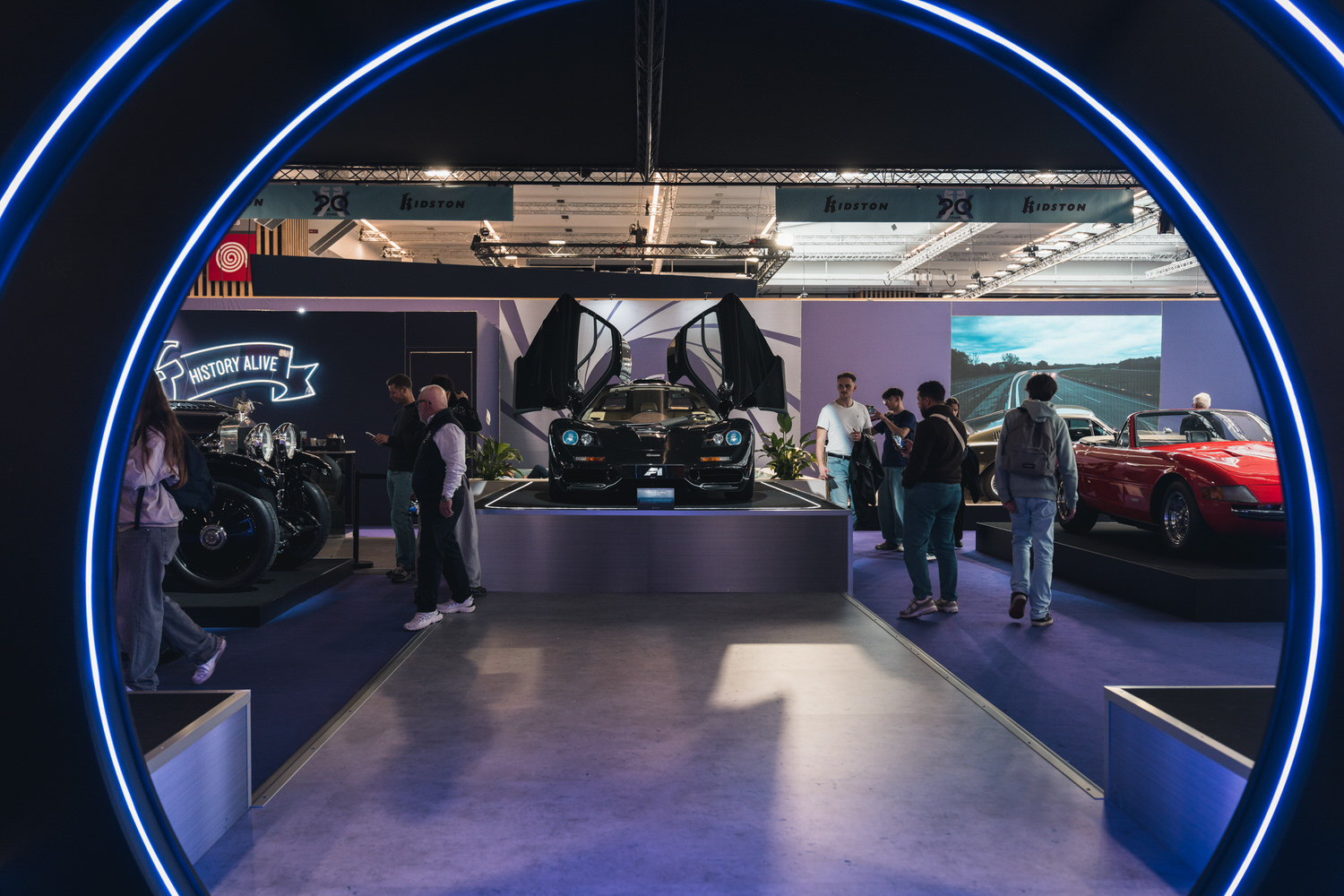
As always, the presentation was theatrical without being flashy. The rumour circulating the hall was that Kidston had sourced original sand for the display of his Aston Martin DBS Vantage from On Her Majesty’s Secret Service. Whether that was true is impossible to verify — and honestly, nobody wanted to ruin the story by checking. When someone brings a Bond movie car, you simply nod respectfully and move on.
And then you look around and realise the cars themselves are doing most of the talking.
Highlights included the kind of lineup that makes grown collectors go slightly quiet:
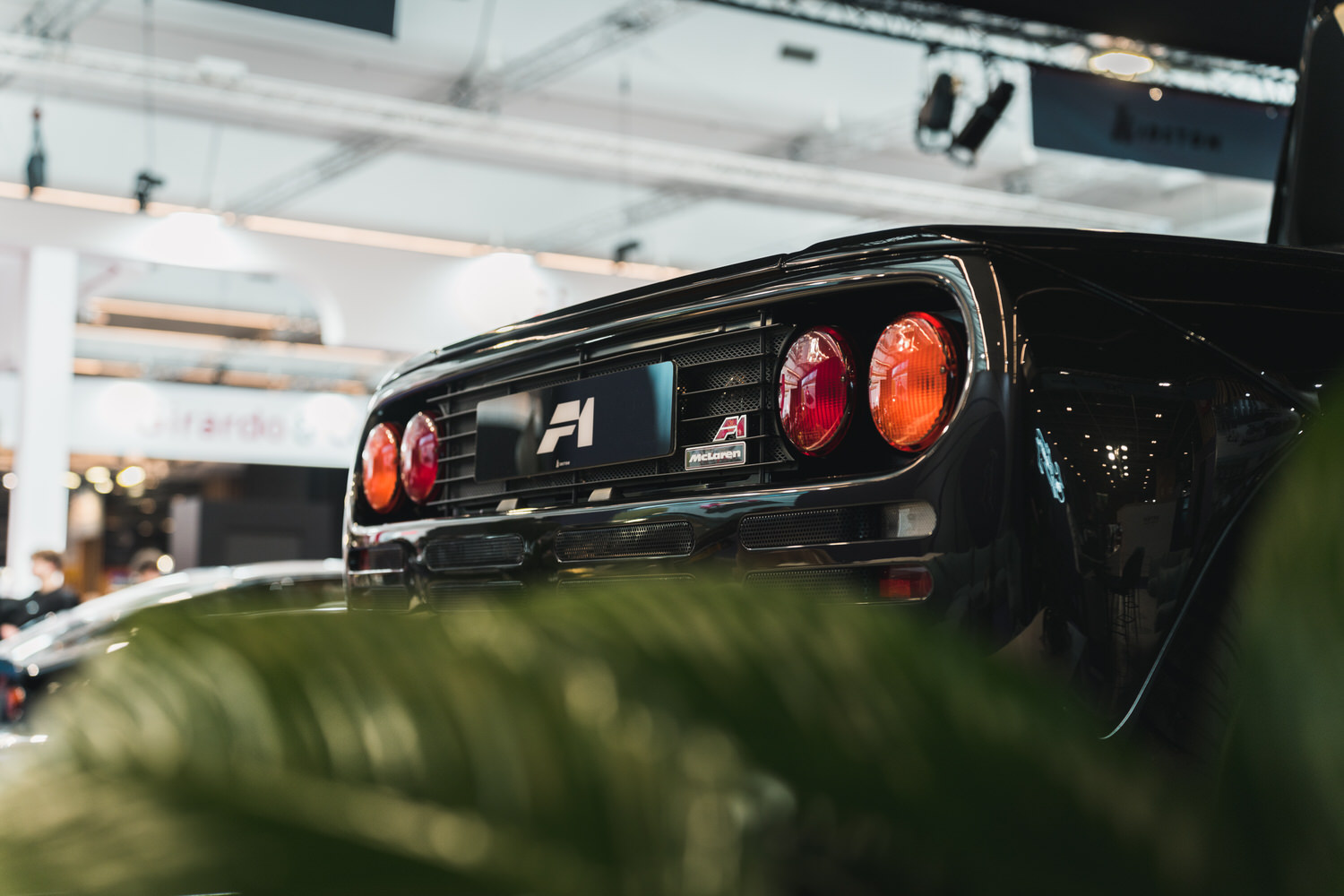
- McLaren F1 (#007) — Yes, that number. And yes, it’s exactly as mythical in real life as you think.Chassis 007 was the seventh F1 production car built and one of 25 examples manufactured in 1994. It was configured with arguably the best exterior colour scheme for an F1: Jet Black (which included 10% metal flake).
In total, McLaren built just four Jet Black cars from the total production run of 64 units: chassis 005, 007, 015 and 072.
The first owner of chassis 007, reputedly a Saudi royal, also specified cream leather upholstery with a dark brown alcantara upper dash and brown carpet.
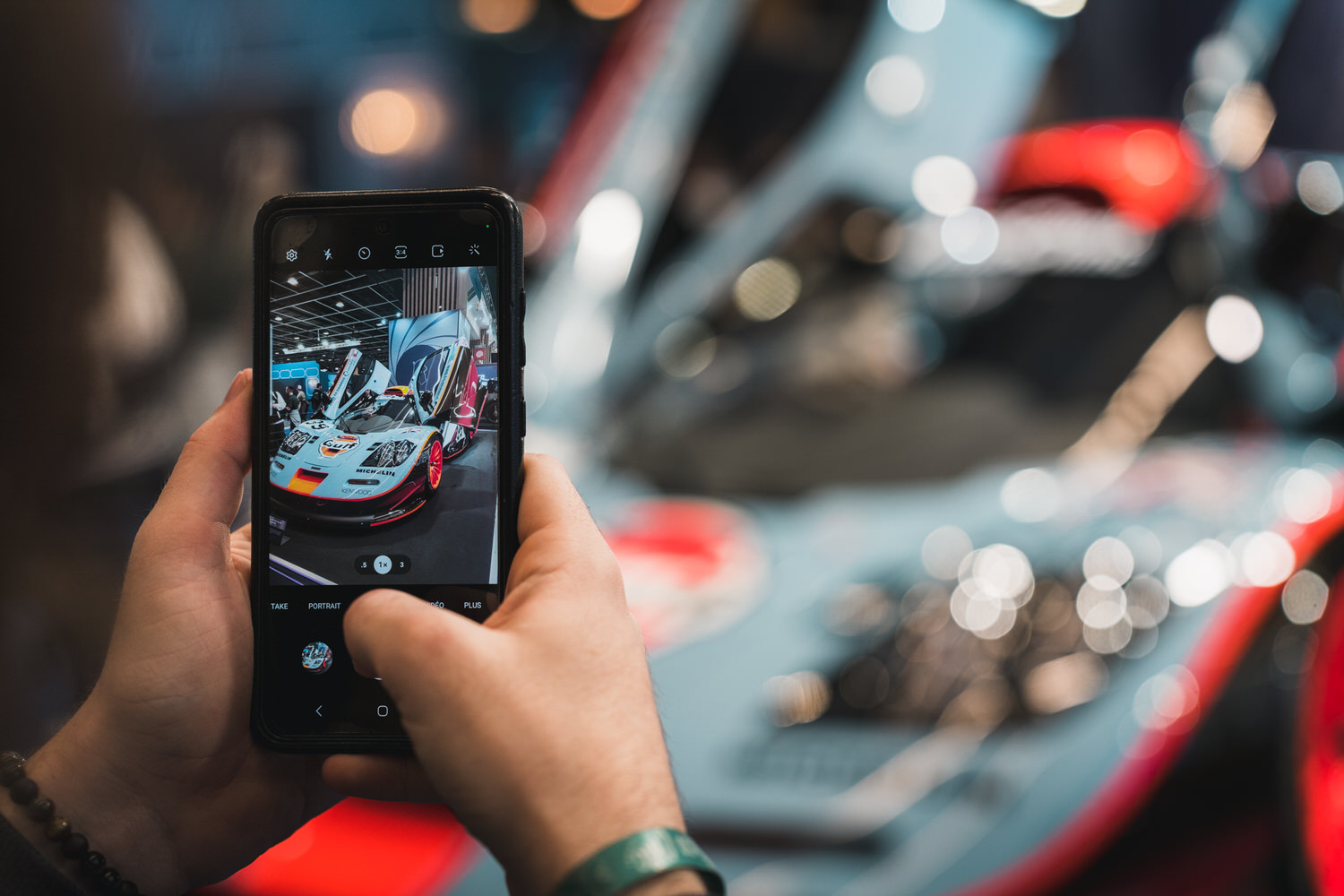
- McLaren F1 GTR LM (GTR 25R) — And this is where things got properly serious.This particular car underwent an 18-month restoration back in 2018, returning it to period-correct condition using pre-June 1997 components, and became the first F1 to receive an official McLaren Special Operations (MSO) authentication certificate — essentially McLaren itself saying: yes, this is the real deal.Highlighted by MSO itself when launching its F1 authentication programme, chassis 25R sits in absolutely pristine condition, wearing its iconic Gulf-Davidoff livery like it never left the grid. Despite being well over two decades old, it looks factory fresh — the sort of machine that makes modern hypercars feel slightly overcomplicated.Alongside legends like the Mercedes-Benz CLK GTR and Porsche 911 GT1, the F1 GTR Longtail has to rank among the best-looking GT race cars ever built. It’s all aggression, aero, and intent — a car designed purely to win races, not beauty contests… even though it accidentally won those too.
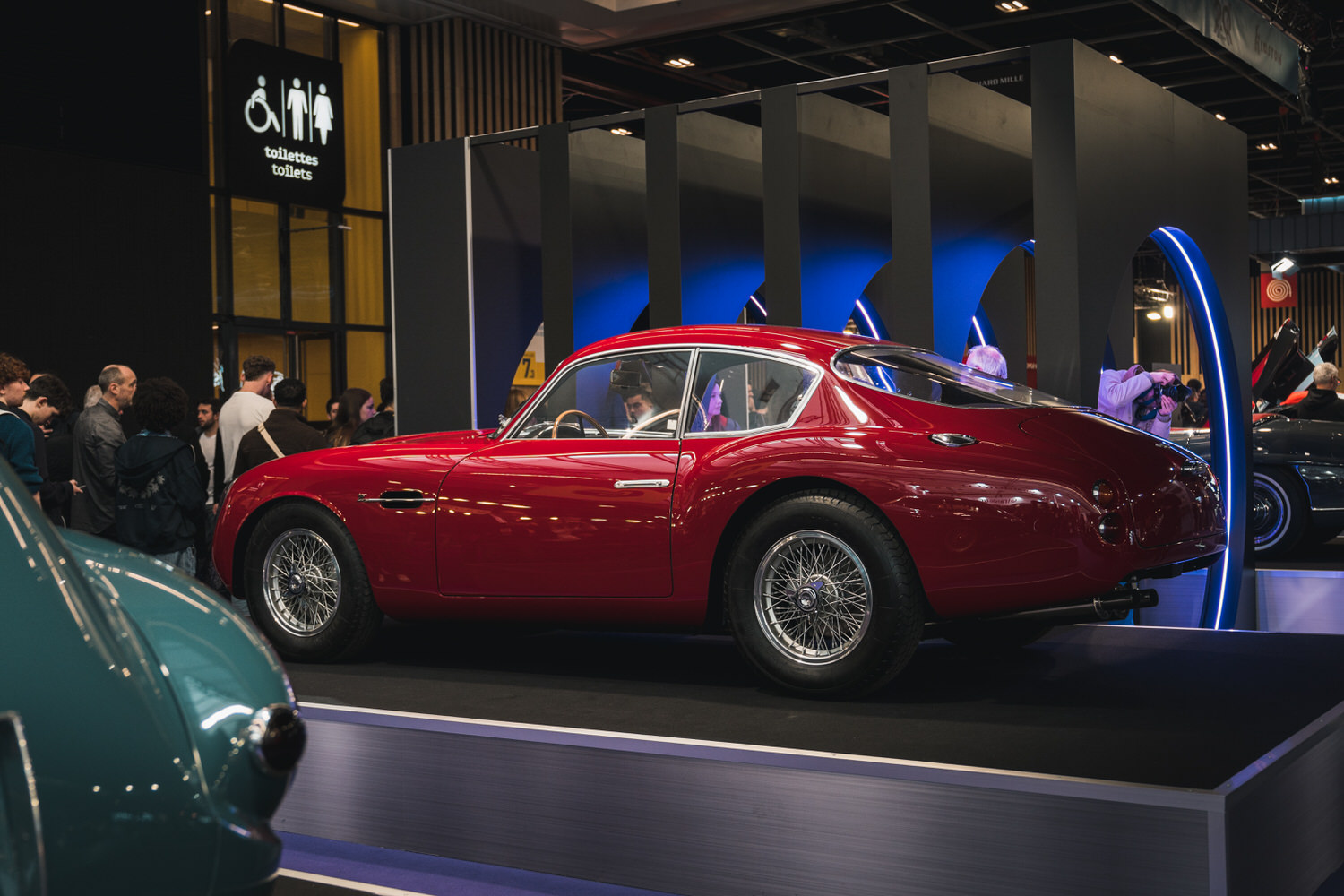
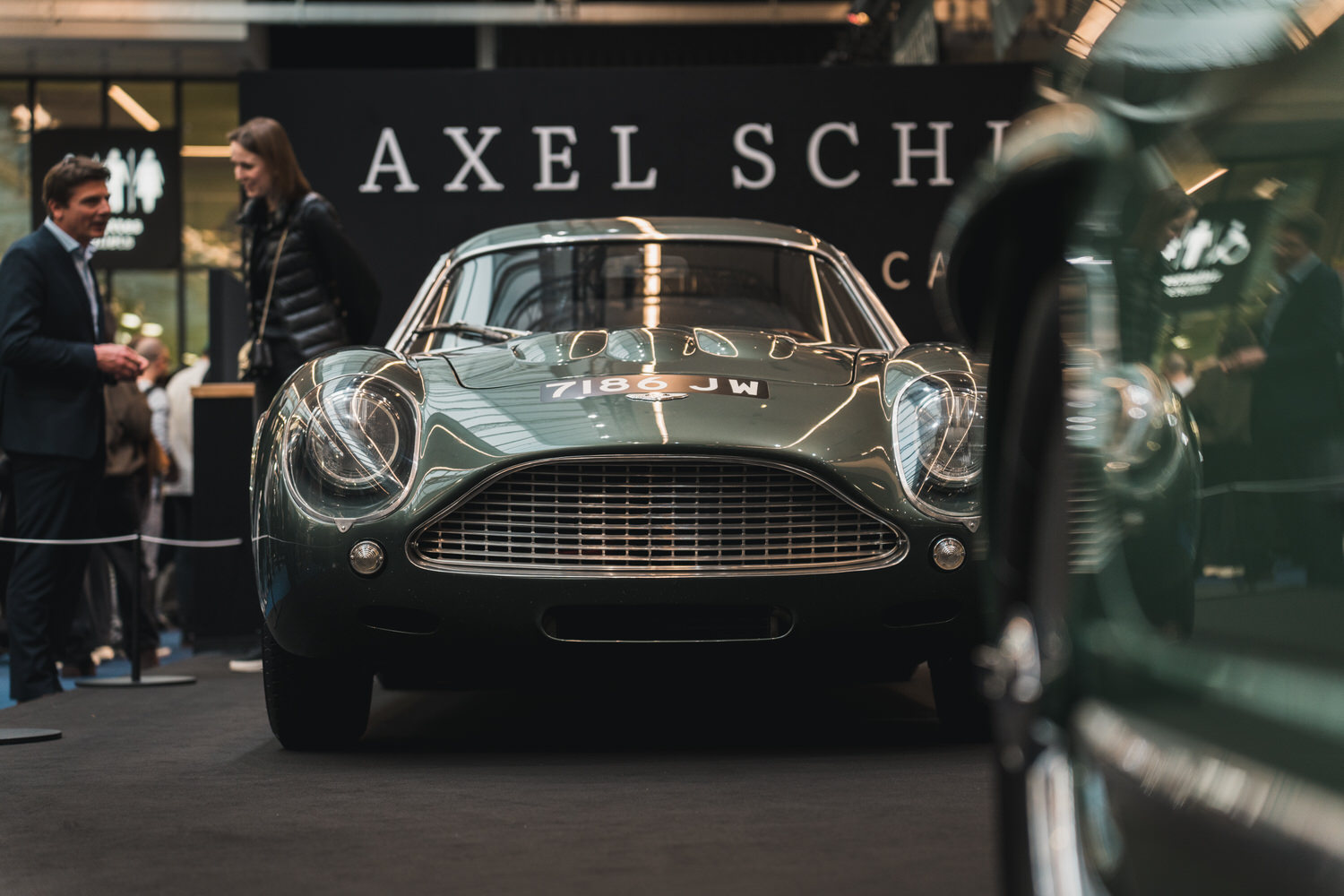
- Aston Martin DB4 GT Zagato — Possibly one of the most beautiful shapes ever drawn with a pencil.
- 1968 Aston Martin DBS Vantage Bond movie car — The automotive equivalent of cinematic royalty.
What makes the Kidston stand special is the emotional mix. These aren’t just historically important machines — they’re cars people grew up idolising on posters, VHS tapes, and late-night motorsport highlight reels. Cars that defined eras. Cars that made careers. Cars that made children decide, at age eight, that they were definitely going to be racing drivers (or at least very enthusiastic car journalists and photographers).
And somewhere between staring at a McLaren F1 and casually standing next to a DB4 GT Zagato, you stop thinking about value, auction results or provenance sheets. You just start counting childhood dreams per square metre — and the Kidston stand was dangerously high density.
Honorable Mentions — The Rest of the Madness
If the main dealer stands were jaw-dropping, the rest of the show was a veritable blur of automotive eye candy — too much to see in one go, and way too much to sum up properly. Let’s try anyway.
HK Engineering with one of only 29 Alloy Gullwings …freshly restored with a beautiful restoration book – you dont see the rarest of this legendary car very often…
JMB Classic leaned heavily into Le Mans history, from BMW’s very first Le Mans prototype, the V12 LM, to Pescarolo’s audacious prototypes, and the legendary Peugeot 908 HDi FAP V12 that finally triumphed at La Sarthe. Topping it off, a Bugatti Centodieci — one of just ten in existence — completed their stand. I barely scratched the surface here, but it was enough to make any endurance racing fan weak at the knees.
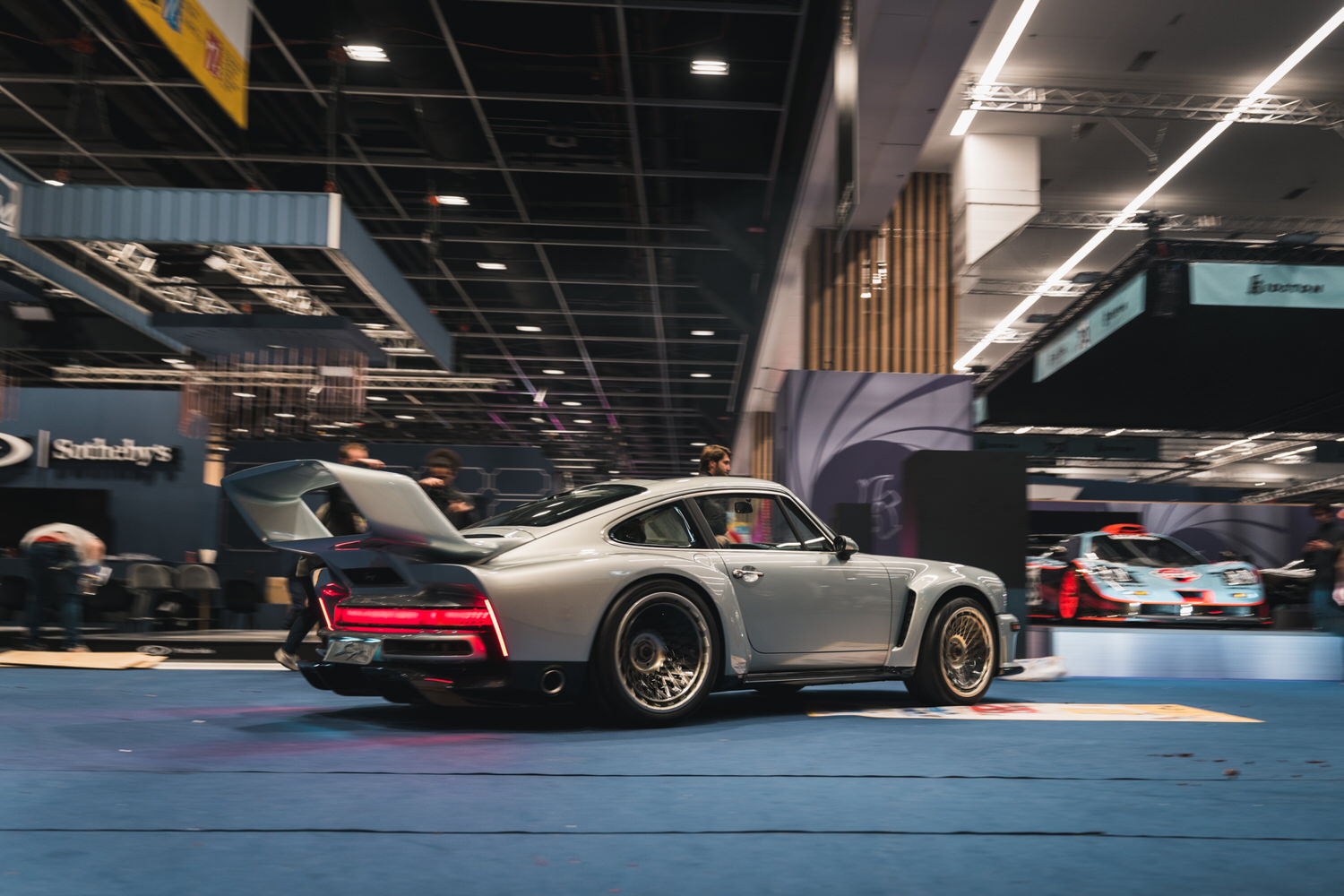
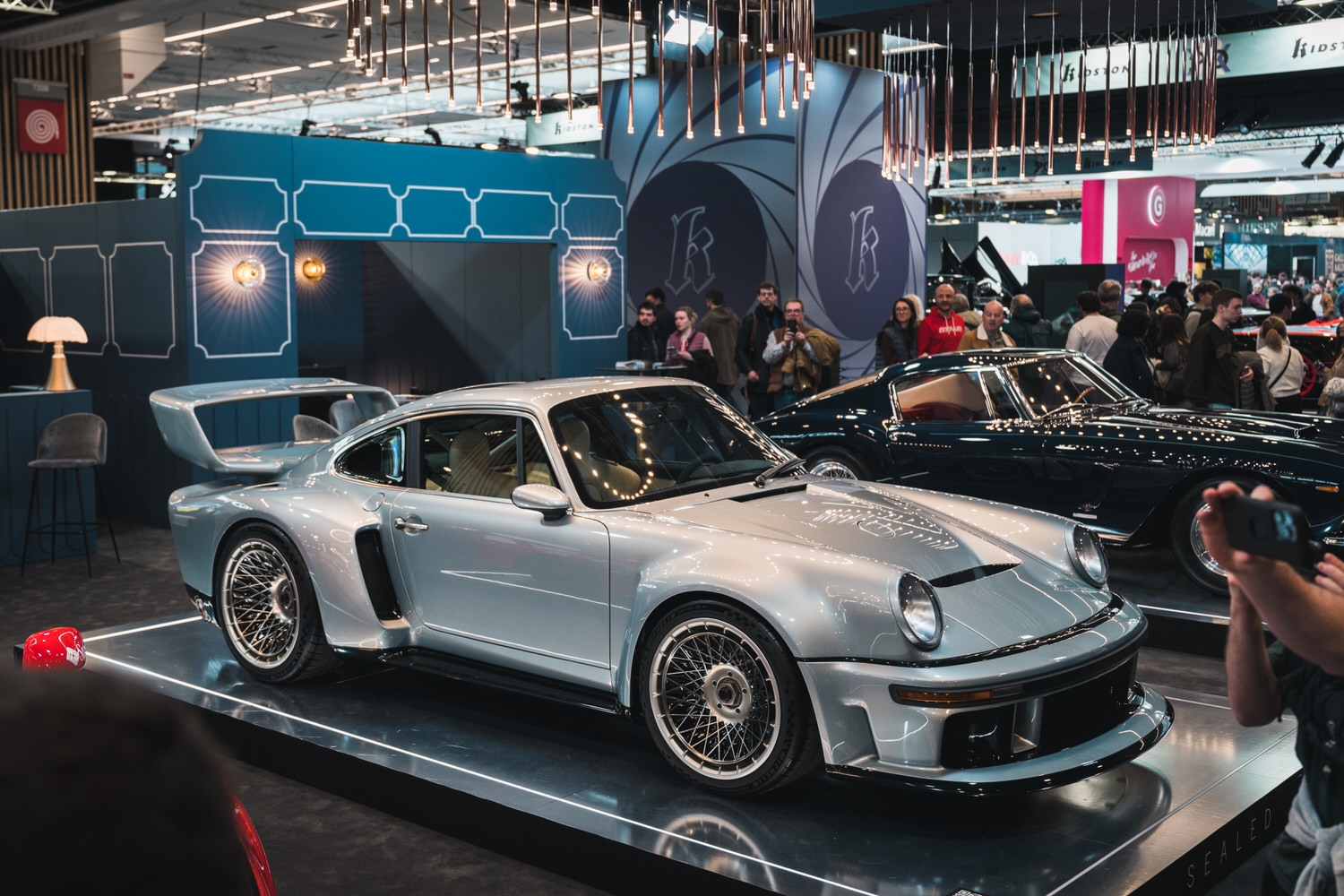
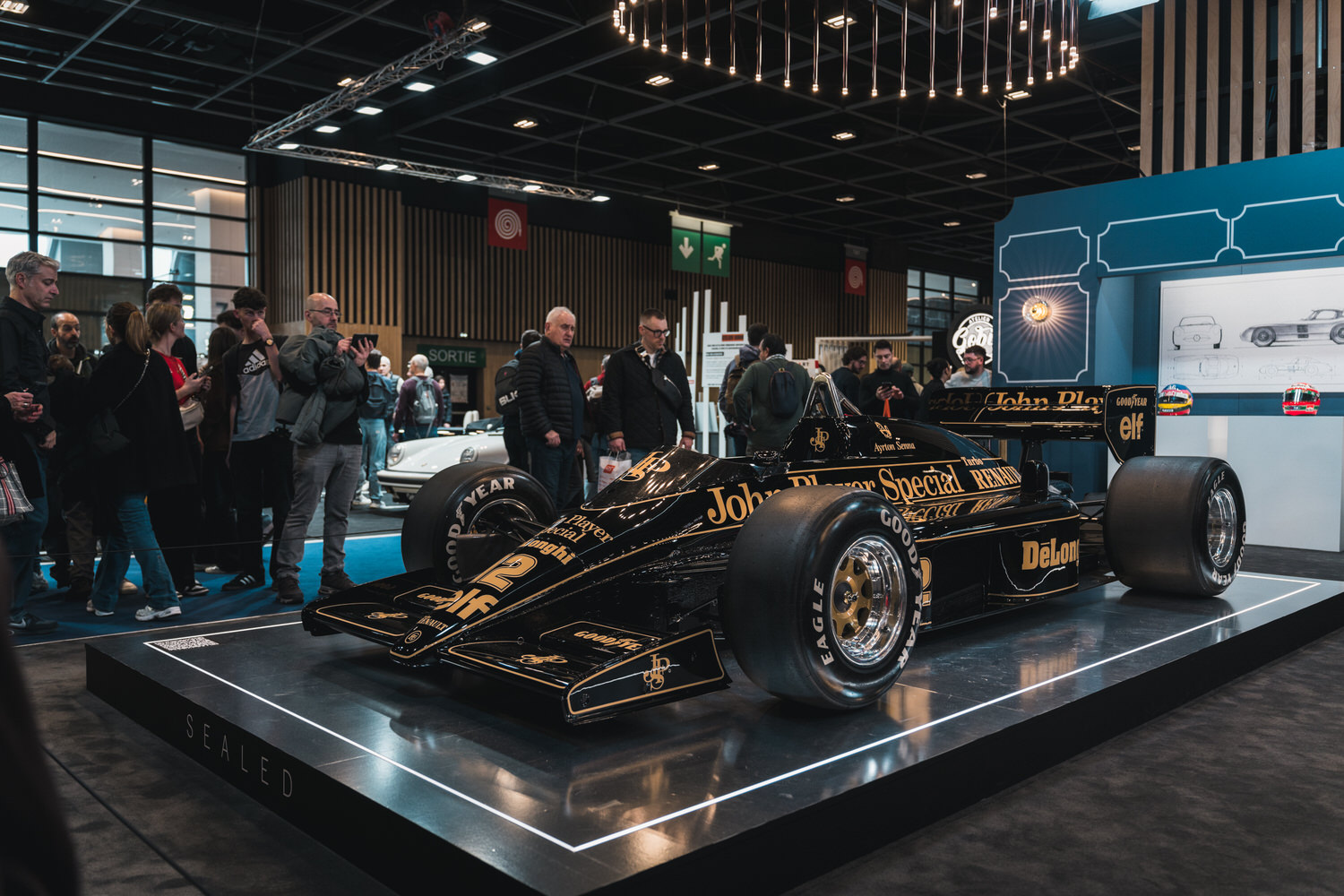
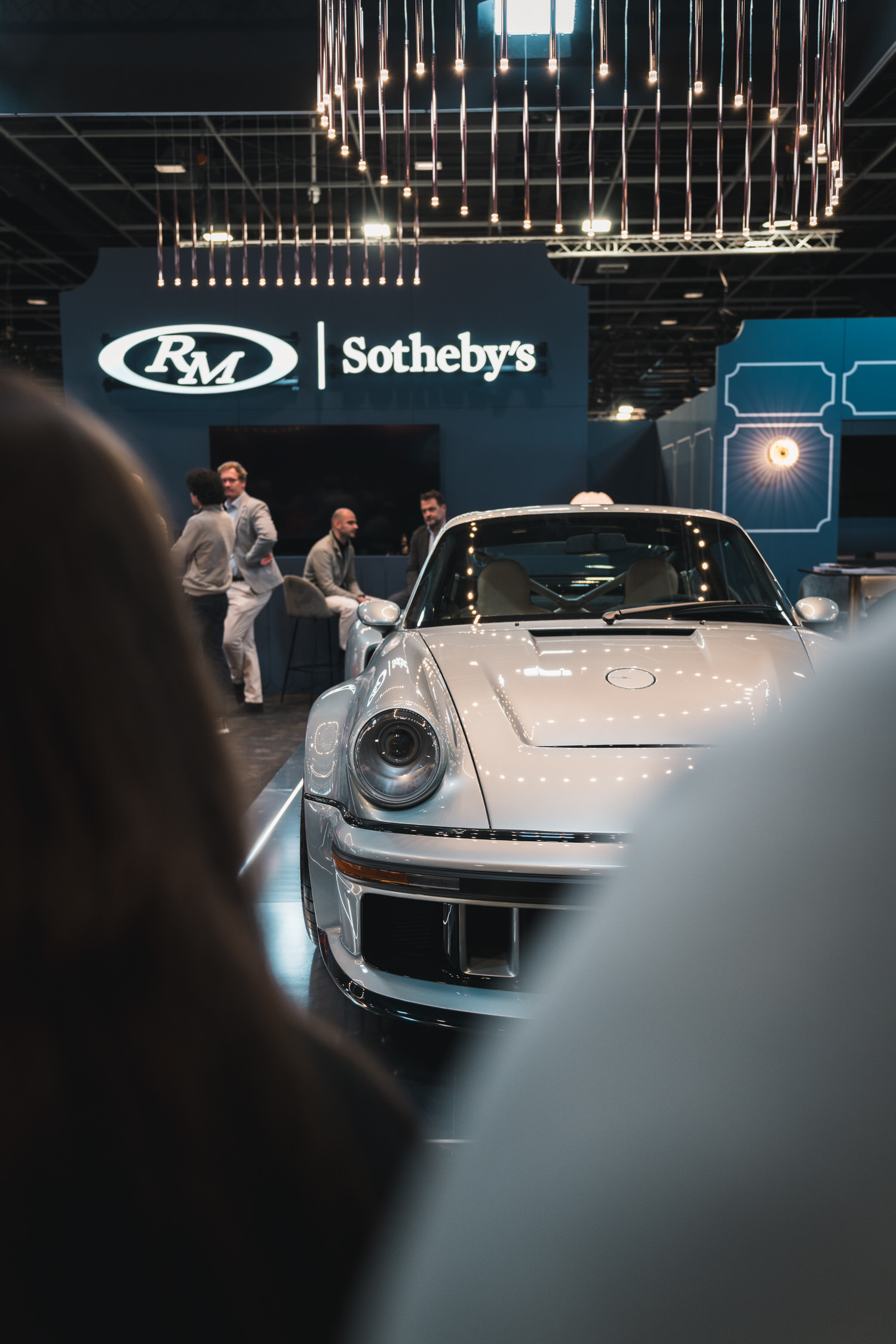
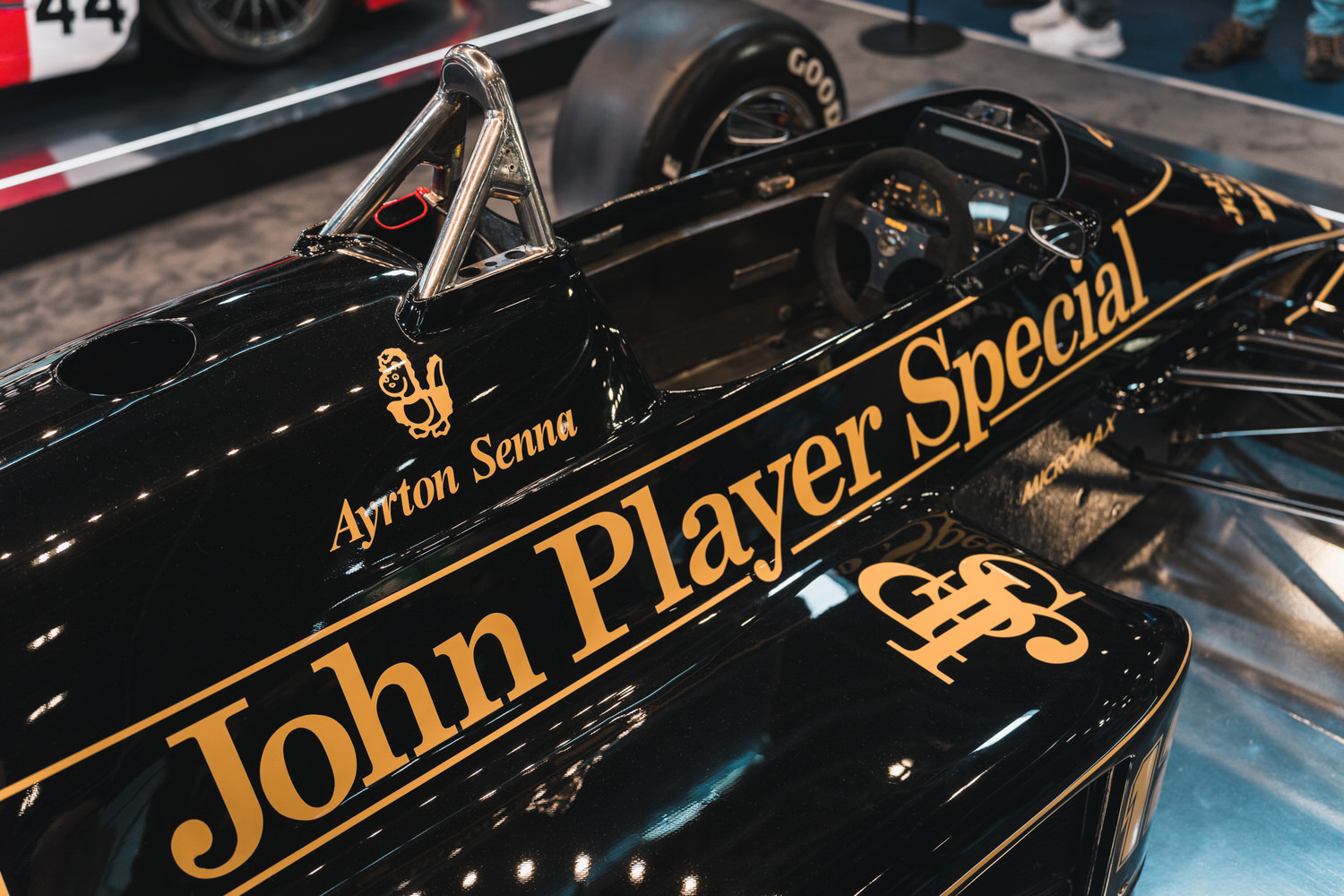
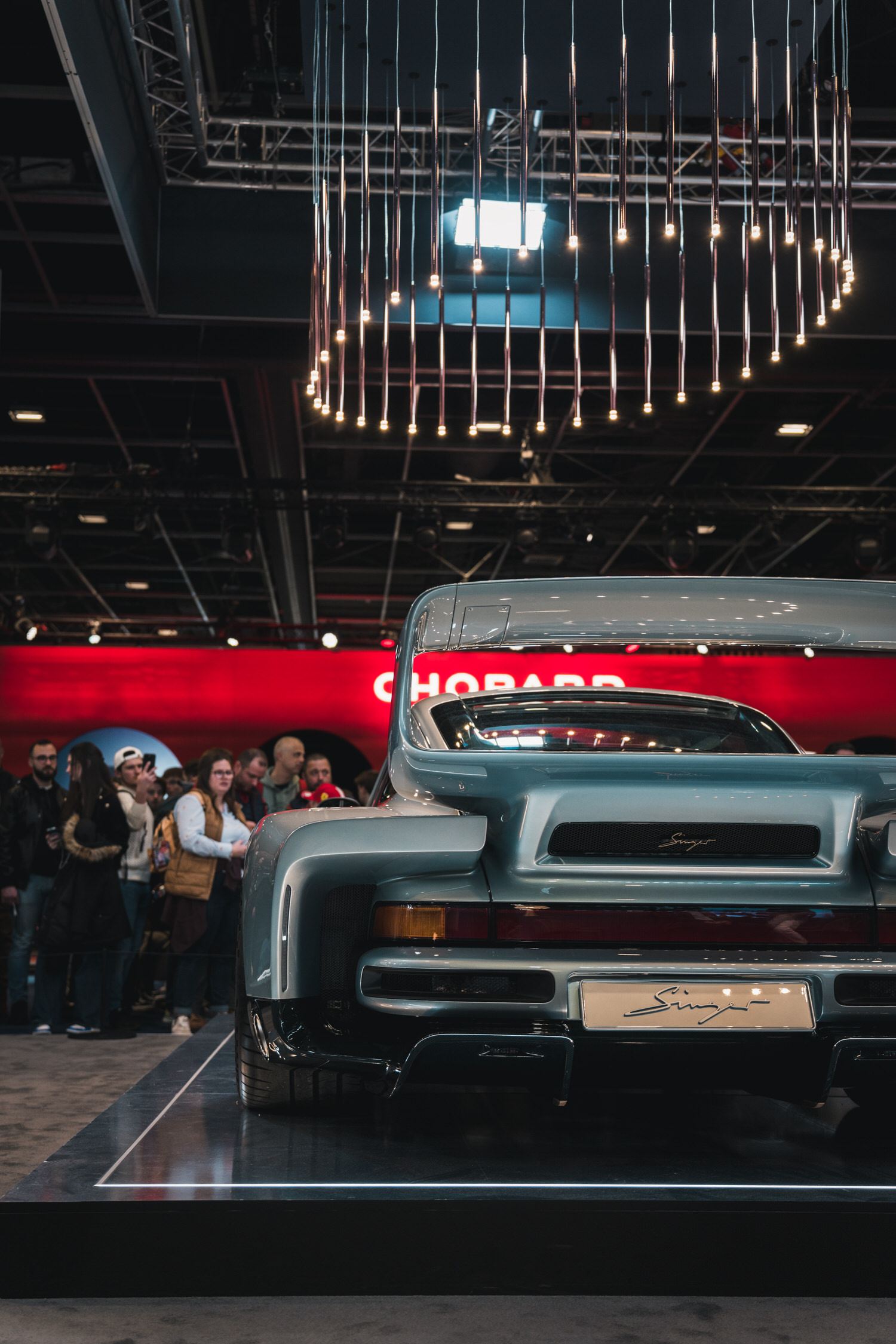
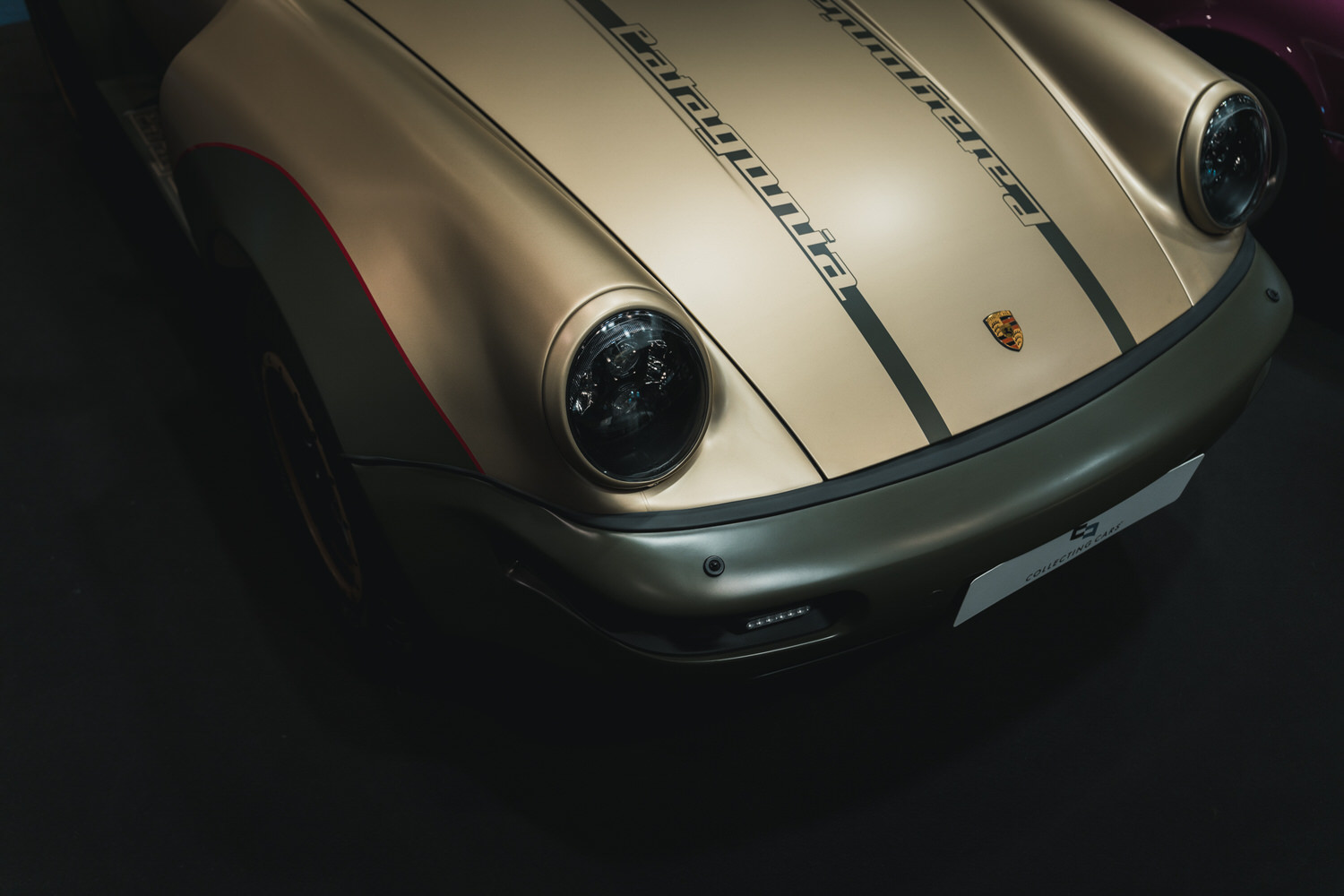
RM Sotheby’s private sales condensed over $40 million into just four cars: a 1997 McLaren F1 GTR, Ayrton Senna’s 1986 Lotus 98T in John Player Special livery, a 1962 Ferrari 250 GT SWB Berlinetta, and a 1990 Porsche 911 reimagined by Singer – The Sepang Commission, the first-ever DLS Turbo Services customer project. Four cars, four dreams, four impossible-to-ignore heart-stoppers.
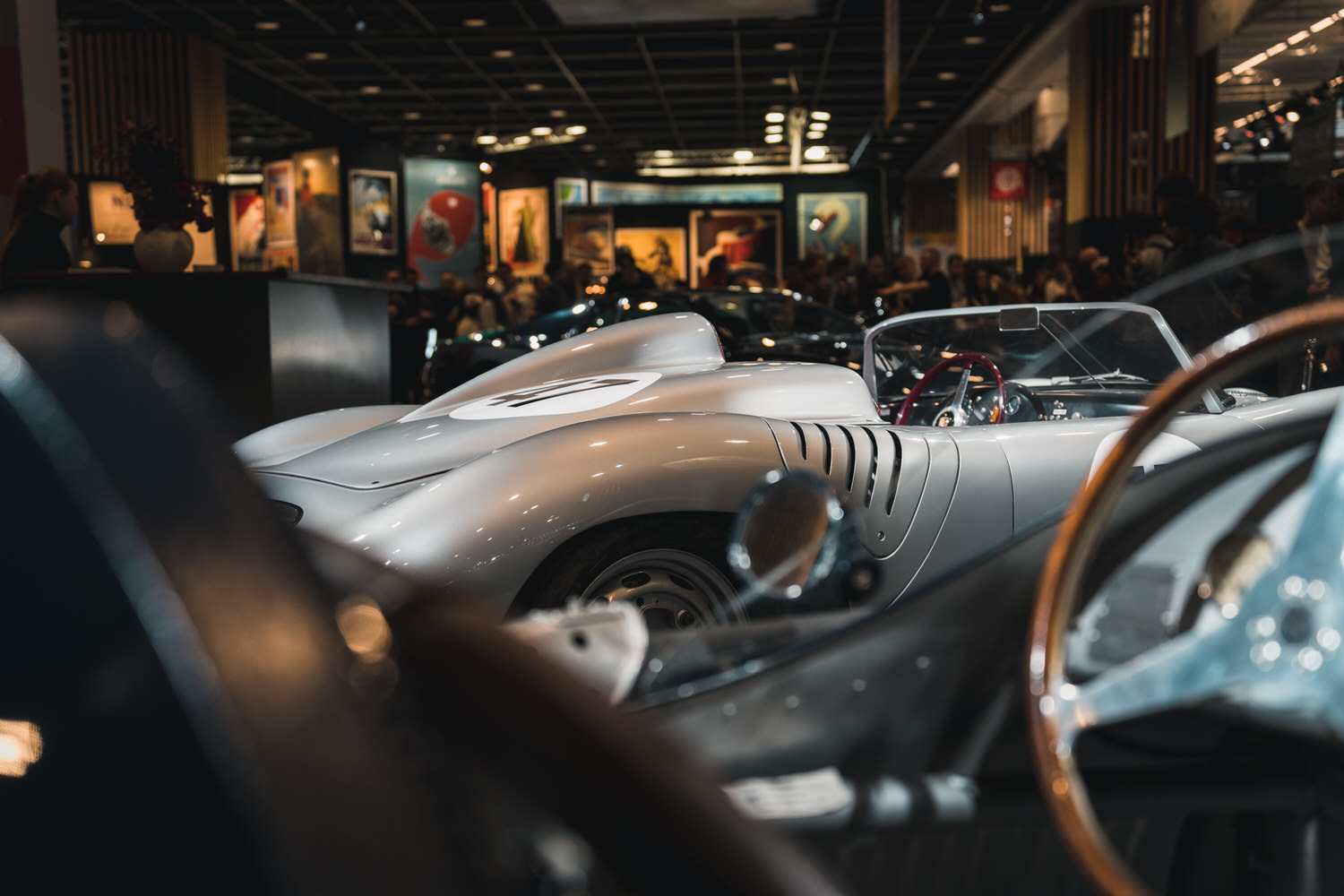
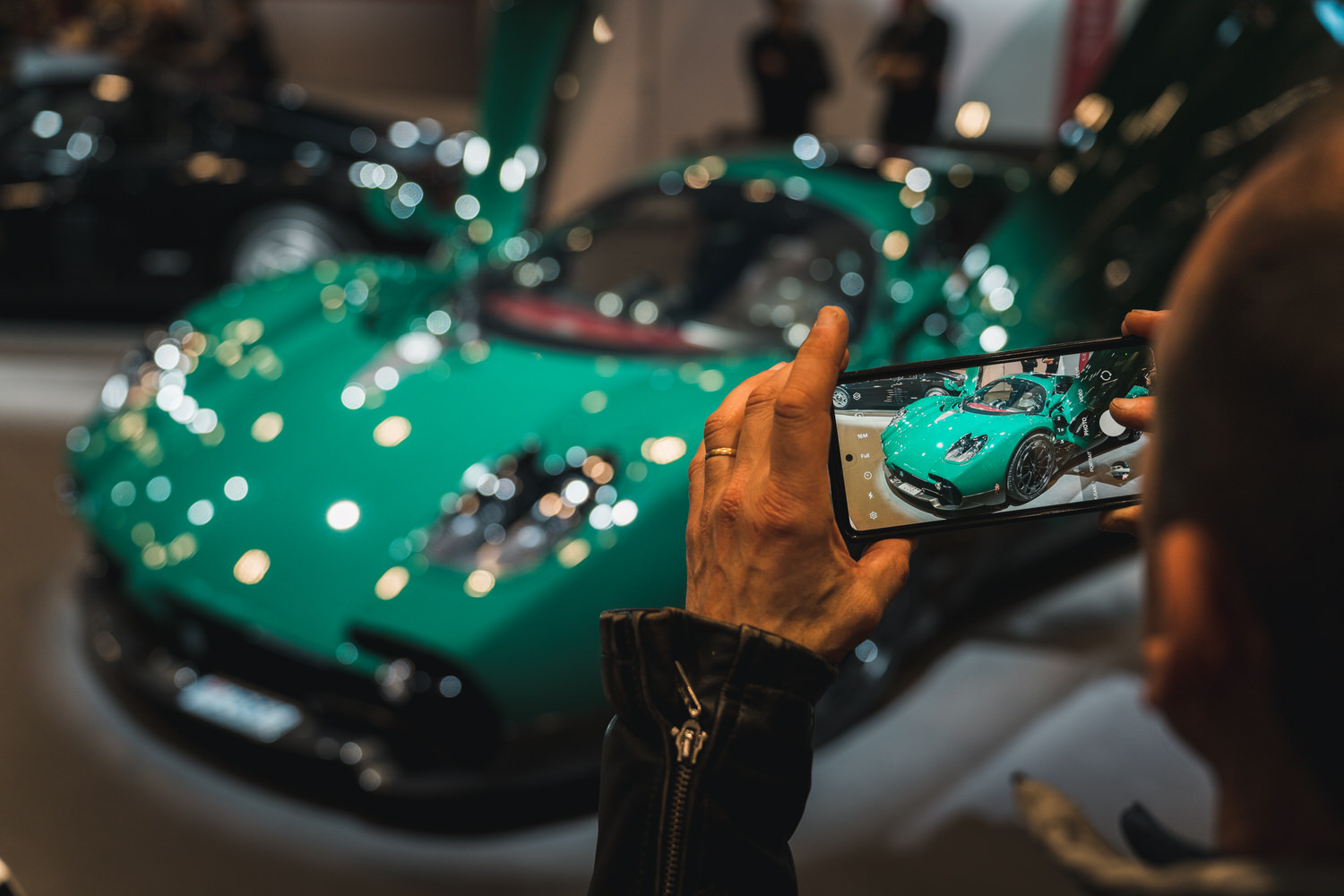
Gooding & Co. brought a mix of historic and contemporary brilliance: a 1961 Porsche 718 RS 61 Spider hillclimb car, a 2024 Pagani Utopia, and the immortal Maserati 250F #2504 — proof that Italian engineering never goes out of style.
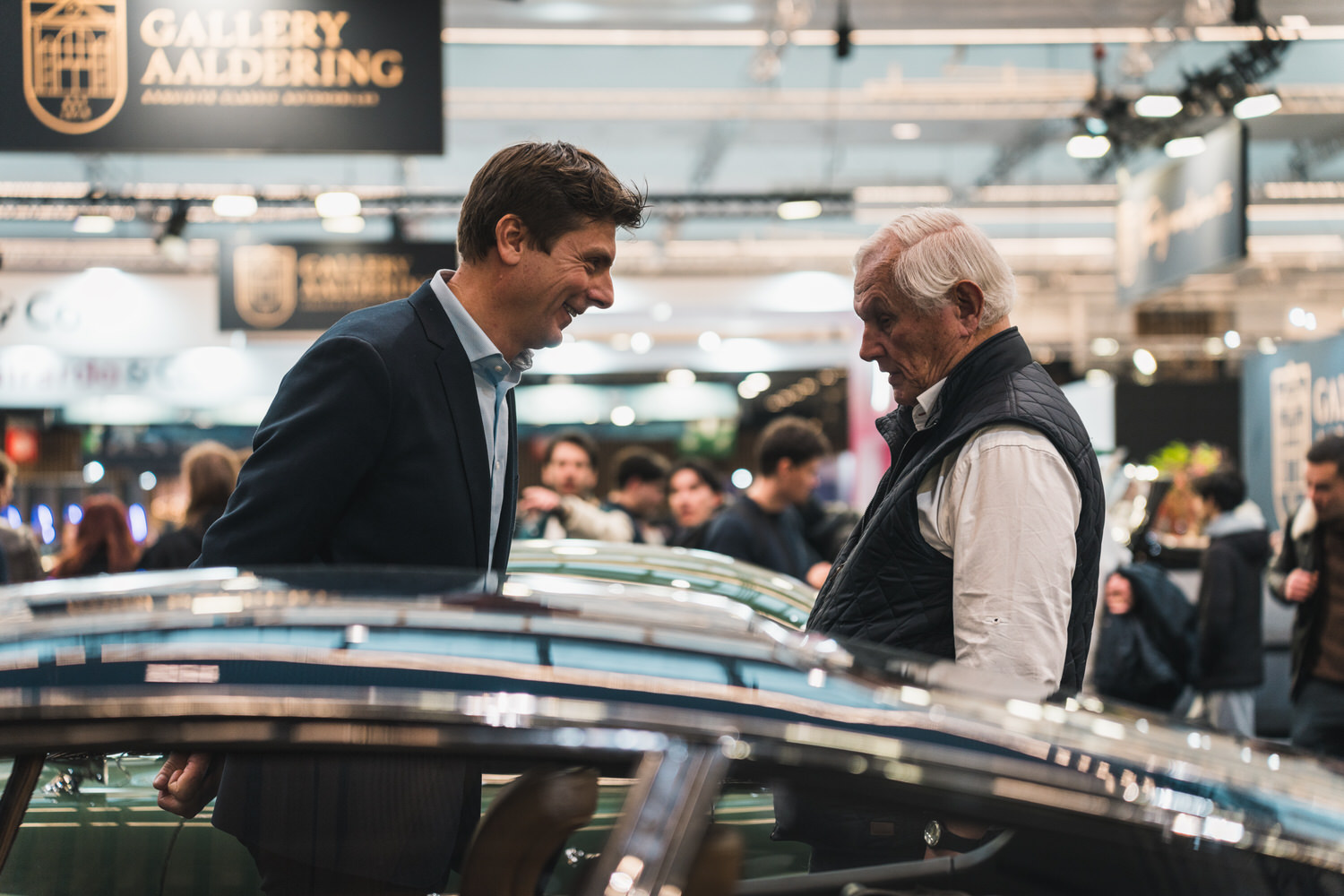
Gallery Aaldering arrived at Rétromobile 2026 not just to be seen — but very clearly to do business. And business was very good.
They rolled into Paris with roughly 20 cars, a line-up stacked with the kind of heavy artillery most shows would build an entire hall around. We’re talking Ferrari Enzo, a grey LaFerrari Aperta, Carrera GT, F40, a blue/black duotone 2007 Bugatti Veyron 16.4, a stunning Wiesmann, a greyish Miura P400 S and a 1973 Ferrari 365 GTB/4 Daytona showing just 5,724 miles – just to name a few. The sort of collection that makes you question whether you accidentally walked into a private vault rather than a public motor show.
And here’s the thing: they didn’t just display them. They sold eight cars during the show. In a market where many stands are about presence and brand theatre, Aaldering proved Rétromobile is still very much a place where serious deals happen. In fact, the plan was simple — sell two cars and the trip pays for itself. By the end of the event, Rétromobile had turned into an outright success story.
Interestingly, among all that firepower, the one car that didn’t find a new owner was the LaFerrari Aperta. Which tells you two things: one, the market is still selective at the very top. And two, if you have to take home an unsold LaFerrari Aperta, life probably isn’t going too badly.
And that’s just scratching the surface. Between these “honorable mentions,” the air was thick with history, speed, and impossible price tags — the kind of stuff that makes you wish you had a spare couple hundred million lying around.
The Main Hall — Where time is money
The main hall in 2026 felt like stepping into an alternate universe where multi-million-euro cars are displayed like supermarket fruit.
And yet it wasn’t just about cars — it was about the entire culture around them. Besides cars, automotive memorabilia, parts, brochures, posters… There were plenty of watches.
It’s no secret that cars and watches are natural partners. Both are mechanical art. Both are emotional purchases disguised as rational ones. And both have brands that are deeply intertwined with motorsport history.
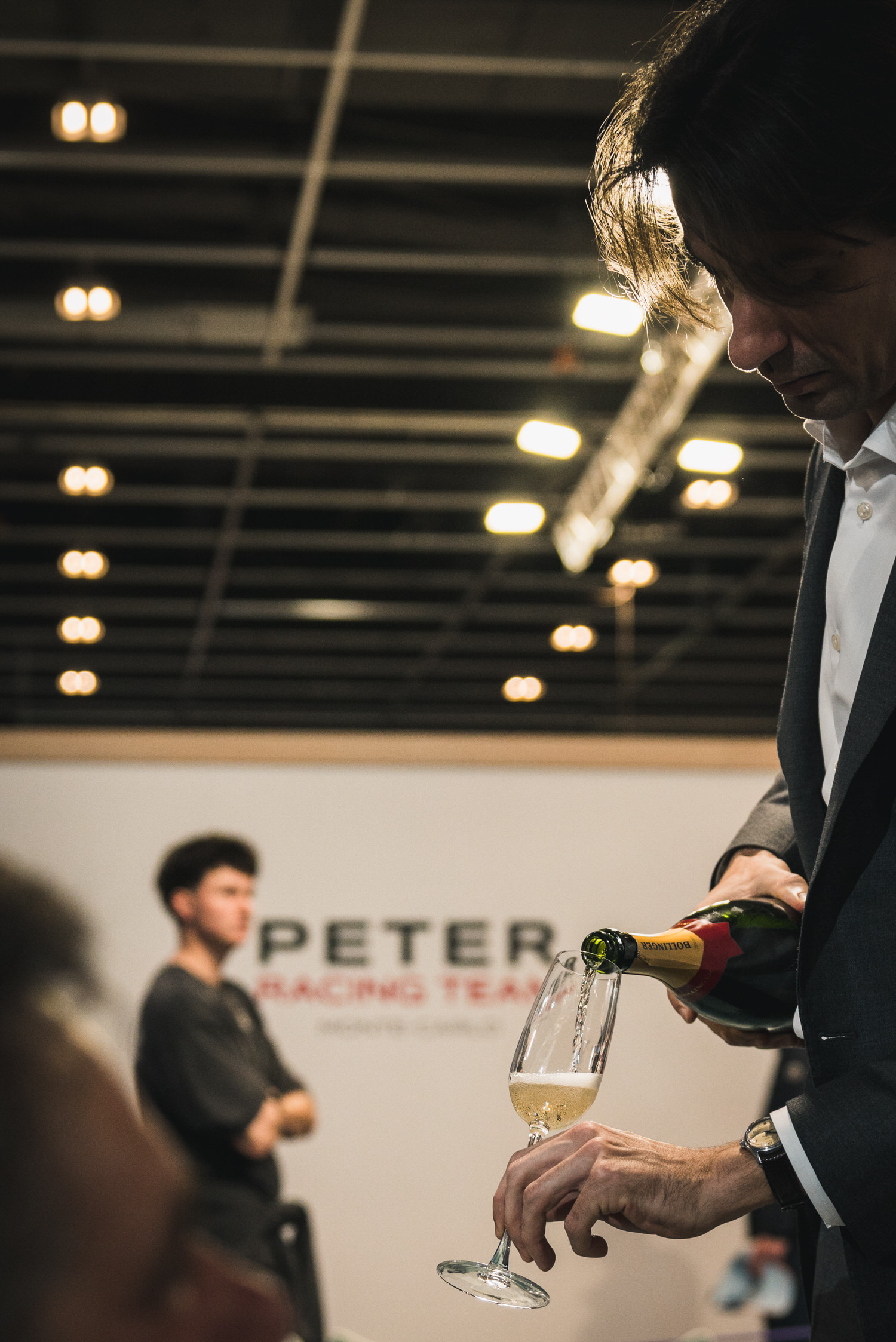
This year, an entire section of the main hall was dedicated to watchmakers and sellers.
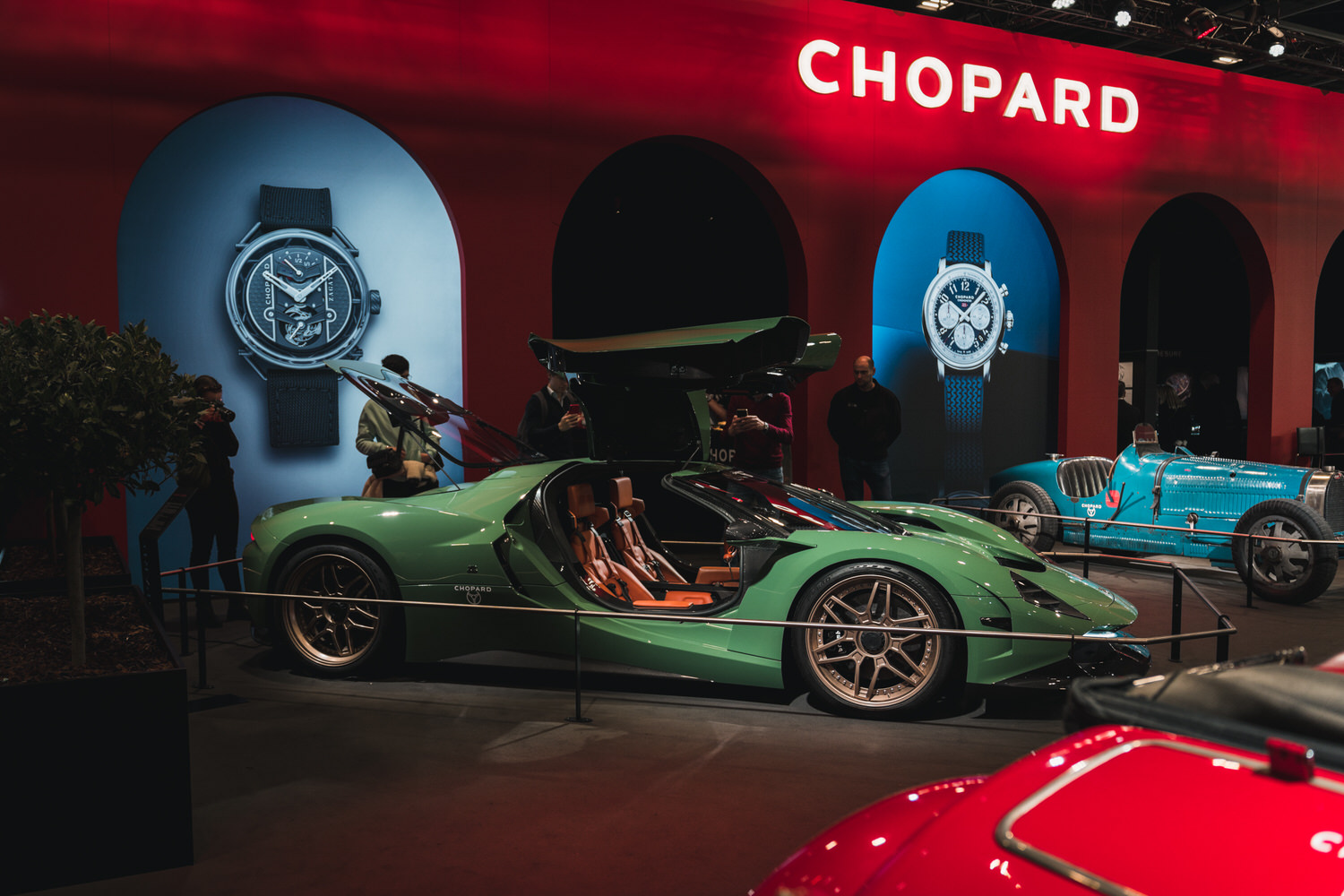
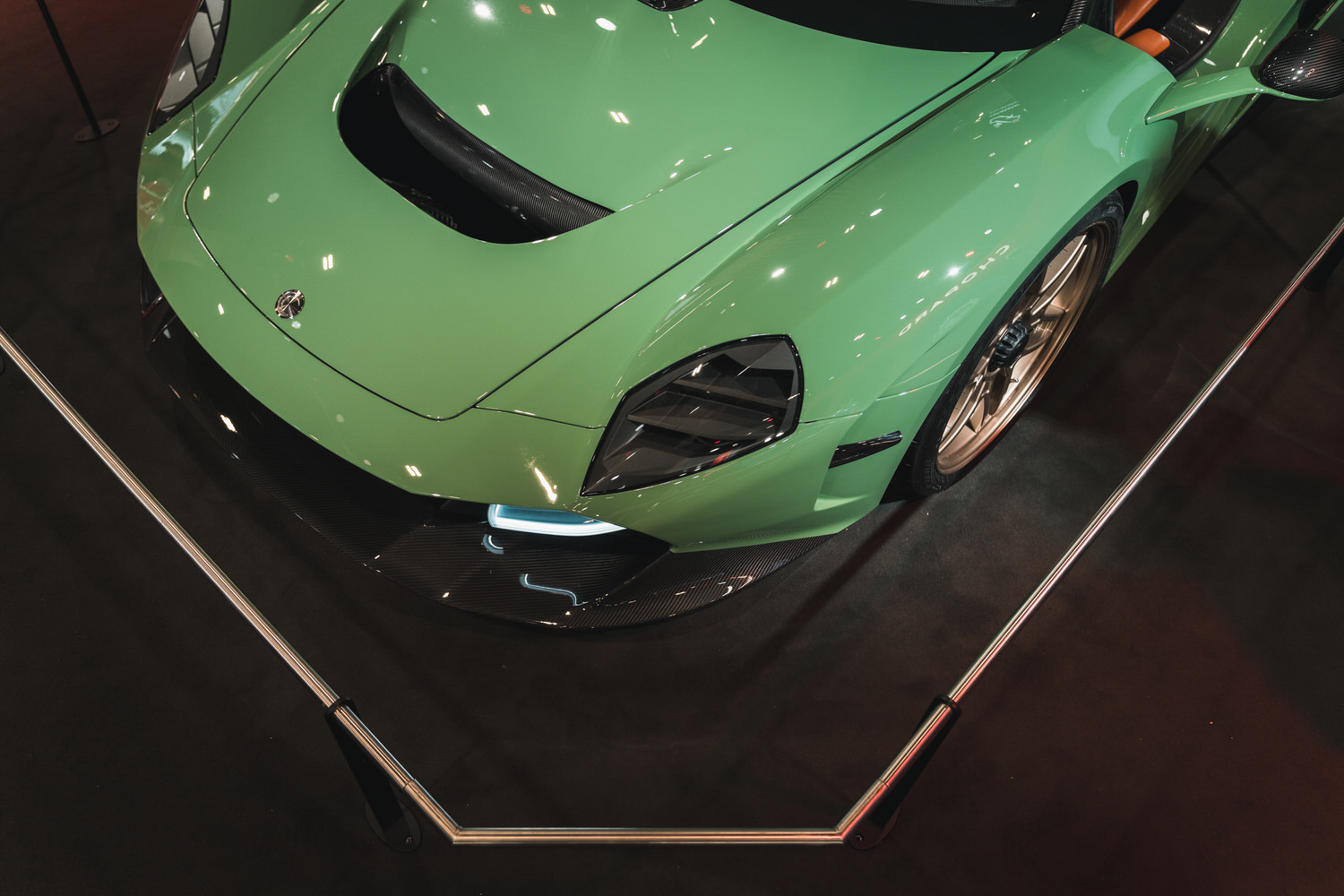
Chopard stole the show at Rétromobile 2026, led by co-president Karl-Friedrich Scheufele, whose car obsession ranges from a Ferrari 750 Monza to a humble Renault 4. The highlight was the Zagato Lab One Concept, a feather-light 43-gram driving watch with a ceramicised titanium case, tubular “chassis” lugs, and a hand-wound tourbillon inspired by a racing steering wheel. And directly in front of the stand, like a perfectly curated front garden for people with very expensive taste, sat a car representing Zagato’s past and present design philosophy: the brand-new $3.3 million Zagato Capricorn 01 hypercar. As well as the legendary 1927 Bugatti 35C #4881, a multiple race-winner in its day.
The Zagato Lab One Concept is the third Chopard-Zagato collab, born from Scheufele’s friendship and Mille Miglia rivalry with Andrea Zagato.
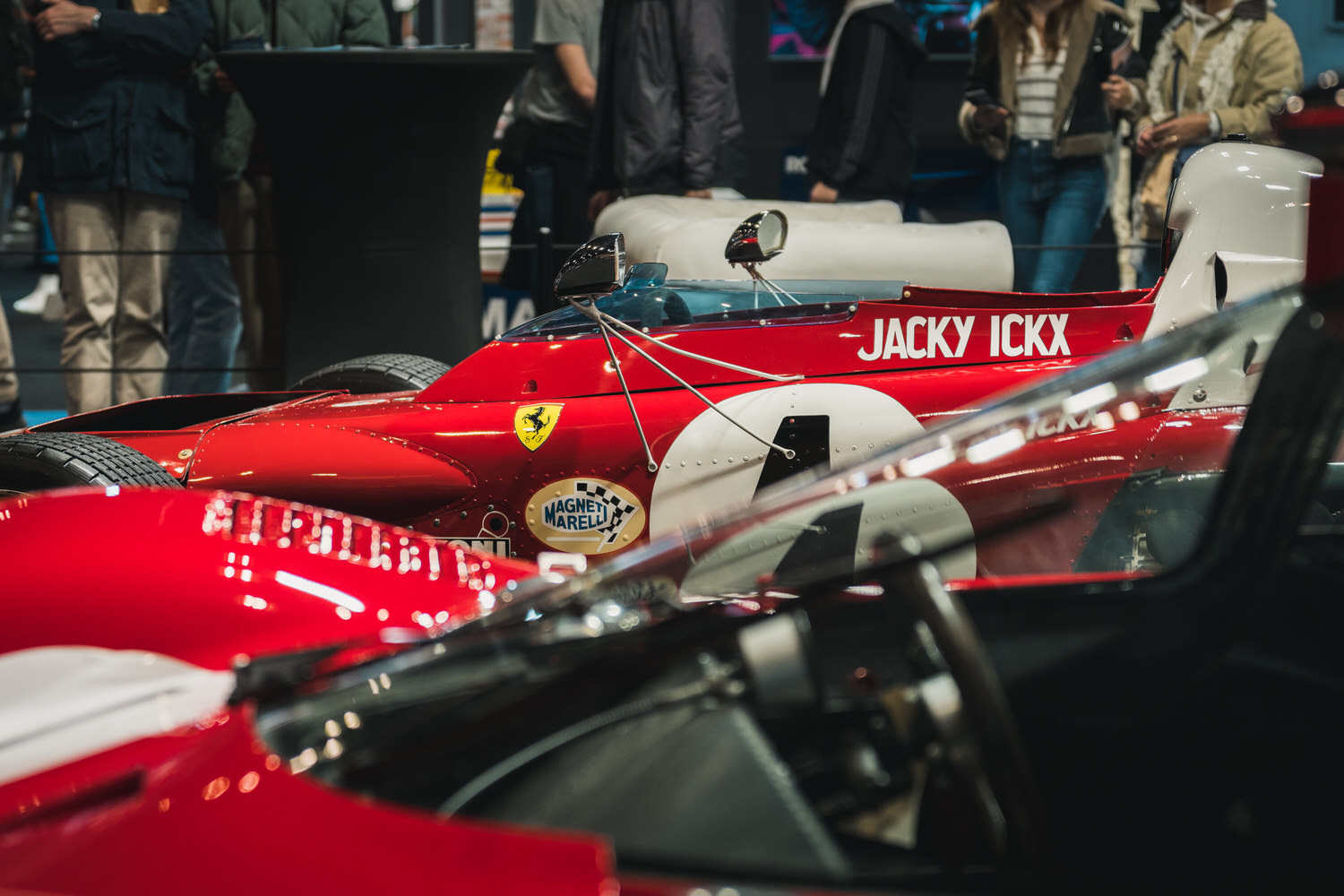
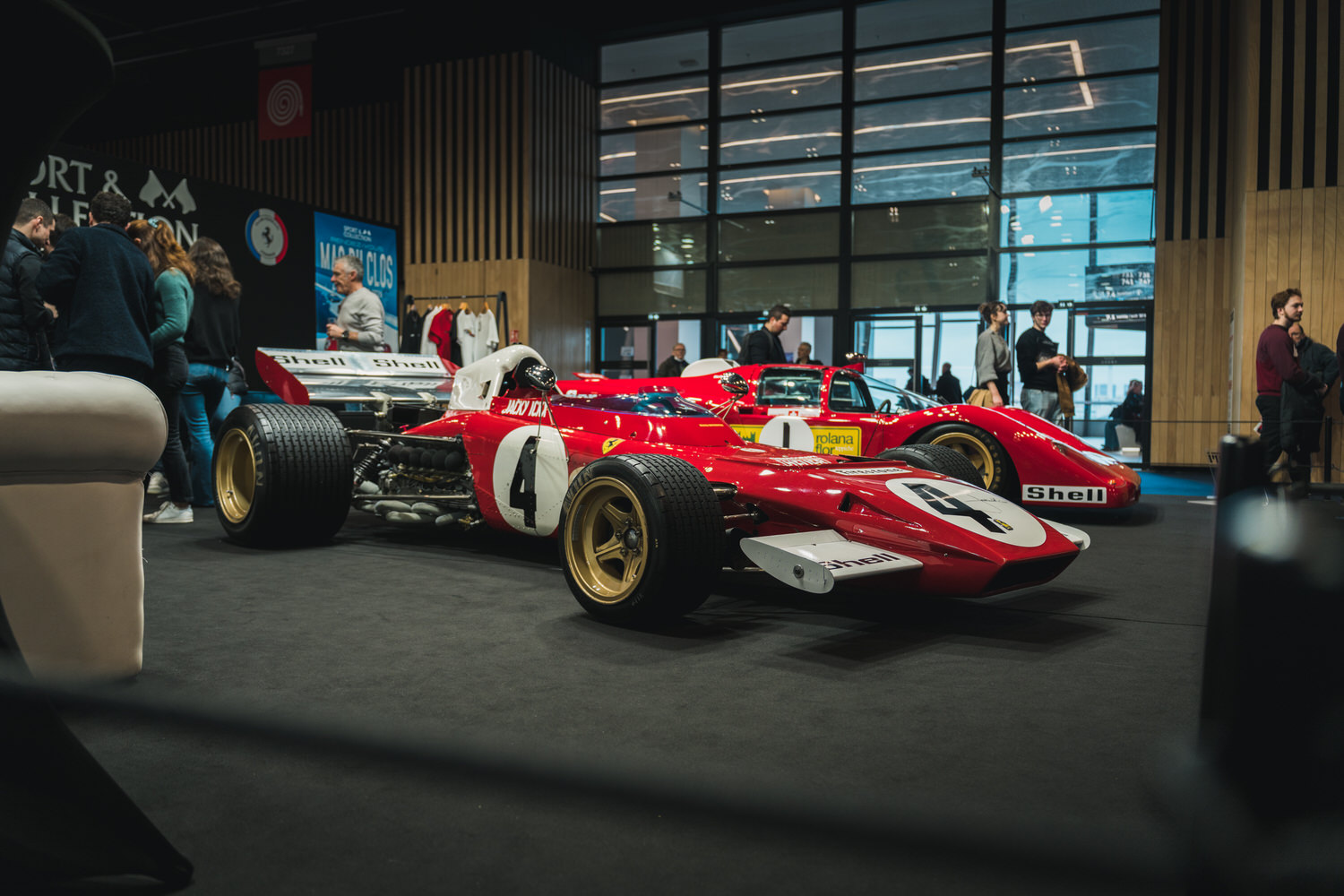
Chopard also leaned into racing heritage through its long-standing relationship with brand ambassador and motorsport icon Jacky Ickx “aka Monsieur Le Mans”, reinforcing how deeply watchmaking and endurance racing culture are intertwined. and paired perfectly with a one-off L.U.C Quattro Spirit of ’72 honoring six-time Le Mans winner Jacky Ickx, complete with a hand-enamelled dial showing him in a Ferrari 312 PB at Spa — watches, history, and serious horsepower, all in one jaw-dropping display.
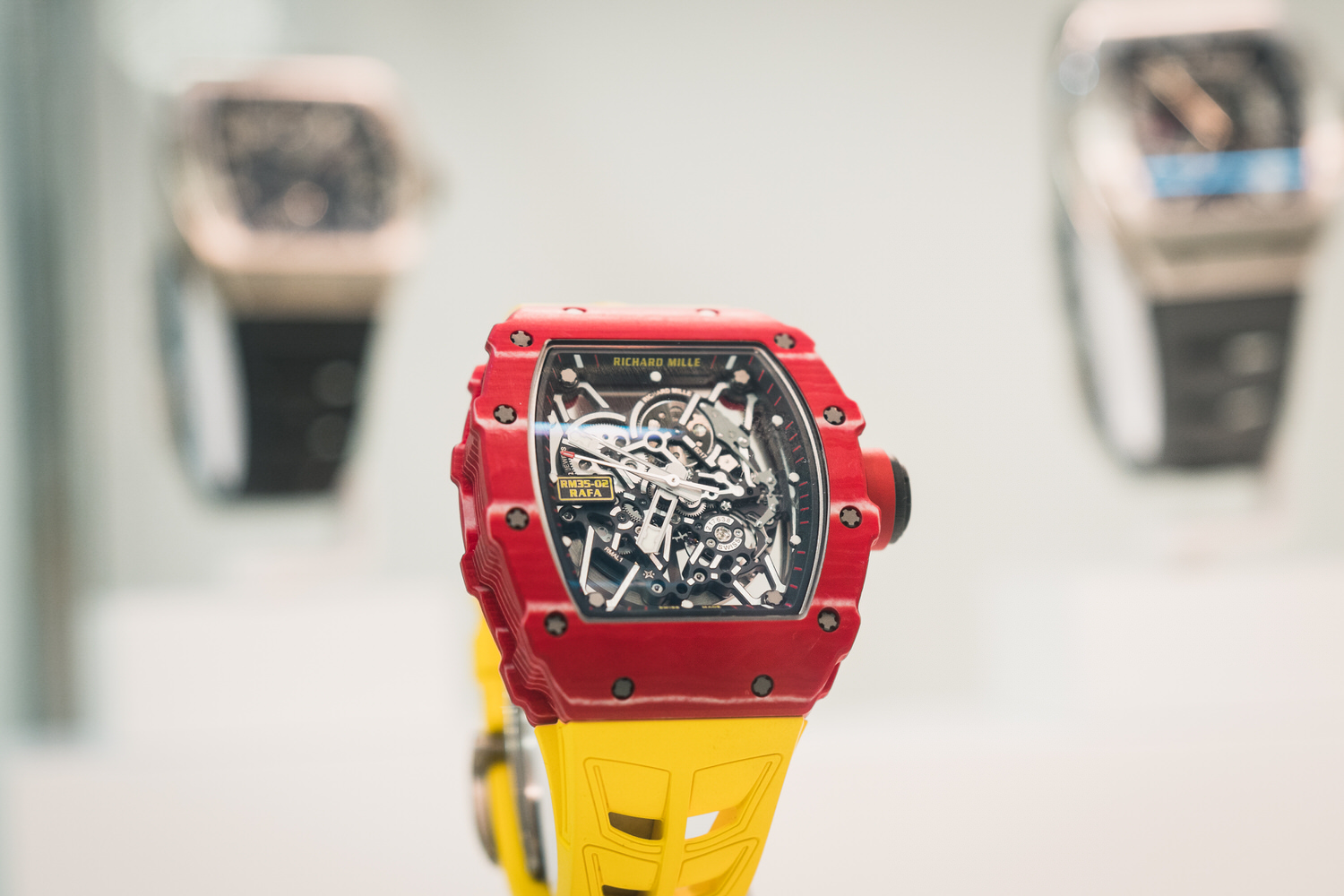
When Richard Mille Decides to Flex — Full Motorsport Theatre
If Chopard was elegant automotive heritage, then Richard Mille was full motorsport theatre in 3D surround sound. There was no subtlety here, no quiet corners — just pure, unapologetic racing pedigree laid out like the ultimate collector’s pit lane.
As befitting the stand of a brand that lives and breathes high‑performance engineering and endurance racing, the visit kicked off with a modern legend: the #51 Ferrari 499P run by AF Corse, in which Alessandro Pier Guidi, James Calado and Antonio Giovinazzi clinched the 2025 FIA Hypercar World Endurance Drivers’ Championship — a reminder that top‑flight endurance racing is still evolving at the sharp end.
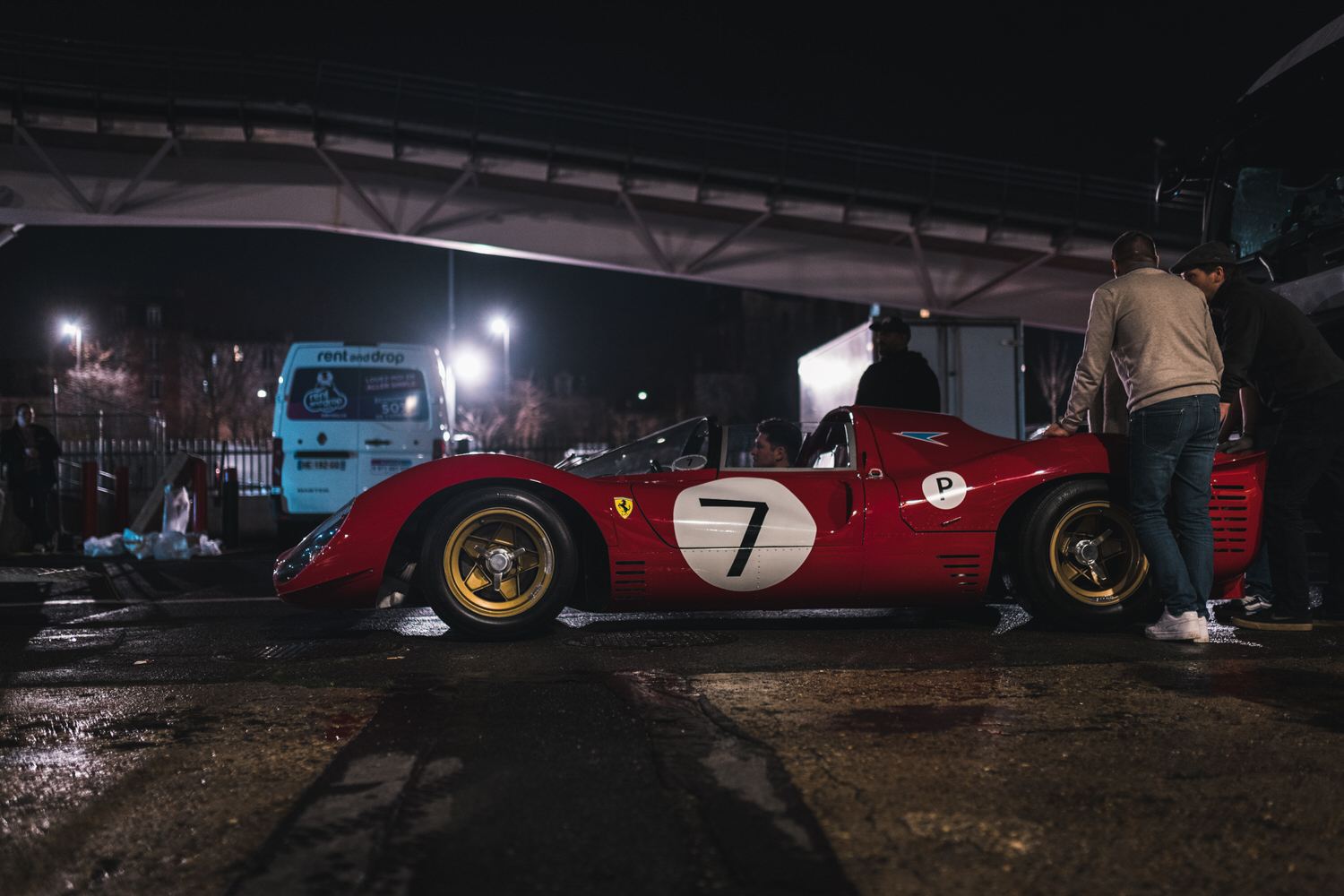
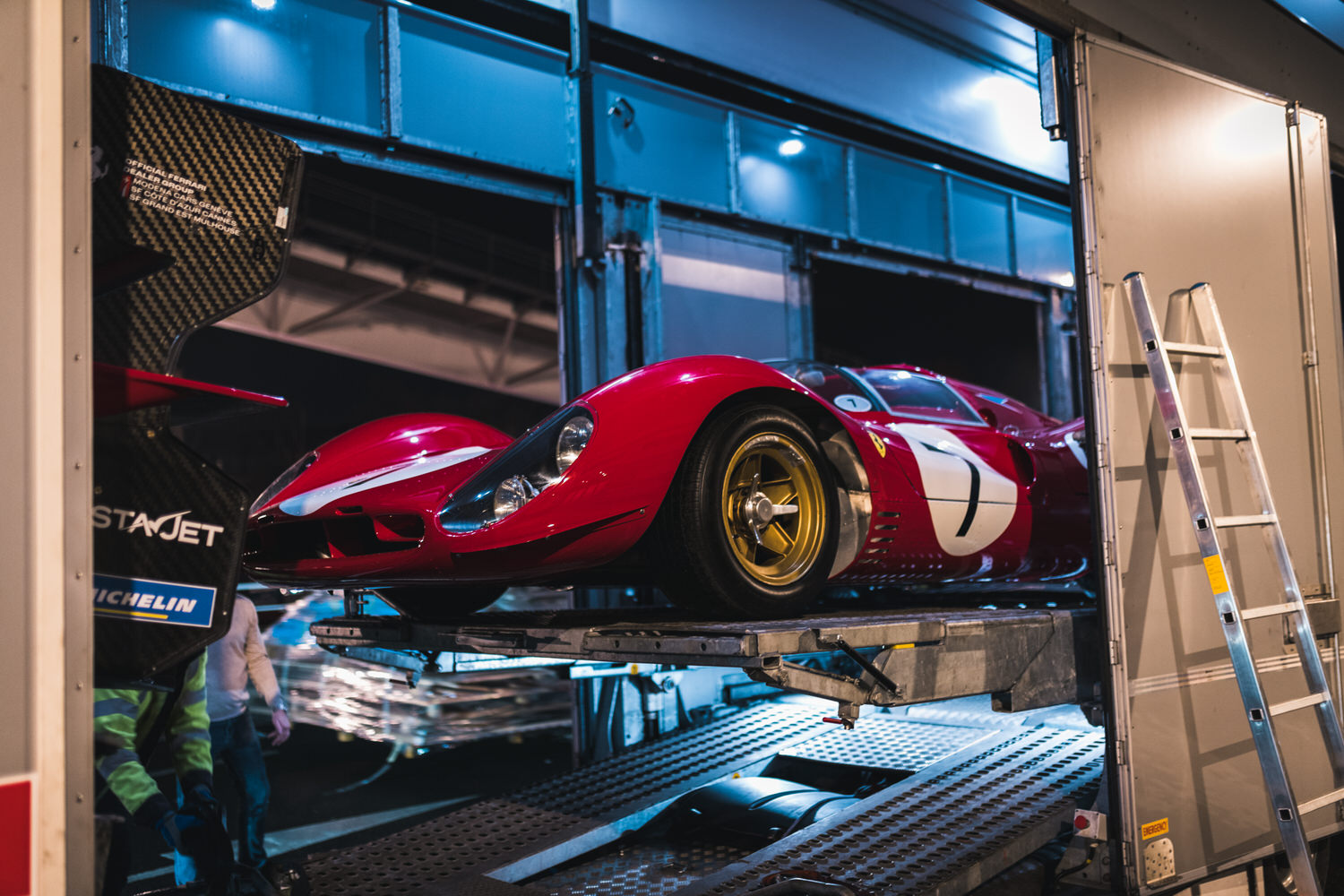
Surrounding the 499P were historic heroes, including a 1970 Ferrari 512 S and a 1972 Ferrari 312 PB — prototypes that looked like they were waiting for a green flag rather than showroom lights. But among all this speed, one car in particular made hearts skip a beat: the Ferrari 330 P4 #0856. Built for the 1967 season as one of three P4s produced, chassis 0856 is the only example that still exists in its original, beautifully preserved state — a mid‑engined Drogo‑bodied racer with a 450 bhp V12 honed from Ferrari’s Formula 1 technology. It stormed to victory at the 1000 km of Monza, stood on the podium at Le Mans and Daytona, and remains one of the most coveted and stunning racing Ferraris ever built. Its presence at the stand was a masterstroke — a piece of living history that looks as good today as it did when it was tearing up the world’s toughest circuits.
At the absolute centre of the stand, though, was another legend: the 1965 Ferrari 250 LM (chassis 5893), the very car that claimed overall victory at Le Mans in 1965 with Masten Gregory and Jochen Rindt at the wheel. Unrestored, unapologetically authentic and dripping with patina, it was one of the defining moments of the entire show. This wasn’t just historic racing iron — it was a car with recent provenance, having reappeared at last year’s RM Sotheby’s auction from the Indianapolis Motor Speedway Museum before being acquired by Philippe Guenat, Richard Mille’s business partner.
If you wanted a single object that explains why collectors lose sleep over cars, the 250 LM was it.
And that was the genius of Richard Mille’s presentation: from modern Le Mans champions to mid‑century prototypes that helped define endurance racing, it was a focused celebration of Ferrari’s indomitable racing spirit. Motorsports friends don’t just talk about these cars — they worship them.
Floor Two: Manufacturer Glory and Racing Legends
Floor two is where the manufacturers and clubs flex their muscles, and, as always, the French heavyweights — Renault, Peugeot, and Citroën — compete for bragging rights with the largest, most eye-catching stands. Each brand digs deep into their historic collections, reminding visitors why French engineering has long been both elegant and cunning.
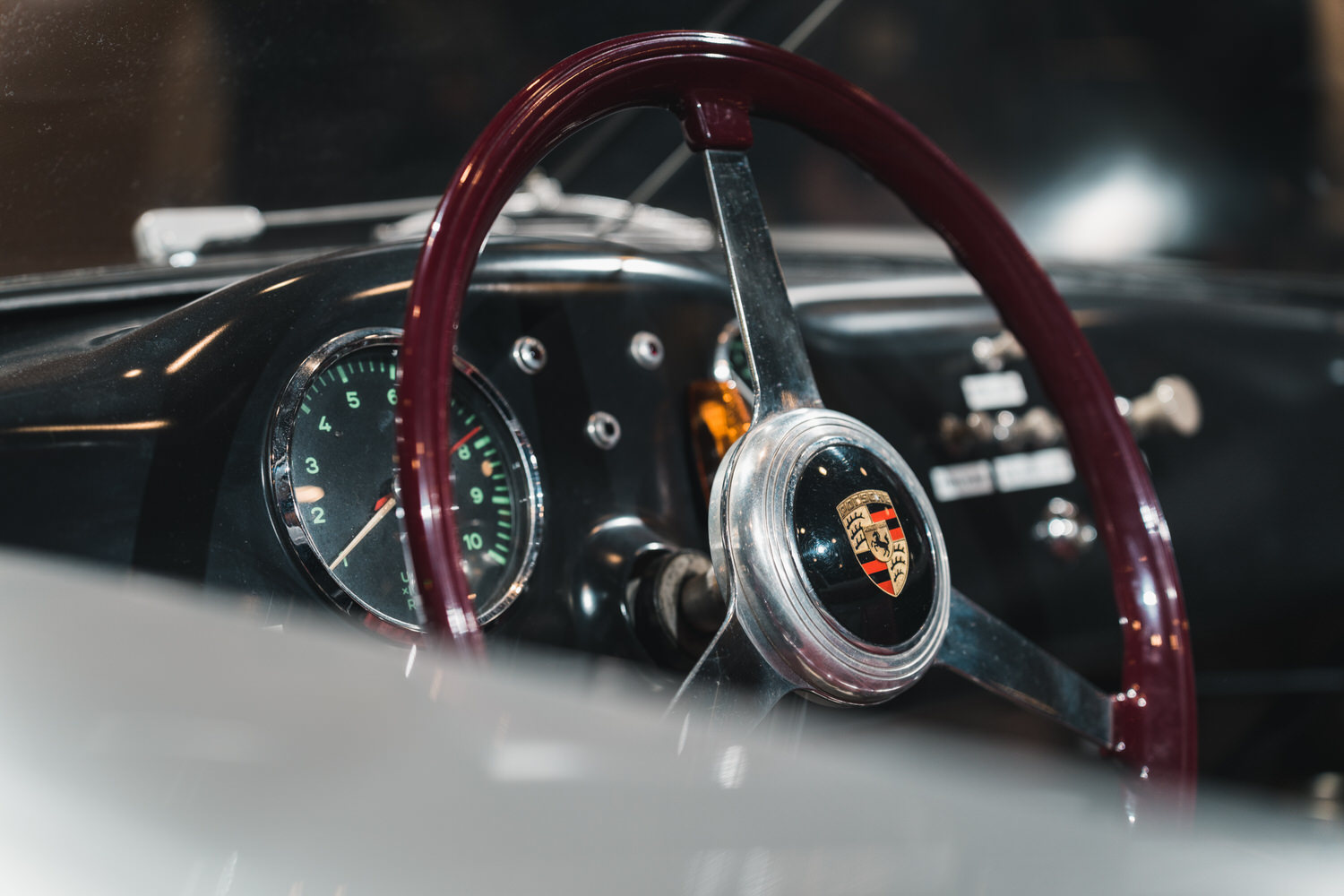
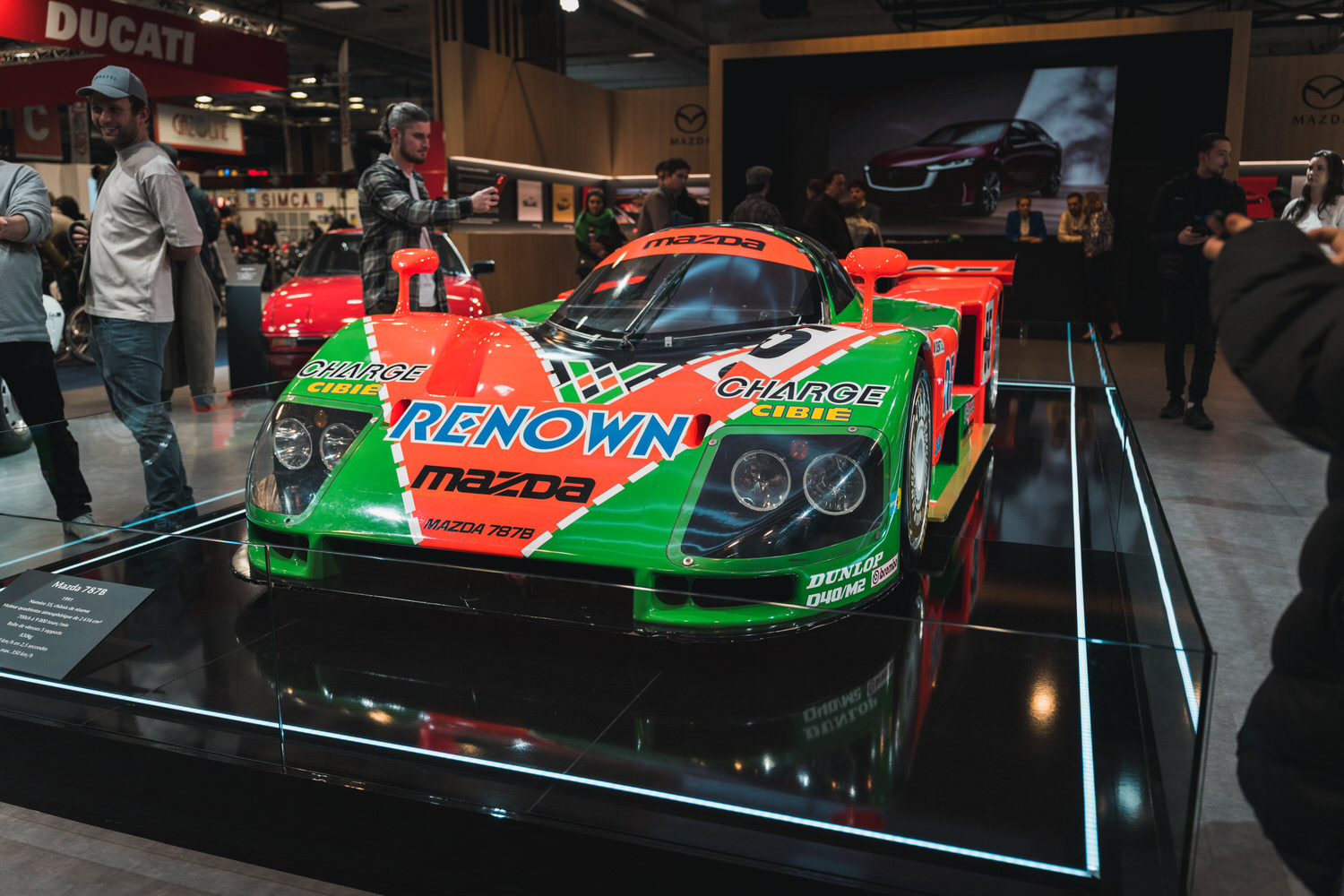
But it’s not just about the home teams. Alfa Romeo turned heads with a Duetto Spider, a 750 Competizione, and the breathtaking 33/2 Periscopica — cars that look fast even standing still. Porsche brought a 924 GTR courtesy of French Speed Connection, a team and dealership steeped in historic racing pedigree. Meanwhile, Mazda teased enthusiasts with the immortal 787B — the 1991 Le Mans winner. Alas, it was a display model only; the real deal still resides at Mazda HQ in Hiroshima, last seen in all its rotary glory at the 2023 Festival of Speed.
With all these amazing cars, all the people milling about, and me only entering at 1 PM, I was already running out of time. I tore through this floor far too fast, snapping glimpses and soaking up whatever I could before heading toward the ‘Ultimate supercar garage’ — and there was still more to see. This floor feels like a hall of fame for automotive passion — historic racers, concept wonders, and brand legends rubbing shoulders — but I had to leave it behind, at least for now.
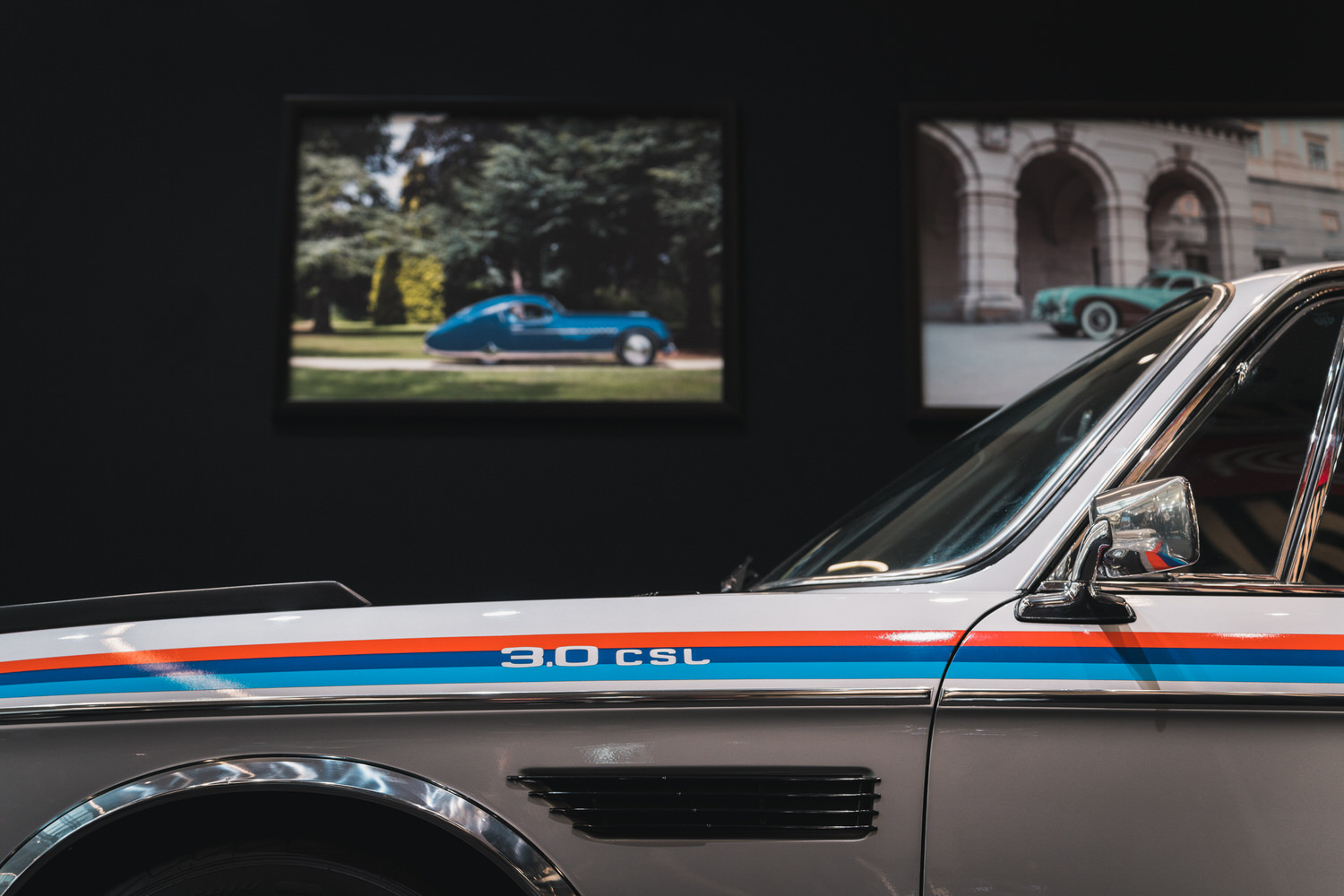
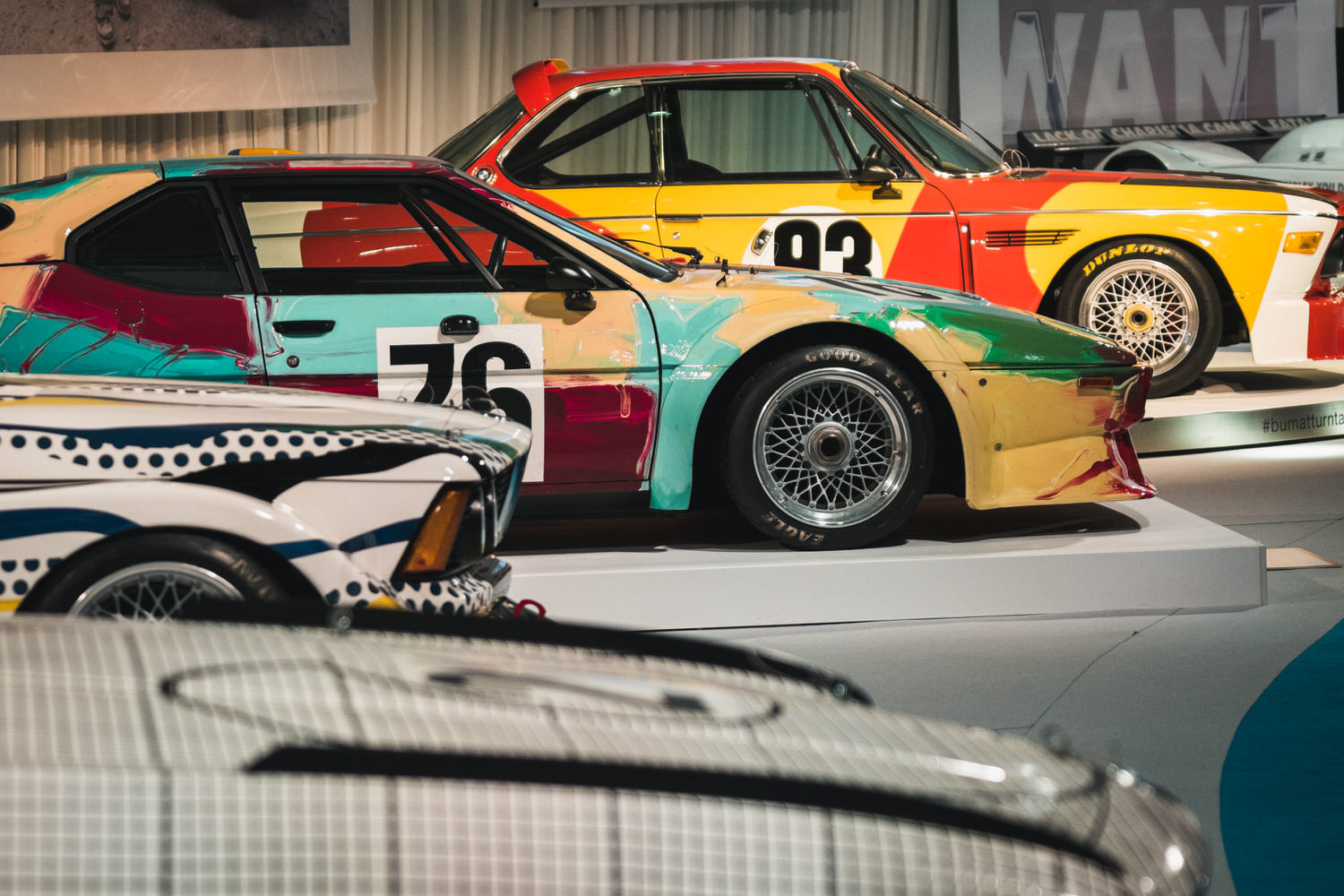
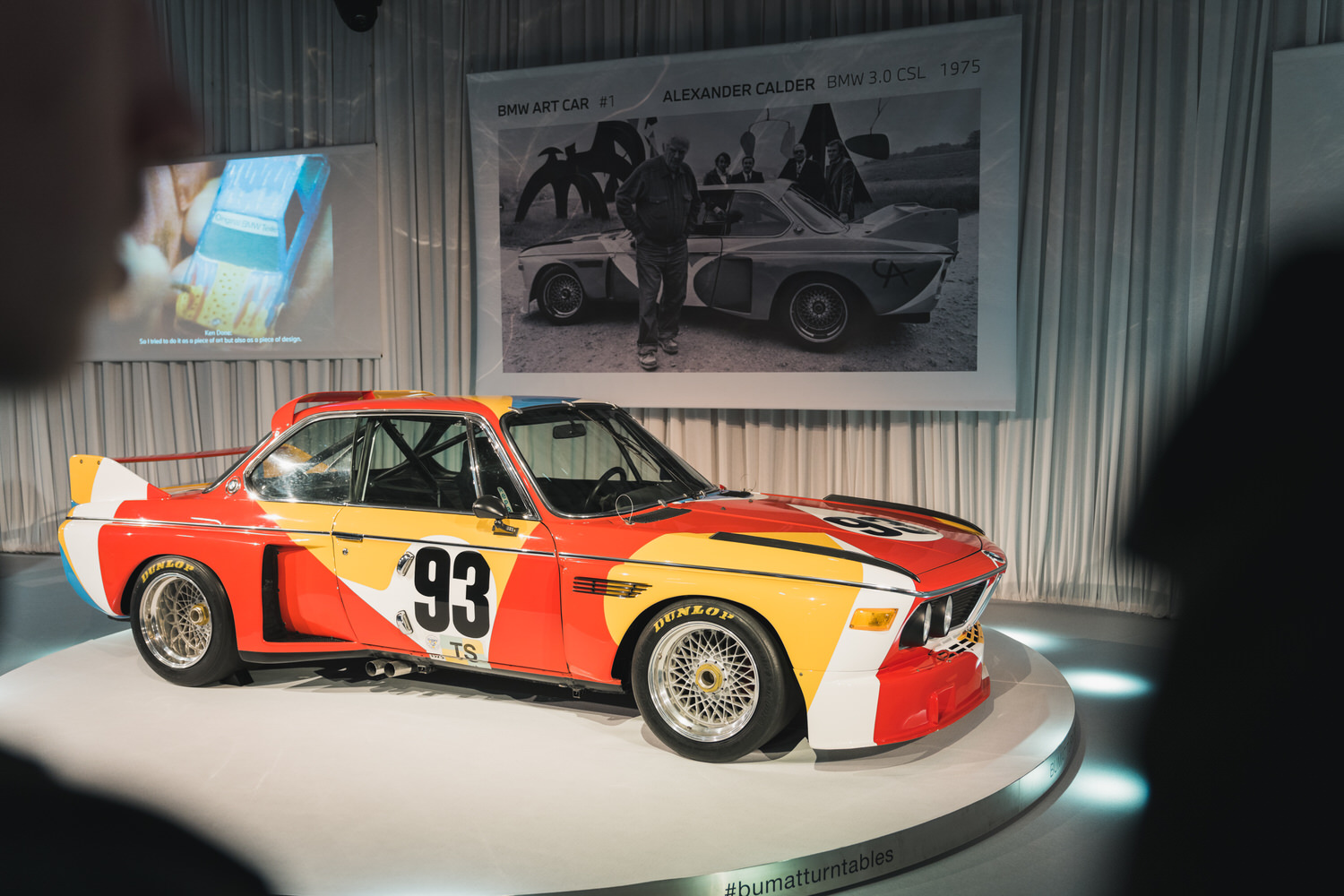
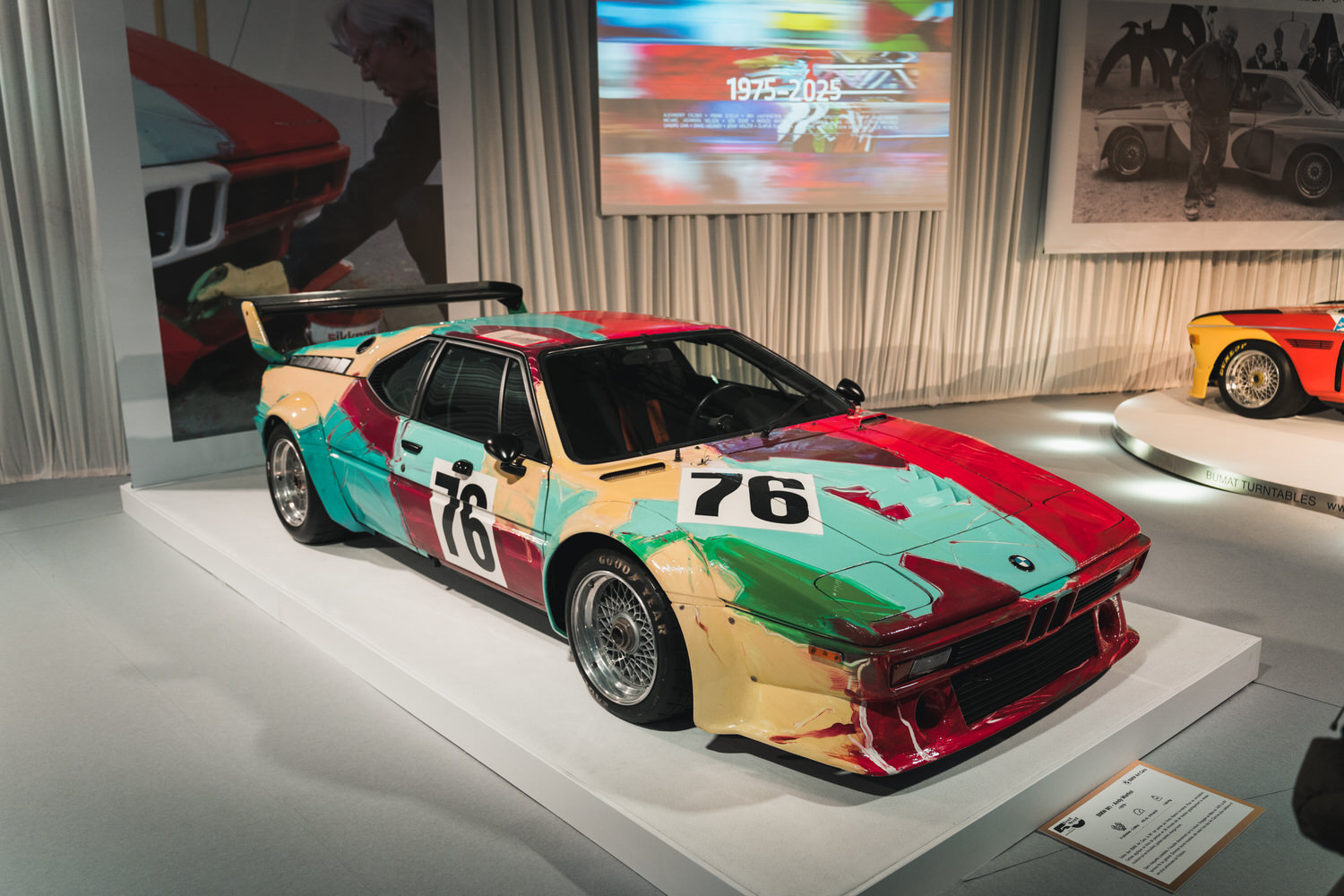
That being said: On this floor BMW stole the spotlight with five of their Art Car collection, a riot of color and creativity. From the Alexander Calder’s CSL to the $100.000M Warhol M1 next to it. These weren’t just cars — they were kinetic canvases that somehow managed to blend motorsport engineering with fine art without spilling the paint. Walking among them, you could almost hear the engines roar and the brushes swish at the same time.
The first floor: Auctions, Parts, Automobilia, and the Bugatti Train
On the first floor, things get seriously nuts — though not in the “hypercar showroom” way. Located in Hall 7.1, the Village Pièces is a treasure trove for anyone restoring or maintaining a classic car. Spare parts for the hard-to-find bits, technical manuals, and automobilia — from vintage toys to mascots and old adverts — fill the aisles. Maintenance products and specialist services ensure that every restoration stays authentic and reliable. It’s the kind of place where you realize that behind every gleaming show car is a mountain of work and know-how.
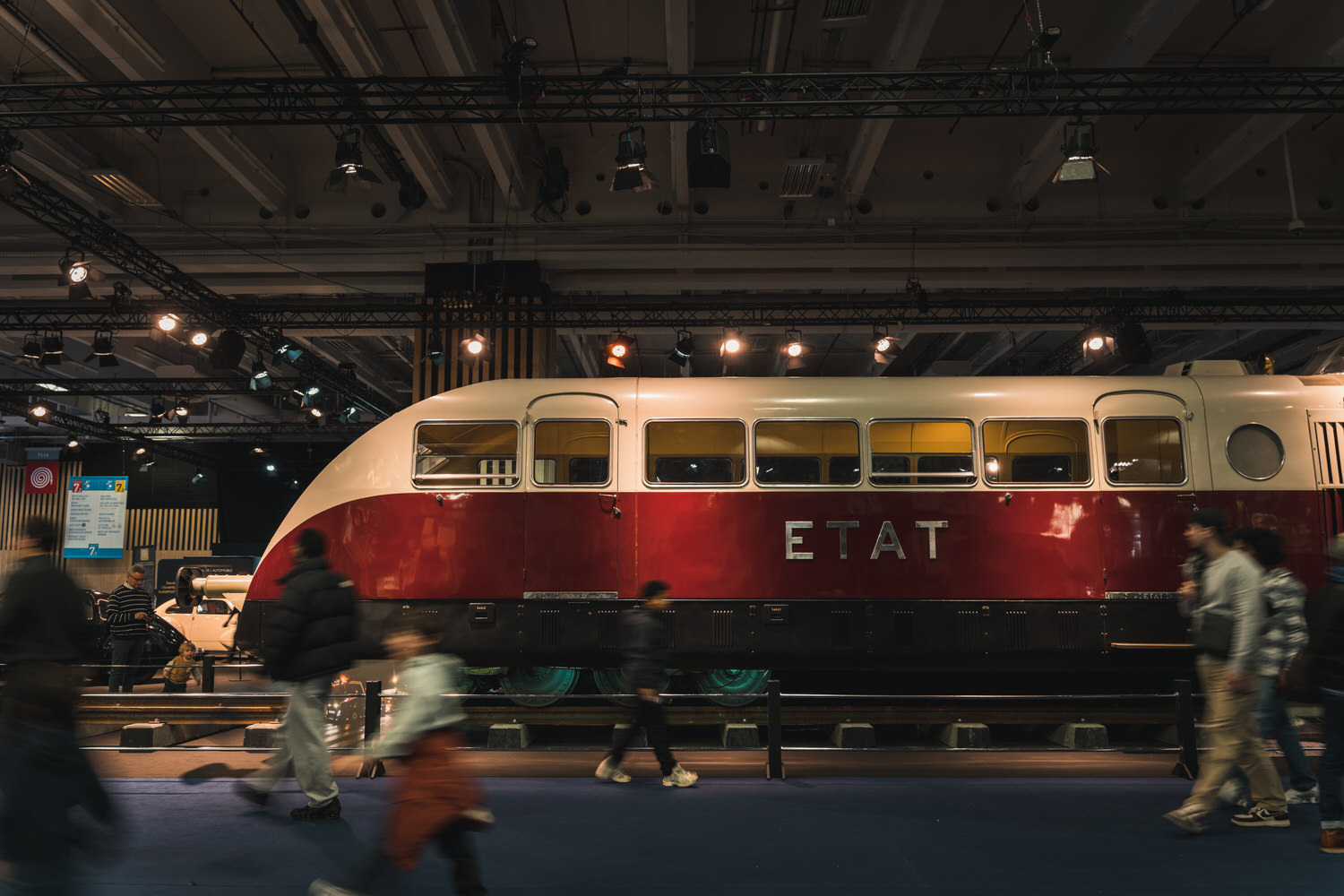
Nestled among all this practical wizardry were the auction cars — rare machines promising eye-watering sums — but I barely had time to stop. Only one hour remained before closing, and I had my sights set on something else entirely: the Bugatti Autorail. This near-mythic 1934 train is powered by four colossal 12.8-litre Type 41 engines producing over 800bhp, capable of more than 120 mph. Its aerodynamically styled carriages and luxurious interiors, with a driver standing in a central pod, made it a rolling testament to Bugatti’s genius. Only 88 were ever built, and Le Présidentiel, the sole survivor, was right there in front of me, impossible to ignore.
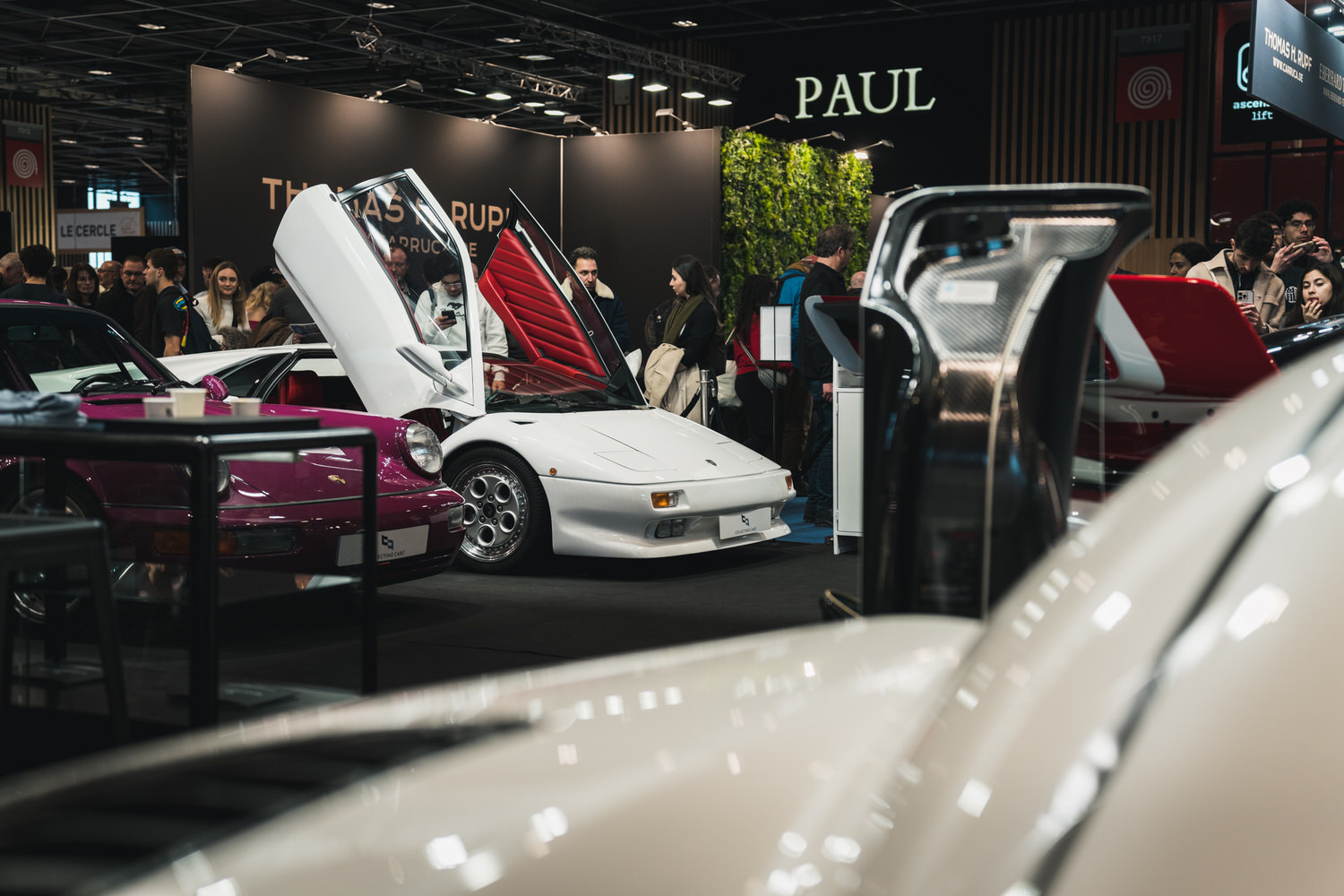
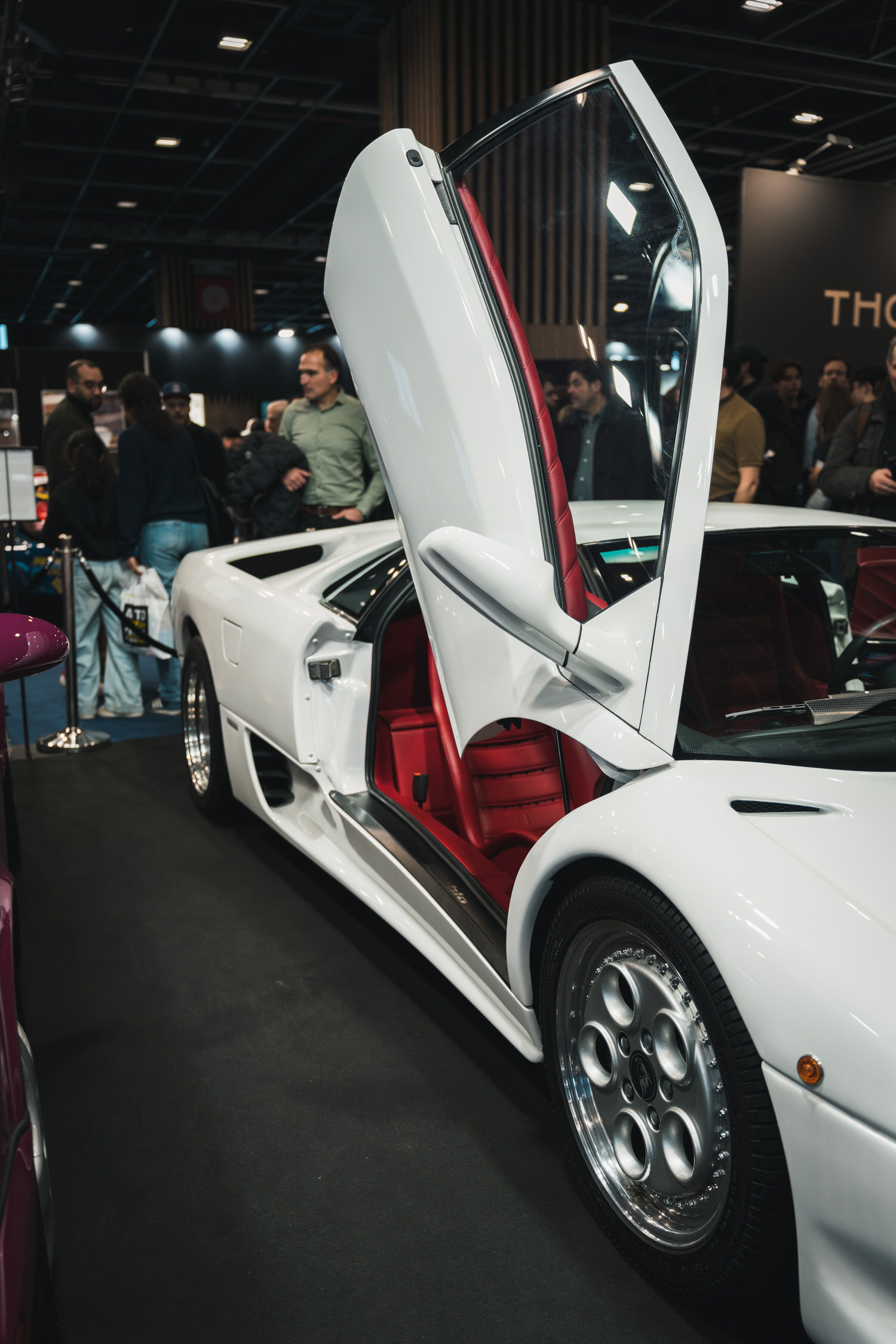
Even as I tried to take it all in, glimpses of the cars in the crowd teased me: a BMW M1 Procar, Lamborghini Diablo VT, Shelby Cobra, a host of Porsches, and the mighty 2018 Ferrari FXX K Evo. It’s not the flashy, crowded show floors upstairs, but on this level, the magic is in the detail — the nuts, bolts, and pure engineering theatre.
Ultimate Supercar Garage — The Modern Beast at Rétromobile
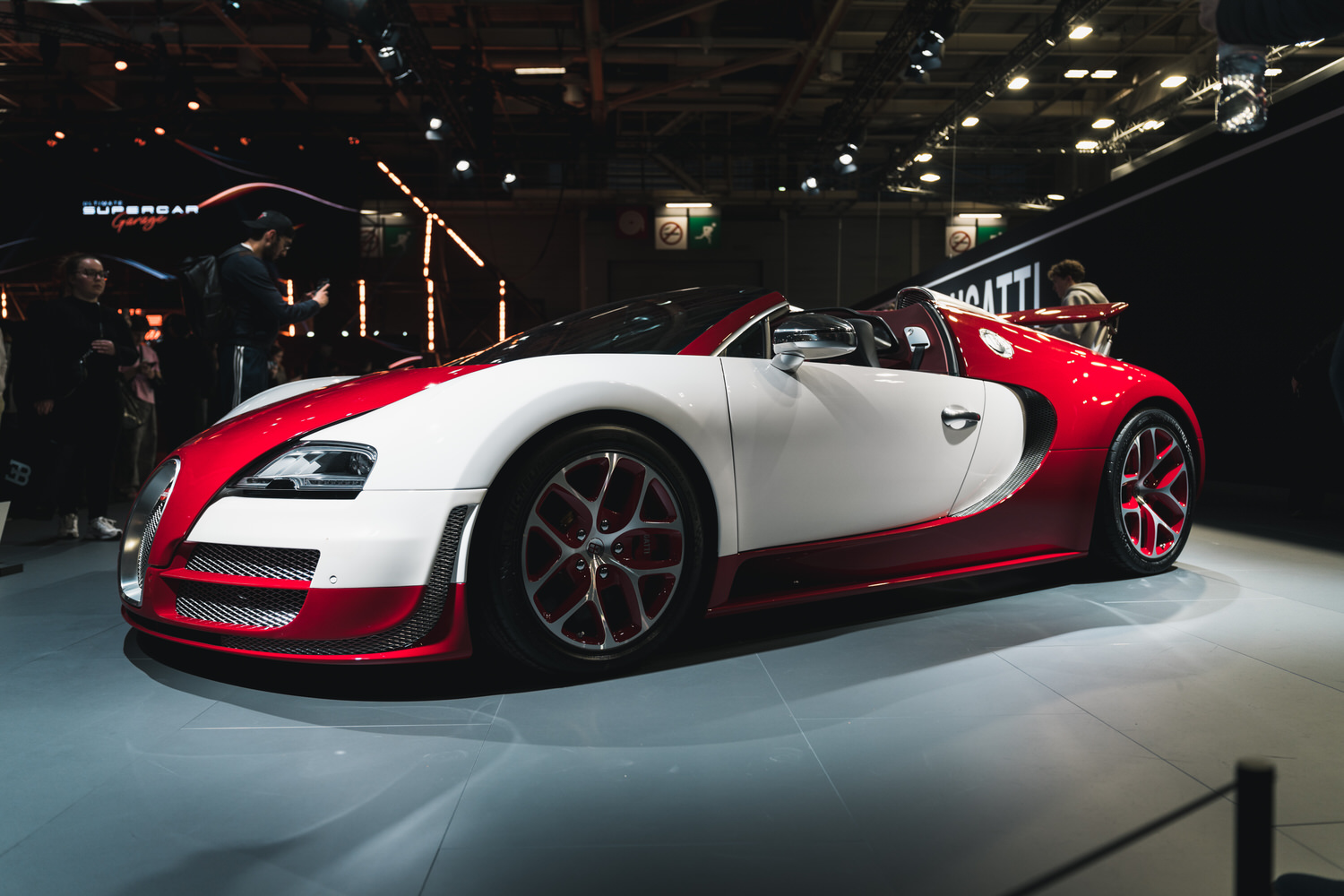
While the classic halls upstairs celebrated automotive history, the Ultimate Supercar Garage in Hall 4 was where the future of performance turned up in force. Conceived as a world‑first alongside Rétromobile, this new showcase was built to spotlight contemporary supercars, hypercars and extravagant performance machines — and it delivered in spades. With crowds streaming through every day, this inaugural edition proved that speed, innovation and audacity are still very much alive.
The roster was a who’s‑who of mainstream and boutique performance heroes. Brands confirmed included Bugatti, Ferrari (via Charles Pozzi), Koenigsegg, Aston Martin, Pagani, Lamborghini (through its Paris distributor), Bentley, Lotus, Maserati, Donkervoort and more — a lineup that read like a year’s worth of salon highlights in one space. But what could your eyes feast on for the extra €21 you might wonder?
Lamborghini, Bugatti and Hypercar Icons
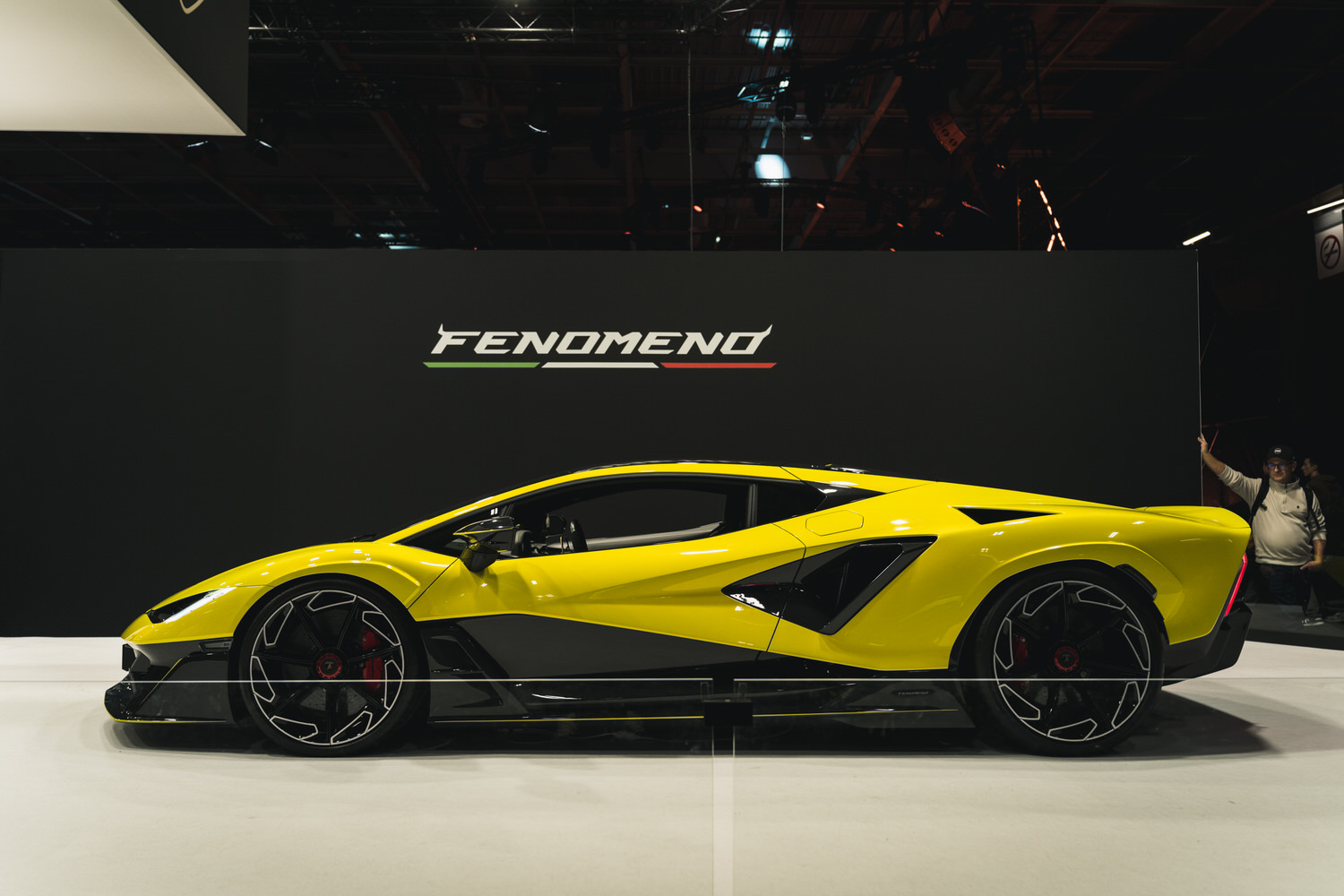
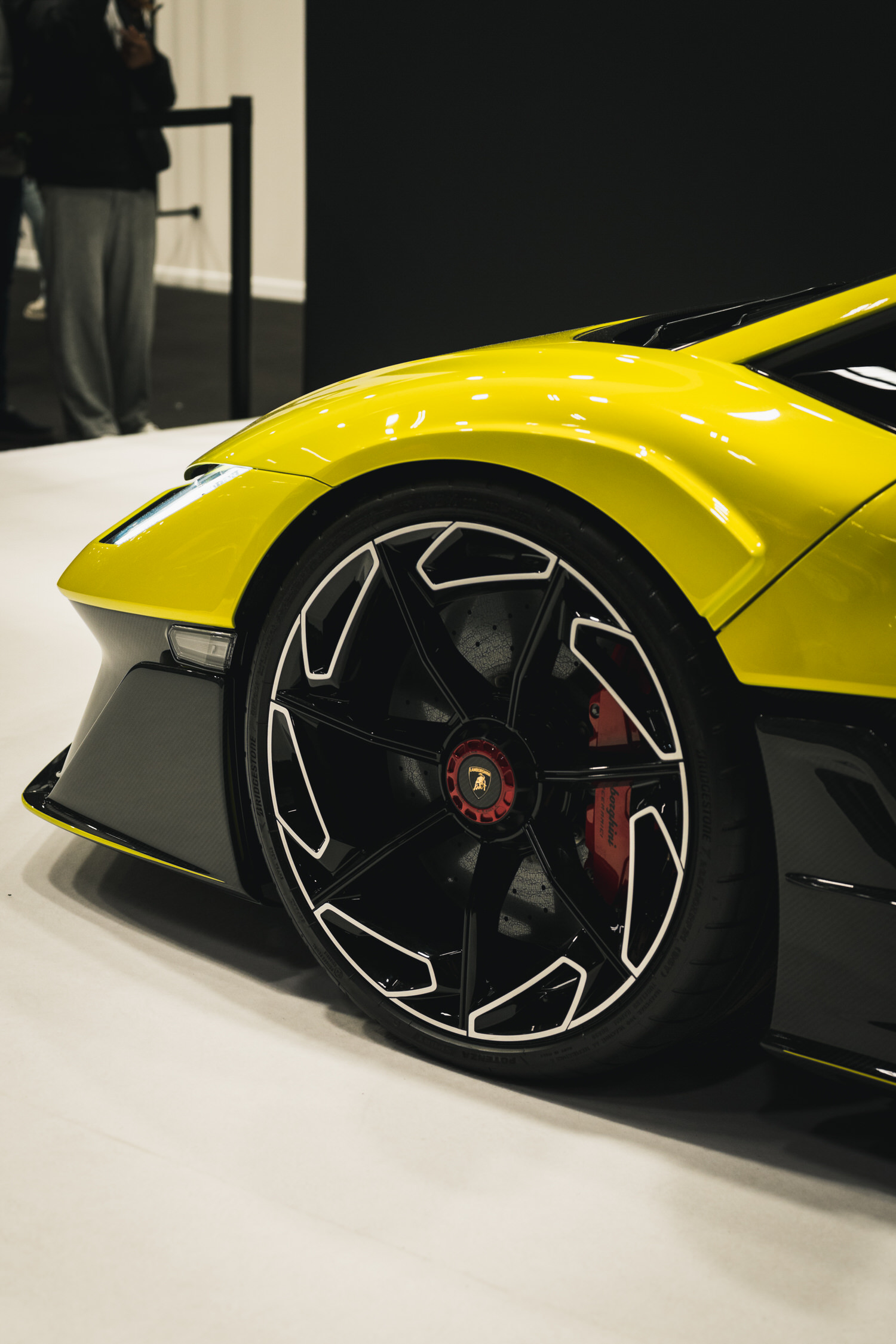
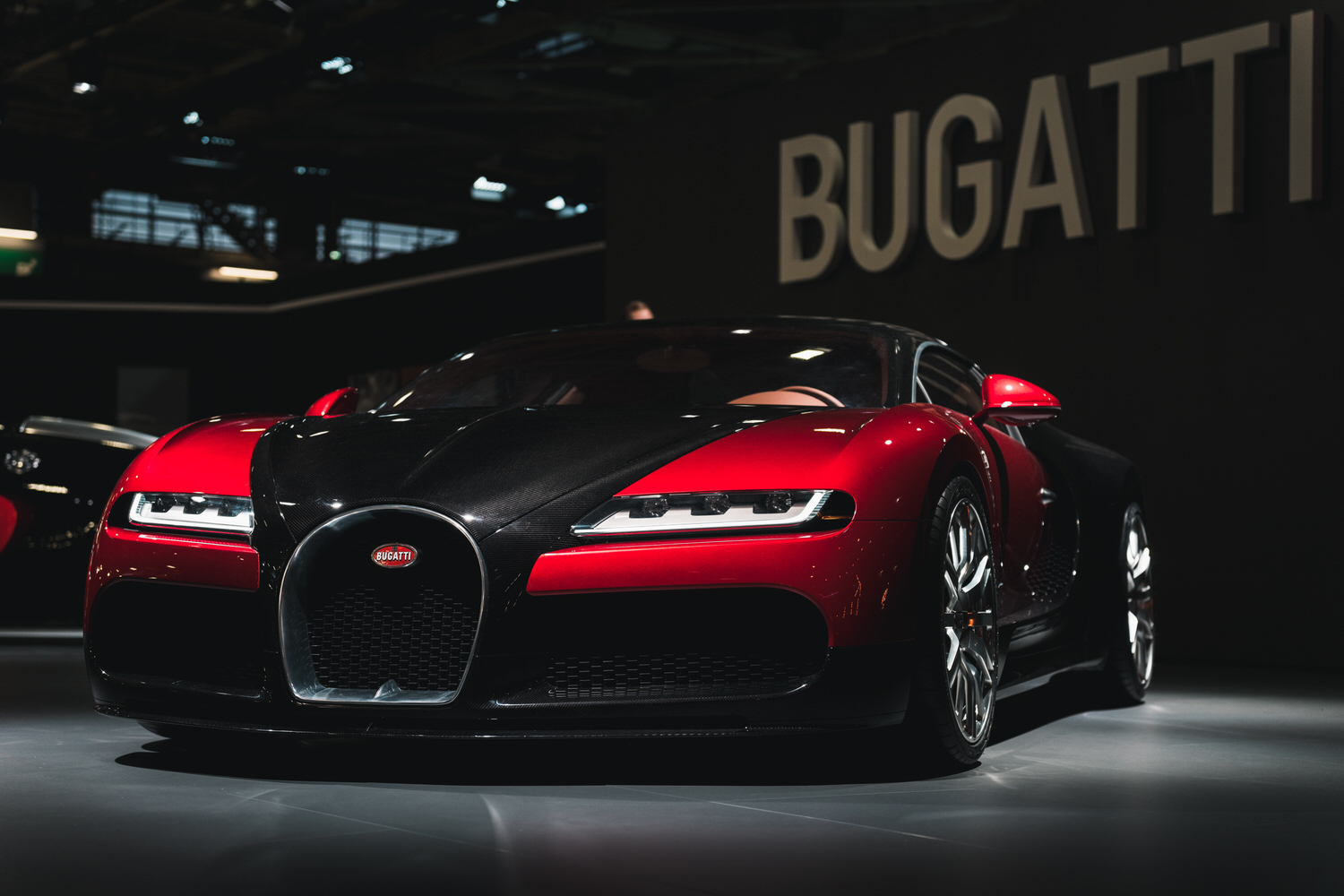
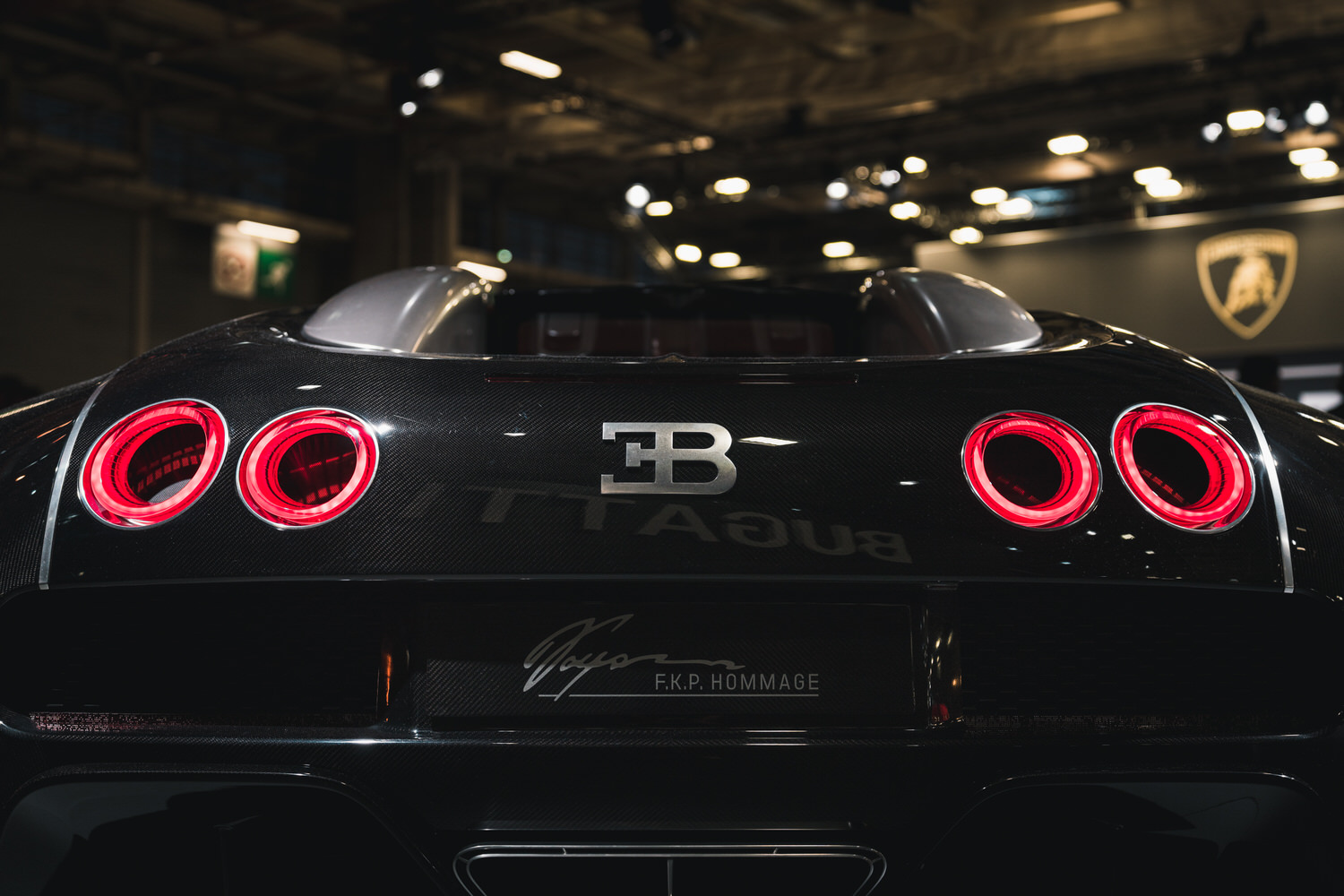
At the heart of the Garage was the one‑off Bugatti F.K.P. Hommage 2026, a bespoke tribute to the Veyron legacy built on an evolved W16 platform from Chiron with a reported 1 600 hp — a true halo hypercar and an undeniable crowd magnet. Lamborghini’s Fenomeno also turned heads, its aggressive stance and futuristic design showing where supercar aesthetics could head next.
Hidden Gems and Boutique Wonders
Part of the thrill here was discovering the lesser‑known but thoroughly ambitious machines that make modern car culture so exciting. The HWA Retromod reimagined a classic platform with contemporary engineering finesse. The Bertone Runabout blended heritage design with modern performance flair. Automobili Mignatta delivered a minimalist Italian roadster with a potent V8 heart, while Donkervoort’s P24 RS leaned hard into raw, aerodynamic performance.
Then there were the wildcards that truly spoke to the adventurous spirit of the event. The Laffite Automobili entry looked aggressive enough to unstick eyeballs — massive aero, 1000 horses and a presence that says “yes, you definitely want to drive me fast.” Nearby, the Nichols N1A turned heads with its brutal, retro‑inspired Can‑Am styling: big power, wide stance, monstrous aero and the sort of attitude that makes you grin even just standing next to it.
One particularly memorable exhibit was the restomod Nardone, a bold reinterpretation of the classic Porsche 928. Taking the 928’s distinctive silhouette and rethinking it with modern suspension, brakes, wheels and bespoke interior touches proved that restomods — when done with respect and vision — can honor the original while giving it a fresh lease on life.
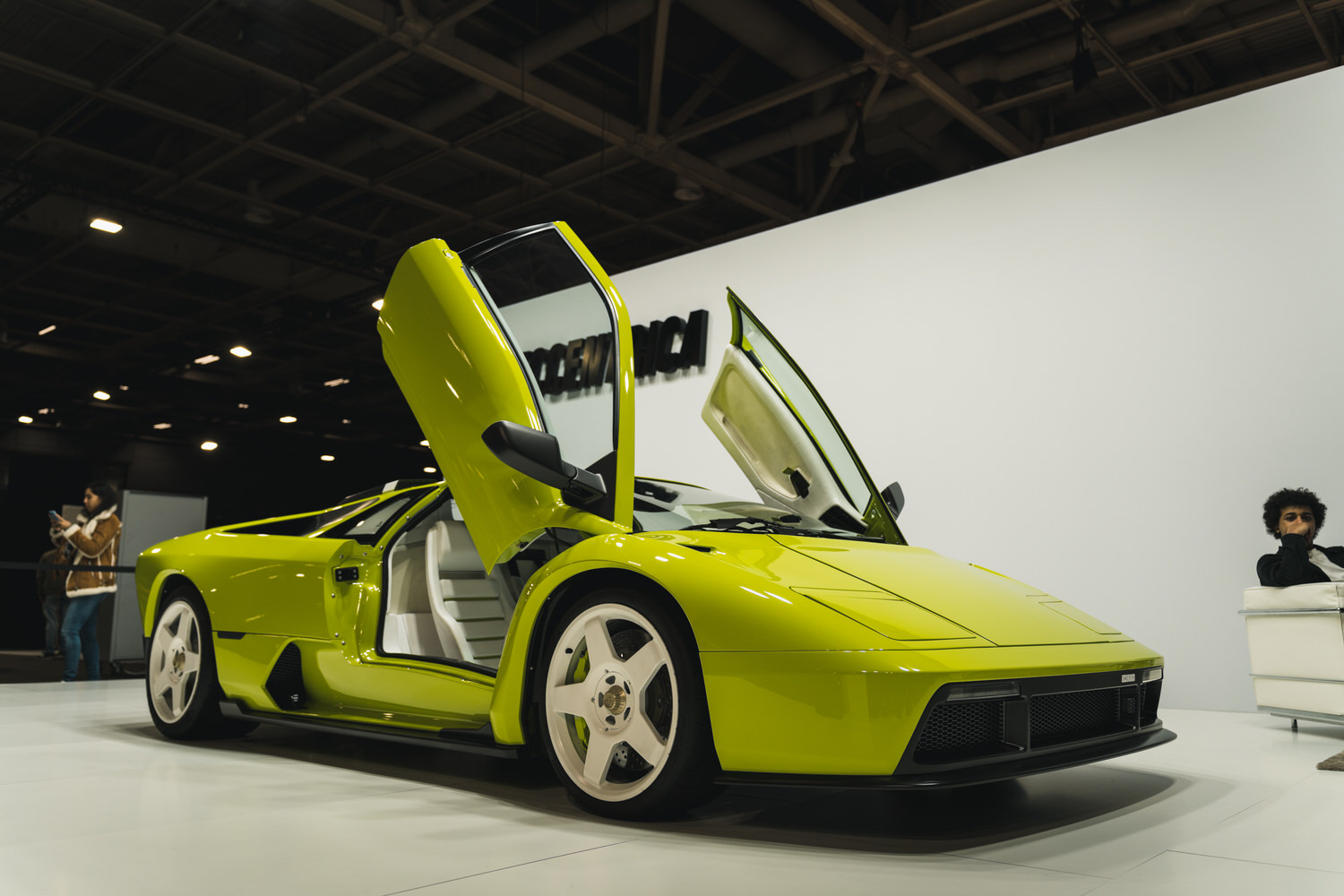
Adding to that mix of reinterpretation and innovation was the Eccentrica V12 restomod, a modern take on classic supercar ethos — combining a thunderous V12 soundtrack with updated chassis dynamics, completely redesigned double-wishbone suspension and bespoke styling cues that made it feel both familiar and futuristic at the same time. Oh – and carbon, loads of it. The Diablo’s body panels are replaced by all carbon ones.
In a hall packed with next‑generation performance metal, the Eccentrica stood out as a reminder that the soul of a great car isn’t just about numbers — it’s about character.
Eclectic Highlights
Elsewhere, standouts included bespoke lightweight track specials and modern hypermachines from boutique builders that blurred the line between prototype and production reality. Every turn rewarded you with something that could headline its own show — cars that dared to be different and pushed performance in new directions.
Unlike the traditional car show format, the Ultimate Supercar Garage wasn’t about static displays — it was a living, breathing celebration of where modern automotive performance stands today. From bespoke one‑offs and legendary brands to creative wild cards from boutique builders, this hall was one of the biggest highlights of Retromobile 2026 — a vivid reminder that the thrill of speed and innovation still has plenty of room to surprise us. I just wish I had more time to take it all in!
Final Thoughts — Worth the Traffic?
Completely. Absolutely. 100%
Rétromobile 2026 was bigger, busier and more outrageous than ever. I missed parts of the club halls. I rushed sections I wanted to study for hours. The Supercar Garage alone deserved half a day.
And yes, the parking situation was borderline philosophical and expensive. Parking on the premises will set you back €40 for the day.
But Rétromobile isn’t about efficiency.
It’s about immersion.
It’s about standing three metres away from cars that shaped history.
It’s about overhearing conversations that start with: “Yes, but is it matching numbers?”
Next year, I’ll arrive earlier.
Or I’ll just bring camping gear and live in a parking structure nearby.
Either way — I’m going back.