In art history, there have been many significant career retrospectives. Few landed quite like Pablo Picasso’s 1932 exhibition at Galeries Georges Petit. By then, the 50-year-old artist already painted himself into fame, wealth, and eternity. But art never stands still; in a show-of-force, Picasso self-staged a collection of 225 works in the legendary Parisian gallery—a retrospective that turned his star supernova.
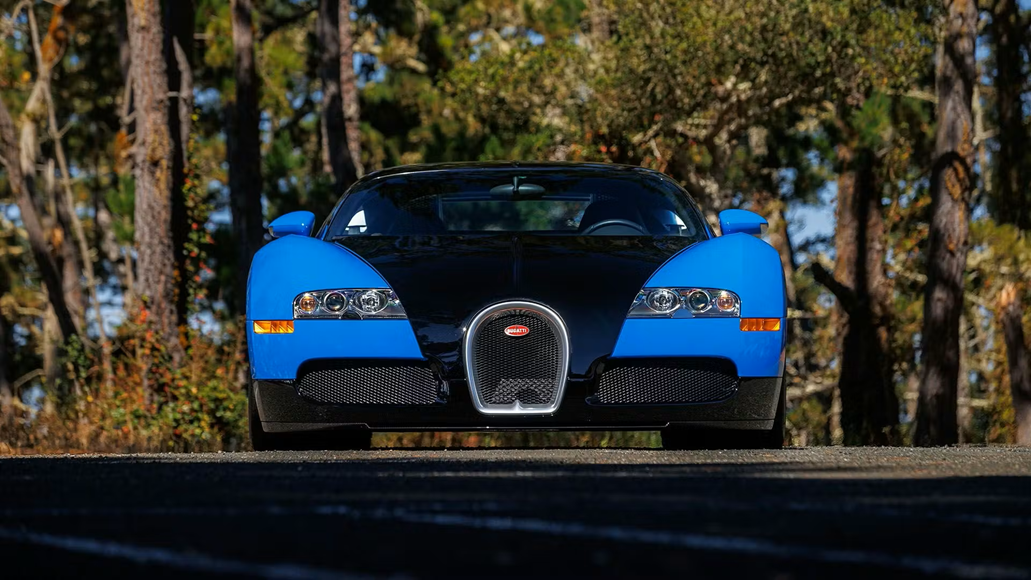
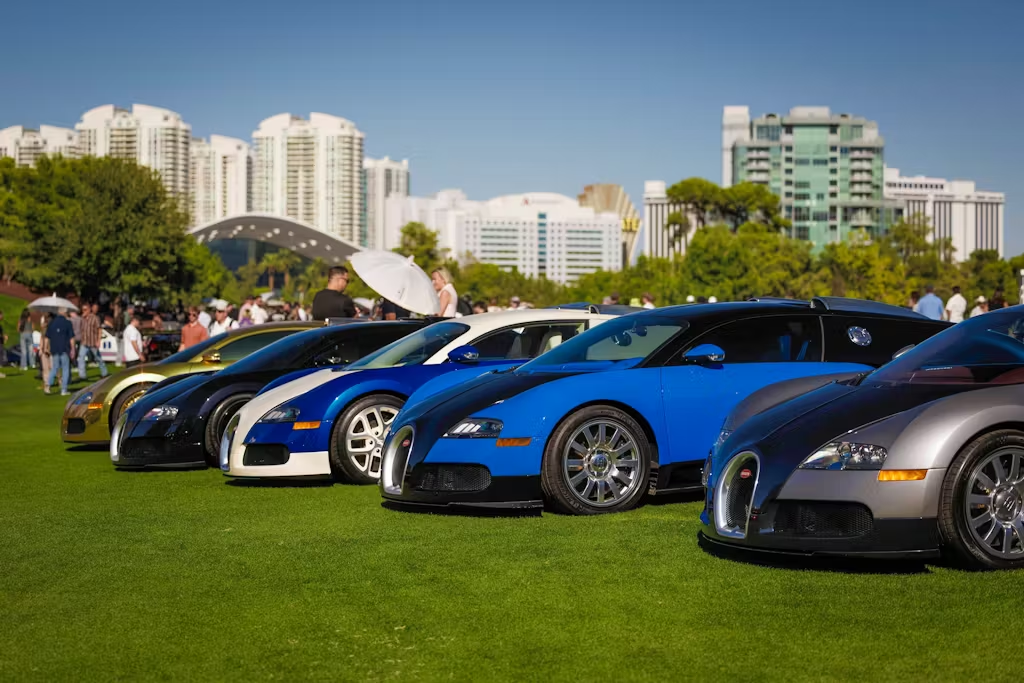
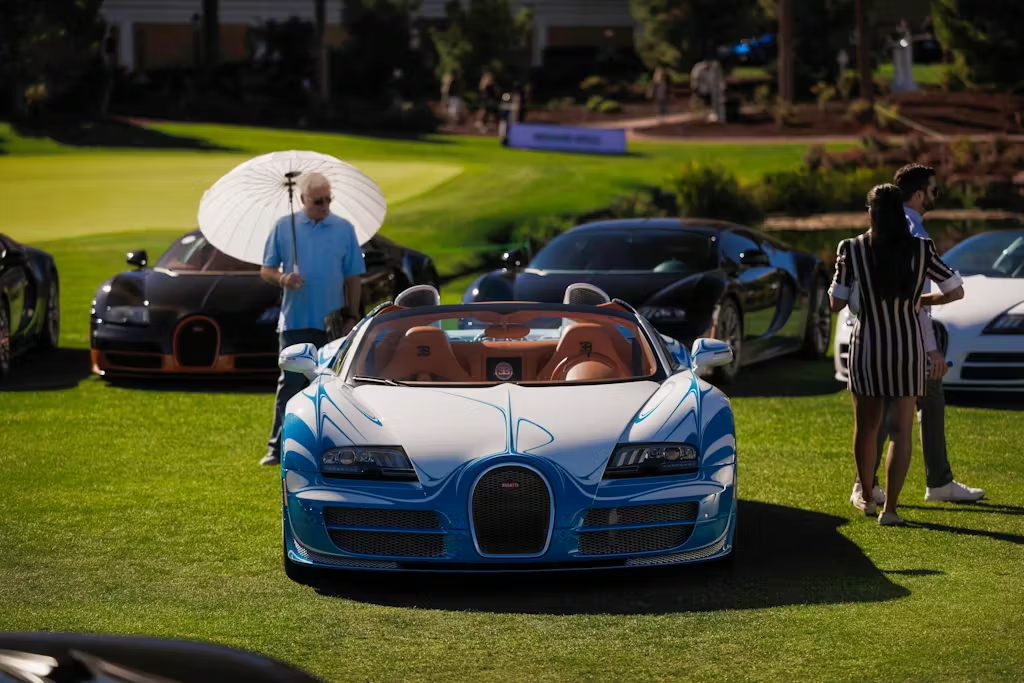
Not sure if this year’s Las Vegas Concours can be referenced with such historical weight, but this was surely a similar moment of ascension for the Bugatti Veyron. Forty-seven examples of the landmark hypercar attended the Bugatti-sponsored event, capturing headlines, camera lenses, and attention not enjoyed since the car left production in 2015. This grand, marque-backed spectacle marks a pivotal point in the Veyron’s transition from abdicated speed king and (slightly) depreciated status symbol to a blue-chip collector car worthy of study and curation.
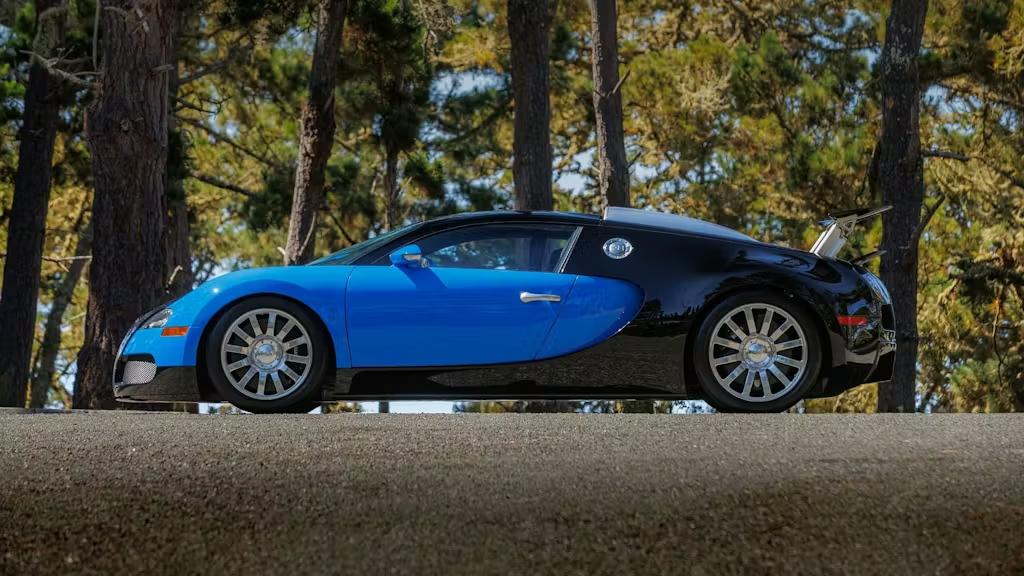
The market seems to agree. Broad Arrow’s accompanying Las Vegas auction positioned a 2010 Veyron 16.4 as the star car, earning a pinch over $2.2M to set a record for a standard, “vanilla” Veyron. “Going into the sale, I felt whatever this car brought that day was either going to change or maintain the [16.4] market,” Broad Arrow VP of Private Sales Alexander Weaver told me during a phone interview. “I told a few people who were considering it, ‘whatever you’re going to pay for this, you really can’t overpay.’”
This was a jump above the Hagerty Price Guide’s $2M value for a condition #1 (concours, or best in the world) 16.4, and nearly matching the condition #1 value for the more valuable targa-topped Gran Sport at $2.3M. Weaver expects the Broad Arrow 16.4 to be a new market waterline; “Now we’re probably going to see guys with an ’06 asking $1.6M, where they were $1.2M or $1.3M last week.”
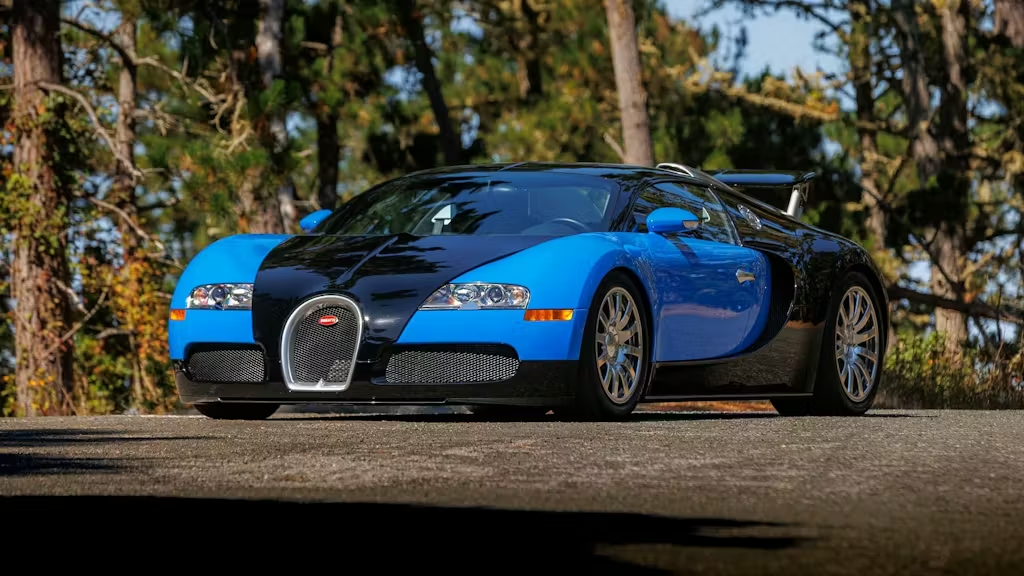
Heavy figures, but the 1200-hp cars—or, the higher-performance Super Sport and Gran Sport Vitesse—can trade hands just below, at, or beyond the $3M mark in condition #1. There was the $2.64M Gran Sport Vitesse that sold at Mecum’s 2025 Indy, along with the one-off Gran Sport ‘Sang Bleau’ that claimed $3.1M at the RM Sotheby’s 2024 Miami sale.
More public sales are necessary to see if that $2.2M sale in Vegas was a slight outlier. Given the venue and timing, it was certainly well-positioned—and, the “right” car. A reasonable 6500-mile odo and reportedly excellent service history made it a safe buy, as did the relatively standard spec. Not that any Veyron can be considered “standard,” but compare Broad Arrow’s Veyron to the brown-over-cream cappuccino 16.4 that sold this past summer through Bonhams and RM Sotheby’s unbelievable Pur Sang and its polished aluminum panels.
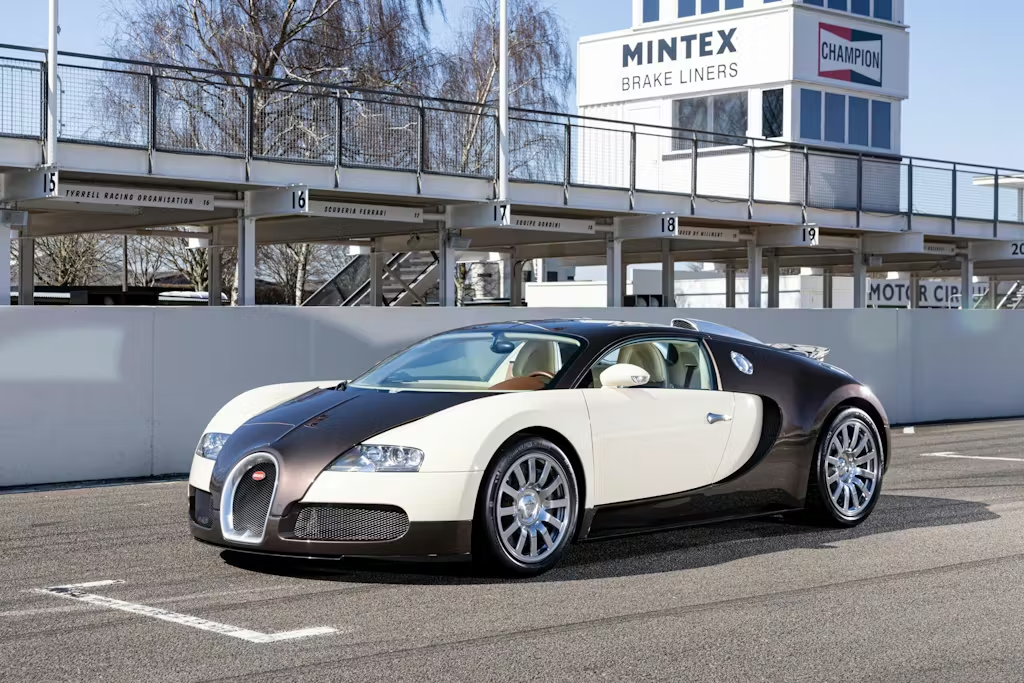
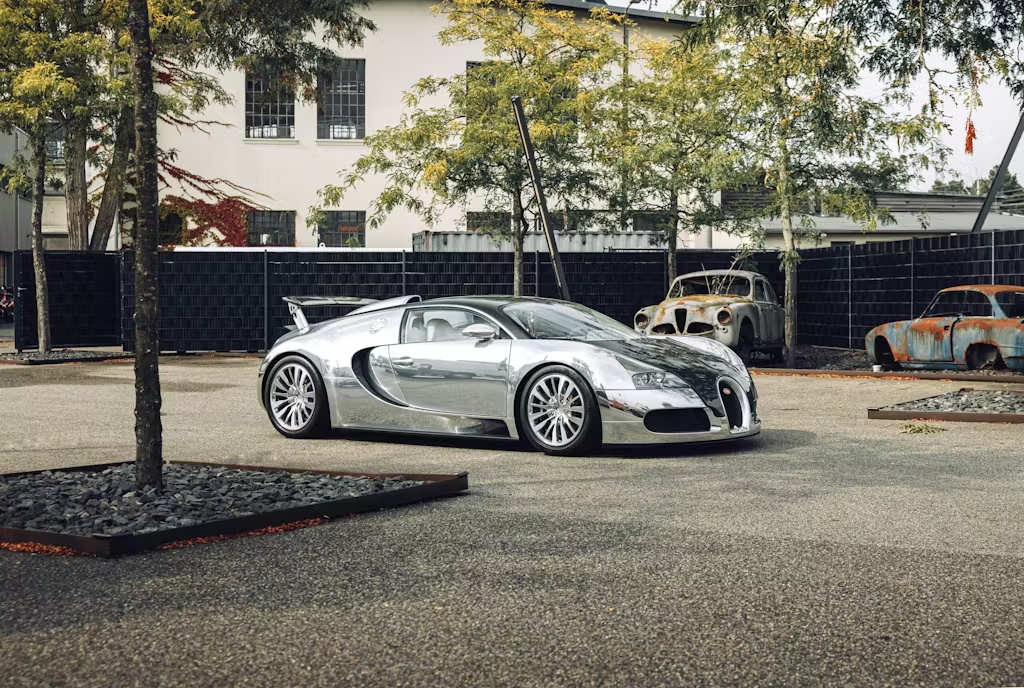
This trio offers an uncommonly forensic cross-section of the market. As we’ll detail later, it’s better compare the 1001-hp 16.4s with other 16.4s and not with the later 1,200-hp cars—the 16.4 mononym referencing a regular Veyron coupe outside of the Gran Sport (convertible), Super Sport, and Gran Sport Vitesse variations, not to mention the several other limited-production or one-off special editions.
In a contest of specification, Bonhams’ lovely 16.4 wins for both subtlety and differentiation, while simultaneously wearing both the rare comfort seats and just 478 miles since new. It sold at Bonhams’ June Goodwood Festival of Speed Sale for $2.06M. Meanwhile, only the extroverted bid on RM Sotheby’s one-of-five 2008 Veyron 16.4 Pur Sang, one of 28 distinct special editions offered in its decade of production. Arguably the first true special edition 16.4, each Pur Sang skipped the paint booth at Molsheim for front and rear fenders, doors, side skirts, and front fascia in polished aluminum with contrasting gloss carbon for the hood, roof, deck, and bumper, a combo cutting around 200 pounds and any sense of anonymity in traffic.
At RM Sotheby’s Munich sale last month, the 4000-mile Pur Sang claimed $2.3M. So, “just” $100,000 more than Broad Arrow’s basic 16.4, and roughly $150,000 more than Bonhams’ well-configured coupe, implying only a minor delta between regular and special editions. However, let’s digest a few additional considerations. The Veyron market isn’t global yet, with the oldest export-market Veyrons still five years from legal importation into the States under our 25-year rule, so you’re still dealing with region-specific markets. Beyond this, Bonhams notes its mocha 16.4 was last serviced in 2012, and though it runs and drives, it is in need of a moderate service before regular and full use.
Those more familiar with the Veyron might’ve winced at that last bit. Yes, no supercar or hypercar is remotely affordable to maintain, but to keep a Veyron is a notoriously costly exercise, with a direct engineering missive of the succeeding Bugatti Chiron to significantly reduce the cost of service. Much of what made the Veyron so groundbreaking makes it so costly to maintain. Between the pumps, filters, and lines that are replaced mostly on time and not mileage, current annual costs for a driven car with no major service required ranges from around $20,000 to $50,000.
But, Weaver says the care and feeding of a Veyron is lighter now than in the past. “Bugatti is getting to the point now where they are trying to develop new components to make it easier on the owners,” he explains. This is exemplified by the Veyron’s need to replace the full wheelset every third set of new tires due to its proprietary adhesive mounting process, something done away with the Chiron. “It’s my understanding the way the Chiron wheels and tires are, they’re trying to make a new Veyron wheel in the same manner,” says Weaver. “There’s also an extended warranty, and even these are becoming more affordable—but let’s keep that in context.”
The Broad Arrow 16.4 came with a detailed and regular maintenance record—something surprisingly not a guarantee at this level. A sizeable portion of Veyrons were purchased new by a clientele that weren’t necessarily automotive enthusiasts, often overlapping with a similar customer base to the Rolls-Royce Phantom. The Veyron is and always was a remarkable status symbol, particularly associated with some of the biggest names in the music and sports world—not usually the types of folk you’ll find at a Cars and Coffee.
“A lot of Veyrons early on ended up with owners who didn’t appreciate or go through with the expense required to maintain the cars. So, instead of a new wheel and tire kit for $60,000, they were buying a set of $10,000 custom aftermarket wheels,” Weaver mentions. “Some got custom interiors and bodykits. Now, to find a great Veyron that’s never been modified or had any changes done to it, that’s where you really want to be.”
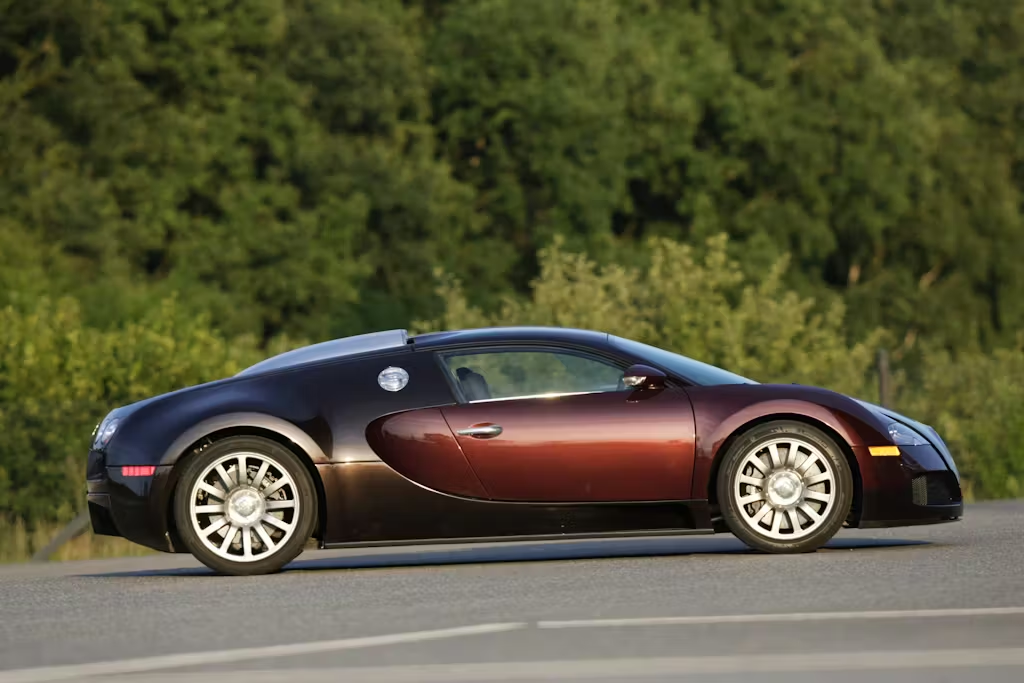
Of the 252 16.4 coupes built, only 76 were made for the U.S. market. And historical importance aside, supercar/hypercar appetite is it all time highs, giving rise to rallies, curated drive events, and gatherings like in Vegas that simply didn’t exist in the Veyron’s era. The use-case, then, is greater than it ever has been, as is the demographic spread. Hagerty’s sample size of insurance quotes for Veyrons is predictably small, but 36% came from Baby Boomers, 41% from Gen X, and—here’s the kicker—23% from Millennials. Sounds like someone’s been laying off the avocado toast.
Talking with Weaver, this age spread matches up with the interested parties on the Broad Arrow 16.4. “The buyer pool is huge. We had people in their 20s bidding on it, next to people in their 70s bidding on it, from all parts of the world and walks of life,” he revealed. “It [the Veyron] touched a lot of people. If you’re a tech guy, you appreciate the engineering. Or, you’re a Bugatti or French car person. It covers so many aspects of the car world.”
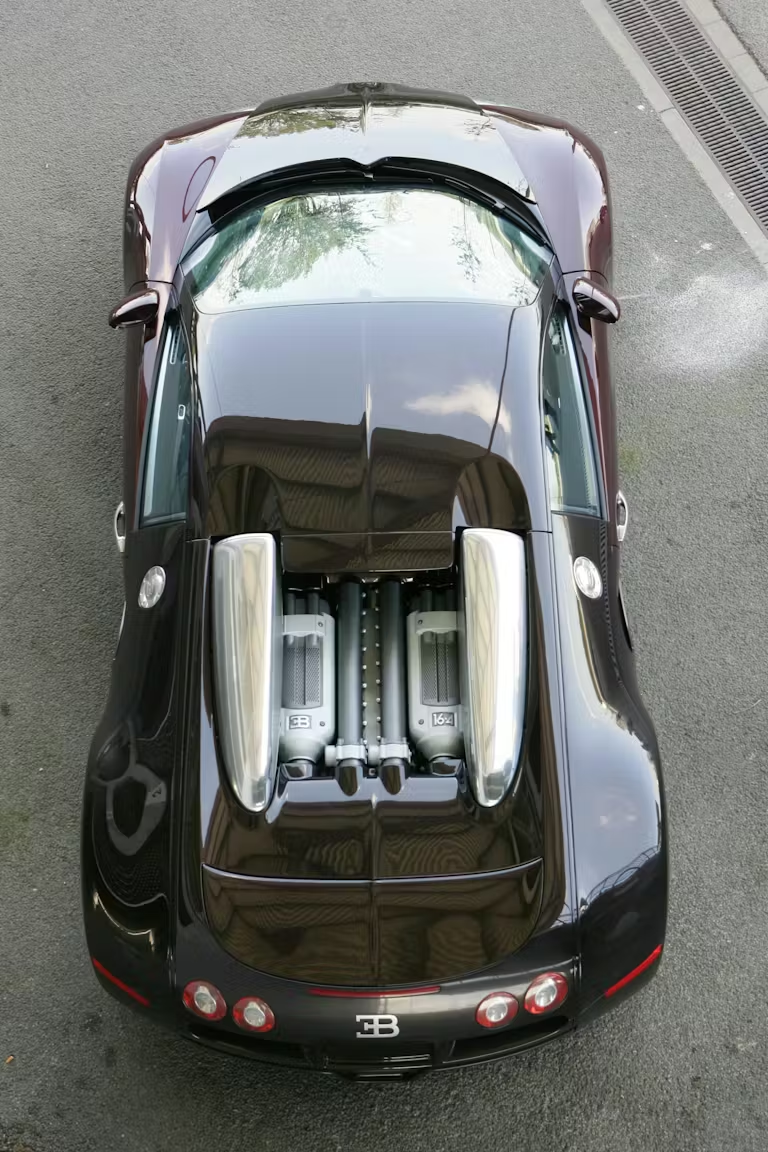
So, that’s where the Veyron falls in the market today. But where does it go from here?
Let’s weave back to that 47-car gathering. Not the first time a Veyron has been on a concours lawn, but this is certainly the most significant showcase of the breed up to this point. Aside from its tremendous capabilities, it’s a car almost purpose-built for future appreciation— something that cannot be said of many semi-mass production supercars of the last 40 years. Most cars are designed and built for the “now,” with little to no consideration of how it will present in 10, 20, 50, or 100 years.
Both the Veyron and the Chiron, to varying levels, are built for “forever.” I promise I’m not regurgitating any corpo-crap here, but look at interiors of both modern Bugs. No neon lights, no plastic, no infotainment, and outside of a small display on the Chiron’s gauge cluster, no significant real estate devoted to screens. If it looks like metal, it’s metal, and even if it doesn’t, it still might be. Surfacing is perfect, and materials are peerless.
To some, the exterior design of the Veyron might appear a bit dated—particularly in the headlights—but it’s arguably less “of the era” than a Ferrari Enzo or Lamborghini Murcielago. Speaking of the latter, the level of customization, detail, and finishing offered during the decade-long production run of Veyrons removes it from comparison with any of its contemporaries save Pagani.
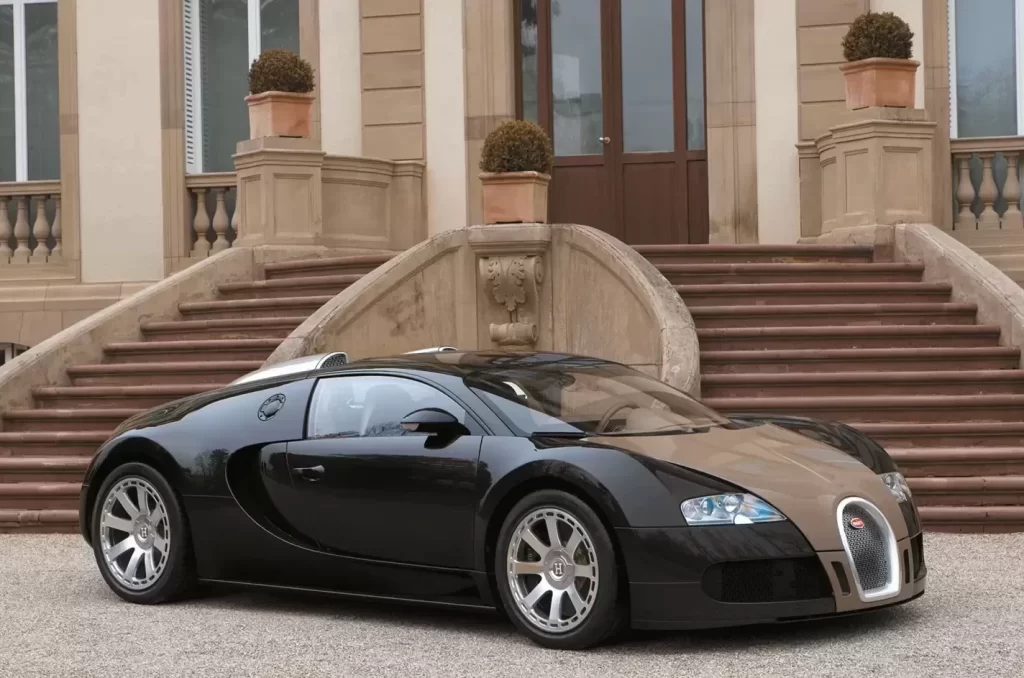
Supercars of the mid-2000s and early 2010s greatly expanded the use of carbon fiber and microsuede. Bugatti made extensive use of these, but also incorporated heirloom-grade materials in some special editions. The Gran Sport L’Or Blanc wore porcelain on the wheel caps and interior inlays sourced from KPM. The 16.4 Fbg par Hermes transformed the Veyron’s cockpit into a Birkin bag with Hermes-sourced hides that extended even to the air vents, signature saddle stitching, and a leather-wrapped key, among many other details. One repeat customer paid well over double the base price to have every panel on his Vitesse hewn from a single piece of milled aluminum, eliminating the majority of the carbon componentry and visible seams on the Pur Sang configuration.
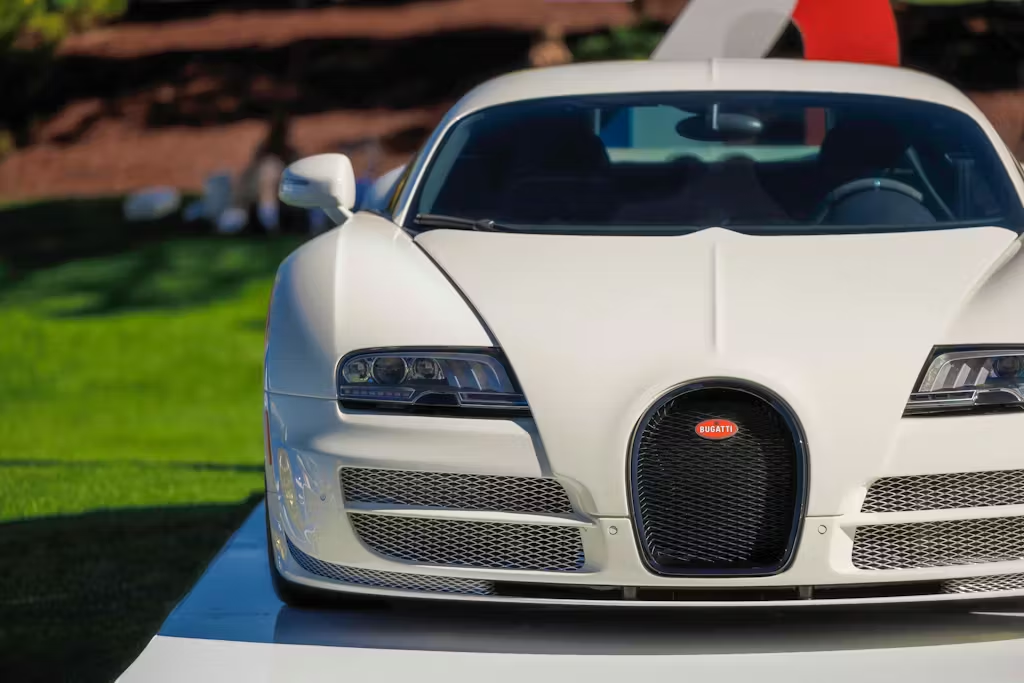
They are undeniably iconic cars, destined to someday rumble onto Pebble Beach’s 18th fairway. Back in Vegas, the official Bugatti stand showcased a lone Veyron Super Sport in gleaming white, flanked on either side by a selection of later and current Bugs including a Mistral, some Chirons, a Centodieci, and the new Tourbillion. More to come, I’m sure—Picasso’s 1932 retrospective showed not only some of his earlier and most important works, but the fruits of his “year of wonder,” setting stage for over 40 years of reinvention. Forty-seven cars, 20 years: the Bugatti Veyron is then, now, and forever.
Report by Elliott Griffith
find more news here.