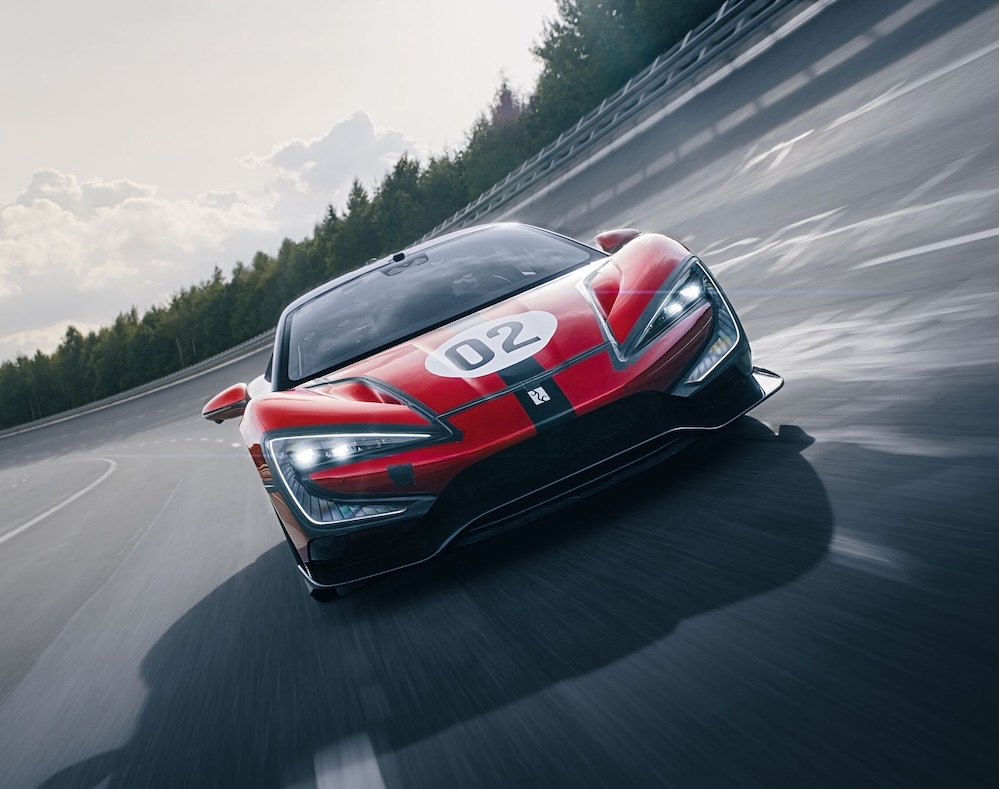
The all-electric Yangwang U9 Xtreme super-coupe recently clocked 496.22 km/h. That’s not only a new record but also a statement. And probably just a snapshot – which, come to think of it, is the next statement right there.
What does Yangwang U9 Xtreme mean? You can’t answer that question without at least trying to grasp what the twenty-first century means – an era that, in less than three decades, has shaken almost every certainty – moral, human, political and technical – to its core. Not yearly, but monthly.
Since Newton we know: for every action there is an equal and opposite reaction. There’s no motion without a cause, no matter how slow or fast. So the fact that an electric production car is now the fastest thing on wheels has to have a reason. We just have to find what it is. Which makes those 496.22 km/h in the Yangwang U9 Xtreme seem almost logical. Except it isn’t that simple. Because after Newton came Einstein – and with him, quantum physics. Everything’s relative and so on. Especially top speed in a closed environment like the high-speed oval at Papenburg.
Almost 500 km/h in a production car? Einstein’s theories wonderfully call that into question. He would have had a field day. The result: complete confusion. Or, to borrow from physicist Richard Feynman: anyone who claims to understand quantum physics is either crazy or lying.
The 496.22 km/h in the Yangwang U9 Xtreme aren’t a lie. We were there. But is it crazy? BYD achieved this with its luxury brand Yangwang and the U9 Xtreme. Again, because it still sounds so absurd: 496.22 km/h. Fully electric. In a production car. No simulation, no prototype, no AI – just a human behind the wheel saying things like: “Keep your eyes straight ahead, absolute focus, never lose sight of the road – the distances you cover are simply too vast.”
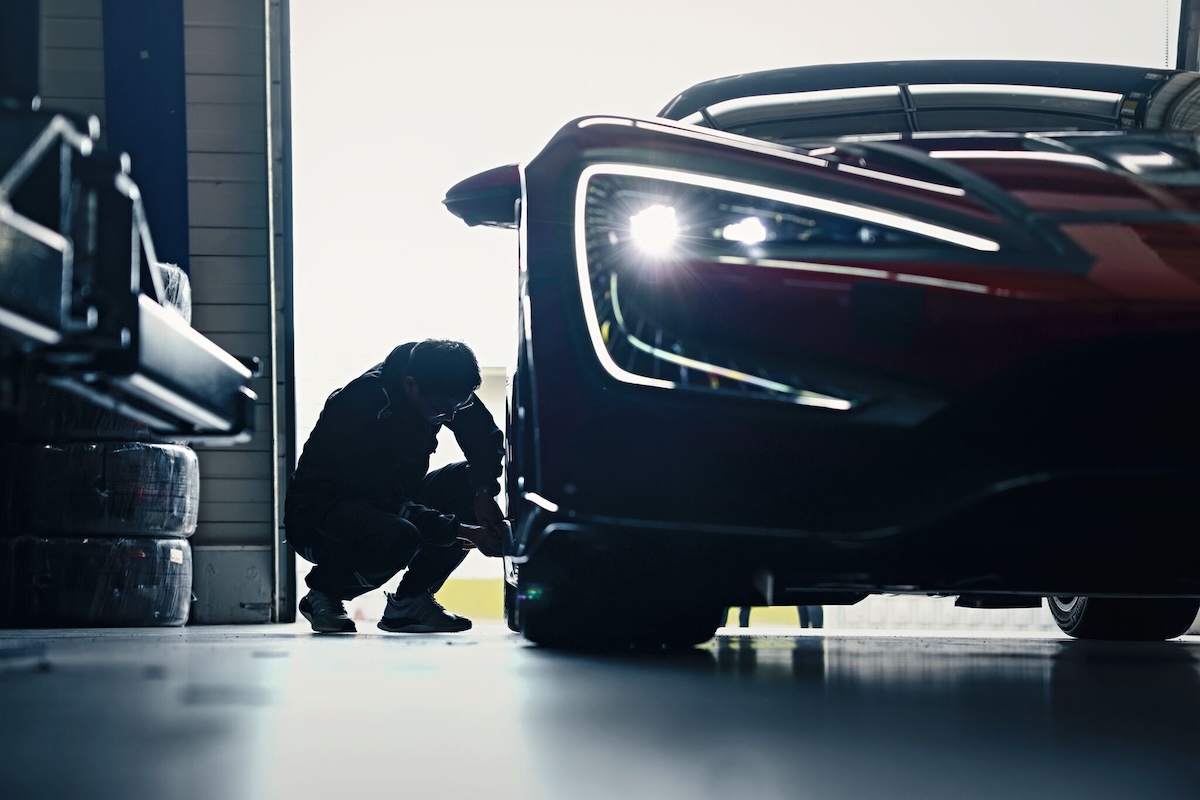
The man speaking was Marc Basseng. It’s easy to forget that 496.22 km/h isn’t just a number but a distance – and that human perception has to keep up. On 14 September 2025, the German driver set a world record. The fastest production car on Earth – and the first to do it without burning a drop of fuel. Basseng, a racer with almost thirty years’ experience and a sense of balance somewhere between intuition and trance: “Preparing for high-speed runs is always highly individual. In this case, the collaboration with the engineers was perfect. They always knew what I was doing and planning – and vice versa. The feeling was flawless.” That’s how synchronized swimmers talk about choreography.
Four electric motors, each spinning up to 30,000 rpm – a frequency no combustion engine could ever match. Together they produce more than 3,000 horsepower, managed by BYD’s e4 platform, which controls every wheel independently, analyzing, adjusting, correcting a hundred times per second. No loss of traction, no twitching, no sway. At its heart: a 1,200-volt architecture – essentially a socket from the future – delivering up to 1,000 amperes and feeding a blade battery with a 30C discharge rate – ten times that of conventional EVs. Even at 20 percent charge, it can release 1,800 kW of power. And because every physical extreme has thermal consequences, the system cuts heat buildup by 67 percent compared to an 800-volt setup. In other words, you can measure progress here in degrees Celsius.
But the real difference, says Basseng, isn’t in the numbers: “Because it’s electric, you can focus entirely on the driving. No load changes, no gearshifts, no distractions. It clears your head.” You could say: the quietest car in the world is also the purest. None of it would matter, though, without grip – and that’s where the DiSus-X suspension comes in, an active system capable of generating 9 kW of pressure per wheel and adjusting ride height by 500 millimeters per second. The result: no pitching, no rolling, no heaving. In extreme corners it even creates “negative roll” – countering gravity purely through computing power.
And since there’s zero room for chance at 496 km/h, the U9 Xtreme runs on custom semi-slicks developed in cooperation with Giti Tire. “We were driving on the north track,” Basseng recalls. “And I realized only one lane was usable – the others had asphalt patches. No issue at 300, but above 360 you really feel it. So I avoided them.” A dry remark that says it all: at 500 km/h, even asphalt becomes a variable.
Exactly 30 units of the U9 Xtreme will be built. No more. In theory, each owner could attempt Basseng’s record. The name “Xtreme” isn’t just about extremes, by the way – it’s also about the unknown. About that X that haunted Newton’s equations and puzzled Einstein’s – the placeholder we use when the world still doesn’t make sense. “There’s no handbook for this,” Basseng concludes. “It was pioneering work.”
Maybe that’s the point: that the world’s fastest car is quiet – just like its makers. When asked if they could go even faster, whether the 500 km/h barrier might actually fall, they kept mum. It’s the competition’s move now.
There’s no wink, no grin. That would be considered rude in Chinese culture. The matter, as they say, remains serious.
Text: Matthias Mederer| Photos BYD
ramp #69 More Than Machines
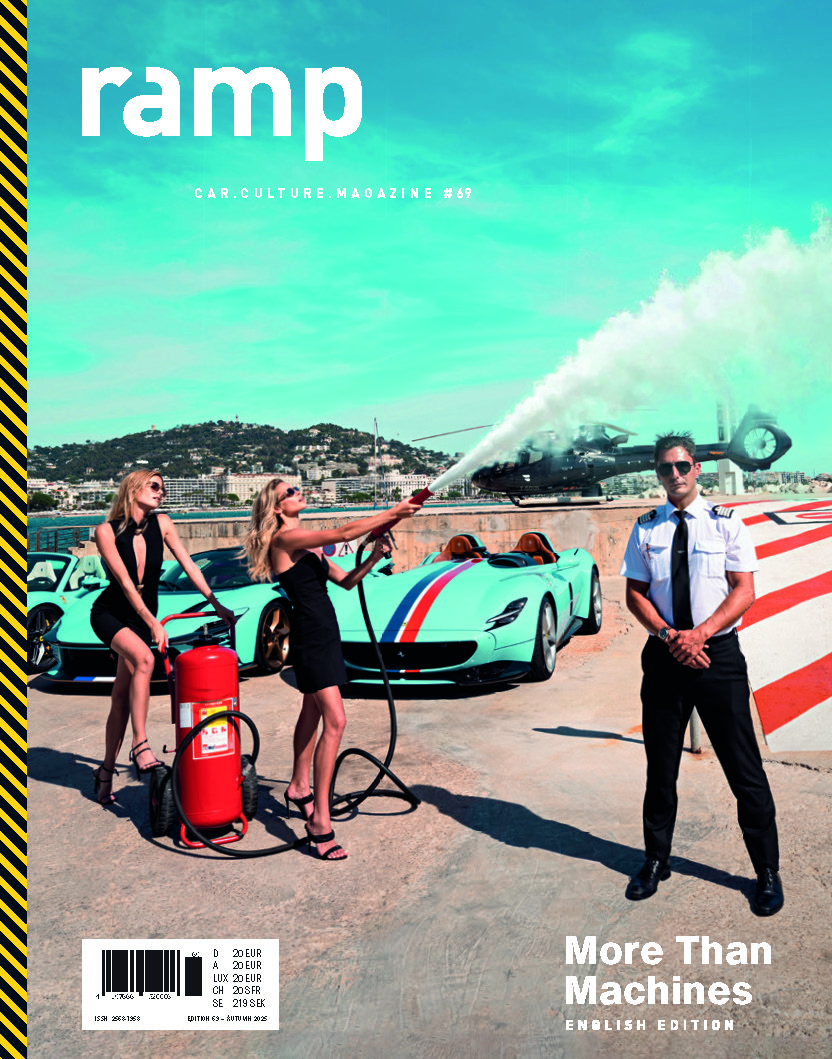
Maybe it all starts with a misunderstanding. The mistaken belief that humans are rational beings. That we make decisions with cool heads and functional thinking, weighing and optimizing as we go. And yes, maybe sometimes we do. But only sometimes. Because in truth, we are not reason, we are resonance.
And so this issue of ramp is a cheerful plea. For beauty that needs no justification. Find out more