The 1921 French grand prix was the first to be revived following the end of the First World War and, as motorsport slowly recovered, it attracted entries from four countries with German automobiles being excluded. The cars from Italy, France and Great Britain were joined by four Duesenbergs that had been shipped from the USA; the Italian entries from Fiat failed to arrive due to industrial unrest at the factory.
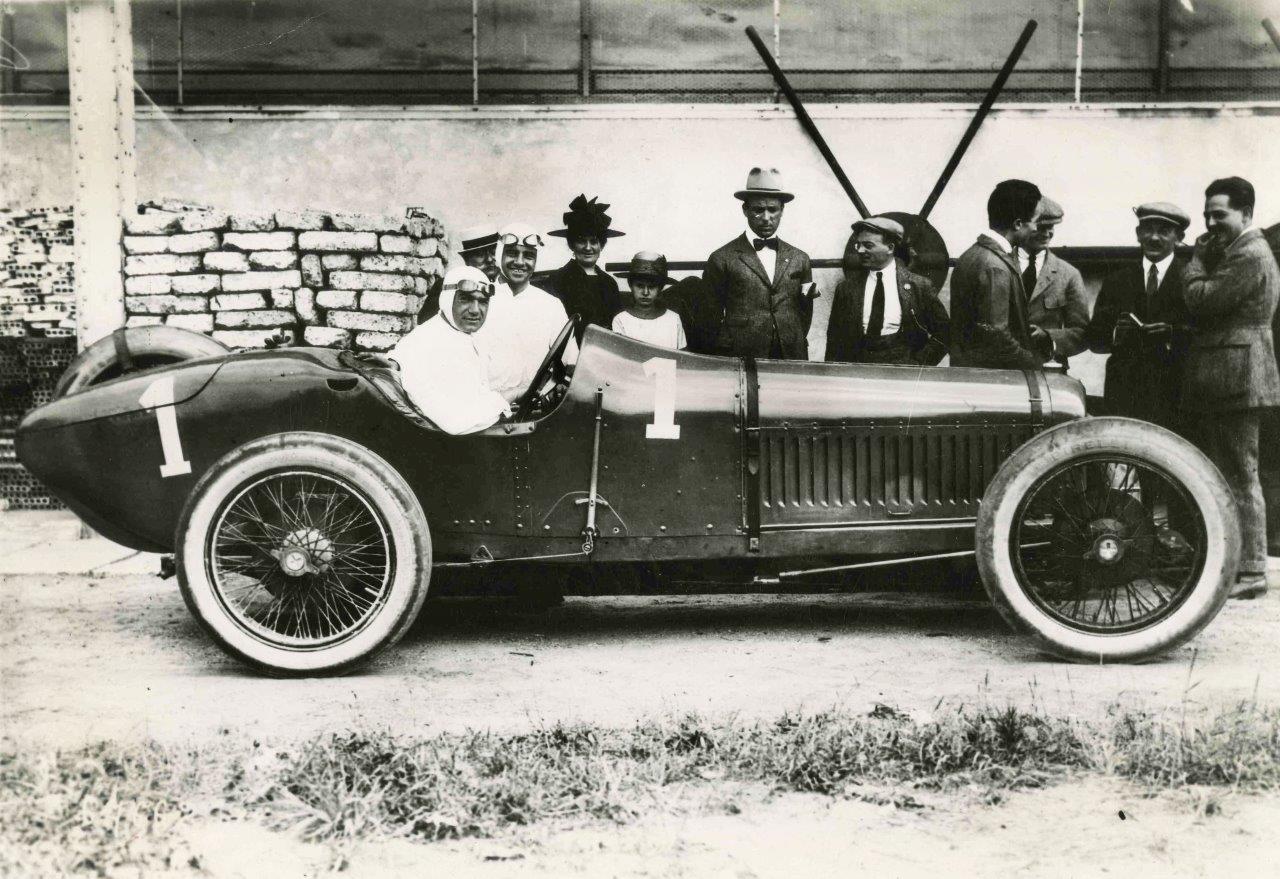
1921 ACF GP Ballot 3 litre de Palma 1
The grand prix was held at Le Mans in July 1921 and took place on a Monday due to a motorcycle race taking precedence on the Sunday. The cars left the start line at one-minute intervals with the fastest car taking 7 minutes 43 seconds to complete each of the 30 laps of the 10.72 kilometre circuit for a total race distance of 517.80 kilometres. To accommodate the American automobiles that were built to the current Indianapolis 500 regulations, a maximum engine capacity of 3-litres was permitted. The French and British contingent was made up by cars from the newly created Sunbeam-Talbot-Darracq conglomerate with each company entering a total of seven cars under each individual name. However, the two Sunbeams failed to arrive as they were not completed in time while the two Talbots made the trip across the channel and were driven by Henry Seagrave and Lee Guinness. Four French Ballots were entered, one of which was driven by the American driver Ralph De Palma. The powerful Duesenbergs proved to be the fastest, especially along the straights but the Ballots were able to keep pace due to their superior handling in the corners. By lap two the American driver Jimmy Murphy established a lead that he held to the end, a victory that would be the last for an American car in a major European race until Ford won Le Mans in 1966. The next American car to win a grand prix occurred the following year when Dan Gurney’s Eagle won in Belgium. The winning Duesenberg took the chequered flag 15 minutes ahead of the first of two Ballots, the second-place car being driven by another American, Ralph De Palma who is seen in the photograph in his 3-litre Ballot prior to the start of the grand prix. Born in Italy in 1882 but naturalized as an American citizen from 1892, De Palma was the most successful and renowned driver of his era, creating a record for the most laps spent in the lead of the Indianapolis 500, one that was only equalled 60 years later, and winning more than 2,550 of the 2,900 races he entered but, having accepted an invitation from Ernest Ballot to drive one of his cars in the French grand prix, he had to settle for second place.