About 20 years ago, this author had one of those memorable moments, the kind when you see a fresh new car for the first time and can only think, “wow.” It was on an episode of Top Gear, and it was the debut of the new baby Aston, the V-8-powered 2006 Vantage.
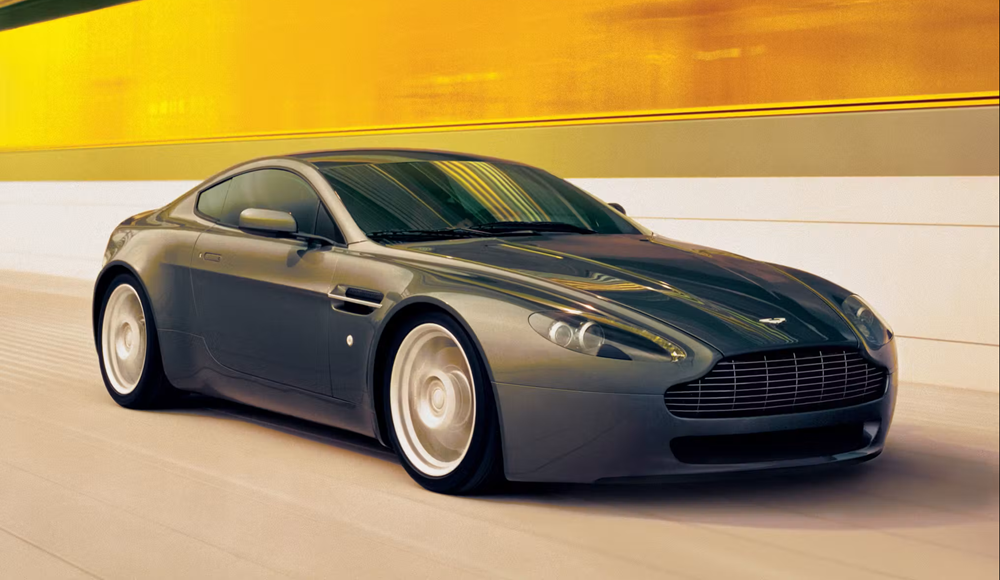
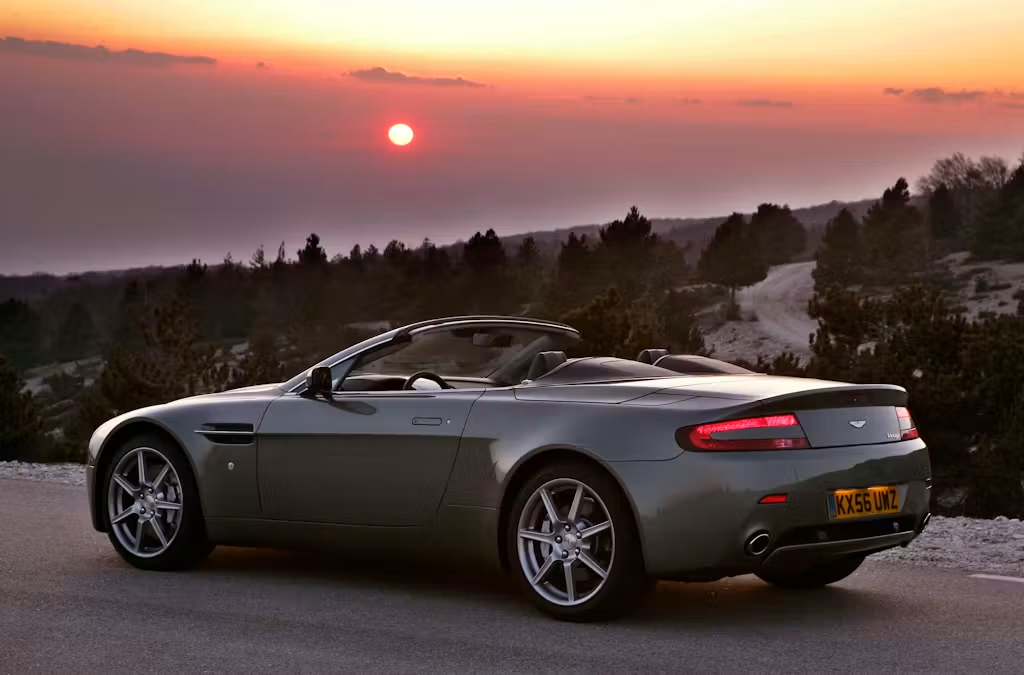
Before this latest Vantage, modern Astons had certainly been sleek and beautiful, but their sizes pointed to grand touring duty rather than agility. With the Vantage, however, Aston aimed to compete with the likes of the Porsche 911 and Ferrari F430, and its comparatively small dimensions proved it. Little overhang, taut bodywork, wide track for its size, and a classic sports car shape that, like so many Aston Martins, aged beautifully. In both V8 and V12 guise, and in both Coupe and Roadster configuration, the 2006–17 Vantage is a timeless looker and impressive overall performer.
There are things to consider before owning one, so for those potentially considering a Vantage as their next weekend cruiser or daily ripper, we’ve come up with this guide covering everything you need to know, especially pertaining to the more common and attainable V8 models.
Exterior And Interior
Dubbed the VH platform, this generation Vantage’s design is credited to both Ian Callum and Henrik Fisker, and aside from the stunning looks, their take on the legendary Vantage badge focused on size. The car’s overall length comes out to 172.5 inches, whereas its wheelbase and width hit 102.4 and 79.6 inches (with mirrors), respectively. As Car and Driver explained when the Vantage debuted: “Compared with the DB9, the V-8 Vantage is 12.3 inches shorter and has 5.5 inches cut from the wheelbase. It is strictly a two-seater, rather than a two-plus-two, but up to the door pillar, the cockpit has the same layout and dimensions.”
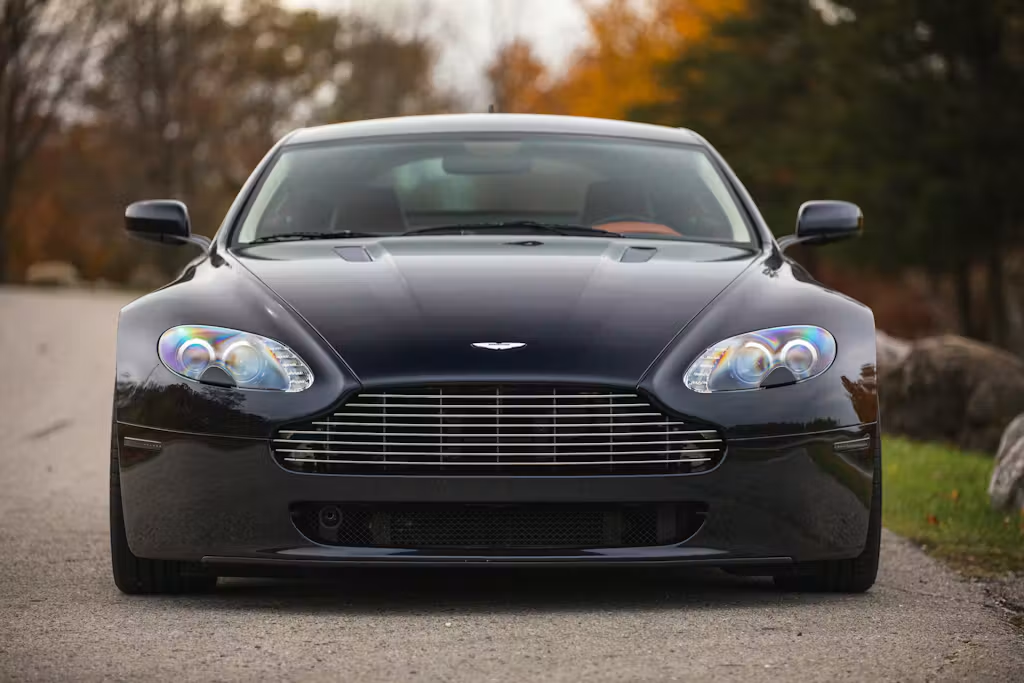
In a 2021 piece for Hagerty, Todd Warren wrote of its overall quality that “panel gaps are tight and even, and there are very few shut lines: For example, the hood extends all the way forward so there’s no nose cone, and no transverse shut line either.” Then, the sharp, HID-equipped headlights flank a large, but not too large, grille that’s characteristic of the brand, and the rear end is finished with crisp taillights featuring body color-matched centers that are largely unique for their era. Below the bumper is a slightly hidden diffuser that helps convey its sporting intentions; the whole package is beautifully tied together, putting the center of the vehicle exactly where the occupants sit.
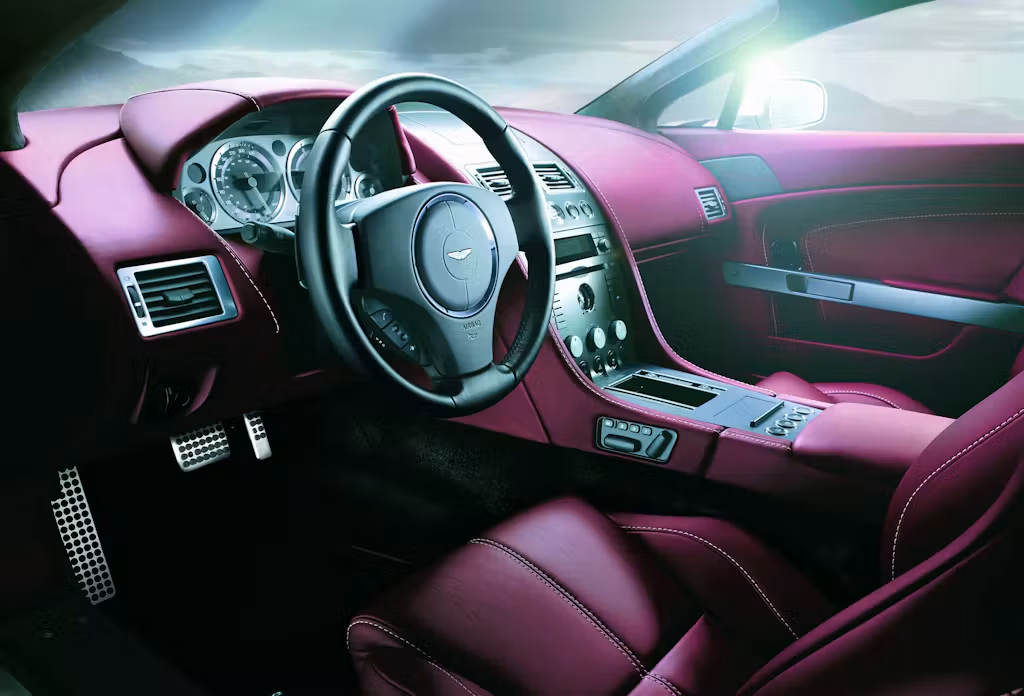
Speaking of the interior, there’s no mistaking materials and features as equipment borrowed from the rest of Ford’s Premier Automotive Group, which also included Jaguar, Land Rover, and Volvo. Sure, much of the switchgear and center stack is borrowed from Volvo, but the sharp-looking gauges are Aston-only. “The quality of build and materials is generally superb, and it really distinguishes these Aston Martins from other cars,” Warren wrote. “Bridge of Weir leather covers nearly everything that isn’t wood, metal or Alcantara.”
Engines and Transmissions
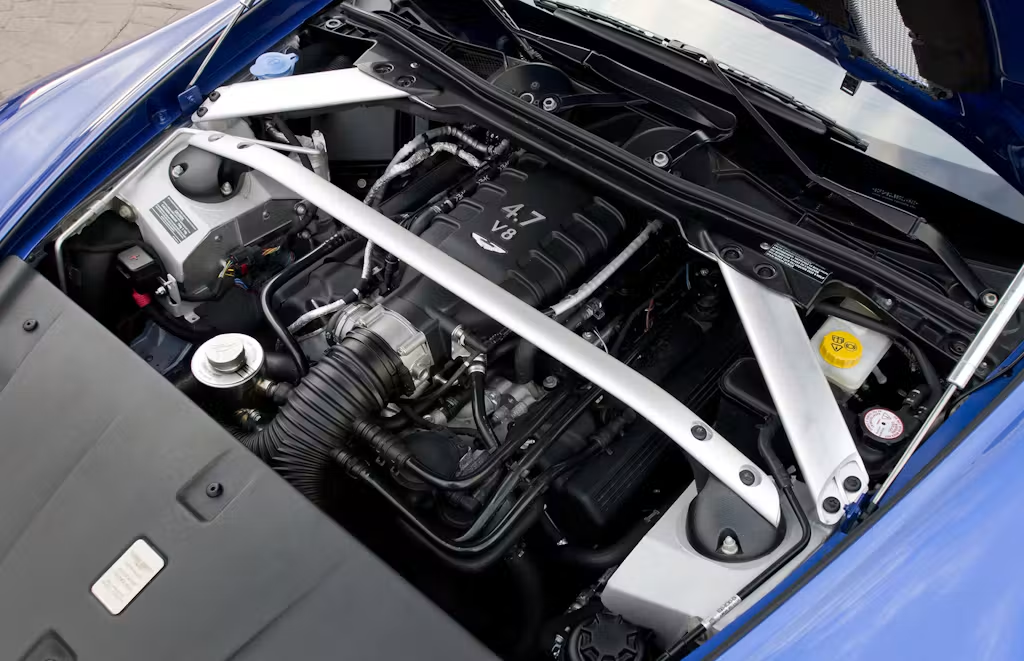
The Vantage debuted with a Ford AJ-derived 4.3-liter naturally aspirated V-8. However, this was unlike other AJ-equipped fare like the revived Ford Thunderbird or Land Rover LR3; the block and cylinder heads are bespoke, as are their contents and exhaust manifolds. Dry-sump lubrication ensured optimal performance in any scenario, and output was rated at 380 horsepower at around 7000 rpm and 302 pound-feet of torque at 5000 rpm.
A special/limited-edition N400 model was introduced for 2008 to commemorate the brand coming in under the eight-minute mark at the Nürburgring. The package added a handful of suspension tweaks, special paint colors, and special interior touches, while engine output rose to 400 hp and 310 lb-ft of torque.
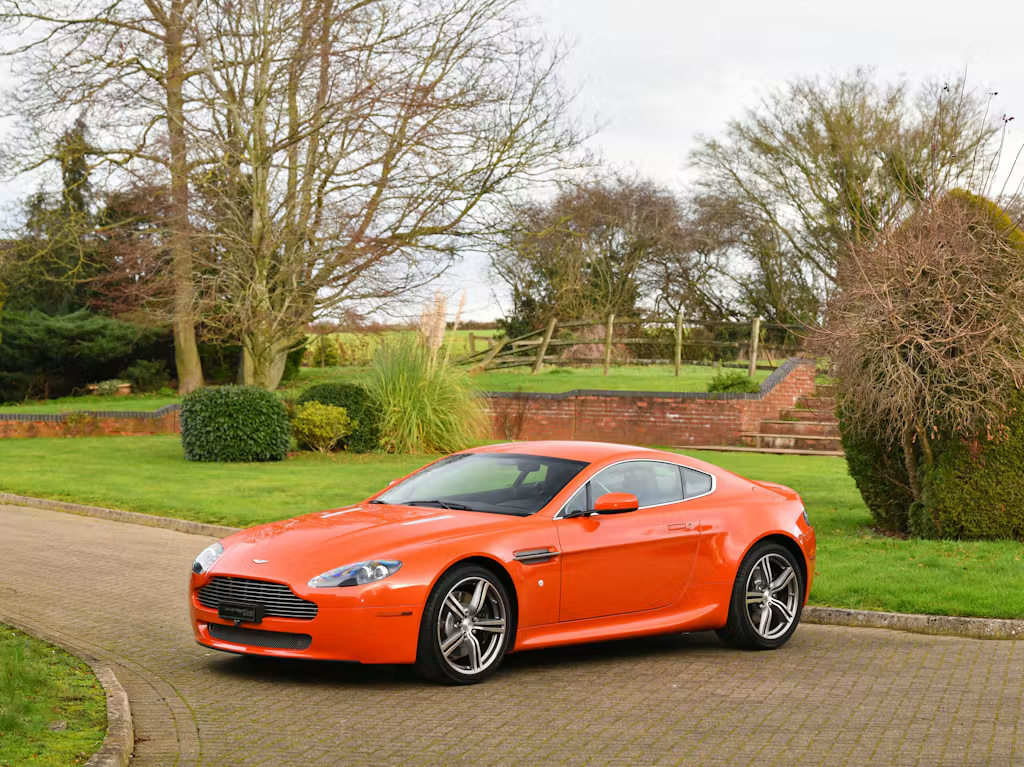
Then, partway through 2008, displacement grew to 4.7 liters, and power increased to 420 hp and 346 lb-ft. Changes included bigger valves, a forged steel crankshaft, pressed-in cylinder liners, and a revised dry-sump system. While 4.3-liter Vantages managed zero-to-60 mph runs in about five seconds, the 4.7s did it closer to the four-second mark. Aston introduced an S trim in 2010 that increased power even further to 430 hp and 361 lb-ft, and the zero-to-60 time dropped even further.
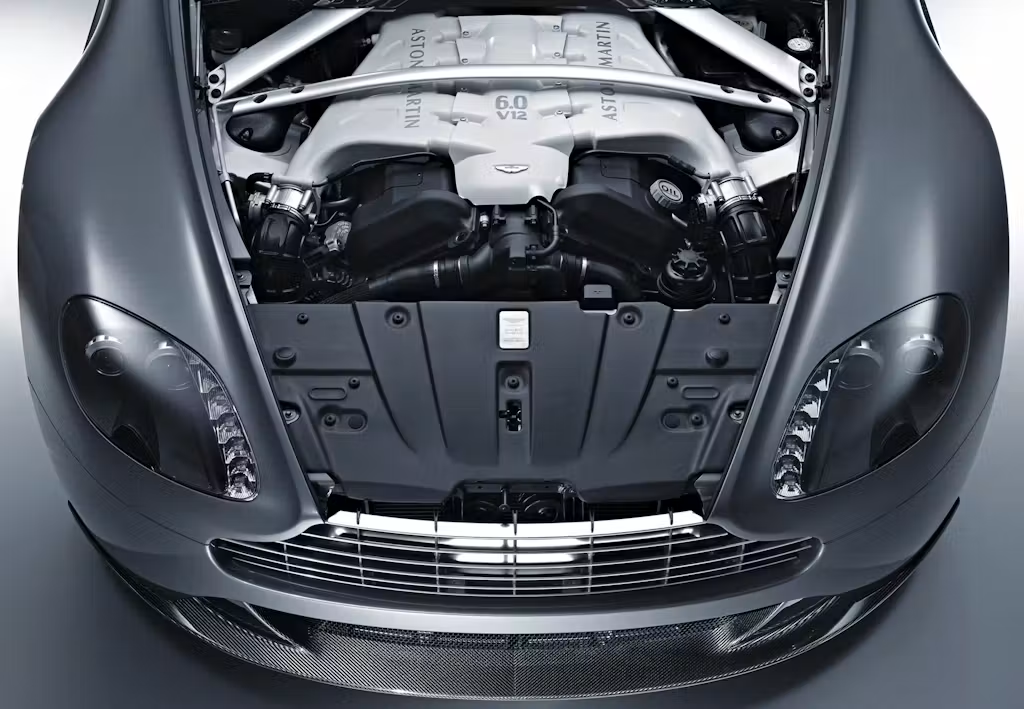
Far rarer and higher in price is the 12-cylinder model introduced to the U.S. market for 2011. Aston Martin shoehorned the V-12 from the DBS into the Vantage’s engine compartment, creating the V12 Vantage. Its 5.9 liters of displacement delivered 510 hp and 420 lb-ft, with the former figure peaking a hair earlier than the V8 model. Then, for 2014, output jumped to 565 hp and 457 lb-ft in the newly introduced S guise. Regardless of trim, the V12 gave the Vantage much closer to supercar-like speed, and the noise it makes at full chat is simply glorious.
As for gearboxes, the sole transmission available for the initial V8 model in 2006 was a six-speed manual transaxle, and 2007 saw the introduction of a Sportshift automated six-speed box. Whether shifted automatically or via the large paddles behind the wheel, gear changes reportedly took just 0.2 seconds. Both the manual and Sportshift were revised in 2008 for smoother engagement. The Sportshift II, which gained a seventh gear and lost weight, saw service in the 2011 S, 2015 GT, and 2017 GTS models. Finally, the Sportshift III was bolted up under the 2013 V12 S, offering even faster shifts.
Chassis and Suspension
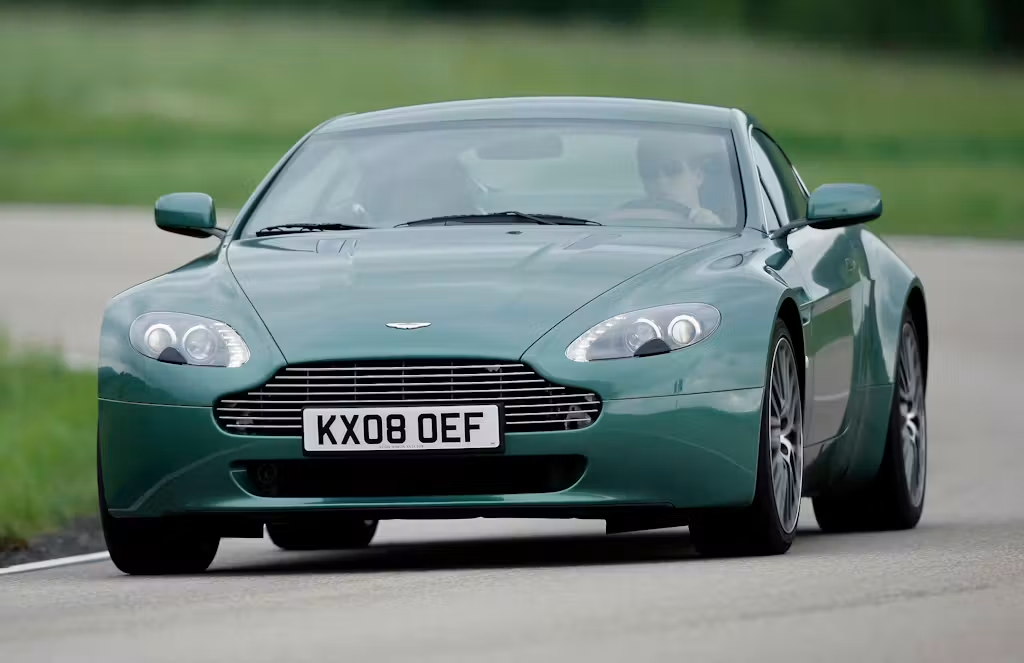
The basic chassis design of the Vantage ensured a solid basis for athletic handling. It’s a bonded aluminum monocoque with fully independent double-wishbone suspension at all four corners. Over the course of its run, the 2006–17 Vantage saw numerous tweaks and upgrades to its dampers, springs, and bushings, and the aftermarket is flush with products to optimize their functions even further.
There are a few highlights to point out. In 2008, it received Bilstein dampers, stiffer spring rates, and stiffer front lower control arm bushings to improve steering response and overall handling. Then, V12 models featured tweaked aerodynamics and sport suspension to differentiate them from the V8’s driving experience and justify the huge jump in asking price. Adaptive dampers first arrived in the V12 Vantage S, offering normal, sport, and track modes, and softer comfort suspension.
Driving Experience
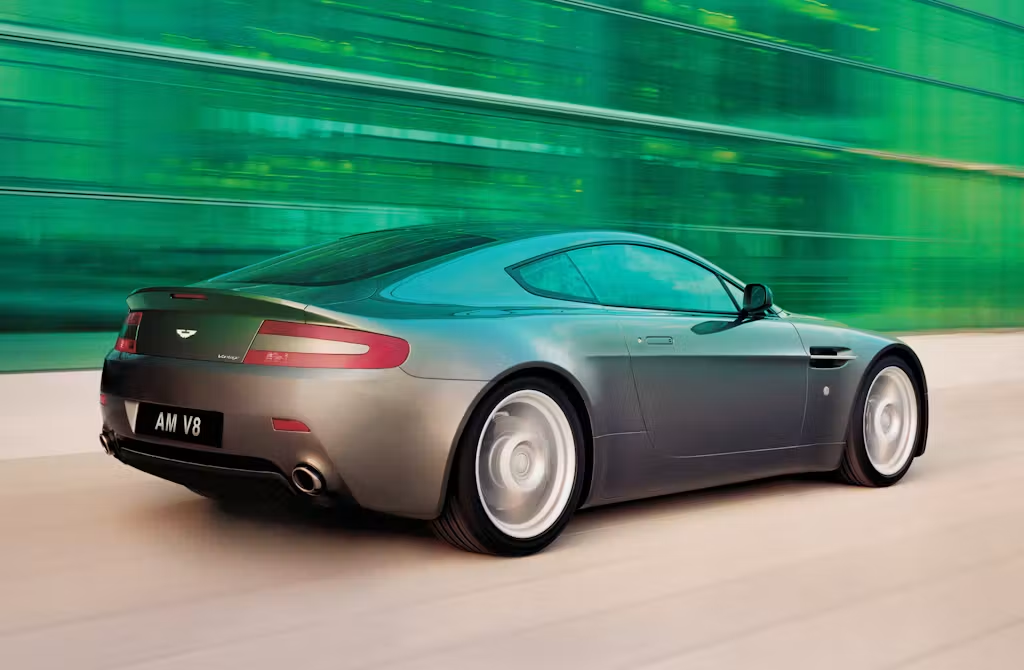
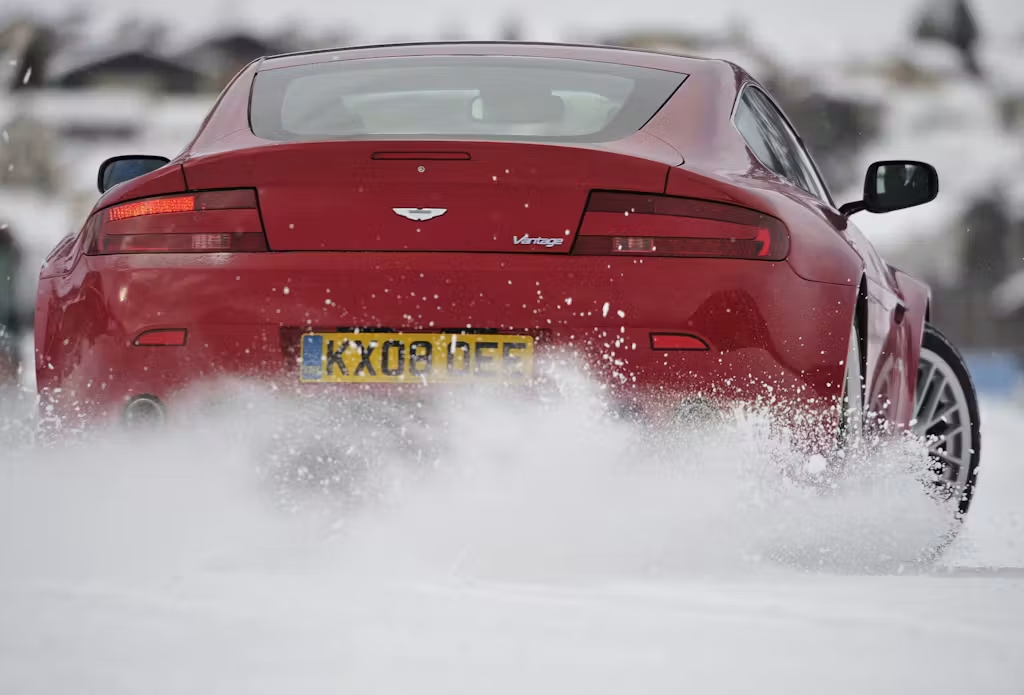
The culmination of all of these features and specs is one fun-to-drive sports car. “The V8 Vantage handles in that beautifully balanced, exploitable manner exhibited by the best front-engine, rear-drive cars,” Warren wrote for Hagerty. “With the engine mounted entirely behind the front axle line, it is a true front-mid-engine design. The rear-mounted transaxle further helps the balance, giving the car a superb, slightly rear-biased weight distribution of 49% front/51% rear.”
Peering beneath a V8 Vantage’s hood shows this beast’s intentions—the engine is indeed pretty darn far back, and thanks to the dry sump oiling system, it sits quite low in there, too. “Driven quickly, mild understeer is easily adjusted with the throttle to neutrality or, if you wish, to gentle oversteer,” said Warren. “The hydraulically assisted rack offers benchmark-level steering feel. The effort is on the heavier side, as are all the control weights. This consistency of weighting is a mark of a well-engineered driver’s car.”
Diving deeper into its inputs, the Vantage’s “gearshift, with its stubby stick and crisp movements, is good, save for the occasional difficulty of engaging first from rest,” according to Car and Driver. Its brake pedal was regarded as performance-focused, too. “The brakes, which have Brembo four-piston monoblock calipers, need a hefty push on the pedal to demonstrate their undoubted effectiveness. A more progressive pedal would aid smoother, gentle braking.”
Maintenance
Like any high-end sports car and especially any Aston Martin, ample service history from a reputable specialist and an attentive owner are key. But there’s no need to fear higher mileage, so long as consistent, on-time service history goes with it. In fact, a well-maintained example with more miles is often a better buy over something that has a low odometer reading but has sat for long periods of time.
While most Vantages don’t seem to suffer from any catastrophic issues, there are some things to look out for, particularly in regard to leaks, drivetrain service, and suspension condition. Regular spirited driving, especially if it’s been wrung out on track, necessitates frequent suspension checks and fluid changes, too. And, like any sports car, they’re happiest when regularly driven rather than kept in storage for months (or years) on end.
To get a better idea of what maintenance looks like for this era of Vantage, as well as what any potential problem areas could be, we chatted with John Soneff, owner of John’s European Auto Service, a shop that specializes in all things Aston Martin in Reseda, California.
There are some recommended intervals to keep in mind, according to Soneff. Brake, clutch, and Sportshift hydraulic fluid should be replaced approximately every two years. Transaxle and differential oil changes should come every 30,000–40,000 miles, or every three to four years. Coolant should be changed every four to five years, using the correct specification. New spark plugs should go in every 30,000–40,000 miles, along with inspection of the accessory belt, tensioners, cooling system, and all dry-sump hoses. “I prefer an engine oil and filter service every 5000 miles or annually,” says Soneff. “Most examples do not accumulate 5000 miles in a year, so time usually determines the interval.”
He also recommends a proper battery conditioner whenever the car sits for an extended period. Low voltage creates a remarkable number of misleading electrical and transmission complaints on these cars. Then, in terms of regular use, “a fully warmed drive is much better for one of these cars than repeatedly starting it briefly and putting it back into storage.”

Clutch changes for manual-transmission examples are sooner than your average vehicle, and replacement is labor-intensive. “As a practical expectation, a well-driven manual may provide 40,000–60,000 miles or considerably more,” Soneff explains. He also says to budget $9500–$11,000 for a complete job including the clutch, flywheel, release/slave bearing, pilot bearing, required hardware and gaskets, fluids, and final testing.
The Sportshift auto has its own clutch-change interval, and regular fluid service is crucial to maintain smooth shifts and no-fault operation. This interval is a bit shorter, and it’s more labor-intensive. ”[These] cars often require a clutch somewhere around 20,000–40,000 miles, although I have seen enormous variation in both directions,” says Soneff, and he advises budgeting $10,500–$12,500, including the additional hydraulic, diagnostic, adaptation, and road-learning procedures.
Those figures vary depending on whether the flywheel is reusable, an original-style or upgraded twin-plate clutch is selected, and whether the torque-tube bearings, Sportshift hoses, slave cylinder or actuator require attention, along with other similar considerations.
Sportshifts shouldn’t necessarily be ruled out. They operate rather well when in tip-top shape. However, Soneff explains that “stop-and-go traffic, extended creeping, reversing uphill, and holding the car on the throttle rather than the brake are all very hard on a Sportshift clutch.” Then, he adds that it’s important to let the car complete its cold-start clutch-learning procedure in neutral before selecting drive or reverse. Suspension dampers, arms, and bushings should also be inspected regularly, and clunks can point to lax ownership.
Potential Trouble Areas
When it comes to potential problems, Soneff has good things to say about the smaller-displacement V8 Vantage: “The 4.3 is relatively understressed and has proven to be an extremely durable engine internally. The 4.7 brings a very worthwhile increase in torque and overall performance, but there have been isolated reports of lower-end or connecting-rod-bearing failures.” While it’s not an epidemic or reason to avoid the 4.7, it’s advisable to look out for any unexplained knock, low-oil-pressure history, or metallic debris in the oil filter. “A clean filter inspection and strong maintenance history have more value than internet speculation about a particular production year.”
There are also several leak-prone areas, such as the front timing, variable valve timing, and valve covers, as well as the rear differential, oil cooler lines and fittings, and the entire cooling system. Then, basically anything related to the flow of oil, from the dry sump to the oil coolers. A thorough pre-purchase inspection by a qualified shop will quickly determine whether any of these are present. “A damp engine is different from an active leak that is lowering the oil level or contaminating the belts, so the severity needs to be judged rather than treating every trace of oil as an emergency,” Soneff notes. Cooling system issues are “normally manageable age-related repairs, but evidence that the car has been driven while overheating is a much larger concern.”
Then, Soneff shares that it’s important to discern between ignition quality and internal engine condition. “Coils and spark plugs can produce intermittent misfires, and oxygen-sensor or secondary-air faults are not unusual as these cars age. Those are peripheral problems rather than evidence of a weak engine.”
Finally, electrical issues can pop up. They rear their ugly heads in interior components, engine-related gremlins, headlights, and more. Flickering lights, gauge problems, and random electrical failures can point to some major issues. Ensuring the battery and charging system are in good condition avoids these, as well as checking and replacing fuses and relays as necessary—though frequent changes can point to larger issues. Thankfully, troubleshooting is generally DIY-friendly, and an afternoon with a multimeter and can of contact cleaner can go a long way.
In summary, Soneff says that his elevator-pitch buying recommendation “would be a 2009-or-later 4.7 manual, or a 2012-or-later car if Sportshift is desired.” That said, he’d buy an exceptional, well-documented 2007 manual before a neglected 2015, because current condition, service history, and the quality of the pre-purchase inspection matter much more than the number on the registration.
What To Pay
Let’s start off with a bird’s-eye view of who’s buying VH-platform Vantages. Hagerty’s insurance data shows that 25% of Vantage quotes come from baby boomers, who make up 34% of the whole market, while 27% of quotes come from Gen Xers, whose share is 31%. Millennials are holding it down with 30%, even though they only make up 21% of the market, while Gen Zers make up 15% of Vantage quotes, even though they only claim 10% of the market as a whole.
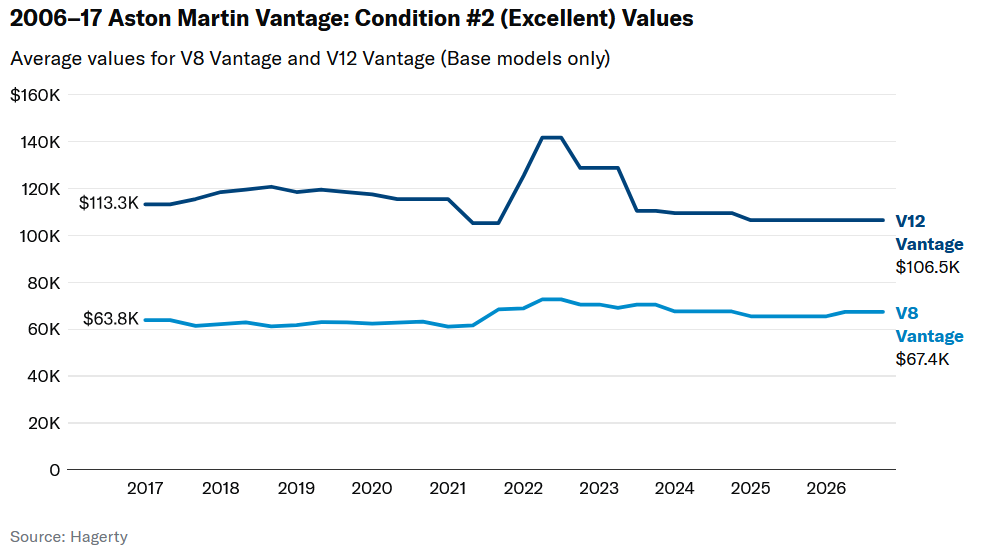
In terms of where values are at today, early base 4.3s are the most affordable. An excellent (#2 condition) Coupe commands $48,900 currently in the Hagerty Price Guide, while more used ones in #3 (good) condition come in at $39,200. Give all of them a 5% haircut if you opt for one equipped with an automatic transmission from a year when it was offered. Roadster models command a few grand more. As years progress, each year increases a few grand regardless of whether it’s a Coupe or Roadster.
If a first-year base 4.7 is desired, expect to pay around $60K for a Coupe in #2 condition or $49K for one in #3 condition. To get into a Vantage S—the first year being 2011—those values are currently $55,500 for #2 condition and $43,700 in #3 condition. Interestingly, Roadsters begin to drop in value with these later V8 versions and can be had for $5000 to $7000 less, but, like the 4.3, overall values increase each year. The 2011 N420 was a special model, and pricing for Coupes reflects accordingly: $83,400 (condition #1), $66,100 (condition #2), $52,300 (condition #3), $43,000 (condition #4).
Getting into a first-year V12 Vantage Coupe takes a bit more scratch: $132,000 (condition #1), $104,000 (condition #2), $82,500 (condition #3), and $67,600 (condition #4). The biggest stick-shift premium also comes in for a 12-cylinder model, the 2017 V12 Vantage S. A Coupe in #2 condition is currently worth $117K, but add another 50% to that price for a manual.
A Timeless Driver’s Car
Between its handsome, athletic looks, diminutive sports car size, vibrant powertrains, and choice in how each cog is selected, the VH Aston Martin Vantage is one of the best modern sports cars to come from the United Kingdom. Its generation ran for quite a few years, but a tremendous amount of updating occurred along the way, including cramming a beastly V-12 beneath the hood. As a result, there is considerable variation across the range, and values vary accordingly. Regardless of powertrain, gearbox, or trim, the 2006–2017 Aston Martin Vantage is renowned for its wonderful inputs, revvy engine, and phenomenal handling, and can be a thoroughly rewarding car to own and drive.
find more news here.