Half of the cars sold during the RM Sotheby’s Abu Dhabi sale held on December 5, 2025, traded hands for seven- or eight-digit figures. The most expensive car was a 1994 McLaren F1, which set a new auction record for the model, but the main takeaway isn’t that the rare three-seater is still going up in value. Looking through the results, we spot three sales that inaugurate a clever way to fund a racing team that could start a new trend.
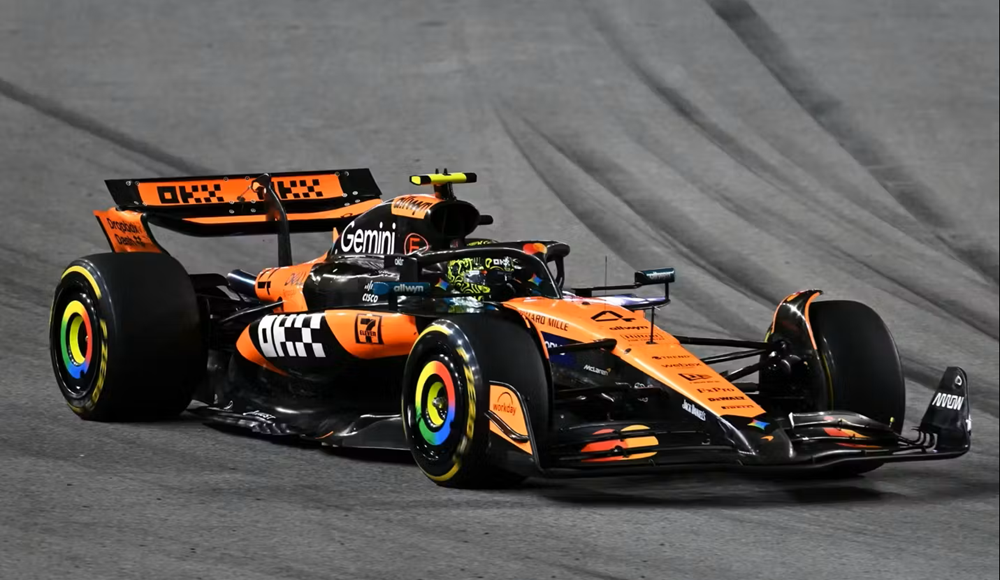
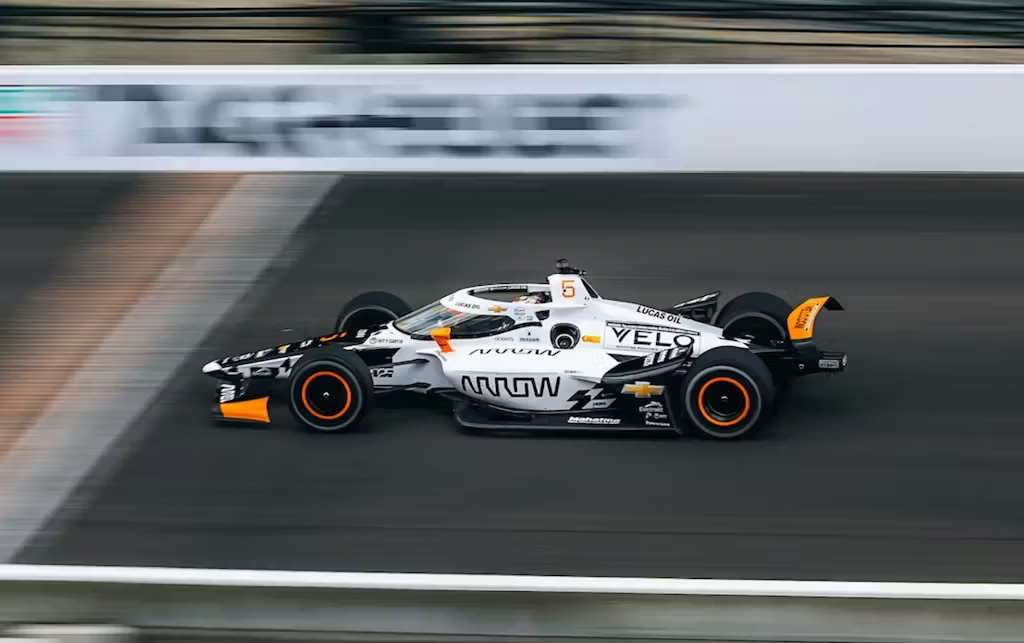
The three cars are a 2026 McLaren MLC40A Formula 1 car ($11,480,000), a 2027 McLaren United AS WEC Hypercar ($7,598,750), and a 2026 Arrow McLaren IndyCar Dallara-Chevrolet DW12 ($848,750). While it’s not unusual for successful race cars with a documented pedigree to sell for six- and seven-digit figures when they’re done racing, what’s new here is that none of these cars have lined up on a starting grid yet. The MLC40A, which will comply with the new-for-2026 Formula 1 regulations, hasn’t even been unveiled.
McLaren didn’t auction off three seats on its racing teams—the cars will be delivered in 2028, after they’ve retired from racing. The number of races (or, in the best-case scenario, championships) won, and the name of the pilot(s) who drove a specific car play a significant role in determining said car’s value. It stands to reason that the Ferrari F1-2000 that Michael Schumacher won the 2000 Formula 1 Driver’s championship in is worth much more than, say, the Minardi M02 that didn’t score a single point that year.


Here, it’s a game of roulette. McLaren notes that it hasn’t decided whether the person who paid nearly $12 million for one of its 2026 Formula 1 cars will receive the car driven by Lando Norris or the car driven by Oscar Piastri. Hypothetically, let’s say it’s the Norris car. If he wins the 2026 championship, the purchase will likely look like a wise investment. If the car is plagued with problems and doesn’t finish a single race, it’s not unreasonable to assume that it will be worth less than what it sold for in Abu Dhabi.
The gamble may increase the appeal of buying unproven race cars; It’s next-level betting. Speculation is very much alive in the collector-car world. McLaren’s pledge to deliver the cars in running condition could have spurred bidding, too. Formula 1 cars don’t trade hands on a regular basis, and when they do, they’re often sold as rollers—without a power unit. The company will deliver its 2026 Formula 1 car to its owner with the Mercedes-AMG-built, 2026-specification 1.6-liter turbo-hybrid V-6 still installed. The WEC car will be delivered “in race-ready condition with running equipment,” and the same goes for the IndyCar.
On a secondary level, auctioning cars before they race is a smart way for the McLaren team to raise cash. As a thank-you gift for what can arguably be summed up as helping bankroll a professional racing team, the owners will become instant VIPs within the company. The person who bought the Formula 1 car will have the opportunity to lease a 2025 show car until the 2026 car is delivered. McLaren is also throwing in hospitality experiences at two Grand Prix races, access to the 24 Hours of Le Mans and the Indy 500, and an invitation to its Technology Center in Woking, England. The other two buyers will receive similar perks.
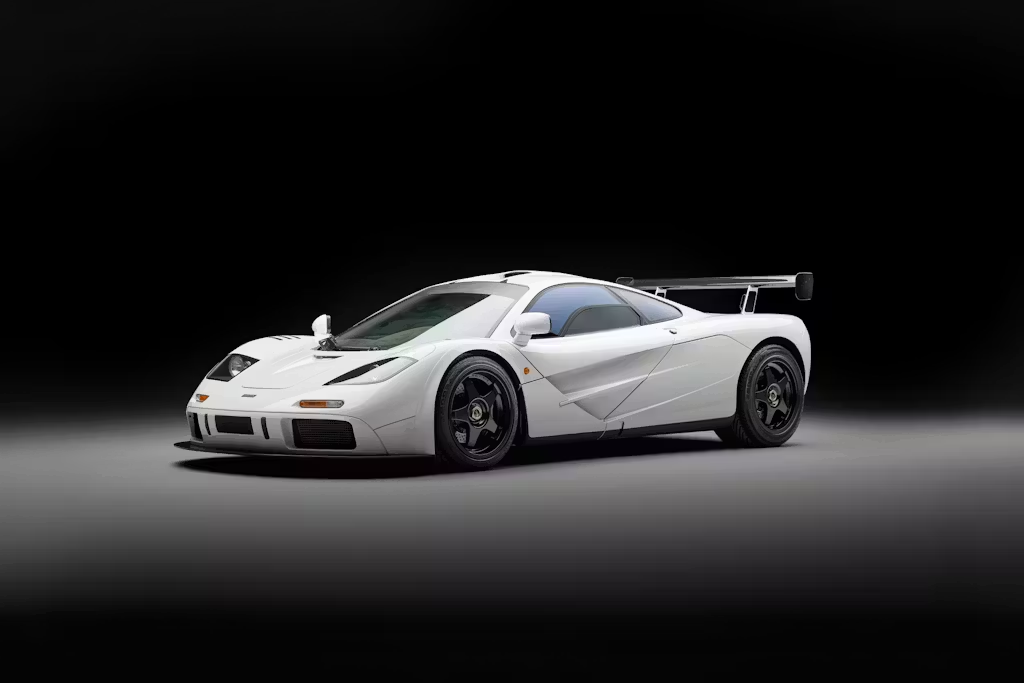
Another notable result from the Abu Dhabi sale was the 1994 McLaren F1, which sold for $25,317,300. That figure makes it the most expensive F1 ever sold at an auction, though more expensive examples may have traded hands privately. Chassis number 14 is also the 13th-most-expensive car sold at an auction.
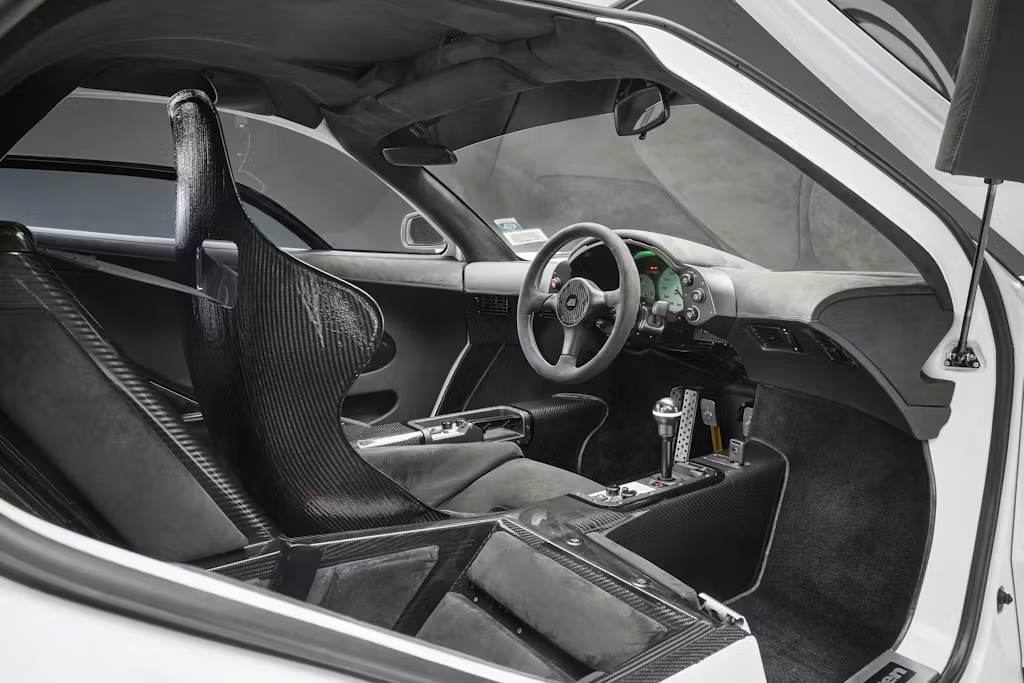
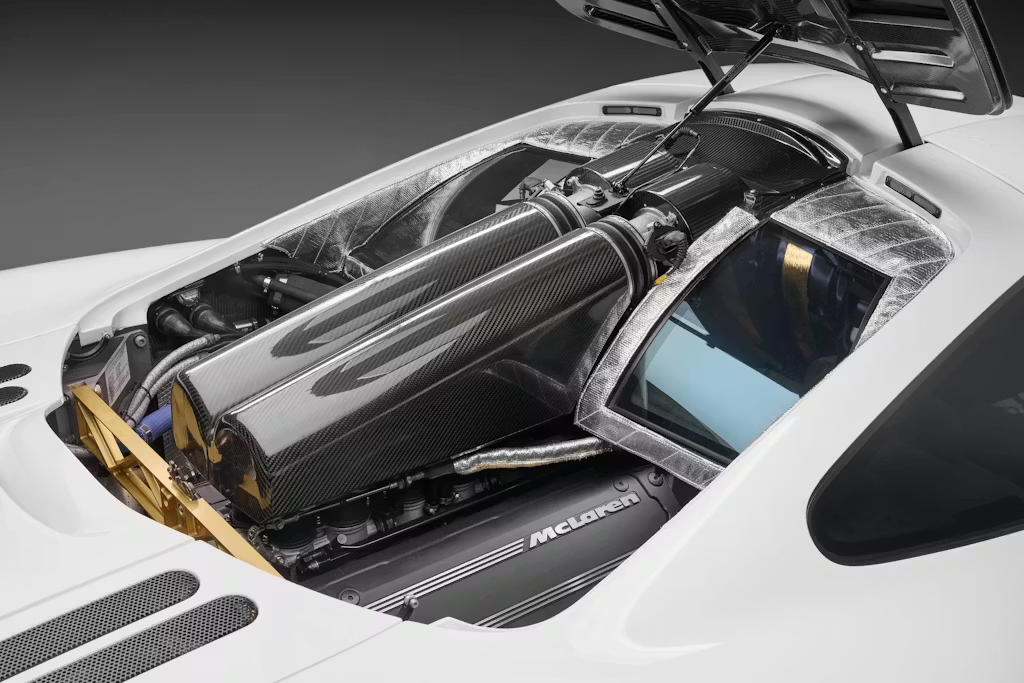
Finished in Ibis White with a black interior, the record-setting F1 left the factory in Titanium Yellow and was delivered new to the royal family of Brunei. It was later sold and exported to the United Kingdom, where it was owned by David Clark, the former director of McLaren’s car-building arm. It continued its trip around the world and landed in the United States. The collector who purchased it in August 2006 sent it back to McLaren’s headquarters in Woking for a complete overhaul that included painting the car in Ibis White, installing a rare and desirable high-downforce kit, and updating the air conditioning system. The interior was converted to LM specifications, too, which included installing a carbon fiber driver’s seat.
The refurbishment reportedly cost $500,000 at the time, which partially explains the selling price in 2025. It’s documented, and the sale includes 450 pictures taken during the overhaul at McLaren’s headquarters.
It’s a pretty safe bet that the F1 will continue to go up in value in the coming years. The jury is still about whether the practice of selling cars before they race will spread across the racing world. We wouldn’t be surprised if it becomes common: Racing is expensive, especially for smaller teams, and Formula 1 is more popular now than it has ever been in recent memory. The mere fact that McLaren managed to sell a Formula 1 car for nearly $12 million may motivate other teams to follow its example.
Report by Ronan Glon
find more news here.