Monterey Car Week just closed and the auction results are staggering. While the auction companies are still tallying post-block sales, as of this writing, the overall total has hit a new all-time high of $748M. With a number like that, there were plenty of eye-watering sales to choose from, but the clear standout sale of the week was the 1964 Shelby Cobra Daytona sold at Gooding Christie’s for $42,905,000.
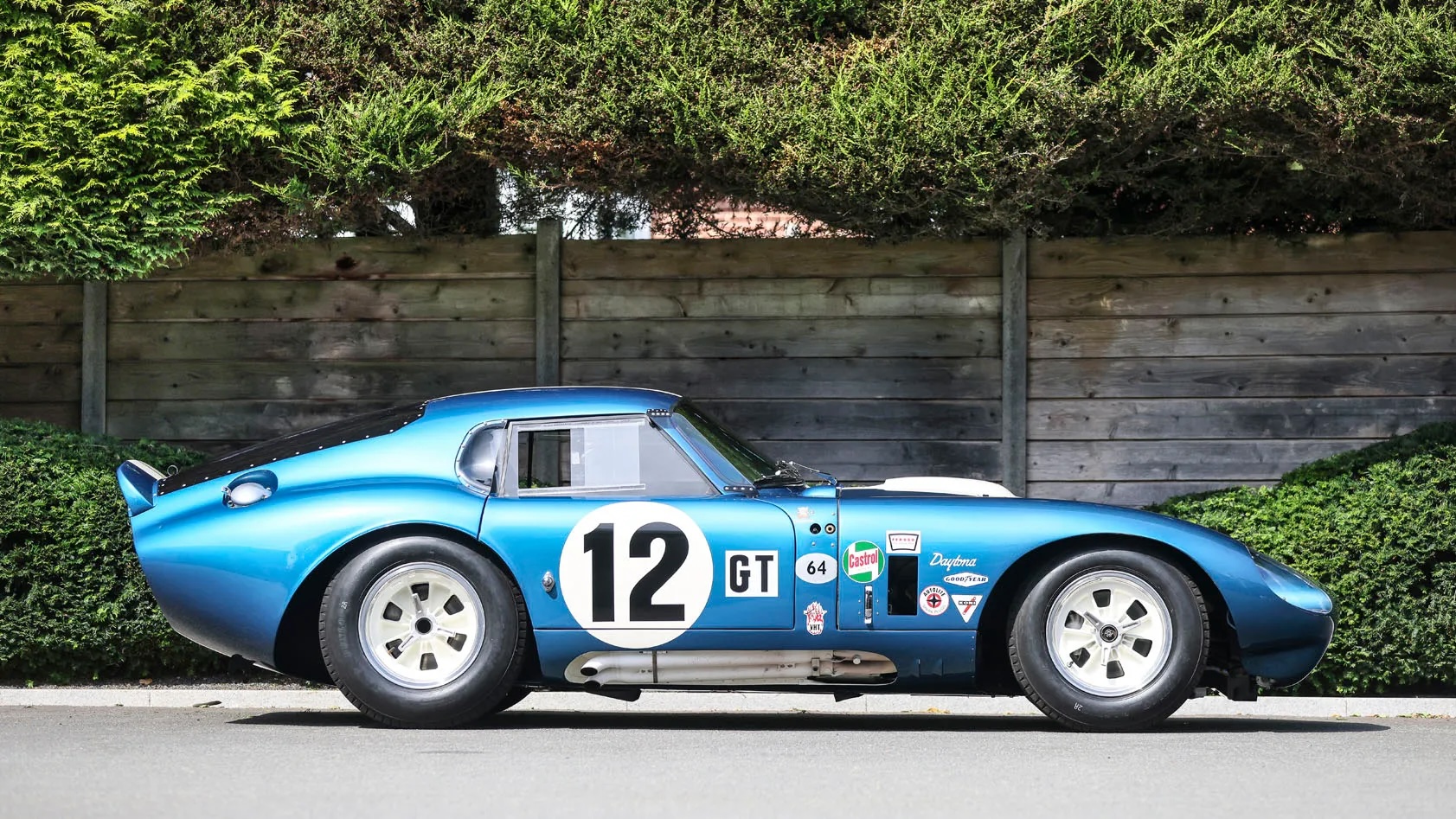
A bit of backstory is in order. Carroll Shelby had a wild success on his hands with the Cobra; it was powerful and hard to beat on track, but as Shelby’s creation rose through the ranks, it was clear that to compete in international events against the likes of Ferrari, more speed was necessary. The roadster body was light, and the Ford engines powerful, but the Cobra’s Achilles’ heel was wind resistance.
The solution came from a young designer by the name of Peter Brock. By adding a roof and applying aerodynamic principles to the design, the slippery new body would drastically increase the Cobra’s top speed, according to Brock. For race cars, aerodynamics was still evolving from art to science, so naturally the Shelby American staff were skeptical of the proposal and pushed back on Brock’s idea. With the clout of driver Ken Miles behind Brock, Shelby relented and gave Brock 90 days to bring the idea from sketch to a functioning car. Working with Miles and a small team, the first Daytona was hand-built in Shelby’s Venice, California, facility. Testing began in February 1964 at Riverside, where the new car immediately silenced the critics. The new design was 25 miles per hour faster and lopped off 3.5 seconds per lap compared to the Cobra Roadsters.
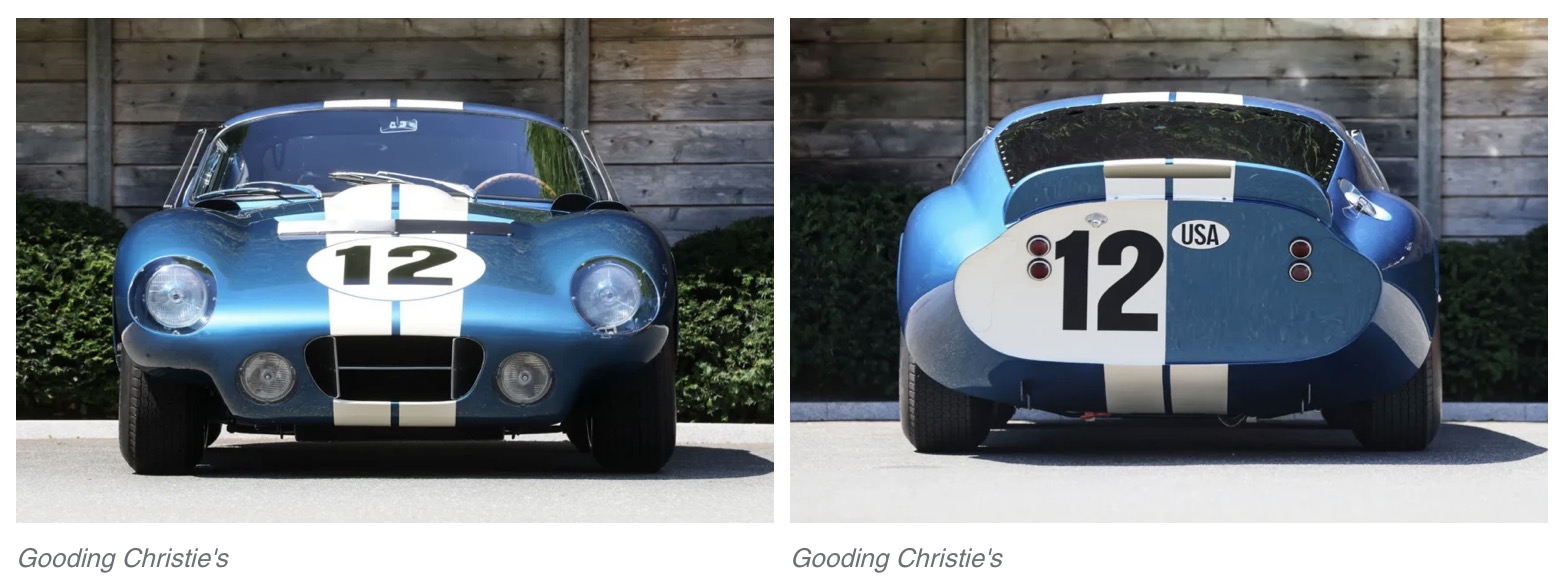
Shortly after, the new Cobra made its racing debut at the Daytona Continental on February 16, 1964, going toe-to-toe with the fearsome Ferrari 250 GTO. The Cobra made an immediate statement by building a 10-minute lead after 110 laps; however, a victory would prove elusive. A fueling mishap forced the car’s retirement. But the line in the sand was drawn, and the new Cobra Daytona had Ferrari in its sights.
Shelby’s coupe would square up against Ferrari again at the 1964 24 Hours of Le Mans later that June, with a second car being completed just prior to the race. Methodically moving up the pack throughout the race, the pair of Daytonas were closing in on the Ferrari prototype cars when the car driven by Jochen Neerpasch and Chris Amon was disqualified for an illegal push-start, leaving the car driven by Dan Gurney and Bob Bondurant to tackle the cavallinos. Driving the car hard, the duo would close the gap on the top three Ferrari prototypes while leaving the 250 GTO 50 miles behind in the race. By morning, however, a leaky oil cooler would dash their hopes of an overall podium, and only fast thinking in the pits would keep the car in the race. Gurney and Bondurant would nurse the car along, completing the race, securing fourth overall and first in class.
The following years would see a team of no less than six Daytonas racing with the full backing of Ford. The Shelby team would accumulate enough points racing at Daytona, Sebring, Monza, the Nürburgring, Le Mans that on July 4, 1965, at Reims, Bob Bondurant clinched the world championship in Daytona CSX2061. This would be the only time an American car would win the FIA GT Championship.
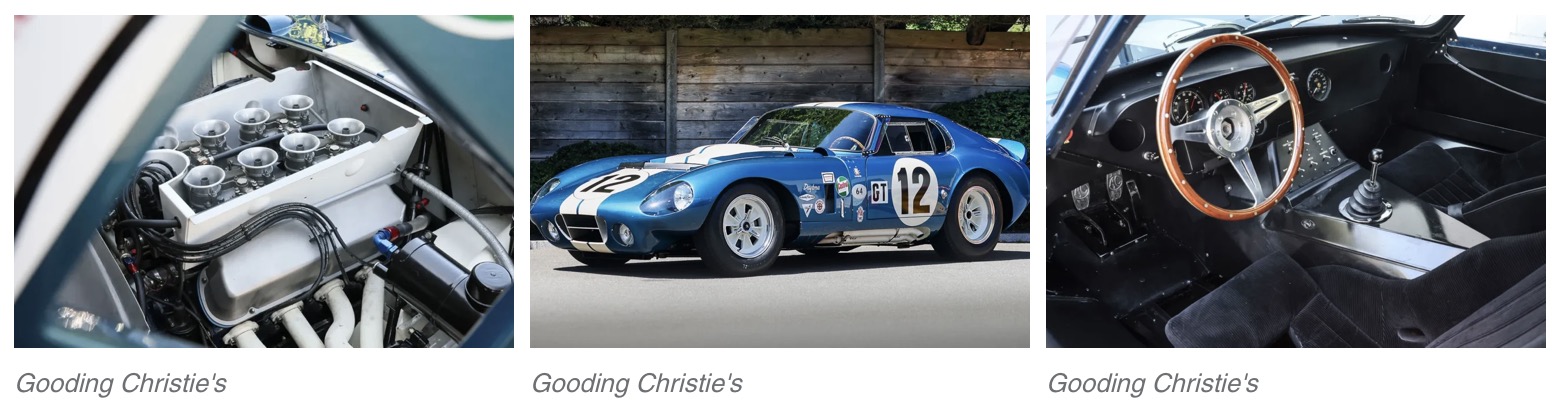
CSX2300
As for the car that crossed the block this week, chassis number CSX2300 made its debut at the 1964 Tour de France with Bob Bondurant and Jochen Neerpasch behind the wheel. The car opened the event strong, winning the high-speed race and hill climb before retiring with a stuck accelerator pedal and then later a broken transmission mount.
CSX2300 was back for the 1965 season, starting at the Daytona Continental driven by Ed Leslie and Allen Grant. The car qualified fastest and finished third in class nursing a slipping clutch. Next came the 12 Hours of Sebring, where the car was struck by another car shortly after the start, necessitating trackside repairs by Shelby mechanics. The car ultimately finished 13th overall. CSX2300 was then shipped to Europe to be campaigned by Allen Mann’s team at the Nürburgring 1000 Kilometres, where it took third overall. CSX2300’s final appearance in the 1965 season was the 12 Hours of Reims, where Jack Sears and John Whitmore put up additional points for Shelby with a ninth-place overall finish.
Following the 1965 season, CSX2300 would be the only Cobra Daytona to continue an active racing career after being sold to a buyer in Japan. The car racked up overall wins at Suzuka and Fuji in 1966. The car would remain in Japan through 1968 and was reportedly street-driven in Tokyo at one point.
By 1975, CSX2300 was purchased by Carroll Shelby himself and would remain in his ownership until 1998. During his ownership, the car would be restored to 1965 specifications. Afterward, CSX2300 would appear at numerous historic racing events such as the Goodwood Revival, Tour Auto, Modena Cento Ore, and the Goodwood Festival of Speed in July 2026.
The Sale
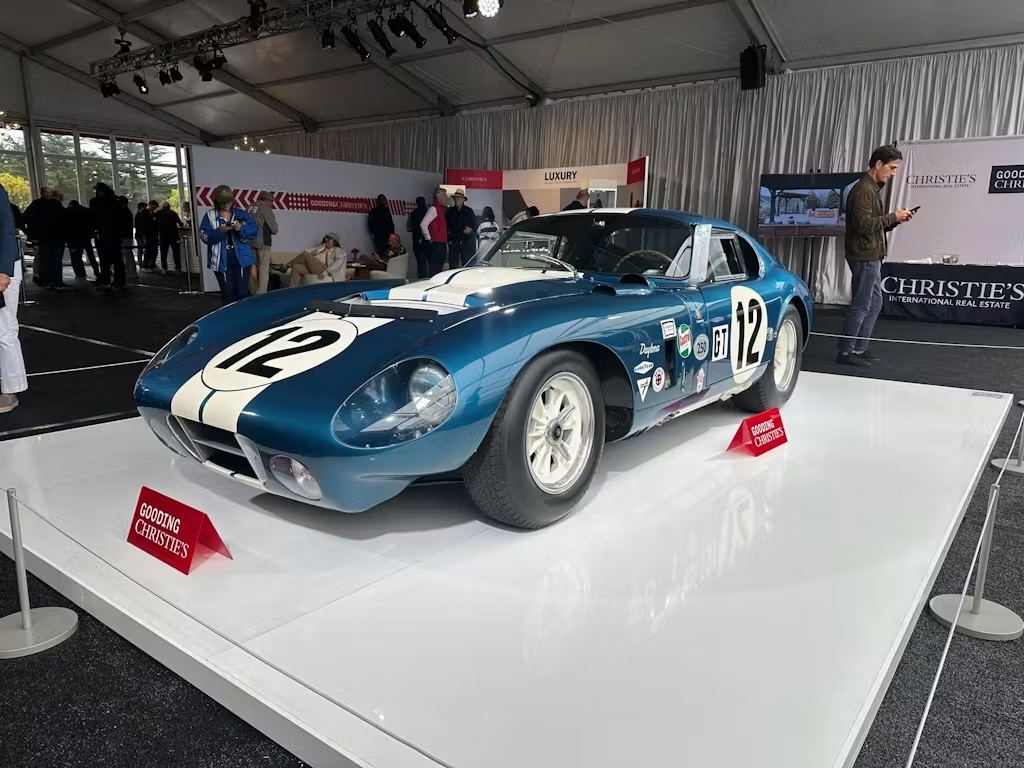
Simply put, this was a once-in-a-lifetime opportunity. The last time a Cobra Daytona was offered at auction was in 2009 at Mecum Auctions here in Monterey, where CSX2601 sold for $7,685,000. That was 17 years ago. When CSX2300 rolled onto the stage at Gooding Christies, the excitement was palpable. The room fell silent as the opening salvos of bids came fast and heavy. At one point, it seemed as if the car would sell after one bidder lobbed a jaw-dropping $28M bid, stood up, and walked out of the room to keep from bidding more. Auctioneer Charlie Ross started counting down to the close when bidding spun up again. After another pause, two phone bidders duked it out until one of them blinked and Charlie’s gavel fell at $39M. With buyer’s premium, the total came to $42,905,000, making CSX2300 the most expensive American car ever sold at auction.
The result just isn’t a big sale for an American car, but it shows the significance of the Daytona Coupe among its contemporaries. This car sold for Ferrari 250 GTO money. Talk about a level-set: This Ford-powered, hand-built underdog of a race car is just as expensive as what is widely considered one of the most important cars ever built, and rolling art. The Daytona once again has come back to show Ferrari what America is made of.
Report by Greg Ingold for hagerty.com