The phone rings often at Mike Pierce’s carburetor hospital, and sometimes he answers it and sometimes he doesn’t. “Everyone who calls either wants to tell me they’re a brain surgeon or a rocket scientist. And I’ll go, ‘You got the float level set?’ And they’ll say, ‘Yeah, yeah, I’ve got it set, right at 7 inches, right?’ And I’ll say, ‘So you’ve got a 7-inch float level in a 4-inch-tall carburetor?’ Because I’m old, I just hang up.”
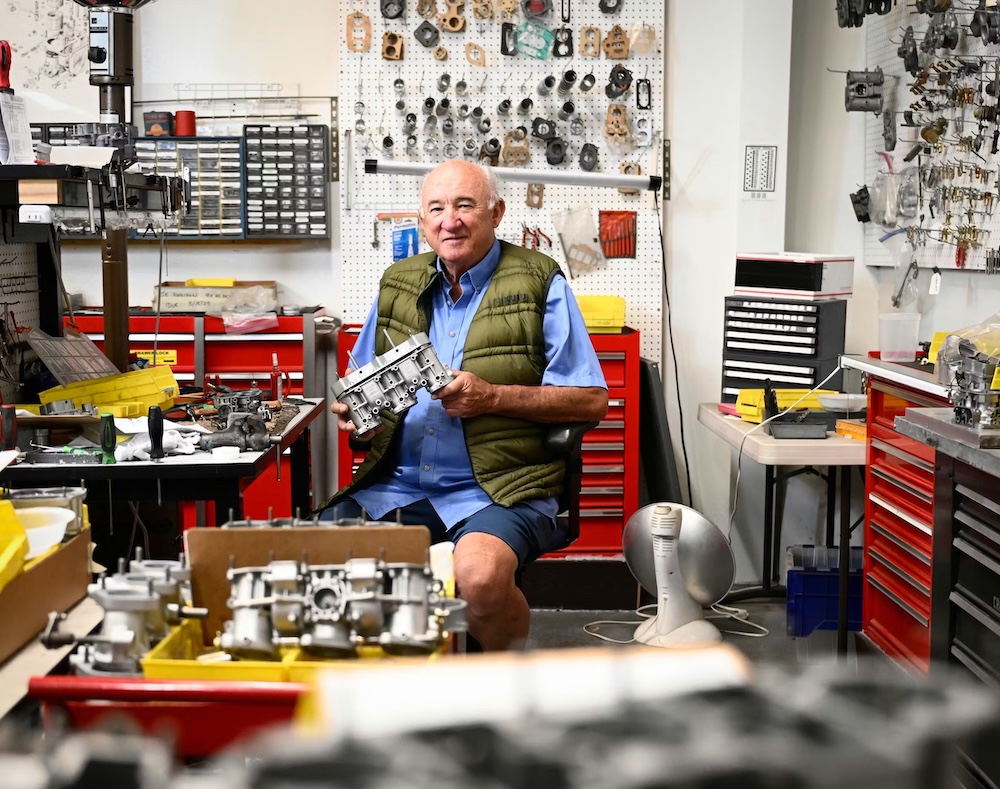
Pierce has been the Weber whisperer since 1981 or so—he can’t quite remember exactly when he started—and he has devoted much of his 74 years to the intricate minutiae of these marvelous fuel-delivery machines from Italy. He figures he has rebuilt about 11,000 of them, which sounds like a lot until Pierce mentions that at its peak in the mid-1970s, Weber was producing 1.3 million carburetors per month.
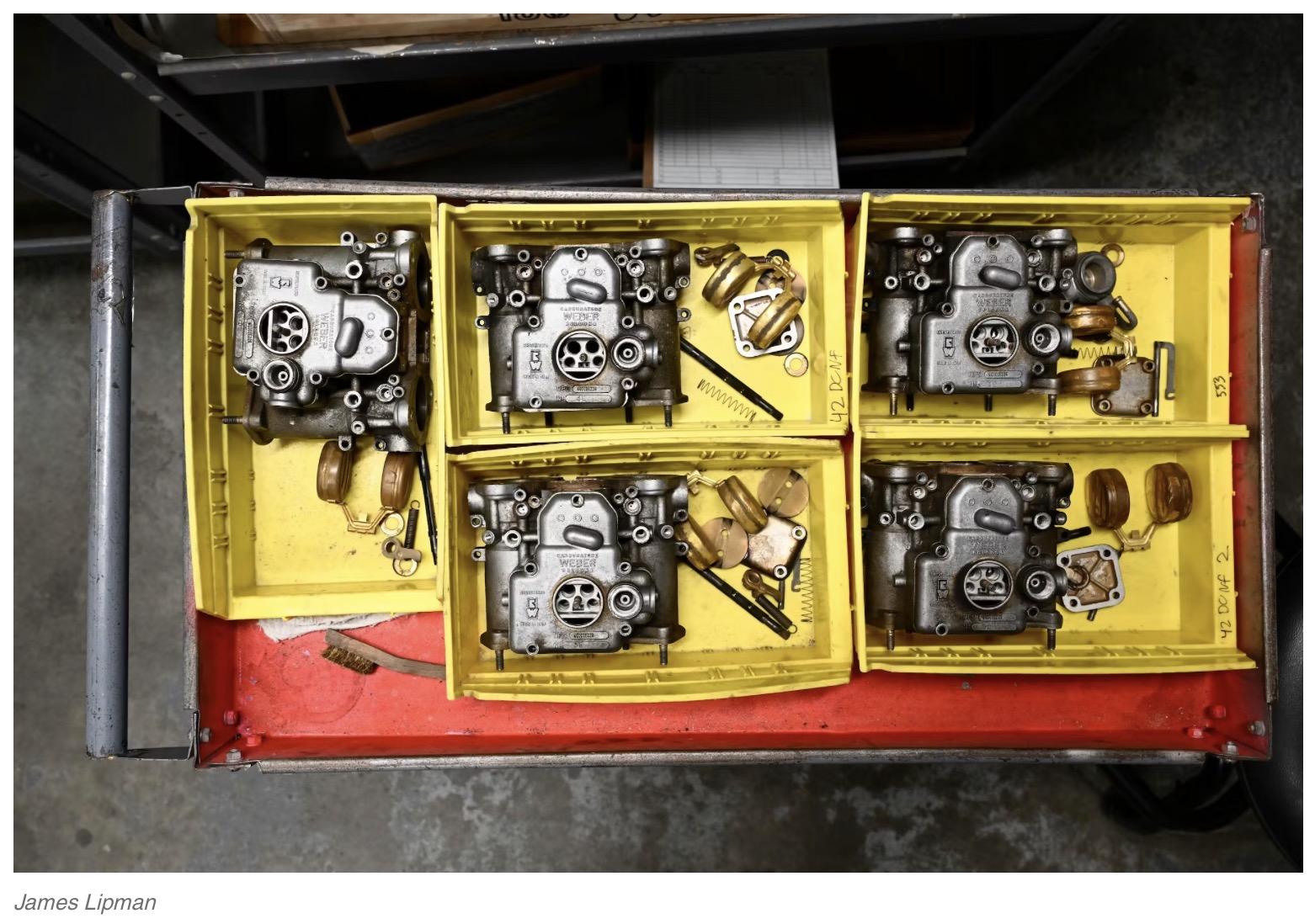
“For me, all the greatest cars ever made had Weber carburetors. OK, for the most part. I know that a 300SL Mercedes is a great car, even if the idiots didn’t go for Webers.” The reason Pierce loves Webers is simple: They are hugely tunable and can make horsepower better than any other type of carburetor, he insists. “People say, ‘I have a V-8.’ No, you have eight individual one-cylinder engines totally independent of each other on a common crankshaft.” If, say, you have lower compression on cylinder number seven, says Pierce, “if I get really crazy on tuning, I can change the fuel curve in just that cylinder and make it efficient to that individual compression ratio in that one cylinder.”
That’s only possible with an individual-runner (IR) induction system, or one with a separate carburetor and intake tube for each cylinder. Which is exactly the type of induction system that many Webers are designed for. “You can put all the four-barrels on you want, you can stack them three deep, but nothing has the throttle response of an IR system,” says Pierce. “At the racetrack, if you go from a single carburetor to an IR system, I can get you half a second at every corner. At Laguna Seca, that’s 6 seconds, an eternity in racing.”
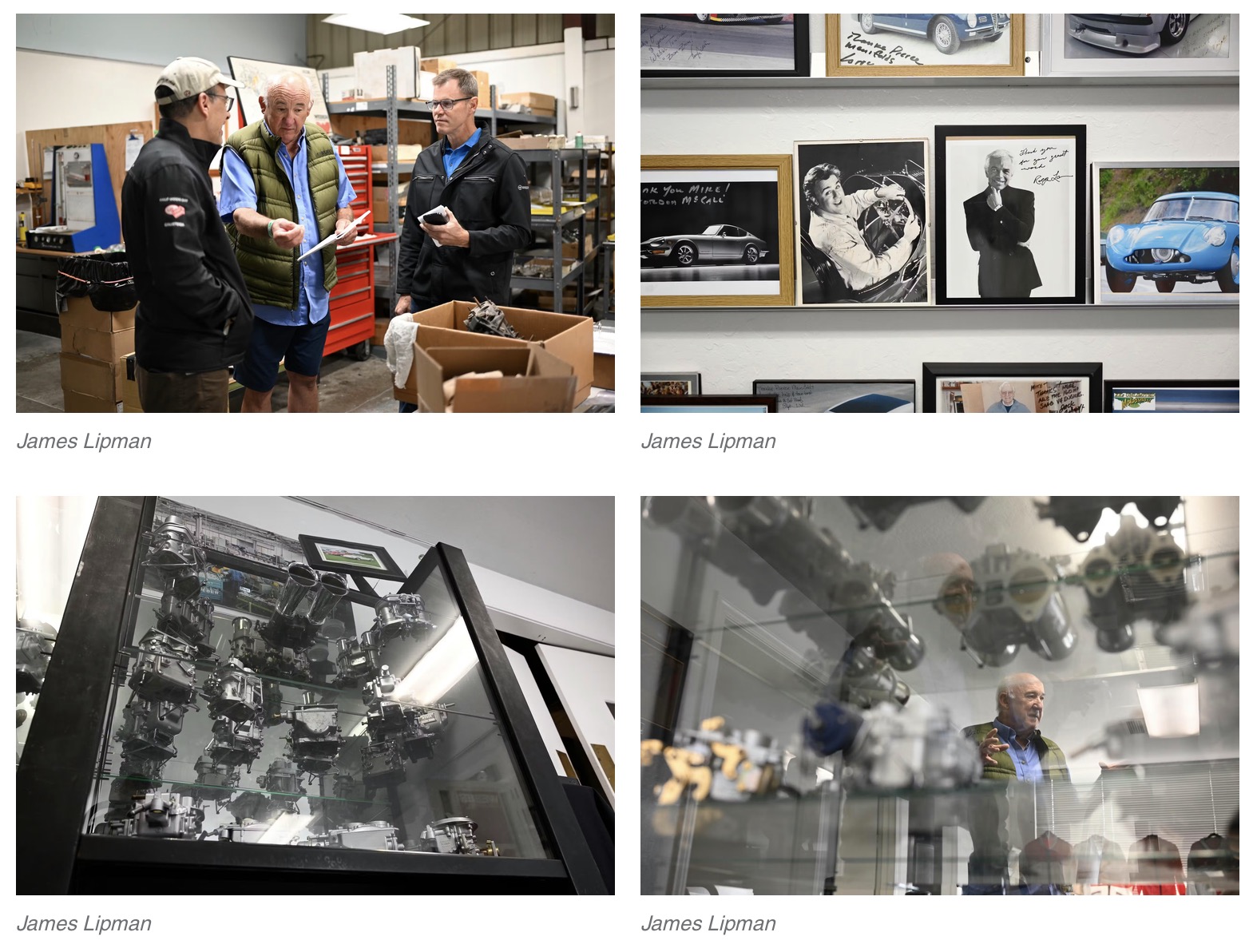
Pierce’s shop, Weber Carburetor Restoration in Salinas, California, isn’t just a repair facility, it’s a museum and shrine of sorts. Among the display items is a glass showcase acquired from the factory with examples of every carburetor model ever produced by Fabbrica Italiana Carburatori Weber, including the first, a brass dual-venturi unit designed by Edoardo Weber himself. Pierce says he knows of only two other survivors. The assortment of carburetors that Weber produced is astounding, from big 58-millimeter Cobra Daytona racing inhalers to tiny 6-millimeter chainsaw tweeters.
“People send us boxes of crap and say, ‘Can you make a carburetor out of this,’ and there’s no books or anything,” says Pierce, pointing at the cabinet filled with cast aluminum jewelry, “so we’ll pull one out of the cabinet and see what the hole that is missing something used to have in it and so forth.”
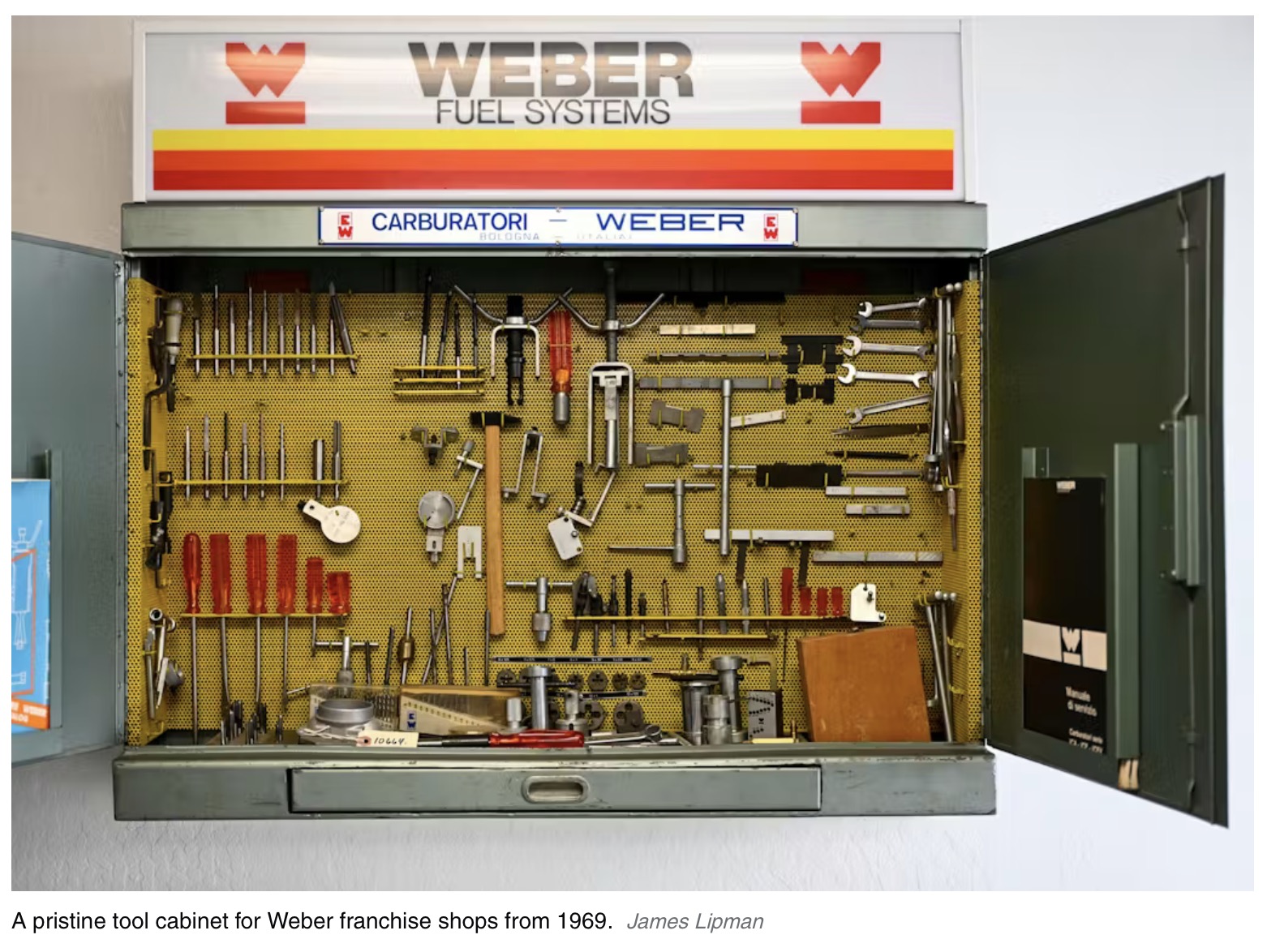
Also on display is a complete factory Weber tool cabinet from 1969 of the type that were purchased by licensed repair shops. Back in the day, Weber sold franchises all over Europe, much like AAMCO or Tuffy in America. One of the centerpiece tools is a huge fuel-pressure gauge, almost comically oversize and ornate given that many Webers prefer only around 3 psi of fuel pressure.
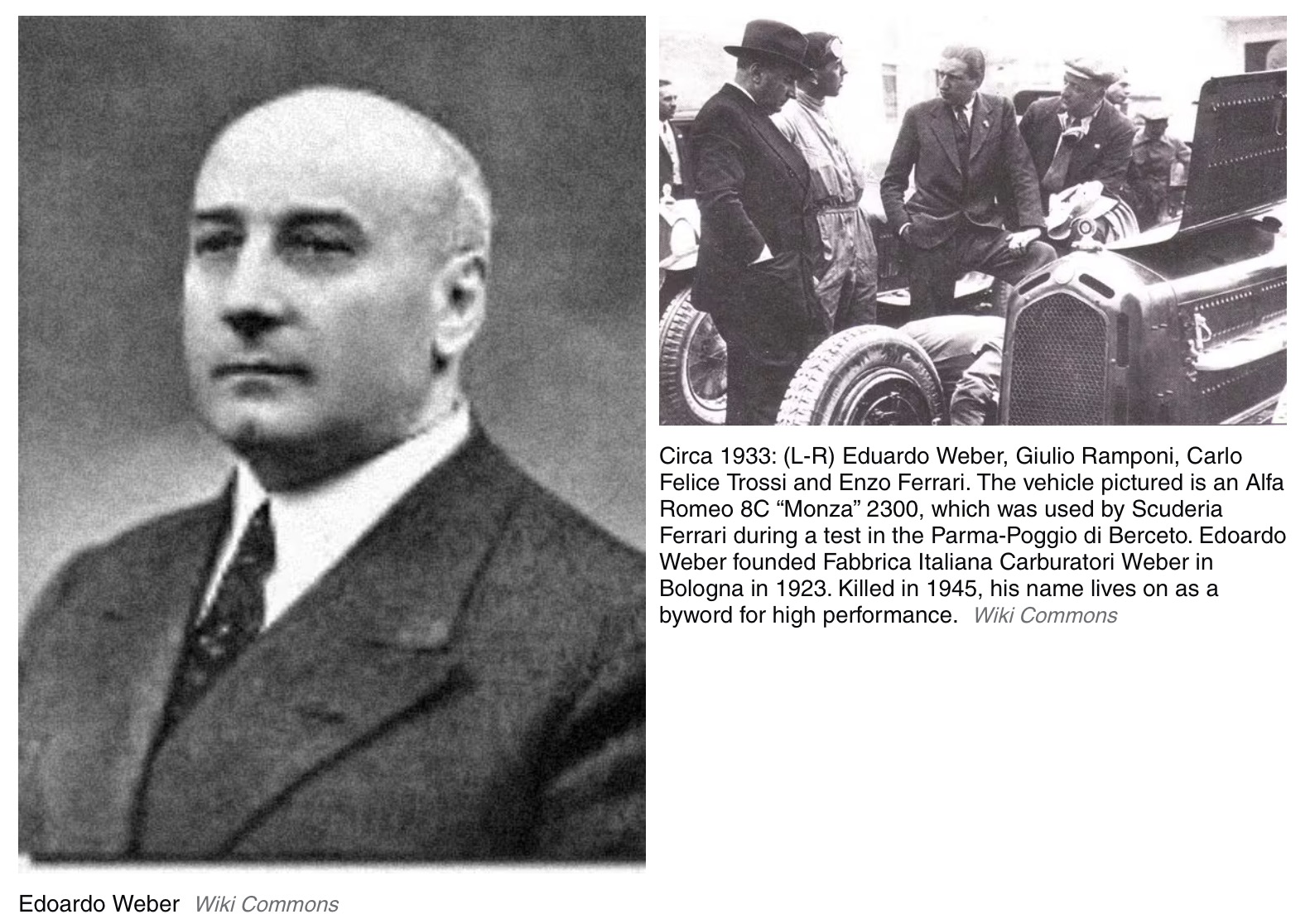
Fuel and the conservation of it is what propelled Edoardo Weber to design his first carburetor, the “Econo Supercharger,” in 1923 after stints working at Fiat and, later, a Fiat agency in Bologna. Weber was an early innovator, using novel features such as emulsion tubes (small brass tubes with tiny holes that disperse air into the fuel before it’s drawn into the main throat for better vaporization) and asymmetrical throats, with a smaller one for economy and a larger one for power. The Weber 32/36 DGV factory-fitted to millions of Ford Pintos in the 1970s used that concept. By the 1930s, Weber carburetors mixed the fuel and air for several cars competing in grand prix racing as well as everything from motorbikes to city buses.
As with many Italian industrialists during World War II, Weber was a decorated member of the country’s Fascist party, and he proved that some casualties of war don’t happen until after the truce. Leaving his Bologna factory for his traditional stroll home on the evening of May 17, 1945, Weber disappeared and was never seen again, presumably merely another victim of Italy’s postwar surge of revenge killings. By then, however, the firm was so well entrenched in the European auto industry that it was still able to grow and thrive in his absence.
Three decades later, Pierce was running his own shop, Pierce Import Repair Service on King Street in Salinas, California, an agrarian working town that is a stone’s throw from the ritzier Monterey Peninsula, Laguna Seca, and the gilded Pebble Beach Concours venue. “I had a wealthy customer with a Shelby GT350, an E-Type Jag, a Rolls-Royce, a Ferrari. The seed company he owned had an office in Arizona, and for some reason, the car he liked to go back and forth in was this rubber-bumper brown MGB. Piece of sh*t, but he loved it.”
However, the MG didn’t make much horsepower given its fuel appetite. This was the late ’70s, the era of the energy crisis and mileage obsession. So Pierce welded up an intake manifold and plopped a Pinto-style Weber DGV on it. “It worked great. Word got out, and people were bringing me MGAs and MGBs, Austin Marinas, all kinds of stuff to put DGV Webers on.”
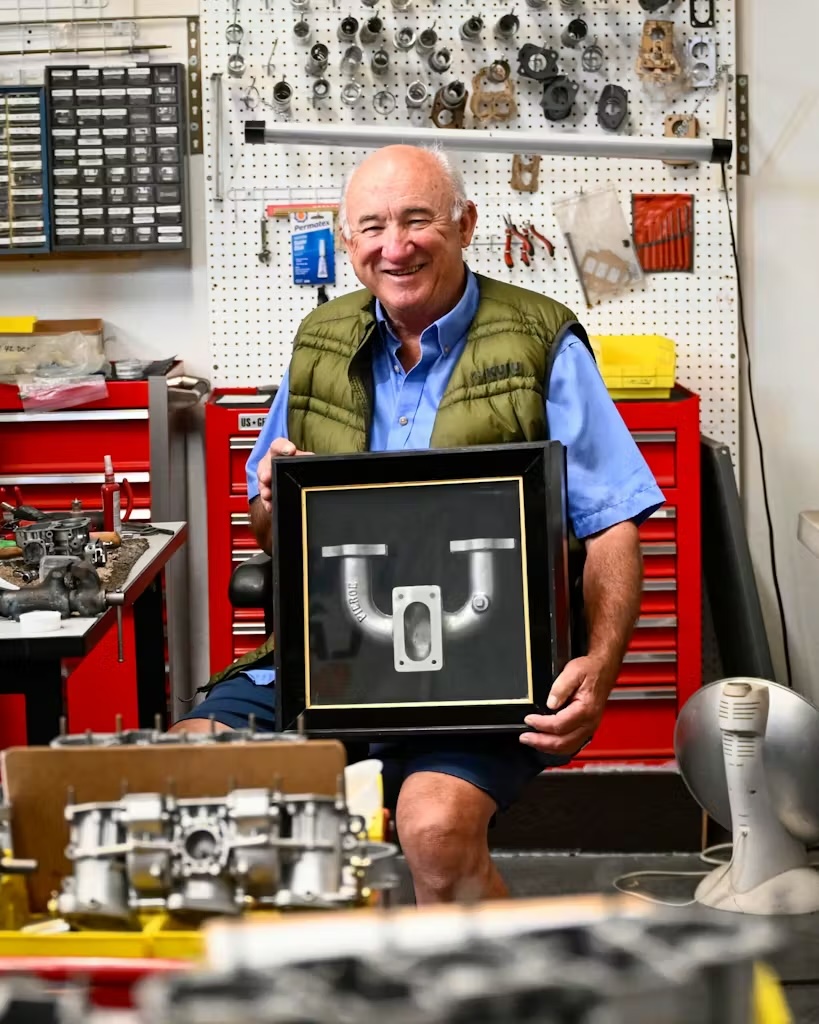
Pierce went down to Los Angeles and showed his U-shaped manifold to Tony Griffith at Redline, then the largest importer of Weber carbs. Griffith dismissed the kludged-up prototype as unsellable, but another Redline employee suggested that Pierce cast the manifold to make it look more finished. “I knew nothing about casting, and so I went up to San Jose, talked to a foundry and a patternmaker, then went home and told my wife I gotta make this manifold and it’s going to be like $3000 for the tooling. She said, ‘No, you’re not spending $3000 on a bunch of car crap.’” Eventually Pierce convinced her, in part by producing a spreadsheet—he’s big on spreadsheets—that showed that the manifold would make back the investment at unit number 50, with the margin on the 51st being 25 percent.
By 1998, Pierce had sold 100,000 of his manifolds. “I didn’t realize because there was no internet back then that all Bedford trucks in India have an MG motor. A lot of the cars in Australia and New Zealand run an MG motor. The first Datsun pickup trucks had an MG motor. So the market was 10,000 times bigger than I thought it was going to be.”
Weber itself shut down in 1992, a victim of the industry’s universal shift to fuel injection. The tooling moved to Spain, where new Webers continue to be made under license by LCN Automotive, a Spanish parts maker. Pierce, who affirms that Spanish Webers are “not bad,” spent two decades in the manifold and carburetor parts business, stocking Weber components and in many cases having new parts remade by the original suppliers to Weber. When he sold his company a few years ago and settled down to a quieter life restoring ailing Webers, Pierce Manifolds had amassed a hoard of 770,000 parts.

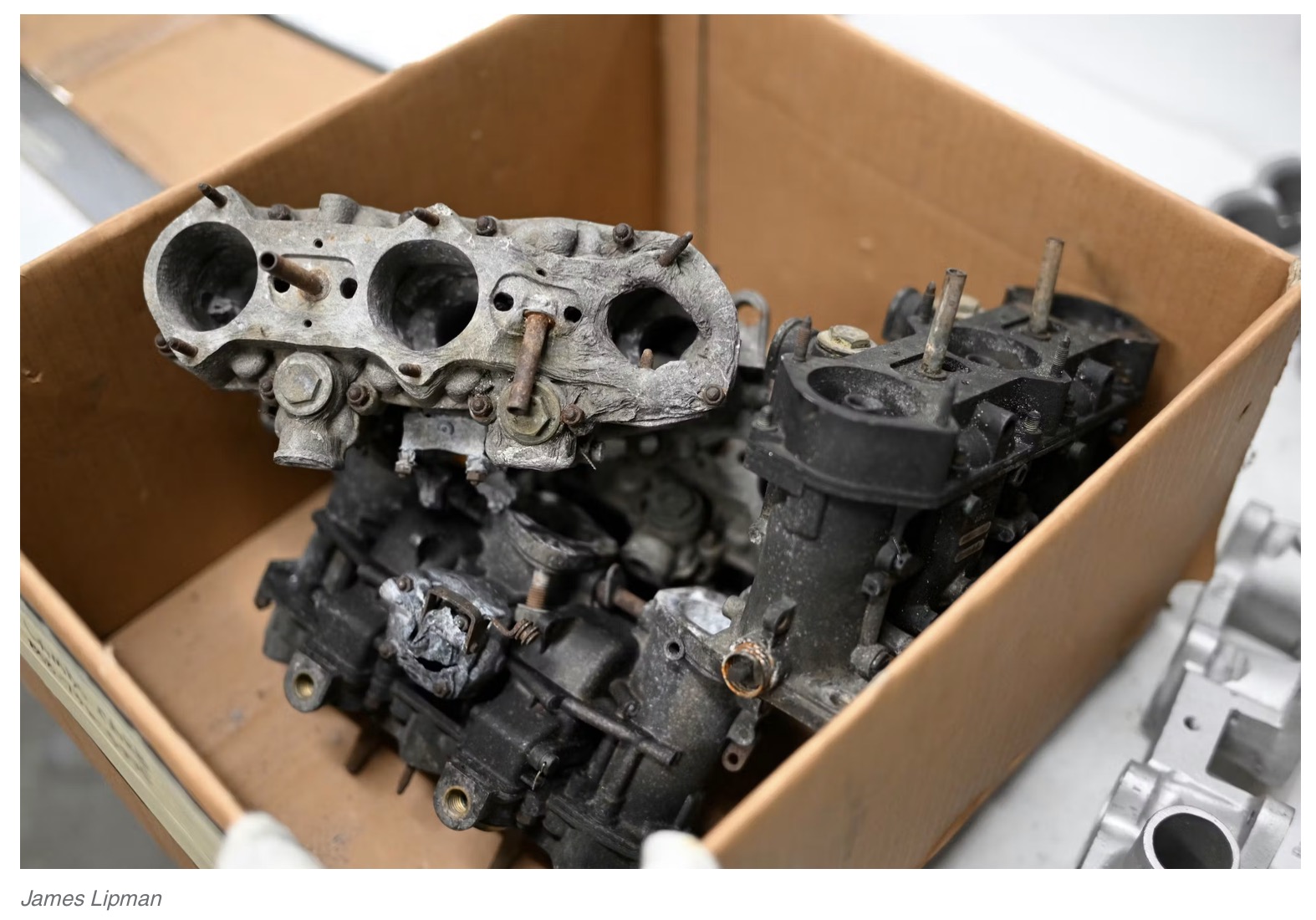
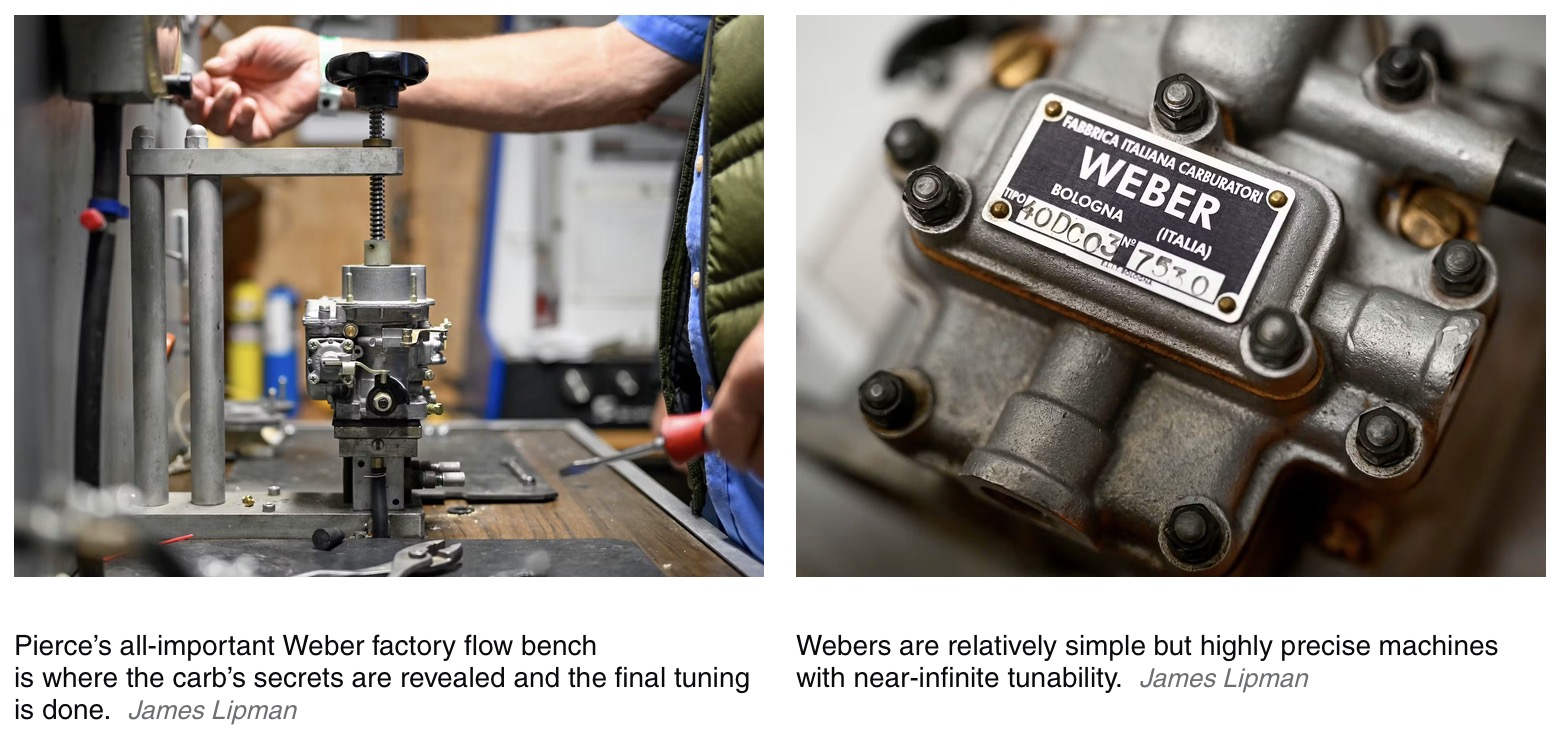
Nowadays, carburetors come to his doorstep in drop-shipped boxes from the four corners of the world, tired, worn out, burned up, or just broken. Webers easily clog up when fouled with tank crud or old fuel, suck air through worn throttle shafts, and can cause all manner of drivability issues with tired diaphragms and bad seals. Restoring them takes more than simply replacing parts; the carbs need to be tested on Pierce’s ultrasensitive Weber flow bench and tuned for both the engine they will be sitting atop and the fuel they will be ingesting.
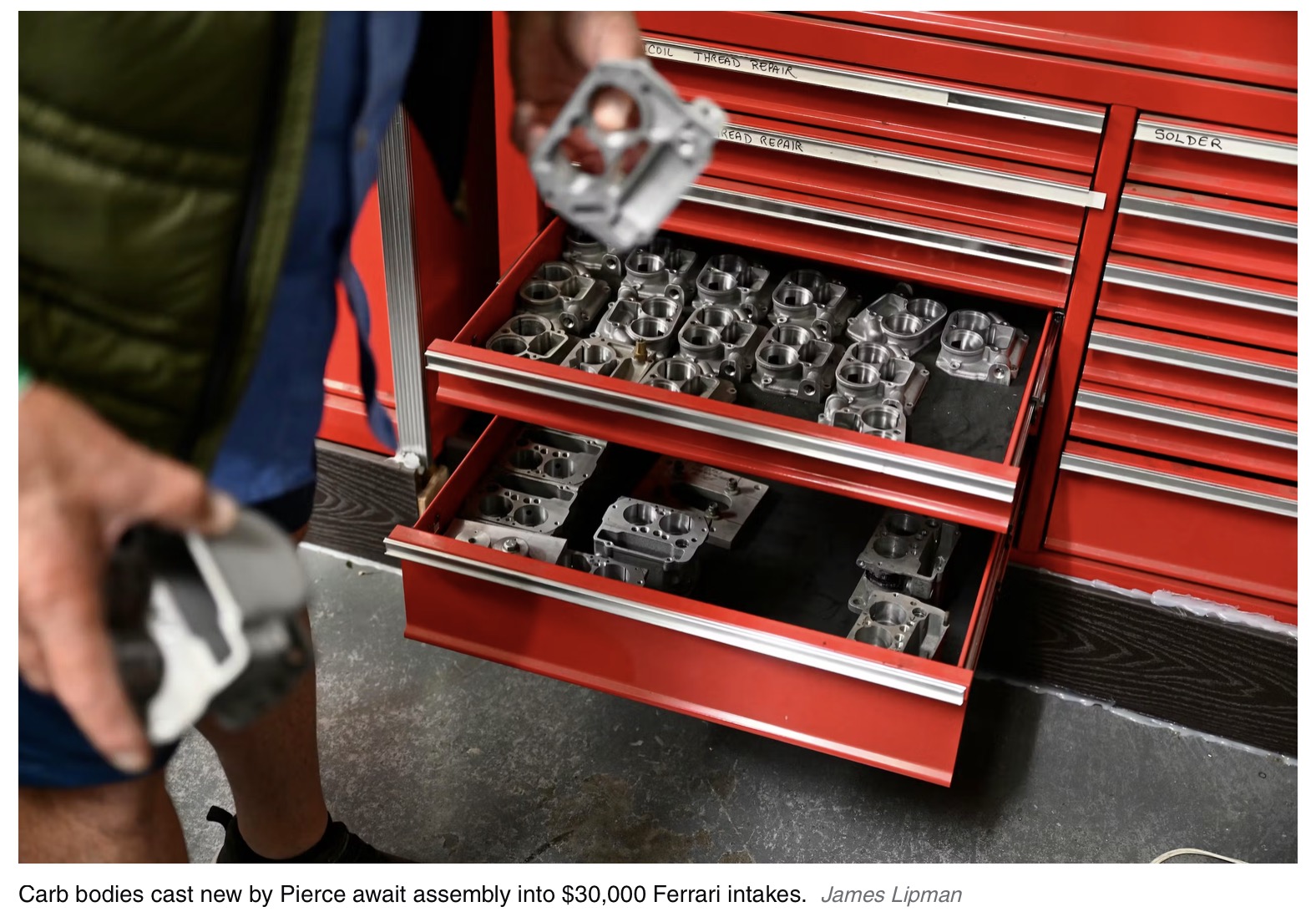
Besides restoring old Webers, Pierce also makes a couple of now-unobtainable Weber models from scratch, having commissioned new castings and parts. In a drawer, we saw bare, brand-new carb bodies for four-cam Porsche engines and early Ferrari Testarossas. A Porsche carb set is $20,000; a Ferrari set, $30,000. He knows it’s a lot of money, but the last original carburetor set for a Testarossa sold at auction for $290,000. Pierce has orders for three of the Ferrari sets, he says, but “I just haven’t had the time to put them together.”
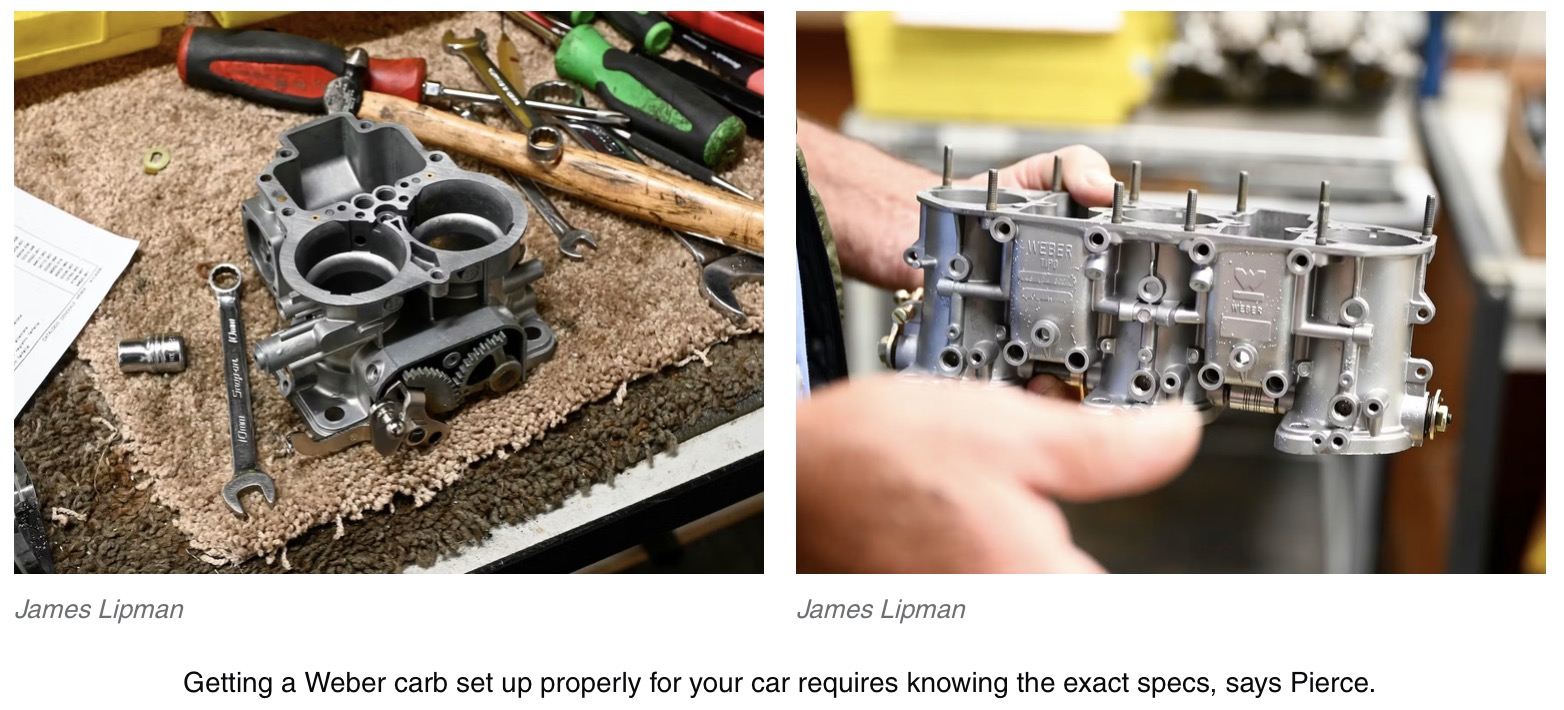
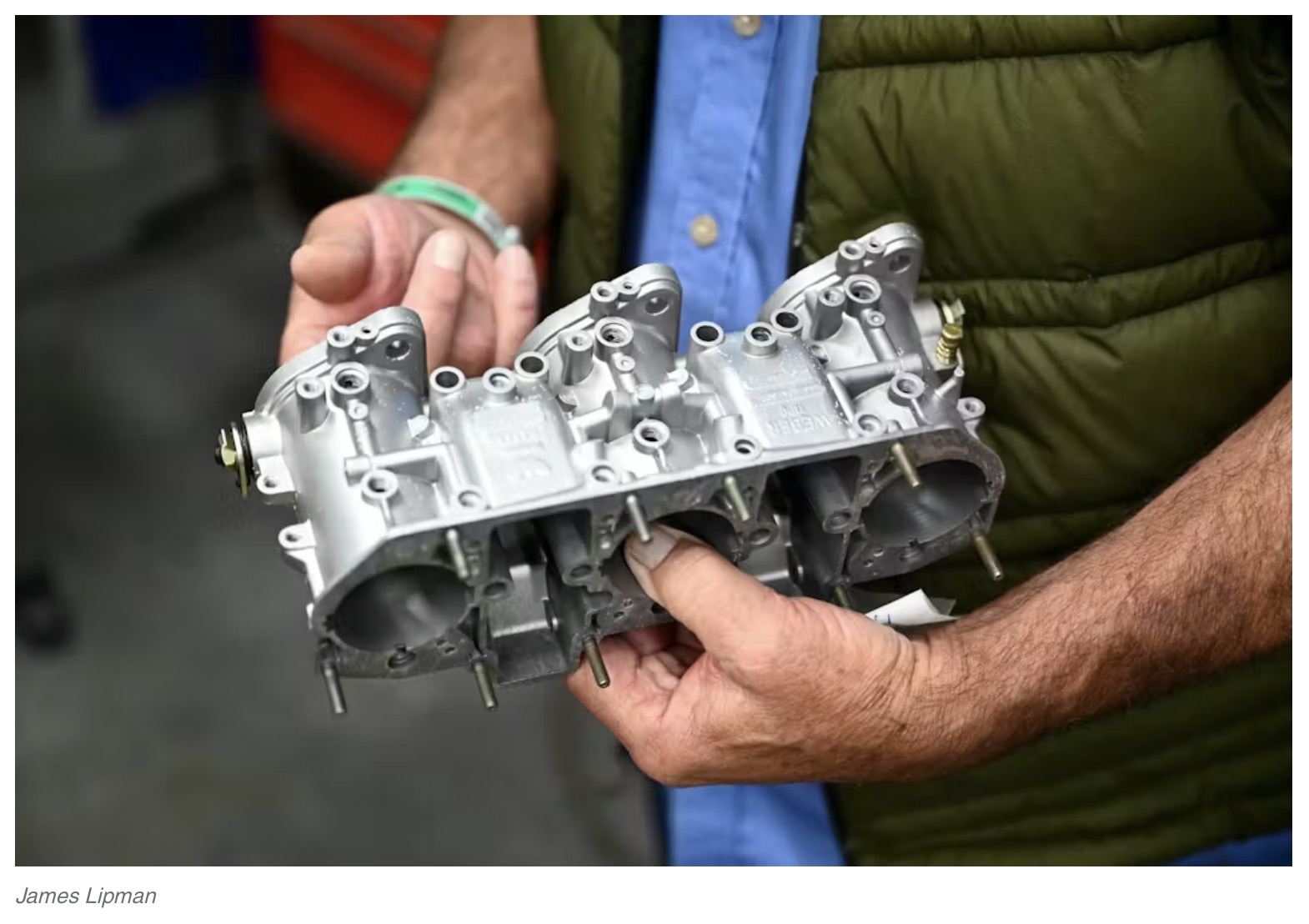
Compared with, say, a late-stage Rochester Quadra-Jet, with its many pushrods and barnacles of emissions-control devices, most Webers are relatively straightforward, with the only moving parts being the throttle plates and the accelerator pump. The rest of the Weber magic is in small, machined passages and brass jets with tiny holes that deliver fuel to the venturi at the precise moments it is needed by the engine depending on the position of the throttle plate. Pierce is quick to point out that merely bolting a Weber on doesn’t instantly make an engine run better, especially if it has other problems, and many a backyard tuner has found out the hard way that it’s easy to “overcarb” an engine with a Weber.
One downside to Webers is that with their fixed venturis and jets, they aren’t flexible in the same way, say, a British SU carburetor is. SUs as well as Zenith-Strombergs are what’s called variable-venturi or “constant depression” carburetors. The vacuum created by the engine inhaling air elevates a piston inside the carb with an attached tapered needle. As the engine speeds up, the piston rises, more of the tapered needle is exposed, and the amount of fuel drawn into the engine increases. “The piston will only lift to the power of the motor,” explains Pierce. “Which is why a lot of guys take SUs off a Jag or a Triumph and put Webers on, and when they run badly, they put the SUs back on, and they say it runs good. That’s because the SU will only give the motor what it can take. The Weber will give it a whole lot more.”
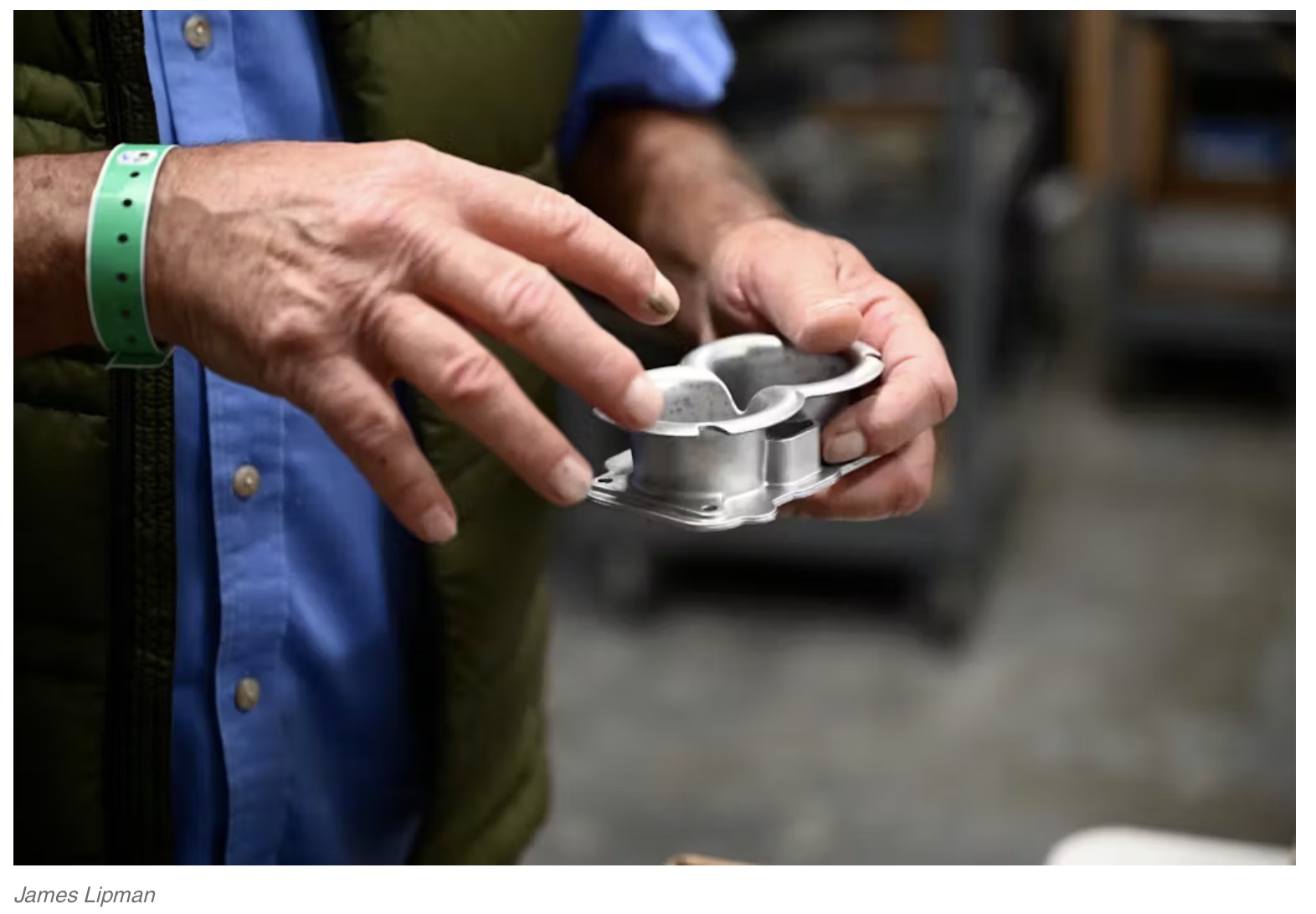
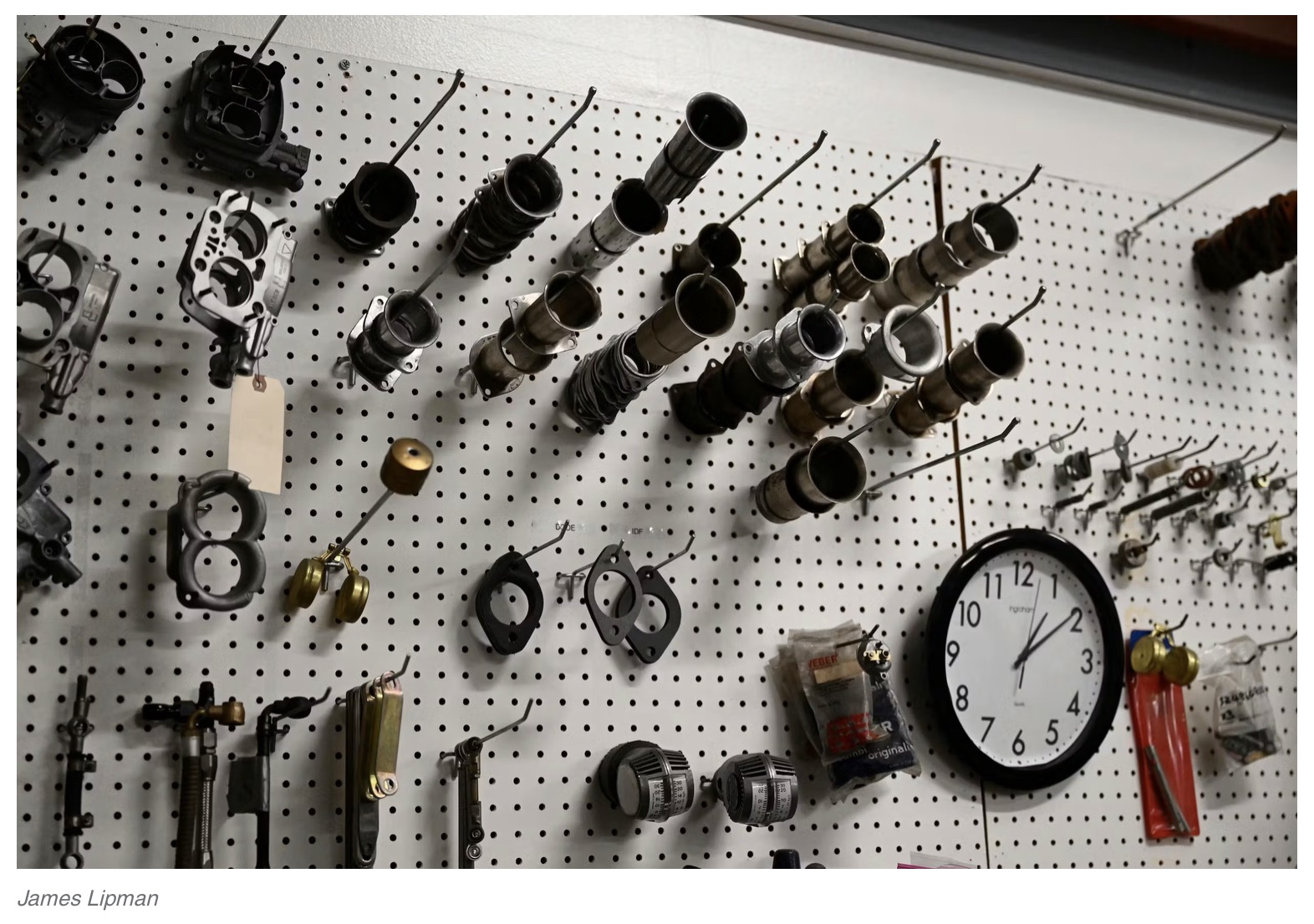
Matched correctly to the application, a Weber was once quite popular with racers and high-performance engine builders because it has nearly infinite tunability. In fact, Pierce once graphed all the variable components in the relatively common Weber 40DCOE side-draft carb, which was used on many European sports cars in the ’60s and ’70s. He wrote down all the available venturi sizes, main jets, accelerator pump jets, emulsion tubes, idle jets, various float levels, and so on, then took the spreadsheet to a mathematics professor at the local college. “He said, ‘Your calculator won’t be able to do this; you have to calculate to the power of absolute.’” Turns out, if you do every possible tuning combination and never repeat it with all the available parts for a Weber 40DCOE, there are 9,130,000,000 possible configurations. Nine-point-one billion.
Which is why Pierce says any standard values printed in the many Weber rebuild manuals are probably not correct for your particular car. “If you look at every book printed, it’ll tell you that a DCNF float is set at 48 millimeters, but then I have a chart that shows a DCNF carburetor on five different applications with five different float levels, and nine different float levels on a DCOE. A DCOE on a Maserati 3500 is 5 millimeters. If you try 5 millimeters on an Austin-Healey 3000, it will foul the plugs in a second.” Pierce says setting float levels correctly is critical in a Weber because it affects the delicate interplay of the idle, progression, and main circuits, the imbalance of which can cause what Pierce calls “that fluffy feeling” of the power sagging off the line as the engine tries to accelerate. “If I change the float level in your Ferrari by a millimeter, I can get your main circuit to engage a thousand rpm sooner or a thousand rpm later.”

Another problem is that today’s ethanol-infused fuel is not the same as the leaded high-test available when most Webers were designed. “The fuel today sucks,” grouses Pierce, who made a spreadsheet about it (of course). “The closest I could come was: Whatever it left the factory with as its recommended jetting, you need to increase the fuel volume 6–8 percent with today’s fuel, and that gets it pretty close.” However, Pierce recommends not shutting off a Weber-equipped car with the key but with the fuel pump and letting the engine run until it starves. That’s because today’s fuel, when it sits for long enough, turns to an acid that eats the castings.
“The glycol goes, the alcohol goes, and it’s like you’re driving on lemon juice and it turns to battery acid,” he says. “I’ve had a couple of Miuras, I’ve had a couple of Ferraris—they’ll just start dribbling fuel out of the bottom. It’s pockmarked so deep they’re just leaking.”
Part of Pierce’s work is restoring Webers to factory spec, part of it is modifying them. Many cars built to race in the day, such as Porsche 906s and Ferrari 250s, have retired to more genteel lives running luxury road rallies such as the California Mille and the Colorado Grand. They need to be able to idle and run in traffic. Pierce has to set up the carbs for their intended use. He’s seen vintage racers that were tuned to idle nicely when being moved in the paddock fall on their face out on the track. Back in the day, the mechanics didn’t worry about docility in the pits, and the drivers simply blipped their throttles constantly to keep the engine lit. With Weber tuning, there is always a trade-off.
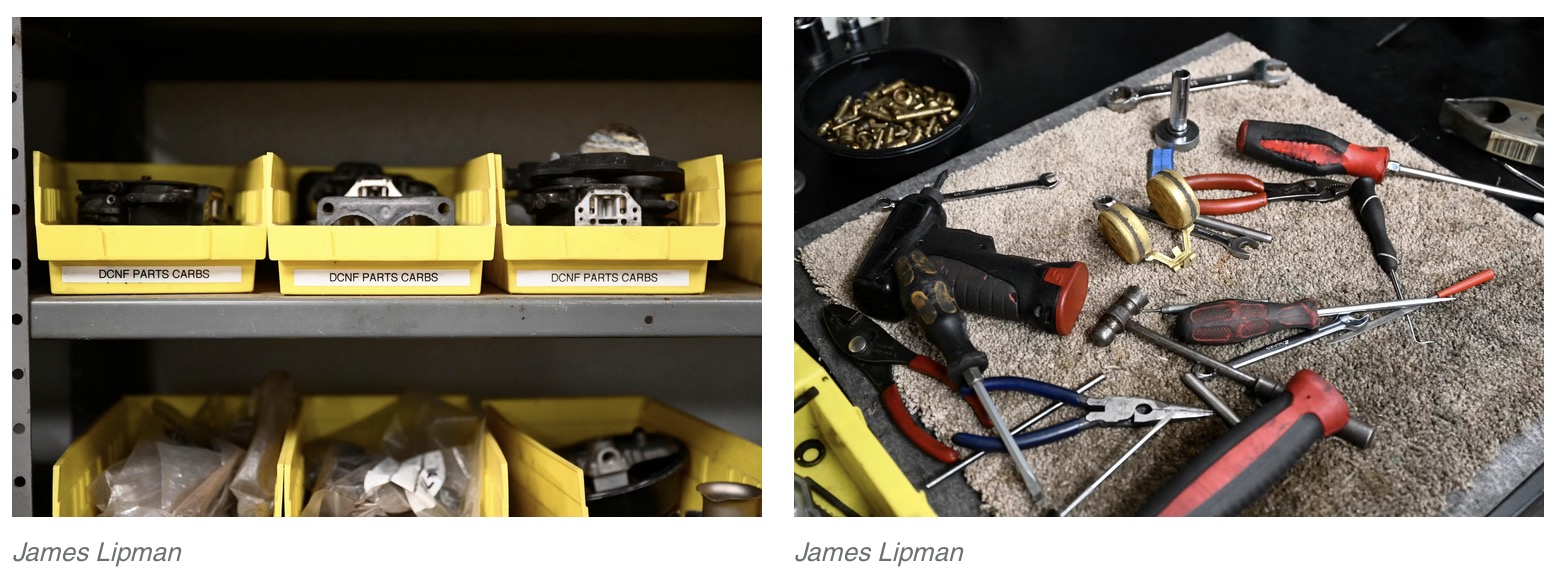
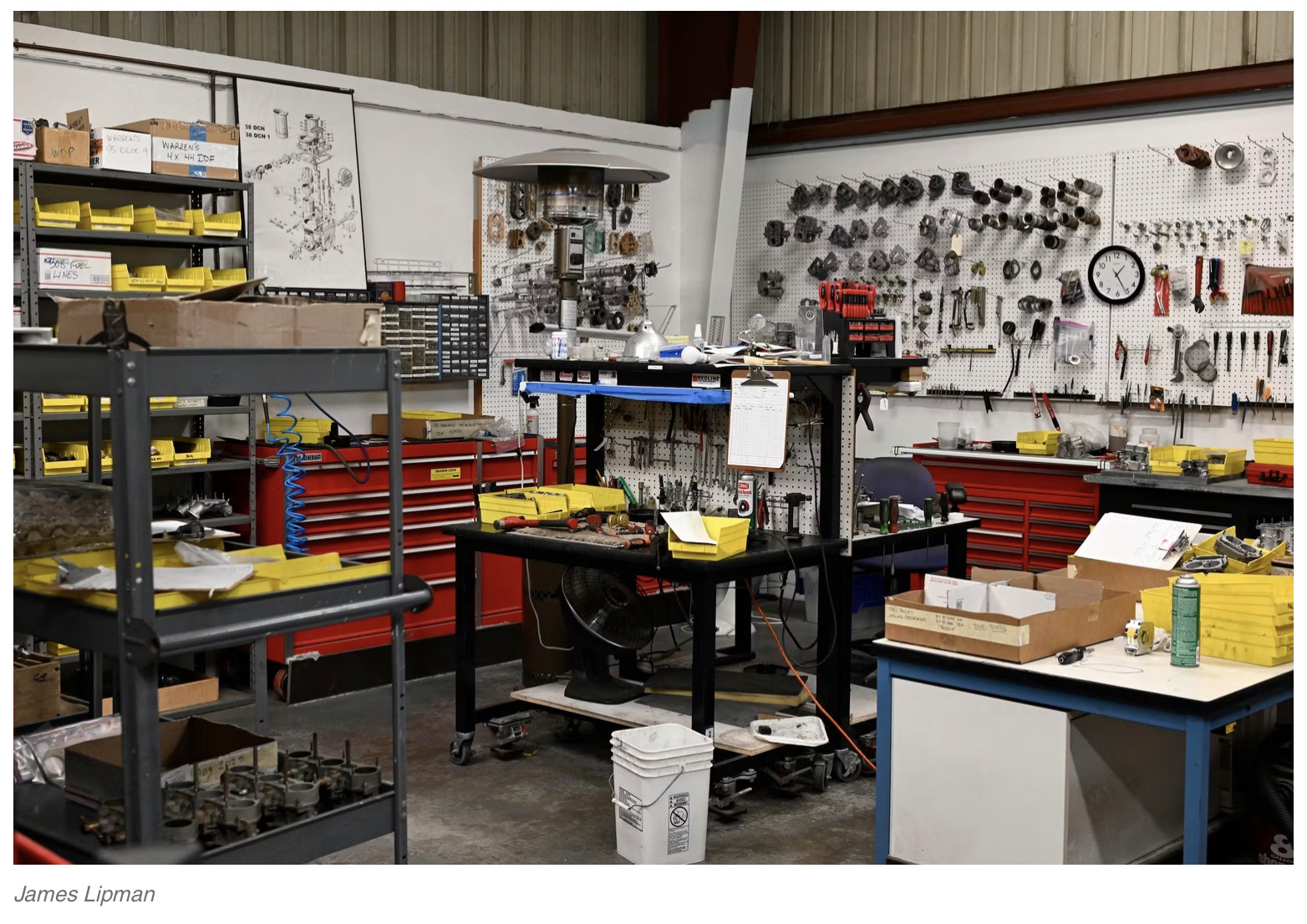
Some people who vintage-race want bigger bores in the carb to move more air at speed, while the carb appears to be stock on the outside. That is a huge undertaking involving machining out the bore, relocating the throttle shaft, making new throttle plates, and redrilling the “progression holes,” or the tiny holes in the carburetor throat that bleed in more fuel as the throttle plate cracks open.
It’s problems with these holes, sometimes blockages due to lack of use, that cause some of the usual Weber drivability issues such as flat spots and lean-condition back-spitting. Pierce says these holes were individually drilled at the factory based on the flow of each carburetor, and he’ll even add holes as necessary, in part to compensate for the poor fuel quality. The precise drilling of progression holes using the attendant fixtures and experience is one reason you send your Webers to an expert like Mike Pierce.
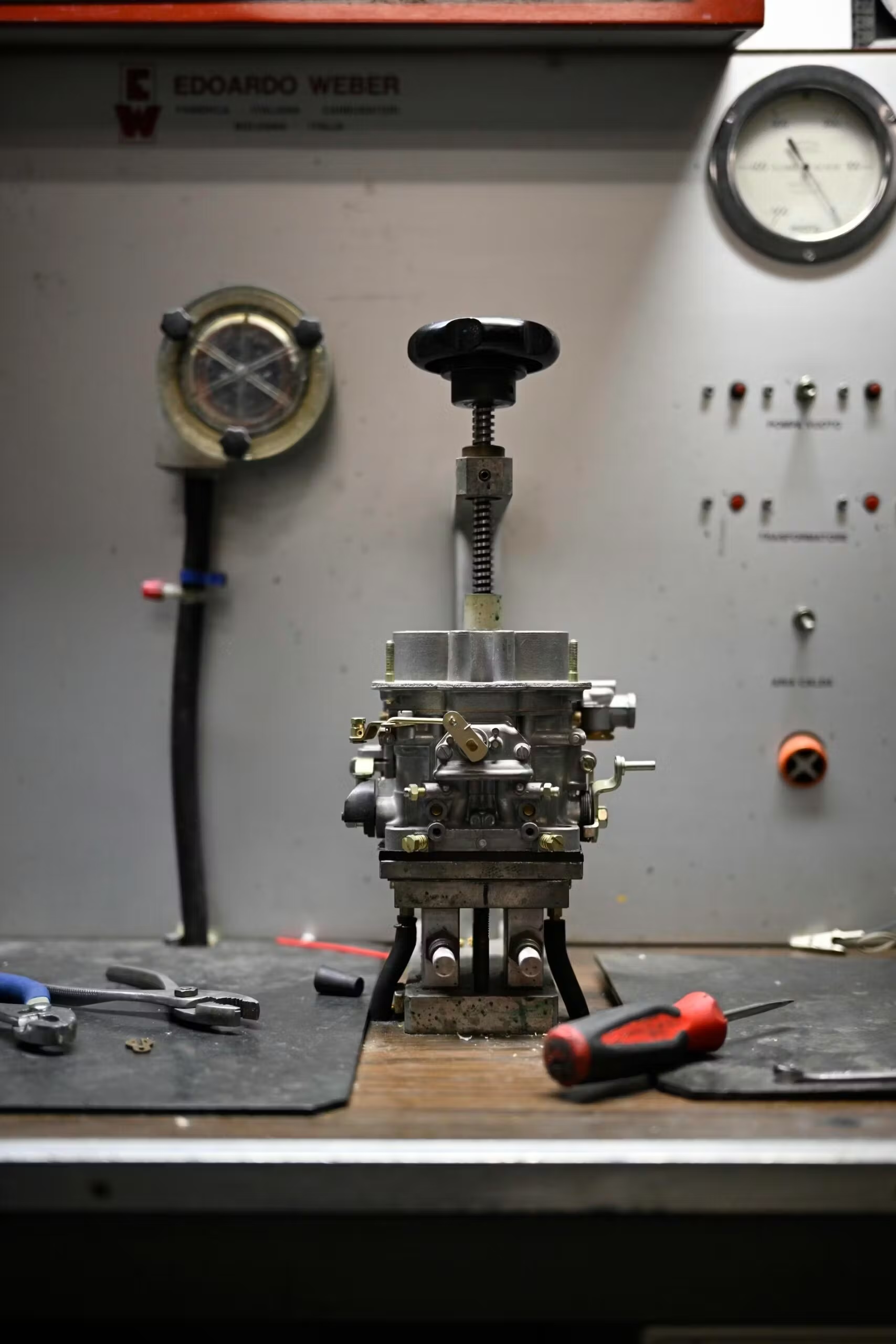
Fortunately for Weber users, Pierce is training a replacement: his 23-year-old grandson Carson Sharp, who, Pierce says, is savvy enough to tell Pierce when to back off and let him figure things out on his own. “I want to jump in and he’ll say, ‘What does that teach me? Show me one and I’ll do the others.’ He has been with me a year and a half. Hopefully he’s going to take all this over. I’ll be 75 next year and my wife’s going, ‘You gotta stop.’”
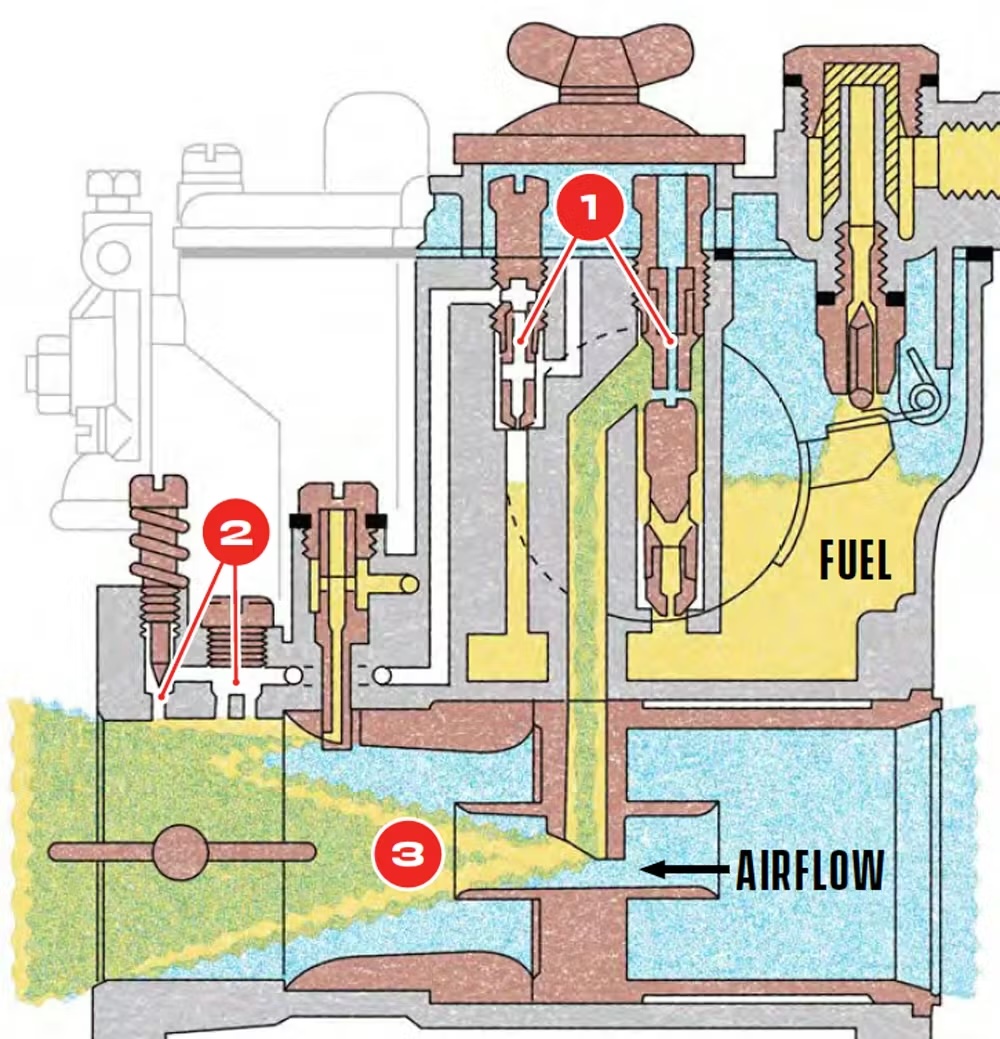
- Quick-Change Jets: Webers use screwed-in jets and emulsion tubes, or small brass tubes with fine holes, to initially mix the air and fuel to produce an emulsion, or a stable mixture of two liquids that normally won’t mix. Different jets can easily be swapped in to alter tuning.
- Progression Holes: The idle and accelerator-pump shot can be tuned with separate jets. Also, “progression holes” are exposed as the throttle plate opens, progressively bleeding more fuel in so the engine won’t stumble as it accelerates off idle.
- One Barrel, One Piston: Many Webers are “individual runner” carburetors, meaning each cylinder has its own barrel. The size is denoted by the model number: A 40DCOE has 40-millimeter barrels.
Report by Aaron Robinson for hagerty.com