At the beginning of the 20th Century, the fashion for creating long-distance races for the new ‘horseless carriages’ found an enthusiastic supporter in Vincenzo Florio, a wealthy Sicilian gentleman. In 1906 he established an automobile race, the ‘Targa Florio’, a test of endurance that welcomed entries from manufacturers as well as professional and amateur drivers.
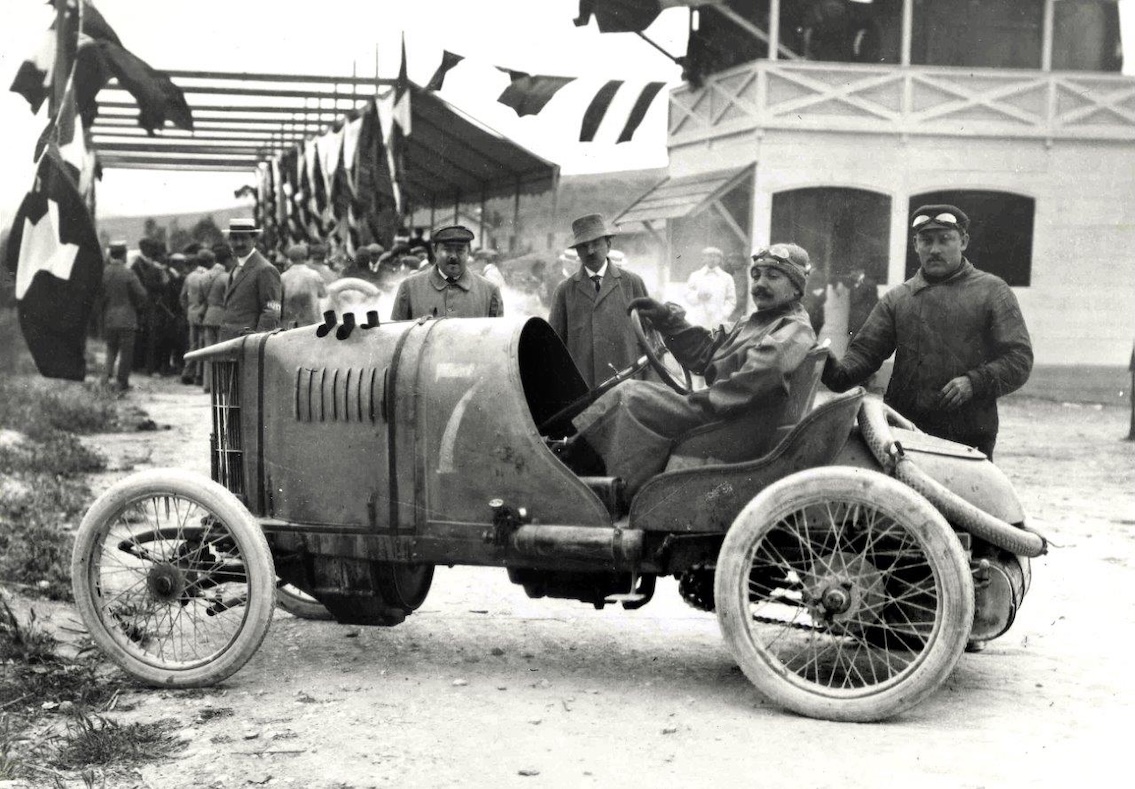
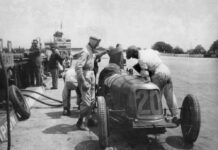
1908 Targa Florio Lion Peugeot
The course consisted of a hazardous 45-mile route, driven 11 times, that wound around the island on narrow, rock strewn tracks that passed for roads but despite the potential dangers, the event attracted a large entry. The photograph shows one of the automobiles entered in the 1908 Targa Florio, a Lion-Peugeot with its driver, Georges Baillot. Lion-Peugeot cars were built in France by three brothers who had had previously parted company from Peugeot, a larger company they helped create. This followed a disagreement between the family members regarding the direction it was heading; their cousin, Armand, wanted to move into large-scale automobile production while three brothers preferred to concentrate on making tools and components alongside their successful bicycle business.
The family reached an agreement to divide the company although in 1905 the brothers persuaded Armand to allow them to build their own cars under the title of Lion-Peugeot. However, in 1910 the two businesses called a truce and join forces once more. There were two main categories of automobiles competing in the Targa Florio, divided into large and small engines, referred to as ‘carts’. The Lion-Peugeot came into this category with its single-stroke 1841cc engine. George Baillot’s automobile failed to finish but another Lion-Peugeot took the chequered flag, a feat that was repeated the following year. However, Baillot did eventually win the Targa Florio in 1910, beating the larger-engined entrants in the process and securing a third victory for Lion-Peugeot. In the final race prior to the First World War, George’s younger brother Andre also won the race.