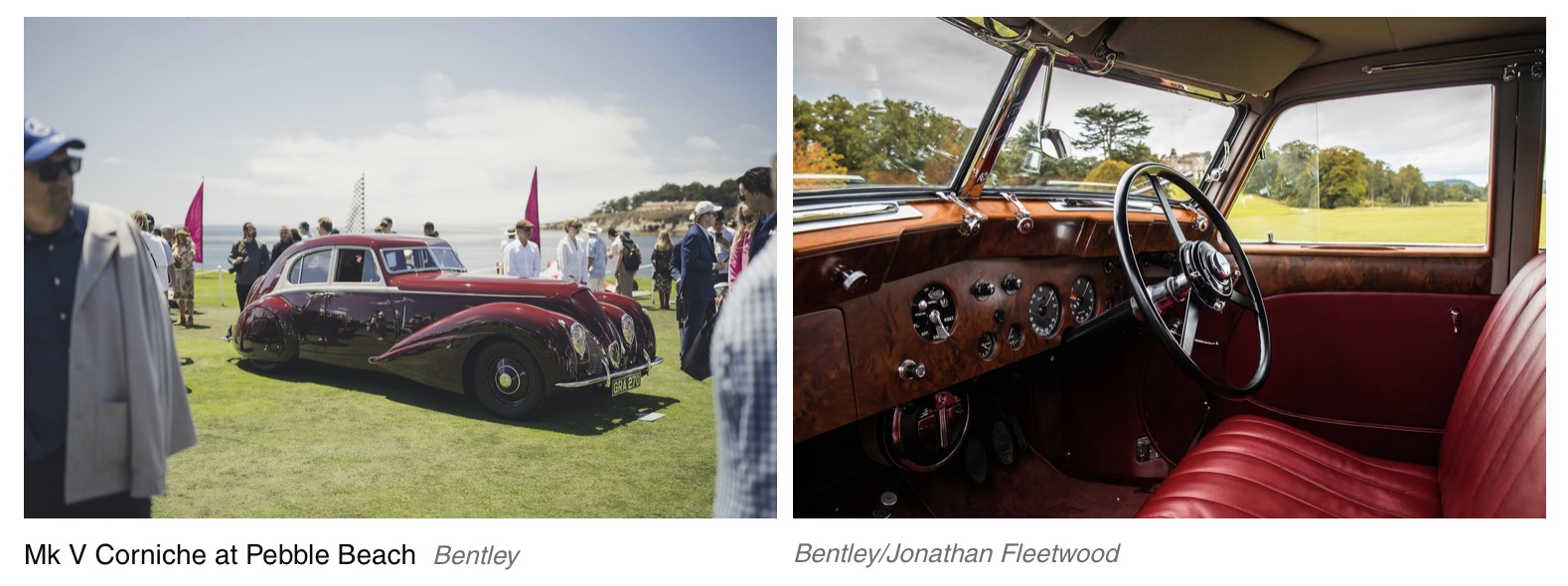
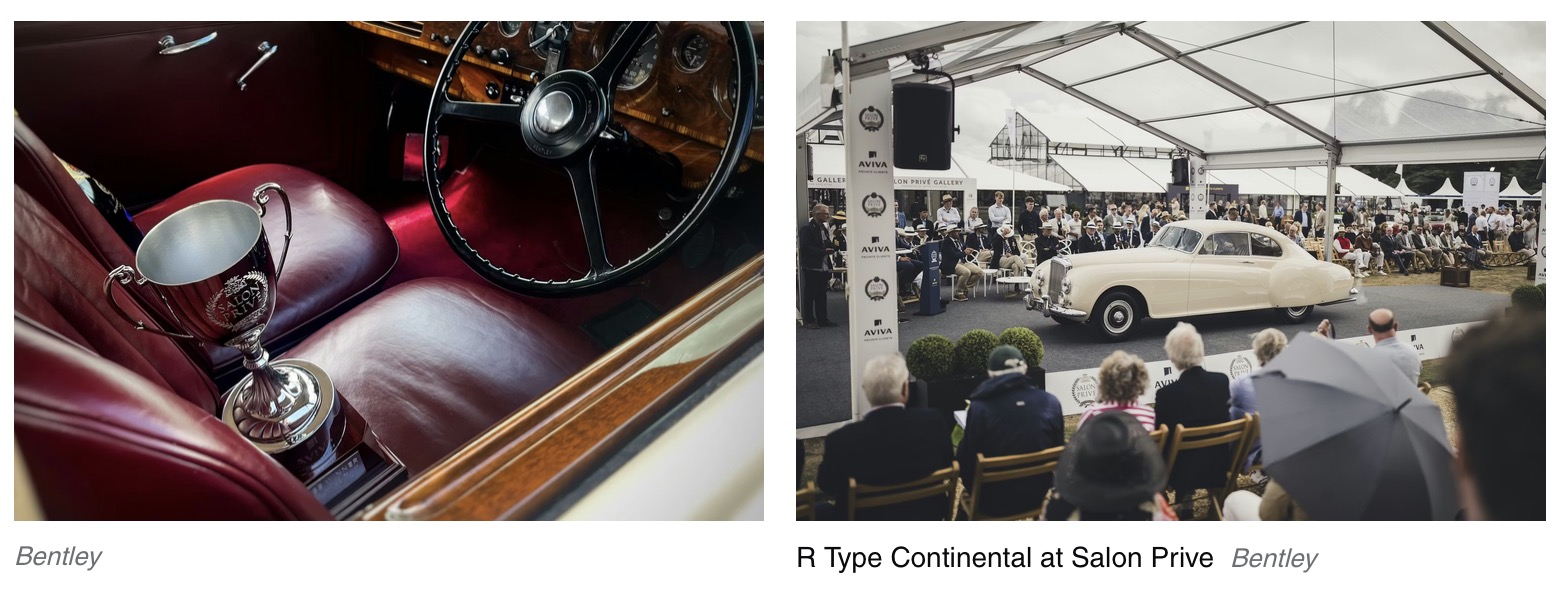
Bentley’s one-of-one 1939 Mark V Corniche is resplendent in a deep Imperial Maroon finish with Heather Grey accents, its center caps gleaming in the sun. The handle turns easily, opening the door to reveal a perfectly restored cabin complete with a massive steering wheel, period-correct upholstery, and wooden dashboard.
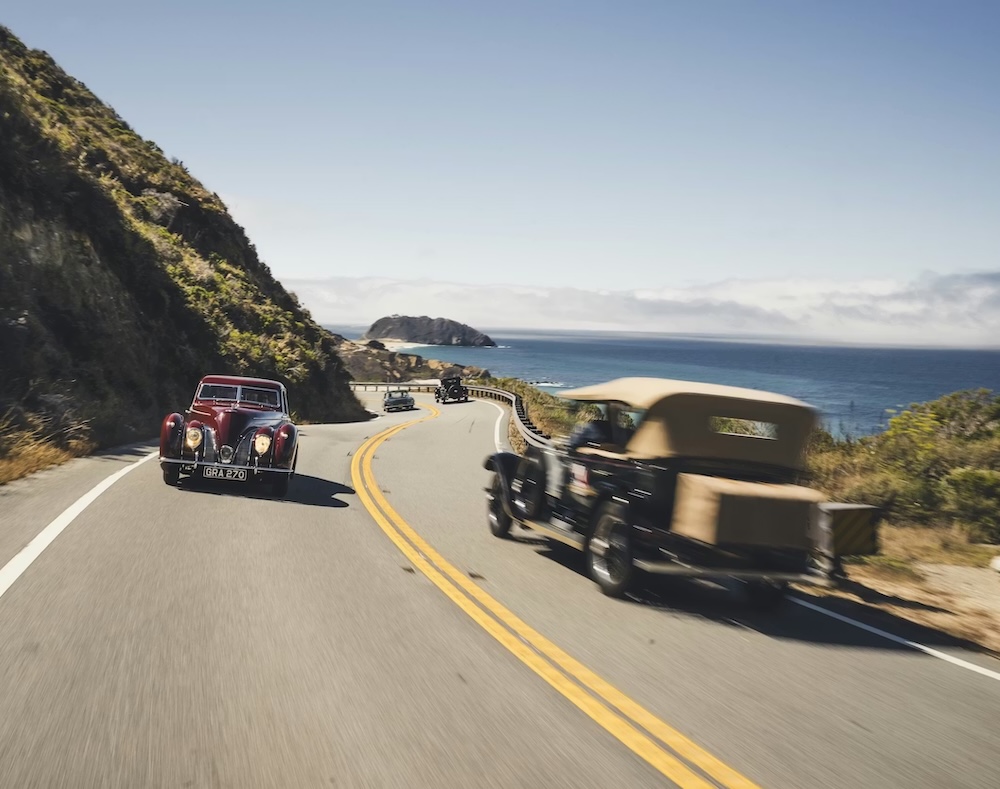
Climbing into the left-side passenger seat, I anticipate a serene ride along the California coastline in Monterey as this Bentley makes its U.S. road debut in the 2025 Tour d’Elegance. As the first ever manufacturer-entered car to be fully judged in the 75-year history of the Pebble Beach Concours d’Elegance, the Mark V Corniche represents Bentley beautifully.
Behind the wheel is Mike Sayer, Bentley head of product communications and the caretaker of the brand’s impressive Heritage Collection. Sayer is uniquely trained and qualified to drive every one of the 50 vehicles in the collection, and he expertly manages the clutch for a lurch-free ride.
Experiencing the 1939 Bentley on the road and not just sitting pretty in a museum is just one example of the ways Sayer and his team have influenced the British brand’s Heritage Collection.
“Four years ago, when the previous curator of the collection retired, my hand was the quickest into the air: ‘Me, me, me!’” Sayer remembers. “I’m delighted that I was honored enough to be chosen to look after the cars; the rest is recent history.”
Sayer’s path to this role, arguably one of the most coveted in the world for car enthusiasts, was what he calls a “wobbly” one. His affinity for the automotive segment was inspired by his dad, who would pick him up from his mother’s house in his beloved 1988 BMW E325i coupe. Sayer’s path brief turn toward the sky when he started college with the intent to study aerospace. Subsequently, though, he found himself on an engineering team designing and building a small racecar, which reignited his passion for the automotive industry. In 2006, Sayer took a job at Bentley as an engineer.
“I’m a mechanical engineer by training, but after about five or six years, I realized I was better at talking about engineering than I was doing it,” Sayer says. “I moved into communications, and that’s how I started working in product communications, and then Heritage came along.”
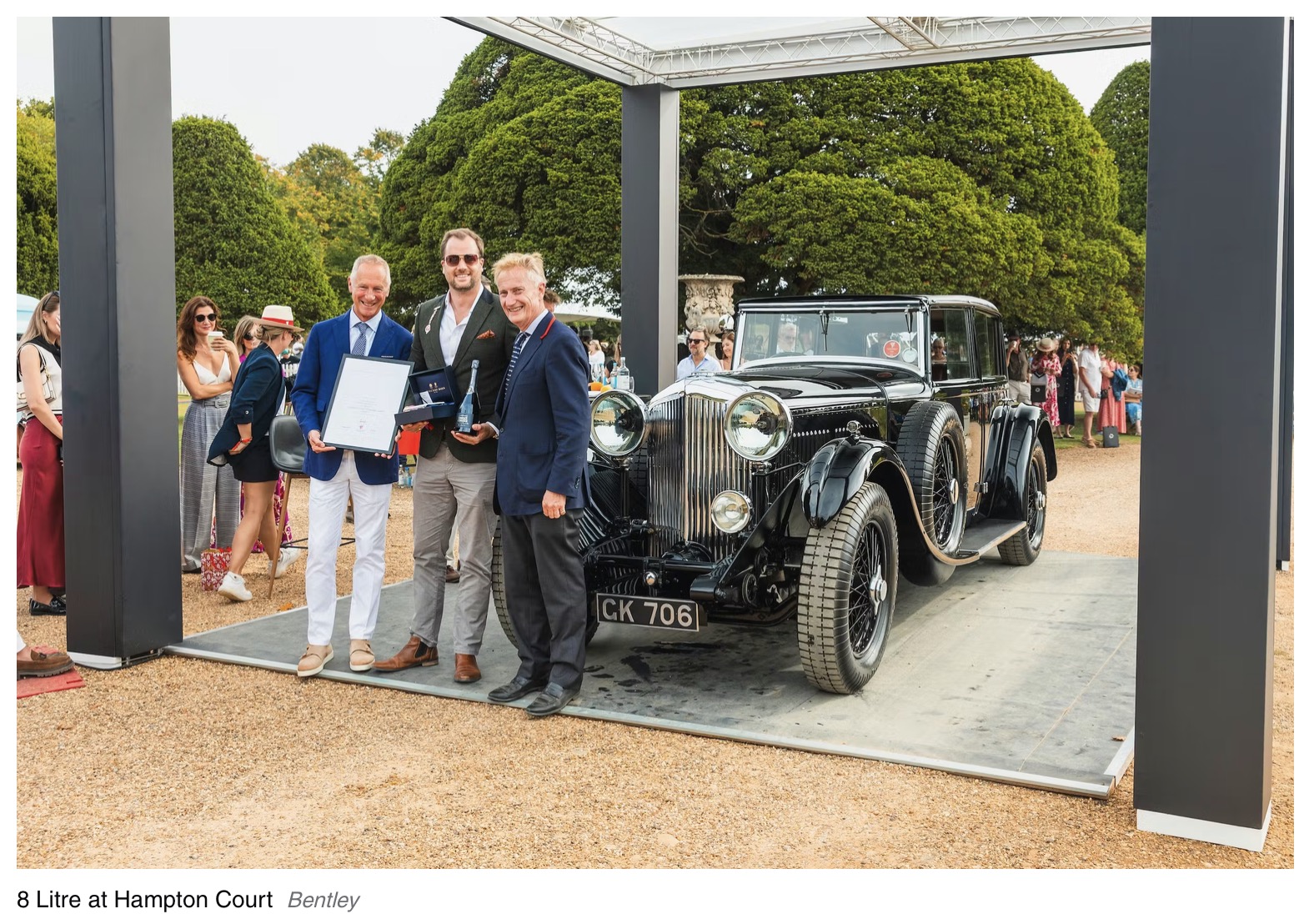
When Sayer took the helm of the collection, only nine of the vehicles in the group could be driven on the road. That’s no longer the case. Not by a long shot.
“The previous mantra was more about taking cars and sort of bubble wrapping them and keeping them as pristine examples,” Sayer says. “When we inherited the collection, we had a very different vision about what the collection should be, and that was that we should represent the entire company history.”
The four dozen or so cars in the collection are meticulously maintained—but not babied—and together they tell the story of Bentley from its beginning. It wasn’t always that way: One of the first issues Sayer and his cohorts had to tackle was addressing a major gap in the automaker’s history, including a sizable chasm from 1958 to 2003.
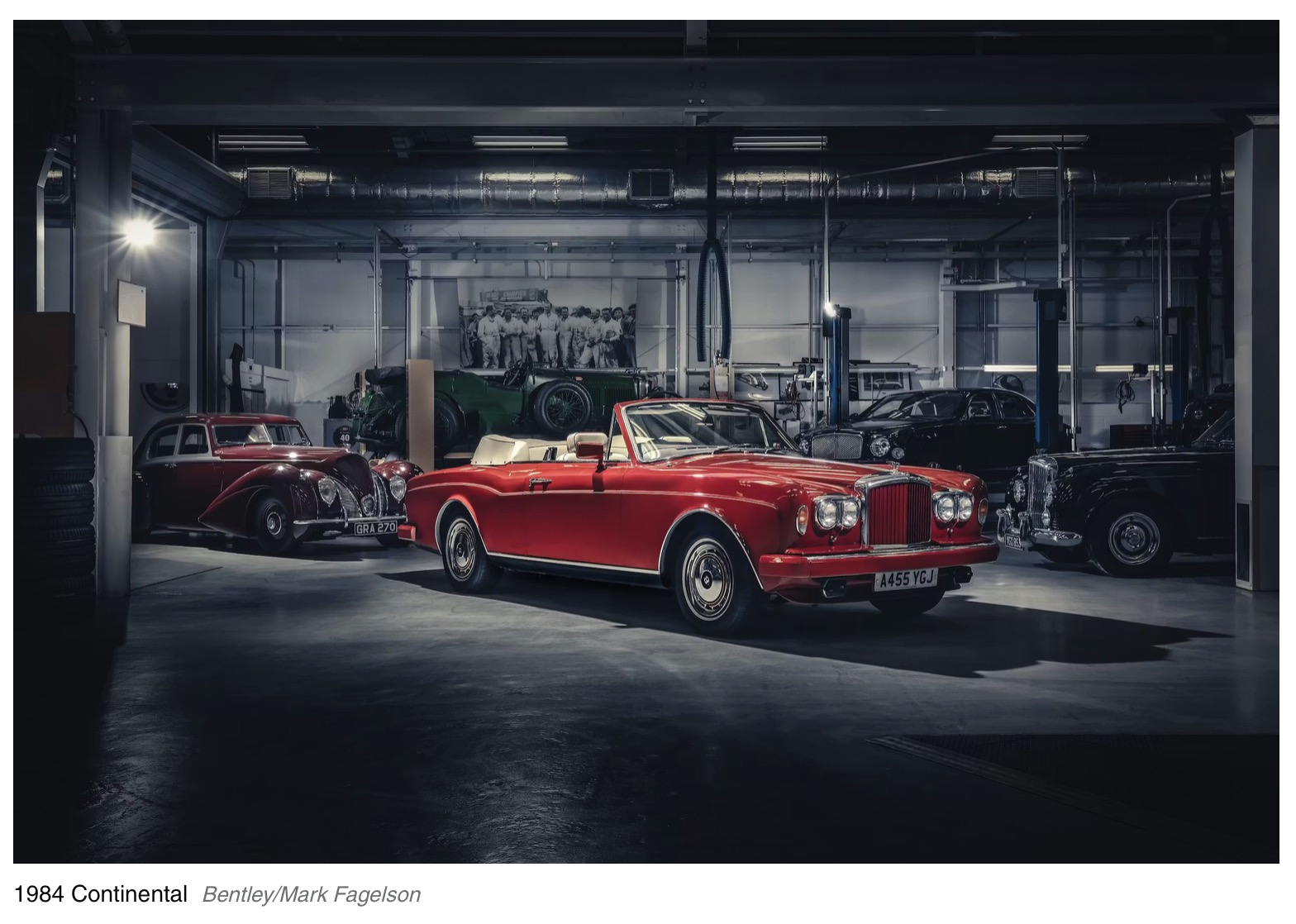
When Sayer started shopping to fill the missing pieces of the collection, one of the cars they wanted was an ’80s-era Continental. It’s a car that was designed a decade before it debuted, modeled on the 1971 Bentley Corniche. While it “by no means represents Bentley’s finest hour,” Sayer says, they couldn’t tell the whole story without one. During the search, the team found an unrestored 1984 Continental finished in Tudor Red. It wasn’t pristine and was a bit leaky, but it was not beyond repair. In the process of sealing the deal, Sayer discovered an interesting detail: this very example was a former Bentley CEO’s car.
“At that point, we had to buy it,” Sayer says. “It’s nice when cars reveal a little hidden history. That car very much came home.”

As Bentley tracked down machines to fill the timeline, the team established its parameters.
“We set a really hard and fast rule, which was that any car that exists in the collection must be drivable,” Sayer explains. “The road cars have to be road legal, taxed, tested, and running, and the race cars have to be kept in a condition to go to the track and run them.”
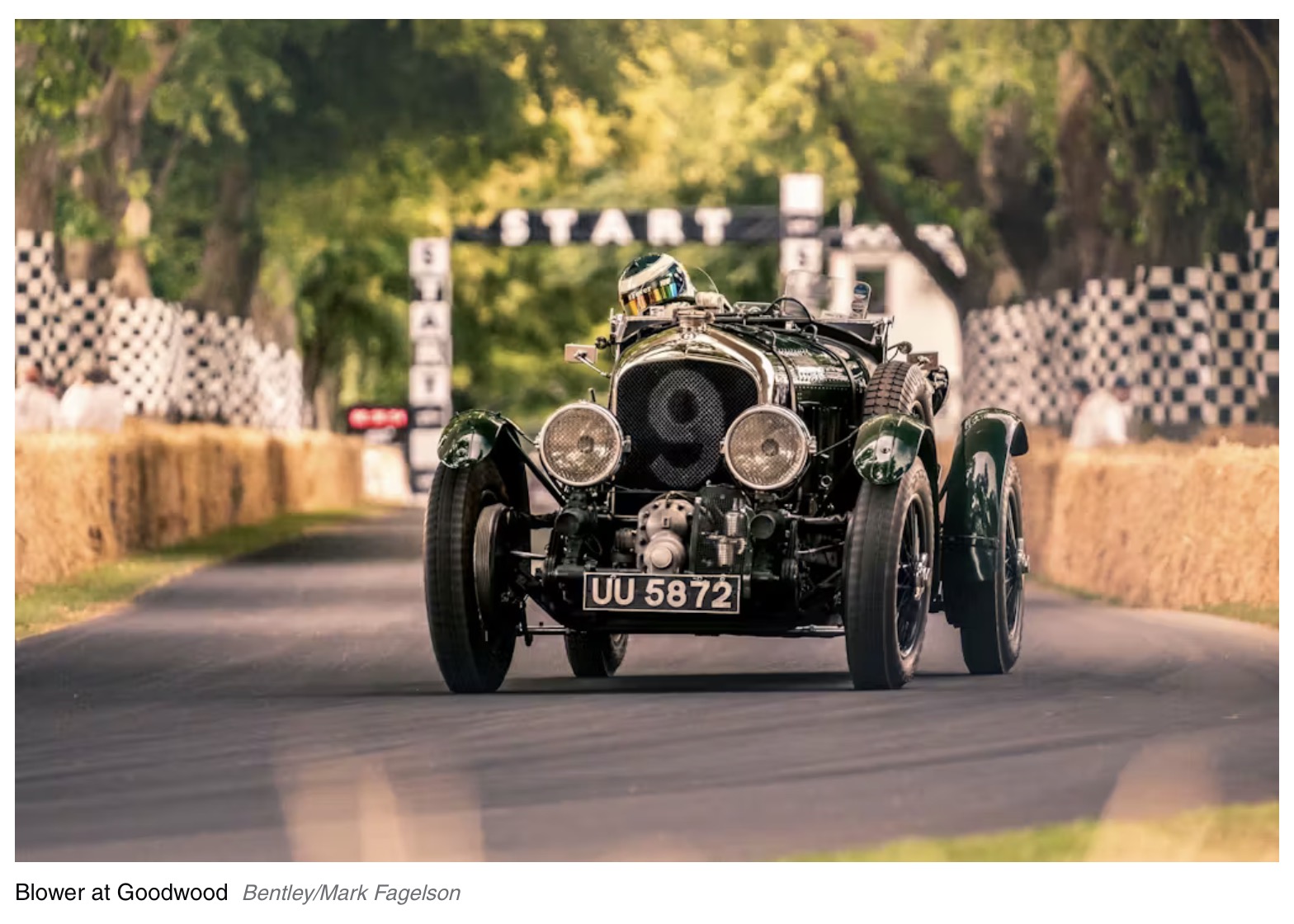
Now comprising 40 road cars and 10 race cars, a select number of lucky people can walk into the facility in Crewe where those cars are stored, point at one, and take it for a drive. I ask Sayer if it’s something he does often.
“If I could, I would do it every single day,” he responds without hesitation.
Sadly for Sayer and those with a golden ticket to drive one of the vehicles in the collection, winter has arrived, and the cars must be kept from the salt roads for the next few months. Each must be driven at least once a year, which translates to an average of more than one per week to make up for the colder months. When spring arrives, the team exercises the car as one would a stable full of thoroughbreds.
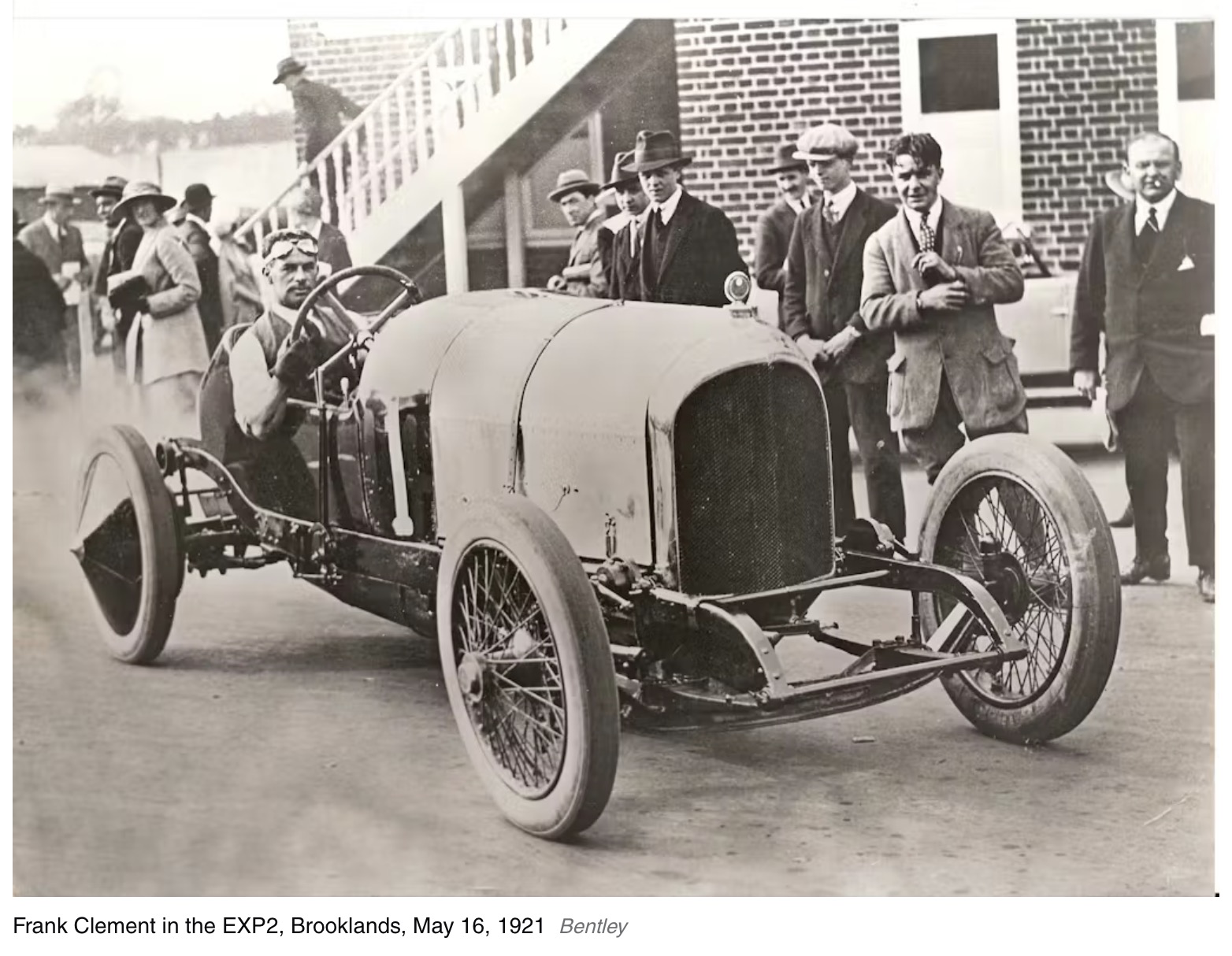
Don’t refer to the Heritage Collection as a museum, Sayer says, because that word evokes a feeling of stasis. This group of cars is very much a living, breathing entity.
“Our view is that a car that can’t be driven is a machine that’s lost its purpose,” Sayer says. “It is very much like a stable, and the cars are like horses in that they have moods. They can be quite recalcitrant; they can have good days and bad days, and if you treat them meanly, they get cross with you.”
Only one car has acted more like a mule than a racehorse, according to Sayer, and that was a model built in the 1980s that has since been tamed.
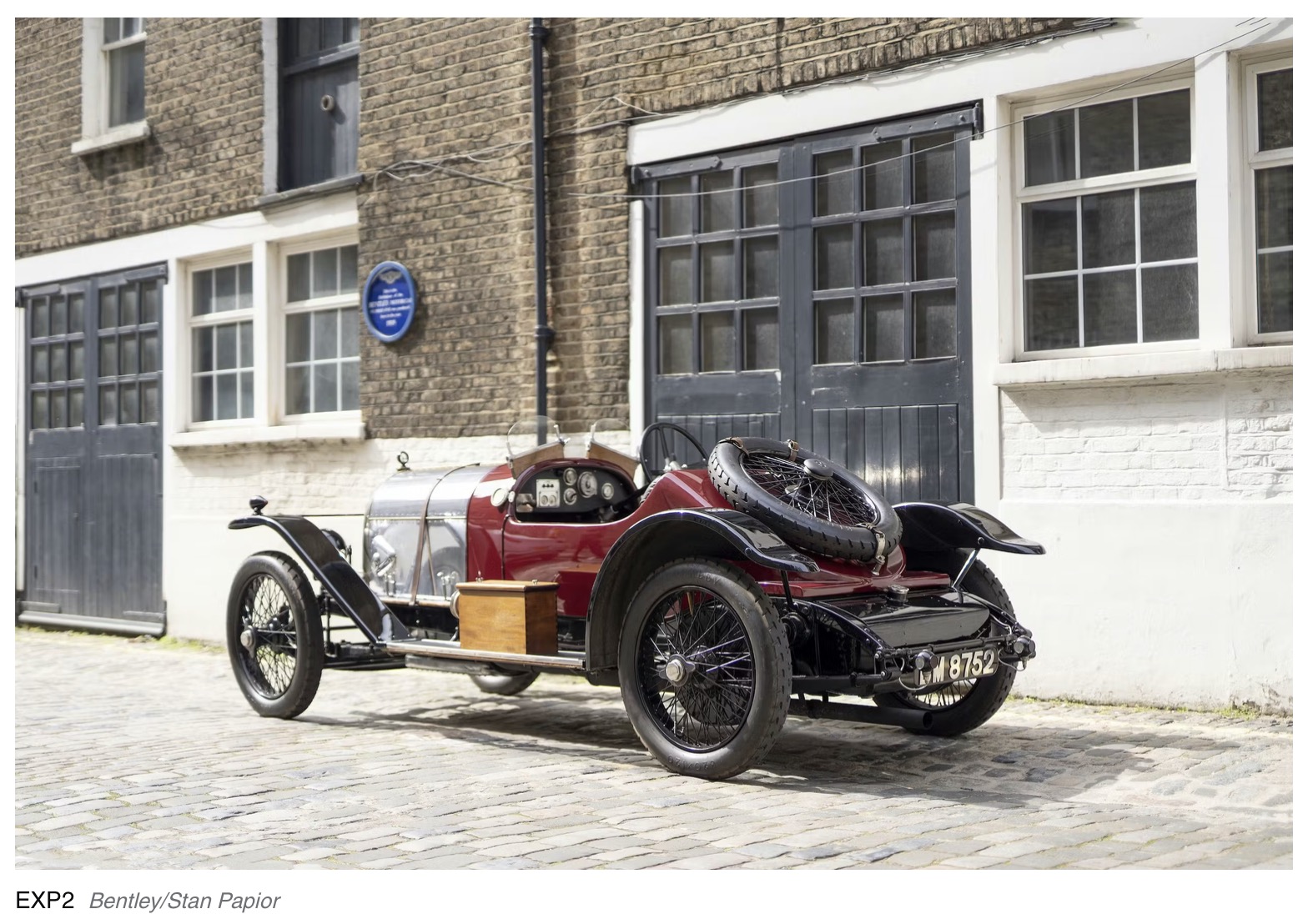
“We have some cars that are remarkably trouble-free in terms of how reliably they start and how well they behave,” he says. “We have the oldest Bentley in the world in the collection. the EXP2. It’s the second Bentley ever built, and it has never, ever failed to start. Those early cars are just incredible, mechanically, and surprisingly reliable.”
Bentley’s brand-new state-of-the-art Engineering Technical Center is just down the street from its Heritage Garage, where some of these classics are stored at the automaker’s original factory site in Crewe. The new research and development facility is dedicated to the brand’s future, including electric and hybrid powertrains, while the Heritage Collection shows the automaker isn’t forgetting its past. And the head caretaker isn’t halting its development any time soon.

“We’ve been victims of our own success in that we have more cars than we have space,” he notes. “The cars currently live in three different locations across the campus, and in five years’ time, it would be amazing to have one unified facility where they can be on display and be maintained in the same place. Whether that’s a realistic vision or not, I don’t know, but that would be Nirvana, I think, for any heritage collection.”
Report by Kristin Shaw for hagerty.com