A dream come true to pay tribute to a person who has meant so much to the history of motor racing and who deserved greater recognition.
A name, a legend: Giotto Bizzarrini. An engineer, tough and uncompromising, who has always pursued his goals without compromise.
GIOTTO BIZZARRINI
After leaving Ferrari, Giotto created the 250 GT Breadvan in 1962 for Count Giovanni Volpi di Misurata’s Scuderia Serenissima, in collaboration with Piero Drogo’s Carrozzeria Sports Cars.
The Breadvan concept is to develop more functional aerodynamic shapes to achieve maximum speed performance on the very long Hunaudières straight in the 24 Hours of Le Mans. Originally 6.75 km long and now interrupted by two chicanes, this famous straight, known to all racing enthusiasts, allowed speeds of over 300 km/h to be reached in the 1960s, culminating in the official record of 407 km/h set in the 1988 race, before the track was modified.
Giotto Bizzarrini was involved in many activities at the time and also devoted himself to engine design, creating a 3.5-liter twelve-cylinder engine that was sold to Lamborghini for the 350 GT.
Meanwhile, he began collaborating with Renzo Rivolta, and this partnership led to the creation of the Iso Grifo A3/L (Lusso) and A3/C (Corsa) in 1963, which were presented at the Turin Motor Show at the Bertone (the A3/L) and Iso Rivolta (the A3/C) stands, respectively.
The project is by Bizzarrini, while the styling is by Bertone, designed by Giorgetto Giugiaro. The A3/C is built at the Carrozzeria Sports Cars Drogo in Modena and is the racing version of the A3/L, which is produced in Bresso at the Iso Rivolta factory. The A3/C was Giotto Bizzarrini’s favorite creation, and he devoted himself to its development in order to bring it to Le Mans.
In 1964, the collaboration with Rivolta ended and Giotto founded Prototipi Bizzarrini, which later became Bizzarrini S.p.A..
In 1965, it presented the 5300 GT Strada, which carried on the legacy of the Iso A3/C and continued its history.
BREADVAN
A “breadvan” or “camionnette” in French, because it seems that the term originated in Le Mans, is a modified sports car with a distinctive body, characterized by an elongated, truncated tail, similar to the shape of a bread delivery van (hence “breadvan” in English).
This aerodynamic solution is the result of studies carried out by German engineer Wunibald Kamm in the 1930s. It is characterized by sides that are sharply truncated at the rear, closing perpendicular to the ground.
The most famous example is that of the Ferrari 250 GT SWB purchased second-hand by Count Volpi di Misurata, owner of Scuderia Serenissima, who hired Giotto Bizzarrini to modify it and transform it into the Ferrari 250 GT SWB Breadvan, with the help of Piero Drogo’s Carrozzeria Sports Cars.
Bizzarrini understood that the rear end is very important for the aerodynamics of a racing car and controls both drag and vertical load, which we now call “downforce.”
In the 1960s, rather than downward downforce, the aim was to reduce the upward thrust exerted by the air, because in the absence of spoilers and other wing appendages and ground effect, which had not yet been discovered, the cars were still buoyant: in other words, the air tended to lift them at high speeds, especially the nose. Modifying the car by raising the rear significantly reduced the upward thrust.
ForGiotto
ErreErre Fuoriserie
“With ForGiotto, we wanted to create something that didn’t exist, but that could have existed if Bizzarrini’s dream had had another chapter to write. It is a gesture of love, a dialogue between generations of creators, a way of saying thank you to the genius of a man who taught us that aerodynamics can be romantic” – Gianluca Rubatto
“For a long time, I proudly guarded what Giotto taught me, and with even greater discretion, I guarded his dreams. Today, it seems right to open that drawer and pay tribute to his genius.” – Fabrizio Rossini
ErreErre Fuoriserie was created to fill a void: that of a car that was conceived, desired, but never built, as a tribute to the genius of those who imagined it.
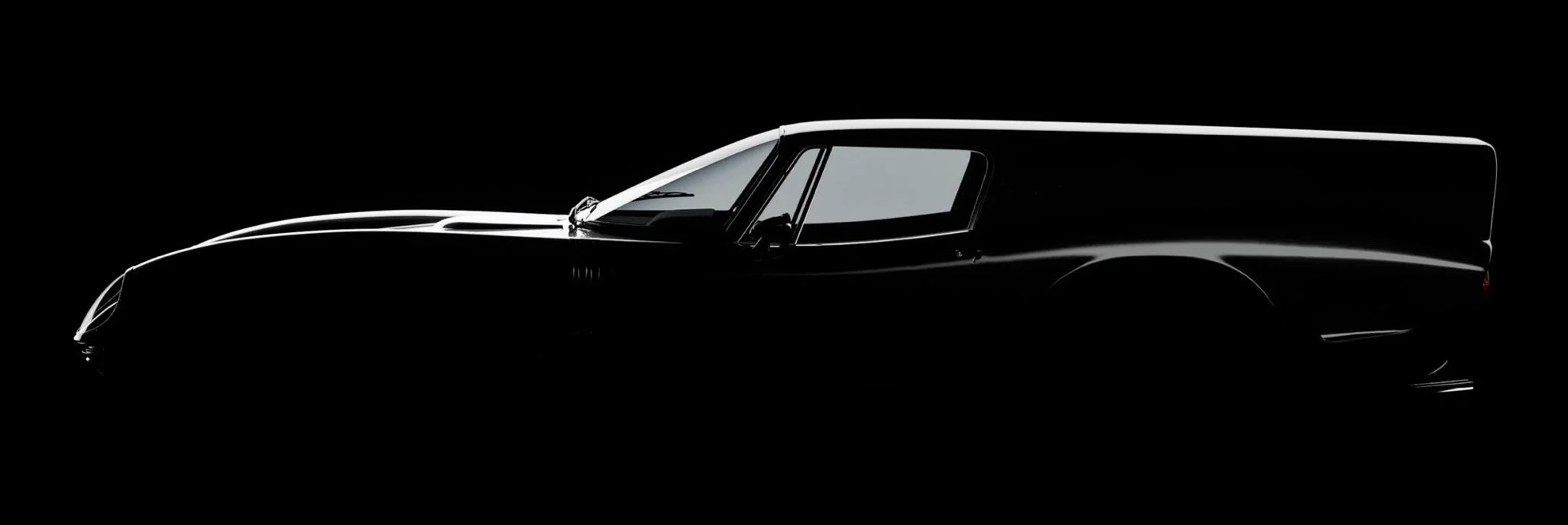
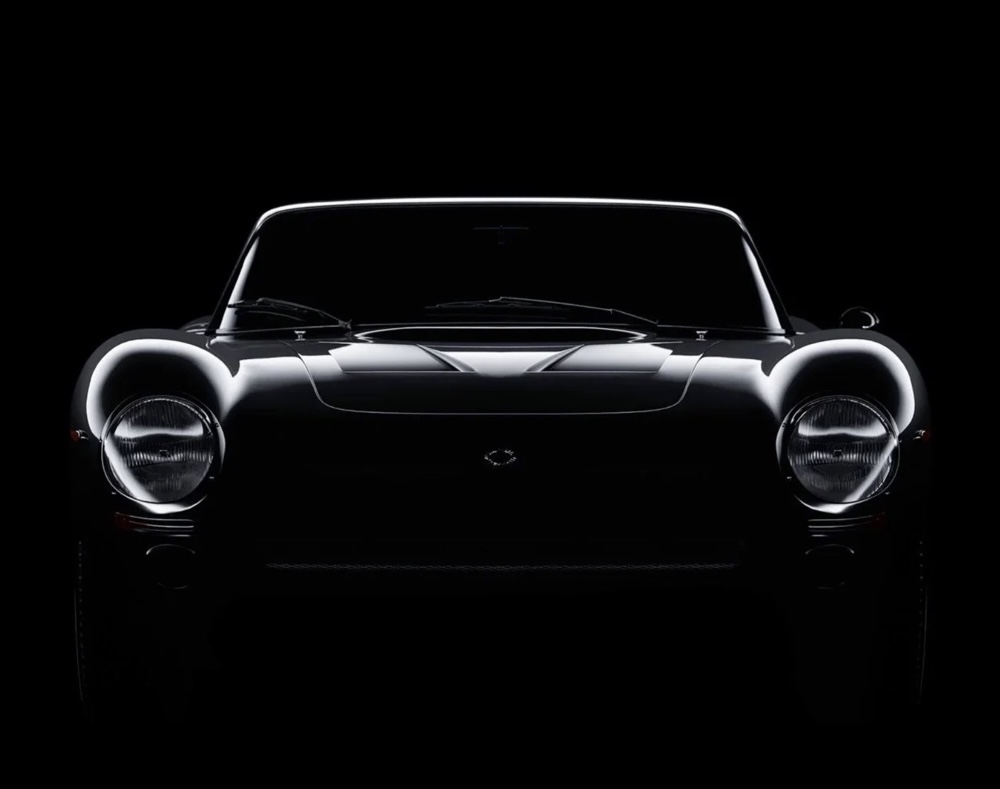
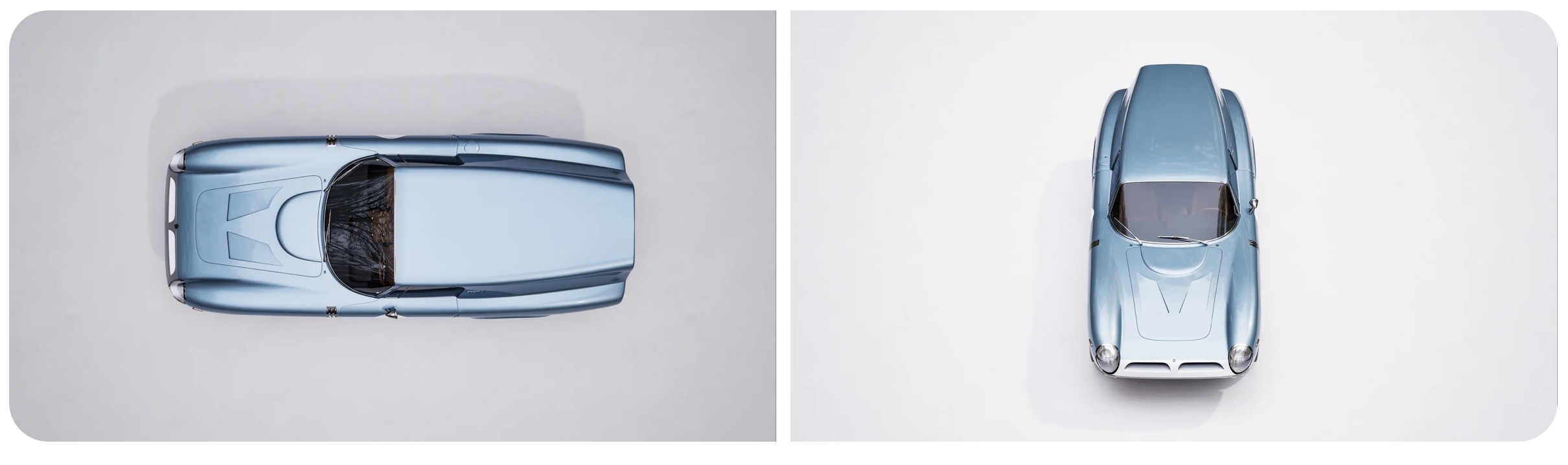
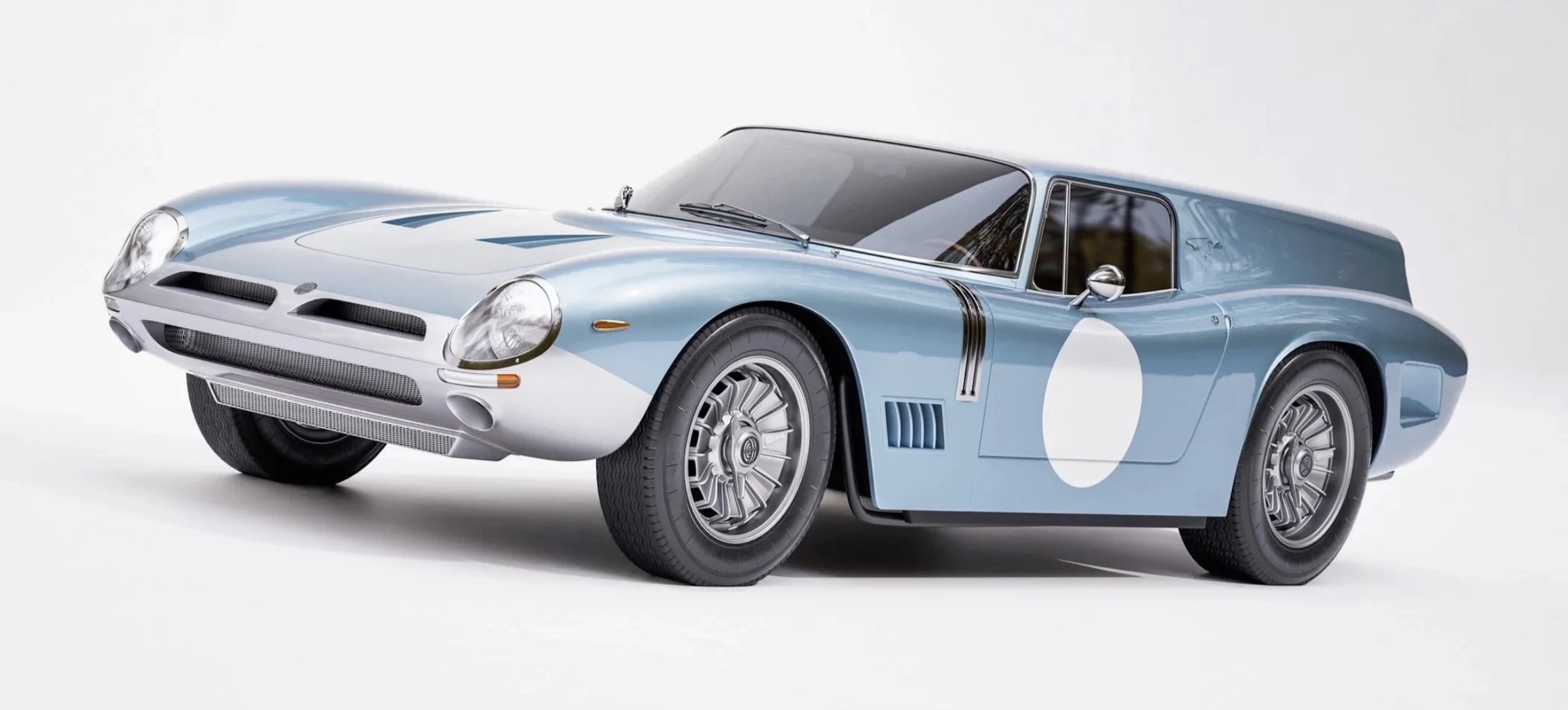
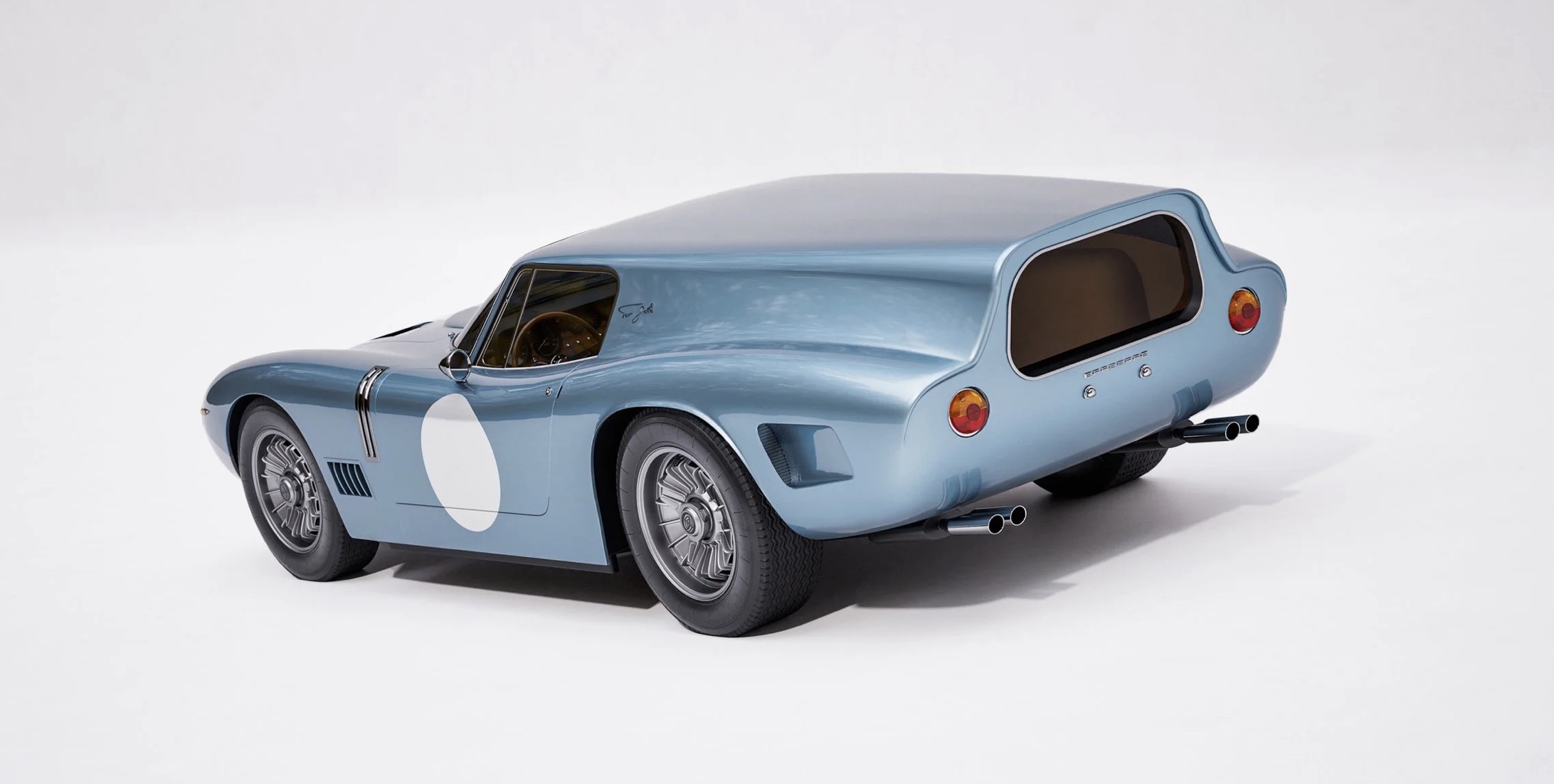
The exterior features sinuous, clean lines, striking a perfect balance between sportiness, fluidity, and aerodynamics, emphasized by the elegant metallic paintwork.
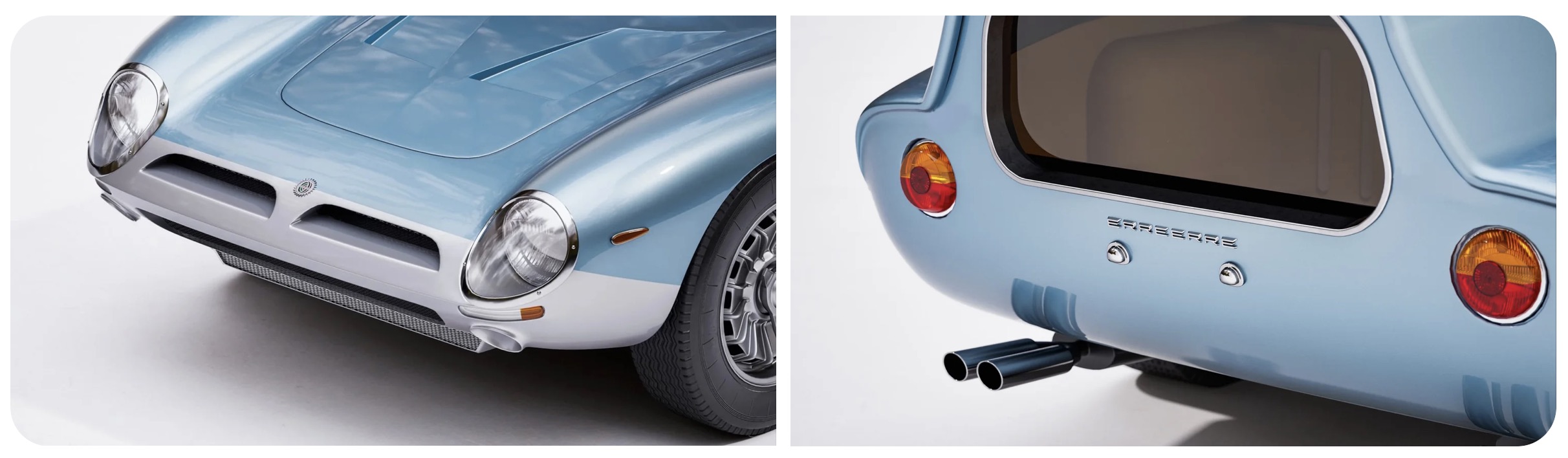
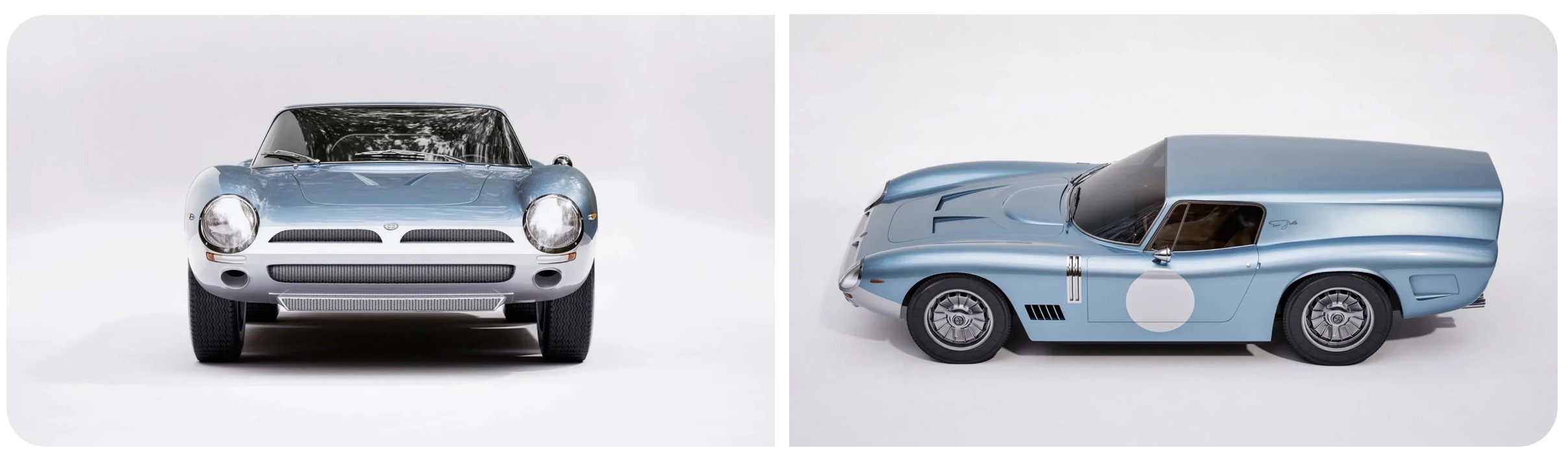
The extreme attention to detail is already evident in the very tapered front end, with the round ErreErre logo and the characteristic air intake on the hood, connected to the large radiator.
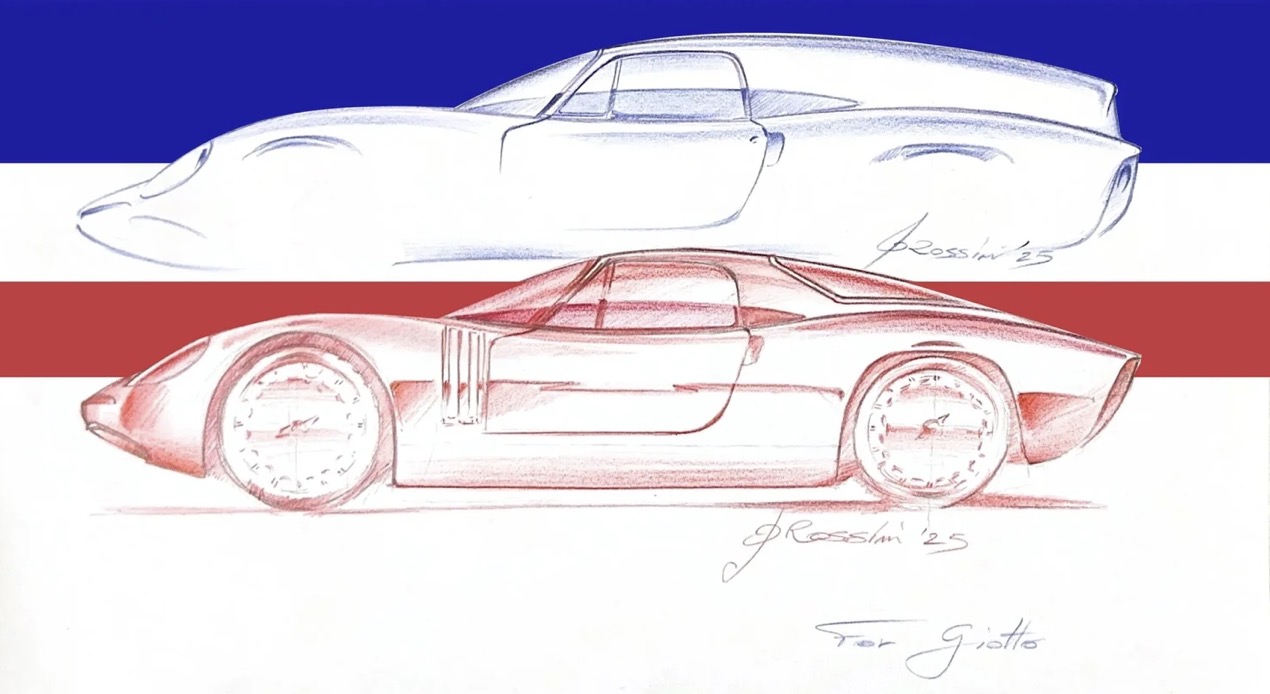
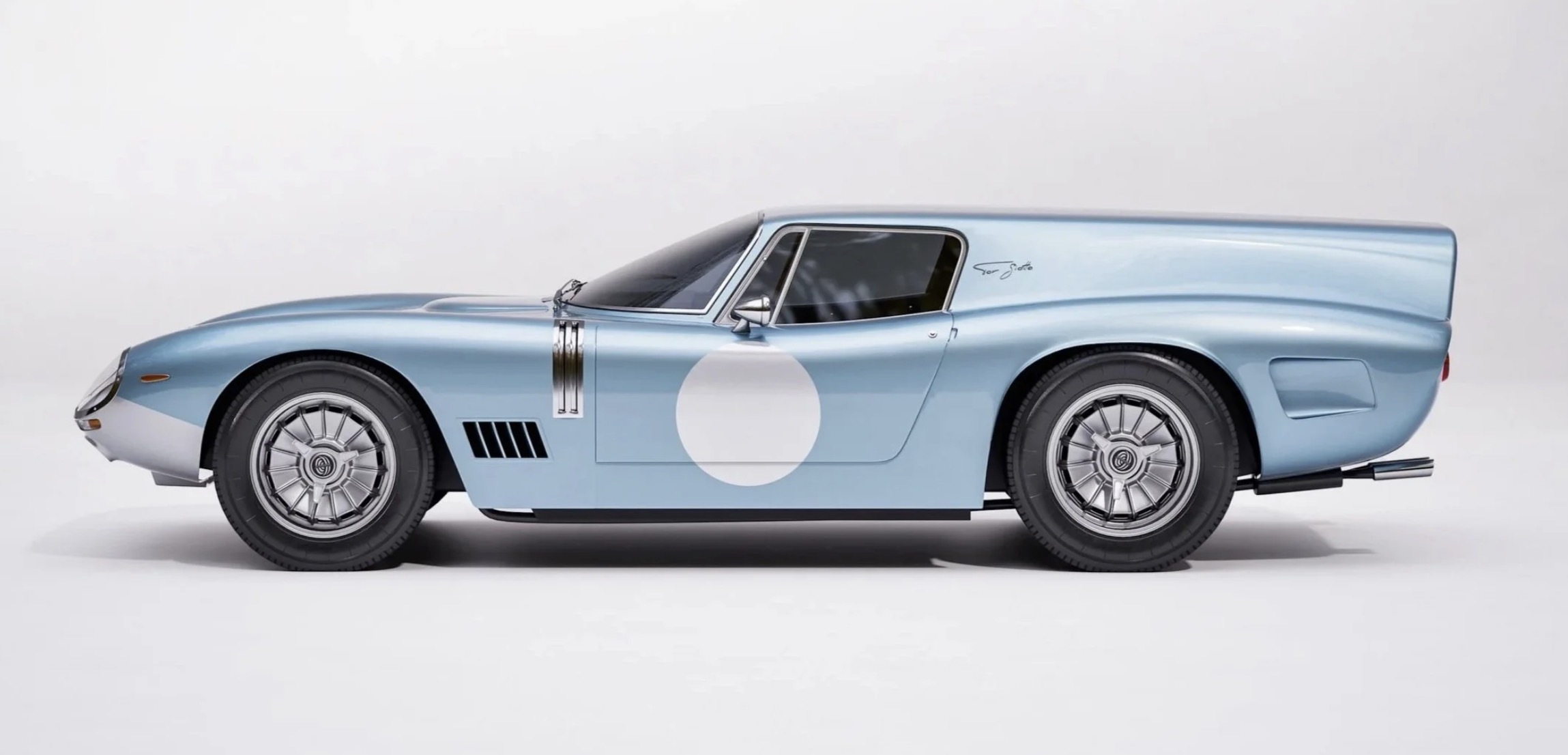
The side view is very sleek and elegant, distinguished by the wheels with the typical ErreErre-branded hubcap, a solution adopted on racing cars of the past; the central number plate only serves to emphasize this vocation. The side air intake in front of the door stands out, contributing to the efficiency of the hot air outlet and giving it even more grit.
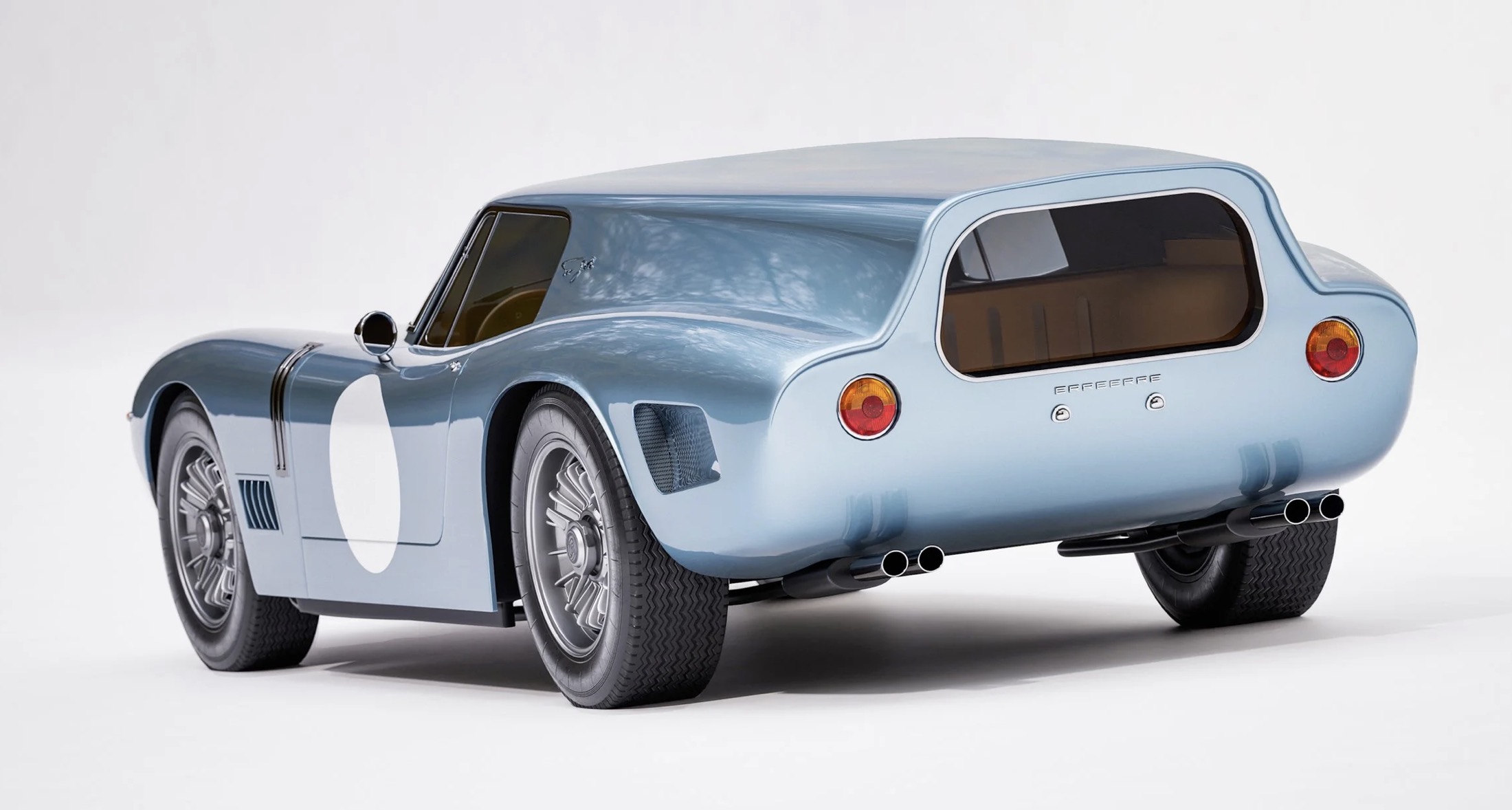
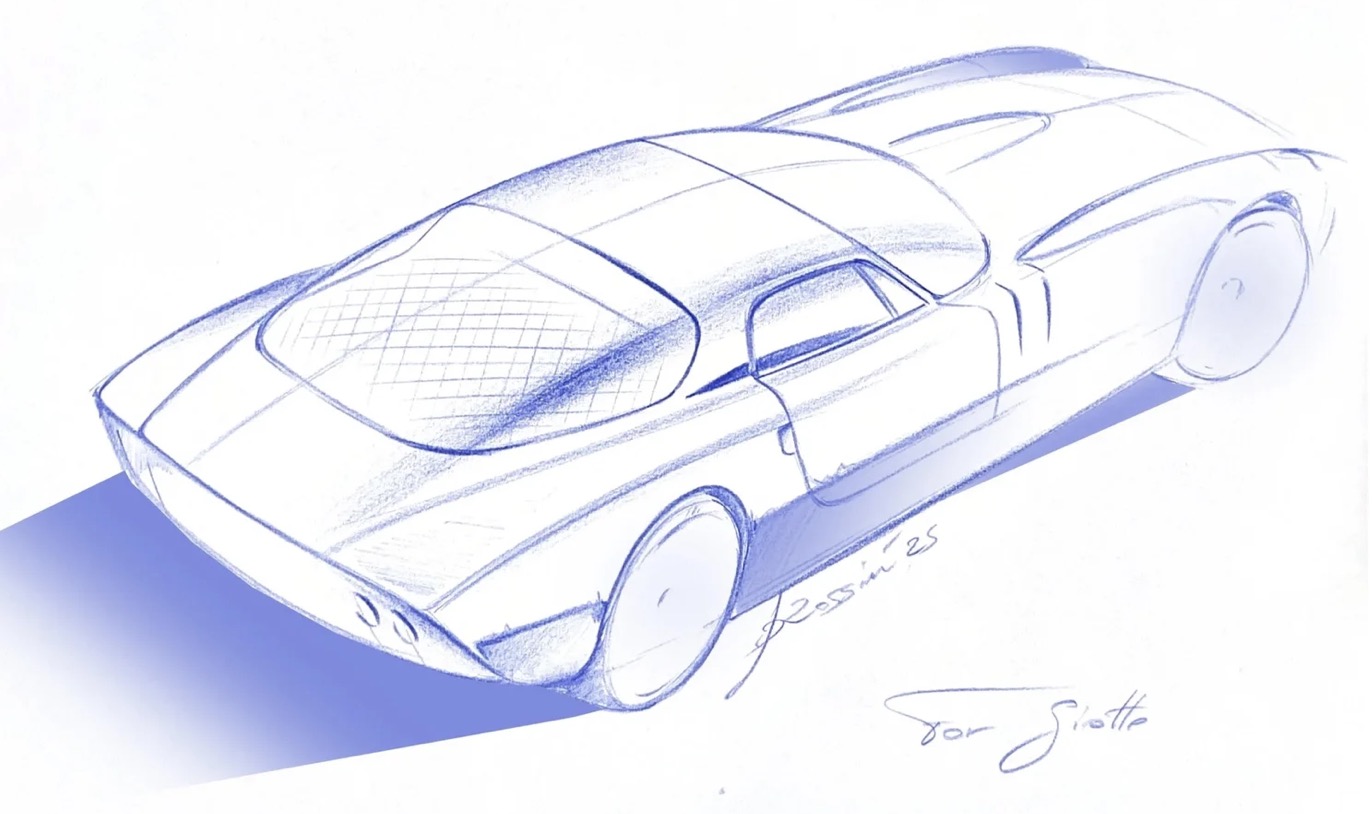
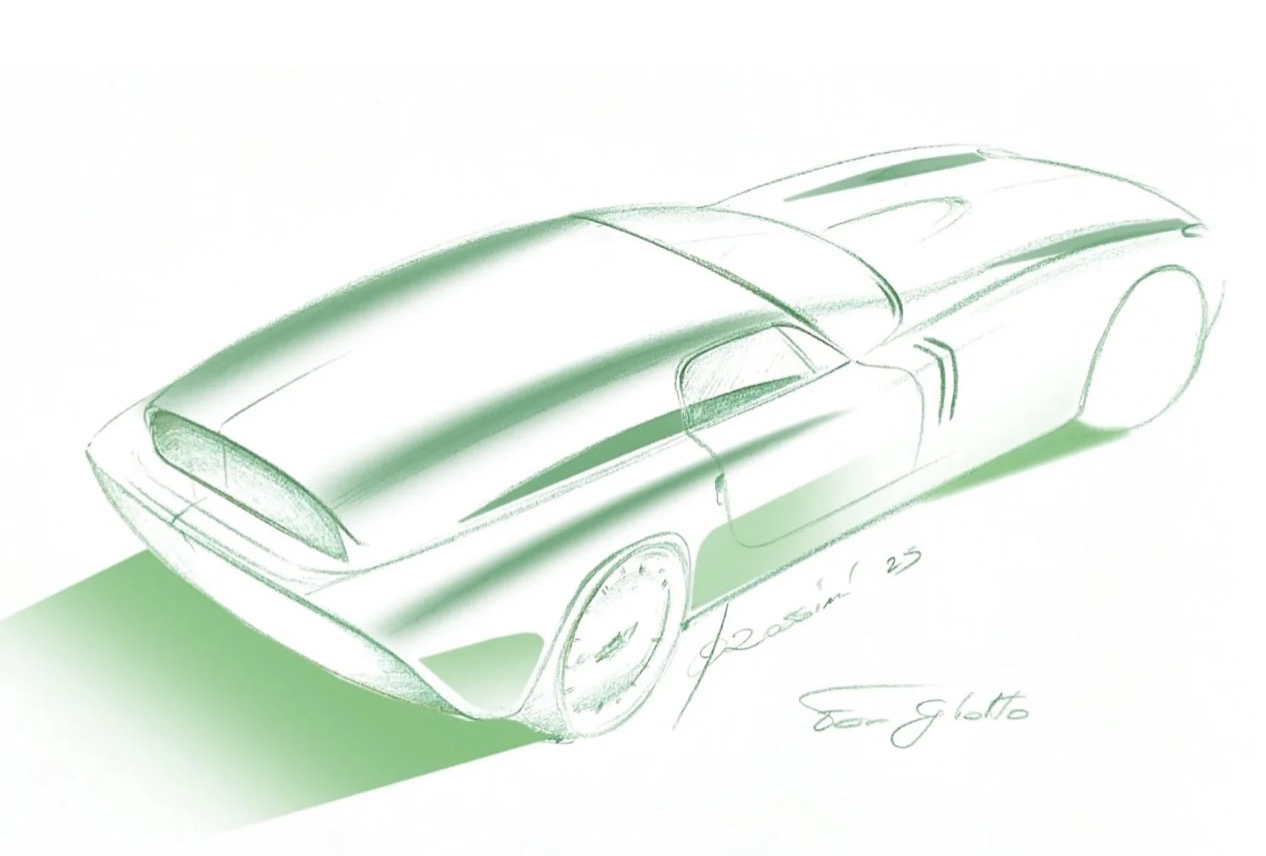
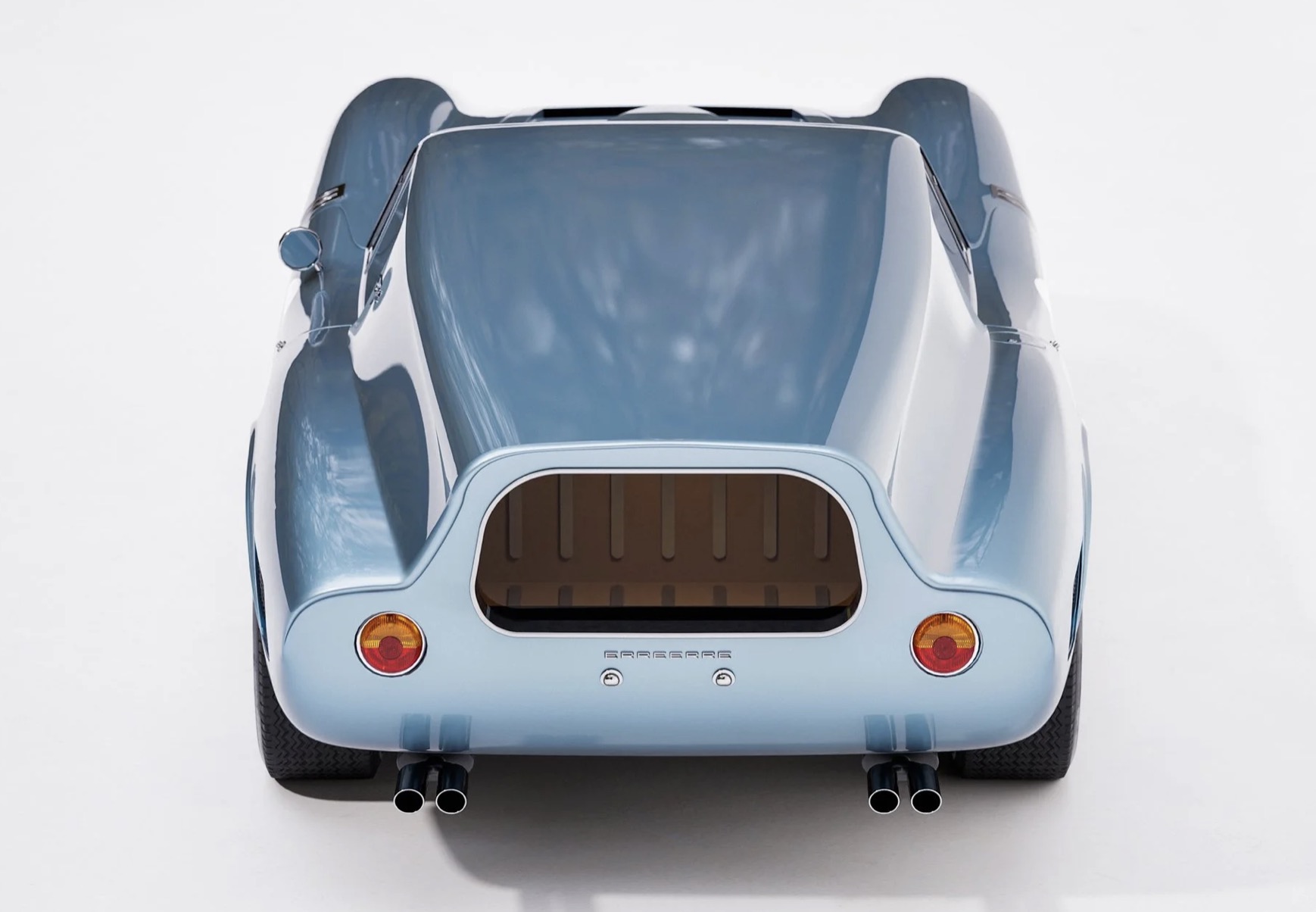
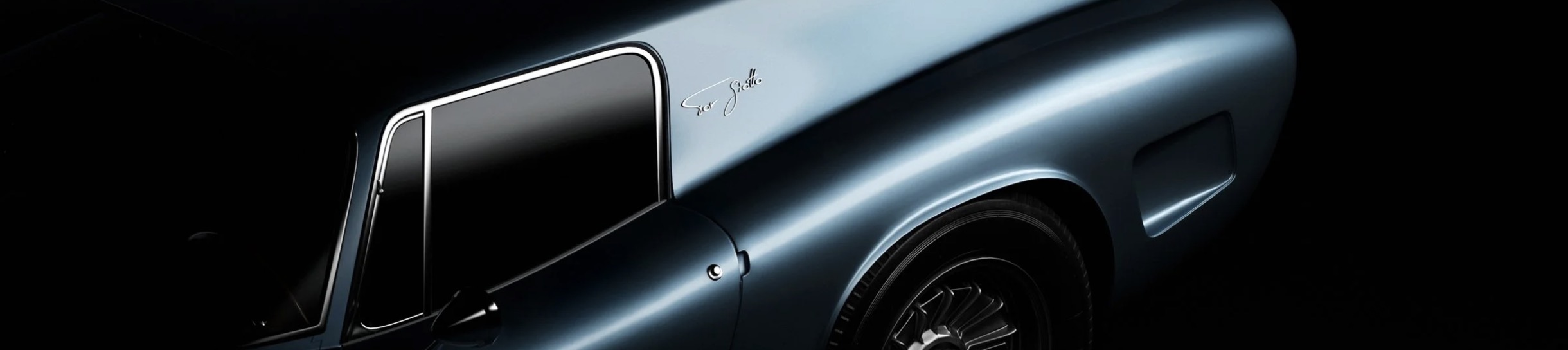
The large fairing bears the ForGiotto signature on its sides. The truncated tail has a harmonious rounded shape at the bottom, again for aerodynamic purposes, to allow air to flow from the bottom of the car. It integrates perfectly with the exhaust pipes, the two classic round headlights, and the ErreErre lettering.
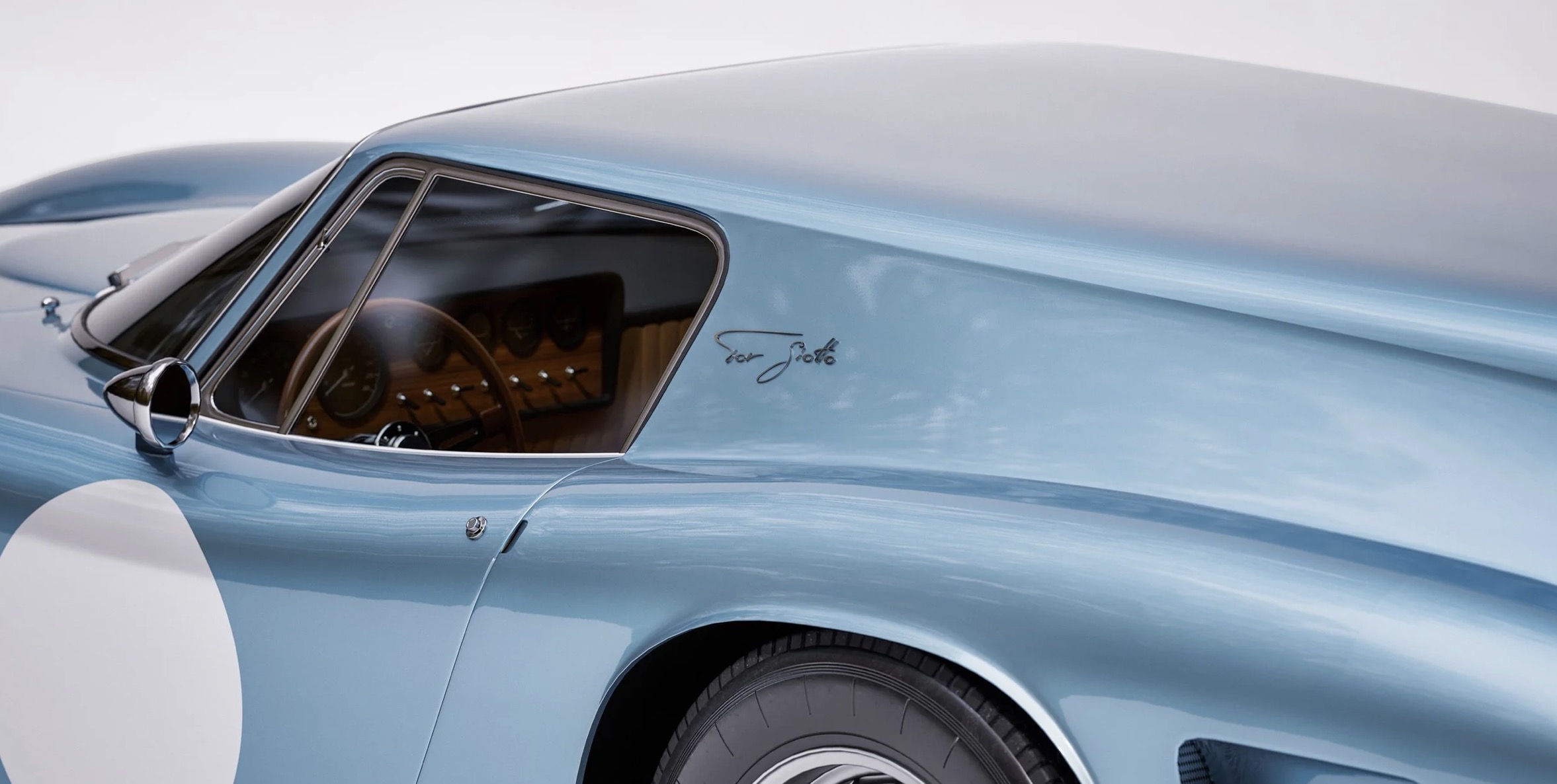
The interior of the ErreErre Fuoriserie is spartan, clearly inspired by racing, as Bizzarrini always wanted for his cars, but at the same time sober, elegant, comfortable, and finished with fine leather.
The three-spoke wooden steering wheel dominates the strictly analog instrumentation, set in the aluminum dashboard in the same color as the bodywork. It includes the two classic round primary instruments, speedometer and tachometer, and the other indicators, also round but smaller, equally clear and easy to read: oil pressure, oil level, water level, fuel level. The set is completed by the levers for the other controls and the central tunnel, with the gear lever and the classic handbrake.
The rear window opens outwards, from bottom to top; the rear area can be left in raw aluminum or covered in leather or Alcantara®, with wood or chrome trim, and used as a luggage compartment.
The customer can customize the interior as they see fit, starting with the choice of leather seats or other premium materials. In this case, to match the bodywork paintwork, the color chosen by ErreErre Fuoriserie is classic leather, typical of racing seats of the era.
If you look at the rear fairing from the front and from above, you can see how perfectly it fits onto the rear fenders.
DNA
They chose the mechanical base of the car that Giotto Bizzarrini would have wanted to modify into the Breadvan at the time: the Iso A3/C, now produced by Iso Restorations.
ErreErre Fuoriserie can be ordered using the original chassis and spare parts still available, up to a maximum of 5 units. Alternatively, the customer can choose to order it using updated and improved parts, creating a brand new car.
ForGiotto was created to travel on normal roads as well as on the track, and above all to thrill.
Every ErreErre Fuoriserie is handcrafted to sartorial standards of quality, guaranteeing meticulous attention to every detail.
Each car is designed with the ambition of creating a work of art to be admired and driven, with extensive customization options, using the excellent state-of-the-art configurator that offers a tailor-made experience without limits.
Fabrizio Rossini
ErreErre Fuoriserie Designer & Project Manager
After his years with Breadvan, Giotto Bizzarrini’s path crossed that of Fabrizio Rossini, a young design student from Turin who was determined to learn from the Master. With passion and tenacity—even going so far as to set up a caravan in front of his house—Rossini won Bizzarrini’s trust and worked with him in Livorno from 1996 to 2001, learning how to design and build a car from scratch. This experience gave him a comprehensive vision: both designer and engineer, capable of combining style and mechanics.
Among his unrealized projects, Bizzarrini confided to Rossini his desire to apply the Breadvan concept to the Iso A3/C, taking its aerodynamics to an extreme level. It is this dream, which had remained unfulfilled, that ErreErre Fuoriserie, together with Iso Restorations, chose to turn into reality: thus, the ErreErre Fuoriserie was born, an authentic tribute to the genius and vision of Giotto Bizzarrini.
ISO RESTORATIONS
Partners
After Iso Rivolta closed in 1974, Roberto Negri—formerly a technician and test driver for the company—acquired the entire spare parts warehouse and founded Iso Restorations, becoming the official guardian of the brand’s tradition.
The warehouse contained an extraordinary collection of original components, from chassis to sheet metal, engines to windows, technical drawings, and period equipment, ensuring the authentic continuity of Iso and Bizzarrini cars.
Thanks to this unique archive, Iso Restorations can restore and rebuild cars in a manner that is completely faithful to the original, using only parts, materials, and techniques consistent with the period.
Among its activities, the company is also able to produce original reconstructions of the rare 1963/64 A3/C, using authentic components and chassis numbers derived from the cars that supplied the parts.
Iso Restorations is now the most authentic Iso workshop in the world.
TECHNICAL DATA
- Bodywork: hand-hammered aluminum
- Engine: Chevrolet 327 small block V8, 5,358 cc
- Power: from 300 to over 400 hp
- Fuel system: four-barrel carburetor
- Transmission: 4-speed Borg-Warner with selectable rear axle ratios.
- Maximum speed: over 155 mph
- Tires: Pirelli with 15-inch rims
- Dimensions: length 4,369 mm; width 1,730 mm; height 1,110 mm; wheelbase 2,450 mm
- Weight: approximately 1,200 kg
Report by erreerrefuoriserie.com
Studio renders by Mattia Orza