The most efficient way to start a heated argument among BMW fans is probably to try crowning the best-ever 3 Series. E30, E36, E46, E90, even throw in the old 2002. It all sounds like off-brand alphabet soup to normal people, but to the BMW faithful, even initially civil discussions about their relative merits can easily escalate to fighting words.
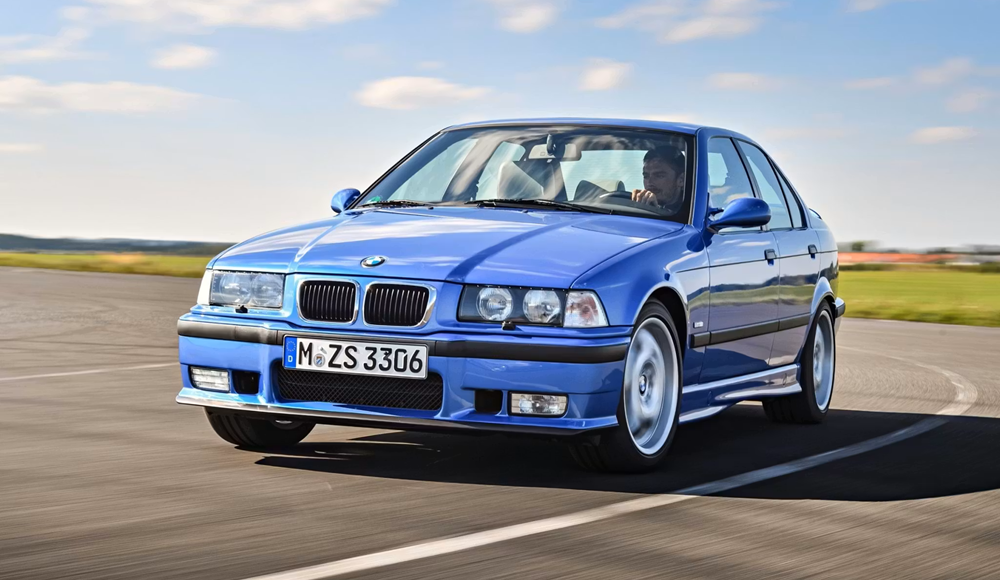
Having been the subject of countless debates, the E36 generation—offered in the U.S. from 1992 to 1999—is often regarded by a significant share of enthusiasts as the greatest. This view is frequently attributed, at least in part, to the fact that it was the 3 Series generation that gave rise to the first truly mass-market M3.
E36 M3 History
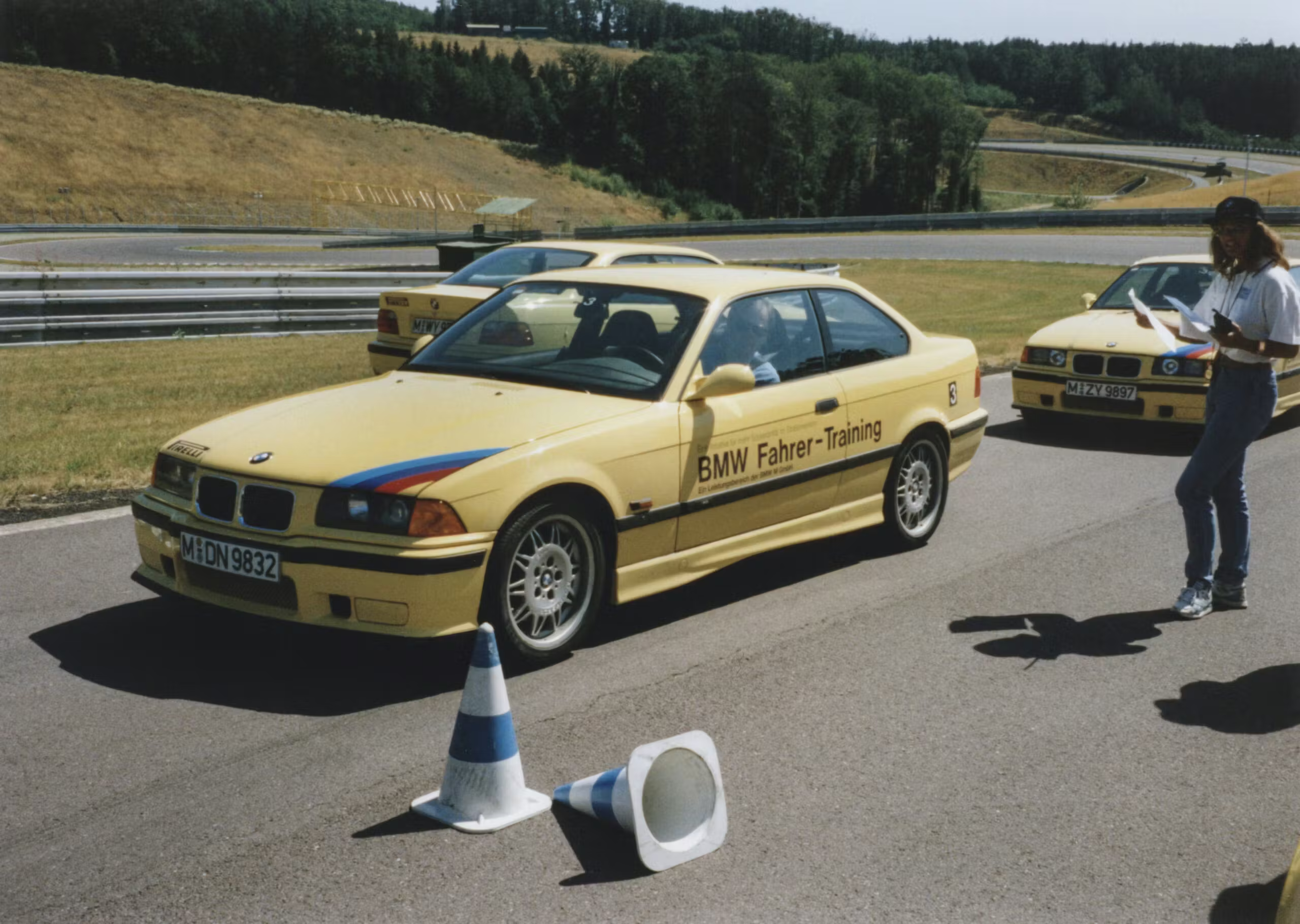
There was, of course, an M3 before the E36, but the E30 M3 was something of a niche product, and it was expensive to build. With numerous bespoke body panels and a high-strung, motorsports-derived 2.3-liter S14 four-cylinder, it was offered in the U.S. in a single two-door coupe body style and it was never going to sell in large numbers. Enter the E36 M3. Based on a newer, more modern 3 Series platform, it now benefited from six-cylinder power, but was far more similar to the base car than the E30 was, relying on different front and rear fascias and rocker panel extensions to differentiate it. BMW even offered it in four-door and convertible body styles. It was also one of the few performance cars in recent memory to be offered with two very different powertrains in the U.S. and Canada.
The E36 M3 may well have been one of the most exciting performance cars of the mid-1990s when it burst into the consciousness of the enthusiast hive via a splashy July 1994 Car and Driver cover. It featured a Dakar Yellow M3 hurtling down a test track—”240-horsepower, 5.6 to 60, for $36,000!” There was a catch, however, as Euro versions of the car featured 282 horsepower, and cylinders fed by individual throttle bodies like the previous generations of M-cars. The U.S. version was simply a tuned version of the standard 328i’s engine. It mattered little, the original OBD I, 3.0-liter S50 B30 US engine was nevertheless adored by all of the major North American magazines and its torquier low-end profile was deemed better suited to U.S. driving. Missing horses aside, the M3 remained a very quick car, just four tenths of a second slower to 60 mph than a contemporary Porsche 993.
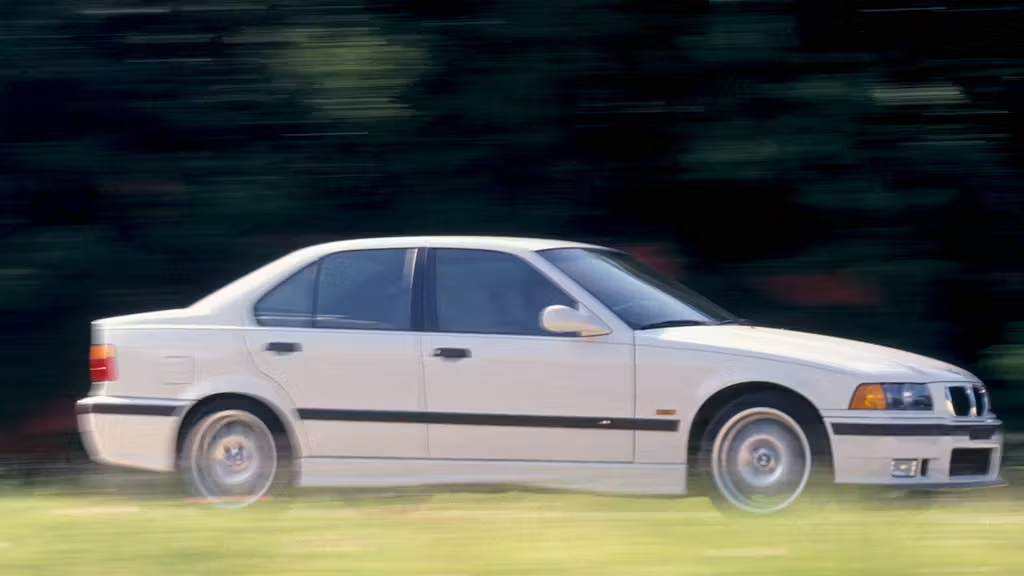
For the record, Canada got the more powerful European version of the M3 by exploiting a bizarre loophole that allowed cars certified in Norway (of all places) to be imported into Canada. In any event, every non-U.S.-spec E36 variant is now to import into the States under the 25-year rule, including the 1994 M3 GT, an FIA homologation special with 295 hp and special dark green paint. There was also a more extreme, insanely rare M3 GTR with a seam-welded, wide-body, and a stroked engine. Late-production Euro M3s also got 6-speed transmissions, while U.S. cars remained 5-speeds. In 1995, the U.S. got its own homologation special with the 1995 E36 M3 Lightweight. Alloy panels combined with the removal of sound-deadening saved a not inconsequential 200 pounds. The cars also had a shorter final-drive ratio and a curious rear-trunk stash of parts that included a Euro-spec oil pump, a front strut bar, and a front splitter. Curiously, the actual installation of any of these items would void the warranty.
In the U.S., for 1996, the OBD II compliant S52 B32 U.S. engine replaced the S50 B30 U.S. The additional 200 cubic centimeters of displacement added even more low-end torque but no more horsepower. The 1995 M3 coupe was the first M-car to be offered with a ZF five-speed automatic transmission, although the take rate was fairly low and eventually dropped. A two-pedal option was always available in sedan and convertible body styles, and not surprisingly, the take rate was higher on those more luxury-oriented cars. In late 1996, there was a modest facelift to the E36, but changes were few after that.
What to Look for in an E36 M3
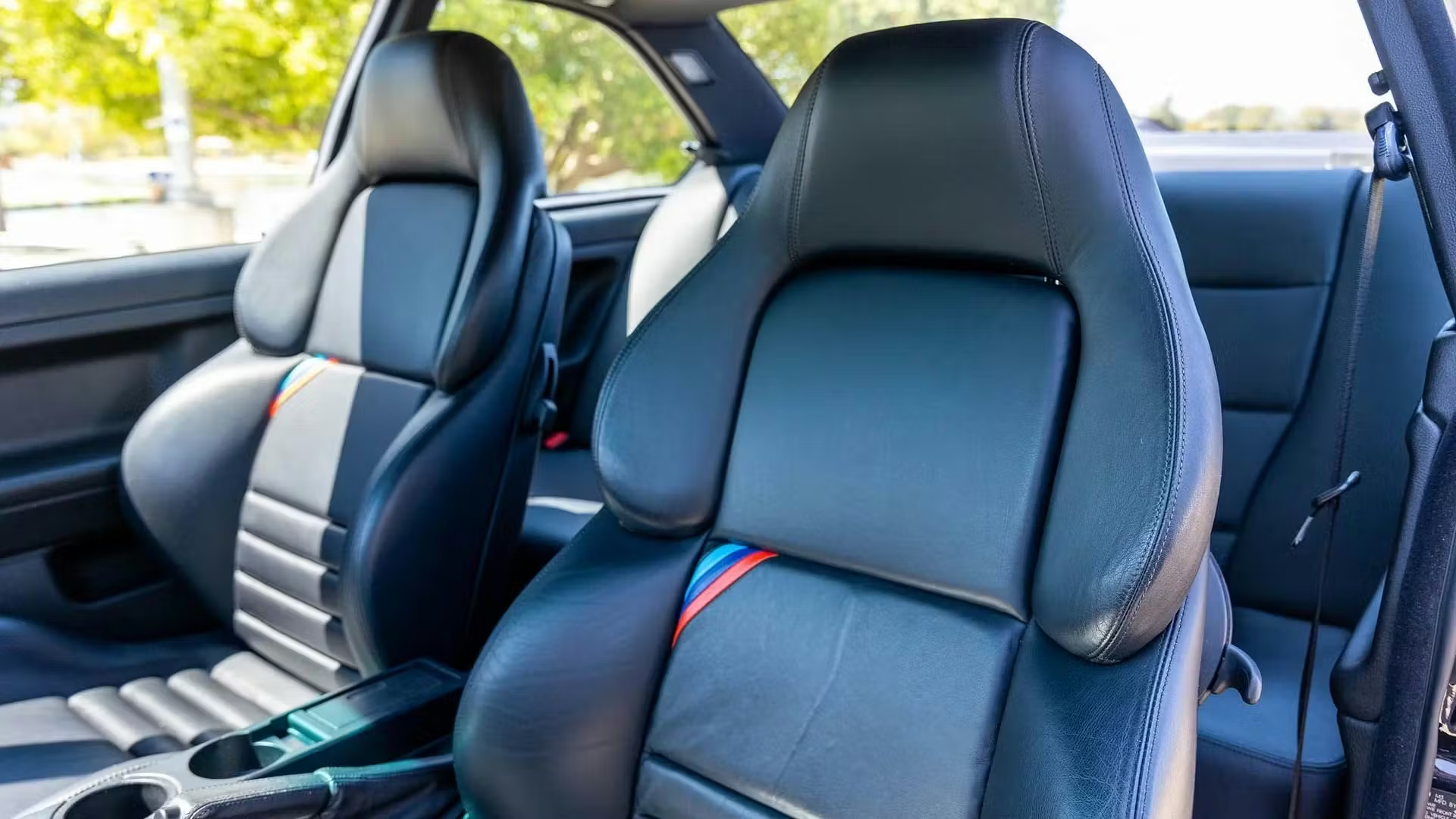
Far more common is wear to the interior. All of the leathers dry, crack and discolor, particularly the Nappa interiors. The Dove Grey interior on my Dakar Yellow car had been expertly re-dyed by a previous owner, but most don’t look that good today. With professional attention, seats without deep cracks or tears can at least be made to look acceptable. Not so the interior plastics. Nearly everything fades, creaks or cracks in an E36 interior. Convertibles fare the worst. Florida cars that were parked with the top down are textbook examples of what UV rays can do to the interior of a car that comes from a country that averages fewer than 200 sunny days a year. If you find an E36 with a glovebox lid that hasn’t warped, you’ve essentially won the equivalent of the Bavarian State Lottery.
Mechanically, the E36 is pretty stout. S50 and S52 engines with proper maintenance can make it to over 300,000 miles. Aside from the normal leaks and clearance increases that take place in any high-mileage car, there are occasional head gasket issues (white smoke and a milkshake-like residue on the dipstick and oil filler cap are the telltale signs of oil and coolant intermix). Cars with above 200,000 miles are probably candidates for a timing chain replacement. Below that, chain guides and tensioners are probably sufficient for cars making modest rattly noises on startup.
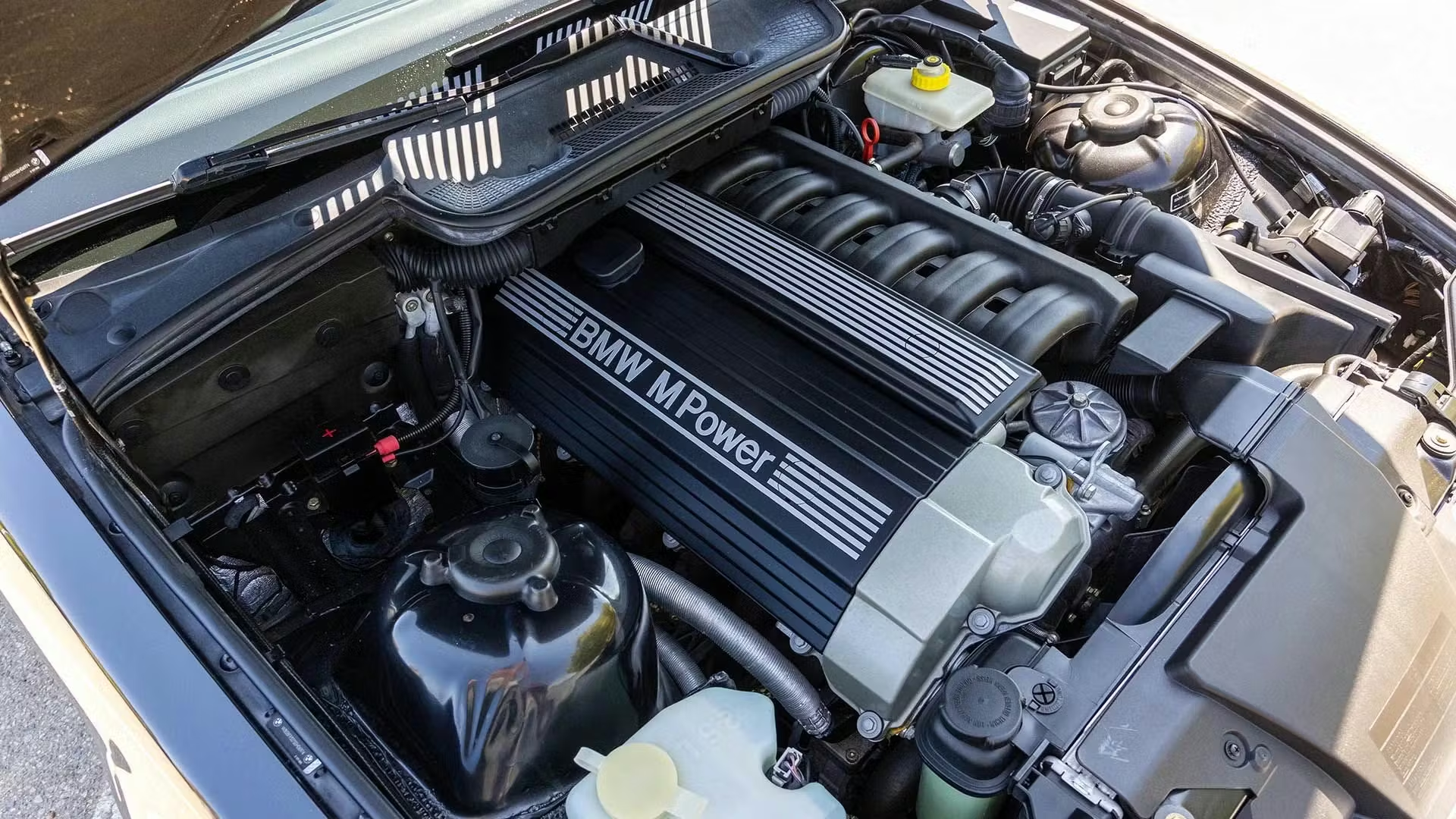
U.S. E36 M3s had the single VANOS variable valve-timing system. A refresh of the system generally consists of seals and solenoids. Lack of power and low-end torque, or rattly noises between 1000 and 3000 rpm are symptoms of a VANOS system that needs attention. Cooling systems are common BMW weak spots, so water pumps, coolant overflow tanks, and radiators themselves are all normal replacement items every 100,000 miles or so.
Gearboxes get noisy with high mileage and synchros get weak. Limited-slip differentials also get noisy with lots of miles, and in extreme cases, internal bolts can shear, causing total failure. Cast aluminum oil sumps are also vulnerable to road debris. Also, keep in mind that the oldest E36 M3s are now over 30 years old, so virtually everything rubber or plastic has had time to perish or crack two to three times by now. Rear trailing arm bushings are notoriously wear-prone. Ditto shock mounts, engine and transmission mounts, and shifter bushings, all of which can contribute to a sloppy and worn-out feel.
What to Pay
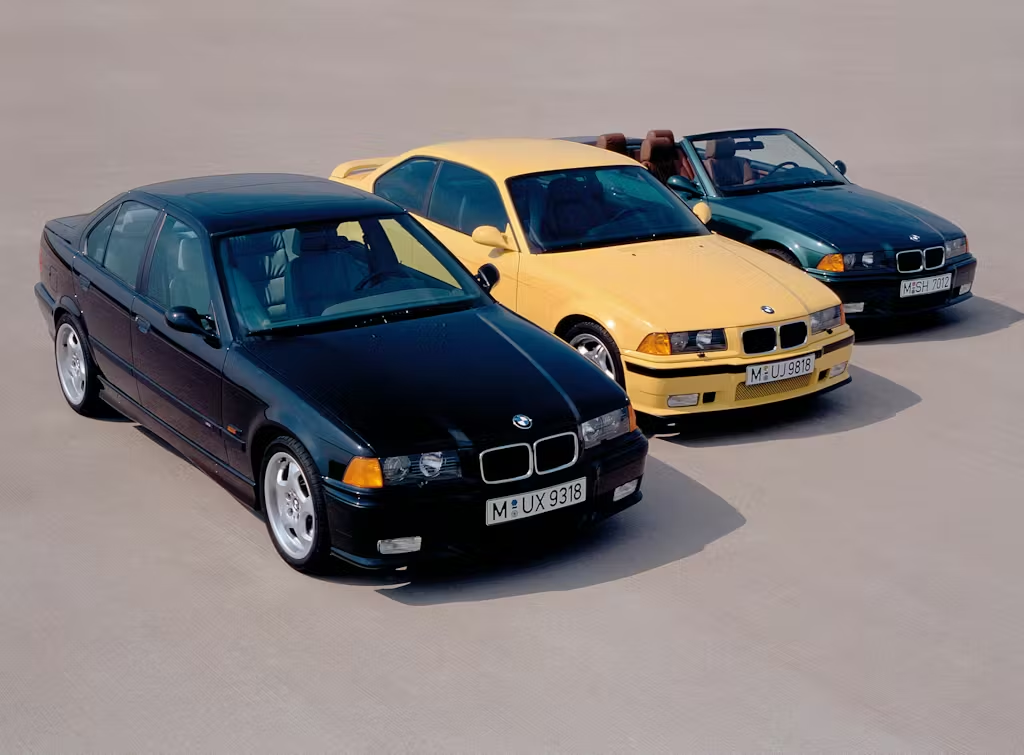
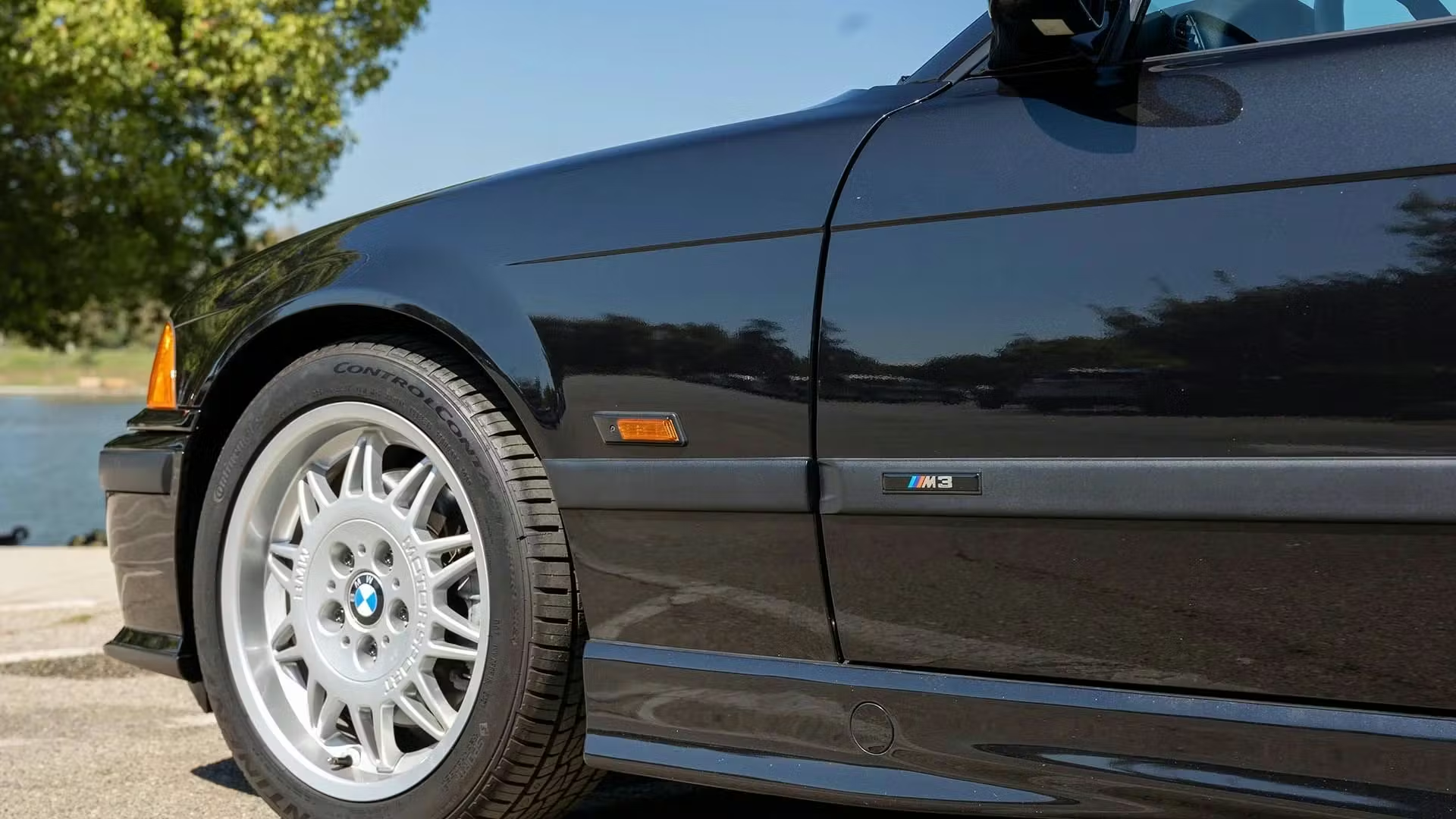
As far as desirability goes, colors and wheels were big differentiators between the M3 and the more ordinary 3 Series cars. Among the most coveted E36 M3 colors are Avus Blue, Estoril Blue, Dakar Yellow, Daytona Violet, Techno Violet, and Imola Red. Mulberry (purplish-grey), Magma (saddle), and Modena (orangish-tan) were M3-only interior colors and were available along with the usual black, tan, and gray leathers. Sport seats were a desirable option, referred to in BMW-speak as “Vaders” because the top of the backrest resembles the helmet of the Star Wars baddie. Special M3 colors and sport seats are a very big plus in E36 values.
The most commonly seen wheel on an E36 M3 is the 10-spoke, 17-inch Style-22. The five-spoke Style 23s (nicknamed “throwing stars”) were more often seen on sedans and convertibles. The rarest (and lightest) were the five-spoke Style 24s.
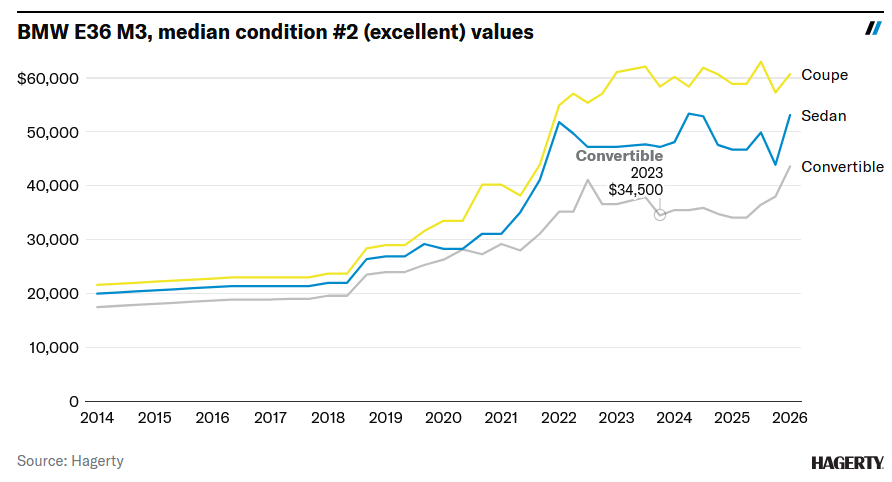
E36 M3 values have risen significantly over the past decade, with particularly strong growth since the late 2010s. In 2016, a Dakar Yellow five-speed convertible with 90,000 miles changed hands for $7,500 and was sold a few years later for $11,500; today, a similar example could command around $15,000. Convertibles remain the least favored E36 M3 body style, and approximately two-thirds were equipped with automatic transmissions. They are also known for noticeable cowl shake and chassis flex, issues that can be substantially improved with the addition of an upgraded X-brace.
Sedans generally achieve higher prices than convertibles, with condition #3 (good) manual-transmission examples typically trading in the high teens to mid-$20,000 range. Across all body styles, automatic transmissions usually result in a price discount of roughly 15 percent compared with their manual counterparts.
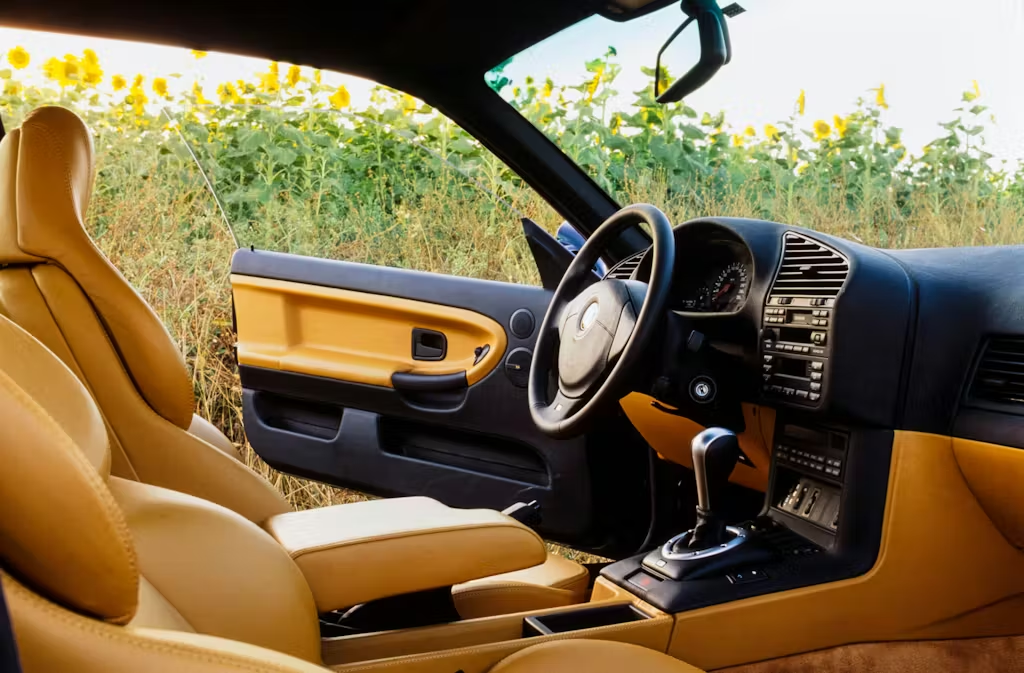
Coupes are what E36 fanatics want, and even a driver-quality example can bring $30K or so, while excellent-condition cars bring far more. The more powerful European or Canadian market cars also command a premium over U.S. ones. M3 Lightweights are in a completely different ballpark price-wise. With just 126 built, they very rarely come up for sale, and expect to pay six figures for one.
No good E36 M3 is cheap, then, but in the rankings of vintage M3s, it is noticeably cheaper than the equivalent E46 (2000-06), while E30 (1986-92) M3s can sell for well over $100,000. E36s are handsome, comfortable, quick, and rewarding to drive and own. While some are clearly more special than others, any flavor of BMW’s first mass-market M3 is an enthusiast’s delight.
Report by Rob Sass
find more news here.