Colin Chapman left a legacy of engineering excellence having been responsible for some of the most innovative and successful sports and grand prix cars. He also founded Lotus Cars, a company that that led the way in the creation of small, lightweight sports cars; one of his designs, penned in 1957, remained in production until 1973 although the design and copyright was purchased by a third party and today remains in production in modified but still recognisable form.
He initially worked in the aircraft industry where weight and engineering precision were paramount, as did his indispensable engineer and right-hand man, Mike Costin. Together they made automotive history with Mike moonlighting from his day job to spend the night build the cars Colin had designed while surviving on about three hours sleep a night. The first Lotus cars were rudimentary vehicles and Colin, who was a competent driver, publicised his products by racing them at weekends. An early successful model was the Lotus 6, a simple small-engined two-seater with cycle-wings over the front wheels. As Colin gained experience and race victories his ambitions grew from club racing to international events but his cars had to conform to numerous regulations, one of which banned the use of cycle-wings on grounds of safety. A new aerodynamic enclosed body was required which led to Mike Costin approach his brother Frank who was an expert in the field of aviation aerodynamics.
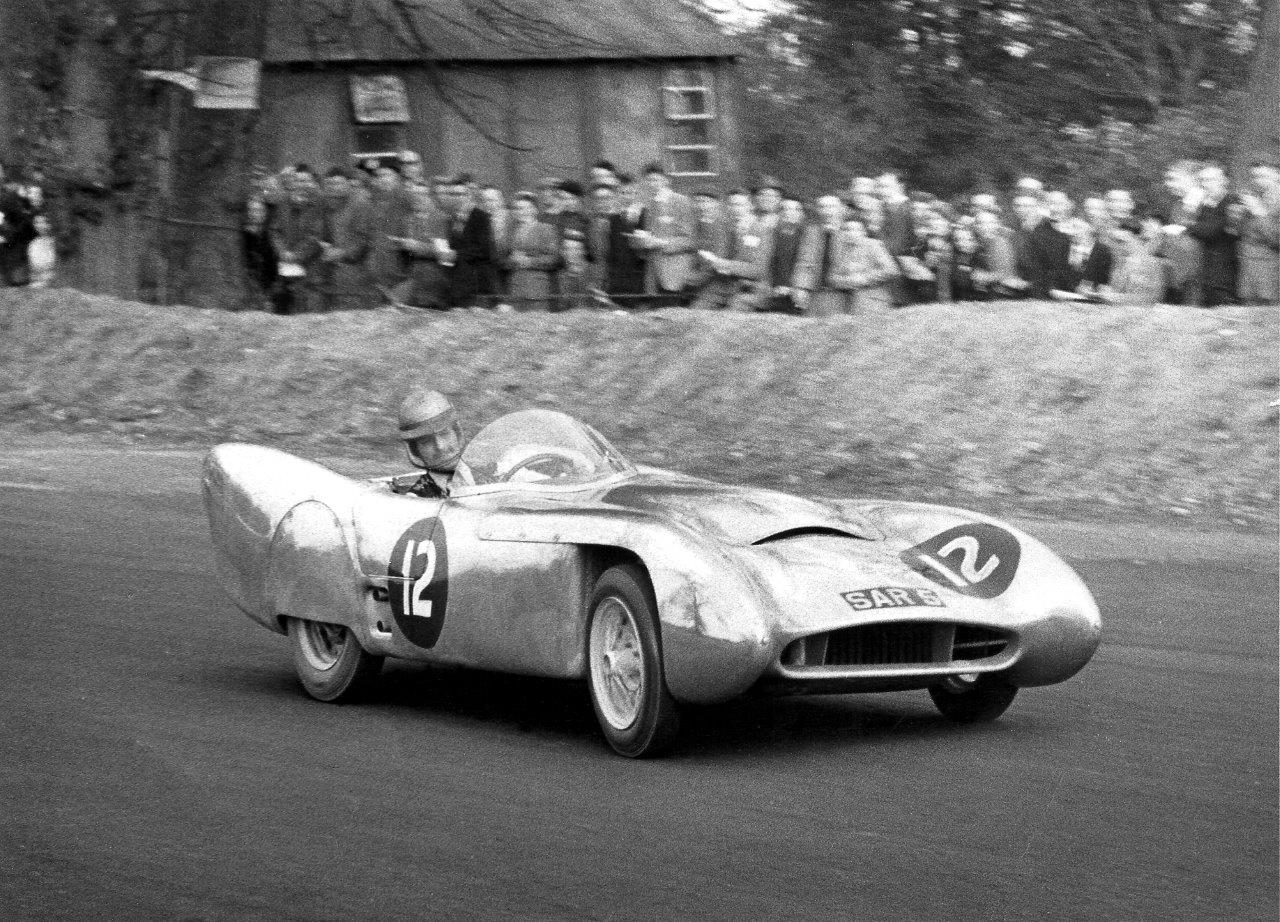
Frank had no interest in automobiles but was eventually and rather reluctantly persuaded to sketch an idea that was soon transformed into an enclosed, flowing set of aluminium body panels that even covered the rear wheels. The body was attached to a ground-breaking spaceframe chassis designed by Colin that consisted of only 19 metal tubes constructed in a triangulated pattern and is considered one of the finest examples of a spaceframe chassis. The only problem was that the design did not allow the engine to be fitted and removed without first taking apart some of the chassis tubes. However, the new Lotus 8 proved to be highly competitive and although only seven cars were built, it is considered to be the car that set Lotus on the path to success. The photograph shows Colin Chapman driving the prototype Lotus 8 at Oulton Park in 1954.