Thirty years after Michael Schumacher’s arrival at Maranello, former Ferrari Technical Director Ross Brawn reflects on how the seven-time World Champion helped return the Scuderia to the pinnacle of Formula 1.
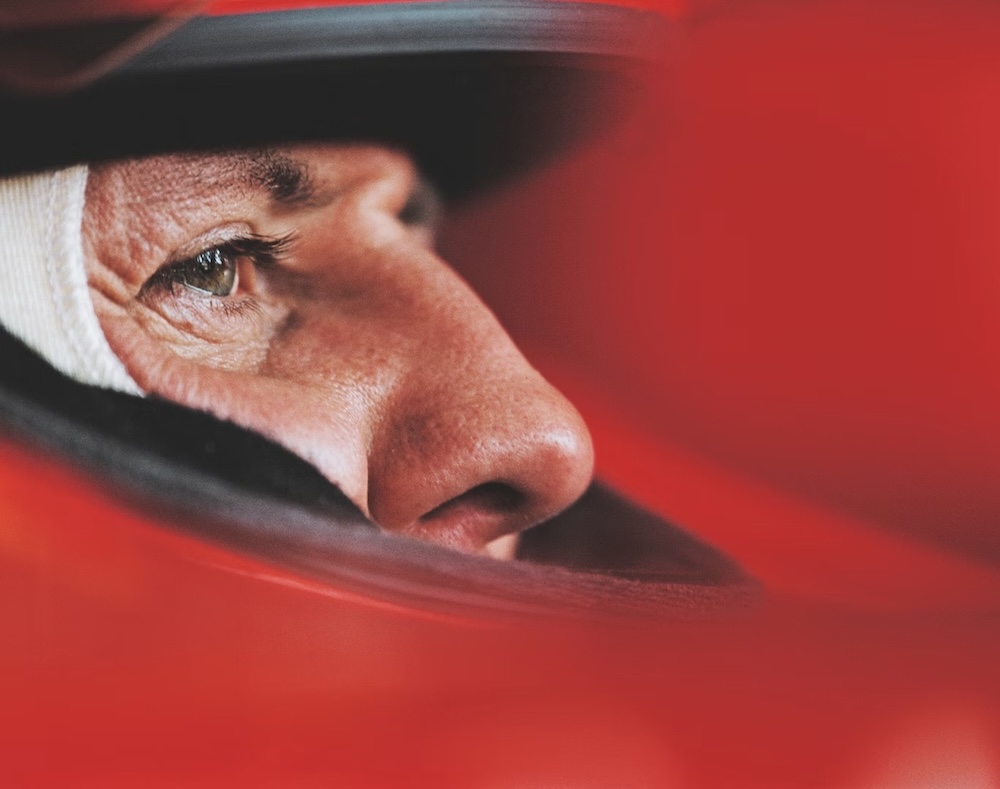
Thirty years after Michael Schumacher’s arrival at Maranello, Ross Brawn looks back not only at the champion who rewrote the record books, but at the man behind the success: the team builder, the leader, and the person who helped restore Ferrari to the top.
After beginning his Formula One career with the March team and later helping Jaguar win the World Sportscar Championship, Brawn joined Benetton in 1991, where he formed a partnership with Schumacher that delivered two Driver’s titles.
In 1997, he followed Jean Todt and Rory Byrne to Ferrari, becoming Technical Director of the Scuderia and one of the architects of one of the most successful eras in the team’s history.
Together, Schumacher, Brawn, Todt and Byrne transformed Ferrari into the dominant force of Formula One, winning five consecutive Driver’s Championships and six Constructors’ titles between 1999 and 2004. Their relationship continued years later at Mercedes, where they worked together once again during Schumacher’s return to Formula One.
Thirty years after Michael’s arrival at Ferrari, what do you think his greatest legacy is to the team?
Michael brought back the respect Ferrari needed. Before that era, success was expected, but not always earned. Michael changed that. The achievements, and the way they were achieved, restored enormous pride inside the factory and renewed the respect people had for Ferrari outside it. He lifted Ferrari to a new level and made people feel proud to be part of the organisation. If I had to summarise his legacy, it would be that.
What do you think people still underestimate about him?
Michael is a bit of a paradox. His aggressiveness on track created a perception of him that didn’t always reflect the person he was. Yes, there were occasions when he admitted he went too far, but if you put that into perspective with all the good he brought, it becomes a very small part of the picture.
What people never saw was his work behind the scenes. He never criticised the team publicly, but internally he could be very demanding. You knew when he wasn’t happy and when he expected a response. But he built teams, he didn’t destroy them. Remember, he joined Ferrari when Ferrari were not winning. He had just become World Champion with Benetton and could easily have stayed where he was. Instead, he embraced the challenge. He saw Ferrari as a project and wanted to be part of bringing the team back to where it belonged.
How much of his contribution happened away from the spotlight?
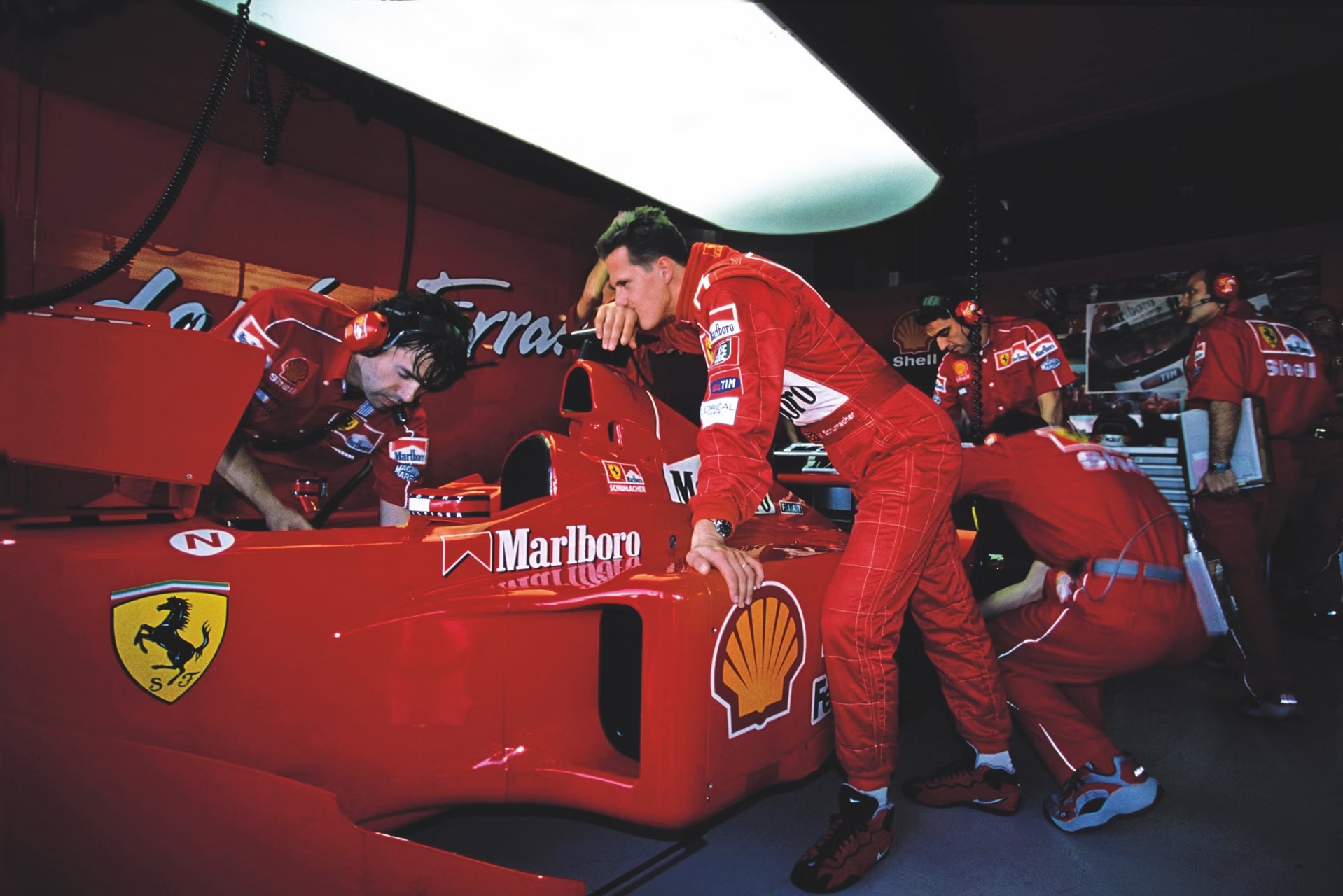
Ninety-five per cent. People only saw what happened on Sunday. But so much of Michael’s contribution came from the factory, the testing and the work with engineers. There was huge testing in those days. If we had a problem, I’d ring him and ask, “Can you test tomorrow?” His answer was always: “What time do you want me there?” Never any hesitation. That attitude contributed enormously to building the team.
What was he like at Maranello?
One thing I always appreciated was that Michael based himself in the Enzo building. He stayed close to the team. He loved walking around the factory and seeing what was going on. Rory Byrne or I would often take him through the design office or engine department to show him the latest developments. He genuinely wanted to understand what people were doing. And he loved talking to people. He encouraged them and made them feel involved.
He also had a special relationship with the mechanics.
Absolutely. Michael came from humble beginnings and never forgot them. At first, people were naturally intimidated by this superstar arriving at Ferrari. But he was incredibly approachable. He played football with the mechanics, knew their names, often knew their families and birthdays. He made a genuine effort to engage with everybody because he enjoyed it. He had been at every level himself and never forgot that.
What made your partnership so effective?
We grew up together in racing. We learned together and we both accepted that we weren’t infallible. We made mistakes, but we supported each other through them rather than blaming each other. Trust evolved over time and stayed with us all the way.
Once that trust existed, was he prepared to follow you anywhere?
Not exactly. We had plenty of robust discussions. Michael had thousands of ideas. He is incredibly intelligent and creative. My job was to decide which ideas we should pursue and which ones we couldn’t. Eventually he started calling me ‘Mr No’ because I seemed to reject so many of them. But it was affectionate. The important thing was that he was constantly thinking. My job was simply to identify the best ideas.
Did your relationship eventually become friendship?
Yes, although we weren’t friends who lived in each other’s pockets. We saw each other socially a few times a year. Michael loved fancy dress parties and organised wonderful gatherings in Switzerland. We went skiing together, I took him fishing a few times, and there was always humour. We were serious when it mattered, but there was always room for a laugh. Sometimes humour helps you deal with enormous challenges.
Strategy became one of your trademarks together…
We loved it. We would spend hours discussing different scenarios. Nothing was improvised. There was always Plan A, Plan B, and Plan C, and Michael understood them all. That trust was essential. The driver doesn’t see the whole picture during a race. He sees his own car, but not all the information available on the pit wall. Michael trusted us. It didn’t always work, but overall we did very well.
Which race best represents your relationship?
Suzuka, the year 2000. The battle with Mika Häkkinen was incredibly close. After the final pit stop, we came out just ahead and I remember Mika asking his team, ‘How did that happen?’ Everything had to be perfect and Michael extracted the maximum from the car exactly when we needed it. Because of the significance of that race and how close it was, that’s the one I remember most.
Did you have any rituals together?
Very much so. I was a great believer in routines and debriefs. Before every session we had meetings, after every session we had debriefs and after every race we analysed everything, whether it had been successful or disastrous. People sometimes thought it was bureaucratic, but I always used to say: ‘Would you like the pilot of your plane to skip his checklist?’ Michael appreciated that structure. He also had his own rituals. He would always have a nap before a race and he was meticulous with his preparation, his diet and his fitness. Today that’s taken for granted, but when Michael arrived in Formula One, it wasn’t. There were still drivers smoking. Michael raised the standards and everyone had to follow.
What should a young Ferrari driver learn from Michael Schumacher?
Enjoy the Ferrari experience because it’s something very special. Lewis experienced that in Barcelona with his first win in red. I remember how special my Ferrari victory in Monaco felt. But don’t let Ferrari overwhelm you. Stay humble. Talk to the mechanics, talk to everybody, make yourself available.
People at Ferrari are incredibly passionate and they love drivers who engage with them. And above all, put the work in. There is no substitute for that.
Michael is often described as the leader of that Ferrari era. Were you the person he trusted most?
I wouldn’t say there was just one person. That was one of the strengths of that team. Michael had a close relationship with Jean Todt, another with Rory Byrne and another with me. Depending on the issue, he would go to different people.
Nobody was possessive about their relationship with Michael and nobody was offended if he discussed something with somebody else. That openness was one of the reasons why the team was so successful.
Of those times with Michael, what do you remember the most?
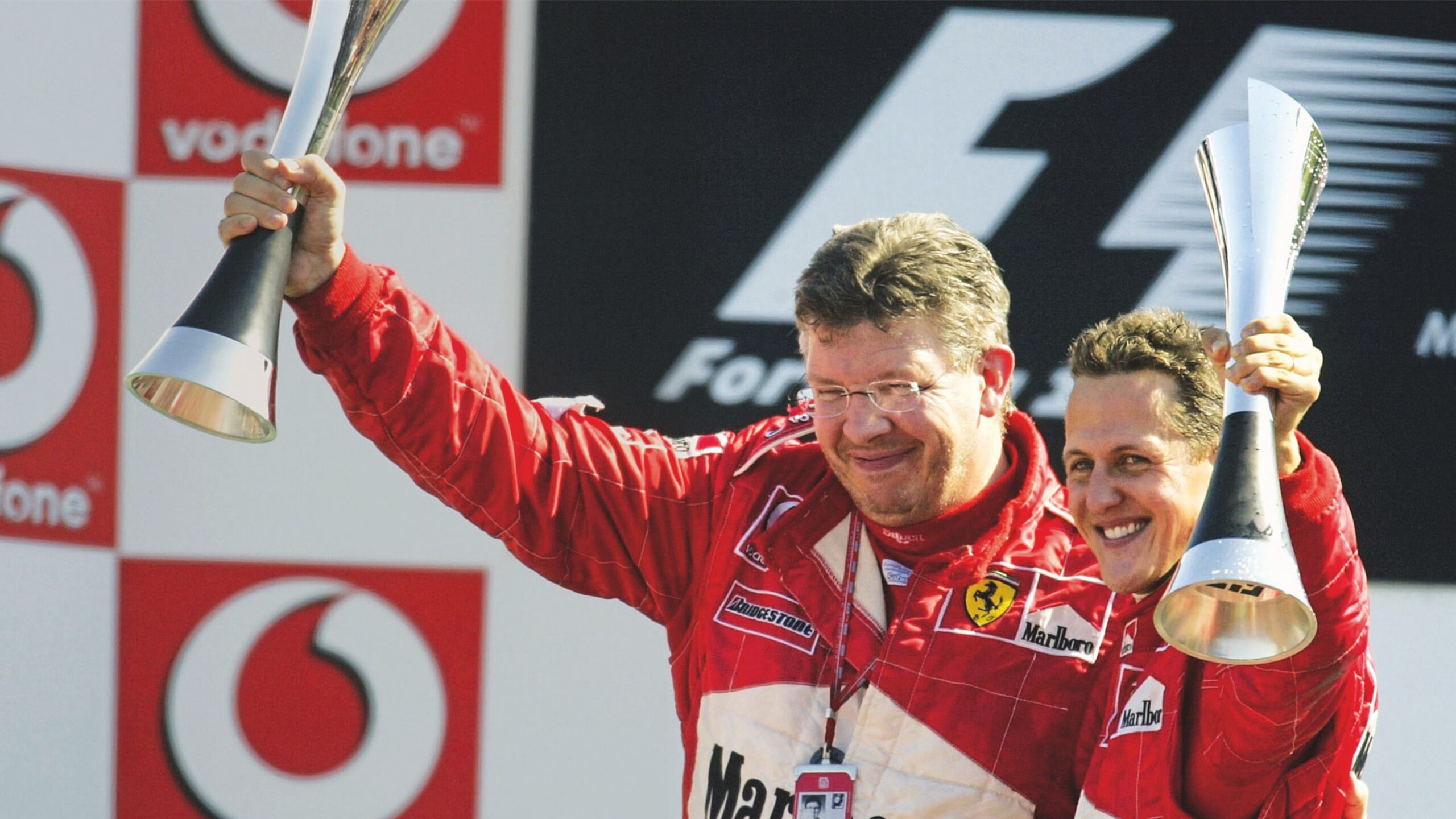
One thing Ferrari taught me was to show emotions. As an Englishman, I wasn’t naturally demonstrative. I learned to hug people, to celebrate, to show emotions more openly. When I think of Michael, I remember the smiles, the hugs, and the joy we shared. There are plenty of photographs of those moments. That says a lot about who Michael is, and what that Ferrari family meant to all of us.
Report by Davide Marchi for ferrari.com